bdc magazine

PROTECTING CONSTRUCTION WORKERS FROM SILICA DUST

Silica is found in construction materials – Natural stone, sandstone, bricks, clay, and concrete products. It is even found in some plastics as silica is used as a filter during the production process. What is silica? Silica is a natural compound and has multiple uses in the construction industry. However,

Read More »

7 Ways to Save Money While Self-Employed

Are you saving enough money? Much has been made of the fact that nearly 70% of Americans have less than $1,000 stashed in their bank accounts. The same principle applies to entrepreneurs running their businesses. The self-employed commonly find themselves on edge financially. Follow these tips for saving money while

Read More »

6 Cost- Effective Driveway Remodeling Tips

A driveway is probably one of the things that few people think about when considering the costs of owning their own home. Yet, approximately two-thirds of people in the U.S. own their own homes, and while it is still considered to be the American dream, many people also recognize that

Read More »

Step by Step Guide for Buying a New House      

Buying a property is a significant milestone, and most people who are buying a home for the first time don’t know what to anticipate. The process is sometimes as scary as it is thrilling. High asking prices and increasing interest rates make buying a new house more of a gamble

Read More »

The 3 Most Impressive Casino Buildings in The World

You can encounter impressive architecture where you least expect. Usually, city centers boast beautiful buildings with rich and complex histories, and the greatest architects such as Antoni Gaudi and Frank Lloyd Wright, are behind these human-made wonders. Within these astonishing structures, you might even find land-based casinos. Nowadays, despite the

Read More »

Tolent begins work on new Vaux homes

ONE OF the country’s most ambitious residential developments is under construction, with ground broken on Riverside Sunderland’s first housing scheme. Sunderland City Council’s Vaux housing development – the first of 1,000 homes that will eventually stand across the Riverside Sunderland site – is underway, with North East based Tolent building

Read More »

Mayor lays first brick at new development on Hayling Island

The Mayor of Havant, Cllr Diana Patrick, was the guest of honour at a new development on Hayling Island earlier this month.  Cllr Patrick was invited to the Barratt Homes Pebble Walk on 4th August to lay a ceremonial brick on the foundations of the first plot being built at

Read More »

HS2 completes first tunnel cross passages

As the tunnelling machines under the Chilterns approach the four-mile mark, HS2 completes the first of thirty-eight underground connections between the northbound and southbound tunnels The construction of HS2’s longest tunnels stretching for 10 miles under the Chilterns has begun a new phase with the start of work on thirty-eight

Read More »

Beard carries out major refurbishment of private hospital

The operating and patient recovery facilities at a private hospital in Bath are undergoing a major refurbishment by Beard Construction. The five-phase project will see three operating theatres at Circle Health Group’s Bath Clinic revamped and a fourth created from an existing endoscopy suite. The associated patient recovery and anaesthetic

Read More »
Latest Issue
Issue 335 : Dec 2025

bdc magazine

PROTECTING CONSTRUCTION WORKERS FROM SILICA DUST

Silica is found in construction materials – Natural stone, sandstone, bricks, clay, and concrete products. It is even found in some plastics as silica is used as a filter during the production process. What is silica? Silica is a natural compound and has multiple uses in the construction industry. However, exposure to fine silica particles vary between distinct types of materials with fine dust remaining in the air from many different working activities. For example: Quarrying and stone processing – Rock drilling, blasting, breaking, crushing, and screening Stone production (particularly on sandstones as they are made-up of around 70% silica) into architectural masonry, cladding, traditional masonry blocks, and natural walling stone Refractory production, cutting, polishing, and finishing products Concrete product and manufacturing and production    Demolition processes where encountering concrete, natural stone, brick, mortar, plaster, roofing products are prevalent Be informed about the effects of breathing silica dust. Workers do not have to get sick when working with materials containing silica. Silica related illnesses are 100% preventable.  The simplest steps to prevent exposer while working around construction products include: Using the correct responsive respiratory protective equipment Wear a face mask, and protective clothing Use blasting cabinets and proper ventilation Use wet production methods when cutting, or grinding products Limit the time you work in duty production environments      Follow good personal hygiene rules – Do not eat or drink in dusty work-related areas Always Shower and change clothes after work to prevent taking dust particles home So, know the hazards and take precautions to avoid exposure.      Remember, continued exposure can lead to developing health complications including, silicosis a long-team lung disease caused by inhaling fine crystalline silica dust over many years.   It is the responsibility of employers to provide a safe working environment for all employees. If you find yourself in a workplace or working on construction sites where you are working around products that are known to contain crystalline silica there are health and safety training programmes that you can sign-up to.   Essential Site Skills offer extensive workplace health & safety training courses including our popular Face Fit Train the Tester course that provide those who are required to wear responsive respiratory protective equipment, the knowledge of how to conduct face fit testing using Qualitative method. If you are responsible for health and safety within your organisation, then it is essential that face fit testing is conducted correctly, and documented evidence is recorded. All ESS face fit testing and train the tester courses are delivered by our Fit2Fit accredited tutors.  If you want to know more about our Face fit and related Health and Safety courses including: Asbestos Awareness UKATA Control of Substances Hazardous to Health (COSHH) Risk Assessment Training Non-Licensable work with Asbestos (UKATA) Go to https://essentialsiteskills.co.uk/category/face-fit-testing You canbook direct online, or you can contact one of our expert training advisors direct: 0115 8970 529 they will assist you find an alternative training location or date or create bespoke training for your organisation.  We are one of the best providers of health and safety training courses in the UK. All our upcoming public courses can be viewed by month and year online https://essentialsiteskills.co.uk/training-calendar  We can deliver in-house accredited training courses right at your premises, anywhere in the UK. For more specific requirements, we are also happy to customise existing courses to meet your objectives. Call 01158 970 529 and talk to a member of our team.  essentialsiteskills.co.uk

Read More »

7 Ways to Save Money While Self-Employed

Are you saving enough money? Much has been made of the fact that nearly 70% of Americans have less than $1,000 stashed in their bank accounts. The same principle applies to entrepreneurs running their businesses. The self-employed commonly find themselves on edge financially. Follow these tips for saving money while you’re self-employed. Most of these tips can be applied to your personal and business finances. The first step to saving money while self-employed is to know where you stand in the first place. Everyone should have both a household and business budget. A budget is simple enough to create. You list your monthly outgoings to get a benchmark for how much you need to survive every month. Add your monthly income to determine whether you’re in the red or the black. Your budget shows you whether you are earning enough or spending too much. It demonstrates whether you need to make spending cuts and where you need to make them. Refer back and update your budget at least once per month. You’re likely paying hundreds of dollars every month for your insurance. Everything from liability policies to health insurance will come with monthly premiums you have to pay. The self-employed also need to think about their business insurance policies, such as malpractice and self-employed insurance. Everyone needs sufficient insurance coverage to protect themselves and their assets if something goes wrong. There’s little benefit to being loyal to one insurance company over another in most cases. Get into the habit of shopping around and comparing annually. Many insurers will even price match if you find the same policy at a lower price with one of their competitors. Anything can happen at home or in business. Ideally, you shouldn’t have to dig into your retirement or investment fund if something goes wrong. A downturn in business or an unexpected medical expense could cause serious problems. Your initial focus should be to build up an emergency fund for your household and your business. Most experts recommend maintaining a minimum of six months in expenses to keep everything running if you lose the bulk of your come. If you’re ambitious, you should aim for twelve months. If this seems unrealistic, it might be worth looking at side hustles you can do to help you build that post. Look at your skills and how you can apply, search online for money-making opportunities such as looking to sell feet pictures or other photography, or take up a delivery job, for example. This will help you boost your emergency fund or give you extra cash to live on. Technology has allowed us all to automate much of our daily lives. Why pay for a coworking space when you can simply use video conferencing software to collaborate instead? Why pay for an office space filled with filing cabinets and watercoolers when you can function just as well in a home office, which you can also take a tax deduction on? There are so many ways in which technology can cut your costs in every aspect of life. With so much competition among tech providers, you might be surprised at how much money you can save by further digitizing your life. How many times have you let a premium newsletter subscription keep running when you don’t make use of it? Cutting those big expenses is easy because they take a big chunk out of your budget every month. Yet smaller expenses open you up to being constantly nickel-and-dimed. If you’ve got subscriptions to three different streaming services, think about which one you really need and cut the rest. Track every transaction at home and in business. Review whether that expense was really necessary and cut what you don’t need. If you want some help with your current finances, then Swissmoney are a great option. Tax credits and deductions are there to support hard-working Americans in business and at home. These tax credits can add up to thousands of dollars in tax savings every year. It has meant that 57% of Americans paid no federal income tax in 2021. Unfortunately, millions of Americans are also paying more than they should in taxes because they’re failing to claim the credits and deductions they’re eligible for on their taxes. Hire a tax accountant to manage your tax affairs rather than attempting to file yourself. Not only will they be able to figure out what you can claim, but they will also ensure you remain tax compliant at all times. On a side note, you may also want to consider filing quarterly taxes to reduce the one-time burden come tax filing season. Like when you create a budget, you should also be planning for retirement. Don’t make the mistake of assuming that because you’re young, this is a problem for later. Approximately one in four Americans have saved nothing for their retirement. Your nest egg includes everything from money in a savings account to a Roth IRA or SEP. Make sure you consult an investment advisor to support you in planning your retirement. But how much should you have saved for your retirement? Firstly, Social Security will only replace roughly 40% of your pre-retirement income, so you have a lot more to cover. Aim for the following guidelines when saving for retirement. Here’s what you should have saved: Obviously, the more you can save, the better. Remember, the sooner you start saving, the less lost ground you’ll have to make up. If you leave it until later, your monthly contributions will need to be much higher to make up for lost time. Conclusion Saving is a matter of slashing your expenses and committing to saving more of your income. Shopping around, streamlining your operations, and being smart with your taxes will all contribute toward putting more money in the bank. Go out of your way to keep accurate documentation and hire a professional to handle everything. By being attentive to your finances, you’ll be able to confront any financial scenario. What are

Read More »

6 Cost- Effective Driveway Remodeling Tips

A driveway is probably one of the things that few people think about when considering the costs of owning their own home. Yet, approximately two-thirds of people in the U.S. own their own homes, and while it is still considered to be the American dream, many people also recognize that it is a huge responsibility and know that there are a lot of hidden costs. The good news is that there are some cost-effective ways to remodel your driveway. The average driveway costs about $4,500 to build, and the price per square foot ranges between $2 and $15 for materials and labor.  Obviously, the greatest factor in determining the cost is the size. Still, you also need to consider the type of materials, labor cost, driveway design, site prep work, permits, and miscellaneous items like culverts. First, we’ll take a look at the different types of driveways. Then, we will focus on six cost-effective driveway remodeling tips. Types of Driveways There are several types of driveways with various costs per square foot. The following types are the most common. ·         Gravel driveways cost about $1 to $2 per square foot, making them considerably less expensive than other options, but they aren’t allowed in some cities. In addition, they last about 100 years with very little maintenance. ·         Chip seal driveways cost about $5 to $10 per square foot and are popular with homeowners who want to look like asphalt without the expense. This is also called tar and chip and will last about ten years. ·         Asphalt driveways cost about $7 to $13 per square foot and last about half as long as concrete but will handle temperature extremes better. ·         Concrete driveways cost about $8-$18 per square foot and are the most popular and require very little maintenance. In addition, they can last up to about 40 years. ·         Paver driveways cost about $10 to $50 per square foot because of the amount of labor needed to install them. Cost-Effective and Durable Concrete Driveways You can get a simple paved concrete driveway that will look good and last for several decades. However, you might also want to choose something a little fancier when you go with concrete because all concrete driveways tend to look the same after a while. Concrete is a versatile building material, and if you feel inspired, you have many options for creativity with concrete. 1. Colored concrete One option to make your plain concrete driveway stand out is to stain it a different color. This can be done by adding the color into the concrete mix, giving you an integral color that permeates through the entire concrete, or it can be achieved by adding stone dust to the top of the concrete, which colors just the top layer. If you already have a concrete driveway, you can have it stained and sealed at a fraction of the cost of installing a new driveway. 2. Concrete tiles Concrete tiles are poured, cured, and then laid in place. They can be stained in a variety of colors and sealed. The results are quite unique and elegant. 3. Designs in concrete You can also choose to break up the monotony of a plain concrete driveway with some designs using inlaid stone. Stenciled concrete is another method used to create designs that look like paved tiles. This is done after the concrete sets but before it completely hardens. Concrete is the best option if you are looking for a durable product at a good price. Because it is such a versatile product, you can achieve almost any desired result. K. Graber Construction is a concrete contractor in Howard County, IN, with over 30 years of experience providing quality concrete work for driveways. If you want to remodel your concrete driveway, getting help from an experienced professional can save you thousands of dollars. Getting Creative with Cheap Materials If concrete is outside of your budget and you don’t have to meet the requirements of an HOA, you might be able to use some cheaper materials. Depending on how long your driveway is and what the requirements are in your locality, you can get creative with some cheaper driveways made out of alternative materials. 4. Recycled Crushed Concrete Old concrete is sometimes recycled into crushed road aggregate. It can be inexpensive to get a gravel-type road because it usually costs about half as much as gravel, and it has a similar look. With pavers or concrete edging, you can achieve an elegant look that will compliment your landscaping and house and stay well within your budget. 5. Asphalt Topped with Pebbles Another idea is to top an asphalt driveway with a pretty pebble aggregate. Again, using edging or a line of pavers, you can make it look very elegant. You might also be able to find pebble aggregate in a color that compliments your home’s exterior. 6. Wood Chips A few cheap materials are not ideal but are certainly better than nothing. One idea is to use wood chips, especially if you live in a rural area. Sometimes, wood chips can even be obtained for nothing but the cost of hauling. If you are willing to do the labor of spreading them, you can get a cheap driveway for next to nothing. Remember that many HOAs may not let you use wood chips on your driveway.

Read More »

Step by Step Guide for Buying a New House      

Buying a property is a significant milestone, and most people who are buying a home for the first time don’t know what to anticipate. The process is sometimes as scary as it is thrilling. High asking prices and increasing interest rates make buying a new house more of a gamble than ever, but here is your help guide. As per the reports of the first half of 2022, the median home price in the United States was $428,700. From 2020 to 2022, home prices in the United States rose by 30 percent. 1. Check Your Credit Report Examining your credit record is the first step to buying your new home. Your credit score determines how likely you are to be approved for a loan, the sort of loan you may be offered, and the interest rate you may be charged on that loan. It’s natural to question what sort of credit score is required to close on a house purchase. It’s crucial to check your credit report to see which sorts of mortgage loans you might be eligible for (Conventional, FHA, VA, USDA, and Jumbo). 2. See How Much You Can Afford After you’ve reviewed your credit report, the next stage in the buying process is to set your budget. Online mortgage calculators are the quickest method to get a feel of your budget. A mortgage calculator will help estimate your mortgage payment, including the principal and interest, taxes, insurance, HOA, and PMI. A home affordability calculator can help you determine your maximum mortgage payment. Another essential item to include in your budget is closing charges, typically 2%-5% of the purchase price. 3. Get Approved in Advance You will want to secure a mortgage pre-approval when investigating how to buy a house. Getting pre-approved commences the mortgage process with a lender and helps you understand how much you can borrow. It also allows you to make a quick decision when you’re ready to make an offer. Instead of going with the first mortgage lender you find or even your present bank, it’s in your best interest to compare rates from several different lenders. Finding the best mortgage rate depends on researching the various mortgage alternatives and rates offered by various lenders. 4. Look For a Real Estate Professional Choosing the appropriate real estate agent can be the key to locating the ideal new house and receiving the best deal. Before deciding on a real estate agent to help you buy a home, it’s wise to do some background reading and formulate a list of questions for potential candidates. 5. Check Out Available Real Estate Listings The next step when buying a new homeis to start browsing properties for sale in your region. Make sure your desired list guides your property search. As a result, when looking for houses on the MLS, you can zero in on those that meet your exact criteria regarding cost, architectural style, geographic area, and the like. There is no need for a first-time home buyer to feel overwhelmed by the process if they are prepared with the correct information and tools. By adhering to the guidelines in this article and teaming up with a reliable real estate agent, you may gain insight into the home-buying process and control the situation. By following the suggestions given above, you’ll have more time to do what’s most important: relax in your new abode. With thoughtful planning and execution of the “A place called home” phenomenon, help you find the abode of your choice.

Read More »

Creating Outstanding Visuals For Real Estate Sales & Marketing

Real estate sales and marketing are one of the biggest challenges faced by investors in this industry. They have to look for competent marketers who might not understand the tricks to succeed in the industry, and those who do are quite expensive. This is because of the sensitive nature of the market. It is also a little bit difficult to capture the attention of potential buyers especially due to the market’s competition. Digitization has also made it difficult to surprise customers with marketing ideas. So what can real estate marketers do? Well, they have to get creative and adapt to the changing requirements of their customers. One way of doing that is by creating outstanding visuals for sales and marketing. Here are a few visual ideas for real estate sales and marketing;  Enhancing Visuals Through Storytelling Storytelling is an amazing sales and marketing idea that is rarely used by real estate marketers. You can create amazing visuals and then spice them up with true-life stories that resonate well with potential customers’ memories, emotions, and dreams. For instance, you can tell a story of how a daughter bought a home for her parents and paid in cash. This can appeal to adult kids. You can also tell a story of a homeless person who got his first job and bought a house with one mortgage to give hope to others. When telling these stories, you should add visuals such as photos and videos. Since most people might have reservations about their photos being put up to the public, you can instead turn photos into cartoons and use them. You can even share these photos and stories on social media. eBooks For Target Audience You can use an eBook with visuals such as photos and infographics to solve a single problem faced by your target audience. This does not sell as much as other strategies but gives you an edge over your competitors when it comes to addressing issues faced by your customers. You can use eBooks for things like lead generation and then place them on your landing pages. When preparing an eBook, ensure that you have focused on a single problem and provided a solution to the problem. You then need to ensure that the problem is effectively covered using photos, comparison tables, infographics, charts, and other visuals that make it easy for people to understand you. Do not forget to add CTAs to the eBook. Video Testimonials Trust is gained, and as a real estate business, you need to gain the trust of your existing and potential customers. Trust plays a crucial role for all real estate investors, but is even more important for those who want to buy expensive properties such as luxury homes. One way of gaining trust is by using video testimonials. You can use them to show that you are not only professional but can also be trusted. Using your existing clients, let them share their stories and how amazing working with you has been. They can even mention some of your agents by name, talk about their new property and how happy it makes them, and recommend you to any future clients. They should also mention the benefits of working with your agency. You can share these videos on social media and on your website. Virtual Tours A real estate agency that uses virtual tours when showcasing a property will sell more compared to one that does not. A virtual tour involves taking 360° images that allow potential customers to virtually walk through a property. This way, they can see all corners of the property and ask any questions that they might have. It is also convenient since the clients and real estate agents save a lot of time – they would otherwise have visited the property physically. Virtual Staging Virtual staging is a modern sales and marketing technique that is driven by advancements in technology. You can virtually stage the design of a house and highlight everything good about the house. These are also referred to as the selling points of the house. Initially, real estate agents had to physically stage a home and then take photos. This has now changed. With virtual staging, you can get as many photos as you want, from different angles. These photos can be changed as much as you want until you get exactly what sells. You can even use professionals to remove or add new things to the virtually staged house. This helps you show the potential of the house. Using these images, you can showcase the house to your potential customers. Looking at the visuals discussed above, you will realize that they are all creative ways and can generate a lot of sales for real estate businesses. So, what are you waiting for?

Read More »

The 3 Most Impressive Casino Buildings in The World

You can encounter impressive architecture where you least expect. Usually, city centers boast beautiful buildings with rich and complex histories, and the greatest architects such as Antoni Gaudi and Frank Lloyd Wright, are behind these human-made wonders. Within these astonishing structures, you might even find land-based casinos. Nowadays, despite the ever-growing popularity of online, top-notch gambling sites of the likes of Casino.online, land-based casinos remain quite frequented due to their atmosphere and rich interiors. Below, we explore three of the most remarkable casino buildings in the world. Monte Carlo Casino, Monaco Designed by legendary architect Charles Garnier, the opulent Monte Carlo casino has been recognized as one of the most beautiful casino buildings across the globe. The building itself was built during the Belle Epoque and preservers a clear influence from the era to this day.  What’s more, the casino’s style organically corresponds with Monaco’s local architecture as observed in its grounds, which include a French-style garden, several statues, and tropical flora.  The entirety of the casino and hotel complex are dressed in marble with slick tabletops, antique columns, and sophisticated chandeliers. To descend to the casino below the hotel, guests can use a unique marble staircase that will lead them to the various blackjack, roulette, and poker tables, as well as numerous slot machines.  Every inch of this outstanding casino evokes status, wealth, and adventure. So much so that several Hollywood productions have been filmed on the premises, including James Bond’s “Never Say Never Again” and “Golden Eye”.  Caesars Palace, Las Vegas Caesars Palace is also a world-famous casino with an extensive history. Ever since opening its doors in 1966, it has remained one of the go-to places to visit in Las Vegas.  As the name rightly suggests, the Caesars Palace’s architecture draws inspiration from ancient Rome as owner and designer Jay Sarno wishes for every guest to feel like a Caesar during their visit.  Nowadays, the casino boasts an oval form and marble columns with surrounding gold leaves. In the center, visitors can observe a twenty-foot-tall Julius Caesar. The Caesars Palace’s complex also includes a 141-foot fountain and a spa complex with baths and pools with mosaics in the Roman style.  Marina Bay Sands, Singapore Conceived by renowned architect Moshe Safdie, the Marina Bay Sands Casino complex is one of the most expensive casinos in the world. In fact, the budget for its construction is estimated to be around five billion dollars.  Not only does Marina Bay Sands rank among the most expensive casinos ever, but also among the biggest with an area of 845,000 square meters counting the three towers that are connected by a sky garden at their very top. Additionally, the atrium casino of this remarkable building is one of the biggest on earth with its hundreds of gaming tables and thousands of slot machines. To conclude We have gone over three of the most famous and remarkable casino buildings in the world. Even if you aren’t an avid gambler, these land-based casinos will certainly impress you with their astonishing architecture and make your visit worth the while. 

Read More »

Tolent begins work on new Vaux homes

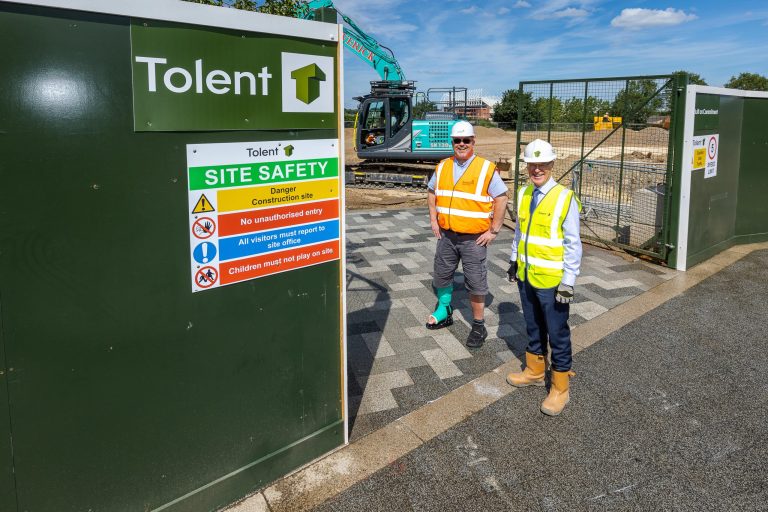
ONE OF the country’s most ambitious residential developments is under construction, with ground broken on Riverside Sunderland’s first housing scheme. Sunderland City Council’s Vaux housing development – the first of 1,000 homes that will eventually stand across the Riverside Sunderland site – is underway, with North East based Tolent building 132 ultra-modern homes. Vaux is the first of four new residential communities being delivered by the council at Riverside Sunderland that will eventually provide city centre housing for up to 2,500 residents. Tolent will build the stunning houses – comprising apartments, townhouses, and maisonettes – using modern methods of construction, renewable energy systems and smart technology to reduce the carbon footprint of the development, producing high quality, energy efficient properties in the heart of the city. Councillor Graeme Miller, leader of Sunderland City Council, said: “It’s brilliant to see work get started on these new homes, which will help us to build a larger residential community in the city centre, in turn, driving more footfall and spend in the area by day and night.  “These homes will be truly trailblazing too – made sustainably and able to support people to reduce their carbon footprint and energy costs. It is a real statement development in lots of ways and one we’re proud to be leading. “And as we move forward with the Housing Innovation and Construction Skills Academy (HICSA) in partnership with Sunderland College and MOBIE (Ministry of Building, Innovation and Education), we’ll begin to create a new housing ecosystem, that will see the city’s next generation of residents building the homes of the future that will deliver on our advanced manufacturing and low carbon aspirations.” HICSA is backed by the Government’s Levelling Up Fund and will create a state of the art learning space at Sheepfolds where students will be trained up in modern methods of construction that will enable them to build many of the future phases of homes on Riverside Sunderland, as well as elsewhere in the city.  All homes at Riverside Sunderland will provide a future living offer that will attract new and existing Sunderland residents to live in the vibrant city centre, with the properties sitting alongside the orchards and allotments of Kingsley Gardens and nearby Riverside Park, which is continuing on its journey towards becoming an accessible, attractive and ecologically diverse parkland. The Vaux neighbourhood will be the site of the Expo Sunderland in 2024, showcasing the homes of the future and the aspirational lifestyle that Sunderland will provide. Included in the scheme will be a cluster of award-winning dwellings, that were selected as the best in the national Homes of 2030 Design Competition – which explored how homes will look and function in the future.  The Homes of 2030 competition, which was launched in March 2020, and managed by the Royal Institute of British Architects (RIBA), to encourage the design of environmentally-friendly homes that support people in leading independent, fulfilling lives as society ages. +Home designed by igloo Regeneration with Useful Projects, Expedition Engineers and Mawson Kerr and Connector Housing designed by Openstudio with Hoare Lea, LDA Design and Gardiner & Theobald were the joint winners of the competition, and it is their designs that will stand proudly on the site, shining a spotlight on future living and showcasing the ambitious plans the council has to make Sunderland a world-class place to live, work and play. Peter Connolly, chief executive of igloo Regeneration, said: “Working closely with the council, we have created a scheme that will be transformational for Sunderland, so getting to this point when we will start to see the first homes come out of the ground is a huge milestone for everyone involved. Not only because of the quality of the housing being delivered but also because of the positive impact that these homes will have on people’s lives.  “We are very proud to have have brought together a team of local professionals who are working together effortlessly to set a real precedent for how new homes should be constructed and delivered across our UK cities in the future.”   The first tranche of homes will be completed by Tolent towards the end of 2023. 111 of the homes will be built to 2025 Future Homes Standard and 21 to PASSIVHAUS standard, delivering high levels of energy efficiency. Hyperfast fibre will connect each home ensuring they’re fit for modern living and homes will also come with bike storage and a ‘city growing space’ to encourage people to grow their own herbs, fruit and vegetables. Paul Webster, chief executive officer of Tolent, said: “As a truly local contractor, we are proud to be involved in this landmark project and continue our legacy in the City of Sunderland. The delivery of these ultra-modern and sustainable homes pushes the boundaries of conventional housing projects and demonstrates the skill and vision of the entire project team. I look forward to seeing the historic site develop over the coming months as the buildings become established which will contribute to the changing skyline of the city centre.” Tolent has committed to delivering significant social value during construction, working with local people and supporting the local supply chain, as well as voluntary and community organisations across Sunderland. In all, over £17m of social value activity – including supporting local jobs for a range of people including apprenticeships and placements, a commitment to spend in the local area through the growth of regional supply chains and a variety of schemes to engage with local community groups – will be delivered during the construction phase of the project. Louise Dodds, Client Relationship Manager at Procurement Hub, said: “Procurement Hub is delighted to be the Procurement partner of choice to deliver a solution for Sunderland City Council on such a forward thinking scheme, and to be part of such a high-profile project which is being delivered by Tolent and will be showcased at the Housing Expo in 2023. We are excited to see the progress on site now that ground has been broken and works are commencing.”

Read More »

Mayor lays first brick at new development on Hayling Island

The Mayor of Havant, Cllr Diana Patrick, was the guest of honour at a new development on Hayling Island earlier this month.  Cllr Patrick was invited to the Barratt Homes Pebble Walk on 4th August to lay a ceremonial brick on the foundations of the first plot being built at the new site, which is bringing 195 new homes to the Island.  Donning her hard had and high vis jacket, the mayor was introduced to the new development by Barratt Homes Finance Director, Glen O’Nion, and was delighted to have the privilege of marking the start of construction in the popular coastal location.  Cllr Patrick said: “It’s great to see this brand-new community coming to Hayling Island. This is a wonderful location, and the development will be delivering a mix of high-quality homes that the region desperately needs.  “I’m delighted to have been given the responsibility of laying the first brick of the very first home being built here, and I’m looking forward to seeing things progress in the coming weeks and months.”  Tammy Bishop, Sales Director for Barratt Homes, Southampton Division, said: “It has been wonderful to welcome the Mayor of Havant to our new community here on Hayling Island. The construction team were especially impressed with her bricklaying skills.  “Pebble Walk will be officially launching this Autumn and with buyers already eager to secure a new home here, we are selling off-plan from our neighbouring Saxon Corner site in Emsworth.”  Pebble Walk will be a collection of two-, three- and four-bedroom homes located just a mile from the beach. There is a great choice of local schools, shops and restaurants close by, and the development is just a short drive to the nearby cities of Portsmouth and Chichester.  To find out more about Pebble Walk, visit www.barratthomes.co.uk. 

Read More »

HS2 completes first tunnel cross passages

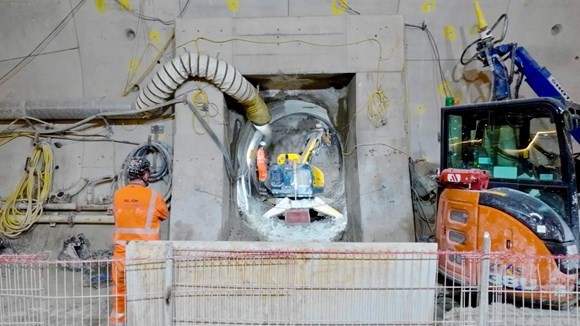
As the tunnelling machines under the Chilterns approach the four-mile mark, HS2 completes the first of thirty-eight underground connections between the northbound and southbound tunnels The construction of HS2’s longest tunnels stretching for 10 miles under the Chilterns has begun a new phase with the start of work on thirty-eight cross passages linking the northbound and southbound tunnels. The Chiltern tunnels will carry high speed trains between London and the North at speeds of up to 200mph (320km/h). The trains will travel through two parallel tunnels linked by short passages for use in emergencies. With the two giant tunnelling machines – named Florence and Cecilia – now almost four miles into their journeys, attention has turned to the first cross passages. An expert team of miners used a remotely controlled excavator to break out of and excavate from one running tunnel to the adjacent tunnel.  As the excavation is progressed the ground is supported using a sprayed concrete lining (SCL). Delivered by HS2’s main works contractor, Align – a joint venture formed of Bouygues Travaux Publics, Sir Robert McAlpine, and VolkerFitzpatrick – each passage is between 15 and 20 metres in length. Once the team had completed the SCL lined tunnel, a water-proof membrane was installed followed by a secondary concrete lining constructed by placing concrete behind formwork installed in the cross passage. Martyn Noak, HS2 Ltd’s Head of Tunnel Engineering, said: “HS2 is making huge progress, with 25,000 jobs supported by the project, construction in full swing between London and Birmingham and now the start of this new phase of tunnelling work under the Chilterns. “While invisible to the travelling public, the cross passages have a key role in providing a safe operational railway.  In an emergency they allow the safe evacuation of passengers into a place of relative safety – the other tunnel.  Constructing cross passages is different than using a tunnelling machine as the ground is excavated in short lengths with each advance being left unsupported for a short period of time until the sprayed concrete lining is installed.  It is a different set of risks and a specific skilled workforce is needed.  “It’s great to see the first one complete and I’d like to congratulate everyone involved in this important milestone, one down 37 to go.” Daniel Altier, Align Project Director said, “The completion of this cross passage is a significant milestone for the team at Align JV, delivering the first mined cross passage on HS2 phase 1. I’m proud of the team, their hard work and collaboration to get us to this point.   “In partnership with our supply chain; KVJV responsible for the ground treatment, specialist contractor Euro Diamond Drilling and waterproofing specialist Rennesco, the sub-surface team at Align have already commenced preparation work on several other cross passages and are making good progress.” Once the passageway is complete, the safety doors can be installed at either end. These are being manufactured by Bolton-based Booth Industries who won the contract to provide more than 300 units for all the tunnels between London and Birmingham. The win allowed Booth Industries to establish a new facility in the town and create up to 50 jobs over the next 10 years. The sliding doors have been subjected to rigorous fire and fatigue testing to take account of the train speeds, associated pressures and frequency of the trains.  Each running tunnel has an emergency walkway that allows passengers to safely evacuate the train and walk through the cross passages into the other tunnel where they can be rescued on a passenger train.  Access for emergency services is from either the portal or one of the five ventilation/emergency access shafts.

Read More »

Beard carries out major refurbishment of private hospital

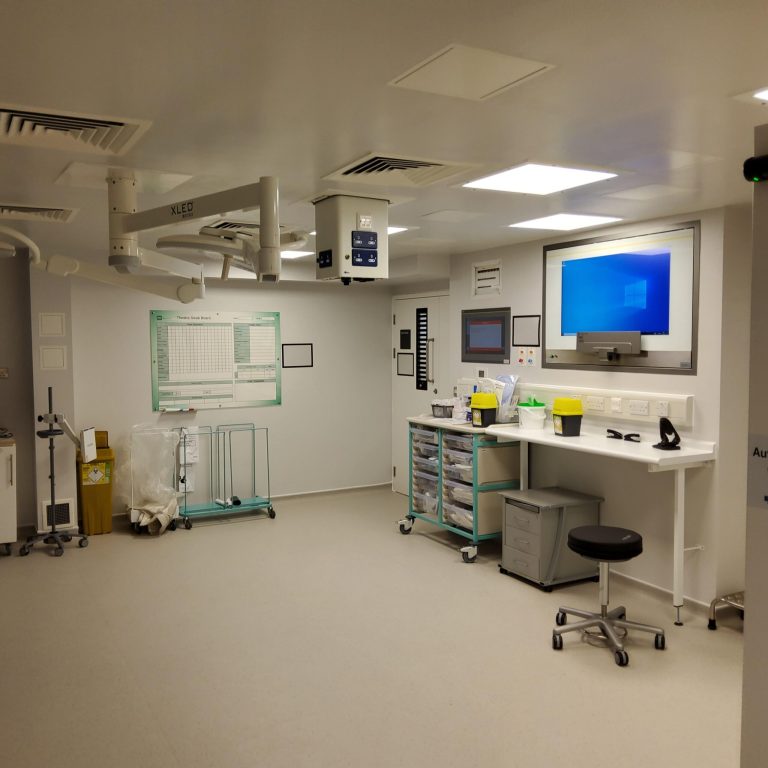
The operating and patient recovery facilities at a private hospital in Bath are undergoing a major refurbishment by Beard Construction. The five-phase project will see three operating theatres at Circle Health Group’s Bath Clinic revamped and a fourth created from an existing endoscopy suite. The associated patient recovery and anaesthetic rooms will also be transformed, alongside new staff changing and toilet areas and the installation in a new roof of the significant new infrastructure needed to power and operate the state-of-the-art equipment in the new facilities. The challenges of the £3.5m refurbishment are calling upon Beard’s extensive experience of working on medical developments. Three of the four operating theatres will always remain in use while the work is undertaken and the entire project will take place alongside the clinical environment of the hospital – with minimum disruption to the on-going, 24/7 patient services. Beard is also pulling together and managing a range of expert sub-contractors providing specialist equipment including medical gas supplies, surgeons panels, hospital building management system panels and nurse-call systems. The work is on track to be completed by July 2023. Three of the theatres sit in the basement of a two-storey building with patient recovery facilities on the floor above. Beard has re-felted, insulated and re-purposed the crinkle-tin roof above this building to hold the new infrastructure needed to run the operating theatres and recovery areas below. This roof area will also house new a standalone air-heating unit as well as parallel unique and isolated power supplies. The installation will include several 300-tonne crane lifts, as the control systems are lowered into place above the patient recovery areas. The project is currently in phase one, with phase zero seeing the roof conversion and installation of system infrastructure and the stand-alone endoscopy unit converted to a fully-fledged operating theatre. The remaining four phases will now work through the conversion of the existing three operating theatres. Beard Swindon director Jamie Harwood said: “Beard’s commitment to minimising the impact of our work on the local environment has already been taken to new levels on this project. “To carry out this extensive refurbishment alongside or above a working, clinical environment is exceptionally challenging. But we’re working with the hospital staff and our sub-contractors to make it happen. “The final product will transform the operating environment and facilities for patients and staff at Bath Clinic.” A spokesperson for Circle Health Group said: “The refurbishment work taking place at Bath Clinic is making good on our promise to offer our patients the very best facilities and services. As the hospital enters its 40th year treating and serving the community, this investment project is a commitment to continuing to deliver outstanding care to patients in Bath and further afield for another 40 years.”

Read More »