Building Design and Construction Magazine

Should You Build Your Own Greenhouse?

There are many individuals who decide to build their own greenhouse – but this can often be quite a challenging endeavour, especially for those who don’t have much experience in this type of project. From the materials, to leveraging; there are typically several things that you’ll need to consider before

Read More »

Johnson Controls calls for stronger fire safety compliance across high rise residential development during Home Fire Sprinkler Week

Johnson Controls, the global leader for smart, healthy and sustainable buildings, is calling for organisations to take urgent action for safety compliance across high rise residential development during Home Fire Sprinkler Week. Now more than ever, the need for fire suppression and general safety in high-rise residential buildings is indisputable.

Read More »

LEGAL & GENERAL ANNOUNCE £4BN INVESTMENT COMMITMENT, WORKING IN PARTNERSHIP WITH WEST MIDLANDS COMBINED AUTHORITY  

·         L&G makes seven-year multi-billion-pound landmark investment commitment to help the West Midlands Level Up  ·         Includes support for provision of housing of all tenures, including social and modular; commercial property and urban regeneration across multiple sites  ·         First project for the partnership will deliver new affordable homes in the

Read More »

CITB to invest over £233m in British construction

With a strong focus on three core challenges for construction, CITB published its Business Plan today (18 May), announcing it will be investing over £233m across Britain to support construction throughout 2022/23. CITB’s investment plan responds to the estimated demand for an additional 50,000 workers every year and is primarily

Read More »
Latest Issue
Issue 335 : Dec 2025

Building Design and Construction Magazine

COLE WATERHOUSE JV ACQUIRES SITE FOR 1000+ APARTMENTS IN EAST LEEDS CITY CENTRE

Cole Waterhouse and Tonia Investments have successfully purchased a 3.8 acre brownfield site in Leeds city centre having recently secured planning for 1012 apartments, over five separate blocks. Currently referred to as ‘Leeds City Village’, the triangular site sits opposite Leeds’ cultural district, Quarry Hill.  Bound by Marsh Lane to the west and Shannon Street to the north. It was formerly home to the Marsh Lane Goods Yard.  The joint venture sees Cole Waterhouse and Tonia Investments working in partnership for the first time. Speaking about plans for the development, Damian Flood, CEO at Cole Waterhouse, commented: “We seek to build developments where placemaking is central to the design to help deliver places that are desirable destinations as well as great places to live.” Commenting on the acquisition, JV partner Tonia Investment Principal Charlie Qian said: “Tonia is excited to work with Cole Waterhouse. We hope the delivery of this impressive scheme will add to the continued expansion of the City Eastwards. It will provide an acre of new public realm that we hope will complement the success of the neighbouring cultural quarter.” The JV partnership now aim to progress the scheme with Leeds City Council. They plan to make a series of design changes to enhance the residential offering and public realm space. The revisions to the submitted planning application will ensure that the development meets occupiers’ expectations now and in the future; proposed changes include adjusting the balance of studio apartments for larger 1-bed apartments as well as providing a sharper focus on the communal areas and the overall scheme design. Enhancements to the public realm will seek to address functional improvements that enable better use of outdoor spaces for entertainment, exercise and leisure. Damian Flood said: “Understanding the area’s culture and the community’s future ambitions is crucial and we will be appointing a local cultural lead to help us shape the scheme to ensure it meets the aspirations of local residents. This community-first approach has been hugely successful for us at other schemes, helping to really connect and engage with the local market from the earliest stage of the development. “We’re really excited to be working in Leeds at a time when it is undergoing a significant period of transformation and we will be appointing a primarily Yorkshire-based team to deliver the project over the next 6 years. We will be submitting the revised planning application by the end of 2022 with the intention to start on site as soon as planning is granted.” Cole Waterhouse has a strong track record in the residential and BTR sector and has a current pipeline to deliver over 2000 residential units across its sites in Leeds, Birmingham and Manchester. Building Design and Construction Magazine | The Home of Construction & Property News

Read More »

Network Space strengthens industrial development pipeline with acquisition of former Manchester College site

Network Space Developments has acquired a 2.8-acre site on Welcomb Street, Openshaw, from the LTE Group for an undisclosed sum. The former Manchester College site, accessed from the Ashton Old Road (A635), currently comprises of eight buildings of varying ages and sizes which were previously used as classrooms and workshops by the Manchester School of Building. Initial development plans are for the delivery of up to 70,000 sq ft of multi-let industrial accommodation with work due to start on site in the first half of 2023, subject to securing planning permission later this year. Joe Burnett, Development Director for Network Space Development commented: “We are delighted to have acquired this site which provides the opportunity to build on the success of our adjacent City Works scheme. “The site is very well located within Openshaw and in a sought-after area of Greater Manchester. It is ideal for both industrial and last-mile logistics uses with its excellent accessibility to a skilled local workforce as well as close proximity to Manchester City Centre. He added: “This latest acquisition aligns perfectly with our strategy for growing our industrial and logistics portfolio by targeting sites located in key urban areas with significant future growth potential.”  LTE Group were represented by Cushman & Wakefield. Building Design and Construction Magazine | The Home of Construction & Property News

Read More »

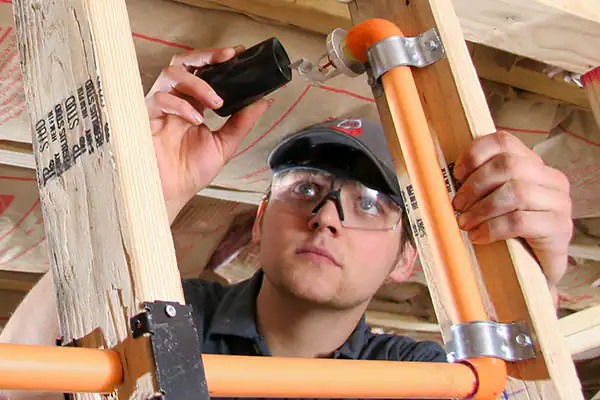
Should You Build Your Own Greenhouse?

There are many individuals who decide to build their own greenhouse – but this can often be quite a challenging endeavour, especially for those who don’t have much experience in this type of project. From the materials, to leveraging; there are typically several things that you’ll need to consider before putting one up in your garden. For those who want an easier experience, buying a kit will often be the best solution. It’s simple and often cost-effective too, which only helps to make it an even better choice. Even so, you may still be unsure of what to do. Let’s take a closer look at some of the important things to consider when choosing between a DIY project and purchasing a pre-made greenhouse kit.  Want to buy? Make sure you buy from a reputable manufacturer First things first, if you do plan on purchasing a greenhouse, you should make sure that you’re getting a product that’s good quality and meets your requirements. If you decide to purchase a greenhouse from Hall, you’re likely to find that there are a variety of good kits to choose from, with plenty of variety too. This is perfect for those who already have an idea of what style and size they’re in need of – but even if you’re unsure, you could always take a look at their range and decide which one you like the most. What are the pros and cons of building your own? There are typically a few things that DIY enthusiasts will find beneficial about building their own greenhouse – but also a few factors that may be less than ideal. The costs For example, you could save quite a bit of money when using recycled materials, but this doesn’t mean that the project will be more cost-effective overall. You may find that modifying an existing structure into a leveraged greenhouse may work out to be a little more expensive despite half of the work already being done, and getting building permits could come at a price. This could end up balancing out the cost a little more. Options for customisation One positive aspect of customisation is that you can choose what materials you use. While it may not always be easy to find everything you need in one trip, it could be a bonus to be able to pick and choose all the individual aspects as you go along. With more options to customise your greenhouse, you can also custom-fit it to your garden’s unique needs.  Time and effort Of course, you will need to be considerate of all the work that will go into installing a greenhouse. From sourcing the materials, to preparing your garden; there’s often a lot that you’ll need to do yourself, even when hiring somebody to undertake the build. What are the pros and cons of buying a kit? In general, buying a good quality greenhouse kit will solve a lot of the issues that many people have when going the do-it-yourself route. You may want to keep the following points in mind: Taking the easy option If you do decide to build your own greenhouse, it may be far better to opt for a kit, as you’ll generally find that the building process will be so much simpler and will take far less time to complete. This generally comes at the cost of being less customisable, which means that it may not be ideal for those who have very specific and unusual requirements. However, with a variety of kits in many shapes, sizes and styles, it usually won’t be too hard to find something that works for you. Quality guaranteed While you won’t necessarily have as many options when it comes to materials, it is worth noting that you won’t have to worry about them either. From a good manufacturer, you can generally enjoy quality throughout, with everything being cut to the right measurements. You may even find some parts pre-assembled and instructions to ensure that the building process goes as smoothly as possible. Save money and avoid risks All in all, considering all the different costs of a DIY greenhouse, you’ll usually be able to save money with a kit. While those on a tight budget could cut corners building their own, it isn’t usually going to be worth the risk. Alongside all this, you should also get a warranty when you purchase a good greenhouse. Typically, a manufactured greenhouse will come with at least some form of protection if something should go wrong (often relating to factory defects or similar issues), which at least gives you the opportunity to get a refund or a new one if anything goes awry. When constructing your own, you won’t get this luxury and will have to pay out for any damages yourself. Which one is best? With all the facts laid out, we can see that there are both positive and negative aspects to both. The best thing you can do is consider which one will be the most beneficial to you. If you’re looking to minimise risks, reduce the amount of work needed and potentially save some cash in the process, buying a kit might be the right way to go. Unless you really want to get involved with a project or need to tailor your greenhouse to your garden, it’ll generally be best to go for a kit. While DIY greenhouses do have their benefits, most will find that it’s simply not worth it in the long run. Building Design and Construction Magazine | The Home of Construction & Property News

Read More »

Johnson Controls calls for stronger fire safety compliance across high rise residential development during Home Fire Sprinkler Week

Johnson Controls, the global leader for smart, healthy and sustainable buildings, is calling for organisations to take urgent action for safety compliance across high rise residential development during Home Fire Sprinkler Week. Now more than ever, the need for fire suppression and general safety in high-rise residential buildings is indisputable. We need look no further than the cladding crisis to see the urgent need for legislation, building regulations, and standards to be upheld and revised where required. Keeping people and facilities safe from fire is a requirement for every building, facility, and premise, including high rise buildings. As with any built environment, there isn’t a one-size-fits-all solution. Developers need to find the right fire suppression solution to match the risk of a particular building, and the right partner to support this process. If these suppression solutions, such as sprinklers, are not properly installed and maintained, then they aren’t reliable to spring into action when an emergency strikes to save stock, equipment, and most importantly, lives. “We are seeing a cultural and regulatory shift, but there is still work to be done in not only setting standards, but also striving to exceed them. Ultimately, more needs to be done to raise awareness of the range of fire suppression solutions available and what they can do. The right solutions will not only add value to buildings, but also save lives.” said Adrian Kay, UK Head of Technical Compliance & Quality, Fire Suppression at Johnson Controls Ensuring fire safety compliance and suppression in even the most complex of high-rise residential developments may seem like a daunting task, but a safe building is one that brings multiple levels of safety and security together, at all times, in all places. Johnson Controls has put together the following five tips for good fire safety practice, and effective fire suppression: The Need to Use Experienced Engineers: Using experienced engineers and contractors is paramount, as a poor supplier choice leads to inexperienced sub-contractors carrying out work they cannot deliver safely, resulting in delays and potentially serious compliance risk. The Correct Contractor: When choosing a contractor, it is important to choose one that services to recognised standards and carries one of the industry-approved third-party certifications within its scope: LPS1048, FIRAS or IFC. Adhering to Regulations: Sprinklers in new high rise residential buildings over 11m is now a requirement, and every commercial or industrial property must have an individual who is responsible for fire safety, and it is their responsibility to make their premises compliant. Effective Installation: Many contractors are not used to high rise buildings and the complexity required in sprinkler installation, and this kind of expert knowledge is where third-party accredited contractors are essential. Sprinkler Maintenance: Best practice for sprinkler maintenance starts with weekly or monthly checks in-house, with experts employed on a quarterly, six-monthly or annual basis to ensure that systems are cared for and in good Building Design and Construction Magazine | The Home of Construction & Property News

Read More »

First firms selected to join new £600m offsite DPS for social housing sector

Building Better, an alliance of 29 housing associations and councils, supported by the National Housing Federation, has appointed an initial six manufacturers to its new dynamic purchasing system (DPS) for MMC category 2 construction systems. Future Built, LoCal Homes, Project Etopia, Roe Timberframe, Sigmat and Starship Homes are the first firms selected by Procurement for Housing and Building Better to provide 2D panelised systems, assembled on-site. The DPS is worth £600m over four years and will run in parallel with Building Better’s first MMC framework which launched in July 2021 and covers category 1 volumetric 3D systems. The alliance aims to give members access to a range of different MMC solutions so they can find the right one for their site. Building Better took the decision to create a DPS, not a fixed framework, so panelised manufacturers can join at any point during the term of the DPS. The category 2 segment of the offsite market is evolving rapidly with new products and manufacturers emerging all the time. By setting up a DPS, social housing providers can access the latest solutions and suppliers as they come to market. Over 215,000 homes are managed by the 29 housing associations and local authorities that make up Building Better. Since the launch of its volumetric framework in 2021, alliance members have put nearly 40 schemes through it, getting costs on over 900 MMC homes. With the launch of its DPS, Building Better will help the social housing sector to produce around 5,000 MMC properties by 2026. Manufacturers wanting to join Building Better’s DPS must first be certified by the Buildoffsite Property Assurance Scheme (BOPAS) or assessed by building warranty provider the National House Building Council (NHBC) and their products must aim to meet the Future Homes Standard. Once they have passed an additional selection procedure, looking at their commercial, social and sustainability credentials, manufacturers can bid for opportunities via a tender call-off. This process has been streamlined for social housing providers too, with members receiving a tender template pack and hands-on support from Procurement for Housing. Trina Chakravarti, Project Director of Building Better said: “The emerging nature of this part of the MMC marketplace means that social housing organisations have, to date, been wary of category 2. Some told us they were anxious about committing to a panelised manufacturer; not knowing if the company or even this form of MMC would be around in four years. Because of this, we knew a different procurement approach was needed; one that would still provide high standards and ease of access like our category 1 framework, but a solution that didn’t ‘clip the wings’ of manufacturers operating in such a fluid environment.” John Bellamy, Category Manager for Construction & Sustainability at Procurement for Housing (PfH) said: “A major benefit of setting up a DPS is the learning. As an alliance, we’ll be able to grow our understanding of what housing organisations actually require with category 2 and the technical solutions they gravitate to. Creating a framework now would have meant guessing the answers. But a DPS allows us to gather data and feedback on products and manufacturers, educating ourselves and helping us to normalise offsite and use it at scale across the sector.” For further information about using Building Better’s MMC Category 2 DPS, click here For manufacturers wanting to join Building Better’s MMC Category 2 DPS, click here Building Design and Construction Magazine | The Home of Construction & Property News

Read More »

UKREiiF: Shadow Chancellor sets out Labour’s mission to grow economy and boost British construction businesses

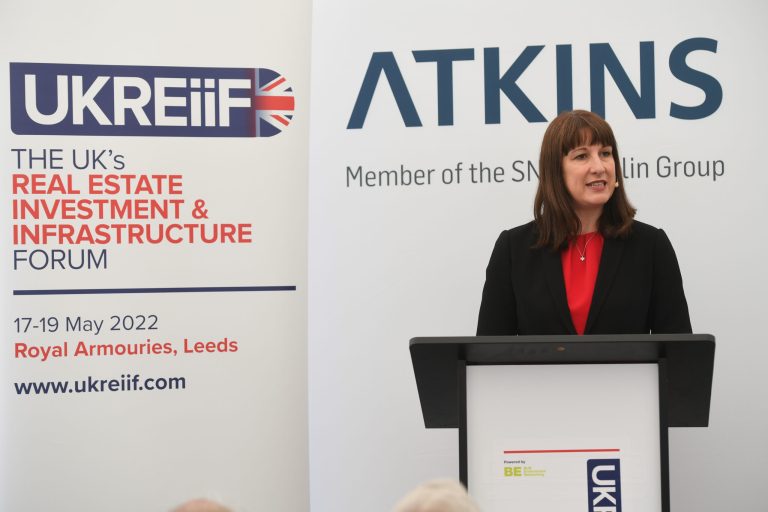
As she gave the UKREiiF keynote this Thursday (19 May), Shadow Chancellor Rachel Reeves said a Labour government would get the economy firing on all cylinders – and backed the British construction industry to help forge that path towards a stronger economy. Speaking at the Royal Armouries Museum as part of the three day conference hosted by the UK’s Real Estate Investment and Infrastructure Forum, she told attendees ranging from investors, developers and occupiers of real estate, how Labour’s plan to grow the economy and bring jobs and prosperity to all parts of the country. And she said the party were committed to support businesses and the industry with the huge challenges facing them from rising inflation and supply chain problems. She said that a partnership between government and business lies at the heart of Labour’s plan for growing the economy, and laid out the party’s key plans to: Buy, make and sell more in Britain Introduce a Climate Investment Pledge to leverage in massive private investment into the economy, boost businesses and create jobs across all parts of the country Create an Industrial Strategy that will help grow the economy and help British industries lead the pack Scrap business rates and replace them with a fairer and more modern form of business property taxation Introduced on the levelling up stage by director of Built Environment Networking Ltd, Phil Laycock, Reeves said that Labour will always be proudly pro-worker and proudly pro-business party. And she noted that “as we rebuild after the pandemic, transition to a low-carbon economy, and meet the challenges and opportunities of the future, businesses large and small will be an essential part of that collective national effort.” Speaking about levelling up, she said “As every one of you will know, a real plan for growth needs to be a plan for growth felt in every part of the country. In too many parts of our country, confidence in the future does not yet match pride in the past. “If we are going to fix that, it will take much more than a cosmetic levelling-up, it will take a real plan for widely-shared prosperity. “For Labour, this means: “First, bold investment to allow us to seize the opportunities of climate transition. “Second, getting serious about industrial strategy – and that is inseparable from a serious regional strategy. “And third, a government providing responsible and open leadership, to create an environment in which business leaders can have confidence and certainty.” Speaking about Labour’s plans for an industrial strategy, Reeves said: “We need a serious industrial strategy fit for the 21st century. “Where the Conservatives scrapped their own Industrial Strategy Council, Labour will create an industrial strategy built on an ethos of cooperation across the public and private sectors, employers and workers. “It will bring local, regional and national leaders together with businesses, trade unions and universities to unlock the brilliance of our leading businesses and entrepreneurs in every part of Britain.” On what Labour would do right now to help businesses facing soaring costs, Reeves said: “We would support energy intensive firms with £600 million of emergency funding to get them through this crisis. “We would cut Business Rates in the short term, providing much-needed relief while overhauling the system in the longer term to make it fit for the 21st Century. “And we have consistently opposed the National Insurance rise. It is a tax on working people and business at exactly the wrong time. “This is a time when working people and the great majority of businesses need a government that is on their side and a Labour government would always strive to be that.” On Labour’s Climate Investment Pledge to supercharge industry, Reeves’ said: “Over the next five years, we are forecast to have a near £800bn investment gap compared to other OECD countries. “I agree with the director of the CBI, Tony Danker, who says this calls for ‘catalytic public investment’. “That is what Labour’s Climate Investment Pledge – £28bn invested each year for the rest of this decade – is about: unlocking the private investment we need to get our economy firing on all cylinders. “Labour will invest in the green industries of the future, working closely with industry – including our construction industry – to build Giga-factories to make batteries for electric vehicles, a thriving hydrogen industry, offshore wind with turbines made in Britain, and flood defences, working closely with, and supporting industry – including our construction industry. “There is a global race on for the jobs of the future, and it calls for active government and business working in partnership.” On Labour providing certainty for British businesses, Reeves said: “It is vital that government provides certainty and transparency in policy decisions so you can know it is safe to invest and plan ahead, without fear of erratic decision-making or policy decided behind closed doors which then falls apart upon contact with the real world. “A Labour government will take a long term view, working with business, in a spirit of cooperation and transparency, to meet the challenges and seize the opportunities of the future.” Building Design and Construction Magazine | The Home of Construction & Property News

Read More »

LEGAL & GENERAL ANNOUNCE £4BN INVESTMENT COMMITMENT, WORKING IN PARTNERSHIP WITH WEST MIDLANDS COMBINED AUTHORITY  

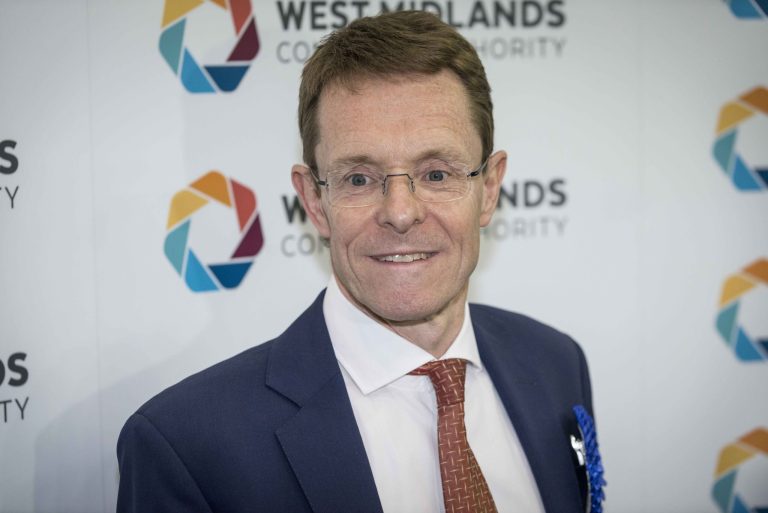
·         L&G makes seven-year multi-billion-pound landmark investment commitment to help the West Midlands Level Up  ·         Includes support for provision of housing of all tenures, including social and modular; commercial property and urban regeneration across multiple sites  ·         First project for the partnership will deliver new affordable homes in the Black Country  ·         Strong innovation focus to drive economic growth across the region  West Midlands Combined Authority (WMCA) Mayor, Andy Street, and Legal & General (L&G) CEO, Sir Nigel Wilson, have today signed a partnership agreement with L&G committing to invest £4bn in regeneration, housing and levelling up across the West Midlands.    The landmark agreement, L&G’s first with a combined authority, sets out a commitment to a seven-year programme of L&G investment, building on the region’s 2022 Investment Prospectus.   The programme is designed to create vibrant, dynamic communities in the region which, by providing attractive environments for people to work, live and play, will further enhance the West Midlands as a driver of UK economic growth. This builds on similar partnership agreements the WMCA has signed since 2018 with organisations such as Lovell and St Modwen.    The clear statement between both organisations combines the respective strengths of the WMCA and L&G. The Combined Authority has a clear and ambitious vision for the region with a strong commitment to Levelling Up, net zero, brownfield regeneration, affordable housing, inclusive growth and devolved powers to deliver on issues from land assembly to infrastructure, both physical and digital.     L&G, which manages £1.4 trillion as the UK’s largest investor, has financed over £30bn of regeneration in UK towns and cities outside London, and wants to repeat the scale of this investment.  It has already invested over £2bn in the WMCA’s region, including the £210m Birmingham Health Innovation Campus and multiple housing projects.     The 2022 West Midlands Investment Prospectus launched in March provides a range of possible development opportunities spread across the region which L&G and other investors can invest in. These prioritise creating thriving and more prosperous places and communities, including “corridors” and city and town centre development.      Alongside investment into new commercial developments, the agreement envisages a major contribution by L&G into climate-friendly projects, local communities and social and affordable housing, including build-to-sell and build-to-rent – providing high-quality homes across the range of tenures.   The agreement will also support the region’s target to deliver 215,000 new homes by 2031, as set out in its ground-breaking Housing Deal with Government in 2018, and the WMCA’s drive for wider inclusive growth.    Since the Housing Deal was signed, the West Midlands has secured upwards of £600m from Whitehall to drive regeneration with new housing and commercial schemes focussed predominantly on derelict or vacant urban sites, often referred to as brownfield land.   Using a nationally leading ‘brownfield first’ approach, WMCA investments have unlocked scores of disused industrial sites for new homes and jobs with developers required to make at least 20% of those new properties affordable under the WMCA’s own locally applied definition, linked to real world local wages rather than property prices.   The first scheme for the partnership will be The Junction, a brownfield site in Oldbury which has lain empty for over 20 years. The site will be brought back into economic use through the investment of L&G. The development will deliver 234 energy efficient new homes of which nearly 50% will be for affordable housing under the WMCA’s local definition.   Andy Street, Mayor of the West Midlands and chair of the WMCA, said: “The unveiling of this £4 billion partnership agreement with L&G is a prime example of how the West Midlands is getting on and delivering Levelling Up. This major investment will help regenerate long neglected areas across the West Midlands, provide affordable homes in the communities where the need is most felt, and supercharge economic growth in the years ahead.      “The scale of the ambition L&G is showing is evident in both the huge sums involved and the breadth of projects envisioned. It is a tremendous vote of confidence in the future of our region from one of the world’s biggest investors, and I am delighted L&G came to the table and agreed such a monumental commitment with us.   “I cannot wait to see this investment rolled out, projects underway, and the lives of our residents changed for the better.”     Sir Nigel Wilson, CEO of L&G, added: “We have been investing across the UK in partnership with cities and universities for a decade.  It’s part of our ‘Inclusive Capitalism’ approach and has delivered terrific economic and social results. With Andy and his colleagues as ambitious partners at WMCA, we can take this to a new level.    “The West Midlands’ economic plan, resources and skills make it an attractive destination for trade and investment from across the world; our role in this is to put UK funds including pension savings to work here so UK savers benefit from UK prosperity.”   Cllr Mike Bird, WMCA portfolio holder for Housing and Land and leader of Walsall Council, said: “There’s no doubt that Covid has been hard on our regional economy but this partnership brings together public and private sector investment and skills on an unprecedented scale in the West Midlands.   “It also shows how our determination to press on and continue making key investments throughout the pandemic, bringing solid delivery on the ground, has been critical in driving private sector confidence and trust.    “The level of investment that L&G has set out will be an incredible shot in the arm for the West Midlands as we continue our recovery, helping to bring sustainable economic growth that benefits all our communities and supports our ambition to be a net zero region by 2041.”   L&G’s Director of Levelling Up, John Godfrey, adds: “Towns, cities and regions across the UK can do much, much better – this is the essence of the levelling up agenda. This framework agreement with the West Midlands enables political will to combine with financial resource so policy intentions become deliverable realities. We fully expect


Read More »

CITB to invest over £233m in British construction

With a strong focus on three core challenges for construction, CITB published its Business Plan today (18 May), announcing it will be investing over £233m across Britain to support construction throughout 2022/23. CITB’s investment plan responds to the estimated demand for an additional 50,000 workers every year and is primarily focused on securing construction’s talent pipeline. This year, the organisation will run and support a whole host of initiatives aimed not only at inspiring people outside of the industry to choose construction as their career, but also upskilling and retaining existing talent. The three challenges set out by CITB are: Responding to the skills demands Developing the capacity and capability of construction training provision Addressing future skills needs. Responding to the skills demands Following the findings of the recent Rethinking Recruitment report, CITB’s plan details how it will invest in supporting apprenticeships and building bridges between further education and work to get more learners into construction. Initiatives such as SkillBuild, work experience, taster events, and the 350-strong STEM Ambassador network, aim to inspire more young people than ever to consider construction. In addition, CITB will collaborate with employers on the Go Construct website and promote the wide range of careers construction has to offer. Coinciding with efforts to get more people to think again about a construction career, CITB will create even more accessible routes into construction, focusing on apprenticeships, alongside on-site experiences, and future rollout of occupational traineeships. A total of £60.3m in direct grants will be available to employers who take on apprentices, supporting the industry to address its current and future need for a skilled workforce.  Developing the capacity and capability of construction training provision As the industry recovers from the pandemic and demand for construction projects increases, CITB will make it easier to access the right training at a time and place that is right for them. CITB will: Invest £25.9m in direct training delivery to enable the continuation of core skills training and training provision in niche and at-risk skills through CITB’s National Construction Colleges Support more than 300,000 Health Safety & Environment tests over the next year, ensuring there is good availability of tests in as many locations as possible, bringing assurance to employers that their workforce can keep themselves and those around them safe Offer enhanced grant support for priority skills such as Drylining apprentices and rainscreen cladding achievements. Addressing future skills needs Looking to the future, CITB’s plan sets out how it will address long-term challenges. The construction landscape is changing and issues such as net zero, digitisation and modern methods of construction are becoming increasingly important. CITB is investing £2.1m into research to better understand construction’s changing environment. This research will help focus CITB’s work on interventions that have the greatest impact, helping shape new training and standards development. Tim Balcon, CITB Chief Executive, said: “I am proud to be sharing my first business plan as Chief Executive at CITB, which sets out how CITB will approach its role in supporting industry going forwards. “While progress has been made, the construction industry has faced significant challenges in recent years, including inflation, rising fuel prices, the pandemic and Brexit, to name a few. In many ways the industry is still experiencing and feeling the impact of these events, which we know has shifted priorities greatly and pushed the demand for skills to the forefront. It’s essential now more than ever that efforts are focused on helping to alleviate those pressures and address the key needs of industry.” Read the full plan here. There are two case studies used within the Business Plan: – Career changer, Sabrina Robertson had a background in admin and degree in Education and Community Development. Having expressed an interest in construction opportunities at the Barking and Dagenham Construction Skills Fund (CSF) Hub, they were able to support Sabrina in securing the role of Community Liaison Officer for McLaren. – Daniel Jeffries Carpentry accessed CITB funding to help with taking on an apprentice and support the upskilling of the company’s existing employees. Daniel was supported through the application process by CITB Engagement Advisor, Darren Lawrence. For further enquiries relating to the Business Plan, please contact: press.office@citb.co.uk Building Design and Construction Magazine | The Home of Construction & Property News

Read More »

More than 1,000 buildings unsafe half a decade after Grenfell: what does this mean for vulnerable residents?

As London’s residents continue to face fire safety risks, industry experts are looking at how the Internet of Things (IoT) can transform fire safety for those most at risk in our communities  The chief of London Fire Brigade (LFB) has warned that more than 1,000 residential buildings in the capital still have serious fire safety failings almost five years after Grenfell.   The LFB Commissioner, Andy Roe, welcomed new Government legislation based on recommendations from the Grenfell Tower Inquiry, but said more needs to be done to tackle dangerous structures and ensure residents know how to escape in the event of a fire.   The phase one report of the Grenfell inquiry recommended that the owner and manager of every residential high‑rise should be legally required to prepare personal emergency evacuation plans for all residents whose ability to self‑evacuate may be compromised. Additionally, Dame Judith Hackitt’s independent Building a Safer Future report recognised the need for provisions for disabled and potentially vulnerable people.  Cognitive and physical impairments are factors that can influence the ability to evacuate a property and, in the UK, over 14 million people have a disability. As COVID‑19 continues to cause a surgery backlog, six million people are on the waiting list for NHS hospital care, including more than 23,000 who have waited more than two years, leaving potentially millions more people vulnerable to fire safety risks.   “Fire safety for disabled residents is not a minority issue. Disabilities affect more than one in five people in the UK, and half of those who died in the Grenfell Tower Fire were disabled or children,” says Fazilet Hadi, Head of Policy at Disability Rights UK.  In multiple‑occupancy houses, terraced homes, and high‑rise buildings, a major fire does not just put a single household in danger but potentially hundreds of lives. Sakina Afrasehabi, who had severe arthritis and walked with a frame, died on the 18th floor in the Grenfell fire at the age of 65. She was unable to negotiate steps but was housed in the tower because it had a lift, which stopped working on the night of the fire. Afrasehabi’s family believe she would still be alive if the council landlord had made a personal‑emergency evacuation plan (PEEP).  “It is not necessarily the disability that makes us vulnerable. Being ignored and left and made to feel invisible is what makes us vulnerable,” adds Fazilet Hadi.  Whilst evacuation plans are critical in the event of tenants needing to leave the building, there are also new, intelligent ways to help cut fire risks for the estimated 43% of social housing residents who live with a long‑term disability.  Using technology to prevent fire risks managing fire safety risks for vulnerable social housing residents  Cutting‑edge technology that remotely monitors the home environment 24/7 has the potential to prevent life‑threatening events. FireAngel Connected is a purpose-built cloud solution for fire detection and prevention. Built on 15 years of the Internet of Things (IoT) expertise, FireAngel’s unique Predict™ technology, patented in application, can highlight trends and patterns of high-risk behaviour to pinpoint properties at risk, enabling social housing providers to arrange successful interventions to help prevent a fire.    “The technology developed by FireAngel can give us a much better understanding of risk in the community, helping us to identify vulnerable tenants and adapt our response accordingly to foster their needs,” comments Jason Avery, Assistant Director for Prevention and Protection, Hampshire and Isle of Wight Fire and Rescue Services.  Predict™ analyses real-time data to identify patterns of potential fire risk within properties – giving an instant risk level without a manual data trawl. This enables prioritised interventions and increased fire prevention measures to residents who need it most. The combination of IoT and AI technologies also provides an overview of buildings and their changing fire risks, allowing landlords to carry out maintenance checks or repairs at the point of need, ensuring costly problems are prevented and tenant safety is protected.    Ian Moore, CEO of the Fire Industry Association, says: “The IoT promises to transform the fire industry. When making informed decisions, data is everything. The more data we have, the more robust the decision can be. I will always support industry developments that help make people safer from fire risks”.  Building Design and Construction Magazine | The Home of Construction & Property News

Read More »

UKREiiF: Belfast region’s cleantech knowhow primes Wrightbus for global growth

The Belfast region’s world-class cleantech sector and strong talent pool will allow Wrightbus to flourish, the company’s chief executive officer has said. Speaking at UK Real Estate Investment & Infrastructure Forum (UKREiiF), Buta Atwal also said Northern Ireland’s unique position in the wake of Brexit makes his and other companies in the region ideally positioned to trade across both the UK and EU. Combined with a flourishing cleantech sector, which has the support of partner companies, local government and academia, he said the Belfast region has created an environment which will nurture innovation in the space and help companies like his become world leading. Mr Atwal said: “It is no coincidence that Wrightbus is regarded as a leader in hydrogen bus technology. Since first entering passenger service in 2020, our StreetDeck Hydroliners have clocked up a million miles, preventing 1,700 tonnes of CO2 from entering the atmosphere on those bus journeys. “We have been able to lead the field in hydrogen bus technology in large part as a result of our location in Ballymena. It has afforded us access to a world-class cleantech skills base, one which will be further enhanced by the Hydrogen Training Academy planned under the Belfast Region City Deal, and the i4C Innovation & Cleantech Centre. “And, as our orders grow around the world, our unique position here in Northern Ireland, with a foot in both the UK and EU markets, offers us the chance grow exponentially.” Mr Atwal was speaking during the Belfast Region – A £1bn Decade of Opportunity session at the inaugural built environment conference held in Leeds. The session was organised by Renewed Ambition, a partnership focused on positioning Belfast and the wider city region to take advantage of the opportunity to drive residential and commercial real estate investment and support inclusive economic recovery. Also speaking at the event was founder of HemingwayDesign, Wayne Hemingway, who said that the Belfast region has a wealth of untapped regeneration and tourism potential. He underscored the importance of regeneration in creating a region where people want to live, work in and visit, highlighting the Bangor Waterfront project and his vision to make it to Belfast what Brighton is to London. Both Mr Atwal and Mr Hemingway also took part in two respective panel discussions, along with senior leaders from councils within the Belfast region, focusing on the significant potential for the cleantech and innovation sector and for tourism and regeneration. The session also focused on the two major initiatives which will rubber stamp the Belfast region’s potential; the Belfast Agenda with its target of attracting 66,000 people to live and work in the city and 31,600 homes by 2035 – and the £1 billion Belfast Region City Deal, which will deliver innovation and jobs for a new economic era. John Walsh, Chief Executive of Belfast City Council, said: “We have come to UKREiiF with a very clear message: the Belfast region is primed for investment and offers a unique set of opportunities which are unmatched the world over. Through the £1 billion Belfast Region City Deal and the Belfast Agenda, we have set out the pathways for inclusive growth across all areas of our economy and are intent on creating the conditions for businesses to flourish. “As a standalone opportunity, the Belfast region’s offer is impressive. Combined with the support of initiatives, such as the Belfast Region City Deal and other funding opportunities, it offers a compelling investment proposition which has and will draw international attention.” UKREiiF was attended by senior leaders from global investment funds and property companies, UK public sector bodies, government and the third sector. The event focuses on levelling up across the UK and in particular cultivating the development of greener, smarter, healthier places while driving inward investment; how the built environment can play its part in creating net zero UK; and facilitating shared learning across the real estate industry on how to embed social value within the private sector. The Renewed Ambition partnership – including local government, occupiers, developers, the supply chain and more – will deliver a collaborative programme of activity to help ensure strong recovery and growth in Belfast and across the wider region by highlighting its compelling investment proposition globally. It is made up of the councils of Belfast, Antrim and Newtownabbey, Ards and North Down, Mid and East Antrim, Newry, Mourne and Down and Lisburn and Castlereagh City. It aims to shape how the future of the city is reimagined and will act together to deliver that ambition in the months and years ahead. Building Design and Construction Magazine | The Home of Construction & Property News

Read More »