January 28, 2026
Ecofill Appoints Mark Watford as Chief Financial Officer

Ecofill Appoints Mark Watford as Chief Financial Officer

Ecofill Group Limited has appointed Mark Watford as Chief Financial Officer, strengthening its leadership team as the business continues to scale its operations and accelerate growth in the UK and beyond. Mark brings over 25 years’ experience in senior financial, commercial, and operational leadership roles across construction, infrastructure, and technology-led

Read More »
What Institutions Should Plan Before Going Digital

What Institutions Should Plan Before Going Digital

Moving to digital assessments offers clear benefits, efficiency, scalability, and data-rich insights, but it also requires deliberate planning. For educational institutions, the transition goes beyond technology. It involves rethinking infrastructure, academic alignment, and stakeholder readiness. Below are the key areas institutions must plan for before going digital. Assess the Operational

Read More »
Latest Issue
Issue 337 : Feb 2026

January 28, 2026

Ranger Fire and Security announces £150m funding partnership with Apera to accelerate expansion in 2026

Ranger Fire and Security announces £150m funding partnership with Apera to accelerate expansion in 2026

Ranger Fire and Security has today announced a £150 million funding package from Apera, a leading European private debt asset manager, to support the next phase of its growth and acquisition strategy. The funding will enable Ranger to significantly accelerate its expansion plans, with a focus on driving organic growth and acquiring high-performing, regulatory compliance driven, preventative maintenance-focused businesses in the fire and security sector and building on Ranger’s successful track record of bringing them together as part of a single integrated platform, enabling greater resource sharing, expertise and cross-selling opportunities. Apera is a leading private debt asset manager dedicated to supporting mid-market companies across Western Europe, having deployed approximately €4 billion since its founding. The investment will support Ranger’s ambition to build a fire and security platform that is truly national in scope. The partnership with Apera will build on a highly successful 2025 for Ranger, during which it completed six successful acquisitions across the UK and Ireland, strengthening its coverage and service offering across both countries. Earlier this month, Ranger announced its first acquisition of 2026, further expanding its footprint in the South West of England and bringing the number of Ranger businesses to 14. The funding will continue accelerating Ranger’s acquisition and partnership strategy as the Group looks to maintain its M&A momentum with a very active pipeline. Mark Bridges, CEO, Ranger Fire and Security, said: “Our new partnership with Apera marks a major milestone for Ranger, providing us with the firepower to take our growth ambitions to the next level. We’ve built strong momentum over the past two years, welcoming 14 high-quality businesses into the Group. “Our vision is to bring together the very best regional specialists into a single national platform that benefits customers, employees and business owners alike. Apera’s support will enable us to continue scaling at pace in the year ahead, while staying true to our focus on quality, service excellence and meaningful partnerships.” Paul Mahon, Partner, Hyperion Equity Partners, said: “Ranger has continued to grow at pace since its launch in 2024 – expanding from a handful of high-performing fire and security businesses to a Group that now has extensive coverage across the UK and a strong footprint in Ireland. “Securing this funding capacity from Apera is a clear endorsement of Ranger’s success to date and the opportunities that lie ahead. Our clear strategy, focused sharply on collaboration, integrated operational excellence and customer service, has put Ranger in an incredibly strong position to deliver further sustained organic and acquisitive growth and value in 2026.” Chris Roper, Partner at Apera, said:“Ranger is a leading maintenance-focused fire and security business that has created a highly innovative, well integrated platform. It has enabled regional businesses in the Group to collaborate, grow and provide a service to customers that is national in scope while bringing the key operational functions under the Ranger framework. Ranger has an impressive track record, coupled with its experienced management team and clear organic growth and acquisition strategy, made this a compelling opportunity for Apera. We’re pleased to be partnering with Ranger as the company enters the next phase of its expansion along with Hyperion.” Building, Design & Construction Magazine | The Choice of Industry Professionals

Read More »
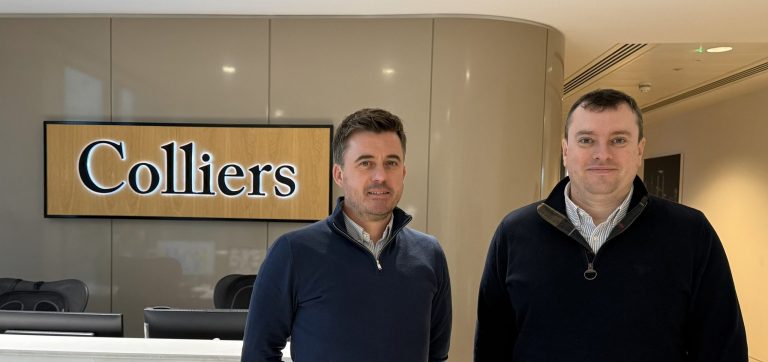
Colliers launches the Measured Survey Services team with appointment of Patrick Foster

Colliers launches the Measured Survey Services team with appointment of Patrick Foster

Patrick joins as service line head to lead a new specialist department within Project & Building Consultancy Colliers has announced the appointment of Patrick Foster to lead its newly created Measured Survey Services department, within the Project & Building Consultancy division. Patrick brings more than 15 years of industry experience, and more recently he was a Director in the CBRE/Turner & Townsend Measured Survey team in London. In his new role, Patrick will spearhead the development and delivery of Colliers’ Measured Survey Services, providing clients with a comprehensive range of Geomatic Surveying solutions. Patrick brings deep expertise in internal area reports, measured building surveys and other geospatial deliverables. This strategic move reflects Colliers’ commitment to expanding its technical capabilities and delivering best-in-class data and insights to clients across the UK. Gavin McCosh, Director, Project & Building Consultancy at Colliers, said:“Patrick’s appointment is a great start to 2026, and it marks an exciting time for Colliers as we launch Measured Survey Services. His proven leadership and technical expertise will enable us to deliver accurate, technology-driven solutions to add real value to our clients. This new service line strengthens our team offering and reflects our continual growth and improvement.” Patrick Foster, Director, Measured Survey Services, commented:“I’m excited to join Colliers and lead the launch of our Measured Survey Services team, bringing clients a fully integrated solution. With demand for precise data and advanced surveying solutions growing rapidly, this new service line is vital for the property industry. I’m looking forward to building a market-leading team and helping clients get the best out of their assets.” This appointment marks a significant step in Colliers’ strategy to broaden its Project & Building Consultancy offering and respond to growing client demand for accurate, technology-driven surveying solutions. Building, Design & Construction Magazine | The Choice of Industry Professionals

Read More »
Ecofill Appoints Mark Watford as Chief Financial Officer

Ecofill Appoints Mark Watford as Chief Financial Officer

Ecofill Group Limited has appointed Mark Watford as Chief Financial Officer, strengthening its leadership team as the business continues to scale its operations and accelerate growth in the UK and beyond. Mark brings over 25 years’ experience in senior financial, commercial, and operational leadership roles across construction, infrastructure, and technology-led businesses. His career spans both SME and large corporate environments, with significant international exposure, including senior roles within global organisations operating across Europe, North America, and Asia. He has a strong track record of supporting high-growth businesses through periods of expansion, acquisition, and transformation, providing the financial discipline and strategic insight required to scale sustainably. Mark’s experience includes working with private equity-backed groups, leading complex corporate restructures, and supporting businesses through international growth and integration. In his role as CFO, Mark will provide strategic financial oversight and governance for Ecofill. His primary focus will be supporting Ecofill’s continued growth, ensuring the business has the financial structure, controls, and insight required to scale responsibly while maintaining strong commercial foundations. Trevor Gaughan, Founder and CEO of Ecofill Group, said: “Mark’s appointment is a major step forward for Ecofill. He brings deep financial expertise, strong commercial judgement, and valuable international experience that will support our ambitions as we continue to scale. As demand for our technology grows, Mark’s leadership will be critical in ensuring we grow in a structured, resilient, and sustainable way.” Mark Watford added: “Ecofill is a business with a clear purpose, a compelling technology, and significant growth potential. What attracted me most is the opportunity to support a UK-based company with ambitions that extend well beyond the domestic market. I’m looking forward to working with the team to help build strong financial foundations that support long-term, sustainable growth.” Based in Leeds and operating nationwide, Ecofill transforms on-site clays and subsoils into high-performance and compliant aggregate replacement products, eliminating the need to send soils to landfill, removing the requirement for imported aggregates, and significantly reducing both carbon emissions and lorry movements. Building, Design & Construction Magazine | The Choice of Industry Professionals

Read More »
What Institutions Should Plan Before Going Digital

What Institutions Should Plan Before Going Digital

Moving to digital assessments offers clear benefits, efficiency, scalability, and data-rich insights, but it also requires deliberate planning. For educational institutions, the transition goes beyond technology. It involves rethinking infrastructure, academic alignment, and stakeholder readiness. Below are the key areas institutions must plan for before going digital. Assess the Operational and Technical Requirements The shift to digital requires a thorough review of your current IT infrastructure and resourcing. Institutions must ensure that internet bandwidth, hardware availability, and technical support are capable of supporting high-volume, high-stakes testing environments across various locations and devices. A critical first step in switching to online assessment is confirming that systems can scale and recover from potential failures. Contingency protocols should be in place for connectivity issues, device malfunctions, or power disruptions. This includes having spare devices available, backup generators where relevant, and clearly communicated procedures for interrupted exams. Running pilot programs under real exam conditions—covering both low- and high-bandwidth settings—helps surface unexpected technical bottlenecks. Testing should also include cybersecurity checks to ensure the platform prevents unauthorised access and protects sensitive student data during delivery and submission. Align Assessments With Educational Objectives Digital tools must support the intent and outcomes of your curriculum, not simply replicate existing formats. Institutions should assess whether existing assessments are still valid when migrated online, or if they require redesign to better suit the delivery medium. For example, assessments that involve critical analysis, project-based learning, or collaborative tasks may require tools beyond simple multiple-choice or timed exams. Can the system handle uploads of student-created artefacts? Does it allow video or audio inputs where required? The platform’s capacity to support varied question types, rubrics, and automated feedback also plays a role in aligning with modern teaching and learning principles. Collaboration with academic leaders during this stage ensures that digital assessment serves a pedagogical purpose, not just an administrative one. Train and Support All Stakeholders Successful implementation depends on the preparedness of everyone involved. Academic staff need training on platform features, assessment design best practices, and interpreting digital reporting. IT and admin teams must understand how to manage exam logistics, monitor live sessions, and resolve real-time issues. Students must also be prepared. Offering mock exams in advance helps reduce stress and gives them familiarity with the digital environment. Support must be equitable, especially for students with limited access to technology or inconsistent connectivity at home. Institutions should consider offering device loans or on-campus testing options where possible. Communication is key. Clear timelines, support channels, and feedback loops ensure stakeholders feel informed and involved throughout the process. Review Compliance and Accessibility Obligations Before going digital, institutions must evaluate how the platform addresses data security, privacy compliance, and accessibility. This includes adhering to laws such as GDPR, the Privacy Act 1988, and sector-specific frameworks if applicable. Data must be encrypted in storage and during transmission. User permissions should be role-based, with audit trails for system access and data changes. Vendor contracts should be reviewed for compliance assurance. Accessibility is equally critical. Does the platform support screen readers, keyboard-only navigation, or colour contrast customisation? Are there options for extending test times or offering alternative formats for students with disabilities? These features must be tested—not assumed—and should align with WCAG 2.1 accessibility standards to ensure equitable access for all users. Establish Cost and Scalability Parameters Digital transformation is not a one-off expense; it is a long-term operational shift. Institutions should analyse the total cost of ownership, including licensing, onboarding, support, infrastructure, updates, and future integrations. It’s essential to ensure the platform can scale with projected student growth, diverse course types, and institutional expansion. The system should also be interoperable with existing learning management systems (LMS), student information systems (SIS), and third-party tools to reduce duplication and manual admin work. Scalability should not compromise performance. Ensure that the platform maintains speed, responsiveness, and reliability even under peak exam conditions. Laying the Groundwork for a Seamless Digital Shift Planning is the backbone of any successful digital transition. By addressing technical needs, academic compatibility, user readiness, legal compliance, and financial sustainability, institutions can avoid disruptions and fully realise the benefits of digital assessment. The more rigorous the preparation, the smoother the shift—and the stronger the long-term outcomes.


Read More »