
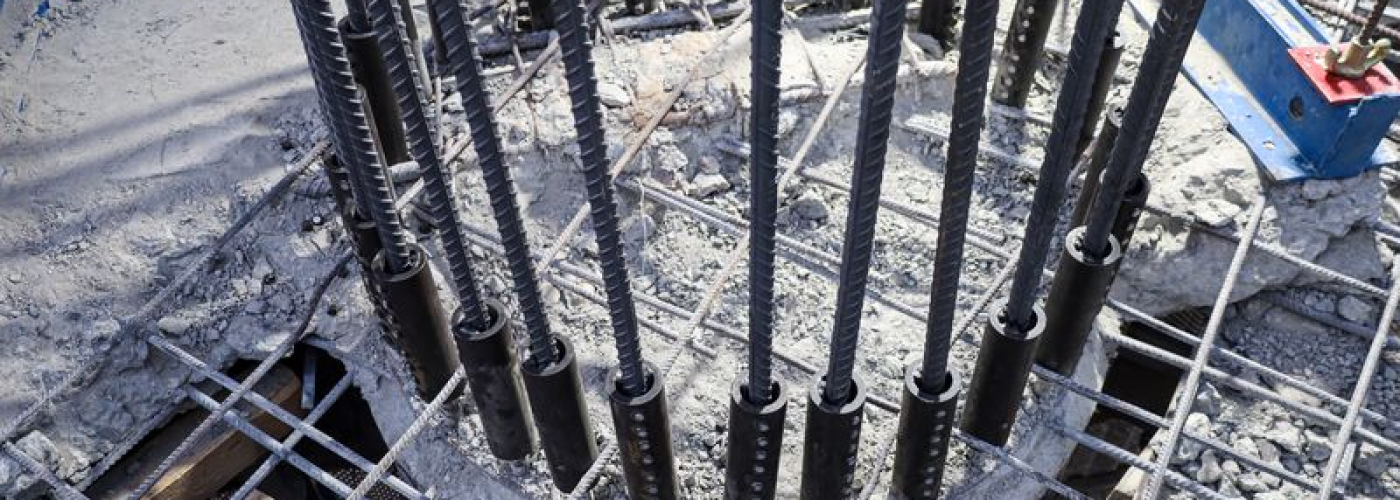


Structural stability starts deep below the surface, invisible to the human eye but playing a critical role in the overall structural performance. The type of foundation is determined by the characteristics of the ground because if the ground is weak, inconsistent or highly compact, conventional shallow foundations just don’t cut it. Instead, we use pile foundations which offer a dependable, deep-foundation solution.
Understanding pile foundations
Here at DSA, we have experience in designing all types of pile foundations. Long, slender structural elements, often cylindrical, the piles are driven, drilled or cast into the ground until they reach deeper, more suitable ground conditions. This means that they can take the weight and load of a range of heavy structure types, such as buildings, high-rise towers and large-scale industrial warehouses. In turn, this minimises settlement issues, uplift or lateral forces, enhancing the overall integrity of the structure.
And this is why pile foundations are so indispensable in construction-they make it possible to develop unsuitable shallow foundation sites such as reclaimed land or waterlogged areas. Because of this, piling does come at a price depending on the load capacity, budget, construction time and site impact.
The main types of pile foundations
Foundation piles are classified by material, load transfer mechanism or installation method and is how a structural engineer knows which piling construction method is most suited to the construction project.
Concrete piles: Can be bought ready-made as precast or cast-in-situ by boring onsite and pouring concrete in. The latter is particularly suited to ground where there is a variety of soil layers, often found in built-up urban areas.
Steel piles: These can be used for deep pile foundations for lighter-load applications, such as bridges and marine works.
End-bearing piles: Transfer loads directly onto a strong stratum such as dense sand or bedrock.
Friction piles: These work by causing skin friction between the pile shaft and surrounding soil.
Combined piles: Use both end bearing and friction resistance for maximum stability.
Piling construction methods
The selection of piling construction method is determined by the soil conditions, constraints and overall project requirements:
Driven piles: Heavy weight machinery hammers or vibrates pre-formed piles into the ground, made from steel, timber or precast concrete. The result is reliable, consistent and immediate load-bearing capacity. The noise however is very extreme making it unsuitable in some highly populated areas.
Bored (cast-in-situ) piles:
If noise needs to be kept to a minimum in a restricted or noise-sensitive location this is the most suitable piling method. Compared to driven piles, bored piles cause less disruption. For this method, a hole is carefully drilled to the suitable depth and then filled with reinforced concrete. When it sets it forms a strong and stable foundation. This method also gives exact control over the depth and diameter of the pile foundation so that performance can be optimised to suit a variety of soil conditions.
Rotary bored piles:
High-load projects demand exceptionally high-strength piles, and rotary bored piles are ideal for more major infrastructure projects of a bigger scale.
Continuous flight auger (CFA) piles:
Also less disruptive and noisy they are a vibration-free option for urban sites, widely used in modern piling construction work.
Screw (helical) piles:
If the project is a light structure, commercial or residential, screw piles are a good option, being quick to install with minimal vibration and even better, they deliver immediate load-bearing capacity. The piles are installed by screwing steel shafts with helical plates into the ground until they reach suitable soil.
What’s the right type of pile foundation?
There are four main factors that influence the pile selection:
Soil conditions: Load bearing capacity, compressibility and groundwater level.
Structural loads: Magnitude and direction of applied forces.
Site environment: Access limitations, vibration control and spoil disposal.
Cost and sustainability: Balancing economic efficiency with environmental responsibility.
The first and most crucial step is a thorough geotechnical investigation to give the structural engineer the essential information needed about the soil properties, subsurface conditions and load-bearing capacity, all of which influence the stability, safety and long-term efficiency of the structure.
Pile foundations for long-lasting construction
Pile foundations are a groundbreaking solution in the world of structural and civil engineering because they enable construction to happen on sites that might otherwise be deemed unsuitable for development. With so many piling methods DSA engineers can design efficient, economical and environmentally responsible solutions to suit the unique needs of every project. Innovative technologies and continuous advances in materials and installation equipment mean that pile foundations are becoming even more low impact, reducing vibration and noise to more acceptable levels, securing them a vital role in the future of resilient and sustainable construction the world over.