February 6, 2026
£1bn London Cancer Hub set to transform UK life sciences landscape

£1bn London Cancer Hub set to transform UK life sciences landscape

Plans for a £1bn expansion of the London Cancer Hub in Sutton have been granted planning consent, paving the way for one of the UK’s most significant investments in cancer research, treatment and life sciences infrastructure. Backed by Aviva Capital Partners alongside developer Socius, the scheme will create a major

Read More »
Salboy launches specialist construction delivery arm to unlock stalled and complex housing schemes across the UK

Salboy launches specialist construction delivery arm to unlock stalled and complex housing schemes across the UK

Salboy, the UK property development and funding group, has officially launched Salboy Construction, a specialist residential construction business created to deliver and support complex, time-critical and distressed housing schemes at a time when rising build costs, contractor capacity constraints and programme risk are increasingly impacting new housing delivery across the

Read More »
Fourth 700-tonne giant strengthens Global Crane fleet

Fourth 700-tonne giant strengthens Global Crane fleet

Global Crane Services has strengthened its heavy-lift capability with the arrival of a fourth 700-tonne class mobile crane at its Scottish operations. The business has taken delivery of another Liebherr LTM 1650-8.1, expanding its capacity to support large-scale lifting projects across the civils, renewable energy, ports and offshore sectors. The

Read More »
Latest Issue
Issue 337 : Feb 2026

February 6, 2026

£1bn London Cancer Hub set to transform UK life sciences landscape

£1bn London Cancer Hub set to transform UK life sciences landscape

Plans for a £1bn expansion of the London Cancer Hub in Sutton have been granted planning consent, paving the way for one of the UK’s most significant investments in cancer research, treatment and life sciences infrastructure. Backed by Aviva Capital Partners alongside developer Socius, the scheme will create a major new campus bringing together global pharmaceutical companies, research institutions, clinicians and manufacturers in a single, highly connected environment. Designed by Gensler, the development will deliver a mix of specialist research and innovation space, including wet laboratories, advanced manufacturing facilities and flexible offices aimed at encouraging collaboration across industry, academia and healthcare. Supporting amenities will include a dedicated Learning Lab, cafés, a crèche and landscaped public spaces, alongside 220 affordable homes for key workers. The campus is positioned as nationally significant science infrastructure, aligning closely with government ambitions to accelerate growth in the UK life sciences sector and strengthen the country’s position as a global leader in medical research and innovation. Once complete, the London Cancer Hub is expected to support thousands of highly skilled jobs and act as a catalyst for wider economic growth across south London. Buildings will be arranged around new pedestrian and cycle routes, with a strong focus on placemaking and accessibility. The masterplan prioritises sustainability, with all buildings targeting net-zero carbon in operation and designed to promote healthy, low-energy environments for both researchers and residents. With planning now secured, the project is expected to move into delivery, with contractor procurement anticipated to begin shortly. Construction will mark the next major step in bringing the ambitious vision for the campus to life. The wider professional team includes Arup as structural and building services engineer and Aecom providing project management and cost consultancy services. Once delivered, the expanded London Cancer Hub will play a central role in accelerating breakthroughs in cancer treatment, fostering collaboration across disciplines and reinforcing the UK’s life sciences ecosystem for decades to come. Building, Design & Construction Magazine | The Choice of Industry Professionals

Read More »
New public underground access to Parliament forms part of the restoration and renewal plan

£3bn early works push aims to unlock historic Parliament restoration

MPs and Peers are being urged to approve a £3bn programme of early works designed to stem the rising cost of repairs at the Palace of Westminster and pave the way for the largest restoration project in its history. A new report from the Parliamentary Restoration and Renewal Client Board sets out a proposed seven-year phase one programme of enabling and preparatory works. The aim is to reduce reliance on costly reactive maintenance, stabilise ageing systems and buy time while Parliament reaches a final decision on how the main restoration should be delivered. Under the plan, preparatory work would begin immediately, narrowing the long-running debate to two remaining delivery options by 2030. The first option would see both the House of Commons and the House of Lords fully decant from the Palace, allowing the building to be stripped back and restored in a single, continuous programme. While politically challenging, this approach is considered the safest and most cost-effective, with an estimated duration of up to 24 years and a projected cost of close to £12bn. The alternative is an enhanced maintenance and improvement option, which would keep Parliament operating within the Palace while works are carried out in multiple phases. This approach would require MPs and Peers to move between temporary chambers, including relocating the House of Lords to the QEII Centre for up to 13 years. The phased approach would significantly extend the programme, potentially running for as long as 61 years, with costs rising towards £39bn. Category Full decant Enhanced maintenance and improvement (EMI+) Comparison Total cost £8.4–11.5bn £11.8–18.7bn EMI+ significantly more expensive overall Total duration 19–24 years 38–61 years EMI+ takes roughly double or more House of Commons chamber decant 8–10 years Up to 2 years in the Lords chamber Longer Commons relocation under full decant House of Lords chamber decant 12–15 years 8–13 years in the QEII Centre Decant periods broadly similar Parliamentary business Delivered with some reduced provision, may require changes to ways of working Delivered with some reduced provision which may require changes to ways of working Operational impact similar Health, safety and fire risk Lowest level of risk Highest level of risk of the options Full decant safer Security risk Lowest level of risk in the Palace Highest level of risk in the Palace Full decant offers strongest security The Client Board warns that further indecision will continue to cost taxpayers heavily. Each year of delay is estimated to add around £70m in wasted option development and reactive maintenance, with construction inflation adding hundreds of millions more to the eventual bill. If approved, procurement for a series of strategic partners covering programme management, technical consultancy and delivery would begin later this year, with appointments expected in 2027. These partners would be tasked with delivering the early works and developing detailed designs, costs and programmes for both delivery options ahead of a final decision by both Houses later in the decade. Phase one would include a number of major enabling projects, such as the construction of a temporary Thames jetty and cofferdam to move materials by river, underground works to release space for new services, early masonry repairs and restoration of key courtyards. The programme would also see temporary power, water and utility systems installed, allowing life-expired infrastructure to be safely taken offline in future phases. Significant remodelling works at the QEII Centre are also planned to support decant arrangements and improve operational resilience during the restoration programme. Building, Design & Construction Magazine | The Choice of Industry Professionals

Read More »
Salboy launches specialist construction delivery arm to unlock stalled and complex housing schemes across the UK

Salboy launches specialist construction delivery arm to unlock stalled and complex housing schemes across the UK

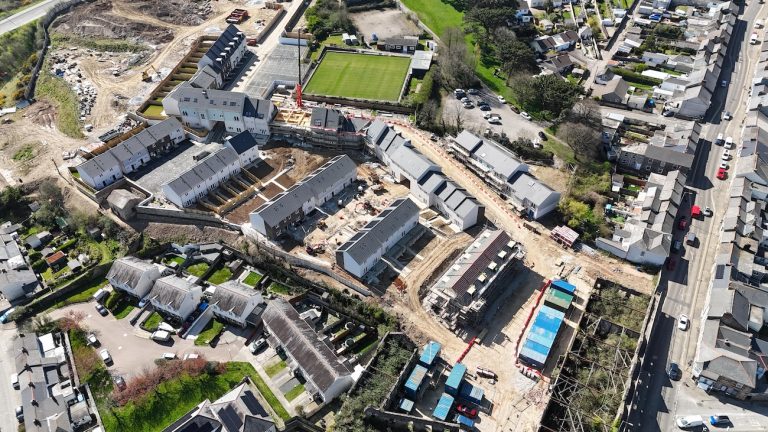
Salboy, the UK property development and funding group, has officially launched Salboy Construction, a specialist residential construction business created to deliver and support complex, time-critical and distressed housing schemes at a time when rising build costs, contractor capacity constraints and programme risk are increasingly impacting new housing delivery across the UK. “The outlook for housing developers, fundings and associations shouldn’t look as bleak as it does,” comments Andrew Cavanagh, CFO of Salboy. “Buyer demand is robust, finance is accessible, and the supply:demand ratio for new housing in this country is skewed heavily in their favour. But the difficulty of securing capable construction partners to build in locations where houses are most needed is reaching fever pitch. Across the country, developers’ schemes are slowing down, stalling altogether or taking years to get out of the ground because suitable contractors cannot be mobilised quickly enough or with sufficient certainty that they can deliver on time and on budget.”  Salboy Construction was established by Salboy in April 2024 in response to these conditions. The business was initially focused on supporting some of the Group’s own developments, as well as select sites funded by Salboy Capital, the Group’s property funding partnership business.  In less than two years, Salboy Construction has grown to a team of 16 construction professionals, quantity surveyors and procurement specialists and has delivered 120 homes with a further 139 currently under construction. The team is now contracted to work on sites by both Salboy’s development team and a number of other developers, funders and housing associations around the country.  Salboy Construction’s team is deployed onto a mixture of brand new sites where work needs to begin from scratch, as well as onto distressed sites where either sufficiently qualified partners were unavailable locally, or problems had slowed progress and a new delivery process was needed to bring the project to fruition.  The business has live and completed schemes in Greater Manchester, Cheshire, London, Cornwall, Lincolnshire and Staffordshire. Recent projects include new-build sites in Wandsworth in London, Tuckingmill in Cornwall and Tean in Staffordshire, in addition to the takeover of a 70-home residential site in Lincolnshire, the reset of two distressed urban schemes in South London, and the delivery of a 77-home affordable housing development in Cornwall. With this track record firmly in place, Salboy Construction is formally launching its services to a wider range of third-party clients nationwide.  Andrew Cavanagh: “Over the past few years, more and more funds, banks, housing associations and registered providers of social housing have approached Salboy to help bring their projects forward. Until this point, capacity was our only constraint. We’re excited that now, thanks to Salboy Construction, we can start saying ‘Yes’ to more of these projects and bring forward more homes where they’re desperately needed.” Demand is particularly high in cost-sensitive areas, such as affordable housing, where Salboy Construction has recently begun work on schemes for three registered providers. The business operates through a hybrid delivery model, combining its own direct delivery teams with a national network of trusted regional partners, including Salboy’s long-standing partner in the Northwest, Domis Construction. This structure allows Salboy to maintain full oversight of every scheme and ensure consistent standards of governance, reporting, quality and cost control. One of Salboy Construction’s key strengths and differentiators is its home-grown procurement network that enables regional partners to save up to 20 per cent on common building materials. The network gives the SME partners Salboy Construction works with access to the buying power and supplier relationships normally reserved for Plc housebuilders, helping them manage inflationary pressures and reduce exposure to material price volatility. Access to the procurement network is also available to developers funded by Salboy Capital.  Stephen Ward, Construction Director at Salboy: “Anyone working in the construction space today will have seen good housing schemes stall, not because demand wasn’t there, but because the right delivery partner could not be secured or retained. That is exactly the gap Salboy Construction has been created to fill. In a short space of time we’ve been able to show developers and funders we’ve the right mix of domain expertise, supplier leverage and tenacity to bring greater certainty to schemes that might otherwise struggle to get off the ground.” Building, Design & Construction Magazine | The Choice of Industry Professionals

Read More »
Fourth 700-tonne giant strengthens Global Crane fleet

Fourth 700-tonne giant strengthens Global Crane fleet

Global Crane Services has strengthened its heavy-lift capability with the arrival of a fourth 700-tonne class mobile crane at its Scottish operations. The business has taken delivery of another Liebherr LTM 1650-8.1, expanding its capacity to support large-scale lifting projects across the civils, renewable energy, ports and offshore sectors. The new eight-axle crane will operate across Global Crane Services and Global Wind Projects, both part of Global Port Services Scotland Ltd. Delivered to the company’s Aberdeen depot, the crane underwent operator familiarisation training delivered by Liebherr Great Britain’s training team before being deployed straight into active service. The LTM 1650-8.1 offers two telescopic boom configurations, with a 54-metre base boom extendable to 80 metres. When paired with its 90-metre luffing jib and Y-shaped guying system, the crane achieves a maximum hook height of 152 metres and a working radius of up to 112 metres, making it well suited to demanding wind and heavy-lift applications. Global Crane Services general manager Gordon Harper said the latest addition would play a key role in supporting ongoing and future projects. He noted that the LTM 1650-8.1 has already proven itself as a reliable and versatile performer within the fleet, particularly on complex wind energy and heavy-lift operations. The delivery forms part of a wider programme of fleet investment. Global has already placed orders for two 250-tonne Liebherr LTM 1250-5.1 cranes, which are scheduled to arrive later this year. During the past year alone, the company added seven new mobile cranes ranging from 70 to 250 tonnes. Global Crane Services now operates a fleet of more than 70 cranes, almost entirely Liebherr machines, including two LG 1750 lattice-boom truck cranes, each rated at 750 tonnes. Building, Design & Construction Magazine | The Choice of Industry Professionals

Read More »