

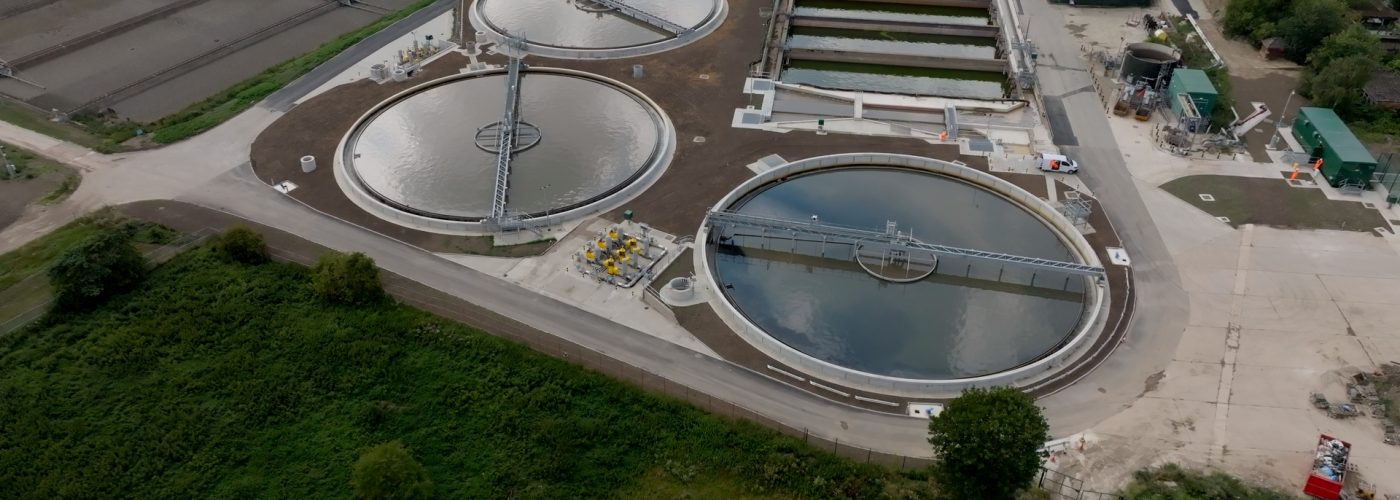


BarhaleEnpure JV has completed an ?18m phosphorus removal programme at Dewsbury Wastewater Treatment Works (WwTW) in West Yorkshire to help improve water quality in the River Calder.
Delivered in partnership with Yorkshire Water, the scheme has achieved a 90% reduction in phosphorus levels in the final effluent at the WwTW, exceeding Water Industry National Environment Programme (WINEP) targets for England.
Fourteen existing primary settlement tanks (PSTs) have been replaced with three new larger tanks and two new primary sludge pumping stations. Prior to construction an existing beck was diverted to accommodate the new tanks’ footprint.
The project took advantage of off-site manufacturing to precast the concrete wall sections before they were assembled on site to form the new 45m diameter, 8.5m deep (deepest at the central desludge cone) settlement tanks.
BarhaleEnpure JV constructed a new chemical dosing plant and installed a UMON4 device to upgrade monitoring to MCERTS (monitoring certification scheme) standards. This confirms that the works is treating permitted flow to full treatment (2,350 litres per second) when the storm overflow is operating.
The team also completed process improvements and created a 2.5ha biodiversity and rewilding area.
The WwTW, which serves a catchment of 200,000 people, remained fully operational throughout the construction process.
Phosphorus is a normal component of domestic sewage, entering the sewer system from products such as shampoos and detergents. It can also enter rivers through agricultural run-off and natural soil erosion, which can be difficult to control.
Small amounts of phosphorus are harmless and are essential to many ecosystems, but higher concentrations can become damaging to aquatic life.
BarhaleEnpure JV Contracts Manager Brian Harrold said the joint venture moved into the design and construct phase in the third quarter of 2023 following extensive early contractor involvement.
“This has been a relatively long-term project to deliver essential water infrastructure for a large part of West Yorkshire,” he said.
“We worked closely with Yorkshire Water throughout and successfully completed and commissioned all the new works on schedule and under budget.
“The improvements are already delivering a measurable impact, including better water quality in the River Calder, a healthier and more enjoyable environment for people and wildlife and improved opportunities for recreation.”
Philip Lister, Yorkshire Water’s environmental permit compliance lead, said: “Yorkshire Water is committed to looking at innovative ways to improve the operation of our sites to meet our phosphorus removal targets. This particular project adopted a number of measures designed to reduce the carbon impact and speed up the duration of the improvement works.
“We have committed over ?350m to reduce the levels of phosphorus going into watercourses at 85 of our wastewater treatment sites across the region in the next five years, continuing the work we began in 2020 – 2025.”
Building, Design & Construction Magazine | The Choice of Industry Professionals