April 27, 2026
Richard Graybrook to lead Ramboll’s aviation market in UK&I and Europe

Richard Graybrook to lead Ramboll’s aviation market in UK&I and Europe

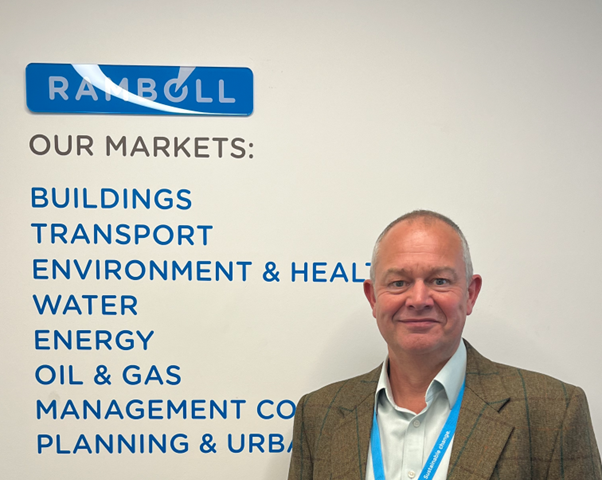
Richard’s appointment as the Aviation Director further strengthens Ramboll’s growing offer in the aviation sector  Global architecture, engineering, and sustainability consultancy Ramboll has today announced the appointment of Richard Graybrook as Aviation Lead for UK&I and Europe. In this role, Richard will lead Ramboll’s aviation business across the region with responsibility for major programmes and projects, driving innovation and embedding sustainability throughout project delivery.  Richard brings extensive experience in the aviation sector, having led multi-disciplinary teams and managing complex operations. He has a strong track record in delivering long-term operational strategies, as well as identifying innovative ways to design, develop, and deliver new processes. 

Read More »
New finance director for housebuilder Dandara

New finance director for housebuilder Dandara

Independent housebuilder Dandara has appointed Nic Davenport as Divisional Finance Director for its housebuilding division, strengthening its leadership team as it pursues ambitious growth plans over the next five years. Davenport joins from Vistry Group, one of the UK’s largest housebuilders, where he held a range of senior roles including

Read More »
Eversheds Sutherland announces 25 promotions to partner for 2026 - including two in its Construction Litigation Practice

Eversheds Sutherland announces 25 promotions to partner for 2026 – including two in its Construction Litigation Practice

Eversheds Sutherland (International) is pleased to announce that it has made 25 partner promotions with effect from 1 May 2026. 40% of Eversheds Sutherland’s new partners are female. The latest round of promotions includes two construction lawyers based within the firms Litigation & Dispute Management practice group, underlining the firm’s

Read More »
Lucky winners of Finning giveaway collect excavator prizes

Lucky winners of Finning giveaway collect excavator prizes

Finning has revealed the two winners of its ‘Win Big’ competition, each receiving brand-new Cat® excavators to help power their projects forward. Finning UK & Ireland launched the free-to-enter competition, organised to mark Caterpillar’s 100th anniversary, with one winner in mind, however the high calibre of entries led to Finning

Read More »
How a property manager can help when selling a probate property

How a property manager can help when selling a probate property

Selling a probate property can be a difficult and emotional process, often happening at a time when families are dealing with loss as well as legal responsibilities. A probate sale involves managing a property that has been left behind, which can include legal delays, maintenance issues and multiple beneficiaries. In

Read More »
Is Bridging Finance Right For Me?

Is Bridging Finance Right For Me?

When you need to move quickly in the property market, timing can be everything. A delayed mortgage or a slow property chain can mean losing out on a deal. This is where bridging finance comes in. It offers fast access to funds, often within days, allowing buyers to act without

Read More »
Latest Issue
Issue 340 : May 2026

April 27, 2026

Richard Graybrook to lead Ramboll’s aviation market in UK&I and Europe

Richard Graybrook to lead Ramboll’s aviation market in UK&I and Europe

Richard’s appointment as the Aviation Director further strengthens Ramboll’s growing offer in the aviation sector  Global architecture, engineering, and sustainability consultancy Ramboll has today announced the appointment of Richard Graybrook as Aviation Lead for UK&I and Europe. In this role, Richard will lead Ramboll’s aviation business across the region with responsibility for major programmes and projects, driving innovation and embedding sustainability throughout project delivery.  Richard brings extensive experience in the aviation sector, having led multi-disciplinary teams and managing complex operations. He has a strong track record in delivering long-term operational strategies, as well as identifying innovative ways to design, develop, and deliver new processes.  Following service in the British Army, he later transitioned to the private sector, holding a series of senior leadership roles, most recently at Jacobs helping to grow their aviation business across Europe.  In his role as Aviation Director at Ramboll, Richad will draw on this experience to build strong relationships with clients and stakeholders across the sector. He will apply his sector experience and leadership skills to drive innovation, challenge conventional thinking to deliver high-quality, sustainable solutions, playing a key role in advancing Ramboll’s ambition to act as the partner for sustainable change to its clients across the aviation market.  Commenting on Richard’s appointment, Neil Sansbury, Managing Director UK&I, Ramboll, said:  “Richard’s experience in leadership roles in the aviation industry speaks for itself and I am confident that he will play a significant role in further strengthening Ramboll’s presence across the aviation sector, a priority area for the business. He joins at an exciting time for our aviation business, and I’m pleased to welcome him to lead the team and support our ambitious growth plans. Sustainability is central to everything we do at Ramboll, and I am particularly encouraged by Richard’s focus on reinforcing our role as a partner for sustainable change for our aviation clients.  Richard Graybrook, Aviation Director, Ramboll, added: “Leading the Aviation team at Ramboll is an exciting opportunity with a huge potential for future growth. Ramboll has an excellent track record in aviation, and I look forward to building on this success by growing the business and the team. My priorities are to support my colleagues in delivering successful, innovative, and sustainable programmes to the highest standards.” Building, Design & Construction Magazine | The Choice of Industry Professionals

Read More »
New finance director for housebuilder Dandara

New finance director for housebuilder Dandara

Independent housebuilder Dandara has appointed Nic Davenport as Divisional Finance Director for its housebuilding division, strengthening its leadership team as it pursues ambitious growth plans over the next five years. Davenport joins from Vistry Group, one of the UK’s largest housebuilders, where he held a range of senior roles including Divisional Finance Director of the West Division. He began his career as an auditor at Deloitte, working with clients such as Taylor Wimpey. In his new role at Dandara, Nic will oversee the financial performance of the company’s national housebuilding business. He will support regional growth across the division, including regional expansion and strategic land acquisitions, while helping ensure the business remains efficient and resilient in the rapidly evolving market.   Based in Dandara’s Milton Keynes head office, Nic said: “Working for Dandara is an honour for me as the company embodies the values I believe a housebuilder should have – a passion for building excellence and customer service, alongside a strong commitment to the communities it serves. “Much of Dandara’s success is down to the fact that it doesn’t operate like an anonymous corporation, the business is structured to give autonomy to regional management teams who know their own local markets best. That ensures that the homes that are delivered in each region genuinely reflect the needs of local buyers. I’m looking forward to spending time across the regions, supporting the teams as the business continues to grow. “While market conditions are currently challenging for the industry, housebuilding is inherently cyclical. Our focus will be on ensuring we are well-positioned to respond quickly and take advantage of future opportunities when they arise.” He added that he is also looking forward to helping grow the Partnerships side of the business to help meet the increasing demand for affordable and mixed tenure housing across the UK, and to address the acute housing shortage. Trevor Dempsey, CEO at Dandara, added: “Nic brings with him strong financial and operational experience from across the housebuilding sector, that makes him a valuable addition to the team. His experience gives him an insight into the day-to-day challenges of a housebuilding business, that goes far beyond the balance sheets. “He has an important role to play as we continue to grow the company and strengthen our delivery across private sale, affordable housing and Partnerships. His expertise will be instrumental in helping us take the business to the next level, while ensuring we remain firmly grounded in the core values that define who we are.” For more information, please visit www.dandara.com. Building, Design & Construction Magazine | The Choice of Industry Professionals

Read More »
The Changing Pressures Facing Tradespeople and the Impact on Mental Health

The Changing Pressures Facing Tradespeople and the Impact on Mental Health

Mental health is becoming one of the biggest challenges facing the construction industry, with new research from Chartered Institute of Building showing that 94% of construction professionals experienced stress over the past year. While the physical demands of the job have always been recognised, many in the trade say it’s the day to day pressures around workload, cash flow and job uncertainty that are now having the biggest impact. In recent years, rising fuel costs, ongoing fluctuations in material prices for items such as bricks and wider economic uncertainty have added further strain, making it harder for tradespeople to plan work, manage costs and maintain consistent income. From managing tight deadlines to chasing payments and balancing multiple projects at once, the role of a modern tradesperson has expanded well beyond the tools. Drawing on its work with tradespeople across the UK, Travis Perkins is seeing how these pressures are changing the reality of working in the industry, particularly as Mental Health Awareness Week approaches. Why tradespeople are particularly exposed to these pressures While many industries are experiencing increased pressure, there are several factors that make tradespeople particularly vulnerable to its impact. A large proportion of the workforce is self employed or working within small teams, meaning there is often little separation between the individual and the business. Responsibility for securing work, managing costs and delivering projects all sits with the same person, leaving limited opportunity to step back when pressures build. Working patterns can also contribute to isolation. Many tradespeople spend long periods working alone or moving between sites, without the day to day support network that is more common in office based roles. This can make it harder to share concerns or recognise when stress is beginning to take its toll. There is also a long standing culture within parts of the industry where mental health has not always been openly discussed. While this is beginning to change, some tradespeople may still feel reluctant to speak up or seek support, particularly in high pressure environments where keeping projects on track is the priority. Research from Mates in Mind suggests that around almost a third of the construction workers who took part reported that they live with heightened levels of anxiety each day, highlighting the scale of the challenge across the industry. Lauren Hickling HSE Director at Travis Perkins says, “In construction, many people are used to just getting on with the job, even when things feel difficult. While that resilience is important, it can also mean people don’t always speak up when they need support.” At the same time, the nature of the work can make it difficult to fully switch off. Even outside of working hours, many tradespeople are still planning upcoming jobs, responding to customer enquiries or dealing with administrative tasks, reducing the opportunity to properly rest and recover. Together, these factors mean that when pressures increase across the industry, tradespeople often have fewer buffers in place, making early support and practical interventions even more important. How the construction industry is responding to mental health challenges As awareness of mental health in construction continues to grow, more organisations across the industry are taking steps to provide better support for those working on site. There has been a noticeable shift in recent years, with more open conversations around wellbeing and initiatives designed to reduce stigma, with initiatives such as the Man Down campaign helping to encourage tradespeople to speak more openly about their mental health. Industry-wide efforts such as Mental Health Awareness Week and campaigns led by organisations like Mates in Mind are also playing a key role in reducing stigma and promoting practical support. Many larger contractors and housebuilders have introduced structured wellbeing initiatives, including mental health first aid training, on site briefings and dedicated wellbeing leads. Industry events such as the Big Brew are also creating more informal opportunities for workers to come together and start conversations in a more accessible way. There is also increasing collaboration between businesses and specialist organisations, helping ensure support is tailored to the realities of construction work, from managing financial pressure to dealing with isolation and long working hours. Through its work across the trade, Travis Perkins has supported a number of initiatives aimed at raising awareness and improving access to support, including its partnership with the Lighthouse Charity, which provides free and confidential advice to those working in the industry. Hickling, “There has been a noticeable shift across the industry, with more businesses recognising the importance of supporting mental health. Creating an environment where people feel able to talk openly and access support is a key part of that.” While progress is being made, access to structured support can still vary, particularly for those working independently or within smaller teams, meaning continued focus across the industry remains essential. What actually helps tradespeople manage pressure day to day While awareness is improving, many tradespeople are still looking for practical ways to manage pressure as it builds. For many, it starts with recognising early signs of stress, whether that is feeling consistently overwhelmed, struggling to switch off or noticing changes in mood or motivation. Spotting those signs early can make it easier to take action before issues escalate. Hickling, “For many tradespeople, pressure tends to build gradually rather than all at once. Spotting those early signs and taking small steps to address them can make a big difference before things become more difficult to manage.” Staying connected with others in the trade can also help reduce isolation. Whether that is working alongside others on site, attending training or simply keeping in touch with peers, having a support network can make challenges feel more manageable. Hickling adds, “Construction can be a very independent way of working, particularly for those who are self employed. Finding ways to stay connected, even through informal conversations or shared jobs, can really help people feel supported.” ork life balance remains a key challenge. Research from Tradesman Saver found that 24% of UK tradespeople say poor work


Read More »
Eversheds Sutherland announces 25 promotions to partner for 2026 - including two in its Construction Litigation Practice

Eversheds Sutherland announces 25 promotions to partner for 2026 – including two in its Construction Litigation Practice

Eversheds Sutherland (International) is pleased to announce that it has made 25 partner promotions with effect from 1 May 2026. 40% of Eversheds Sutherland’s new partners are female. The latest round of promotions includes two construction lawyers based within the firms Litigation & Dispute Management practice group, underlining the firm’s ongoing investment into its construction offering. Those promoted are Ray Hetherington (Birmingham) and James Molland (Cardiff). Keith Froud, Chief Executive, Eversheds Sutherland (International) commented: “Our newly promoted partners exemplify exceptional talent, deep client commitment and market-leading capability. Together, they reinforce our position as a firm that is powerful globally, strong locally, delivering seamless support to clients wherever they operate. “My congratulations go to our 2026 cohort on this well-earned achievement for their outstanding contribution to our clients and our firm.” Eversheds Sutherland – Partner promotions 2026: Practice group Partners   Corporate Finance Chris Archer, Corporate (London) Adite Aloke, Corporate (Dubai) Faris Al-Louzi, Corporate (Riyadh) Thomas Howell, Corporate (Leeds) Griff Jones, Corporate (Leeds) Thomas Plant, Corporate (Birmingham) Rob Worsfold, Corporate (Birmingham)   Commercial Advisory Thomas Farkas, Commercial (Munich) Lisa Highet, Commercial (Nottingham) Teresa Pessoa e Costa, Commercial (Lisbon) Robbert Santifort, Commercial (Rotterdam)   Employment Labor & Pensions Laura D’Arcy, Employment (Manchester) James Ellis, Pensions (Birmingham) Jen Green, Pensions (Cardiff) Sarah Lown, Pensions (Manchester) Taoufik Yekhlef, Employment (Rotterdam)   Litigation & Dispute Management Ray Hetherington, Construction (Birmingham) Angharad Hurle, Commercial Dispute Resolution (Cardiff) Mostafa Ihab, Commercial Dispute Resolution (Riyadh) Philip Kiossev, Commercial Litigation (Sofia) Karen Mitchell, Real Estate Litigation (London) James Molland, Construction (Cardiff)   Real Estate Emma George, Core Real Estate (Dubai) Fiona Hammett, Core Real Estate (Cardiff) Chris Mullings, Core Real Estate (London)   In December 2025, Eversheds Sutherland (US) announced the promotion of six attorneys to partner, which took effect on 1 January 2026. Building, Design & Construction Magazine | The Choice of Industry Professionals

Read More »
Lucky winners of Finning giveaway collect excavator prizes

Lucky winners of Finning giveaway collect excavator prizes

Finning has revealed the two winners of its ‘Win Big’ competition, each receiving brand-new Cat® excavators to help power their projects forward. Finning UK & Ireland launched the free-to-enter competition, organised to mark Caterpillar’s 100th anniversary, with one winner in mind, however the high calibre of entries led to Finning naming two winners: the Colin Burt Reserve for Wildlife Conservation and Valley Veterans. Both winners were invited to Finning UK & Ireland headquarters in Cannock, Staffordshire to celebrate their win with the Finning team. During the day Finning provided training on mini excavators, as well as tutorial on how the new machine owners can get the very best from their new excavators with telematics.  The Colin Burt Reserve, in Killin in the central Highlands of Scotland, opened in 2005 in memory of keen conservationist Colin Burt who died aged 38 following a motorcycle accident. The 50 acre site was a poor-quality piece of waste wet land and is now a diverse nature reserve open to all. The project has won a Cat 301.6 excavator to continue its development. Valley Veterans, a charity based in the Rhondda Valley, was founded more than 20 years ago as an informal support group for PTSD sufferers and is now a vibrant hub with more than 140 active participants. Its Equi-Grow project includes the development of a purpose-built equine and horticultural space for activities supporting the mental and physical health and wellbeing of veterans. It has won a Cat 301.5 excavator to help get groundwork underway. To mark Caterpillar’s centenary year in 2025, Finning hosted the giveaway on its website, asking participants: ‘How would winning a Cat machine or generator help you build something that lasts?’   Gary Megarrell, Managing Director at Finning UK and Ireland, said the high quality of the entries meant it was impossible to select just one winner. He said: “The 100th anniversary of Caterpillar provided the perfect opportunity to gift our winners with the equipment they need to take their projects forward. “The answers from the Colin Burt Reserve and Valley Veterans truly embodied the values we share at Finning around safety and inclusivity. Caterpillar’s centenary and Finning’s desire to have a positive impact within the community “We are delighted both organisations are now the owners of mini excavators, and that this will make a real, tangible difference to their projects and to their visitors. This prize-giving has been a fantastic way to mark what has been a very memorable year celebrating the Finning partnerships.” The winners were given the choice between a Cat 301.6 excavator or a Cat DE110E2 genset as their prize. They were also automatically enrolled in a set of monthly prize draws – with rewards up for grabs including a trip to Malaga. Ashley Pearson of the Colin Burt Reserve, said: “We encourage participation in practical conservation tasks and wildlife habitat improvements, and our work includes carrying out regular maintenance and projects to promote increased biodiversity. “Winning this Cat excavator means we can progress our development plans so that even more visitors can experience being in the outdoors.” Valley Veterans was last year honoured with the King’s Award for Voluntary Service. It has been presented with the centenary celebration Cat machine that was on display at Finning’s headquarters in Cannock during the anniversary year. Nigel Locke, Secretary at Valley Veterans, said: “This recognition from Finning comes on the back of a remarkable year for us, and inspires us to keep working to make a difference to veterans and their families. “The Equi-Grow project will allow Valley Veterans to vastly increase capacity to train and mentor existing members as well as extending the offer to a far wider veteran and community cohort in the South Wales Valleys region.  “Having the new excavator means we can focus on delivering the project and support more veterans to combat the challenges resulting from isolation and loneliness.” Building, Design & Construction Magazine | The Choice of Industry Professionals

Read More »
The care home enquiry journey starts online. Call tracking shows you where it ends

The care home enquiry journey starts online. Call tracking shows you where it ends

Families searching for care home placements rarely make a decision quickly. The journey typically involves weeks of research, multiple website visits, comparison across providers, and eventually a phone call. That call is often the moment intent becomes action. But for many care home marketers, it’s also the moment the data trail goes cold. Call tracking tools bridge that gap, connecting the digital touchpoints that preceded the call to the conversion itself. The software assigns a dynamic number to each individual that lands on your site, allowing you to track their journey and the touchpoints that led them to call. You know exactly which activity triggered the enquiry. For care home providers, that attribution is far more valuable than a general sense of which campaigns are running. Why phone calls still dominate care home enquiries The decision to place a family member into residential care is one of the most significant a family will make. It’s personal, time-sensitive, and emotionally charged. Online research helps narrow the options, but most families want to speak to someone before committing to a visit or a move-in. That means phone calls carry a disproportionate weight in the care home conversion process. A high volume of website traffic that doesn’t translate into calls is a problem worth diagnosing. Call tracking provides the data to do that, showing where visitors are dropping off and which pages and campaigns are actually prompting enquiries. Connecting online behaviour to offline outcomes Care home marketing typically spans several channels: Pay-per-click (PPC) advertising, organic search, local listings, social media, and sometimes offline activity such as leaflets or community partnerships. Each of these can drive a prospective family to your website. Without attribution data, there’s no reliable way to know which ones are driving enquiries. Call tracking assigns attribution across all of these touchpoints, giving marketers a clear picture of which channels are producing calls and which are generating traffic with no conversion value. That distinction shapes where budget gets allocated and where messaging needs to improve. It also captures multi-touch journeys. A family might find the care home through a Google search, revisit via a direct URL a week later, and then call after reading a specific page about residential care. Each of those steps is visible, and each one contributes to a more accurate understanding of what the enquiry journey actually looks like. Improving campaign performance over time Attribution data from call tracking doesn’t just tell you what happened. It informs what to do next. If PPC is generating a high volume of calls but a low proportion of move-in enquiries, that’s a signal to review landing page content or refine keyword targeting. If organic search is consistently driving the highest-quality leads, that’s a case for greater investment in content. Over time, these adjustments compound. Each campaign cycle becomes more informed than the last, and spend is directed toward the activity that demonstrably moves families closer to a move-in decision. Closing the gap between marketing and outcomes Care home marketing is often judged on enquiry volume. Call tracking adds a layer of quality to that measure, showing not just how many calls campaigns generate but what those calls represent in terms of genuine move-in intent. That connection between marketing activity and real outcomes gives care home marketers the evidence they need to make better decisions, justify spend, and demonstrate the value of campaigns that are actually working.

Read More »
How a property manager can help when selling a probate property

How a property manager can help when selling a probate property

Selling a probate property can be a difficult and emotional process, often happening at a time when families are dealing with loss as well as legal responsibilities. A probate sale involves managing a property that has been left behind, which can include legal delays, maintenance issues and multiple beneficiaries. In the UK, it is estimated that over 270,000 probate applications are made each year, and many of these involve property sales. A property manager can play a key role in making this process smoother, helping to protect the asset and support a successful sale. Understanding the probate process Before a property can be sold, legal authority must be granted through probate. This allows the executor or administrator to deal with the estate, including selling the property. The process can take several months, and delays are common. During this time, the property still needs to be managed. A property management company can step in to oversee the home while legal matters are being resolved, ensuring it does not fall into disrepair. This is important, as empty properties can lose value quickly if not maintained. Securing and maintaining the property One of the first tasks is making sure the property is secure. Empty homes are more vulnerable to damage, vandalism or weather-related issues. A property manager can arrange regular inspections and basic maintenance to keep the building in good condition. They may also handle essential services such as insurance, utilities and cleaning. Around 60% of vacant properties experience some form of deterioration within the first year, which shows how important ongoing care can be. Keeping the property in good shape helps maintain its value when it comes to selling. Preparing the property for sale Probate properties are often older and may not have been updated for many years. A property manager can organise repairs, decoration and general improvements to make the home more appealing to buyers. This might include simple updates such as painting, garden clearance or fixing minor faults. In some cases, larger refurbishment work may be recommended to increase the property’s market value. Even small improvements can make a big difference in attracting interest. Managing valuations and pricing Setting the right price is essential in a probate sale. A property manager can help arrange professional valuations and advise on realistic pricing based on the current market. This is especially important when multiple beneficiaries are involved, as there may be different opinions on value. A clear and professional approach can help avoid disagreements and keep the process moving forward. Coordinating with agents and buyers Once the property is ready, a property manager can work closely with estate agents to market the home effectively. They can handle viewings, respond to enquiries and ensure the property is presented well at all times. They also act as a point of contact between all parties, including solicitors, buyers and family members. This helps keep communication clear and reduces delays. With property transactions in the UK taking an average of 12 to 16 weeks to complete, good coordination can make a noticeable difference. Handling ongoing responsibilities Even after a sale is agreed, there are still responsibilities to manage. The property must remain insured, secure and well maintained until completion. A property manager ensures nothing is overlooked during this period. They can also deal with practical matters such as clearing remaining belongings or arranging final checks before handover. This reduces stress for the family and ensures a smooth finish to the sale. Conclusion A property manager can provide valuable support when selling a probate property, handling both practical and organisational tasks during a complex time. From securing and maintaining the home to preparing it for sale and coordinating with buyers, their role helps protect the property’s value and reduce stress for those involved. With probate sales often involving delays and challenges, having professional management in place can make the entire process more efficient and manageable.

Read More »
Is Bridging Finance Right For Me?

Is Bridging Finance Right For Me?

When you need to move quickly in the property market, timing can be everything. A delayed mortgage or a slow property chain can mean losing out on a deal. This is where bridging finance comes in. It offers fast access to funds, often within days, allowing buyers to act without waiting. In the UK, bridging loan usage has grown by over 100% since 2020, showing how more people are turning to this option when speed matters. However, while it can be a powerful tool, it is not always the right choice for everyone. What is bridging finance? Bridging finance is a short term loan designed to “bridge” a gap between buying a property and securing longer term funding or selling another asset. It is usually secured against property and typically lasts between a few months and one year. Unlike traditional mortgages, bridging loans focus more on the value of the property and the borrower’s exit plan rather than income alone. This allows lenders to move much faster, which is why these loans are often used in urgent situations. Why people use bridging for quick purchases One of the main reasons people choose bridging finance is speed. A standard mortgage can take weeks or even months to arrange, while a bridging loan can sometimes be completed in less than two weeks. This makes it ideal for property auctions, where buyers must complete quickly, or when a property chain risks falling apart. Around 23% of bridging loans in the UK are used to prevent chain breaks, showing how important they are in fast-moving transactions. It also allows buyers to secure properties that might not qualify for a mortgage straight away, such as homes needing renovation. The benefits of bridging finance The biggest advantage is flexibility. Bridging loans can be tailored to different situations, whether you are buying, refurbishing or refinancing a property. Speed is another key benefit. Being able to access funds quickly can give you a strong position when negotiating, especially in competitive markets. There is also less focus on strict income checks compared to traditional lending. This can help buyers who have complex financial situations but strong assets. The drawbacks to consider Despite the advantages, bridging finance comes with clear downsides. The most obvious is cost. Interest rates are much higher than standard mortgages, often ranging from 0.5% to 1.5% per month. Over a year, this can add up to a significant amount. There are also additional fees, including arrangement fees of around 1% to 2% of the loan, as well as valuation and legal costs. These can quickly increase the overall expense of borrowing. With these costs in consideration, bridging loans are not suitable for long-term borrowing and should only be used as a short-term solution. Using an impartial calculator can be useful to calculate these fees. What are the risks for homeowners? For homeowners, the risks can be serious if the loan is not managed properly. Bridging loans are secured against property, which means your home could be at risk if you fail to repay the loan on time. A key risk is relying on a property sale that may be delayed. If your existing home does not sell as quickly as expected, you could face higher interest costs or struggle to repay the loan. There is also the risk of rising costs. If the loan runs longer than planned, monthly interest can build quickly. Some borrowers underestimate how expensive this can become, especially if exit plans change. Is bridging the right choice for you? Bridging finance can be the right option if you have a clear plan and need to act quickly. It works best for buyers who are confident in their exit strategy, such as selling a property or securing a mortgage soon after purchase. However, it is not suitable for everyone. If your finances are uncertain or your repayment plan is unclear, the risks may outweigh the benefits. Careful planning and professional advice are essential before taking out a bridging loan. Conclusion Bridging finance can be a useful solution when time is critical, offering speed and flexibility that traditional lending cannot match. However, it comes with higher costs and greater risks, especially for homeowners. With the market continuing to grow and more people using these loans, it is important to fully understand both the benefits and the drawbacks before deciding if it is right for you.

Read More »