

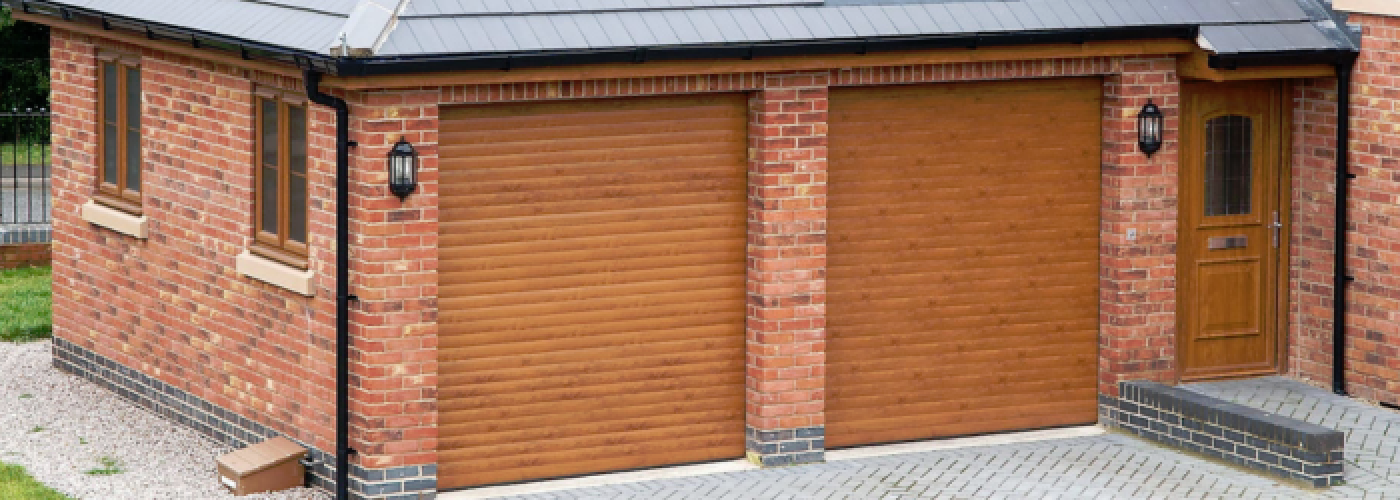


The connected garage has quietly moved from specification upgrade to buyer expectation. By 2027, smart home adoption in UK households is projected to reach 50.2%, and for developers planning 2026 handovers, automated roller doors are now a standard feature rather than a premium add-on. Buyers arriving at a show home expect the door to respond to a phone, sit within the same app as their heating and lighting, and close itself when the car leaves the drive.
The shift has been building for years. UK homeowners have adopted electric garage doors with striking speed, with motor-driven units now outselling manual alternatives across most new residential stock. When combined with interoperable smart-home standards, the garage becomes a working part of the home’s security and energy systems rather than a detached outbuilding that happens to share a wall.
Why roller doors suit connected homes
Roller doors are a natural fit for a connected spec. Their compact, coil-up design frees ceiling space for storage, EV charging cables or plant rooms. The motor sits directly above the opening, which simplifies wiring runs and smart hub integration during the first fix. For developers working on tight plot ratios or low-headroom garages, this layout removes a common constraint that sectional or up-and-over systems introduce.
Specification detail matters. Insulated slat construction, rolling-code receivers, anti-lift bars and photo-eye safety sensors should all feature as standard rather than options. Any powered door fitted to a new home should also follow the Door and Hardware Federation’s current code of practice, DHF TS 013-1:2025 which sets out the UK industry’s reference standard for safety, hazard control and commissioning. All such compliance documentation needs to sit within the handover pack. Specialist UK suppliers including Best Roller Garage Doors publish detailed specification material covering materials, insulation, security and installation, which is the technical ground most procurement teams cover before confirming a partner.
Integrating with the smart-home hub
The key to efficient implementation is treating the roller door as one node in the home’s wider network, not a standalone gadget. Most current motors ship with Wi-Fi or Matter compatibility, which means a single app can handle the door alongside lighting, heating, cameras and alarms. Matter is now backed by Apple, Google, Amazon and Samsung, so specifying a Matter-ready motor future-proofs the door against whichever ecosystem the buyer eventually chooses.
Three integration decisions tend to define the quality of the finished system:
- Power and data provision: fit a fused spur and a Cat6 drop during the first fix. Retrofitting these later is disruptive and often visible.
- Protocol choice: Matter-compatible motors give buyers the widest choice of hub and reduce callbacks from owners on different ecosystems.
- Commissioning: agree with the installer who pairs the door to the hub before the handover. Buyers should receive a working system, not a setup task.
Practical steps for developers
Build a repeatable specification across the site rather than changing brand or motor type plot by plot. This cuts training time for site teams, shortens snagging lists and gives your aftercare provider a single parts catalogue to hold. Warranty terms also tend to be stronger when volume is committed upfront. Standardising on one colour range and slat profile across a development keeps streetscapes coherent, which planning officers tend to look on favourably.
Pair the choice with a clear owner handover pack that explains app setup, service intervals, compliance certificates and the manual release. The handover is also the moment to flag that the door sits inside the wider smart-home system, not separately from it, allowing buyers to add it to the same app as their other devices rather than treating it as a standalone gadget.
The connected garage will not on its own sell a home, but its absence is increasingly noticed. For 2026 buyers comparing similar properties on the same street, a roller door that pairs cleanly with the rest of the house is a quiet but meaningful differentiator worth specifying early.