May 1, 2026
Steel rises at Mountpark Ferrybridge as first unit takes shape

Steel rises at Mountpark Ferrybridge as first unit takes shape

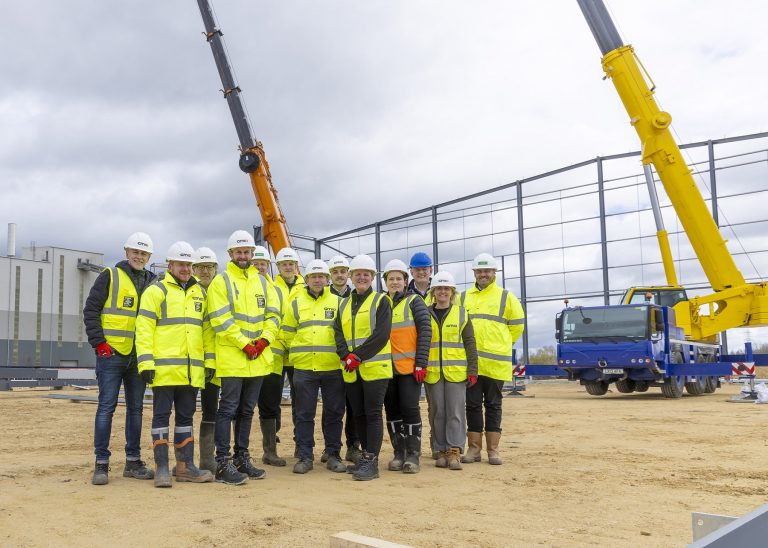
GMI Construction Group has begun erecting the structural steel frame of the first unit at Mountpark Ferrybridge, marking a major milestone in the regeneration of the former Ferrybridge C Power Station coal yard. Developed by specialist industrial and logistics developer Mountpark, the scheme secured hybrid planning consent in 2024, paving

Read More »
Winvic to launch ESG whitepaper at UKREiiF during landmark 25th year

Winvic to launch ESG whitepaper at UKREiiF during landmark 25th year

Winvic Construction Ltd will return to real estate event UKREiiF next month during its 25th year, leading its presence with the launch of a major new ESG whitepaper calling for regulatory action to accelerate net zero across the built environment. Demonstrating its continued commitment to the UK’s real estate, infrastructure

Read More »
Latest Issue
Issue 340 : May 2026

May 1, 2026

Getting the fundamentals right: Why early-stage discussion determines data centre success

Getting the fundamentals right: Why early-stage discussion determines data centre success

By Rob Davies, chapmanbdsp The rapid expansion of digital infrastructure has put unprecedented pressure on the delivery of data centres. As programmes shorten and power constraints intensify, projects are increasingly judged on speed to market and megawatt yield. Yet, according to Rob Davies, the industry’s greatest risks still arise long before construction begins. Due diligence, he explains, is where risk is cheapest to resolve; once a project pushes past concept delivery, every change costs both time and money. Data centres are fundamentally investment-led developments, and return on investment is directly linked to IT load and available power. This naturally encourages clients to maximise capacity wherever possible. However, that pressure often results in “max packing”, designing maximum yield before constraints are properly understood. The consequences frequently emerge later in the programme: deliverables are over-promised, designs prove unusable, yield is lost through redesign and all stakeholders expend significant fees correcting issues that could have been prevented. Naturally, decisions taken at the outset lock in cost, programme and flexibility far more than those made later, and Davies stresses that doing the work properly first time avoids costly reversals. In the current race to secure ever-greater power capacity, there is a growing temptation to accelerate these early steps to claim headline megawatts. Yet rushing the foundations of a project rarely improves returns; in practice, it often hinders ROI by forcing redesign, delaying delivery and reducing the very capacity developers were trying to maximise in the first place. Central to this is technical due diligence, which Rob Davies argues must be carried out rigorously at the very outset of a project rather than rushed through or treated as a procedural step under pressure to progress quickly into delivery. Early investigation establishes the direction of the project, informing whether a site is viable before major commitments are made. Aside from Power availability, flood risk, connectivity, environmental constraints (EIA requirements) and planning considerations all directly affect investment. Communication in these early stages prevents delays further down the line, particularly as competition for grid capacity intensifies. In an environment where speed is increasingly strategic, a site without a clear path or ‘ramping plan’ to power may never proceed regardless of design quality. Rob Davies, with his architectural background, also highlights the importance of holistic thinking during the feasibility stage. Early studies are often undertaken by a single discipline due to limited budgets, but this can create bias and downstream problems. Instead, bringing together architecture, engineering, planning and civils/site considerations from day one creates clarity for clients and investors. Looking at mechanical and electrical capabilities, site adjacencies, civils, power and planning together, rather than sequentially, enables clearer decisions and reduces redesign. Within chapmanbdsp’s integrated model, fewer handovers mean design, engineering, cost and delivery thinking remain aligned from the outset, while buildability and spatial efficiency can be assessed immediately alongside IT yield and power capabilities, the usual drivers. Rob’s architectural background shapes this approach. He focuses on translating technical constraints into clear commercial options, building strong relationships with clients and avoiding over-promising. Clients, he says, do not want drawings; they want certainty. Early conversations must therefore centre on outcomes and honest advice, even when that requires difficult discussions about achievable capacity. As demand grows and infrastructure becomes more complex, early collaboration must extend beyond consultants. Shorter programmes and constrained utilities mean the supply chain, modular manufacturers and alternative energy providers increasingly need to be engaged from the start. Phased and modular delivery strategies can accelerate deployment, while future power solutions may require new ways of thinking about grid reliance. Getting the right people involved early allows projects to move faster later. Trust plays a defining role in this highly specialised sector. Clients rely heavily on advisors because delivery is everything, and confidence is built through clarity and consistent outcomes. Under-promising and over-delivering, Rob Davies argues, remains more valuable than ambitious projections that cannot be achieved. Early-stage transparency not only supports better decisions but encourages repeat collaboration across developers, funds and operators. Rob Davies believes success is determined much earlier. Early-stage design is not simply preparation, it establishes whether a project works at all. As data centre demand accelerates and infrastructure pressures grow, competitive advantage will come less from how quickly facilities are built and more from how intelligently they begin. Building, Design & Construction Magazine | The Choice of Industry Professionals

Read More »
Steel rises at Mountpark Ferrybridge as first unit takes shape

Steel rises at Mountpark Ferrybridge as first unit takes shape

GMI Construction Group has begun erecting the structural steel frame of the first unit at Mountpark Ferrybridge, marking a major milestone in the regeneration of the former Ferrybridge C Power Station coal yard. Developed by specialist industrial and logistics developer Mountpark, the scheme secured hybrid planning consent in 2024, paving the way for up to 1.64 million sq. ft of B2 general industrial and B8 storage and distribution space, alongside significant infrastructure and connectivity improvements. Once fully operational, Mountpark Ferrybridge could support between 2,000 and 2,500 jobs. The first unit now rising on the 110-acre site is a 65,800 sq. ft distribution facility pre-let to Warburtons, the UK’s largest bakery brand. Secured on a 20-year lease, it will become the company’s 18th UK distribution depot. The project also marks the first collaboration between Mountpark and GMI. As part of the first phase of the development , it will also construct a second high-specification industrial unit. The second unit will total a 40,000 sq ft Grade-A logistics facility where foundations are underway. Practical completion is expected to occur in October 2026 and is available to let. Both buildings are targeting BREEAM ‘Outstanding’ certification and EPC A/A+ ratings. Sustainability measures include roof-mounted photovoltaic panels, air-source heat pumps, enhanced building fabric performance, intelligent LED lighting, electric vehicle charging infrastructure and facilities designed to encourage active and sustainable travel. Yorkshire-based GMI will also deliver extensive enabling works unlocking the wider site. In addition, there will also be new highway junctions, estate roads, drainage and landscaping infrastructure, together with modifications to existing rail infrastructure to maintain operational connectivity for neighbouring industrial users. Strategically located north of Ferrybridge, adjacent to the A1(M) and M62, the previously developed site is bordered by the River Aire and surrounded by established industrial operations. Following demolition of the former power station in 2022, the site was designated for employment use, creating a significant opportunity for long-term regeneration. Working alongside GMI as principal contractor, the wider consultant and advisory team include Oxalis Planning, SMR Architects, Ridge and Partners, SK Environmental, BWB, Circle Sustainability, Lampos, and Whitings. Ed Weston, Regional Director (Yorkshire) at GMI Construction Group, said: “The erection of the steel frame is a highly visible sign of progress and a real milestone. Ferrybridge has long been synonymous with energy and industry. Seeing new structures take shape signals the start of a new chapter focused on advanced logistics, manufacturing and high-quality job creation. We’re proud to be working alongside Mountpark to bring forward this next phase in the site’s evolution.” Brett Huxley, Development Director UK and Ireland at Mountpark, added: “Seeing real progress at this stage of construction is a key moment for the project. The strong momentum on site reflects continued demand for high-quality, sustainable logistics space in strategically located markets. With steel now in the ground, our vision is rapidly becoming a reality.” Building, Design & Construction Magazine | The Choice of Industry Professionals

Read More »
Future hospitals take shape as groundwork begins on new £12.8m urgent treatment centre at Leicester Royal Infirmary

Future hospitals take shape as groundwork begins on new £12.8m urgent treatment centre at Leicester Royal Infirmary

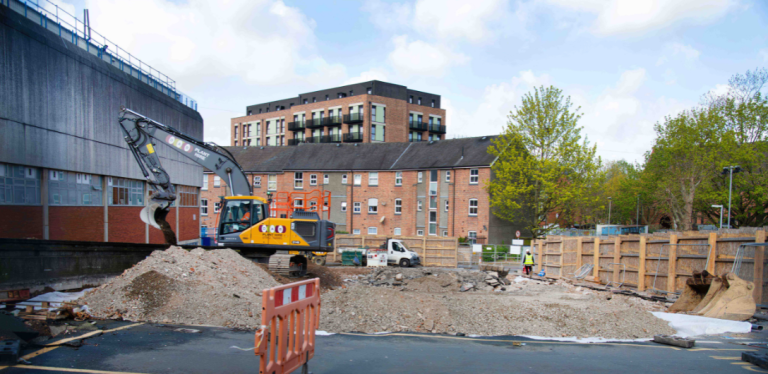
Our future hospitals are quickly becoming a reality, with groundwork now officially underway on the new £12.8 million Urgent Treatment Centre (UTC) at Leicester Royal Infirmary. The site has been set up, hoardings are in place, and excavation has begun to prepare the foundation area for the new facility – a visible and exciting step forward for the project. This marks a significant milestone in improving urgent care services for patients across Leicester, Leicestershire, and Rutland. The new UTC was announced in December 2025 and is expected to open in 2027. It will replace the existing Minor Injuries and Minor Illnesses (MIaMI) unit and will provide a modern, purpose-built environment designed around the needs of patients requiring same-day treatment for urgent but non-life-threatening conditions. Richard Mitchell, Chief Executive, said: “The start of groundwork on our new Urgent Treatment Centre is a really important and exciting moment for our Trust and for local communities. Seeing activity on site brings this investment to life and demonstrates our commitment to improving urgent care. This new facility will support our colleagues and significantly improve the experience for patients when they need us most.” As work gets underway, patients, visitors, and colleagues will begin to see changes across the Leicester Royal Infirmary site. The new Urgent Treatment Centre forms part of our future hospitals programme, which is focused on modernising hospital facilities and ensuring services are fit for the future. It will complement the £39m of funding secured in December last year from the national New Hospital Programme. This will fund essential enabling works to start this year, including the relocation of services such as the hearing and balance service from the Knighton Street campus to the East Midlands Planned Care Centre in early 2027. These works will support plans for a new Women’s and Children’s Hospital, with building expected to start in 2032. It is expected to bring maternity, neonatal, gynaecology and children’s services together into a single, state‑of‑the‑art building.  Natalie Forrest, Chief Programme Officer of the New Hospital Programme said: “It’s great to see work starting on site at Leicester Royal Infirmary, marking real progress for local patients and communities. This new Urgent Treatment Centre will provide a modern, purpose-built space that supports faster, more effective care closer to home. We’re proud to be working with local partners to deliver facilities that meet the needs of Leicester, Leicestershire and Rutland now and into the future.” Dr Saad Jawaid, Consultant in Emergency and Pre-hospital Emergency Medicine at UHL, said: “The new Urgent Treatment Centre will give us a purpose-built space that reflects how urgent care is delivered today. It will help us improve patient flow, provide care in a more appropriate environment and deliver a better overall experience for patients.” The UTC builds on a period of significant investment across our hospitals over the past 12 months, including the East Midlands Planned Care Centre and Endoscopy Unit at Leicester General Hospital, the Preston Lodge rehabilitation unit in North Evington, and the Hinckley Community Diagnostic Centre. These developments are helping to deliver world‑class services closer to where patients live, supporting improved access to care, and contributing to the Government’s 10‑year plan for the NHS. Construction work is being delivered by Henry Brothers, one of the UK’s leading construction companies, with further updates to be shared as the project progresses. Ian Taylor, managing director of Henry Brothers, said: “Breaking ground on this new Urgent Treatment Centre marks a significant milestone. We’re proud to be working at the forefront of the health construction sector, helping to bring a vital and inspiring community resource to fruition. Once complete, these facilities will make a real difference to how local people access urgent care close to home.” Building, Design & Construction Magazine | The Choice of Industry Professionals

Read More »
Winvic to launch ESG whitepaper at UKREiiF during landmark 25th year

Winvic to launch ESG whitepaper at UKREiiF during landmark 25th year

Winvic Construction Ltd will return to real estate event UKREiiF next month during its 25th year, leading its presence with the launch of a major new ESG whitepaper calling for regulatory action to accelerate net zero across the built environment. Demonstrating its continued commitment to the UK’s real estate, infrastructure and investment sectors, Winvic will have an expanded ‘Winvic and Partners Pavilion’, which will be shared with partners Ridge, UMC Architects, Maber and M1 Agency, creating a collaborative hub for engagement, knowledge-sharing and industry dialogue. As part of its position on the advisory board of The Westminster Policy Liaison Group (PLG) on ESG, Winvic has spearheaded the whitepaper, positioning the UK Net Zero Carbon Building Standard (UKNZCBS) as a critical framework for delivering genuinely net zero carbon assets. Drawing on insights from a broad range of industry bodies and experts including investors, developers, contractors, consultants, designers and policymakers, the paper sets out clear, targeted recommendations for government to help accelerate adoption at scale and inform the future direction of net zero policy. Contributors to the whitepaper include UK Green Building Council (UKGBC), Royal Institute of Chartered Surveyors (RICS), Building Research Establishment (BRE), Chartered Institute of Building (CIOB), Winvic Construction, BWB Consulting, Firethorn Trust, Panattoni, Ridge and Partners, Royal London Asset Management (RLAM), Royal Town Planning Institute (RTPI), UMC Architects and Wordsworth Excavations. Further insights were gained from The Lord Porter of Spalding CBE and Lancaster City Council at a recent PLG round table where the UKNZCBS was discussed. The ‘Winvic and Partners Pavilion’ will host a programme of panel discussions and interactive sessions throughout UKREiiF, including a dedicated session exploring the whitepaper’s findings involving a number of the contributors and Mike Reader MP, Chair of the All Party Parliamentary Groups (APPGs) on the BuiIt Environment and Infrastructure, Business Champion for Construction and MP for Northampton South. Wider topics will include social value and planning reform, build-to-rent, data centre viability, and what makes “good” industrial and logistics development. In addition to its pavilion programme, Winvic will engage with a range of partners and initiatives during the three-day event. Leeds Children’s Charity has been selected as its local charity partner, with funds raised during the event supporting its work in the region, social enterprise Fusion21, Invest Warwickshire, developer Prologis, and partners Ridge and Maber will also host panel sessions within the pavilion, reinforcing Winvic’s collaborative approach across the industry. As it marks 25 years in business, Winvic’s presence at UKREiiF and its launch of the whitepaper celebrates its legacy, and its commitment to help shape policy and accelerate the adoption of net zero standards across the industry. Danny Nelson, Managing Director – Industrial, Logistics & Data Centres at Winvic, said: “Over the past 25 years, Winvic has evolved in step with the industry, from a regional contractor rooted in Industrial & Logistics to a trusted national delivery partner across Industrial & Logistics, Multi-Room, Civils & Infrastructure and now Data Centres. That journey reflects a business responding to change while maintaining a disciplined approach to delivery. “It’s particularly meaningful to be at UKREiiF during our 25th year, sharing this milestone with partners and peers. This whitepaper is an important step in bringing together industry insight to help shape the policy and regulatory environment needed to deliver net zero at scale. Strong, collaborative partnerships are key to solving the sector’s most complex challenges.” Arun Thaneja, Technical Services and Sustainability Director at Winvic, said: “We’re proud to share a whitepaper that sets out a clear call to action for regulatory backing of the standard. Drawing on insights from across the industry, it provides practical recommendations for policymakers, highlighting where greater clarity and alignment can accelerate adoption of the UK Net Zero Carbon Building Standard. Our focus is on ensuring ESG strategy translates into real outcomes on projects and across communities, helping to underpin the next phase of progress across the built environment. I look forward to sharing this at UKREiiF.” Recognised as the nation’s leading ‘shed specialist’, Winvic recently celebrated the construction of 110 million sq ft of industrial space and has expanded into data centre delivery. The company has also built a strong reputation in complex civil engineering and infrastructure, delivering over 125km of highways works and six Rail Freight Terminals to date. In the build-to-rent and student accommodation sector, Winvic has delivered more than 15,000 beds. Building, Design & Construction Magazine | The Choice of Industry Professionals

Read More »