

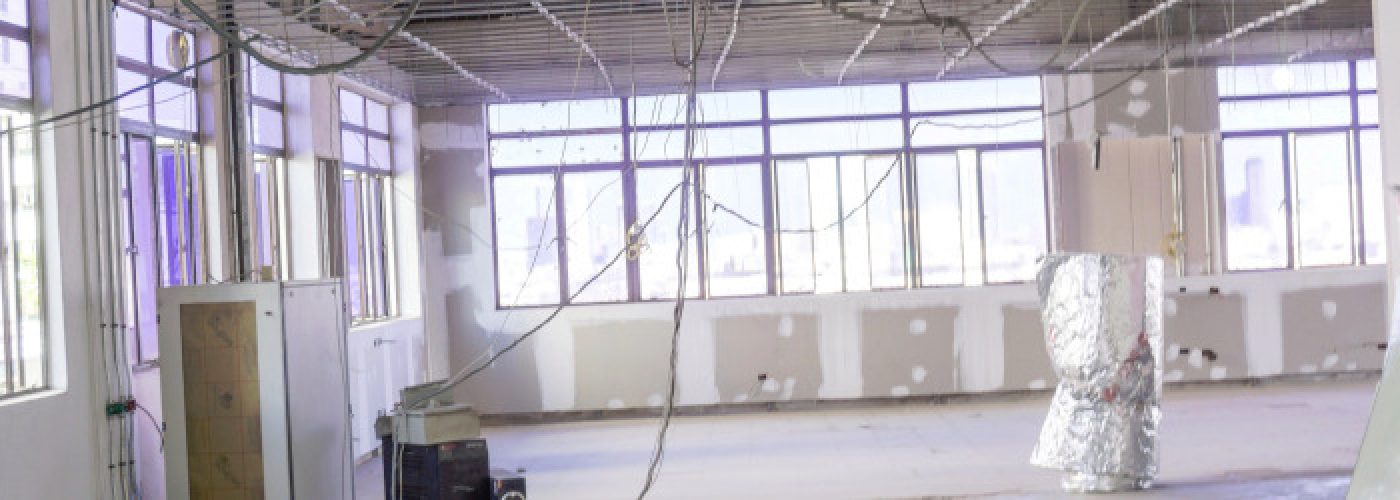


Pressure on urban commercial stock has never been greater. Developers are pushing to extract maximum usable space from ageing city-centre buildings, while tightening Minimum Energy Efficiency Standards (MEES) regulations demand that those same buildings are refurbished to a credible green standard.
On paper, the two ambitions complement each other. In practice, the projects that attempt both simultaneously are increasingly the ones that stall, run over budget, or grind to an expensive halt mid-construction.
The culprit is rarely poor design or bad intentions. It is structural information that was never gathered before the work began.
The hidden obstacles beneath the surface
Older commercial buildings carry decades of undocumented alterations, concealed materials, and structural quirks that simply do not appear on original drawings. This is precisely why understanding the different types of building survey and commissioning the right one before design work is finalised matters so much. A Level 3 building survey will assess the full fabric of a structure, identify defects and their causes, and provide the remediation detail that allows accurate budgeting before a contractor is ever appointed.
Asbestos is the most widely recognised hazard. Any building constructed before 2000 may contain it, and the HSE confirms that asbestos remains the single greatest cause of work-related deaths in Great Britain, responsible for over 5,000 fatalities every year.
Under the Control of Asbestos Regulations 2012, any refurbishment that disturbs the fabric of a pre-2000 structure requires a formal refurbishment or demolition survey before a single wall is touched. When that survey has not been commissioned ahead of the programme, discovery of asbestos-containing materials mid-project triggers mandatory stop-works, specialist removal contracts, and significant cost additions that no contingency budget anticipated.
Structural load-bearing elements present an equally serious risk. Contractors regularly discover that the walls earmarked for removal to create open-plan, flexible spaces are, in fact, load-bearing. The structural frames of 1960s and 1970s commercial blocks were not designed to accommodate the additional weight of green roof systems, solar installations, or mechanical plant that modern sustainability retrofits require.
Damp ingress, failed waterproofing membranes, and compromised foundations compound the problem further, each requiring remedial work before any insulation upgrade or low-carbon heating system installation can proceed. The result is a cascade of delays that prove disruptive and costly.
Why urban intensification makes this worse
The drive to maximise space in dense urban centres amplifies every one of these risks. When developers are adding floors, converting rooftops, or reconfiguring building cores, the structural interrogation required is extensive. Yet the commercial logic of urban intensification often compresses the pre-construction phase, with surveys treated as a cost to minimise rather than an investment to prioritise.
There is also a sustainability irony at play. Retrofitting existing commercial stock is far less carbon-intensive than demolition and rebuild. If structural problems cause a project to stall, not only does the intended environmental benefit fail to materialise, but the embodied carbon of all materials already deployed is wasted. As research into commercial retrofit consistently shows, poor upfront investigation is among the primary drivers of cost overruns. Getting the structural assessment right at the outset is not only financially rational; it is the only way to protect the green credentials of the project itself.
Structural insight as a prerequisite, not an afterthought
The sustainable refurbishment agenda of achieving MEES EPC ratings of B or above is the right one. However, recent statistics paint a sobering picture: there has been a 20% year-on-year drop in upgrades to EPC ratings A*-B, with 13,000 commercial properties in England and Wales rated F or G. The commercial property sector, at present, is unlikely to meet key energy efficiency standards by 2030, and may fall short by a decade.
The volume of retrofit work required over the coming decade is therefore substantial and urgent. But ambition without adequate preparation is a formula for failure.
Developers who commission thorough structural investigations before committing to design solutions will find that their programmes run more smoothly and their sustainability outcomes are delivered as intended. Those who do not will continue to generate the cautionary tales that give the wider retrofit market a credibility problem it can ill afford.
In a market where urban space is at a premium and net zero targets are non-negotiable, the building survey is not a box-ticking exercise. It is the foundation on which every credible sustainable refurbishment is built.