

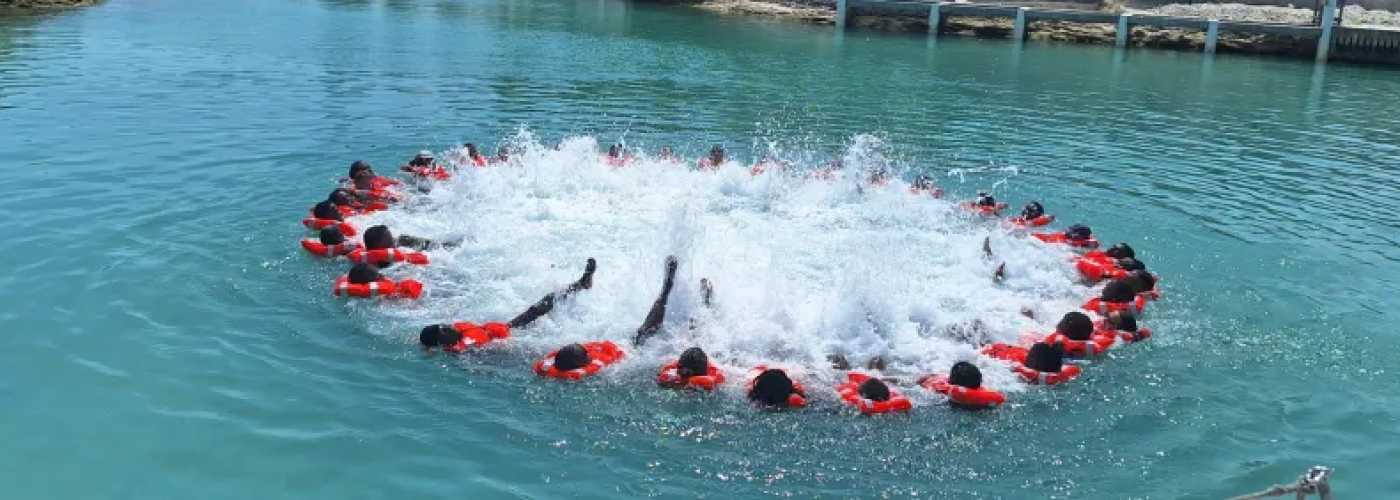


Safety requirements across marine, offshore, port, energy, transport, and industrial sectors continue to evolve as organizations operate in increasingly complex and regulated environments. In these settings, personnel are often required to demonstrate a clear understanding of emergency procedures, risk awareness, and safe working conduct before accessing operational areas. Structured safety training plays a central role in ensuring workers are adequately prepared for environments where conditions can change rapidly and where safety responsibilities must be clearly understood from the outset.
Marine and port operations
Marine and port environments combine vessel movement, controlled access points, cargo handling activity, and time-sensitive logistics, creating a working environment where safety awareness is integral to operational continuity. In these settings, even routine tasks can carry elevated risk due to changing conditions and high levels of activity across shared operational spaces.
The STCW basic safety training course is widely recognized as a foundational requirement within this context, supporting personnel working across vessels, terminals, and associated infrastructure. It establishes a baseline understanding of survival awareness, fire response, first aid, and safe working behavior, all of which are essential in environments where clarity of action during emergencies is critical.
For contractors, technicians, logistics personnel, and inspection teams, this level of preparation supports safer engagement with operational activity and improves alignment with site procedures, communication protocols, and emergency response expectations.
Offshore and energy
In offshore and energy environments, the operational risk profile increases further due to remote working conditions, vessel transfers, and structured evacuation requirements. Personnel supporting offshore wind, oil and gas, or marine engineering operations are often required to demonstrate additional readiness before mobilization.
In many cases, this is addressed through BOSIET training, which provides specific preparation for offshore travel, sea survival, and helicopter transfer procedures. While distinct from STCW certification, both frameworks may operate in parallel depending on role requirements and deployment conditions. Understanding where each applies is increasingly important for employers managing multi-disciplinary project teams and complex contractor mobilization schedules.
Transport and industry links
The relevance of maritime safety training extends beyond ports and vessels into wider transport and industrial networks. Logistics hubs, energy infrastructure sites, and intermodal operations often involve overlapping personnel, contractors, and procedures across multiple controlled environments.
In these contexts, the STCW basic safety training course provides a consistent foundation in emergency awareness and safe conduct. While it does not replace site-specific induction or task-based instruction, it helps ensure personnel arrive with a baseline understanding of safety expectations, improving consistency in how procedures are interpreted and applied across different operational settings.
This consistency becomes particularly important where multiple contractors and service providers operate within shared infrastructure, requiring clear communication and alignment on safety standards.
Training pathways
As offshore operations expand across energy and infrastructure sectors, distinctions between training frameworks have become increasingly significant. STCW certification is primarily designed for maritime environments, while offshore-specific programmes such as BOSIET training are intended for personnel working on or travelling to offshore installations.
For employers, understanding these distinctions is essential when assigning personnel to roles and planning mobilization. Selecting the correct training pathway helps ensure compliance with operational requirements, reduces delays caused by unsuitable certification, and strengthens overall workforce readiness in environments where safety systems must function without ambiguity.
Conclusion
The STCW basic safety training course provides an essential foundation for personnel working in marine-related environments, supporting core competencies in survival awareness, fire safety, first aid, and safe working practices. Across marine, offshore, port, energy, transport, and industrial sectors, its value lies in establishing a consistent safety baseline before personnel enter operational settings. When aligned with site procedures and sector-specific requirements such as BOSIET where applicable, it helps support safer, more consistent operations across increasingly complex working environments.