

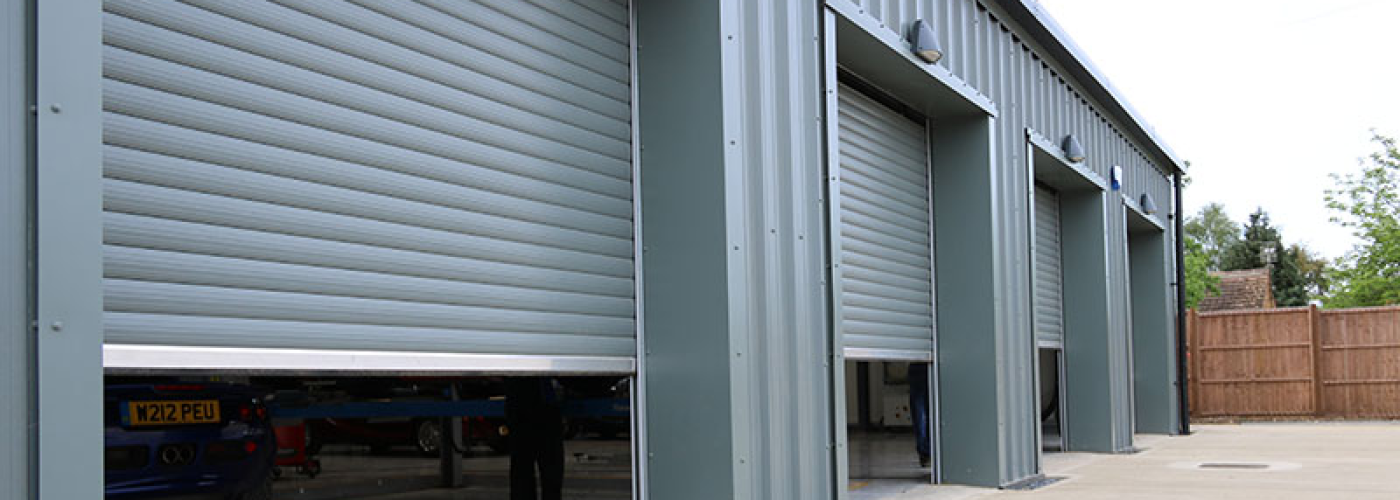


Roller doors are one of those building elements that look simple and are not. On the drawing they are a single line and a note. In reality they are a system of curtain, guides, drum, motor, and structure that has to satisfy wind loads, clearances, fire requirements, and durability standards, all while doing what the design intends. When a roller door is specified late or loosely, the result is the familiar one: a clash on site, a redesign, or a door that underperforms for the life of the building.
This is a practical brief for architects and designers who want to specify roller doors well from the start. It covers the standards that govern them, the dimensional realities that shape the design, and the decisions that are far cheaper to make on paper than on site. Getting these right early protects the design intent and keeps the project moving.
Specify Early, Not Late
The single most useful principle is to bring the door into the design early. Roller doors impose real requirements on the surrounding structure, headroom above the opening, side room beside it, fixing points, lintel capacity, and power supply. When those are accommodated from the outset, the door disappears into the design as intended. When they are discovered late, something has to give, and it is usually the architecture.
Engage a door specialist during design development rather than at construction. A good supplier will provide shop drawings, structural loads, and clearance requirements that you can coordinate with the engineer and builder before anything is locked in. This single habit prevents the majority of roller door problems on site, which almost always trace back to assumptions made without the real numbers.
The Standards That Govern Roller Doors
Roller doors in Australia sit within a framework of standards, and a working knowledge of them protects both the design and the certifier sign-off. The key references shape wind performance, safety, and operation.
Wind Loading
Wind is the dominant structural consideration. Doors must be rated to withstand the wind pressures for their location and exposure, derived from the wind actions standard, AS/NZS 1170.2, and the relevant region classification. A large door on an exposed elevation experiences significant pressure, and a curtain or fixing not rated for it can bow, fail, or blow out of its guides. Specify the wind classification with the supplier and confirm the door is engineered and, where appropriate, tested to meet it. In cyclonic regions of Australia this is critical, but even temperate sites like Perth see strong fronts that test wide openings.
Safety and Operation
Automated doors carry safety obligations. Powered doors should incorporate appropriate safety features such as obstruction detection, and the controls and operation should align with the applicable Australian Standards for powered doors and gates. For any door the public can access, or where children are present, these safety provisions are not optional extras but core requirements that belong in the specification.
Fire and Other Ratings
Where a door penetrates a fire-rated element or forms part of a required separation, a fire-rated roller shutter may be needed, tested to the relevant fire standard and certified accordingly. Flag these openings early, because fire-rated doors have specific construction, clearance, and control requirements that differ from standard doors and must be coordinated with the building’s fire strategy.
The Dimensions That Make or Break the Detail
Roller doors are unforgiving about space, and the dimensions are where designs most often come unstuck. Three measurements deserve particular attention.
First, headroom. The curtain coils onto a drum above the opening, and that drum needs vertical space. A roller door is actually one of the more headroom-efficient options, but it still requires a defined allowance above the lintel that you must reserve in the design. Specify it with the supplier rather than guessing, as it varies with door size and motor type.
Second, side room. The guides that the curtain runs in occupy space on each side of the opening, and the motor needs a side mounting position on many configurations. Crowding a roller door against a return wall or an adjacent opening is a common and avoidable clash. Confirm the guide and motor allowances before fixing the opening location.
Third, the structure itself. The drum, curtain, and operating forces impose loads on the lintel and jambs, and the fixings need something solid to anchor to. Coordinate the structural support and fixing substrate with the engineer so the door has adequate capacity to bolt to. A door is only as reliable as what holds it up.
Insulation, Acoustics, and Sealing
Standard single-skin roller doors offer minimal thermal or acoustic performance, which is fine for a warehouse but a problem for conditioned or occupied spaces. Where the brief calls for thermal comfort or noise control, consider insulated door options and pay attention to perimeter sealing. The gaps around a poorly sealed door undermine the building envelope and let in dust, draught, and water.
For projects chasing energy performance or comfort, treat the door as part of the envelope rather than a hole in it. Specify seals, consider insulated curtains or alternative door types where performance demands it, and coordinate the door with the surrounding weatherproofing details. An uninsulated, unsealed door can quietly defeat a great deal of careful envelope design elsewhere.
Durability and the Australian Environment
Material specification determines how a door ages, and the Australian environment is demanding. Corrosion is the leading concern, particularly within a few kilometres of the coast, where airborne salt attacks unprotected steel and hardware. From Perth’s coastal corridor to any seaside site, specify quality Colorbond or appropriately coated steel and corrosion-resistant fixings rated for the exposure category.
UV exposure is the other factor. Australian sun degrades poor finishes quickly, so specify finishes warranted for the conditions. Getting the durability specification right is not just about longevity, it is about the building continuing to present and perform as designed years after handover, without premature replacement disrupting an occupied facility.
From the Project Files: A Clash Caught in Time
To illustrate why early coordination matters, here is a case the Slide And Glide technical team shared, with details changed at the client’s request. On a light industrial development in Perth’s south, a designer had specified a row of wide roller doors to the warehouse tenancies, with the openings drawn close to the underside of a structural beam to maximise clear height.
During design review, the door supplier flagged that the headroom shown did not allow for the drum and motor at the door width required, and that the openings sat too tight to the beam. Because this surfaced on paper rather than on site, the fix was a straightforward adjustment to the lintel level and opening width, coordinated with the structural engineer before construction. Had it been missed, the contractor would have faced an expensive variation and a compromised clear height. The technical team’s point is one architects know well but is easy to forget under deadline: the cheapest time to solve a roller door problem is before the drawings are issued for construction.
Aesthetics Without Sacrificing Performance
Roller doors are not only utilitarian. Modern ranges offer a variety of profiles, finishes, colours, and glazing options that let the door contribute to the architecture rather than detract from it. On a commercial frontage or a design-led industrial build, the door can be a deliberate part of the composition, and the industrial aesthetic of an exposed roller door is increasingly sought after rather than hidden.
The key is to pursue the look without compromising the engineering. Work with a supplier who can deliver the desired appearance within a door that still meets the wind, safety, and durability requirements for the project. The best outcomes treat performance and appearance as a single problem solved together, not as a trade-off where one is sacrificed for the other.
Working With the Right Supplier
Much of what makes a roller door specification succeed comes down to the supplier relationship. A capable partner provides the technical data you need to coordinate the design, manufactures to the required standards, installs correctly, and supports the door over its service life. That is a very different proposition to a box-shifter who supplies a door and walks away.
An experienced commercial and industrial specialist such as Slide And Glide, a specialist in Garage Doors in Perth, can engage during design, supply shop drawings and structural information, advise on the right specification for the wind, fire, and durability requirements of the project, and deliver an installation that matches the documentation. For an architect, having that input early is the difference between a door that vanishes neatly into the design and one that becomes a problem on site. Build the relationship before you finalise the details, not after.
Access, Egress, and Accessibility
Roller doors often sit on circulation routes, and that brings access and egress considerations into play. Where a door forms part of a required exit path, or where people and vehicles share an opening, the operation, speed, and controls need to suit that use, and any interaction with emergency egress must be coordinated with the building’s life-safety strategy. A large vehicle door may need a separate personnel door or an integrated pass door so people are never tempted to duck under a moving curtain.
Accessibility is the other piece. Control heights, ease of operation, and clear opening dimensions all matter where the door serves people with a range of mobility. Considering these early, rather than retrofitting them, keeps the door compliant and genuinely usable for everyone who passes through it.
Coordinating Power, Controls, and Maintenance
An automated roller door needs power and controls, and these are easy to overlook on the drawings. Coordinate the power supply, the control location, and any integration with access systems, intercoms, or building management early, so the electrician is not improvising on site. The control position should suit the way the door is actually used, whether that is a wall button, a remote, a keypad, or a sensor.
Whole-of-life maintenance also belongs in the thinking. A door needs periodic servicing, and the design should allow safe access to the drum, motor, and fixings for that work. Specifying a door from a supplier who offers ongoing service means the building owner inherits a maintainable asset rather than a sealed problem. Designing for the door’s whole life, not just its installation, is what keeps it performing long after handover.
A Short Pre-Specification Checklist
Before a roller door is locked into the documentation, a brief checklist saves a great deal of trouble downstream. Confirm the wind classification for the site and exposure, and that the door is engineered to meet it. Reserve the headroom and side room the chosen door and motor require, coordinated with the structure. Verify the lintel and jamb can carry the loads and provide a sound fixing substrate. Identify any fire-rated or egress-related openings early and coordinate them with the life-safety strategy.
Then settle the performance items: insulation and sealing where comfort or energy targets demand it, corrosion and UV specification suited to the location, and the power supply and control position for any automated door. Finally, confirm safe maintenance access to the drum and motor for the building’s whole life. Run an opening against that list and most of the common roller door pitfalls simply never arise, because they were resolved on paper where they are cheapest to fix.
The Bottom Line
A roller door is a simple line on a drawing and a genuinely engineered system in reality. Specify it early, understand the standards that govern wind, safety, and fire, reserve the headroom and side room it needs, and get the insulation and durability right for the use and the environment. Do that and the door supports the design exactly as intended.
Treat it as an afterthought and it will assert itself the hard way, through clashes, variations, and underperformance. The good news is that every one of these pitfalls is avoidable with early coordination and the right supplier. A few conversations during design development buy a lifetime of a door that simply does its job, which is precisely what good detailing is meant to achieve.