June 15, 2026
UK cities entering a new era of mixed-use development

UK cities entering a new era of mixed-use development

City centre development is becoming more integrated, with residential rental tenures now dominating delivery, prime office supply tightening, and retail reshaping regeneration across the UK’s major regional cities, according to a new report by Savills. This new phase of regeneration within UK cities is becoming defined by increasingly integrated mixed-use

Read More »
New active travel bridge for Cardiff by Moxon and Arcadis gets go-ahead

New active travel bridge for Cardiff by Moxon and Arcadis gets go-ahead

Moxon Architects and Arcadis have been granted planning approval for a new pedestrian and cycle bridge across the River Taff in Cardiff. The 165m-long bridge is part of Cardiff Council’s ambitious Channel View Estate regeneration scheme and will improve connectivity and accessibility, encouraging active travel at a local and city-wide

Read More »
Emerging designs for new St Mary’s Hospital revealed

Emerging designs for new St Mary’s Hospital revealed

Emerging designs for the redevelopment of the St Mary’s Hospital site in Paddington have been revealed by Imperial College Healthcare NHS Trust, as part of a second round of public consultation on its plans. The redevelopment sees the construction of a new, 800-bed major trauma and general hospital to meet

Read More »
Burges Salmon advises on £199m Tritax Big Box asset sale

Burges Salmon advises on £199m Tritax Big Box asset sale

Independent UK law firm Burges Salmon has advised Tritax Big Box REIT plc, one of the UK’s leading listed investors in high-quality logistics real estate, on the completion of a £199 million sale of a portfolio of six logistics assets. The deal forms part of the FTSE100 logistics real estate

Read More »
Latest Issue
Issue 341 : Jun 2026

June 15, 2026

UK cities entering a new era of mixed-use development

UK cities entering a new era of mixed-use development

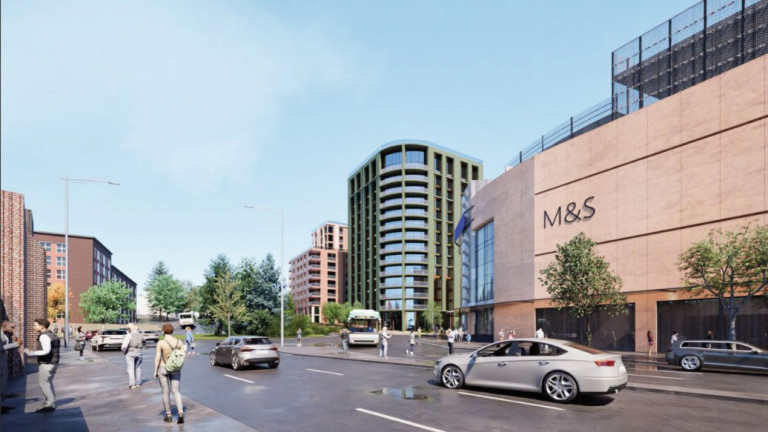
City centre development is becoming more integrated, with residential rental tenures now dominating delivery, prime office supply tightening, and retail reshaping regeneration across the UK’s major regional cities, according to a new report by Savills. This new phase of regeneration within UK cities is becoming defined by increasingly integrated mixed-use development, as residential, commercial and leisure uses become more interdependent in response to shifting economic dynamics, changing patterns of urban living and evolving investor preferences. Across regional markets, the balance between demand, development viability and structural change is shaping the next cycle of urban growth. According to the latest report by Savills Research – UK Cities: a mixed-use perspective – the decade leading up to the global financial crisis saw city centre development in the Big Six regional cities (Birmingham, Bristol, Edinburgh, Glasgow, Leeds and Manchester) dominated by private sale housing. Over the last 10 years, however, a much broader mix of uses has emerged, with Build to Rent (BTR) overtaking private sale as the primary driver of city centre housing delivery, Purpose-Built Student Accommodation (PBSA) expanding rapidly, and co-living emerging as a new asset class. This shift reflects strong demand fundamentals and the growing role of institutional capital, which has supported large scale, placemaking-led regeneration. Savills notes that rental growth across the Big Six has averaged between 4% and 7.5% per year over the last five years, supporting strong returns – although continued build cost increases and growing affordability pressures mean developers and local planning authorities will need to take a pragmatic approach to viability in order to maintain strong development pipelines. The report also highlights a significant structural shift in office markets. In the post-pandemic environment, uncertainty around hybrid working contributed to rising vacancy in older, less efficient buildings, but demand has become increasingly polarised as occupiers prioritise modern, highly sustainable offices in central, well-connected locations. More than 60% of expected 2026 office take-up is forecast to be Grade A and prime, underlining the depth of demand for high-quality space. At the same time, the office development pipeline remains exceptionally thin. Savills states that only Manchester and Leeds currently have new schemes under construction that are due to complete beyond 2026, leaving supply constrained just as occupiers focus on securing prime accommodation. Prime headline office rents have risen by an average of 30% over the past five years and, if that trajectory continues, could soon approach the £60 per sq. ft. threshold that many developers consider necessary to re-establish viability. Retail is also evolving, moving away from traditional formats towards mixed-use environments centred on experience, leisure, and food and beverage. In this context, retail plays an essential role in placemaking by supporting footfall and enhancing the attractiveness of city centres. Ground-floor activation – including shops, bars, restaurants and cafés – is increasingly recognised as the element that connects homes, offices and hotels, helping to attract target occupiers and residents while maximising value across the wider scheme. Research from Savills also illustrates the scale and diversity of delivery across the UK’s major urban markets between 2016-2025. Among the Big Six, Manchester recorded 5.3 million sq. ft. of office delivery, 15,650 BTR homes and 3,448 co-living beds, while Birmingham delivered 3.4 million sq. ft. of offices, 6,397 BTR homes and 6,985 student beds. Leeds delivered 10,042 student beds, while Edinburgh recorded 947,000 sq. ft. of retail delivery. Looking ahead, Savills says city centre development will continue to be driven by strong underlying demand, but increasingly constrained by viability challenges. Emily Williams, Director of Residential Research at Savills, says: “Residential is expected to remain at the heart of city centre regeneration, particularly through rental-led models, although rental growth is expected to moderate as affordability limits are reached. High construction costs, borrowing costs and regulation are all expected to continue restricting new supply and widening the gap between demand and delivery.” Jonathan Lambert, Co-lead of Savills’ Mixed-Use Sector Group, adds: “Market polarisation is certainly a defining theme, with larger and more established cities best placed to sustain development, while smaller or more constrained markets may struggle in a higher-cost, higher-risk environment, particularly where planning obligations present too many challenges. “Local authorities will need to adopt a pragmatic approach to viability, with public-private partnerships and the attraction of long-term patient institutional capital likely to be key to unlocking future opportunities.” Building, Design & Construction Magazine | The Choice of Industry Professionals

Read More »
McAlpine Exits £4bn Agratas Gigafactory Project as TSL Takes the Helm

McAlpine Exits £4bn Agratas Gigafactory Project as TSL Takes the Helm

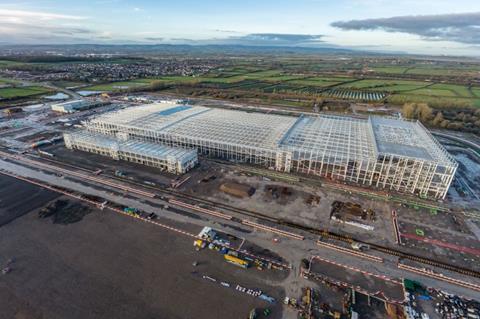
Sir Robert McAlpine is stepping away from one of the UK’s most significant industrial developments after agreeing to part ways with client Agratas on the next phase of the £4bn electric vehicle battery facility in Somerset. The contractor has confirmed that it will no longer be involved in the delivery of the Agratas gigafactory at Bridgwater, having successfully completed the initial phase of the landmark project. Buckinghamshire-based engineering and construction specialist TSL has now been appointed as the new construction partner. McAlpine secured the prestigious contract in 2024, winning the race to deliver the first phase of the major battery manufacturing plant, which is being developed by Agratas, Tata Group’s global battery business. Tata Motors subsidiary Jaguar Land Rover (JLR) is expected to be one of the anchor customers for the facility, which represents a substantial investment in the UK’s rapidly expanding electric vehicle supply chain. In a statement, Sir Robert McAlpine said: “Having successfully completed the first phase of Agratas’s battery manufacturing facility in Somerset, following extensive discussions, we have mutually agreed to part ways. “We are now working closely with Agratas to support a smooth and orderly transition to a new construction partner.” Agratas said the decision had been made following a review of the project’s evolving requirements and reflected the need for a different approach as the development moves into its next stage. The company stated: “As the project has progressed, we have determined that a different construction delivery model is needed to support the next phase of our development. “Following a review of the project’s requirements, we have decided to transition to a new construction partner. We thank our existing construction partner for their support to date. “This change reflects the evolving needs of the project, positioning us to deliver the next phase with the capability and focus required to meet our objectives safely, efficiently and on schedule.” McAlpine expressed pride in the progress achieved during its involvement with the scheme and highlighted the contribution of its wider project team and supply chain partners. The contractor added: “We are immensely proud of the progress and achievements made to date, done so in true partnership with our supply chain partners and remain committed to supporting Agratas with the effective handover to the next phase.” The Agratas project had been viewed as a flagship example of Sir Robert McAlpine’s strategic focus on key growth sectors, following a business reset that saw the firm prioritise industrial, commercial and healthcare opportunities. Taking over responsibility for the next phase is TSL, the Gerrards Cross-headquartered technical engineering and construction specialist. The company operates across Europe, the Middle East and Africa (EMEA), the Americas and the Asia-Pacific region, with expertise in delivering complex industrial and advanced manufacturing facilities. According to its latest financial results, TSL reported a turnover of £527m in 2024 and achieved a pre-tax profit of £27m, underlining the company’s growing presence within the industrial construction sector. The Somerset gigafactory is one of the UK’s most strategically important manufacturing projects and forms a key part of the nation’s ambitions to strengthen domestic battery production capabilities to support the transition to electric vehicles. Once operational, the facility is expected to supply batteries for Jaguar Land Rover’s next generation of electric vehicles, while also helping to secure thousands of jobs and reinforce the UK’s position within the global automotive industry. Construction on the development continues, with the plant currently scheduled to become operational next year as Agratas advances the next phase of delivery under its new construction model. Building, Design & Construction Magazine | The Choice of Industry Professionals

Read More »
Derbion Masterplan Secures Green Light for 1,150 New Homes in Derby City Centre

Derbion Masterplan Secures Green Light for 1,150 New Homes in Derby City Centre

A major regeneration programme set to reshape Derby city centre has moved a significant step forward after plans to deliver more than 1,150 new homes received planning approval. Shopping centre owner Derbion has secured consent for an ambitious mixed-use masterplan that will transform two prominent redevelopment sites, supporting Derby’s long-term vision to create a more vibrant and sustainable city centre. The approved proposals focus on the former Eagle Market site and the nearby Bradshaw Way Retail Park, both of which have been identified by Derby City Council as priority regeneration areas within its wider Vision for Derby strategy. The largest element of the scheme will see the long-vacant Eagle Market site redeveloped to provide 674 new homes across six residential buildings. The plans aim to breathe new life into a key city centre location that has remained underutilised since the closure of the historic market complex. Meanwhile, the Bradshaw Way Retail Park site will accommodate a further 478 homes, including a landmark 14-storey residential tower that is expected to become a defining feature of Derby’s evolving skyline. Derbion said the development forms a central part of its broader strategy to diversify the city centre by creating a thriving mixed-use destination where people can live, work and socialise. Alongside new homes, the wider vision seeks to strengthen Derby’s retail, leisure and hospitality offer by increasing footfall and supporting local businesses. The company believes that encouraging more people to live in the city centre will help attract additional investment from retailers, food and beverage operators and leisure brands looking to benefit from a growing residential population. The professional team behind the proposals includes Leonard Design Architects, Currie & Brown, Bidwells and Waterman. Beth McDonald, Managing Director at Derbion, described the masterplan as a once-in-a-generation opportunity to contribute to the revitalisation of Derby’s historic heart. She said the approval represented an important milestone in delivering much-needed new homes while creating the conditions for further economic growth and investment across the city centre. The development is expected to play a pivotal role in Derby’s regeneration ambitions, helping to transform underused sites into vibrant new neighbourhoods that support the city’s future prosperity. Building, Design & Construction Magazine | The Choice of Industry Professionals

Read More »
DMA Group secures Hard FM contract with Thurrock Council through Fusion21 Framework

DMA Group secures Hard FM contract with Thurrock Council through Fusion21 Framework

Property maintenance specialist DMA Group has been appointed by Thurrock Council to deliver Hard Facilities Management services across its corporate estate. The contract was secured through the Fusion21 Workplace & Facilities Management Framework (Lot 4 – Building Engineering Services). Greater Essex based unitary authority Thurrock Council manages a diverse portfolio of civic buildings and community facilities that support frontline services across the borough. As the Council progresses its recovery and transformation agenda, ensuring a resilient, compliant and efficient property estate is central to delivering reliable public services and supporting sustainable place-making. Under the three-year contract, with options to extend, DMA will provide a fully integrated Hard FM solution including reactive repairs, planned preventative maintenance, statutory compliance testing, asset installation and minor project works. The service model is designed to provide single-source accountability, transparent governance and measurable performance improvement. Central to delivery will be DMA’s award-winning BiO® service management platform, which provides real-time visibility of asset condition, compliance status and KPI performance. The platform enables automated scheduling, digital certification, live dashboards and full audit trails, supporting data-led decision-making and improved cost control. The contract incorporates clear sustainability and social value commitments. DMA will prioritise local supply chain engagement and employment opportunities within Thurrock, alongside apprenticeship pathways to support skills development in engineering and building services. In parallel, its energy and sustainability specialists will work with the Council to identify practical, cost-effective carbon reduction initiatives aligned with net zero ambitions. Steve McGregor, Executive Chairman of DMA Group, said: “We are proud to have been appointed by Thurrock Council through the Fusion21 framework. This partnership is about delivering visible improvement, strengthening compliance and providing long-term value. “By combining experienced engineers with our BiO® digital platform, we will deliver a transparent, accountable and future-ready Hard FM service that supports the Council’s operational resilience and sustainability objectives.” Building, Design & Construction Magazine | The Choice of Industry Professionals

Read More »
Adaston and Synergize secure places on £695m national building safety framework

Adaston and Synergize secure places on £695m national building safety framework

Yorkshire-based specialists Adaston and Synergize have both secured places on the £695m Procure Plus Framework. Harrogate-headquartered Adaston has been appointed to Lot 4 – Fire Precaution and Compartmentation Works National, while Synergize has secured a place on Lot 11 – External Fabric Improvements to Medium and High Rise Building. Both lots are part of the “Framework for Building Safety and Compliance Works, and Associated Consultancy Services”. The framework provides public sector organisations and housing providers with a compliant route to market for specialist building safety and refurbishment works, supporting faster procurement and access to pre-vetted contractors. Being part of the framework strengthens their ability to deliver compliant fire safety and building improvement projects for public sector clients across the UK. The dual appointment creates a unique combined offering across internal and external building safety works, enabling the two Yorkshire firms to support clients with integrated solutions spanning passive fire protection, fire doors, compartmentation, façade remediation and wider building modernisation works. Paul Ward, Acting Managing Director of Adaston, said: “Being appointed to the Procure Plus framework is an important strategic milestone for Adaston and reinforces our position as a trusted specialist in passive fire protection and compartmentation works. “Frameworks such as Procure Plus provide public sector clients with confidence that they are working with competent, compliant contractors who understand the complexities of modern building safety requirements. “This appointment also creates exciting opportunities to collaborate alongside Synergize to provide clients with a more holistic approach to fire safety and building compliance projects.” Mark Loftus, Managing Director of Synergize, said: “Securing a place on the Procure Plus framework is a significant achievement for Synergize and reflects the strength of our expertise in external building improvements and remediation works. “As demand continues to grow for specialist high-rise compliance and refurbishment solutions, frameworks like this are becoming increasingly important in helping housing providers and public sector organisations deliver projects efficiently and compliantly. “Together with Adaston, we can now offer a genuinely complementary service that addresses both the internal and external aspects of building safety and modernisation.” Procure Plus supports social housing providers and public sector bodies with compliant procurement solutions for building maintenance, compliance and capital works projects. The framework appointment comes amid continued growth for both businesses as demand increases for specialist remediation, compliance and refurbishment expertise following evolving building safety legislation and regulatory reform. Building, Design & Construction Magazine | The Choice of Industry Professionals
Read More »
New active travel bridge for Cardiff by Moxon and Arcadis gets go-ahead

New active travel bridge for Cardiff by Moxon and Arcadis gets go-ahead

Moxon Architects and Arcadis have been granted planning approval for a new pedestrian and cycle bridge across the River Taff in Cardiff. The 165m-long bridge is part of Cardiff Council’s ambitious Channel View Estate regeneration scheme and will improve connectivity and accessibility, encouraging active travel at a local and city-wide scale, while providing a new leisure destination for the city. The new crossing will connect surrounding neighbourhoods, Grangetown and Butetown, with locally popular green spaces, The Marl to the west, and Hamadryad Park to the east. It will also serve up to 360 new homes along the western riverbank, better connecting them to the City Centre and Cardiff Bay. By anchoring the bridge within the existing urban fabric, it will help connect communities, providing a safe route between the new housing on the west side with an established Welsh school on the east, benefitting new and existing residents. Located where the River Taff widens as it approaches Cardiff Bay, the river crossing has been shaped by its proximity to the Louisa Shipwreck, a Scheduled Ancient Monument, and the new Channel View Estate. The 6m-wide crossing will comfortably accommodate both pedestrians and cyclists, forming a peaceful and safe connection across the river, and providing a much needed alternative to the major A4232 dual carriageway bridge to the south, and the narrow sidewalks along the Clarence Road bridge to the north. The bridge’s design reflects the intersection of urban, park, river and coastal environments. With a main span of 60m, the new crossing will be visible from the adjacent green spaces, as an S-shaped path that curves in both plan and elevation. The western bend occurs at the high point over the navigation channel, providing sufficient clearance for river traffic, while the eastern bend creates symmetrical side spans and breaks up the long ramp heading into Hamadryad Park. Within the main span, the structural flange ‘ribbon’ rises from the bottom of the girders over the piers, to the height of the pedestrian balustrade at mid span. This gives users a dynamic experience while providing a sense of enclosure at the highest, most exposed part of the crossing. It also forms a structural arch from which the deck will hang. The pathway widens at this point to incorporate a curving bench to rest and view the river and surrounding landscape. Connecting paths will be modified to ensure the structure sits above future flood events. At The Marl, landscaped paths will lead users directly onto the bridge, while at Hamadryad Park, approach ramps will integrate into the existing perimeter paths. Gentle gradients, along the approaches and bridge, will allow full accessibility to those with limited mobility. The use of colour and materials will accentuate the bridge form. A contrasting finish to the flange ‘ribbons’ will stand out against the darker web and exposed ribs supporting the deck. Stainless steel parapets with visually light infill mesh will follow the deck’s curving edges to highlight the bridge’s dynamic form. The bridge steelwork will be prefabricated in large sections, and potentially transported to site along the river. The three concrete supports will also feature prefabricated elements. The bridge’s lean and efficient design will minimise local environmental impact and its overall carbon footprint. Water life, bats and birds using the river corridor have all been considered throughout the design process and biodiverse landscaping at the landings will reinstate any natural habitat lost during construction. Ezra Groskin, Director at Moxon Architects, said: “It’s been a pleasure helping this project mature in response to Cardiff’s aspirations and the local community’s feedback. Our ambition is to create an elegant local landmark that will provide a vital link for pedestrians and cyclists, connect communities and enhance people’s experience of the river and the surrounding parkland.” Vita Dudley Bow, Project Lead at Arcadis, said: “This is a really exciting bridge that will deliver a fantastic active travel link in an area of Cardiff that is seeing huge transformation. It’s been great to work with Cardiff Council and Moxon on a project that will bring tangible benefits to the community.” Councillor Lynda Thorne, Cabinet Member for Housing and Communities at Cardiff Council, said: “The bridge development will create much better connectivity between Butetown and Grangetown for both pedestrians and cyclists, linking into our exciting regeneration of Channel View, creating more good quality, affordable homes in the area.” Building, Design & Construction Magazine | The Choice of Industry Professionals
Read More »
Emerging designs for new St Mary’s Hospital revealed

Emerging designs for new St Mary’s Hospital revealed

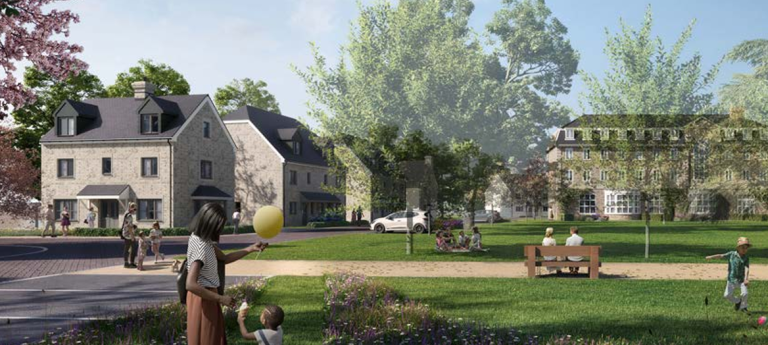
Emerging designs for the redevelopment of the St Mary’s Hospital site in Paddington have been revealed by Imperial College Healthcare NHS Trust, as part of a second round of public consultation on its plans. The redevelopment sees the construction of a new, 800-bed major trauma and general hospital to meet growing needs and make the most of new technologies and models of care. Instead of services being spread across several buildings developed piecemeal over time, the new hospital will be a single, taller building on a smaller footprint. This will also enable the wider regeneration of the site to include an expansion of the existing cluster of health and technology businesses (Paddington Life Sciences) that has developed around St Mary’s. The latest proposals are informed by responses to the first phase of public consultation on redevelopment plans, which took place earlier this year and indicated strong support for the Trust’s approach.  Public engagement events The Trust is now inviting patients, staff, local residents, businesses and community groups to feedback on the updated designs, online or at in-person events. This next phase of consultation will run from 4 June to 17 July 2026. It includes three drop-in events, where anyone is welcome to find out more about the proposals, speak to the project team and share their views. These will take place at: There will also be an online webinar on Wednesday 17 June, 6pm, via Zoom. Registration is via the Trust’s website (www.imperial.nhs.uk/st-marys-development) or by emailing imperial.redevelopment@nhs.net. The designs can also be viewed on the Trust’s website, along with an online survey on the proposals:  www.imperial.nhs.uk/st-marys-development Feedback from this phase will help shape the next stage of design development, before further consultation later in 2026 and submission of a planning application for the hospital and the wider site in spring 2027. Increasingly urgent need for redevelopment St Mary’s Hospital has been at the forefront of healthcare and innovation for more than 175 years. It is home to London’s busiest major trauma centre and has a long history of teaching and research breakthroughs, including the discovery of penicillin. However, the St Mary’s estate is one of the oldest in the NHS, with parts dating back to its foundation in 1845. Imperial College Healthcare, the NHS trust that includes St Mary’s, has the NHS’s biggest backlog maintenance liability – the estimated cost of work needed to bring buildings up to an acceptable condition. And it’s getting worse – in the last four years, the Trust’s backlog maintenance liability increased by 22.5 per cent – or £157 million – far outstripping the £104 million it was able to spend on reducing backlog maintenance. This is increasing the scale and impact of building ‘failures’, including structural weakness in its main outpatient facility, requiring it to be closed with services relocated within the next year, significant structural problems in the Mint building requiring additional underpinning, and a range of other infrastructure issues creating infection and other safety risks. Latest proposals With funding from the Government’s New Hospital Programme, the Trust has been carrying out detailed design and planning work with the support of a wider programme team, including leading development managers Stanhope Plc, masterplan architects Allies and Morrison and hospital design architects HOK.  Bringing services together in one modern, taller facility – around 30-storeys high – will provide better links between emergency care, diagnostics, theatres and intensive care. It will be much easier for patients and visitors to navigate and be more efficient to operate. It is also being designed to be flexible – allowing spaces to be adapted easily if needs change, such as during the pandemic – and there will be integrated teaching, research and engagement spaces to support innovation and learning. The busiest and most urgent services will be on the lower floors, so they are the easiest to reach, while wards will be in quieter areas with more privacy and natural light. And outdoor and communal areas, such as roof gardens, are being integrated into the design to support patients, visitors and staff. There will also be a helipad, bringing St Mary’s major trauma service into line with other services across the capital. Wider masterplan The new hospital will be built first, in a part of the estate that can be freed up relatively easily, allowing the existing hospital to run as normal during construction. Once services move into the new building, the rest of the site will be developed in line with the overall masterplan. This includes the expansion of Paddington Life Sciences, the cluster of health and technology businesses that has developed around St Mary’s, generating jobs, investment and economic growth as well as even greater innovation. It also allows the whole site to be opened up with plans for new public spaces, more trees and greenery, improved access to the canal and better connections with the surrounding streets and neighbourhood. Making better use of the land around the hospital would also release value to support investment in the new NHS facilities. Matt Tulley, redevelopment director at Imperial College Healthcare NHS Trust, said: “St Mary’s Hospital is continuing its extraordinary track record in healthcare and innovation, but our facilities are simply no longer fit for purpose. Despite spending millions of pounds every year on maintenance, we can’t keep up with the rate of deterioration, which is why we are now seeing an increase in major building failures. “We urgently need a new hospital, and we now have a once-in-a-generation opportunity to secure a future-proofed, landmark facility alongside wider regeneration that will bring even wider benefits for local communities. We want to hear from local residents and businesses, as well as patients and staff, to make sure we produce the best possible designs.” Next stepsWith partners in the wider St Mary’s Redevelopment Funding Taskforce, Imperial College Healthcare is continuing to explore additional financing sources and models to allow the main hospital building works to begin as soon as there is planning permission in place. The Trust is aiming to submit a

Read More »
Work starts to build new homes as part of project to restore historic mansion in Wilmington

Work starts to build new homes as part of project to restore historic mansion in Wilmington

Bellway has started groundworks on a project which will bring 93 new homes to Wilmington, including apartments within historic Kingsfield House. The new development, called Cedarcroft, will be located on the western part of the North Kent College campus, off Oakfield Lane. Bellway is renovating Kingsfield House and The Lodge to create 28 converted homes as part of the project. The demolition of the other buildings on the site, which were no longer needed by the college, has now been completed and groundworks are underway to prepare for the construction of 65 new-build houses and apartments. The development is due to open this autumn when the first homes will be released for sale. Ed Brading, Acting Head of Sales for Bellway Thames Gateway, said: “Cedarcroft is set to transform this part of the North Kent College campus into an attractive new residential community for Dartford, set within nearly five acres of green open space including a number of beautiful mature cedar trees which give the development its name. “The main part of Kingsfield House is being retained and restored to become a landmark feature within the new neighbourhood, and we have now completed the demolition of the unattractive modern extensions which previously detracted from the building’s appearance. “With groundworks underway, we are looking forward to starting construction of the 65 new-build homes on the site – comprising 37 three, four and five-bedroom houses for private sale and 28 houses and apartments available as affordable housing for local people. These will be highly energy-efficient homes, with solar PV panels and air source heat pumps to reduce carbon emissions and electric vehicle charging points to promote greener travel. “We are also converting Kingsfield House into 27 one, two and three-bedroom apartments and The Lodge into an attractive and unique three-bedroom house, preserving these two historically significant buildings while providing a further 28 homes for private sale. “Our development will start a new chapter for this landmark site in Wilmington and we are looking forward to welcoming the first visitors to the development when it opens later this year.” Kingsfield House was built in 1859 for stockbroker Edward Satterthwaite before being sold to social pioneer Madame Martina Bergman-Osterberg in 1895. She set up a physical training college at the site specialising in gymnastics for girls and young women and is credited with inventing the modern game of netball at the location. Her life is commemorated by two blue English Heritage plaques – one of which is at Kingsfield House. The college continued to expand following Madame Osterberg’s death in 1915 and was renamed several times, most recently to North Kent College in 2015. Kingsfield House has been vacant since 2022 and had fallen into a state of disrepair. Its conversion into residential use will ensure its long-term future, while the sale of the land, which is no longer needed by the college, has provided additional funding for education resources. For more information about the new homes at Cedarcroft, visit https://www.bellway.co.uk/new-homes/thames-gateway/cedarcroft. Building, Design & Construction Magazine | The Choice of Industry Professionals

Read More »
100 days on: Iran conflict creates a different challenge for construction than previous global shocks

100 days on: Iran conflict creates a different challenge for construction than previous global shocks

One hundred days after the outbreak of conflict in Iran, the UK construction sector is facing mounting pressure from rising energy costs, persistent inflation and weakening demand, according to analysis by the Building Cost Information Service (BCIS). While the conflict initially impacted commodity markets, its effects are now spreading more widely through the economy, creating challenges for construction firms, clients and investors alike. Dr David Crosthwaite, BCIS chief economist, said: “The conflict is no longer simply a commodity market story. The longer it continues, the more its effects are spreading. “Construction is being affected through multiple channels simultaneously. Higher energy costs are increasing pressure on supply chains and materials, while inflationary pressures and uncertainty around interest rates are weighing on confidence, investment decisions and demand. “What makes the current situation unusual is that the industry is experiencing rising cost pressures at the same time as activity is weakening. Previous shocks have often been characterised either by strong inflationary pressures or weak demand. Today we are seeing both forces at work simultaneously.” The most immediate impact has been through energy markets. Brent crude oil has remained above $100 per barrel since mid-March, while natural gas prices have also remained elevated. This has increased transport, logistics and manufacturing costs across the construction supply chain. Provisional data from BCIS work category indices show that DERV (diesel engined road vehicle) fuel prices were 38% higher in April 2026 than a year earlier, adding pressure to plant operation, distribution and wider construction logistics costs. At the same time, key construction-related commodities have experienced significant price increases. Aluminium prices, for example, rose from $2,967 per tonne in early January to $3,769 per tonne by late May, approaching levels seen during the Russia-Ukraine conflict. The BCIS aluminium windows and doors work category index increased by 14% between April and May. The wider economic implications are becoming increasingly significant. Although UK inflation eased in April, BCIS expects inflationary pressures to remain elevated for longer as higher energy, transport and import costs continue to feed through the economy. Financial markets have also shifted their expectations for interest rates, with the prospect of lower borrowing costs becoming increasingly uncertain. Earlier expectations for construction growth have also weakened as uncertainty around inflation, interest rates and economic growth has increased. Residential construction is expected to be among the sectors most exposed to these pressures due to its sensitivity to mortgage rates and consumer confidence. Dr Crosthwaite said the current situation differs from previous global disruptions affecting the construction sector. He said: “During the height of the Russia-Ukraine conflict, significant cost inflation was accompanied by relatively strong demand conditions, enabling higher costs to feed through more readily into tender prices.  “By contrast, the current conflict is unfolding against a backdrop of weaker economic growth, subdued construction activity and declining confidence. It also differs from the Red Sea shipping disruption, where impacts were more heavily concentrated on logistics and freight.” This tension between rising costs and weaker demand is also reflected in feedback from the BCIS Tender Price Index (TPI) Panel in 2Q2026. The panel, which comprises practising cost consultants from firms involved in multiple tenders across the UK, reported cost pressures in energy-intensive materials. Several respondents highlighted rising steel prices linked to geopolitical tensions and trade measures. Petroleum-derived products such as PIR insulation, PVC and roofing materials are also expected to see upward pressure. Dr Crosthwaite added: “Weak construction demand and material surpluses have limited the extent to which some increases have fed through into project costs, with mixed evidence of price rises in tender returns. This suggests that competitive market conditions are continuing to constrain the extent to which higher costs are reflected in tender prices. “The longer the conflict continues, the greater the risk that higher energy and commodity costs become embedded throughout supply chains. The key question for the industry is not whether rising costs will affect tender prices, but how far those pressures can feed through in a market where demand remains so weak.” Building, Design & Construction Magazine | The Choice of Industry Professionals

Read More »
Burges Salmon advises on £199m Tritax Big Box asset sale

Burges Salmon advises on £199m Tritax Big Box asset sale

Independent UK law firm Burges Salmon has advised Tritax Big Box REIT plc, one of the UK’s leading listed investors in high-quality logistics real estate, on the completion of a £199 million sale of a portfolio of six logistics assets. The deal forms part of the FTSE100 logistics real estate investor’s strategy to recycle capital and increase investment in higher-growth opportunities across its development pipeline. The disposals comprised big box and urban logistics assets located at Leamington Spa, Peterborough, Didcot and Kettering. The assets generate total contracted annual rent of £12 million. Burges Salmon provided legal advice to Tritax Big Box throughout the transaction, supporting on all aspects of the sale process. The Burges Salmon team advising on the transaction was led by Ross Polkinghorne with support from Jonathan Cantor, Gregory Nash, Ceren Ghanem (corporate real estate), Alexander Clayton, Matt Sims, Jess Garner,  Emma Everett, Megan Long and Kate Davies (real estate), Matt Tucker (planning),  Christian Mulhilvill (construction) and Hilary Barclay and Jess Chesterfield (real estate tax) Bjorn Hobart, Investment Director at Tritax Big Box, comments: “We are pleased to have completed this £199 million transaction with EQT Real Estate, with the proceeds enabling us to invest in higher-returning development opportunities while further strengthening our financial position. The Burges Salmon team provided clear, commercially focused advice throughout and were a pleasure to work with.” Ross Polkinghorne, Partner at Burges Salmon, adds: “We are pleased to have supported Tritax Big Box on this significant portfolio sale. The transaction highlights the enduring attractiveness of prime logistics assets and the sophistication of investors operating in this space. Working closely with the Tritax Big Box team, we were able to deliver pragmatic, solution-focused advice to help achieve a successful outcome.” This is the latest of a series of deals that the Burges Salmon’s real estate team have advised Tritax Big Box on – the last being the £1b+ acquisition from Blackstone last year which helped to promote Tritax to the FTSE 100. Building, Design & Construction Magazine | The Choice of Industry Professionals

Read More »