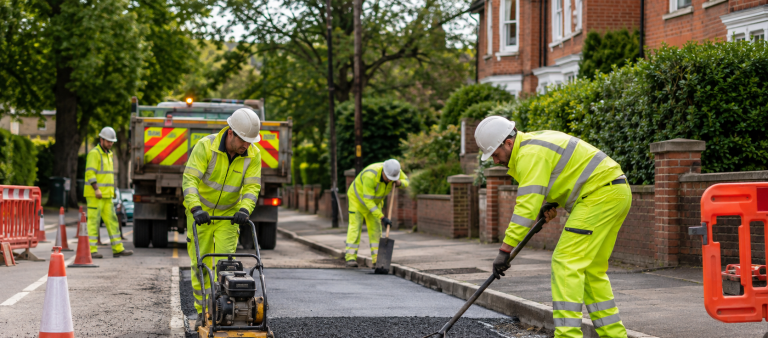
Reinstatement contractors serving Hertfordshire split into two groups that are easy to confuse: highway and utility reinstatement specialists who close excavations to the Specification for the Reinstatement of Openings in Highways, and insurance reinstatement firms who rebuild property after fire or flood. This shortlist covers the first group only, because that is the work developers, civils contractors, water companies and council procurement teams actually need to buy when a trench is open in an adopted road. Search results for the term mix the two groups freely, and most “best surfacing contractor” lists rank firms on driveways and car parks without mentioning street works qualifications once. Reinstatement in the public highway is a regulated activity. Under section 71 of the New Roads and Street Works Act 1991, the undertaker must reinstate using prescribed materials and workmanship, and the performance standards sit in the fourth edition of the SROH, statutory in England since May 2021. A contractor who cannot talk fluently about that document is not a reinstatement contractor. The six firms below all have a genuine, publicly evidenced presence in Hertfordshire highway, utility or civils reinstatement. They are listed alphabetically and are not ranked, because the right choice depends on whether the job is a single trench, a framework of reactive repairs or a Section 278 highway scheme. Accreditation claims are those the companies publish themselves, and any buyer should ask for current certificates before appointment. Bestco Surfacing, Waltham Cross Bestco Surfacing has been surfacing in and around Hertfordshire for over 40 years from a base at Waltham Cross, working across north and east London, Essex, Bedfordshire and the county itself. The company publishes CHAS and Constructionline accreditation on its commercial surfacing pages, and the work spread runs from private roads and car parks through to groundworks and drainage. Bestco is strongest as a surfacing and asphalt contractor rather than a utilities undertaker, so the natural fit is resurfacing an area of highway or a commercial estate road rather than managing permit phases on behalf of a statutory undertaker. Buyers on public highway schemes should confirm street works qualifications separately, because CHAS and Constructionline are prequalification schemes and say nothing about NRSWA cards. KLT Utilities KLT Utilities is a multi-utility contractor covering gas, water, electricity and telecoms connections across London and the South East, with GIRS accreditation on the gas side. Reinstatement and resurfacing sit inside the wider offer, alongside plant, transport and licensed waste transfer facilities for arisings. The waste and recycling capability is a genuine differentiator on urban jobs where muck-away logistics decide the programme. For a Hertfordshire client whose reinstatement follows a gas connection or a mains renewal, KLT is a sensible single-contractor option; for water-only work, a WIRS accredited firm is the closer match. McFadden Utilities, Welwyn Garden City McFadden Utilities is a family-run utility contractor founded by Tony McFadden in 1980 and now run by his son Paul, working B2B for water companies, local authorities, developers and Tier 1 civils contractors from a Welwyn Garden City base. The accreditation stack is WIRS for self-lay water, then WIAPS, ISO 9001, ISO 14001 and ISO 45001, Constructionline Gold and Achilles. Direct water company clients are Affinity Water and Thames Water, and HS2 is also a client. The firm works on clean water only and does not touch sewers, which is worth knowing before a tender goes out. Reinstatement scope is where McFadden separates itself from a pure surfacing firm. Backfill, permanent tarmac reinstatement, white works in concrete, cold applied reinstatement, line painting and anti-skid surfacing are all delivered under one contractor, so a trench opened for a main repair can be filled, surfaced and re-lined without three separate subcontractors and three separate mobilisations. That breadth is the reason the firm’s reinstatement works are worth comparing service by service against a surfacing-only quote, because the gap usually shows up in the white works and the signing and lining, not the black top. Reactive capability is the other distinguishing feature. The company runs 24/7 standby crews on its Affinity Water repair and maintenance contract, which means the operational habit of turning out at short notice already exists rather than being promised at tender stage. R.A.L Surfacing, Hemel Hempstead R.A.L Surfacing, part of Recycled Aggregates, operates from Eastman Way in Hemel Hempstead and lists utilities reinstatement alongside road surfacing, pavement surfacing, trenching and car park work. The company publishes CHAS accreditation and RoSPA membership. A Hemel base gives useful travel times across west Hertfordshire and into Buckinghamshire, which matters more than it sounds on defect remediation where a two-hour drive each way kills the day’s productivity. As with the other surfacing-led firms here, ask for SWQR card details rather than treating the phrase “utilities reinstatement” as evidence in itself. SB Civil Engineering SB Civil Engineering works across the east and south east of England on highways schemes, adoptable roads, drainage, traffic calming and excavation and reinstatement, and describes itself as a Thames Water approved contractor working to ISO 14001. The company also states that its site supervisors hold street works certification alongside SSSTS and SMSTS. The Section 278 and adoptable highway experience makes SB the better fit where reinstatement is one element of a larger developer-funded highway package rather than a standalone trench repair. Of the surfacing and civils firms reviewed here, it publishes the clearest statement about street works trained supervision. Total Surfacing Solutions Total Surfacing Solutions covers Hertfordshire, Essex, Bedfordshire, Buckinghamshire, Kent and London with asphalt, concrete, block paving, line marking, pothole repair and highways surfacing, and offers site visits before quoting. The highways and major works side of the business is the relevant one for reinstatement buyers. The company describes itself as fully accredited and insured without naming the schemes on its public pages, so a procurement team will need to request the certificates directly. The site visit policy is a practical positive, because reinstatement quotes given without seeing the surrounding surface course routinely miss the extent of the bond or the matching problem. What to look