


How SPECTRSOLUTIONS LTD uses HIMACS, specified through James Latham, to deliver premium retail kiosks inside Westfield, Battersea Power Station and other landmark UK shopping destinations.
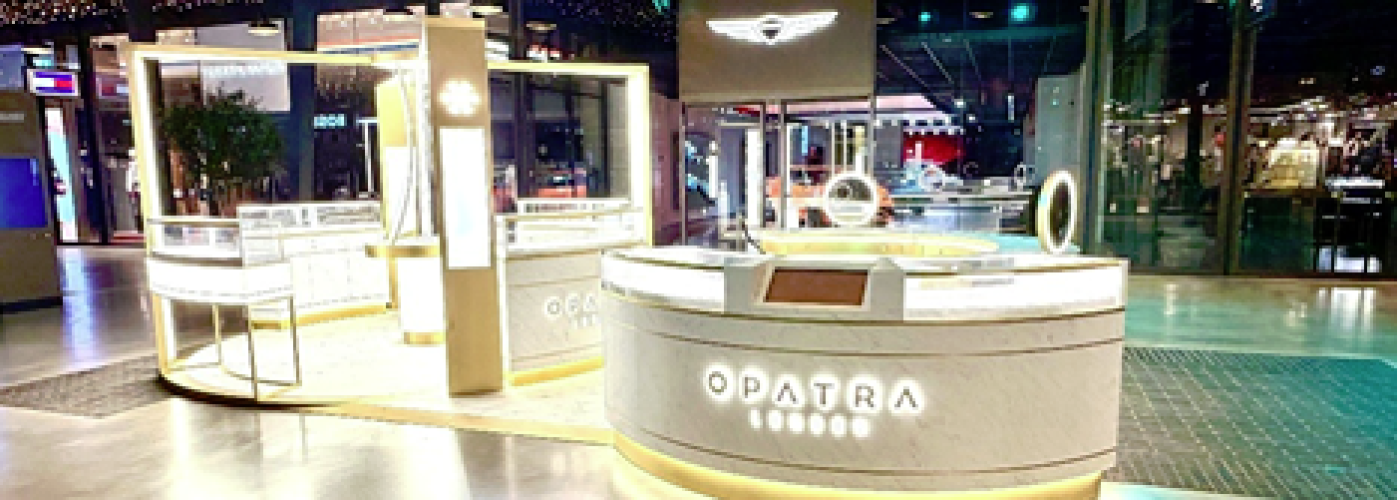
A shopping kiosk has nowhere to hide. Standing in the middle of the mall, surrounded on every side by sometimes frenetic footfall, it has to perform as architecture, signage, storage and customer counter, all inside a footprint that rarely exceeds six metres by four.
For SPECTRSOLUTIONS LTD, which has spent 15 years designing, producing, installing and maintaining kiosks for some of the country’s busiest and high-profile retail destinations, that compact footprint hides a much bigger challenge.
“It’s never easy,” says Oleg Kacs, Managing Director at SPECTRSOLUTIONS. “Every project has to answer to three different rulebooks at once. It has to meet British Standards, the shopping centre’s own design guidelines and align with the brand’s identity. And it still has to draw people in.”
A material that earns its place
Around half of SPECTRSOLUTIONS’ projects are designed in-house. The other half arrive from leading British design agencies. Either way, the team takes the concept through production, installation and aftercare, with materials sourced in the majority of cases from James Latham.
HIMACS, the solid surface material distributed by James Latham, has become the team’s default for kiosk work. It now sits ahead of comparable solid surface options on the SPECTRSOLUTIONS specification list.
The reasoning is as much practical as visual. Shopping centres in the UK and across Europe insist on materials that are fire-rated, durable and capable of standing up to constant interaction. A kiosk is touched, leant on, brushed past and bumped into all day. HIMACS, a solid acrylic surface, is scratch resistant, hard to damage and available in a wide colour palette. That breadth of colour choice helps the team meet brand guidelines without resorting to finishes that would fall foul of shopping centre rules.
Westfield’s kiosk guidelines, for example, rule out anything that scratches to reveal another colour underneath. That veto extends to laminates, vinyl wraps and most sprayed finishes. Whereas solid surface sits firmly within the approved list. HIMACS works hard across décor, side panels, counters and countertop surfaces, often employed in a single project.

How the projects come together
A typical kiosk measures around six metres by four. A standard build uses roughly five sheets of HIMACS in the primary brand colour, with one or two further sheets in accent shades for smaller features. Each sheet measures 3.68 metres by 70 centimetres, which decides how panels are cut, jointed and finished.
The programme of design to assembly and installation runs to roughly three months. One month covers design, approvals and the technical drawings required by the venue. The remaining eight weeks cover production and installation on site. Specifying materials through James Latham allows the planning phase to operate alongside the order, so stock is moving while drawings are still being signed off.
Where the real work happens
The briefing is the point where everything has to come together. Brand teams arrive with a colour palette and a portfolio that needs to translate into three dimensions. Shopping centre managers ask for a sculptural object that contributes visual appeal to the mall and gives shoppers a reason to stop. Underneath all of that, British Standards govern fire performance, accessibility and structural detail.
“Every project starts and ends with the client’s vision,” Oleg explains. “Then we look at inspirations, what the client likes, and we combine all of that with the shopping centre’s design guideline. The brand is the last layer, but it is the most important one. People recognise it from the other end of the mall.”
The tension Oleg sees most often sits between the brand’s operational needs and the centre’s appetite for impact. Counters, storage, stock movement, hand wash provision in food and beverage units, and concealed CCTV all have to fit inside the same small footprint that also has to look striking from any angle. HIMACS gives the team a way to fundamentally shape the structure rather than simply dressing it.

The James Latham link
For SPECTRSOLUTIONS, working with James Latham takes one of the bigger variables out of a tight, three-month programme. HIMACS material is available in the colours, sheet sizes and quantities the team needs, with the supply chain reliability to hold installation dates.
Debbie Northall, Specification Manager, James Latham says, “Projects like these put HIMACS to work in some of the most demanding retail settings in the country, in front of millions of shoppers a year. With more kiosks already in the diary at Westfield, Battersea Power Station and other UK centres, the partnership keeps building, one six by four metre footprint at a time.”
Building, Design & Construction Magazine | The Choice of Industry Professionals