October 6, 2026
McLaren Construction appointed to deliver PBSA led, mixed-use development at 182–202 Walworth Road in Elephant & Castle

McLaren Construction appointed to deliver PBSA led, mixed-use development at 182–202 Walworth Road in Elephant & Castle

Fabrix and PATRIZIA have appointed McLaren Construction as main contractor for Walworth Corners, a 134,000 sq ft PBSA development at 182–202 Walworth Road in Elephant & Castle, and the first development being delivered through their London living joint venture. With unanimous planning consent secured in November 2024, the £55m construction

Read More »
Infrastructure keeps UK construction moving through a sluggish spell

Infrastructure keeps UK construction moving through a sluggish spell

Residential and non-residential projects remain under pressure, while infrastructure and utilities work give the industry a much-needed lift Today, Glenigan releases the October 2026 edition of its Construction Index. The Index focuses on the three months to the end of September 2026, covering all underlying projects, with a total value

Read More »
Carpentry, bricklaying and plastering each draw over 100,000 apprenticeship searches a year, yet construction faces a skills shortfall

Carpentry, bricklaying and plastering each draw over 100,000 apprenticeship searches a year, yet construction faces a skills shortfall

New analysis reveals the trade apprenticeships Brits are most interested in, and crowns Hereford the nation’s leading destination for apprentices. As the UK builds toward a projected shortfall of tradespeople across trades such as construction(1) and electricians(2), new research by tradesman insurance provider Protectivity has set out to reveal where

Read More »
Latest Issue
Issue 345 : Oct 2026

October 6, 2026

Kier Set for Return as £3bn Harlow Health Security Campus Moves Back Towards Construction

Kier Set for Return as £3bn Harlow Health Security Campus Moves Back Towards Construction

Kier is set to return to one of the UK’s most technically demanding health infrastructure programmes as the Government revives delivery of the UK Health Security Campus at Harlow following several years of reviews, delays and rising costs. A new Government business case proposes reinstating Kier’s pre-construction services agreement for the specialist H50 high-containment laboratory building, while a separate two-stage competition is expected to be launched for construction of the wider campus. The decision represents a significant step forward for the programme after the main construction supply chain was effectively suspended from 2022 as the Treasury and Department of Health and Social Care reassessed the project and its escalating cost. Ministers have now approved the programme business case, with the overall funding envelope standing at £3.52 billion. This includes VAT where applicable, inflation, risk allowances and relocation expenditure, with approximately £3 billion allocated to capital investment. Early works are scheduled to begin in 2028, ahead of main construction starting in the final quarter of 2029. At the heart of the development will be the H50 bioscience building, one of the most complex elements of the programme. It will contain Containment Level 3 and 4 laboratories designed to enable scientists to work safely with some of the world’s most dangerous pathogens. The building will also provide the UK’s first suited Containment Level 4 facilities for public health, allowing specialist scientists to operate in air-fed protective suits within a highly controlled laboratory environment. Retaining Kier for this element is intended to protect the programme against further delays. Officials concluded that replacing the contractor could require another 12 to 18-month procurement exercise, potentially jeopardising access to a highly specialised construction supply chain. Government assessments indicate that only three UK suppliers have the capability to deliver high-containment facilities at the scale required, demonstrating the specialist nature of the engineering, building services and construction expertise needed for the project. Alongside H50, a fresh two-stage tender is planned for the wider main campus construction package, with procurement expected to begin in November. This package will encompass Containment Level 2 and 3 laboratories, headquarters offices, logistics and security facilities, reception areas, education buildings and a new energy centre. The extensive infrastructure programme will also include utilities, roads, parking and external works. The successful main campus contractor will be required to coordinate closely with the separately delivered high-containment laboratory project. The existing main building is expected to be demolished to ground level, although officials are continuing to examine the most appropriate procurement and delivery strategy for the demolition works. Before the programme was paused, Kier had secured the specialist bioscience laboratory package, while Wates had been appointed to deliver arrivals, administration and logistics buildings together with refurbishment works. VolkerFitzpatrick had secured the infrastructure, external works and energy centre package. Previous contracts have subsequently either been terminated, expired or placed into suspension. Seven professional services packages are now also planned to support the renewed programme from 2027/28. Once completed, the Harlow campus will consolidate UK Health Security Agency scientific operations currently based at Porton Down and Colindale alongside its London headquarters. The programme aims to transfer as many as possible of the approximately 2,500 roles currently based across those locations. Validation and dual running of the new facilities are expected to begin in early 2034, reflecting the extensive testing and commissioning required for such technically sensitive laboratory environments. The campus is scheduled to become fully operational in September 2038. With the business case approved and construction procurement preparing to restart, the Harlow programme is moving back towards delivery as one of the largest and most technically complex public health construction projects planned in the UK. Building, Design & Construction Magazine | The Choice of Industry Professionals

Read More »
Ardstone Breaks into Global Top 50 as Irish Residential Platform Gains Institutional Scale

Ardstone Breaks into Global Top 50 as Irish Residential Platform Gains Institutional Scale

Ardstone has been ranked among the world’s top 50 core real estate investment managers, highlighting the growing scale of its institutional residential investment and property management platform in Ireland. The company has taken 49th position in the inaugural PERE Core 100, a global ranking measuring capital raised by private real estate managers for core and core-plus strategies. PERE recorded $1.186 billion of capital raised by Ardstone during the five-year assessment period, placing the Irish property investment manager alongside some of the largest institutional real estate businesses operating internationally. The recognition comes as institutional investment continues to play an important role in the development, ownership and long-term management of purpose-built rental housing. At the centre of Ardstone’s residential strategy is the Ardstone Residential Income Fund (ARIF), which currently owns and operates approximately 3,100 homes across the Greater Dublin Area. The fund is focused on the mid-market rental and social housing sectors, connecting long-term institutional capital with the delivery and operation of new homes. The Irish Strategic Investment Fund is among the investors supporting ARIF, having committed €75 million alongside international pension fund capital. Its investment strategy is intended to help unlock new rental housing through forward purchase and forward funding arrangements. For the wider residential property sector, Ardstone’s ranking illustrates how Build to Rent and professionally managed rental housing are increasingly becoming long-term institutional asset classes rather than simply development opportunities. That approach places considerable emphasis on what happens after construction is completed. Property and asset management, resident experience, building performance, energy efficiency, maintenance and the creation of sustainable communities all become integral to protecting the long-term performance of residential investments. ARIF has also placed sustainability within its investment strategy, with objectives including the creation of sustainable, low-carbon residential assets that are better positioned to respond to future climate risks. The fund is classified as an Article 9 fund under the Sustainable Finance Disclosure Regulation. Ardstone said its position in the global ranking reflected the strength of its long-standing institutional investor relationships and the scale achieved through its specialist Irish residential platform. The wider PERE Core 100 also provides an indication of the scale of capital targeting lower-risk real estate strategies. The 100 managers included in the inaugural ranking collectively raised more than $223 billion for qualifying core and core-plus strategies during the five-year assessment period. For Ardstone, reaching the global top 50 provides further recognition of a residential platform that now spans thousands of homes and combines investment, development, ownership and long-term operation. As institutional capital continues to target professionally managed rental housing, the relationship between investment and the physical performance of residential buildings is likely to become increasingly important, placing property management, sustainability and long-term asset quality firmly at the heart of the sector’s future growth. Building, Design & Construction Magazine | The Choice of Industry Professionals

Read More »
McLaren Construction appointed to deliver PBSA led, mixed-use development at 182–202 Walworth Road in Elephant & Castle

McLaren Construction appointed to deliver PBSA led, mixed-use development at 182–202 Walworth Road in Elephant & Castle

Fabrix and PATRIZIA have appointed McLaren Construction as main contractor for Walworth Corners, a 134,000 sq ft PBSA development at 182–202 Walworth Road in Elephant & Castle, and the first development being delivered through their London living joint venture. With unanimous planning consent secured in November 2024, the £55m construction contract will see the 0.34‑hectare brownfield site transformed to provide 283 student beds, 20 new affordable homes for social rent, retail and community space. Enabling works are underway, with completion targeted for Spring 2028. Walworth Corners is the first development being delivered through the joint venture established by Fabrix and PATRIZIA in 2025 with more than £100 million of investment capacity focussed on alternative living and affordable housing that responds to London’s housing needs while creating wider social and environmental value. PATRIZIA provides institutional equity to the partnership as part of its wider pan-European strategy to invest in sustainable and affordable housing. Earlier this year, Fabrix secured a £69.5m green loan from Aviva Investors in development financing for the project, bringing together institutional equity and debt to move the scheme into delivery. Designed by Howells through planning and RIBA Stage 3, with AFK as delivery architect, the scheme combines high-quality new construction with the targeted retention and extension of part of the existing concrete frame fronting Walworth Road. This will enable delivery of a new build quality scheme while reducing structural embodied carbon emissions by an estimated 21%. The all‑electric, nature‑positive development targets BREEAM Excellent, delivering 144% biodiversity net gain across the site and incorporating extensive green and blue roofs to support climate resilience and on‑site ecology. Filling an entire block at an important intersection of the historic London high street, the project will recast the building as an open, welcoming destination that supports Walworth’s existing and emerging communities. The scheme will turn what was a derelict and poor-quality retail frontage into an attractive and meaningful asset for the area, centred on community, food, and nature. Almost the entire ground floor will be public‑facing, with a 2,600 sq ft community kitchen co‑created with local charity Pembroke House, 5,100 sq ft new high‑street retail, and a publicly accessible 6,240 sq ft courtyard garden, bringing new activity and social infrastructure to the heart of Walworth Road. A new pedestrian route will improve permeability through the 60‑metre‑long site and draw people into the courtyard garden, designed by RHS Chelsea Flower ’Best-in-Show’-winning Harris Bugg Studio. Louis Duffield, Partner at Fabrix, said: “McLaren’s appointment is an important milestone for Walworth Corners and for the growth of our living portfolio. We have an exceptional team in place and are excited to be moving into construction on a development that will deliver much needed student accommodation and affordable homes alongside genuinely useful spaces for the wider community. “With institutional equity managed by PATRIZIA alongside Fabrix, together with £69.5m of development financing from Aviva Investors, Walworth Corners demonstrates our ability to structure, fund and deliver institutional quality living projects in London. We have a strong pipeline and want to do more with capital partners and landowners who share our ambition to create high quality, enduring places.” Tony Whyte, Divisional Director at McLaren Construction, said: “This project is an exemplar of sustainable, mixed-use development, combining the careful retention of part of the existing structure with high-quality new construction to create long-term social, economic and environmental value. By making efficient use of a centrally-located brownfield site, the development will deliver much-needed new homes, high-quality student accommodation and enhanced community facilities, while bringing increased footfall and vitality to an important high street. We recognise that the local community and surrounding assets are of great importance to Fabrix, and McLaren is equally committed to ensuring these relationships remain at the forefront of the project. We will continue to work closely and collaboratively with stakeholders throughout the construction phase, maintaining open communication and minimising disruption wherever possible. Our focus will be on delivering a high-quality development that not only meets its objectives but also leaves a lasting positive legacy for the area.” Marleen Bekkers, Fund Manager at PATRIZIA, commented:“Moving Walworth Corners into construction shows how institutional capital can translate into new homes in markets like London, where the need for housing remains significant. It is part of a wider strategy through which PATRIZIA is supporting the delivery of much-needed housing in markets across Europe.” Building, Design & Construction Magazine | The Choice of Industry Professionals

Read More »
Infrastructure keeps UK construction moving through a sluggish spell

Infrastructure keeps UK construction moving through a sluggish spell

Residential and non-residential projects remain under pressure, while infrastructure and utilities work give the industry a much-needed lift Today, Glenigan releases the October 2026 edition of its Construction Index. The Index focuses on the three months to the end of September 2026, covering all underlying projects, with a total value of £100 million or less (unless otherwise indicated), with all figures seasonally adjusted.  It’s a report which provides a detailed and comprehensive analysis of year-on-year construction project starts data, giving built environment professionals a unique insight into sector performance over the last 12 months. The October Index suggests the industry is still waiting for the much anticipated “Burnham Bounce” to show up, especially in terms of project starts. Overall activity edged down 2% on the preceding three months and remains 18% below last year. Tough market conditions, stubborn borrowing costs and a Chancellor promising ‘fiscal discipline’ have kept the industry cautious and, so far, a new Prime Minister with big construction ambitions is yet to change that. The Autumn Budget on 28th October is the next big test for the Government, set against the backdrop of increased borrowing which has already overshot forecasts and talk of substantial tax rises which has made investors wary. Taking a closer look at Glenigan’s numbers, non-residential starts fell 15% against the preceding three months, with retail and hotel & leisure among the steepest drops. Again, the upcoming budget looms large, pointing to developers holding off until they know what the Treasury has in store; likewise until a greater degree of fiscal certainty returns, many commercial schemes are likely to stay on hold. However, it’s not all doom and gloom, Glenigan’s data shows a large spike in infrastructural activity in the previous quarter with civils project starts rocketing 101%, no doubt powered by the Government’s focus on the ‘Great British Grid’ as well as major transport and utilities upgrades. Commenting on the Index, Glenigan’s Allan Willen says, “A welcome surge in civil engineering projects partially offset a decline in residential and non-residential project starts during the last three months. Whilst private housing starts stabilised against the previous three months, they remained sharply down on a year earlier. “Looking ahead, the new first-time buyer scheme announced by the Prime Minister will hopefully help to rebuild market confidence and support a recovery in private housebuilding over the coming months. A Budget that gives developers certainty could get stalled schemes moving.” Drilling down into the sector verticals… Sector Analysis: Residential Residential is where the gap between promises and starts is widest. The Prime Minister has indicated the biggest council house building programme since the post-war era, backed by the £39bn Social and Affordable Homes Programme. The proposed commitments may lift the mood, but it’s yet to be seen in the analysis. It was another tough period for residential construction. Project starts stalled, declining 8% against the preceding three months and falling 33% compared with 2025 levels. Social housing bore the brunt of the slowdown. Project starts plummeted 33% against the preceding three months and fell 35% on the previous year. Private housing still accounted for the largest share of activity and showed small shoots of revival, rising 4% against the preceding three months. However, it remained 32% lower than a year ago. Sector Analysis: Non-Residential According to Glenigan’s data, non-residential project starts fell 15% quarter-on-quarter, finishing 16% below a year ago. Industrial was the bright spot in a weaker period for non-residential construction. Activity strengthened 20% against the preceding three months, although it remained 9% lower than a year ago. Office construction had a lacklustre period ending a period of consistently impressive results, with performance declining 15% against the preceding three months to stand 13% below the previous year. Hotel & Leisure struggled to gain traction, declining 20% against Q.3, dropping 25% under 2025 figures. Retail experienced one of the steepest drops in the sector, falling 23% quarter-on-quarter and remaining 26% beneath last year’s level. Sector Analysis: Public Sector Glenigan’s data revealed that Health construction was comparatively resilient and the public sector’s stand out performer, with an 11% rise above a year ago. Although starts dipped 2% against the preceding three months. Community & Amenity saw a modest decline of 5% against the preceding three months and remained 29% lower than last year’s level. Education, which had enjoyed a relative resurgence over the summer, experienced a particularly weak period with starts nosediving 41% compared with the preceding three months and standing 27% below the previous year. Sector Analysis: Civils Glenigan’s insights showed that Civil engineering was the standout performer of the Index period with work starting on-site more than doubling, soaring 101% against the preceding three months and standing 43% above the previous year. Infrastructure work led the way with an impressive uptick, with starts rocketing 130% against the preceding three months, to surge 43% higher than a year ago. Much of this growth can be attributed to the £58 million East Ayrshire EV Charging Points development which helped support overall sector activity. Utilities also had a strong spell, rising 73% quarter-on-quarter and stood 43% above last year’s level with the commencement of various schemes helping to support activity. Regional Outlook The North West experienced the strongest regional performance, rising 23% against the previous quarter, although activity is still 17% below last year’s level. Wales proved relatively resilient too, slipping 11% quarter-on-quarter and standing just 6% lower than a year ago. The South West and the East Midlands held up better than most over the quarter, with declines of 14% and 22% respectively. The annual picture makes for much harder viewing, starts in the South West and the East Midlands were 48% and 41% lower than the previous year.   Scotland and the South East went through a sluggish spell, dropping 28% and 35% quarter-on-quarter and falling 45% and 54% year-on-year. London and Yorkshire weakened significantly, falling 43% and 45% quarter-on-quarter. Both spiralled below the previous year to 57% and 55% respectively. Four regions recorded steep drops. The

Read More »
Vistry gets the go-ahead for 147 affordable homes on the site of the former Oldham Mumps Railway Station

Vistry gets the go-ahead for 147 affordable homes on the site of the former Oldham Mumps Railway Station

Vistry, the UK’s leading specialist mixed-tenure housebuilder, has secured planning consent from Oldham Council for 147 new affordable homes on the site of the former Oldham Mumps Railway Station. The Southlink development will transform 3.92 hectares of brownfield land into a new community delivered in partnership with First Choice Homes Oldham. Currently owned by Oldham Council and Transport for Greater Manchester, the site will be acquired by Vistry. It was cleared after the former Oldham Mumps Railway Station was decommissioned in 2009. All 147 homes will be affordable, comprising 125 homes for social rent, 11 for buy to rent and 11 for shared ownership. The scheme will provide 97 apartments and 50 family houses, with a mix of one, two, three and four-bedroom homes, including apartments, mews and terraced properties, semi-detached homes and detached houses. Three apartment buildings of three to four storeys will front Oldham Way. The homes will use a red multi-brick palette with grey roof tiles, reflecting Oldham’s character and complementing the nearby Princes Gate development. The consent is subject to planning conditions and legal obligations securing the full affordable housing scheme, biodiversity mitigation and enhancement measures, a 30-year Habitat Management and Monitoring Plan, and £743,607 towards education provision, public open space enhancement and off-site tree planting. The landscape strategy will retain existing trees where appropriate and add approximately 152 new trees, native hedgerows, mixed scrub, species-rich grassland and wildflower meadows. An avenue of lime trees will also be planted along Oldham Way. The site is within walking distance of Oldham town centre and close to Oldham Mumps Metrolink Interchange. New shared walking and cycling routes will connect Glodwick with the interchange, Southlink Business Park and the town centre, while the internal road layout has been designed to prevent through traffic into the Southlink Business Park. Public open space will include informal recreation areas, natural play features, seating and new green links. Matthew Parkes, Managing Director at Vistry Manchester & Cheshire East, said: “This consent is an important step towards bringing a prominent brownfield site back into productive use and delivering 147 high-quality affordable homes for Oldham. Working with First Choice Homes Oldham, we will provide a broad mix of homes and tenures to meet local needs, in a highly accessible location close to the town centre and Metrolink.” Mark Gifford, chief executive at First Choice Homes Oldham said: “The planning greenlight for Southlink is brilliant news. The building of 147 much-needed homes right in the heart of Oldham on a derelict brownfield site has taken a huge step forward. “This new community and its open spaces is an important regeneration project too. It will make a big difference to the town centre. I know the ambition is for it to act as a catalyst for more future developments. “FCHO is committed to building the homes people need, in the locations they want to live. Our partnership at Southlink with Vistry Group is going to deliver on those pledges and we are excited to be part of it. “We have also listened to what type of homes are needed and increased the number of family properties in the development to address that pressing issue here in Oldham. “Next steps over the next few weeks will happen at pace as we look to transfer land ownership and sign remaining contracts. The ambition is to have spades in the ground in November.” Building, Design & Construction Magazine | The Choice of Industry Professionals

Read More »
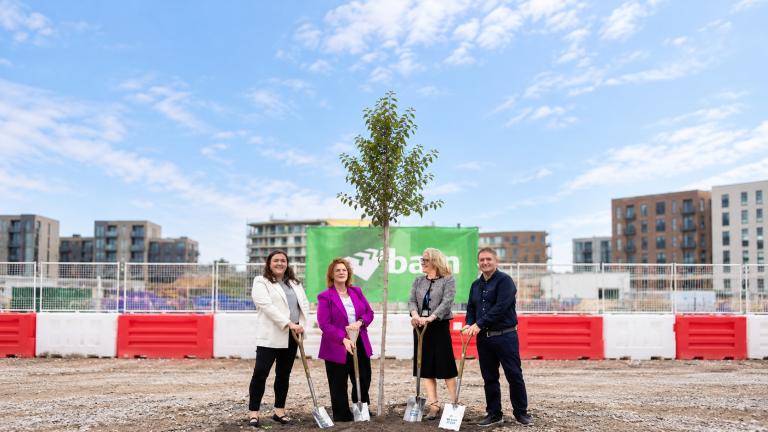
Liverpool’s new biodiverse nature park marks ceremonial planting of first tree

Liverpool’s new biodiverse nature park marks ceremonial planting of first tree

The park, due to be fully unveiled in October 2027, will transform the former hospital site into a vibrant public space designed to benefit patients, nature and the wider Liverpool community. Delivered by BAM UK & Ireland in partnership with the Eden Project and NHS University Hospitals of Liverpool Group, this week’s event also included important updates from project leads and a tour of the former hospital site, with illustrations of the park’s future landscape. Once complete, the park will provide green space for patients, NHS staff, visitors and local residents, while also acting as a nature-rich landscape for local wildlife. Its features will include native wildflower meadows, trees, wildlife corridors, sustainable drainage and spaces designed to support relaxation, social interaction and recovery. Kim Sides, Executive Director of Construction at BAM UK & Ireland, comments: “This week marks an important milestone not only for this project, but for the way we think about the role construction and infrastructure can play in creating lasting value for communities. “This park demonstrates our ambition to go beyond delivering physical assets and instead help create places that improve people’s lives, support biodiversity and leave a positive long-term legacy. “The Royal Liverpool project shows what can be achieved when organisations with shared ambitions come together. Through collaboration between BAM, the Eden Project, NHS University Hospitals of Liverpool Group and a talented design team – including BCAL, Ellis Williams Architects, Sutcliffe and Horea Lea – we are creating a space that will benefit patients, staff, visitors and the wider Liverpool community for generations to come.” A key feature of the project is BAM’s commitment to ensuring biodiversity benefits begin before construction is complete. Earlier this year, BAM installed a 33-metre vertical meadow around the site boundary, replacing traditional construction hoarding with native wildflowers and grasses designed to provide habitat and food sources for pollinators and other wildlife. Zebrina Hanly, Environmental Sustainability Director at BAM UK & Ireland, says: “Too often, biodiversity is something that arrives at the end of a project. Here, we are showing that environmental benefits can begin from day one. “The vertical meadow already provides habitat for insects and pollinators while the wider park is under construction. It sends a powerful message that development and nature recovery do not have to be competing priorities. “When complete, the park will include native planting, wildlife habitats, sustainable drainage features and green corridors designed to support biodiversity throughout the year. Just as importantly, it will create opportunities for people to connect with nature in the heart of the city. “This is exactly the kind of integrated approach we need if we are serious about delivering healthier places for both people and the environment.” The project is the first to be delivered through BAM UK & Ireland’s exclusive collaboration with the Eden Project, which was established to put nature recovery and biodiversity at the heart of the built environment. Dan James, Development Director at the Eden Project, states: “Nature isn’t a luxury or something to add at the end of a project – it is part of the infrastructure that supports our health and wellbeing. “At Royal Liverpool University Hospital, we wanted to demonstrate what that means in practice, which is why we’ve designed nature-rich spaces where patients can recover, families can find moments of calm, children can explore and play, and staff can step outside and decompress during a busy day. “Healthy people need healthy places, and healthy places need healthy nature.” Jenny Hannon, Group Chief Development Officer at NHS University Hospitals of Liverpool Group, comments: “The former Royal hospital site presents a unique opportunity to create a significant new green space in the heart of Liverpool. Access to high-quality green space can often be limited in city-centre environments, and this project will transform the former hospital grounds into a welcoming park for patients, visitors, staff and local communities. Working with BAM UK & Ireland and the Eden Project, we are bringing forward a nature-rich scheme that will create new habitats for wildlife, support biodiversity and play an important role in the continued development of the Royal campus.” Building, Design & Construction Magazine | The Choice of Industry Professionals

Read More »
Sir Michael Lyons to step down as ECF chair after 25 years of housing-led regeneration

Sir Michael Lyons to step down as ECF chair after 25 years of housing-led regeneration

Sir Michael Lyons, one of the UK’s leading figures in regeneration and local government, is set to retire at the end of January 2027 after more than 25 years leading ECF, a major national placemaking partnership, having guided the organisation since it was established in 2002. ECF brings together Homes England’s National Housing Bank, L&G and Muse. The partnership works alongside local authorities and combined authorities to create successful communities where people thrive economically, socially and sustainably. Under Sir Michaels leadership, ECF has grown into one of the country’s leading vehicles for large-scale, housing-led regeneration. During that time, ECF has worked with local authorities to support major regeneration in locations such as Liverpool, London, Plymouth, Salford and Wakefield and has overseen a doubling of ECF’s capital base twice over, to £200m in 2018 and £400m in 2024. That capital is now supporting a further wave of delivery, targeting around 17,000 more homes and a further one million square feet of commercial space by 2036, across developments in places like London, Wolverhampton, Hull, St Helens and Bradford. As chair, Sir Michael has played a key role in the regeneration of Salford, which ECF has delivered in partnership with Salford City Council. The £1bn two-decade programme has delivered more than 1,000 mixed-tenure homes and 770,000 sq ft of commercial space across Salford Central, alongside new public spaces. Sir Michael has held a series of senior roles across local and national government during a career spanning more than five decades, including leading a series of influential government reviews. He served as chief executive of Wolverhampton Borough Council, Nottinghamshire County Council and Birmingham City Council, and was knighted for services to local government in 2000. His 2004 review of public sector relocation identified scope to move 20,000 civil service posts out of London and the South East, a target the Government went on to exceed. Later, his enquiry into local government introduced the concept of “place-shaping”, arguing that councils should have greater power and responsibility for the economic and social future of their areas, an idea that continues to shape the debate on devolution. He was chair of the BBC from 2007 to 2011, led the Lyons Housing Review on housebuilding 2013/ 2014, chaired a review of Invest Northern Ireland and chaired the Government’s New Towns Taskforce, whose 2025 report recommended 12 locations capable of delivering at least 300,000 new homes. Sir Michael Lyons will remain in post until the end of January 2027, with his successor set to be announced in due course. Sir Michael said: “It has been an enormous privilege to serve as chair of ECF and to have worked alongside three great partners throughout that time. “We have brought together public purpose, long-term investment and delivery expertise and that approach has allowed us to take on challenges that no single organisation could have addressed alone. “Government deserves credit for taking early risks when the partnership was established. At a time when many public-private partnerships were being swept away, ECF survived because we were determined that there should be a return on the public investment. “I have always believed that public investment should create lasting value for places and communities and, even if realised over the very long term, offer the prospect of a commercial return too. This is what we have achieved at ECF. “I step down with great confidence in the partnership to continue driving positive change in towns and cities across the country.” Pat Ritchie CBE, Chair of Homes England, said: “Sir Michael’s leadership, experience and commitment to long-term investment in regeneration have been central to ECF’s success in creating thousands of new homes and thriving places from Wakefield to Plymouth. “He has been a committed champion of partnership and placemaking, and his influence will be felt for many years as ECF continues its long-term regeneration ambitions. He has been hugely valued by us all at Homes England and we wish him a long and happy retirement.” Tom Roberts, Head of Investment & Development at L&G, said: “Sir Michael has been the driving force behind some of the most significant regeneration projects the country has seen over the past few decades. His belief that lasting change requires patience, partnership and a willingness to invest over the long term has shaped ECF’s approach from the very beginning. “Sir Michael has helped demonstrate that successful regeneration is about creating places with enduring economic purpose, where communities can prosper and future growth can be sustained. We are hugely grateful for his leadership and contribution to ECF’s success, and look forward to continuing his lasting legacy. On a personal level, I am honoured to have worked closely with Sir Michael and am grateful for all that I have learned from him” Phil Mayall, Managing Director at Muse, said: “The opportunity to work alongside and learn from Sir Michael for near two decades has been an incredible honour and one I am incredibly grateful for. “His leadership has left a real mark on ECF and on the places we’ve worked together in partnership to shape. His experience, judgement and genuine commitment to getting regeneration right have been inspiring. “He has not only played a leading role in spearheading the partnership and its continued progress over the years, but also more broadly influencing the way housing delivery and placemaking is approached up and down the country. “On behalf of Muse, I want to thank him for his contribution and years of service to ECF and wish him the very best in his retirement.” Building, Design & Construction Magazine | The Choice of Industry Professionals

Read More »
Carpentry, bricklaying and plastering each draw over 100,000 apprenticeship searches a year, yet construction faces a skills shortfall

Carpentry, bricklaying and plastering each draw over 100,000 apprenticeship searches a year, yet construction faces a skills shortfall

New analysis reveals the trade apprenticeships Brits are most interested in, and crowns Hereford the nation’s leading destination for apprentices. As the UK builds toward a projected shortfall of tradespeople across trades such as construction(1) and electricians(2), new research by tradesman insurance provider Protectivity has set out to reveal where in the UK has the highest interest in undertaking trade apprenticeships and filling the skills gap.  Protectivity’s research analysed Google search data relating to apprenticeships across multiple trades including electricians, bricklaying, and plumbing. The data reveals  that while trades such as plumbing and carpentry generate high search interest, the overwhelming most popular trade for searches related to apprenticeships was from those looking to become an electrician.  The data also shows that based on search interest across UK cities, locals in Hereford are currently searching for trade apprenticeships at the highest volume per capita. The UK’s most in-demand trade apprenticeships(3)     Trade Annual Searches 1 Electrician 1,148,150 2 Plumbing 475,250 3 Carpentry 250,740 4 Bricklaying 197,080 5 Plastering 133,850 6 Welding 110,620 7 Joinery 99,230 8 Painting 81,350 9 Construction 76,550 10 Roofing 28,800 Protectivity’s research ranked trades by which had the largest search interest across the whole of the UK, revealing that the clear leading trade of choice for apprentices right now is becoming an electrician.  Between September 2025 and August 2026, the research found over 1.1 million searches relating to electrician apprenticeships. This is more than double the volume of the second-highest trade, plumbing, and more than the next three trades (carpentry, bricklaying and plastering) combined. The surge in search interest lines up with real momentum in the sector. Department for Education figures show apprenticeship starts in Construction, Planning and the Built Environment rose 5% to 23,900 in the first half of the 2025/26 academic year, while electricians are seeing their pay climb too, with the latest 2026-28 JIB agreement securing a nearly 4% wage increase for the trade(4).  Plumbing ranked as the second most in demand trade for apprentices, with  over 475,000 searches, while carpentry came in third place with 251,000 searches, followed by bricklaying and plastering on 197,000 and 134,000 respectively. The only other trade to surpass 100,000 searches is welding on 111,000.  Yet despite electricians clearly being the trade with the most interest, the pipeline into the profession is under real pressure. Electrical apprenticeship starts in England actually fell by 10% last year, against a projected shortfall of 15,000 electricians over the next five years, according to the Electrical Contractors’ Association(5). England’s electrical workforce has also shrunk by more than a quarter since 2018, from 214,200 to 158,000 practitioners(6).  Ian Hodgkinson, Construction Consultant and Project Manager on BBC DIY SOS(7) talks about how he started his career as an apprentice and why he encourages more young people to consider the apprenticeship route: “I started as an apprentice bricklayer and it gave me a career that’s lasted more than 40 years. I’ve built houses, built businesses, trained apprentices and ended up working on television, all from learning a trade. “A good apprenticeship isn’t a second choice to university. For the right young person it’s a first-class route into work, giving you practical skills, qualifications, experience and the chance to earn while you learn.” Ian also touched on the growing need for skilled tradespeople in the construction industry: “Construction desperately needs the next generation of skilled tradespeople. My advice is simple: learn your trade properly, turn up, work hard and keep learning. A trade can take you much further than you might imagine.” Chris Trotman, Head of Sales and Underwriting, at Protectivity(8) comments: “Ian’s story is a brilliant example of where a trade can take you and why it’s worth seriously considering. A big motivator for conducting this research was news stories breaking this year around a growing shortage of trade skills. The role of an electrician, in particular, has been one of the key areas highlighted by projections so seeing the high demand for electrician apprenticeships is hopefully an encouraging sign for the industry that skills shortages won’t be a long-term issue. “Our study also found that electrician was the most in demand trade for apprentices in all of the cities we analysed. This shows the popularity of the trade, but also the need for young workers to fill skill gaps that cover other trades such as construction and roofing too.” The top cities where trade apprenticeships are in highest demand(3)    City Annual Searches per 1,000 residents 1 Hereford 154 2 Norwich  129 3 Bath 119 4 Worcester  112 5 Lisburn  106 6 Inverness 100 7 Lincoln 96 8 Plymouth  93 9 Manchester  91 10 Portsmouth 90 Protectivity’s research also reveals which UK cities have the strongest overall appetite for trade apprenticeships, with Hereford emerging as the leading city in the UK with a total of 154 annual searches per 1,000 local residents researching available apprentice roles and how to join each industry.  The city with the second highest search interest was Norwich. Aspiring trade apprentices made 129 searches per capita in the last 12 months. Additionally, Norwich was found to be the top city specifically for interest in roofing apprenticeships, and behind only Hereford when it comes to electrician apprenticeships.  Bath ranked in third place on 119 searches per capita, with no other city having more searches related to carpentry apprenticeships than Bath.  Rounding off the top five is Worcester and Lisburn. Worcester ranked fourth on 112 searches per 1,000 residents, with its total boosted by having the third highest search interest from aspiring electricians.  Meanwhile the Northern Irish city of Lisburn ranked fifth on 106 searches. Lisburn ranked as the top city for joinery and tiling apprenticeships. Despite being two of the smallest cities included in the study, two Northern Ireland cities had the highest interest in tiling apprenticeships – Lisburn and Derry.  Chris comments on the research:  “What jumps out is the diverse range of cities in the top 10, with eight different regions represented, along with three of the four UK


Read More »