




Plans for a vast new Chinese embassy complex in central London have been approved, clearing the way for the construction of what would become China’s largest diplomatic outpost in Europe.
The £255m scheme at Royal Mint Court, located just east of the City of London and directly opposite the Tower of London, has received final sign-off from housing secretary Steve Reed. The decision follows years of delays and political scrutiny, with opposition raised by MPs across parties over national security concerns.
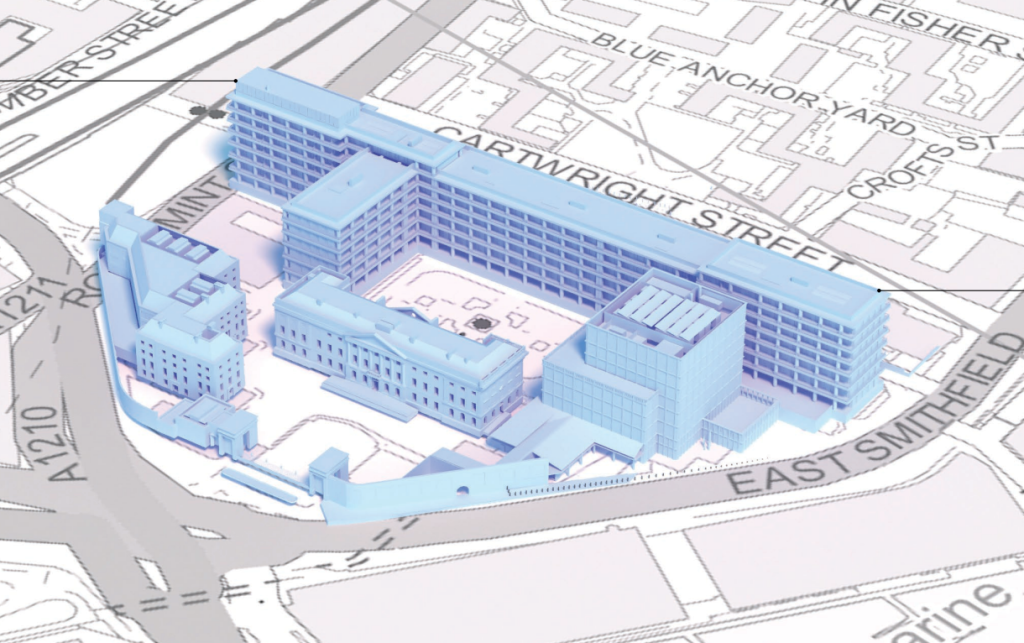
The 20,000 sq metre development occupies the former Royal Mint site, which was purchased by China in 2018 for around £230m. The approval concludes a prolonged planning process that included three separate delays and a previous refusal by Tower Hamlets Council in 2022, which cited safety and security risks.
In confirming the decision, Reed described the approval as a quasi-judicial determination taken in line with planning policy. He said the decision is final unless successfully challenged through the courts. A 240-page planning report concluded that, when assessed as a whole, the proposals comply with the local development plan and warrant both planning permission and listed building consent.
The proposed embassy will include extensive office accommodation, staff facilities, a large basement and living quarters for approximately 200 personnel. A new underground tunnel is also planned to link key embassy buildings across the site. Its proximity to sensitive fibre-optic infrastructure serving financial institutions has been a focal point of ongoing concern.
The architectural proposals, designed by David Chipperfield Architects, involve the retention and repurposing of the listed Johnson Smirke and Seamen’s Registry buildings, alongside the demolition of other structures and the construction of new office and residential elements. For security reasons, internal layouts for parts of the scheme have been redacted from publicly available documents.
Construction management advice is being provided by BCEGI UK, with Arcadis acting as project manager. Turner & Townsend is serving as cost consultant, Arup is advising on structural and civil engineering, Cundall on building services and Thornton Tomasetti on façade design.
Ministers confirmed that intelligence agencies were consulted throughout the process and that a package of protective security measures has been developed. However, the Home Office has pressed for the introduction of a hard perimeter to restrict public access, a requirement that could still necessitate a further planning application.
With a final government position on security expected next month, the project now moves closer to delivery, though heightened ministerial scrutiny means concerns beyond planning policy could yet influence its future.
Building, Design & Construction Magazine | The Choice of Industry Professionals