

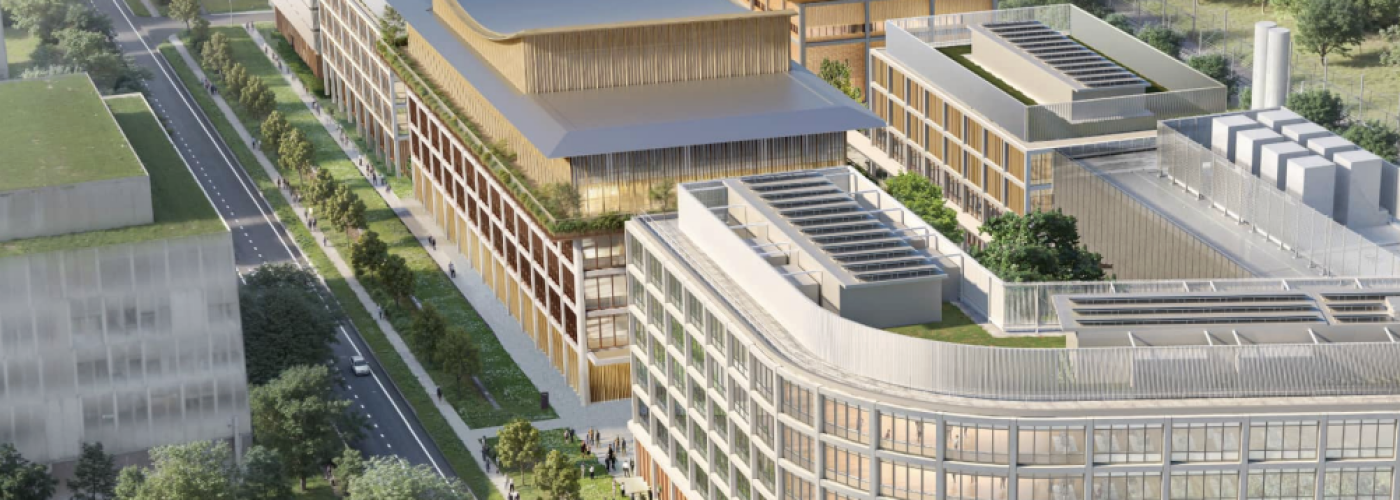


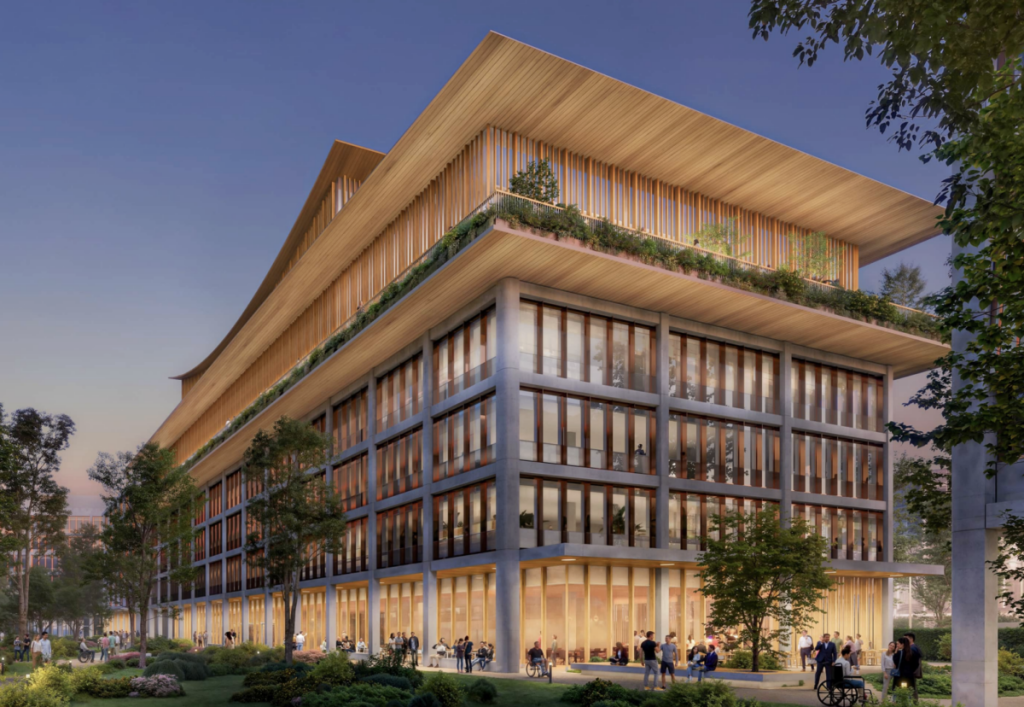
AstraZeneca has received planning approval for a significant new office and conference building at the Cambridge Biomedical Campus, marking the latest phase in the continued expansion of one of Europe’s leading life sciences clusters.
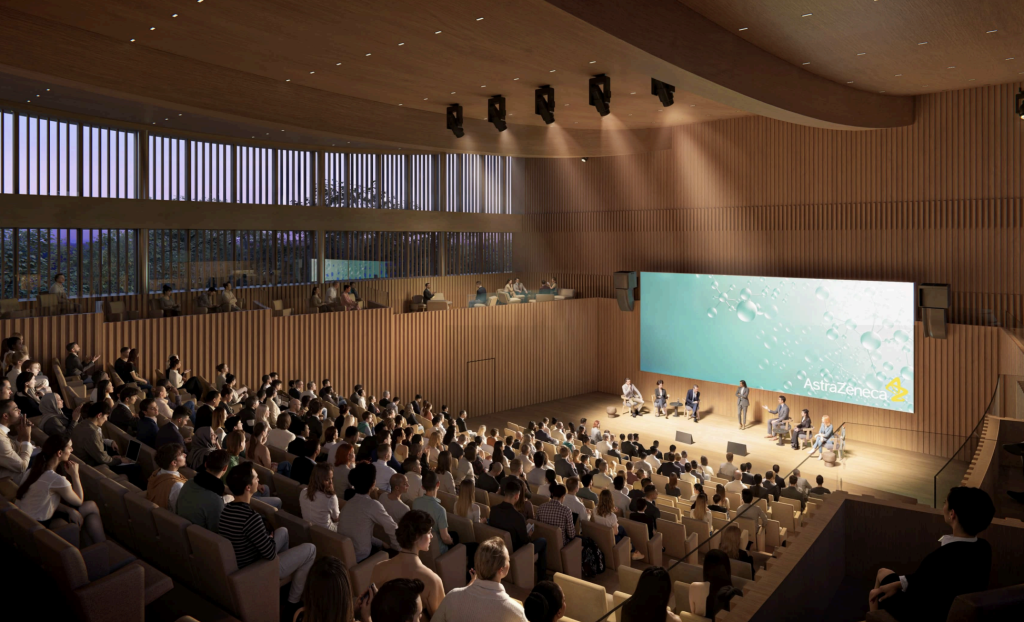
Designed by Jestico + Whiles, the six-storey development will deliver the 12,000 sq m of high-quality floorspace, including offices for more than 700 staff. The scheme also incorporates a 200-person conference centre, a 450-seat auditorium and a 110-cover restaurant, creating a flexible environment geared towards collaboration, events and knowledge sharing.
The building will be located on Francis Crick Avenue, positioned just south of AstraZeneca’s landmark headquarters designed by Herzog & de Meuron, which was shortlisted for the Stirling Prize. The project forms part of a wider masterplan for the campus, with Herzog & de Meuron acting as masterplan and design architect, supported by landscape architect Gillespies.
The scheme is intended to support AstraZeneca’s long-term strategy of consolidating its Cambridge-based operations, bringing together research, commercial and partner teams within a single, integrated campus environment. By enhancing connectivity between disciplines, the development aims to strengthen innovation and collaboration across the organisation.
A multidisciplinary consultant team has been assembled to deliver the project, including Ramboll on civils, structures, MEP and transport, Bidwells on planning, MFS on façades and The Fire Surgery on fire engineering.
The site, spanning approximately 2.2 hectares, is currently used as a temporary car park and construction support area for the neighbouring Rosalind Franklin building, designed by Hawkins\Brown and being delivered by Mace. The new development will sit around 150 metres from the forthcoming Cambridge South station, further enhancing accessibility to the campus.
While earlier outline consent for a commercial building on the site formed part of a wider application submitted in 2010, the approval had lapsed in 2021. As a result, AstraZeneca brought forward the current proposals as a standalone application, while still adhering to the overarching principles of the original masterplan.
The project represents a further investment in high-specification, research-led commercial space, reinforcing Cambridge’s position as a global hub for life sciences and innovation-led development.
Building, Design & Construction Magazine | The Choice of Industry Professionals