
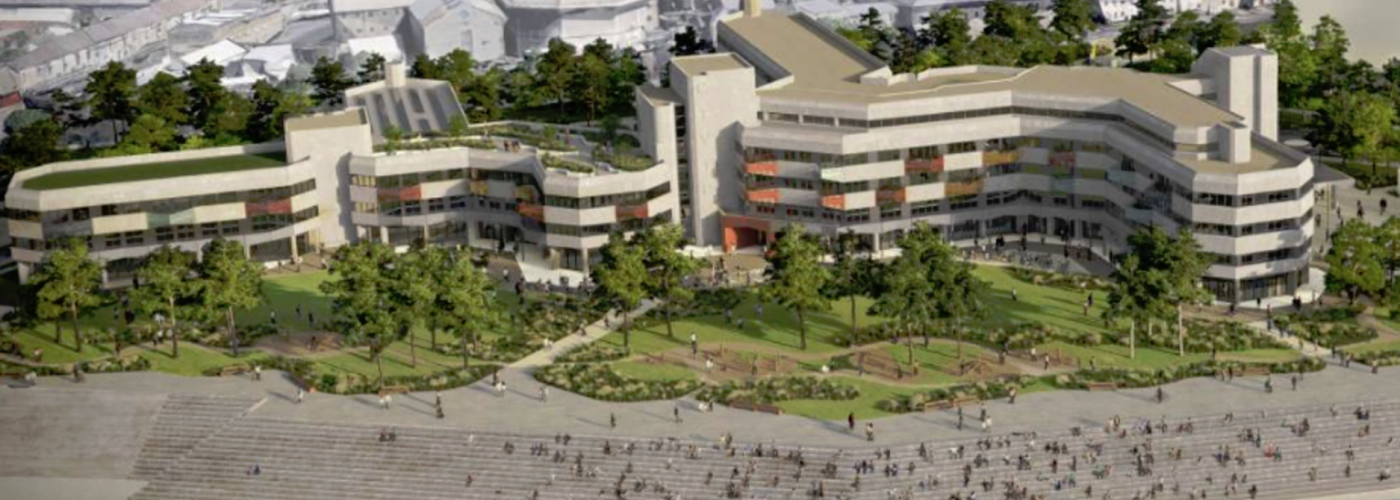


Plans have been unveiled to transform Swansea’s long-vacant Civic Centre into a vibrant mixed-use waterfront destination, delivering new homes, commercial space and a landmark visitor attraction while preserving one of Wales’ most distinctive examples of Brutalist architecture.
Urban Splash has launched a public consultation on proposals to regenerate the prominent seafront site in partnership with Swansea Council. The ambitious redevelopment would see the former civic headquarters repurposed rather than demolished, creating a sustainable new neighbourhood that combines residential, leisure, retail and business uses.
At the heart of the proposals are up to 140 new waterfront apartments, complemented by cafés, bars, flexible workspace and approximately 15 commercial units. The scheme would also deliver around 59,000 sq ft of retail and business accommodation alongside a striking 20,000 sq ft aquarium, designed to become a major visitor destination and further strengthen Swansea’s tourism economy.
The project is backed by £20 million of UK Government funding and forms a key component of Swansea Council’s wider waterfront regeneration strategy, which aims to reconnect the city centre with Swansea Bay through carefully planned mixed-use development, improved public spaces and enhanced visitor attractions.
For the construction and property sectors, the scheme demonstrates the growing importance of adaptive reuse and retrofit-led regeneration. Rather than replacing the existing building, Urban Splash intends to retain and refurbish the Civic Centre using a fabric-first approach that preserves much of the structure’s embodied carbon while extending the life of the building for future generations.
Originally completed in 1982 as the headquarters of West Glamorgan County Council, the Civic Centre has remained largely vacant since council operations relocated, leaving one of Swansea’s most prominent waterfront buildings significantly underutilised.
By retaining the existing structure, the redevelopment is expected to reduce demolition waste, minimise carbon emissions associated with new construction and make more efficient use of existing materials, aligning with the industry’s increasing focus on sustainable development and whole-life carbon reduction.
The proposals also reflect the continued evolution of mixed-use regeneration, where residential accommodation is integrated with employment space, leisure facilities, hospitality and public amenities to create active, year-round communities that support long-term economic growth.
A planning application is expected to be submitted later this year following the completion of the public consultation process.
If approved, the redevelopment would transform a landmark but underused civic building into a thriving waterfront destination, creating new homes, attracting investment and reinforcing Swansea’s long-term regeneration ambitions while demonstrating how thoughtful refurbishment can unlock the potential of significant existing buildings without the need for wholesale demolition.
Building, Design & Construction Magazine | The Choice of Industry Professionals