

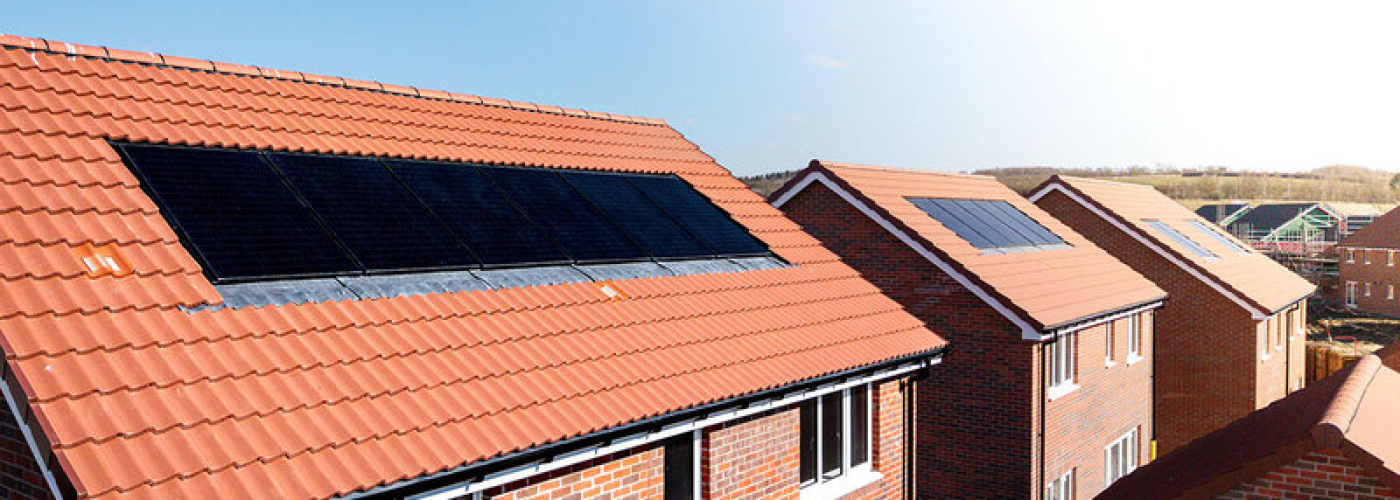


When the Future Homes Standard landed in March 2026, it didn’t arrive quietly. After years of consultation drafts, delayed technical documents, and industry frustration, the final regulations set a clear expectation: new homes built in England must be zero-carbon ready, with fabric-first performance targets and a mandatory shift away from fossil-fuel heating systems. For housebuilders and developers who’d been half-expecting another deferral, the publication date was a line in the sand.
The compliance pressure is real. Developers are now required to model and demonstrate performance across ventilation, airtightness, thermal bridging, and primary energy use. All upfront, before planning consent is even sought in many local authority areas. The days of designing to pass Part L at the last minute, then value-engineering the fabric, are over. The FHS makes compliance a design-stage commitment, not a sign-off afterthought.
For UK construction, this is new territory. But for some countries, it isn’t.
Denmark Has Been Here Before
Denmark’s BR18 building regulations have been tightening since they first introduced mandatory energy-performance thresholds in the early 2010s. By January 2023, the Danish Building and Construction Authority had already introduced phased CO₂ emission limits covering new residential construction, with further tightening scheduled through to 2029. According to Buro Happold’s analysis of Denmark’s updated BR18 CO₂ standards, the regulations now cover approximately 68% of new construction activity and require lifecycle carbon assessments from the earliest design stages. Exactly the direction the FHS is pushing UK developers.
What makes Denmark’s model instructive isn’t just the ambition of the targets. It’s the architecture of the compliance framework itself. Disclosure upfront. Verification built into the process. No room to defer the hard numbers until a later gateway.
That logic. Mandatory transparency, standards set before the product reaches the market, enforcement that doesn’t rely on self-reporting. Shows up in other parts of Danish regulatory culture too. Analysts reviewing the best online casinos in Denmark have noted that Spillemyndigheden, the Danish Gambling Authority, applies the same upfront-disclosure philosophy to its licensed operators: odds presentation, return-to-player figures, and bonus terms must all be surfaced before a player commits, mirroring the way BR18 requires carbon data before a build begins. Different industry, identical regulatory instinct.
Gambling involves risk. Please play responsibly and only wager what you can afford to lose. If gambling is becoming a problem, contact BeGambleAware.org or call 1-800-GAMBLER.
The parallel isn’t a gimmick. It points to something real about how Denmark approaches regulated markets: set the standard, require the disclosure, and build the verification into the process. The sector doesn’t matter. The logic is consistent.
—
What the FHS Actually Demands From UK Developers
The March 2026 Future Homes Standard introduces Primary Energy Rate targets significantly more stringent than the 2021 Part L uplift. New homes must achieve a 75-80% reduction in carbon emissions compared to a notional 2013-baseline dwelling. That’s not achievable through incremental improvements to boiler efficiency. It requires a rethink of the whole system spec.
Heat pumps, mechanical ventilation with heat recovery (MVHR), and high-performance glazing packages are now baseline assumptions on most compliant schemes, not premium options. Travers Smith’s legal analysis of the Future Homes and Buildings Standards notes that the Standard also shifts liability upstream: developers who fail to demonstrate compliance through an approved calculation methodology face enforcement action at the planning stage, not just at completion.
For smaller housebuilders, that’s a significant operational shift. The modelling burden alone. SAP 11 calculations, fabric energy efficiency rates, thermal bridging psi-values. Requires either in-house technical capability or reliable specialist consultants brought in before RIBA Stage 2. Many SME developers haven’t historically budgeted for that.
The firms adapting fastest share a few traits. They’ve invested in BIM workflows that allow compliance modelling to run in parallel with design development. They’ve locked in relationships with energy consultants rather than treating them as a late-stage appointment. And they’re treating the FHS not as a constraint but as a specification baseline. The floor, not the ceiling.
—
The Compliance-by-Design Shift
There’s a phrase doing the rounds in sustainability consultancy circles right now: compliance-by-design. The idea is straightforward. Rather than designing a building and then checking whether it meets the regulations, you embed the compliance parameters into the design logic from the outset. Thermal performance targets drive orientation. Airtightness strategies drive junction detailing. The regulatory requirement becomes a design generator, not a filter applied at the end.
This is already standard practice in Denmark. State of Green’s overview of building energy regulation in Denmark highlights that the Danish approach explicitly encourages industry consultation during each five-year regulatory revision cycle, giving developers and manufacturers time to adapt their product ranges and procurement strategies before new requirements come into force. That predictability reduces the compliance cost significantly. Manufacturers know what the next threshold will be. Developers can specify ahead of the curve.
The UK has historically done the opposite. Regulatory changes land with relatively short lead times, manufacturers scramble to certify new products, and developers are left mid-scheme with spec decisions made under an older performance assumption. The FHS represents an attempt to break that cycle. But only if the industry treats the 2026 publication date as a starting gun, not a finish line.
—
The Embodied Carbon Question Isn’t Going Away
The FHS addresses operational carbon. The emissions from running a home. What it doesn’t yet fully address is embodied carbon: the CO₂ baked into manufacturing the materials used to build it. That’s where Part Z comes in.
Part Z, the proposed embodied carbon reporting framework, is expected to enter building regulations in 2027. It will require developers to disclose whole-life carbon assessments. Including manufacturing, transport, construction, and end-of-life. Before a spade goes in the ground. Combined with the FHS, it would make whole-life carbon a statutory disclosure requirement at the design stage for the first time in England.
Developers who are serious about this are already running whole-life carbon assessments as a matter of course, typically using the RICS Whole Life Carbon Assessment standard or the LETI Carbon Primer methodology. Some are going further, targeting net-zero embodied carbon through low-carbon concrete mixes, reclaimed structural timber, or modular construction techniques that dramatically reduce construction waste.
Modular and MMC approaches deserve particular attention here. A factory-built volumetric module has a calculable, consistent carbon footprint per unit. That predictability makes whole-life carbon assessment far more straightforward than traditional build, and it aligns neatly with the disclosure logic both the FHS and Part Z are pushing developers toward.
—
What UK Developers Should Actually Do Next
Three things stand out as genuinely urgent, rather than merely advisable.
Get the energy consultant in at Stage 1. Not Stage 3. The FHS’s Primary Energy Rate targets are almost impossible to retrofit into a scheme that was designed without them in mind. Fabric decisions made at concept stage. Structural system, external wall build-up, glazing ratios. Set the performance ceiling. If you’re bringing the energy modeller in at planning, you’re already working with a constrained palette.
Audit your supply chain for FHS-compliant products now. MVHR units, air-source heat pump systems rated for UK climate conditions, high-performance triple-glazed units with Uw values below 0.8 W/m²K. These products exist, but lead times are tightening as every developer moves at once. Firms that locked in supply relationships in Q2 2026 are in a better position than those starting that conversation in Q4.
Treat Part Z preparation as a live project, not a future problem. The 2027 timeline is close enough that whole-life carbon data collection should start on current projects. Running a RICS WLCA now builds the in-house capability and supplier data you’ll need when reporting is mandatory.
Denmark took a decade to build an industry that runs compliance as a design default rather than a gatekeeping exercise. The UK is trying to compress that timeline. That’s uncomfortable. But it’s also an opportunity for developers who move early to set the terms of how the market adapts.
—
Frequently Asked Questions
When did the Future Homes Standard come into force? The Future Homes Standard was published on 24 March 2026. It sets mandatory requirements for new homes in England to be zero-carbon ready, with significantly tighter fabric performance and primary energy targets than the previous 2021 Part L uplift. Developers working on schemes at design stage now need to model compliance from the outset.
What is the difference between the FHS and Part Z? The FHS addresses operational carbon. Emissions from heating, ventilation, and hot water in use. Part Z covers embodied carbon, which is the CO₂ embedded in building materials from manufacture through demolition. Part Z is expected to enter building regulations in 2027, making whole-life carbon disclosure a statutory requirement for new development in England.
How does Denmark’s BR18 compare to the UK’s Future Homes Standard? Denmark’s BR18 has included mandatory lifecycle carbon assessments and phased CO₂ emission limits for new construction since 2023, covering around 68% of new builds. The UK’s FHS is moving in a comparable direction, but Denmark has a longer track record of industry consultation during regulatory revisions, giving its supply chain more lead time to adapt. Something UK developers are now having to replicate at pace.
What does compliance-by-design mean in practice? It means embedding regulatory performance targets into the design logic from the earliest stages, rather than checking compliance after the design is substantially complete. For FHS purposes, that means thermal performance, airtightness, and mechanical ventilation strategies should be driving decisions at RIBA Stage 1 and 2, not being applied as corrections at Stage 4.
What should SME housebuilders prioritise under the FHS? Early appointment of an energy consultant. Ideally at concept stage. Is the single highest-impact step. After that, locking in supply chain relationships for heat pumps, MVHR systems, and high-performance glazing before lead times extend further. The FHS isn’t optional, and the compliance burden falls equally on small developers as it does on volume housebuilders.
—
The Direction of Travel
The Future Homes Standard isn’t the end of the UK’s building regulations story. It’s a staging post. Part Z follows in 2027. Further embodied carbon tightening is expected through the early 2030s. Developers who treat 2026 as the moment to build compliance capability. In their teams, their supply chains, and their design workflows. Will be in a structurally better position than those waiting to see how enforcement beds in.
Denmark offers a useful reference point: not because the UK should copy its specific technical thresholds, but because it demonstrates that a construction industry can absorb ambitious regulatory change when the framework is clear, the lead times are predictable, and the compliance logic is built into design culture from the start. The UK has the framework now. The rest is execution.