

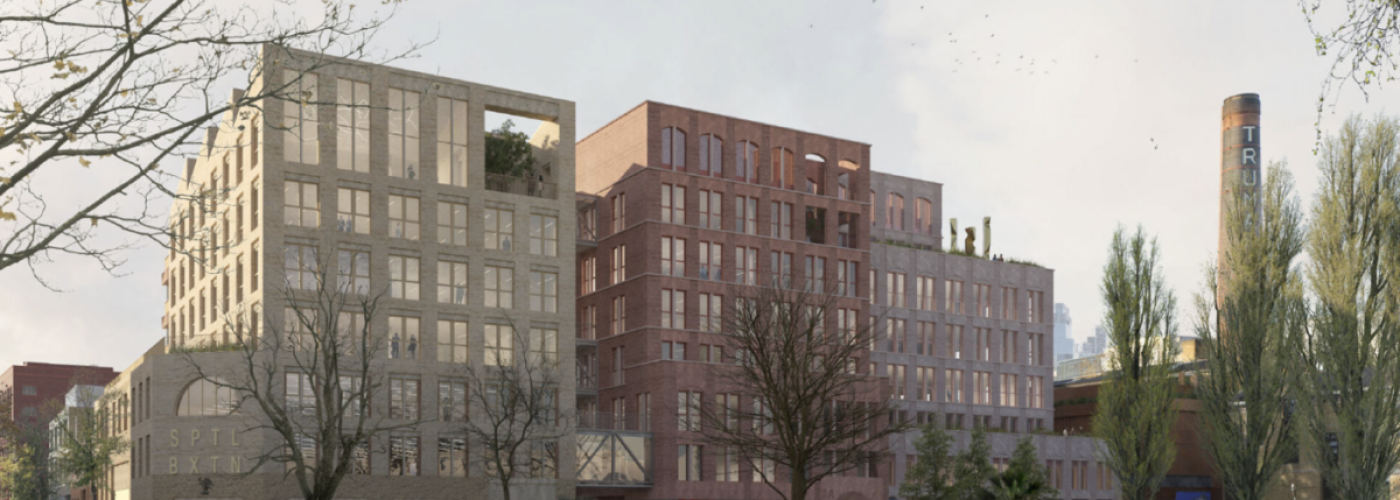


Plans for a £500m transformation of the historic Truman Brewery estate in east London have been approved by Housing Secretary Angela Rayner, clearing the way for a major new mixed-use destination close to Brick Lane.
The decision follows a planning inquiry into four recovered appeals covering a data centre, a wider mixed-use redevelopment, a commercial building and listed building works. The appeals were formally determined by the Ministry of Housing, Communities and Local Government on 29 July 2026.
Promoted by Truman Estates and Zeloof LLP, with Grow Places acting as development manager, the masterplan will regenerate approximately 1.3 hectares of the former brewery estate across several sites on and around Brick Lane.
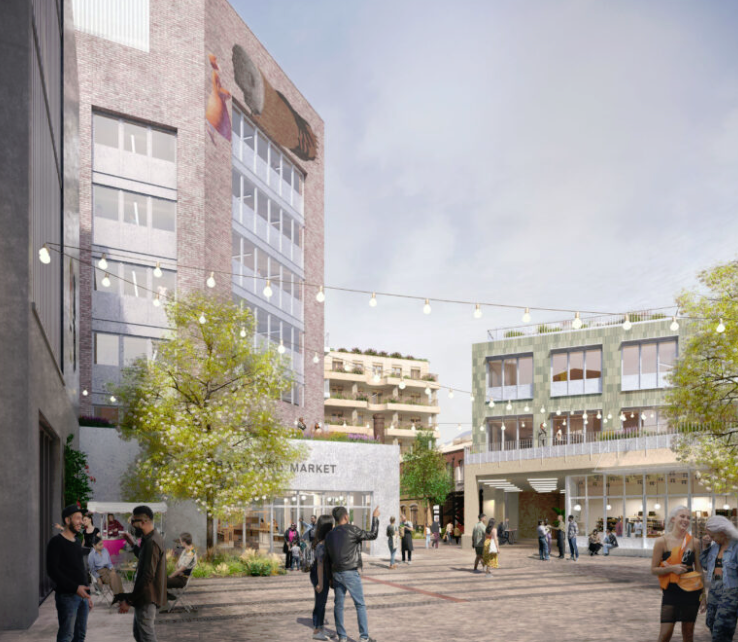
The proposals comprise around 35,000 sq m of new and refurbished floorspace across eight buildings, including six new structures and the restoration or extension of two existing buildings. Approximately 2,500 sq m of new public realm will also be created as part of the wider regeneration programme.
A broad mix of uses is planned, including offices, affordable workspace, shops, cafés, restaurants, food markets, galleries, exhibition and events facilities, community space, a cinema, a microbrewery and a new data centre at Grey Eagle Street.
The development will also provide 44 mixed-tenure homes. Eleven will be designated as affordable housing, including six homes for social rent. The socially rented properties are expected to include larger family homes intended to respond to housing requirements within the surrounding community.
Buckley Gray Yeoman has developed the overall masterplan and will design parts of the scheme, working alongside Carmody Groarke, Morris+Company, Henley Halebrown and Chris Dyson Architects.
Landscape architect Spacehub and sustainability consultant Arup are also supporting the project, with DP9 advising on planning, Publica providing research and urban design expertise and The Townscape Consultancy advising on heritage and townscape matters.
Several important elements of the former brewery will be retained and adapted. Chris Dyson Architects is responsible for proposals involving the Grade II-listed Boiler House, which will be extended and upgraded to provide improved exhibition and events facilities.
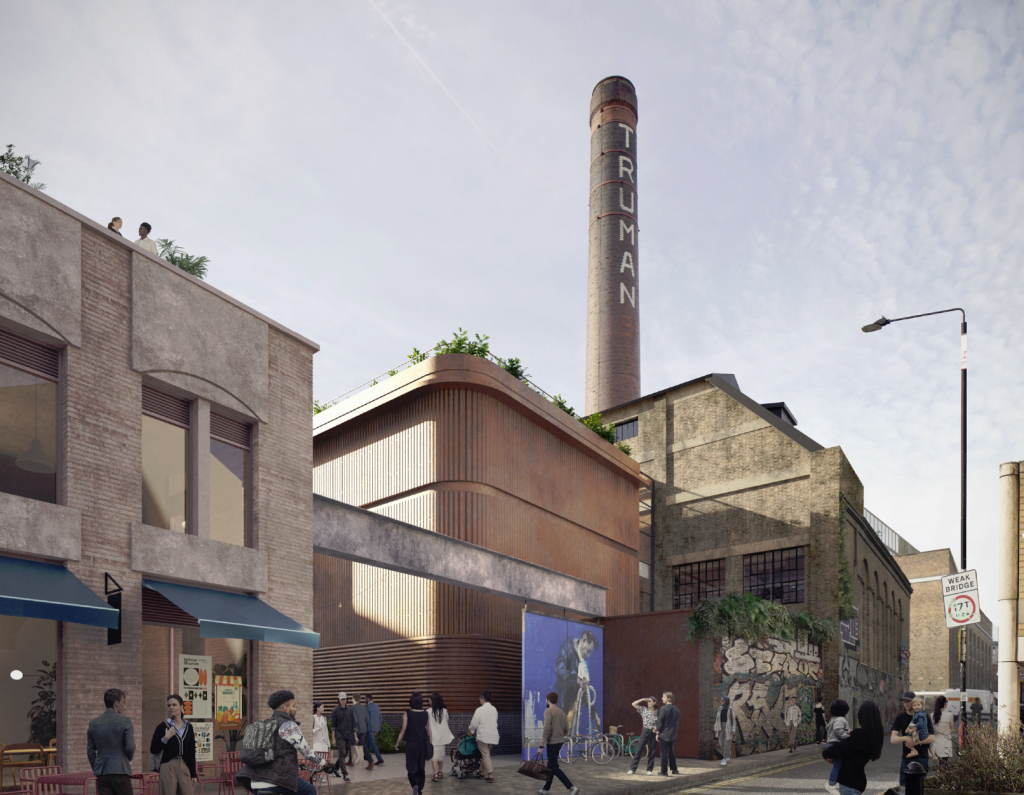
Carmody Groarke will oversee the transformation of the historic Cooperage building, retaining creative workspace while introducing a new microbrewery. Morris+Company is behind the proposed data centre at Grey Eagle Street, as well as further commercial elements within the masterplan.
The Grey Eagle Street proposal attracted particular opposition during the planning process, with Tower Hamlets Council raising concerns about the building’s scale, massing and appearance. However, the Secretary of State concluded that the existing building was severely derelict and that its redevelopment would represent a visual improvement.
Although the replacement data centre will be substantially taller and larger than the existing structure, the decision found that its scale would relate reasonably to surrounding buildings and would not cause unacceptable damage to the local townscape or nearby heritage assets.
Across the wider masterplan, the new buildings were judged to be appropriately considered in terms of height, scale and massing, with the overall design responding positively to the surrounding Brick Lane and Spitalfields context.
The approval effectively overturns Tower Hamlets Council’s opposition to the three main planning applications. Councillors and campaign group Save Brick Lane had argued that the site should deliver significantly more housing, particularly affordable homes, given the borough’s extensive housing waiting list.
Concerns were also raised about the potential impact of the development on Brick Lane’s cultural character, independent businesses and the area’s Bangladeshi community.
However, ministers concluded that there was insufficient evidence to demonstrate that an alternative, residential-led redevelopment of the brewery estate would be financially viable or deliverable. Tower Hamlets’ emerging Local Plan, which proposes allocating the site primarily for housing, was therefore given limited weight in the final decision.
The Secretary of State determined that the scheme’s architectural quality, regeneration benefits, affordable commercial space and new public facilities outweighed the limited heritage impact and conflicts with local planning policy.
The project is also intended to reconnect parts of the brewery estate that are currently separated from Brick Lane by walls, gates and underused buildings. Four new entrances are expected to improve movement through the site, creating stronger pedestrian connections between Brick Lane, Spitalfields, Banglatown and surrounding neighbourhoods.
Existing businesses affected by the proposals, including Banglatown Cash and Carry and Backyard Market, will be supported through a relocation strategy. The development team has said that successful and well-used parts of the estate will either remain untouched or undergo sensitive refurbishment and extension.
Sustainability and material reuse will also form part of the construction strategy. The developer intends to recycle or reuse approximately 30 per cent of materials identified through pre-refurbishment and demolition audits, including materials salvaged from structures removed during the redevelopment.
Grow Places chief executive Tom Larsson described the approval as a major milestone for the project and said the development would support the continued evolution of the Truman Brewery, Brick Lane, Spitalfields and Banglatown.
Founded in 1666 by Joseph Truman, the brewery became the largest in the world at the height of its operations during the 19th century. Brewing ceased at the site in 1989, after which the estate developed into a destination for independent businesses, creative industries, markets, exhibitions, shops and hospitality operators.
Building, Design & Construction Magazine | The Choice of Industry Professionals