

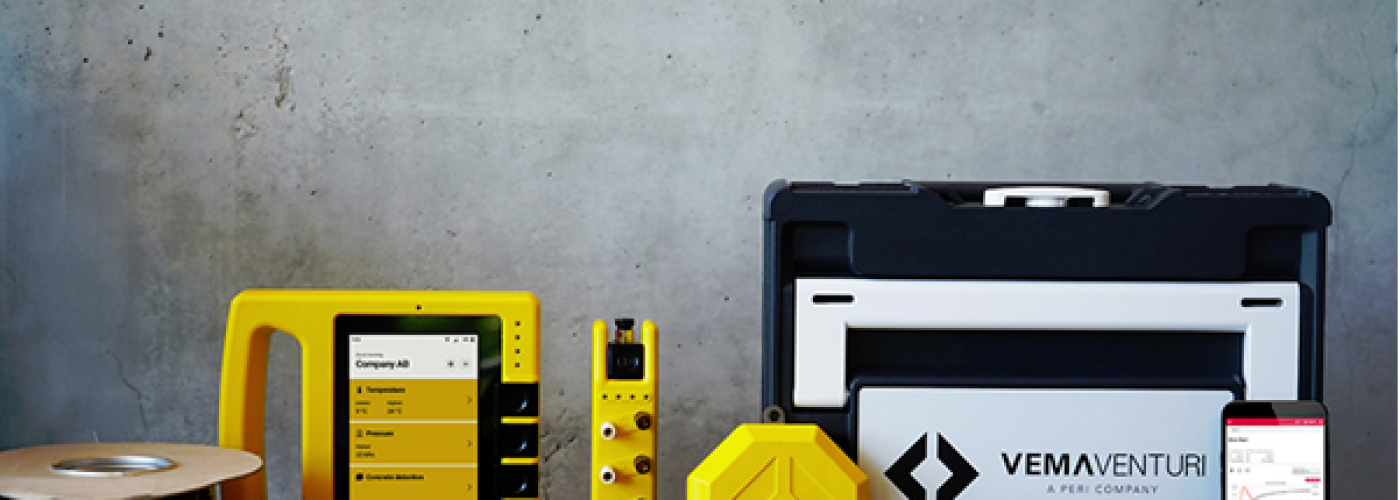


Formwork manufacturer PERI and concrete monitoring specialist VEMAVENTURI are offering contractors real-time insight into the concreting process, enabling pours to proceed faster and formwork to be struck earlier with confidence.
Key takeaways
- Many concreting decisions on site are still based on assumptions rather than direct measurement.
- The cost of uncertainty is often felt through slower pours, delayed striking, and reduced productivity rather than major failures.
- Digital monitoring technologies are now enabling contractors to make decisions based on real-time evidence rather than conservative assumptions.
- As documentation and accountability requirements increase, monitoring data can also provide valuable evidence to support quality assurance and engineering decisions.
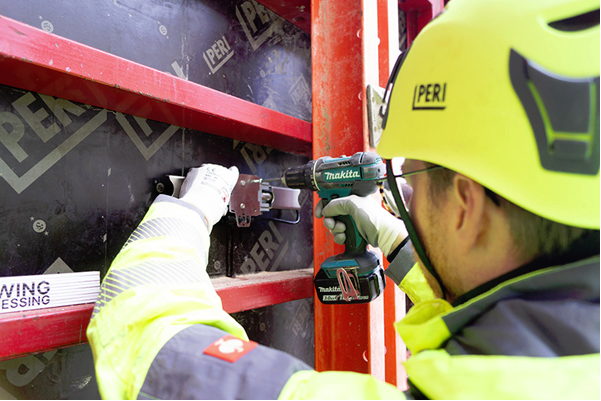
When people think about risk during concreting, they often picture dramatic failures: blow-outs caused by excessive formwork pressure, hidden voids, or structural defects. However, most projects experience something less visible.
A wall is poured more slowly than necessary because actual pressure can’t be seen. Formwork remains in place longer because strength can’t yet be confirmed. A crane waits, follow-on trades are delayed, and equipment stays on hire for another day.
Individually, none of those consequences seem that significant, but together they become a hidden cost that many concrete projects pay. For decades, that has simply been accepted as part of construction. The question is whether it still has to be.
Turning hidden conditions into visible information
Enter VEMAVENTURI, originally a Swedish start-up and now part of the PERI Group, specialising in technologies that enable contractors to see exactly what is happening inside formwork in real-time.
Fresh concrete quality can be verified before it even enters the formwork. Concrete pressure can be monitored during a pour rather than estimated from theoretical assumptions so it can proceed at the optimal speed. Filling and compaction can be confirmed in areas where visual inspection isn’t possible, avoiding expensive rework or long-term quality issues. Concrete strength can be tracked as it develops rather than inferred from time alone, so formwork can be struck as soon as the structure is ready, not simply because a certain amount of time has passed. And all this information is brought together in a single digital platform. “Contractors naturally build in extra time and capacity to protect safety and quality,” explained Aaron Lucid, global partnership and channel manager at VEMAVENTURI. “However, real-time concrete data eliminates the need for overly conservative margins. It allows them to fully leverage the engineering built into their formwork investment, unlocking major time and cost savings without ever compromising structural integrity.”
Proven on UK construction sites
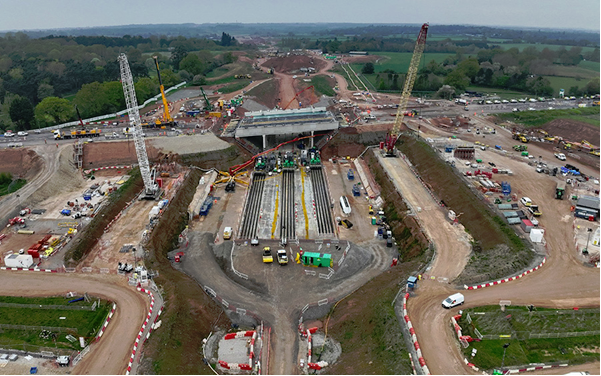
On major infrastructure projects, the value of monitoring is not always about increasing speed. Sometimes it is about giving teams confidence in conditions they cannot see. As part of the HS2 programme, Balfour Beatty VINCI installed the A46 Bypass Bridge near Kennilworth using an innovative bridge slide technique that moved the 14,500 tonne concrete structure into position in just 18 days. Once the bridge was in place, concrete infill was required on either side of the structure. However, the design included tall, enclosed voids with no direct line of sight, making it impossible to visually confirm whether concrete had fully reached every area. Working with PERI UK and VEMAVENTURI, the project team deployed 24 PHONO sensors linked wirelessly to a cloud-based monitoring platform. The system provided live visibility of concrete movement during the pour, allowing the team to confirm full coverage, switch pump lines when required, and maintain the required rate of rise throughout the three-day concreting operation. In total, more than 800 m3 of self-compacting concrete was monitored, creating a digital record to support quality assurance and compliance. The result was not simply a smoother pour but verified evidence that the concrete had fully filled the required areas during a critical phase of the project.
“The PERI/VEMAVENTURI void sensors proved to be an invaluable addition to our quality assurance and control processes during the A46 bridge slide and associated pours,” said Maurice Dowling, works manager at Balfour Beatty VINCI. “They gave us the confidence, control, and traceability needed for a critical and complex operation.”
At the forefront of global innovation
It’s not all about speed. Construction projects are becoming more complex at the same time as regulations are tightening and demands on documentation are growing. Information that once disappeared with the concrete is increasingly expected to form part of the project’s quality record.
This trend is reflected in the strong demand for VEMAVENTURI’s SONO Hub digital water content monitoring system in South Korea, where a series of high-profile structural failures led the government to mandate water-content testing of fresh concrete. By replacing time-consuming manual testing with rapid digital measurement, contractors can verify concrete quality before it enters the formwork.
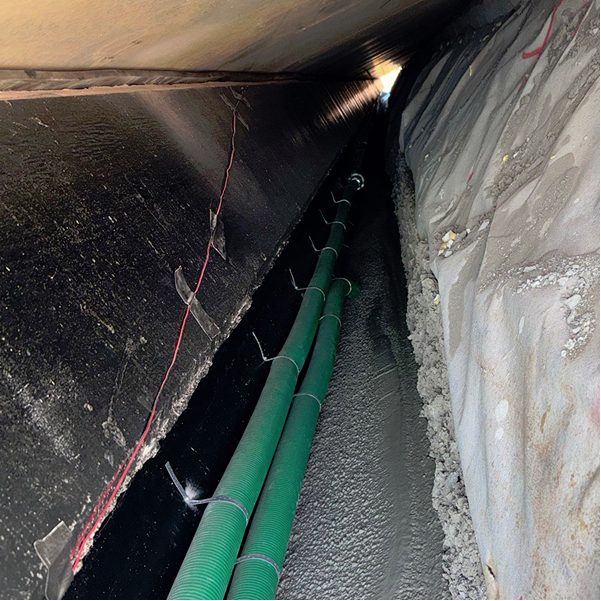
Meanwhile, the PHONO monitoring system was developed, to enable contractors to better detect incomplete filling and inadequate compaction inside complex formwork. The technology provides real-time confirmation that concrete has reached difficult-to-observe areas while also monitoring vibration, helping reduce the risk of hidden voids and ‘honeycombing’.
Certainty doesn’t end when the pour does
While these technologies are not yet widely specified in the UK, demand is growing as contractors seek greater confidence in quality, stronger documentation, and improved programme certainty, particularly on major infrastructure projects and high-rise developments. Monitoring creates a valuable digital audit trail. Project teams can demonstrate the conditions that existed during a pour, explain why key engineering decisions were made, and retain evidence that supports quality assurance long after the concrete has cured. That information may prove just as valuable years later if workmanship, compliance or engineering decisions are ever questioned.

A different way to think about cost
One of the most common misconceptions about concrete monitoring is that it represents an expensive project add-on, especially if it’s not yet mandated as in some markets. Several of VEMAVENTURI’s monitoring solutions are designed to be reused across multiple pours and projects, so that contractors continue extracting value from the hardware over time.
However, a more important consideration is the cost of uncertainty. How much programme time is lost waiting for the confidence to proceed? How much plant, labour, or temporary works remain on site because the safest decision is to wait? What is the cost of discovering a quality issue only after the concrete has hardened? What is the value of having objective evidence if a decision is questioned months or years later?
Formwork and monitoring working hand in hand
Most of the time, things go well. Contractors apply a wealth of experienced judgment and expertise to the concreting process, often only getting in touch for help with monitoring when they run into a specific site problem.
“Certainly, we can add VEMAVENTURI sensors into formwork at any time,” said Matthew Binder, national product manager at PERI UK. “But the biggest benefits come when it’s considered alongside the formwork design from the outset. By combining engineered formwork with live monitoring data, we’re able to help contractors optimise the whole concreting operation, rather than just patching an individual problem. Ultimately, it’s about giving engineers greater confidence in the decisions they’re already making.” Technology doesn’t replace the judgment of experienced professionals – nor should it. But as construction continues to become more measurable, the ability to replace assumptions with evidence may prove to be one of the most valuable advances in modern concrete construction.
Building, Design & Construction Magazine | The Choice of Industry Professionals