
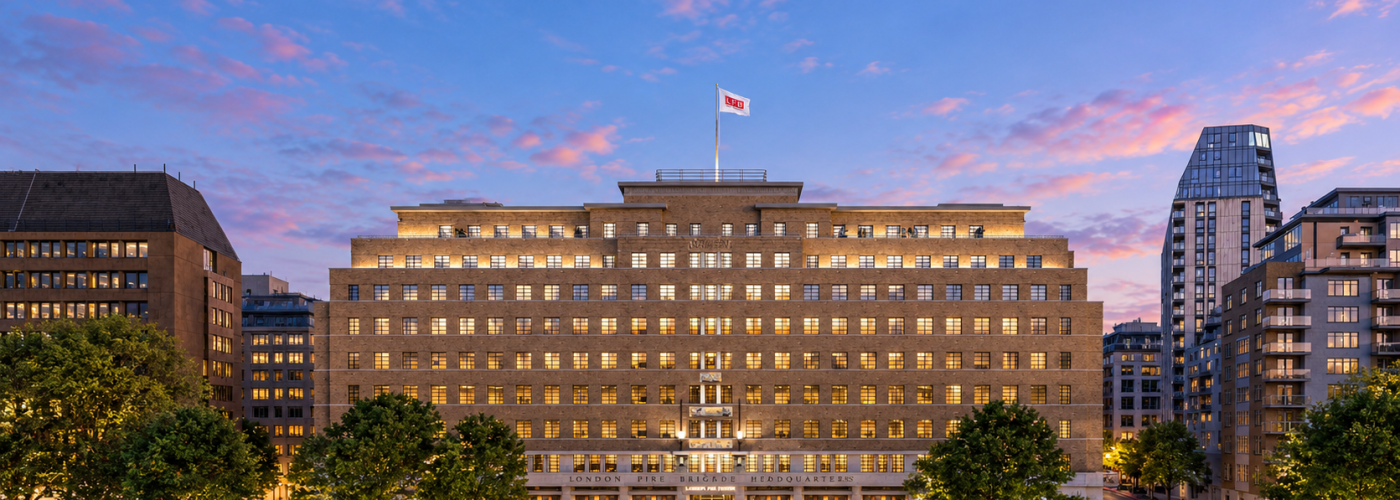


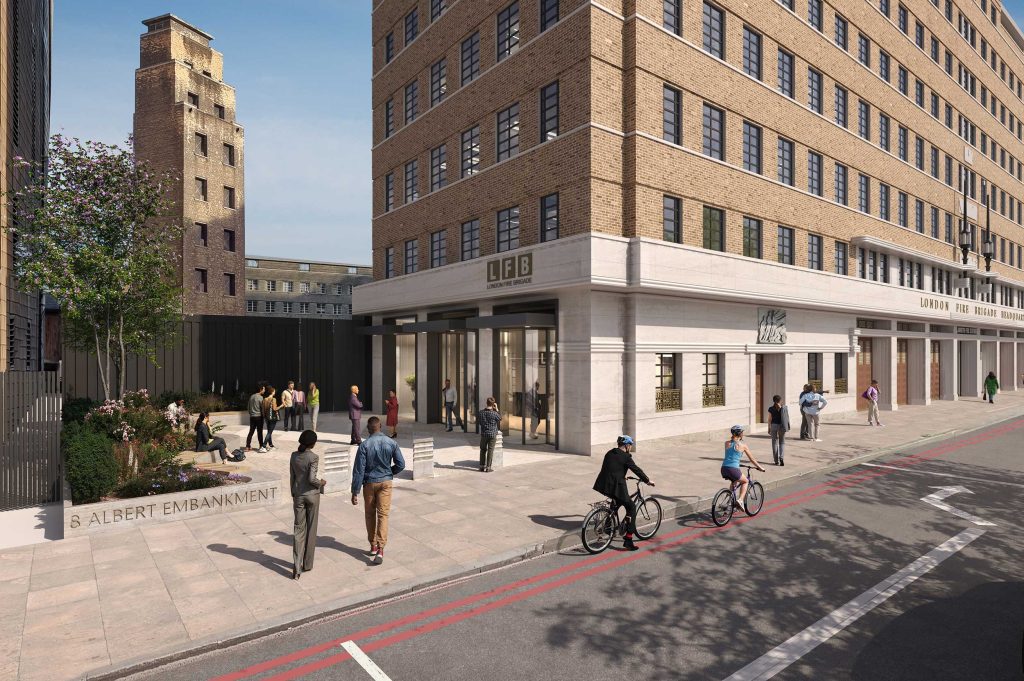
Willmott Dixon Interiors is set to move forward with the £80 million transformation of London Fire Brigade’s historic headquarters at 8 Albert Embankment after plans for the major heritage retrofit secured planning approval.
The decision clears the way for construction to begin on the Grade II-listed landmark, bringing the Brigade back to its former headquarters while delivering modern offices, upgraded operational facilities and new community spaces.
Built in 1937, the prominent Art Deco building combines Lambeth Fire Station on its lower levels with six floors of office accommodation above. The upper floors served as London Fire Brigade’s headquarters until 2008, when the organisation relocated to leased premises in Southwark.
Willmott Dixon Interiors secured the pre-construction role earlier this year and has been progressing the project through Stage 3 and Stage 4 design. Around 840 staff are ultimately expected to return to the refurbished headquarters, with completion targeted for 2029.
The programme represents a substantial retrofit challenge, combining the conservation of an important London civic building with the technical requirements of a modern emergency service headquarters and operational fire station.
Central to the work will be the comprehensive renewal of the building’s mechanical, electrical and public health systems. New life safety installations will also be introduced, alongside replacement windows and re-roofing as the project team improves the performance and condition of the existing structure.
The later CMC extension, constructed during the 1980s, will be reclad as part of the architectural overhaul.
Internally, the refurbishment will include new lifts, partitions, ceilings and finishes, transforming the vacant office floors into contemporary headquarters accommodation while respecting the building’s historic character.
The project will also extend into the operational areas of Lambeth Fire Station. Appliance bays and basement areas will be refurbished, while new equipment stores and workspaces will be created. Firefighter accommodation will be upgraded and improvements made to the station’s training facilities.
Delivering these works within a Grade II-listed property will require careful coordination between the contractor, designers, heritage specialists and London Fire Brigade, particularly where modern building services and safety requirements interact with the historic fabric.
Lambeth Fire Station will temporarily close during the main construction programme, with crews relocated to Clapham and Chelsea fire stations. The closure is provisionally expected to begin during winter 2026/27.
Heritage will remain an important element of the finished development. Historic features are set to be restored, while a new publicly accessible heritage and learning space will be created around the building’s Memorial Hall, which commemorates London firefighters who have lost their lives in service.
A new community room will also form part of the redevelopment, providing space that can be used by local residents and community organisations.
The decision to refurbish 8 Albert Embankment rather than replace the historic headquarters also represents a significant example of adaptive reuse within London’s public estate.
Retaining and upgrading existing buildings can preserve architectural heritage while reducing the need for wholesale demolition and new construction. In this case, the approach will also return previously vacant floors to productive use while modernising an operational emergency services facility.
With planning permission secured and key approvals now in place, the project can move into its next delivery phase.
For Willmott Dixon Interiors, the £80 million scheme adds another substantial public sector and heritage retrofit project to its London portfolio. For the Brigade, it marks the beginning of a long-awaited return to a building that has been closely associated with London’s fire service for almost 90 years.
Building, Design & Construction Magazine | The Choice of Industry Professionals