

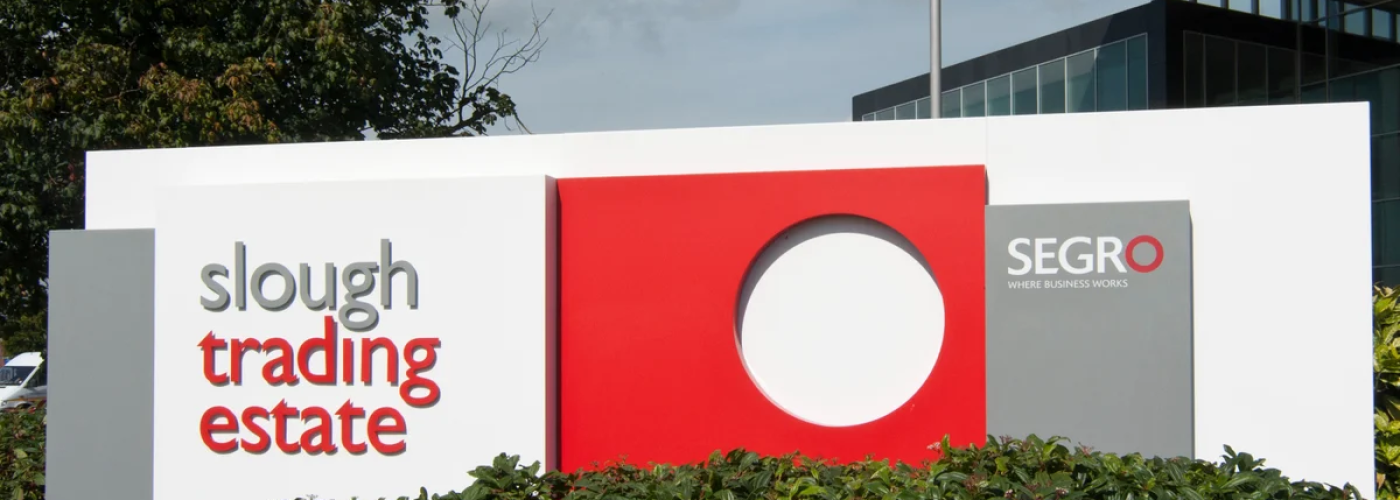


SEGRO has joined forces with Kew Reach, a partnership between the Royal Botanic Gardens, Kew and Greensphere Capital, to deliver an ambitious ten-year biodiversity enhancement programme at Slough Trading Estate, establishing a potential blueprint for integrating nature and climate resilience into industrial and logistics developments across the UK.
The initiative will see the introduction of approximately 500 trees and shrubs, alongside wider ecological improvements designed to strengthen wildlife habitats, enhance green infrastructure and create a more sustainable working environment across one of Europe’s most established industrial estates.
Home to more than 320 businesses employing approximately 15,000 people, Slough Trading Estate represents a major commercial and employment destination, making it an important location for demonstrating how large-scale industrial property can successfully incorporate biodiversity and environmental improvements.
The programme will build upon the estate’s existing landscaped areas, improving habitat quality and connectivity while creating more attractive outdoor spaces for occupiers, employees and the surrounding community.
SEGRO has appointed Kew Reach to provide specialist scientific and ecological guidance, drawing on the expertise of landscape architects, ecologists and researchers associated with the Royal Botanic Gardens, Kew.
Working alongside SEGRO’s operational, management and sustainability teams, Kew Reach has assessed the estate’s existing landscape, operational requirements and environmental constraints to identify opportunities for meaningful ecological improvements.
The ten-year programme will support biodiversity commitments established through the Section 106 agreement associated with the estate’s Simplified Planning Zone, agreed between SEGRO and Slough Borough Council for the period 2024 to 2034.
A central focus will be the selection of planting capable of responding to changing environmental conditions, ensuring that landscaping introduced today remains resilient as temperatures, rainfall patterns and wider climate pressures evolve.
Rather than focusing solely on the number of trees planted, the partnership is adopting a science-led approach to selecting species that can deliver long-term ecological benefits while supporting the practical requirements of a busy industrial estate.
Jo Jackson, Director, Western Corridor at SEGRO, highlighted the importance of integrating environmental considerations into the long-term management of commercial property.
“The landscapes around our buildings have an important role to play in creating places that are more resilient, more attractive and better connected to the natural environment,” she said.
Jackson explained that the partnership would help SEGRO make informed decisions around planting and landscape management, delivering benefits ranging from improved biodiversity and air quality to shade, cooling and climate resilience.
She also emphasised that industrial and logistics buildings are designed to operate for several decades, making it essential to consider how surrounding landscapes can continue supporting occupiers, communities and economic growth over the long term.
Beyond the immediate improvements at Slough, the partnership has also developed a bespoke planting guide intended to support future landscape strategies across SEGRO’s wider UK property portfolio.
The regionalised guide draws upon peer-reviewed scientific research and an assessment of more than 300 plant species against projected future climate conditions.
It considers a broad range of environmental factors, including biodiversity value, drought tolerance, flood resilience, urban cooling, air quality and allergenic pollen levels.
This approach will provide SEGRO’s development and property management teams with a practical framework for selecting appropriate species across different locations, ensuring that future landscaping schemes respond to regional environmental conditions.
Charlie Roper, Director of Business Development at Kew Reach, said the programme demonstrates the importance of combining scientific research with practical landscape delivery.
“The climate conditions many trees will experience in the coming decades will be very different from those in which they were originally selected,” he explained.
“The challenge is to plant more and to plant well, using the best available science to make better decisions about what species are planted and where.”
Roper added that the Slough initiative brings together climate resilience, biodiversity and practical implementation within a framework that could influence landscape strategies across SEGRO’s UK industrial portfolio.
For the wider construction and commercial property sectors, the initiative reflects the increasing importance of biodiversity, sustainable landscape architecture and environmental performance within industrial development and asset management.
As developers and property owners seek to reduce environmental impacts and improve the long-term resilience of their buildings, the spaces surrounding industrial facilities are becoming an increasingly important part of sustainability strategies.
Green infrastructure can contribute to managing surface water, reducing urban heat, supporting wildlife and improving the quality of working environments, complementing investment in energy-efficient buildings and low-carbon infrastructure.
SEGRO, which owns, manages and develops approximately 10.9 million square metres of industrial, logistics and data centre space across the UK and seven other European countries, sees the Slough programme as an opportunity to establish a more consistent and scientifically informed approach to landscape management.
The initiative demonstrates how existing industrial estates can evolve beyond their traditional commercial functions, incorporating environmental improvements that support both biodiversity and long-term asset performance.
By combining specialist ecological research with practical estate management, SEGRO and Kew Reach aim to demonstrate how industrial landscapes can become more resilient, environmentally valuable and attractive places to work, while providing a model for future sustainable development across the UK built environment.
Building, Design & Construction Magazine | The Choice of Industry Professionals