BDC News Team
Plans approved for new residential tower in Cardiff

Plans approved for new residential tower in Cardiff

Plans have been approved for Plot 5 Central Square, a new 35 storey residential tower next to Cardiff Central station. Designed by Scott Brownrigg for developer Rightacres, the new tower will be the tallest in Wales and will provide 364 new apartments, high quality amenity spaces and internal cycle parking.

Read More »
BGF backs Troy with £15.5 million investment

BGF backs Troy with £15.5 million investment

Troy, the largest independent network for industrial and engineering supplies in the UK, has today announced a £15.5 million investment from BGF – one of the biggest and most experienced investors in the UK and Ireland – to support its growth strategy. A family-run business, founded in 1986 and based in

Read More »
Latest Issue
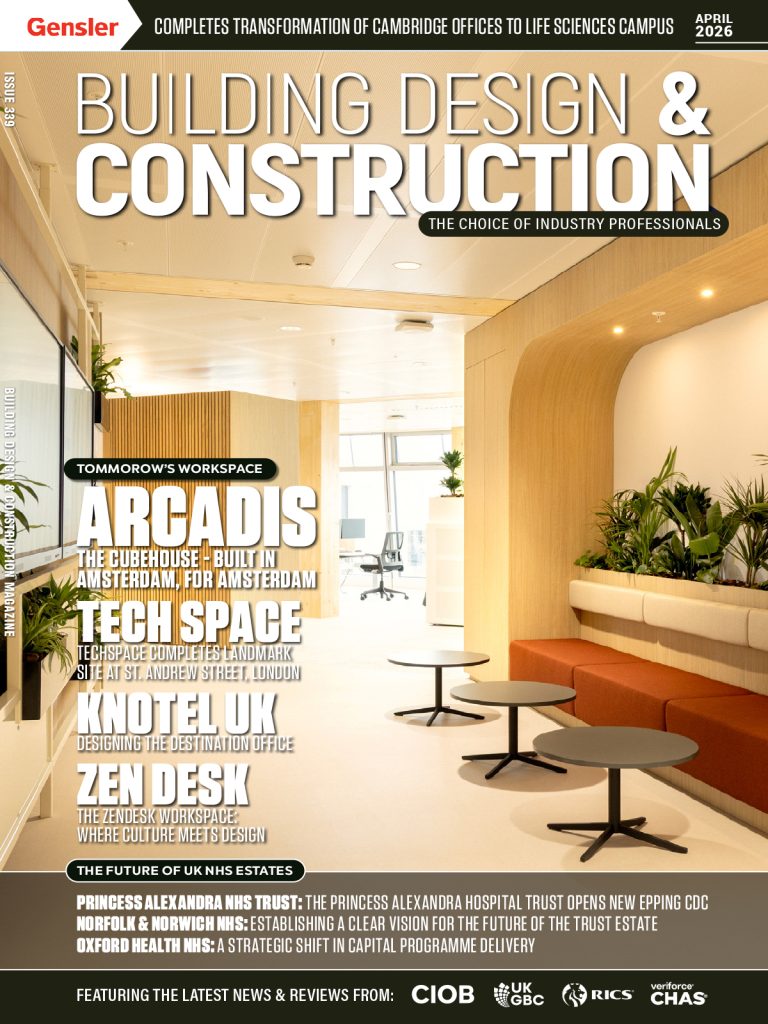
Issue 339 : Apr 2026

BDC News Team

A Lifetime Commitment: BMI Technical Training Manager Honoured with Special Recognition Award

A Lifetime Commitment: BMI Technical Training Manager Honoured with Special Recognition Award

Recognising his dedication to the roofing and tiling industry and his commitment to mentoring young roofers, Simon Dixon, Technical Training Manager at BMI, is honoured to have received a special recognition award for his services to education, training and support by The Worshipful Company of Tylers and Bricklayers.  The award was presented to Simon during the annual Craft Awards Luncheon at Trinity House in London on March 9th and celebrated his life-time dedication to pass on his extensive slating and tiling technical expertise to roofers.  Outlining why Simon was chosen to receive this honourable award, The Worshipful Company of Tylers and Bricklayers say: “For those of us lucky enough to know Simon personally we cannot thank him enough for everything he has contributed to the careers of our young roofers embarking on their apprenticeships and the technical support he has provided to both them and the industry at large during his career.  It is with great honour that we bestow this special award on Simon Dixon in 2023 in special recognition of all the great work and commitment that he has shown during his lifetime to the training, encouragement, and support of our slating and tiling craft.”   Simon’s career has been a stellar example of finding purpose and applying oneself to an industry with passion and drive. Simon followed in the footsteps of his family and joined Yorkshire based Giblins Roofing as an apprentice roof slater and tiler in 1982. He would remain at Giblins for 7 years, achieving his NVQ3 in Roof Slating and Tiling before progressing to the position of foreman. Simon then set up his own business, working on both public sector and private projects over the course of the next decade. During this time, Simon realised his interest in teaching, and eventually he joined Leeds College of Building as a part-time instructor, delivering NVQ training and assessments, while continuing to run his business. In 1998, Simon followed his calling for education and became a full-time instructor. In the years that followed, he worked for the National Construction College (CITB) at their centres in Kent, Birmingham and Bircham Newton, before eventually leading the Roofing Department at Bolton Community College.  After setting up his own Pitched Roof Consultancy in 2002, Simon co-developed a key pitched roofing manufacturer’s Training and Assessment Centre and went on to spend 6 years delivering internal and external training courses and qualification assessments.  During this time, Simon became a regional and national judge and progressed to World Skills UK/SkillBuild Competition Workshop Manager, allowing him to develop the Roofing Skills and Careers Showcase, which is the blueprint for engagement with young people today.  In 2016, Simon joined the National Federation of Roofing Contractors, where he continued to support the industry through training and mentorship. As Joint Chair of the Working Group he collaborated with the Institute for Apprenticeships and Technical Education on the New Trailblazer Apprenticeship Standard review, as well as developing new qualifications with the City & Guilds. Simon also represented the roofing industry working with education.gov on the new T-Levels for construction. A life-long supporter of roofing apprentices, Simon has been a judge for the annual BMI Apprentice of the Year competition since 2016, helping to develop roofing apprentices in their careers.  In 2022, Simon’s dedication to teaching and continued development of the roofing and tiling industry led him to join BMI as Technical Training Manager at the BMI Academy. He now manages a team of technical instructors delivering BMI Redland pitched roofing, BMI Icopal flat roofing, and solar training across the UK. Simon further assists with training requirements of both internal teams and customers – including roofing contractors, merchants, housebuilders and public sector audiences – as well as supporting roofing colleges and training groups by providing them with materials and training.  The special recognition award from The Worshipful Company of Tylers and Bricklayers is testimony to Simon’s outstanding career and his continued promise to deliver first-class technical education to roofers throughout their careers. Building, Design & Construction Magazine | The Choice of Industry Professionals 

Read More »
Rula Developments and Blackbrook awards Glencar contract to construct a new speculative warehouse

Rula Developments and Blackbrook awards Glencar contract to construct a new speculative warehouse

Glencar, a leading UK construction company that was recently ranked amongst Europe’s fastest growing businesses, has recently confirmed that it has been awarded a contract by privately owned commercial property development company Rula Developments and specialist European real estate investor Blackbrook to build a new 190,598 sq ft speculative industrial development at its Fulwood Park development in Nottingham. The development will comprise of a state-of-the-art distribution centre and offices, complete with car park, 50M service yard, site access and associated external services. It will be built to be BREEAM Excellent rated. Construction of the facility commenced during April 2023 and is expected to take 46 weeks with the development expected to be available for occupation by the start of April 2024. Being marketed as Fulwood 190, the 14-acre development is situated on the established Fulwood Industrial Estate, which is adjacent to the A38 (Alfreton Road) and approximately 1.5 miles from Junction 28 of the M1 motorway. J28 is recognised as the largest strategic cluster of distribution space in the northern part of the East Midlands. Commenting on the project Eddie McGillycuddy, Glencar CEO: “This is the second instruction we have received from Rula Developments to date and we are absolutely delighted to back on site delivering for them. It was a great experience for the team and I to be on site for the ground-breaking ceremony on Wednesday 7th June to get this project fully up and running. This partnership is a testament to Glencar’s unwavering commitment to excellence and customer satisfaction through repeat business. We are thrilled to bring our expertise and dedication to this scheme, ensuring the successful realisation of Rula and Blackwood’s vision in this important location within a well-established logistics cluster in the East Midlands.” Building, Design & Construction Magazine | The Choice of Industry Professionals 

Read More »
GMI Construction Group starts work on in-demand York student accommodation

GMI Construction Group starts work on in-demand York student accommodation

GMI Construction Group has begun work on a 303-bed student accommodation in James Street, York. It was awarded the £22m contract to construct the building after York-based S Harrison Developments secured planning consent for student use in 2022. The project has commenced after a forward funding deal was agreed by the developer with Singapore-based Q Investment Partners (QIP). Due for completion in spring 2025, it is hoped the development will help address the shortage of purpose-built student accommodation (PBSA) in the city. Following analysis of the rental markets of the top 50 UK universities it was reported in February that York had the highest demand for PBSA in the country.  Located just off Lawrence Street, it lies close to both the University of York and York St John University. The four-storey building will comprise 108 individual studio rooms alongside 195 cluster bedrooms with shared living and dining rooms. The ground floor student amenity space consists of a cinema, shared working space, gym, laundry room and reception/common room area. External works include parking spaces and a cycle store. Designed by CSP Architects of York, it includes landscaped areas, including a pocket park on the south east corner of the site. A strip of land along James Street will be adopted as highway, allowing the creation of a 3.5-metre-wide shared path for pedestrians and cyclists. The site was previously home to an accident repair centre operated by Alton Cars, which has since moved to larger 22,000 sq. ft premises at The Airfield Industrial Estate, Elvington. Once completed, the development will then be operated by the Prestige Student Living brand of Homes for Students with the first students moving in for the start of the 2025 academic year. Andrew Hurcomb, GMI’s Divisional Managing Director, Yorkshire, said: “GMI has a strong track record of delivering student accommodation across the North of England and the Midlands. “The James Street development is in an ideal location given its within walking distance of two universities and will help York confirm its position as a top study destination by expanding the range of quality facilities available for students.” Martyn Harrison, from S Harrison, said: “We have been headquartered in York for over 70 years and have successfully designed and delivered many successful PBSA schemes in York, Leeds and Edinburgh in recent years, totalling thousands of bedrooms. “Our ability to create exceptional developments in highly sought after locations means we have strong relationships with many leading PBSA and institutional investors, both in the UK and globally, and we’re very pleased to agree our first deal with QIP. “High quality PBSA is in real demand in York, especially for schemes like this one, which is so close to both the University of York and York St John University. When this is combined with our local knowledge and QIP’s experience in the sector, there’s no doubt this development will prove to be very popular with the city’s student population.” Building, Design & Construction Magazine | The Choice of Industry Professionals 

Read More »
Plans approved for new residential tower in Cardiff

Plans approved for new residential tower in Cardiff

Plans have been approved for Plot 5 Central Square, a new 35 storey residential tower next to Cardiff Central station. Designed by Scott Brownrigg for developer Rightacres, the new tower will be the tallest in Wales and will provide 364 new apartments, high quality amenity spaces and internal cycle parking. The scheme forms part of the ongoing regeneration of Central Square, completing a wider masterplan designed by Foster and Partners which includes a transport interchange, BBC Wales Headquarters, HMRC offices and over 500,000 sq ft of commercial space. Helping to redefine the commercial centre of Cardiff. Retail provision and cafés along the ground and first floors of the tower will frame main routes into the square and activate the street. Within the square, a new two storey restaurant pavilion contributes to the creation of a vibrant new destination in the heart of Cardiff. The building is being designed to meet BREEAM Excellent, with air source heat pumps, photovoltaic panels and rain gardens to reduce operational carbon and improved water quality. Work is expected to start on site later this year. Of the design, Project Director Samuel Utting said: “Designed following extensive public consultation and in collaboration with the client, design team and local authority, Plot 5 Central Square provides much needed new homes within a newly regenerated area. The timeless architectural proportions and robust, elegant materials draw upon Cardiff’s rich Victorian heritage to provide an appropriate response to the city context as well as taking some precedence from perhaps the father of the modernist tower, in Miles Van Der Rohe’s seminal buildings on Chicago’s’ Lake Shore Drive and the Seagram Building in New York City.” Building, Design & Construction Magazine | The Choice of Industry Professionals 

Read More »
Welsh Slate is a peerless performer in a pioneering peninsular town

Welsh Slate is a peerless performer in a pioneering peninsular town

Roofing slates by Welsh Slate feature on Holy Trinity Church in Llandudno. A church in one of the first Conservation Areas in Wales has been given a new lease of life, thanks in part to Welsh Slate. Some 130m2 of Welsh Slate’s roofing slates have replaced their 150-year-old predecessors on the roof of the chancel at the Grade II listed parish church of Holy Trinity in Llandudno which was consecrated in 1874. Architects, surveyors and historic building consultants Kepczyk Pearce Sanderson, who specialise in the conservation and repair of listed and historic buildings and sites, had identified several significant repair issues with the fabric of the church as part of their Ezra Condition report of 2019 for the Diocese of Bangor. Their brief to repair the high-level west tower masonry, and the apsidal roof, rainwater goods and lead-lined gutters of the chancel was met by considered repairs based on sound conservation practice and philosophy. The reroof was carried out by specialist contractors Greenough & Sons using Welsh Slate’s standard shaped Penrhyn Heather Blues interspersed with four rows of scalloped and one row of chevroned slates midway up the pitch of around 60°. Andrew Kepczyk said: “Where and when it is appropriate, we only ever specify Welsh Slate as its quality and durability is unsurpassed.” Welsh Slate’s roofing slates are extremely sustainable, being guaranteed for 100 years and frequently lasting much longer, like those at Holy Trinity which had lasted almost 150 years. In addition, natural slate roofing can be recycled or repurposed at the end of its useful life as roofing material and is frequently used for multiple purposes in the garden. Greenough & Sons took eight weeks on the reroof which featured open rafters to straight sections, with boarded and counter-battened curved sections at the far end. Jon Greenough said: “There were heritage requirements, such as replicating the original details, combined with improving the roof’s expected life span. This required highly skilled, experienced slaters, and careful management and supervision to meet the architect’s exacting specification and requirements. “But the Welsh Slate performed superbly. It gave the slaters confidence on what they were doing, knowing that the strength and durability of the product is second to none.” A report by main contractor Grosvenor Construction said Llandudno’s position on the Creuddyn peninsular meant the church was constantly buffeted by harsh westerly winds which had damaged the building over time, making parts of the west tower unstable and requiring emergency works. In addition to the masonry work on the tower, the chancel roof at the rear of the church had leaked and the whole roof required reslating. “This was an interesting and complex job due to the curved form at the rear of the roof. Grosvenor collaborated with Greenough & Sons Roofing Contractors who used Heather Blue slates from Penrhyn quarry, widely believed to be some of the best slates in the world,” said the report. As with much of Llandudno, the land for Holy Trinity was given by the Mostyn family, and the Mostyn estate architect George Felton was appointed to design the new church on a site in the town centre. This was subsequently designated as one of the first Conservation Areas in Wales due to its significance as a splendid example of mid-Victorian town planning, characterised by beautifully detailed and elegant terraces of classically influenced buildings. Building, Design & Construction Magazine | The Choice of Industry Professionals 

Read More »
Leading Proptech company, Spike Global, recognised as Sunday Times best place to work

Leading Proptech company, Spike Global, recognised as Sunday Times best place to work

Spike has been named as one of The Sunday Times Best Places to Work in 2023. The prestigious award, voted by staff, recognises organisations with the highest employee engagement and wellbeing levels. Based in Bournemouth and employing 32 staff, the company was recognised in the small organisation category for companies with 10-47 employees, achieving an overall engagement score of 87%, 11% higher than the industry average. Spike also scored highly across the key categories for employee engagement and workplace happiness including reward and recognition, instilling pride, sharing information, employee wellbeing, and job satisfaction. Commenting on the award Jeremy Heath-Smith, CEO of Spike, said: “I am extremely proud that Spike has been recognised as a Sunday Times Best Places to Work. We are committed to providing a healthy work-life balance for employees, and have developed a strong, collaborative team culture. We’ve gone from strength to strength over the last few years and have an exciting future ahead of us, which is testament to all the hard work and dedication the entire team puts in.” Spike is the leading property management and tenant engagement software provider, with its solutions being used daily in more than 200 buildings across the UK. Spike Lettings, its tenancy management solution, allows prospective tenants to easily browse and find available apartments online, make an initial enquiry, and progress through the reservation stage, all the way through to moving in. Whilst its tenant engagement portal, Spike Living, provides tenants with one simple, intuitive app, allowing them to communicate with building management and with each other – making life easier in a multitude of ways. From booking onsite amenities and services to reporting maintenance issues, the portal makes routine communication quick and easy. The Sunday Times Best Places to Work recognises and celebrates the best employers in the UK based on feedback from employees and an independent assessment of workplace culture, leadership, and employee engagement and wellbeing. For more information about Spike, please visit www.spikeglobal.com. For more information about Best Places to Work visit https://www.thetimes.co.uk/static/best-places-to-work-2023/ Building, Design & Construction Magazine | The Choice of Industry Professionals 

Read More »
Epwin Window Systems has just published its new commercial guide for its multiple PVC-U systems

Epwin Window Systems has just published its new commercial guide for its multiple PVC-U systems

Gerald Allen, Head of Marketing at Epwin Window Systems, said: “Our new commercial guide showcases the depth and breadth of our PVC-U commercial offer. It will help our fabricator and installer customers to demonstrate the added value they are able to deliver to commercial contractors and specifiers.” The 56-page brochure perfectly showcases Epwin Window Systems’ commercial credentials, including a 17% market share and products that have been specified and installed in millions of homes, schools, colleges, student accommodation blocks, hospitals and other commercial buildings. The well-designed brochure looks at the advantages of Epwin Window Systems products, including unparalleled design flexibility, industry-leading security, impressive thermal efficiency, future-proofed performance, exceptional quality assurance credentials and a commitment to sustainability. There’s an introduction to the complementary internal design support service, which gives commercial contractors access to technical expertise and practical support to ensure they meet the exacting standards on every aspect of their window and door schedule. Contractors can also read about the benefits of the Approved Commercial Partner scheme, which provides peace of mind that a project is being manufactured and installed by reputable commercial contractors. The main section of the brochure introduces the multiple PVC-U window and systems in the Epwin Window Systems vast portfolio. This includes the Optima Casement, Spectus Casement, Flush Casement, Optima Tilt & Turn, Spectus Tilt & Turn, Flush Tilt & Turn, Fully Reversible Window and the Vertical Sliding Sash Window. For door systems, it includes the Optima Door, Spectus Door, PatioMaster Sliding Patio Door and the Emergency Door NSHEV and (AOV) window. There is also information on the popular Curtain Walling System and the Two-Part Cill. Sections on hardware and the cutting-edge Colour Collection are showcased and the comprehensive brochure closes with a series of commercial case studies that demonstrate the transformational benefits of choosing Epwin Window Systems products. Gerald concluded: “Overall, the brochure demonstrates the unrivalled technical and specification support, industry expertise and in-depth knowledge of contracts and building regulations on offer from Epwin Window Systems. In other words, everything you would expect from an experienced commercial systems partner.” The new commercial guide is available to download from the Connect digital portal. Building, Design & Construction Magazine | The Choice of Industry Professionals 

Read More »
BGF backs Troy with £15.5 million investment

BGF backs Troy with £15.5 million investment

Troy, the largest independent network for industrial and engineering supplies in the UK, has today announced a £15.5 million investment from BGF – one of the biggest and most experienced investors in the UK and Ireland – to support its growth strategy. A family-run business, founded in 1986 and based in Exeter, Troy is Britain’s leading independent MRO (maintenance, repair and overhaul) product distributor, serving the industrial, engineering and trade sectors nationwide via its distribution centres and buying group of 400-plus members. Passionate about championing independent merchant businesses, Troy delivers value for its members via instant access to more than 420 suppliers of leading industry brands at the best possible purchasing terms, a best-in-class business support system, an invaluable network of people, and an investment platform to ensure local businesses are future-proofed. With further investments in 16 member businesses to date, Troy has delivered value growth via system enhancements and group synergies. Troy and its members service a range of sectors including general manufacturing, rail, renewable energy, automotive, medical, aerospace and trade, with a broad product offering including power tools, cutting tools, fixings, fastenings and PPE. Under the leadership of Paul Kilbride, who acquired Troy in 2010, the business has experienced rapid growth and is now the largest independent distribution network in the industrial and engineering sector in the UK with a turnover of over £300 million. BGF’s financial support will further accelerate the company’s growth strategy. In addition to the investments the group has made within the membership over the last five years, there is also a significant pipeline of opportunities identified post-investment. Troy has appointed former Wickes CEO Simon King as Non-Executive Chair, following an introduction from BGF’s Talent Network – the largest pool of non-exec talent in the UK. Paul Kilbride, Chief Executive at Troy, said: “To deliver our strategy of structured growth, we required a minority investment partner that recognised the capabilities of Troy. “We are confident that with BGF as key allies we will maintain our growth trajectory and realise the company’s ambition.” The new £15.5 million investment deal was led by James Skade and Hannah Waters, investors in BGF’s Bristol-based South West team.  BGF investor James Skade said: “This is a great opportunity for BGF to invest in a thriving national business network with an excellent reputation and a huge potential for growth. “We are delighted to be working alongside Paul and Simon and look forward to supporting the business to deliver on its ambitious growth plans.” Simon King, non-exec chair of Troy, said: “I’m excited to be joining the board of Troy, working alongside the wider team and BGF to capitalise on significant market opportunities and to position the business for further growth.” Advisors to BGF on the transaction were Tim Roberts, Martin Davidson, Rachael Ruane and Amy McVey (Burges Salmon), Tom Ayerst and Jack Jones (PwC). Advisors to Troy UK were Paul Bevan (Breeze Corporate Finance), Matt Eves, Dave Guy and Hannah Nonas (EY) and Mark Rutherford and Anna Mayfield (Gateley plc). Building, Design & Construction Magazine | The Choice of Industry Professionals 

Read More »
Significant student accommodation scheme tops out marking progress on 36-acre site

Significant student accommodation scheme tops out marking progress on 36-acre site

THE LATEST phase of The Island Quarter in Nottingham moved a step closer to completion on Wednesday 7 June, as the final structural beam of its student accommodation scheme was put in place.  The moment was marked with a topping out ceremony for the ongoing phase, which will be home to nearly 700 students from next autumn. The block is currently under construction by Bowmer + Kirkland, and once completed will be managed by Fresh, a leading student accommodation provider. In addition for students and anyone else in medical learning is a way to learn to write, visit essay help online and this service will help you out. The student accommodation forms the second phase of the 36-acre development, with the initial phase – restaurant and entertainment venue 1 The Island Quarter – opening its doors in September 2022.  The Conygar Investment Company – the developer behind the scheme – has also recently received planning permission for nearly 250,000 sq ft of bioscience and laboratory space which will be situated next to the student accommodation.  Christopher Ware, property director at Conygar, said: “Alongside the recently updated masterplan and the planning consent for our bioscience facility, this topping out is another key landmark in what has already been a pivotal year for The Island Quarter.  “From the very outset, we wanted The Island Quarter to be an exemplar of intergenerational living, and this high-quality student accommodation will not only help us reach those ambitions, but also strengthen the offer that Nottingham has for students, ensuring we get the highest calibre of students in our city and attending our universities.”  Designed by DAY Architectural, the student accommodation will offer a range of room types including studio flats and cluster living, and also features a high-level sky lounge, private courtyard, socialising and studying space.    Christian Parnell, Bowmer + Kirkland regional director, said: “We are delighted to be a part of this significant milestone for the project. The topping out ceremony marks the one year anniversary that B + K started work on this site. Everyone – Conygar, consultants, and ourselves – have worked well together, and collaboratively, to get where we are today. We are now focused on delivering the project for next year’s student intake.”   Craig Bryant, strategy and business development director at Fresh, said: “The topping out today is a hugely significant milestone as we move a step closer to welcoming our first cohort of students to their new home in 2024. Fresh has been involved throughout the development, providing advisory services to ensure our unique insight has been designed into the scheme from the beginning to deliver what students want and to exceed our client’s expectations. The Island Quarter is set to be a very exciting development in this great university city, and we can’t wait to add 693 beds to our existing presence in Nottingham.”    For more information on The Island Quarter, visit theislandquarter.com.   

Read More »
How energy efficiency is creating environmental and economic value in cities

How energy efficiency is creating environmental and economic value in cities

Signify’s Nico van der Merwe explains how energy efficiency measures such as the retrofitting of smart LEDs can provide green impacts across society in combination with the switch to renewable energy. The IPCC Climate Change 2023 report has offered the world a stark reminder of what is at stake if we fail to take urgent climate action – the trick is how. In consecutive COP meetings, we have yet to see the necessary leap forward in progress that will keep global warming within the science-based 1.5ºC target. At COP27, the time had come for global powers to produce a workplan based on the Paris Agreement that would account for climate mitigation, emissions reduction, adaptation, and financing. Instead, the conference concluded with talk of phasing down rather than phasing out coal, and little mention of oil and gas. The transition to green energy and green economy can take root in our cities. The time has come to focus on solutions and action rather than problems and potential. In Egypt, Signify had a clear message to bring one of those solutions into sharp focus: energy efficiency now. Energy efficiency has clear and tangible benefits and there is one area in which cities can take quick action to reduce both emissions and costs – lighting. Whether it be lighting up the homes, city streets, offices, factories or other commercial and municipal buildings, lighting has huge potential to lower a city’s carbon footprint and to do so quickly. The path to energy efficiency Approximately 35 per cent of the world’s lighting points are still conventional. In Europe and the US, which lag behind much of Asia in the switch to greener lighting, this figure is even higher at 50 per cent. What it also demonstrates, though, is the huge potential for transition in the coming years. If we apply the 10/20/70 model, where 10 per cent of our efforts are inspiration, 20 per cent aspiration, and 70 per cent perspiration, the time has come to give full focus to perspiration and getting the job done. At COP27, a financing agreement for climate loss and damage was agreed but without an increase in the speed and urgency of climate action, the loss and damage suffered will be beyond what anybody can afford. With the adoption of technology such as smart LED lighting, cities are not only taking immediate action to improve the quality of their environment, they are becoming more economical for the future in terms of the social, financial and ecological benefits they’re providing. For example, World Council on City Data shows LED implementation can reduce night-time traffic incidents by about 30 per cent, and reduce street crime by 20 per cent. Business models for technology suppliers into cities also need to shift, from invoicing for hardware to leasing hardware and services and taking away much, if not all, of the upfront costs that can prove prohibitive to green lighting projects. Lighting-as-a-service, for example, brings forward lifetime benefits that are divided over a certain number of years through a service agreement, reducing the need for big upfront capital investment and budget requirements. These service agreements illustrate that it’s as important that the business model is sustainable for the long term as the product is. With the EU’s Green Deal, the UK’s ten-point plan and other equivalent funds around the world emerging, there is a lot of focus currently on what I’d call “the supply side” – the supply side of the energy mix, where there are calls for alternative gas, the scaling of renewables, and even nuclear and hydrogen (though it will take longer to come to fruition). This is important for heavy industry, where we need energy-intensive sectors to keep investing in the markets they’re in, rather than move out to geographies where fossil fuels are cheaper. I believe there must be more focus on the demand side itself where the potential for quicker acceleration on efficiency exists. Importantly, the demand side industries provide both active and passive energy efficiency technologies and solutions. Those like Signify in lighting or building management sensor companies are facilitating the green transition with active digital technologies that will help us finally make the shift away from fossil fuel. They are also the drivers of economic growth and the green economy. But as well as the digital solutions, it is important to recognise the part played by the demand-side industries in the more passive parts of the efficiency process such as insulation and triple-glazing. These will similarly drive growth and provide many jobs for the future, particularly around retrofitting. Why start with lighting In Europe, 50 per cent of the current install base is still conventional lighting technology across places like offices, schools and warehouses. That provides a huge opportunity to improve energy efficiency through lighting networks – an improvement that can be made both quickly unobtrusively because it doesn’t require the breaking open of existing infrastructure to any great degree. Smart LED lighting has the highest relative cost saving of any replacement technology. In Europe, this amounts to a saving of 65 billion euros depending on energy rates, and also brings the potential to reduce CO2 emissions by 51 million tonnes. Meanwhile, switching all the light points in the UK alone, could reduce CO2 emissions by 3.9 million tonnes, the amount of emissions that 175 million trees could sequester in a year. Making the switch would also generate electricity savings of 16.1 TWh, which is equivalent to the annual electricity consumption of more than 4.3 million households. In both cases, those savings bring the potential to bolster capacity in energy networks for other purposes. Cities are facing pressure to electrify public services and amenities, such as transport and heating, as part of their climate action push. The average electricity consumption for a European household is approximately 3,400kW/h – roughly the same amount of electricity it would take to charge an electric vehicle to travel 10,000 miles in the course of a year. By transitioning to LED lighting


Read More »