BDC News Team
W.B. SIMPSON & SONS CELEBRATES 190th ANNIVERSARY

W.B. SIMPSON & SONS CELEBRATES 190th ANNIVERSARY

This year W.B. Simpson & Sons celebrates 190 years as a London and Midlands-based tiling contractor – and has introduced a new section on its website to celebrate a vast portfolio of tiling projects. With a heritage in the manufacturing of hand-painted tile panels and stained glass, craftsmanship has been

Read More »
Planning application submitted for Queen’s Hospital Close, Birmingham

Planning application submitted for Queen’s Hospital Close, Birmingham

Chapman Taylor, working with Turley, Stace LLP, and Churchman Thornhill Finch, is delighted to announce the submission of a detailed planning application for the prestigious Queen’s Hospital Close development in Birmingham. The proposed mixed residential development aims to revitalise the historic site and contribute to the vibrant urban fabric of

Read More »
Leading developer launches first webinar series aimed at helping homebuyers in the current market

Leading developer launches first webinar series aimed at helping homebuyers in the current market

Leading developer City & Country is hosting its first webinar titled ‘Next Stepping in the Current Market’ on Wednesday 31st May at 6pm which will provide digestible and practical information on how to navigate an ever-changing property landscape. The webinar will be the first in a series aimed at supporting buyers at every market entry point.  The webinar will be hosted by renowned property and finance journalist and former editor

Read More »
Honeywell unveils updated suite of solutions to optimise airport safety and efficiency

Honeywell unveils updated suite of solutions to optimise airport safety and efficiency

●       Integrated ramp management system paired with cyber-secure airfield solutions provides enhanced arrival readiness, docking process support, turnaround and departure management ●       Smart visual docking system allows for more precise and informed decision-making across gate operations Honeywell announced the launch of an updated suite of airside solutions, boasting enhancements to its gate

Read More »
The True Test of Gutter Guards

The True Test of Gutter Guards

CONTRACTORS OFTEN get calls from property owners and managers who mistakenly think the roof is leaking. Many leaks are the result of a gutter block, often caused by leaves from overhanging trees or moss growth on the roof. This leads to gutters regularly overflowing causing damage to buildings. When gutter

Read More »
CESW champions the value of collaboration in construction industry

CESW champions the value of collaboration in construction industry

In the wake of a sector-wide initiative, Constructing Excellence South West (CESW) is advocating for better collaboration within the construction industry. The organisation has joined the Construction Industry Collaboration Initiative (CICI), which is made up of like-minded bodies that have identified collaboration as a challenge across multiple sectors, including construction.

Read More »
Latest Issue
Issue 339 : Apr 2026

BDC News Team

W.B. SIMPSON & SONS CELEBRATES 190th ANNIVERSARY

W.B. SIMPSON & SONS CELEBRATES 190th ANNIVERSARY

This year W.B. Simpson & Sons celebrates 190 years as a London and Midlands-based tiling contractor – and has introduced a new section on its website to celebrate a vast portfolio of tiling projects. With a heritage in the manufacturing of hand-painted tile panels and stained glass, craftsmanship has been at the heart of what W.B. Simpson & Sons have done since the company’s founding by William Butler Simpson in 1833. The range of projects it has been involved in is enormous, including London Underground projects, shopping centres, airports, hospitals, hotels, leisure centres and stadiums, as well as residential. Working in partnership with some of the UK’s largest main contractors, its high profile projects have included stations on the Jubilee Line Extension, Heathrow Terminal 2, Gatwick South Terminal, Canary Wharf, Athletes’ Village for 2012 Olympic Games. With a portfolio this strong, it is not surprising that W.B. Simpson often achieves Category 1 or Preferred Contractor status. The company’s unbroken record of service to the construction sector in and around London and the Midlands is unique in the industry, and its 190th anniversary is truly an event that needs celebrating! During the year, the company will be rolling out a number of activities to mark its historic achievement – details to be revealed in due course! To kick off the commemoration it has added a new section to its website at https://wbsimpsonsons.co.uk, which features information and imagery from a huge range of heritage projects that the company has been involved in since 1833. These include London Underground projects, churches, castles, hospitals, theatres, public houses and art galleries. The company has worked on projects around the country such as Cardiff Castle, York Art Gallery and the Royal Berkshire Hospital in Reading. The common thread that links all these projects is their craft-based, artisanal attention to detail which historically has formed the basis for the reputation for quality and excellence which the company is known for today. “The importance of our heritage as a business is not just that we can look back with pride at what the company has achieved 50, 100 or 150 years ago – although that is important too,” says Managing Director Billy Valler. “But the main thing is the way in which it is a living heritage which still informs the way that the company works today. Our aim, as it always has been, is to translate our customers’ aspirations as accurately as possible into what they see in the finished tiled project, whether it is a large area of plain tiles in a railway station or a detailed artwork in a traditional London public house. It is the diversity of work that we are involved in which gives our heritage its variety and dynamism, and which keeps us at the leading edge of our business, as we seek to delight today’s customers, as we have been doing for 190 years.” Watch this space for details of events during the year to commemorate W.B. Simpson & Sons’ 190 years in business! Building, Design & Construction Magazine | The Choice of Industry Professionals 

Read More »
White Rose Rail Station takes shape as Spencer Group delivers for partners

£26.5 Million White Rose Rail Station takes shape as Spencer Group delivers for partners

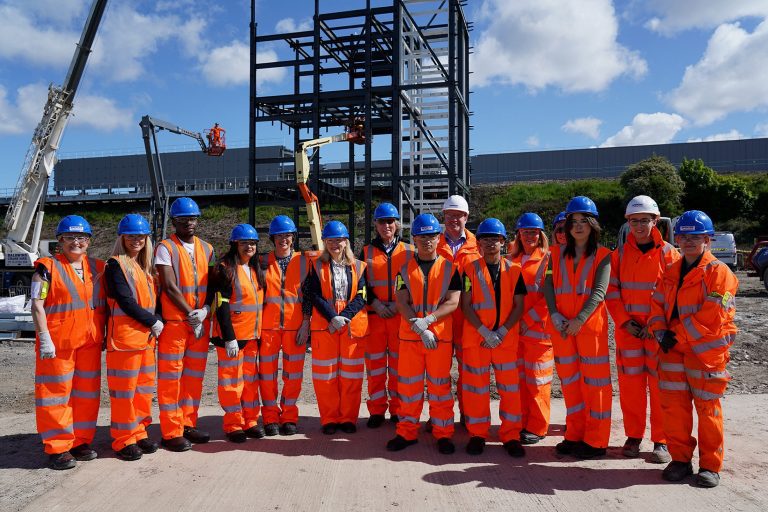
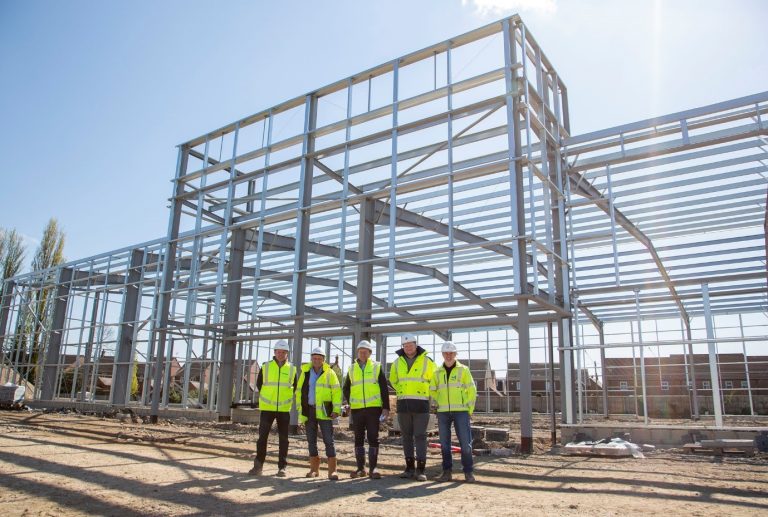
Rail infrastructure specialist Spencer Group is making significant progress on the construction of a £26.5 million station in South Leeds. Situated between Morley and Cottingley, the White Rose Rail Station will be located on the main trans-Pennine route to Manchester via Huddersfield. It will be a two-platform station providing improved access to the adjacent White Rose office park, shopping centre and bus interchange. The fully accessible station will include cycle storage next to the White Rose Park, along with improved walking and cycling routes between Cottingley, Churwell and Millshaw, and the White Rose Shopping Centre and bus interchange. Hull-based Spencer Group is delivering the project for White Rose owner Munroe K in conjunction with Network Rail, the West Yorkshire Combined Authority, Leeds City Council and the Department for Transport. Construction of the new station, which will replace Cottingley Rail Station, is scheduled to be completed later this year and is expected to open in early 2024. Joe Bennett, Operations Director at Spencer Group, said: “We’ve been working closely with key stakeholders to bring the White Rose Rail Station to fruition and, as a local contractor, are pleased to play our part in helping our infrastructure in the North. “Over the coming months, the commitment and hard work the partnership and key stakeholders have demonstrated in getting the scheme to this point will be rewarded with significant physical progress on the site. “The erection of the lift cores and link bridge walkways, connecting the platform works already undertaken, will transform the look of the project and enable people to see the facility for the first time. It’s an exciting time for all involved.” Mayor of West Yorkshire, Tracy Brabin, visited the site to see the progress being made on the project. The visit included a first look at the steel frames for the new station buildings, which will house two lifts and the stairs to the station platforms. This work follows the installation of the station platforms on the railway line embankment. Ms Brabin said: “We’re determined to create a stronger, fairer and better-connected region so that everybody has the same opportunity to get on in life. Investing in transport that supports economic growth is absolutely vital. “I’m proud that together we’re investing £26.5 million in a new White Rose Rail Station. “This investment will bring new opportunities for people in Cottingley, Churwell, Millshaw, Morley and beyond by boosting transport links and local regeneration, including housing and job growth.” The scheme has received funding from the Leeds City Region Transforming Cities Fund, the Leeds Public Transport Investment Programme and £5 million from the Department for Transport’s New Stations Fund, alongside contributions from Munroe K. David Aspin, CEO of Munroe K, said: “For a long time now I’ve had the ambition to bring a fully accessible new station to White Rose Park and to see it nearing completion is immensely rewarding. “Delivering the UK’s very first railway station through public and private sector partnership has been a real testament to everyone involved. “The new station can be the catalyst to unlock real economic development in this area of south Leeds, providing our local communities with better links to education and employment opportunities. Its location at the White Rose Park makes it accessible to many more people living in the area and beyond.” Students from nearby Elliot Hudson College have taken part in work experience with Spencer Group at the site to learn more about the project and careers in the industry. Rosie Quashie, Vice Principal at the college, said: “Work experience placements such as those our students have been able to access at the White Rose Rail Station construction site are so important. “Working with the staff at Spencer Group has provided our students with a wide range of transferable employability skills and enabled them to gain invaluable experience of the scheme and the different career opportunities in engineering and construction, and this has really supported them in deciding their career destinations after leaving Elliot Hudson College. “Many of our students rely on public transport and will benefit from the new station when it opens next year.” To find out more about Spencer Group’s rail infrastructure expertise, visit www.thespencergroup.co.uk/our-work/rail/

Read More »
Planning application submitted for Queen’s Hospital Close, Birmingham

Planning application submitted for Queen’s Hospital Close, Birmingham

Chapman Taylor, working with Turley, Stace LLP, and Churchman Thornhill Finch, is delighted to announce the submission of a detailed planning application for the prestigious Queen’s Hospital Close development in Birmingham. The proposed mixed residential development aims to revitalise the historic site and contribute to the vibrant urban fabric of the city. The plans encompass an innovative blend of 189 Build to Rent apartments and 759 Purpose-Built Student Accommodation (PBSA) residential bedrooms. Located on the grounds of the former Birmingham Accident Hospital, the development will breathe new life into the site while honouring its rich heritage. Part of the proposal involves the careful refurbishment of the two remaining listed buildings, ensuring their preservation and activation. These buildings will house communal facilities, including a public café and a gym, fostering a sense of community within the development. Designed with a landscape-led approach, the site layout seeks to transform the currently gated area into an inviting environment. It features a series of landscaped courtyards responding sensitively to the adjacent canal, and generous new public ream creating a harmonious setting for the listed buildings. The new buildings have been thoughtfully conceived as a family grouping, gradually stepping up in height from east to west. At the junction of Bath Row and the Birmingham Old Line Canal, a tall building will serve as a distinctive landmark. While each building boasts its own unique identity through variation in colour, a common architectural language ensures a cohesive and visually appealing whole. Sustainability lies at the core of the project’s design philosophy, with a commitment to achieving a BREEAM Excellent for the new buildings and Very Good for the listed buildings. Through the implementation of a high-performance building envelope and efficient technical systems, the development aims to minimise energy consumption and carbon emissions. Ecology and biodiversity are woven through the site, with buildings carefully placed to allow retention of the majority of the existing trees, and set back from the canal to provide an ecologically rich edge, preserving the Canal Wildlife Corridor. Additionally, a strong emphasis on connecting residents with the outdoors will enhance their well-being, offering spaces for both active enjoyment and calm reflection. Currently, the planning application is under review by the local authority, with a decision anticipated in early autumn 2023. We look forward to a positive outcome that will pave the way for the realisation of this exceptional development in the heart of Birmingham. Building, Design & Construction Magazine | The Choice of Industry Professionals 

Read More »
Leading developer launches first webinar series aimed at helping homebuyers in the current market

Leading developer launches first webinar series aimed at helping homebuyers in the current market

Leading developer City & Country is hosting its first webinar titled ‘Next Stepping in the Current Market’ on Wednesday 31st May at 6pm which will provide digestible and practical information on how to navigate an ever-changing property landscape. The webinar will be the first in a series aimed at supporting buyers at every market entry point.  The webinar will be hosted by renowned property and finance journalist and former editor of the Times’ Bricks & Mortar segment Anne Ashworth, with panellists made up of experts from leading property agents Savills; well-known property search portal, On The Market; mortgage specialists, The Mortgage Brain; alongside City & Country’s Sales Manager.  The webinar will focus on the challenges buyers are facing in the current market, with the well-experienced panel offering advice and guidance to combat this. There will also be a question – and – answer section, with attendees able to submit questions live and receive personalised advice about their property situation from specialists in the field. City & Country’s interactive approach also allows attendees to submit their queries prior to the event through a selection of platforms, for example, via Instagram and emailing cityandcountry@building-relations.co.uk.   David Cox, panellist and Sales Manager at City & Country, said: “The webinar is a fantastic opportunity for those buying for the first time, upsizing, downsizing, or otherwise to really get an understanding of what is happening in the market at the moment. Demand has been steadily increasing since the beginning of the year and with house prices recently rising for the first time in seven months, we are potentially starting to see a bounce back from the economic turbulence since the mini-Budget; as a result many people are dusting off their previous plans to move – it’s an important time to be informed. We would encourage anyone who’s interested in making a move this year to sign up – it’s a great chance to get the very best advice from our experienced panel.”  Alex Leigh, panellists and head of office and head of new homes at Savills Chelmsford, said: “There’s no doubt the market has been a little more subdued when compared to the heights of the previous two years or so. The cost of living and rising interest rates have forced many buyers to reassess their budgets. However I think we’re now starting to see things settle down and return to what you might describe as a ‘post pandemic-norm’. Demand remains robust and long-term house price forecasts are broadly positive. Reports the Government is considering reviving the Help to Buy scheme could also be good news for first time buyers. Although some way from becoming a reality, it has at least brought the challenges in the housing market to the front pages of newspapers; the hope being that it may prompt a more balanced debate about housing policy.  “Our own buyer/seller survey shows that commitment to move continues to be strong – especially among those at the higher end of the market who are perhaps less reliant on borrowing to fund a move. Consequently, while there might not be quite the same level of urgency in the market as there was 12 to 24 months ago, there are grounds for cautious optimism. For those selling, setting a realistic guide price remains key to driving activity, while for those buying it’s important to have all your ducks in a row. If you have a property to sell make sure it’s on the market, instruct a solicitor as soon as possible and – if you need a mortgage – make sure all your finances are agreed in principle. It’s also important to understand exactly what it is that you want – both in terms of the property itself and the location. Take some time to view a variety of properties and visit the area you’re hoping to move to. Looking at somewhere as a buyer is very different from if you’re on holiday or just passing through.”  City & Country offer a number of initiatives for prospective buyers including the Deposit Unlock scheme at selected developments across England and Scotland, which allows buyers to purchase with just a 5% deposit*, as well as providing customers with competitively priced mortgage products. The developer also offers schemes such as Assisted Move, helping buyers who are facing the challenge of selling their current property, as well as Early Bird reservation which allows buyers to secure their dream home before it is put on the market.  City & Country is a family-owned business, with over 60 years experience in the restoration and conversion of the very best of Britain’s historic and listed buildings.  As the UK’s leading heritage developer, the company has one of the most eclectic porfolios in the industry with sites including former schools, hospitals, factories, and mansions. Current projects include Bristol’s former General Hospital, King Edward VII Hospital, FN1, Donaldson’s College in Edinburgh, Springfield Hospital in South West London and the Mansion at Sundridge Park.   Increasingly, the business is taking the expertise, skill, and attention to detail demanded by heritage sites to creating beautifully crafted new build homes, often within the grounds of nationally important heritage assets or within sensitive conservation area. Recent developments include Manningtree Park, Sanderling Reach and St Osyth Priory developments in Essex and Burderop Park in Wiltshire.  To find out more about City & Country, call 020 3811 6170 or visit www.cityandcountry.co.uk.  To register for the webinar, please visit: https://us02web.zoom.us/webinar/register/WN_XpohIR1MRYCcjAH419szpQ  *Terms and Conditions apply. Visit https://www.cityandcountry.co.uk/promotion-terms-and-conditions/ for more information.   Building, Design & Construction Magazine | The Choice of Industry Professionals 

Read More »
1% of green belt land could deliver 738,000 homes with a market value of £317.5bn

1% of green belt land could deliver 738,000 homes with a market value of £317.5bn

The latest research from Searchland, the development site sourcing specialists, has revealed that reclassifying just 1% of the nation’s green belt could unlock the potential to deliver almost 738,000 new homes with an estimated market value of £317.5bn.  The green belt across England currently covers an estimated 1,638,150 hectares, or 16.382bn square metres, accounting for some 12.6% of the nation’s total land area. With the average new-build plot requiring an estimated 222 square metres of space, England’s entire greenbelt could facilitate some 73.790m new homes.  Its development has long been a controversial topic but there have been numerous calls for wrongly classified areas of green belt to be opened up for development in order to help address the housing crisis.  Should just 1% of the nation’s green belt be reclassified for housing development, it would enable the delivery of an estimated 737,905 new homes across England.  With the average new-build commanding £430,229 in the current market, that’s a potential £317.468bn in new housing stock reaching the market.  The South East is home to the greatest level of green belt property development potential, with the region home to 18.6% of England’s total green belt. Developing on just 1% of this green belt would enable house builders to deliver 137,581 new homes with a total market value of £72bn.  Developing just 1% of green belt land across the West Midlands (119,347), Yorkshire and the Humber (118,144), the North West (115,063) and East of England (104,306) would also enable the delivery of more than 100,000 new homes in each region.  Even in London, where green belt land accounts for just 2.1% of the national total, reclassifying and developing on 1% would bring a housing stock boost to the tune of 15,667 new homes.  Co-founder and CEO of Searchland, Mitchell Fasanya, commented: “With whisperings of yet another Help to Buy reboot, it seems as though the government intends to maintain their strategy of fuelling buyer demand while maintaining a head in the sand approach to actually building more homes.  The result of which is a dangerously inflated market and record high house prices that the average homebuyer simply can’t afford.  The development of green belt land is an unpopular solution, largely due to the misconception that it involves concreting over areas of outstanding natural beauty. The reality is that there is a great deal of green belt that simply isn’t classified correctly and the green belt itself is actually a buffer between urban sprawl and the countryside.  There have been recent examples whereby green belt land has been successfully reclassified to provide much needed homes and it really does beg the question, why does the government remain so intent on ignoring a solution that is staring them in the face?” Data tables Data tables and sources can be viewed online, here.

Read More »
Honeywell unveils updated suite of solutions to optimise airport safety and efficiency

Honeywell unveils updated suite of solutions to optimise airport safety and efficiency

●       Integrated ramp management system paired with cyber-secure airfield solutions provides enhanced arrival readiness, docking process support, turnaround and departure management ●       Smart visual docking system allows for more precise and informed decision-making across gate operations Honeywell announced the launch of an updated suite of airside solutions, boasting enhancements to its gate and turnaround and airfield lighting portfolios, including the Honeywell NAVITAS™ Smart Visual Docking system. To help airports maintain a smoother traveler experience amidst increasing air traffic, the latest solutions help optimise gate operations and improve situational awareness for pilots and airside operations teams, resulting in faster turnaround times for aircraft. The latest solutions were unveiled at the 2023 Airport Show in Dubai. As the number of air travelers continues to increase[i], the air travel industry needs continued innovation to keep up with the demand. However, the industry has faced a shortage of staff since pandemic conditions started, like air traffic controllers, with 1,200[ii] fewer controllers today than a decade ago. These challenges are reflected in on-time departure rates of less than 70%[iii] for U.S. flights in December 2022. “Honeywell provides the latest technology solutions that help airports be more resilient, efficient and sustainable, topics that are more critical than ever as we approach the busy summer travel season,” Alex Cowen, general manager, Global Airports, Honeywell Building Technologies. “The Honeywell solutions are designed to meet the challenges that impede efficiency and safety, such as ramp obstacles, adverse weather conditions, maintenance and management of gate downtime and capacity optimisation like airport congestion.” The expanded range of solutions include: To learn more about Honeywell’s latest solutions, please click here. Building, Design & Construction Magazine | The Choice of Industry Professionals 

Read More »
The True Test of Gutter Guards

The True Test of Gutter Guards

CONTRACTORS OFTEN get calls from property owners and managers who mistakenly think the roof is leaking. Many leaks are the result of a gutter block, often caused by leaves from overhanging trees or moss growth on the roof. This leads to gutters regularly overflowing causing damage to buildings. When gutter brush systems first came on the market, contractors thought they had found a simple, cost-effective solution to offer clients. New builds began to incorporate gutter brushes at the time of construction to counter known risks, for example from trees which had to be retained to gain planning for the development. Contractors thought their problems were solved, until they began to receive angry callbacks. Many returned to find that the gutter brush or infill systems they’d installed were impeding rainwater flow, in itself causing overflows, or the systems were accumulating debris and getting blocked so frequently they’d become more hindrance than help. LiabilityDoug Basen of Local Authority Building Control highlighted the problem when he cautioned inspectors to advise clients to choose anti-blocking gutter systems carefully. Citing Building Regulations part H3, and BS EN 12056-3:2000 Clause 7.3.3, which states “the reduction in outlet capacity due to strainers being installed shall be taken into consideration”, Doug warned that installers might find themselves liable if they had fitted a product which ultimately caused building damage. Doug compared the various products on offer, assessing rainwater flow rates when they’re installed. Foam, fibre, rubber or acrylic systems are designed to sit in the gutter and absorb water moving it to a downpipe without allowing any material to find its way into the system. Three products were examined: firstly, foam, fibre, rubber or acrylic systems designed to sit in the gutter and absorb water moving it to a downpipe without allowing any material to find its way into the system. Secondly, gutter brushes were evaluated: also designed to sit in the gutter and catch debris while still permitting waterflow. Thirdly, gutter guards, which are a mesh fitted to the open top of the gutter. Reduction in flow capacityAfter conducting his investigation Doug concluded: “It would seem the first two examples will immediately cause a reduction in flow capacity as a direct result of their installation. The moral here is make sure you do check if guttering anti-blockage has been incorporated before completion, and, if it has, that the flow rate of the gutter has not been impeded. Mesh gutter guards are the clear winner here because, sitting on the top of the gutter, they clearly don’t impede water flow.” Not all equalBut, not all gutter guard meshes are created equal. For example, a mesh construction allowing for a slope is vital: flat gutter guards do not perform optimally. If the gutter mesh is not sloped towards the outer edge of the gutter where it’s fitted, it risks leaves still accumulating on the mesh surface where they will start to decompose and form a mulch, over which rainwater can run off. Whereas a sloped mesh will help debris to sluice harmlessly of the mesh surface, while rainwater is channelled away. Tests conducted by the Building Research Establishment (BRE) to the principle of BS EN 12056-3-2000 confirm these findings. BRE tests showed that, firstly, any product that sits within the gutter can impede rainwater flow by as much as 50-80%. CONTRACTORS OFTEN get calls from property owners and managers who mistakenly think the roof is leaking. Many leaks are the result of a gutter block, often caused by leaves from overhanging trees or moss growth on the roof. This leads to gutters regularly overflowing causing damage to buildings. When gutter brush systems first came on the market, contractors thought they had found a simple, cost-effective solution to offer clients. New builds began to incorporate gutter brushes at the time of construction to counter known risks, for example from trees which had to be retained to gain planning for the development. Contractors thought their problems were solved, until they began to receive angry callbacks. Many returned to find that the gutter brush or infill systems they’d installed were impeding rainwater flow, in itself causing overflows, or the systems were accumulating debris and getting blocked so frequently they’d become more hindrance than help. LiabilityDoug Basen of Local Authority Building Control highlighted the problem when he cautioned inspectors to advise clients to choose anti-blocking gutter systems carefully. Citing Building Regulations part H3, and BS EN 12056-3:2000 Clause 7.3.3, which states “the reduction in outlet capacity due to strainers being installed shall be taken into consideration”, Doug warned that installers might find themselves liable if they had fitted a product which ultimately caused building damage. Doug compared the various products on offer, assessing rainwater flow rates when they’re installed. Foam, fibre, rubber or acrylic systems are designed to sit in the gutter and absorb water moving it to a downpipe without allowing any material to find its way into the system. Three products were examined: firstly, foam, fibre, rubber or acrylic systems designed to sit in the gutter and absorb water moving it to a downpipe without allowing any material to find its way into the system. Secondly, gutter brushes were evaluated: also designed to sit in the gutter and catch debris while still permitting waterflow. Thirdly, gutter guards, which are a mesh fitted to the open top of the gutter. Reduction in flow capacityAfter conducting his investigation Doug concluded: “It would seem the first two examples will immediately cause a reduction in flow capacity as a direct result of their installation. The moral here is make sure you do check if guttering anti-blockage has been incorporated before completion, and, if it has, that the flow rate of the gutter has not been impeded. Mesh gutter guards are the clear winner here because, sitting on the top of the gutter, they clearly don’t impede water flow.” Not all equalBut, not all gutter guard meshes are created equal. For example, a mesh construction allowing for a slope is vital: flat gutter guards do


Read More »
CESW champions the value of collaboration in construction industry

CESW champions the value of collaboration in construction industry

In the wake of a sector-wide initiative, Constructing Excellence South West (CESW) is advocating for better collaboration within the construction industry. The organisation has joined the Construction Industry Collaboration Initiative (CICI), which is made up of like-minded bodies that have identified collaboration as a challenge across multiple sectors, including construction. Despite previous attempts to encourage collaboration within the building industry, progress has been patchy, according to CICI, however, as the industry continues to face issues such as labour shortages and supply chain problems, the time is ripe for collaboration to improve contract delivery. CESW is leading the effort to improve the construction industry in the South West, with a goal of enhancing industry performance and creating a better built environment. It forms part of Constructing Excellence a national platform for industry improvement that delivers excellence through collaborative working with clients, industry, and users. The initiative aims to enhance understanding of effective collaboration, change negative attitudes, and share knowledge, learning, and experiences. The primary focus currently is on value-for-money training in the key behavioural aspects of effective collaborative working, delivered through a five-hour online training course held over five weeks, as well as a one-day, face-to-face session for people to learn and develop collaborative skills. Alison Nicholl, Head of Constructing Excellence, stated: “Collaboration is fundamental to Constructing Excellence. This initiative led by the South West is an excellent mechanism to upskill and train those at all levels in the sector on how to effectively collaborate.” Kevin Harris, CEO of CESW, added: “We are confident that the Construction Industry Collaboration Initiative will help to address the challenges that have persistently hindered the construction sector, and we look forward to working with our members to drive positive change in the industry.” For more information about this new collaboration initiative and how to get more involved visit: https://hub.leadersmeets.com/cici

Read More »
Greater Manchester to invest a further £40.7m in walking, wheeling and cycling infrastructure

Greater Manchester to invest a further £40.7m in walking, wheeling and cycling infrastructure

Greater Manchester is set to invest a further £40.7m in its walking, wheeling and cycling infrastructure as it progresses with its delivery of the largest active travel network in the country. Active Travel England (ATE) has today confirmed it will award £23.7m to the city-region as part of a wider boost to active travel funding across the country, with Greater Manchester’s sum the largest regional settlement in the UK. In addition, the Greater Manchester Combined Authority (GMCA) is due to approve the release of £17m from the Mayor’s Challenge Fund for four major active travel schemes when leaders meet next week. Both sources of investment will enable Greater Manchester to progress with its long-term ambition to create the largest walking, wheeling and cycling network in the country, and further unlock the health and environmental benefits of active travel for people across the city-region. Dame Sarah Storey, Greater Manchester’s Active Travel Commissioner, said: “The news of this funding award from Active Travel England is a sign of confidence in the plan we have here in Greater Manchester for the development of our Active Travel network. It’s vital that we are linking to the wider public transport system and building a Bee Network that provides genuine journey choice for residents and visitors alike. “The new funding, as well as the funding drawn down from the Mayor’s Challenge Fund, will be used across all 10 boroughs on a variety of infrastructure projects. The key focus remains that a universally accessible network is the aim and so the projects vary from segregated and accessible paths and crossings, to secure cycle storage and upgraded junctions. “I am looking forward to seeing all of the funded projects come to life as they will further add to the high quality, comprehensive network of active travel routes that are needed across the region.” The £23.7m has been allocated to 13 schemes in total, including a new active travel corridor along Chapel Street in Salford and a striking cycling and walking ‘helix ramp’ as part of the new Stockport Interchange. The eye-catching 180m spiral ramp will link a new rooftop park to the River Mersey and the TransPennine trail, and to a wider network of cycling, walking and wheeling routes. The ramp will not only be a striking structure to look at, but it will also provide a seamless and dedicated link for users to walk, wheel or cycle to the new park from ground level, and vice-versa. The first phase of Salford’s Chapel Street East scheme, between New Bailey Street and Blackfriars, will make it easier and safer for people travelling on foot or by bike by providing high quality cycle lanes, as well as improved footways and crossing provision. The other 11 schemes set to benefit from ATE’s award in Greater Manchester include: In addition to the ATE funding, GMCA leaders will also be asked to approve the draw down of a further £17m from the Mayor’s Challenge Fund at their next meeting on 26 May as part of the wider delivery of the Bee Network, Greater Manchester’s vision for an integrated London-style transport system. Funding due to be rubber-stamped includes £4,312,386 for the Bee Network Crossings programme (GM-wide), £4,998,000 for improved active travel infrastructure in Bolton town centre east, a further £2,951,594 the Lord Street-Rock Street scheme in Oldham town centre and £4,751,389 for three CYCLOPs junctions on Talbot Road in Trafford. With approximately five million journeys made on Greater Manchester’s road network each day, the investment in active travel infrastructure will further enable people to opt for different modes of transport and in turn reduce congestion. Andy Burnham, Mayor of Greater Manchester, added: “The scale of our ambition in transforming how people get around is huge; with a target for one million extra journeys being made on public transport or by bike or foot every day by 2040. “To meet this challenge head-on we are delivering our transformational Bee Network, which will make travelling easier, cheaper and more accessible and connect our trams and buses – and ultimately local train services – with the largest cycling, walking and wheeling network anywhere in the UK. “It is great news that all 10 of our boroughs will benefit from more than £40m being invested in active travel schemes across the city-region.” As well as funding to deliver new and improved cycling and walking routes, leaders at next week’s GMCA meeting will also be asked to approve the release of funds – allocated to the city-region from the government’s City Region Sustainable Transport Settlement (CRSTS) – to enable the ongoing development of plans for a range of transport projects, including a new train station at Golborne, a new quality bus route connecting Ashton and Stockport and the development of future rapid transit schemes. Proposals to strengthen governance arrangements around the delivery of Greater Manchester’s transformational plans for public transport and active travel will also be discussed, with plans for a new Bee Network Committee – which would lead transport decision-making at a regional level, taking greater ownership and responsibility for our integrated network – to replace the existing Greater Manchester Transport Committee.

Read More »
Clowes Developments to bring new Lidl and Wickes stores to Long Eaton

Clowes Developments to bring new Lidl and Wickes stores to Long Eaton

Work is underway on a new scheme in Long Eaton, Derbyshire, that will see the development of a new Lidl and Wickes store in the town. IMA Architects (IMA) is working with Clowes Developments to provide all architectural services and act as Principal Designer on the scheme. The company will work alongside Millward Consulting Engineers and Roe Developments to deliver the site, known as Stadium Trade Park.  The 1.68-hectare Stadium Trade Park will be built on a brownfield former industrial site that has been derelict since 2014, located just off Nottingham Road.  Completion is expected next year and once finished, the site will feature a new Lidl and Wickes stores, car parking for 157 vehicles, a service yard and all associated boundary treatments and landscaping. The site will also bring new employment opportunities to the area. Marc Freeman, Director at Clowes Developments said: “We are delighted to welcome both Wickes and Lidl GB to Stadium Trade Park. The site has been in the planning stage since 2018, so it’s great that we are now up and running on the build. We expect both the new Lidl and Wickes stores to be very popular with the local community once they are complete and bring economic benefits to the town.” Joe Travers, Associate Director at IMA Architects said: “This is our latest project with Clowes, and we are enjoying regenerating this site which has been derelict for so long. Given the close proximity of residents, we have been considerate to their needs and our plans include additional landscaping, boundary treatments and acoustic mitigation measures to improve aesthetics and to ensure the scheme does not adversely impact local people.” Sarah Tait, Property Director at Wickes said: “We’re thrilled to be expanding our Wickes store in Long Eaton, Stadium Trade Park.  The masterplan of the site and the fact that we can be involved in the design stage meant we could develop a location that perfectly suited our needs, and we are looking forward to opening the store in early 2024.” Lidl GB’s Regional Head of Property, Dominic Bryan, commented: “We are delighted to be part of this development and looking forward to bringing our high-quality produce at the best possible value to those in the local community.” Clowes Developments is one of the UK’s largest and strongest privately-owned property investment and development organisations. Headquartered in Ednaston, Derbyshire, the company are experts in land acquisition and promotion, property development and asset management, with 18,000 consented residential plots and 3,000 acres of development pipeline across the UK.  IMA is an award-winning firm of architects based in Blaby, Leicestershire. The firm has completed more than 200 projects nationally and is actively working on 75 large-scale projects across the UK, Ireland and further afield. IMA works across all sectors and with a range of FTSE 100 companies – such as Marks & Spencer – as well as global brands including an international discount supermarket retailer. The company is a proud Community Partner of Leicester City Football Club and a sponsorship partner of both Leicester Tigers RFC and Leicestershire County Cricket Club. Building, Design & Construction Magazine | The Choice of Industry Professionals 

Read More »