BDC News Team
National Pile Croppers assists with Biophilic Living scheme

National Pile Croppers assists with Biophilic Living scheme

Biophilic Living aims to bring nature into buildings in a meaningful and functioning way. It is a concept conceived and based on the ‘Wellness of Future Generations Act’, with seven of its principles forming the basis of the unique scheme. In order for one such scheme to be completed in

Read More »
How a 150-million-year-old stone could rock your world

How a 150-million-year-old stone could rock your world

Traditional materials such as Portland stone may have been pushed out of the mainstream by concrete and steel, but nothing beats this natural material, says design and construction specialist Dan Grimshaw. “It may be old as the hills but is still a viable option for eco-conscious builds and can still

Read More »
Transform handling operations with QUASAR

Transform handling operations with QUASAR

Award-winning battery technology cuts both operating and capital costs. Almost every one of the 3,000 business executives in a survey reported by the influential magazine Forbes believed their companies lacked the capability to address major changes. * That doesn’t come as a surprise to Tom Burgess, Managing Director of international

Read More »
RIBA Future Trends April 2023

Increasing workloads expected despite growing planning application delays: RIBA Future Trends April 2023

The Royal Institute of British Architects (RIBA) has published the latest Future Trends survey results, a monthly report of the business and employment trends affecting the architects’ profession.  Architects’ outlook for future work remains positive. In April 2023, the RIBA Future Trends Workload Index stayed at +8, the same as in March, and the

Read More »
Horizon Construction, based in Colchester, has fought off stiff international competition to scoop a prestigious RoSPA Award

HORIZON CONSTRUCTION WINS 4th Consecutive RoSPA Award

Horizon Construction, based in Colchester, has fought off stiff international competition to scoop a prestigious RoSPA Award, demonstrating its commitment to health and safety excellence. Horizon Construction won a Silver Award in the construction industry sector category, demonstrating its dedication to ensuring all personnel in its construction operations get home

Read More »
Latest Issue
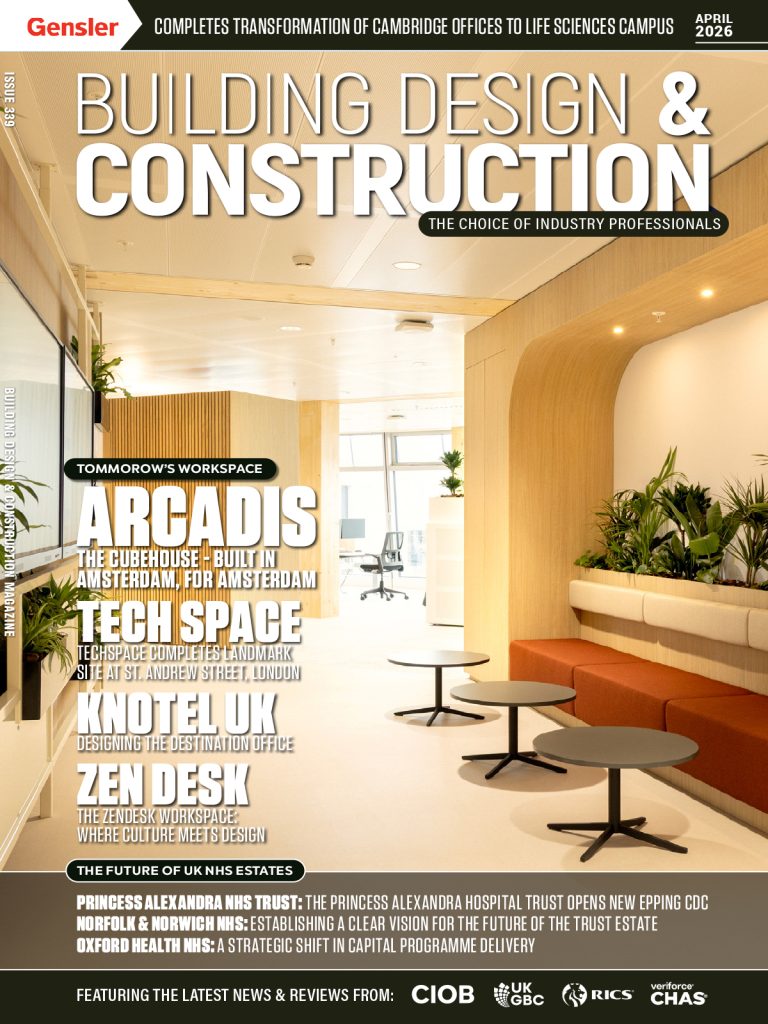
Issue 339 : Apr 2026

BDC News Team

Keeping construction connected - 5G-powered routers for connectivity anywhere, anytime

Keeping construction connected – 5G-powered routers for connectivity anywhere, anytime

Whether it’s viewing architectural plans or enabling Internet of Things (IoT) devices, access to a reliable, high-speed internet connection is increasingly becoming a priority on construction sites. But with scope and timescales often varying so much between projects, is there such thing as a one-size-fits-all for internet connectivity? Here, Kristian Torode, director and co-founder of business IT provider Crystaline, investigates. Construction workers are increasingly finding themselves in need of a faster, more reliable internet connection. Whether it’s accessing architectural plans or 3D CAD diagrams, the ability to share, edit and download large files is becoming more and more essential to the daily operation of sites. This need is exacerbated further in larger developments, where multiple teams across the site need to be able to communicate with one another. Internet access can also facilitate the implementation of IoT technologies, such as Building Information Modeling (BIM). BIM uses a host of cameras and sensors on-site to create a digital model of the project as construction work goes on, allowing for architects and engineers to validate the structure’s integrity throughout. As a result, minor errors or faults can be spotted much more quickly, preventing long project delays. Security is another area that can benefit, with remote CCTV monitoring and the ability to set up more sophisticated locking systems at gates and barriers. Using personal devices But how can construction sites get online? The first, and perhaps easiest option, is to rely on workers to use their own personal devices to access the internet. And for quick access to one or two individual files, such an approach might be sufficient. But problems can quickly arise as soon as there’s a need to do more. Workers may not have sufficient data plans to access everything they need, for example. This can be alleviated in part by using devices to ‘tether’ to one another and sharing data that way, but it often results in slow speeds for the user and is unlikely to be able to support more than one or two devices at a time. And for businesses who are paying for company plans, it might be that the cost of multiple unlimited data plans quickly starts to add up. Fixed broadband So, what about installing a broadband line? For long-term projects lasting several years, in areas already with access to ultrafast broadband, this might be the most appropriate solution. But often, projects must work on a shorter timeframe. With most broadband contracts locking customers in for 12 or 24-month periods, it often isn’t financially viable for workers who may only be on-site for half that time, for example. And with the time it takes to lay a new fixed line varying from weeks to months, particularly in remote areas or those with more challenging terrain, it could result in a significant and crucial part of the project not having the connectivity required. With the upcoming PSTN and ADSL broadband stop sells in September 2023, setting up new connections on these old lines will no longer be possible, presenting an additional challenge to construction companies looking to get their sites online. Rolling out 5G routers Rather than relying on personal device usage or long-term broadband plans, a 5G router could provide the ideal solution. 5G routers provide connectivity via mobile network connections rather than on fixed broadband lines, meaning they can be plugged in anywhere to provide connectivity within minutes. With 5G up to ten times faster than 4G, and just a fraction of the latency, a 5G router offers enough speed and bandwidth for multiple workers to access any file they might need or hold video meetings with other colleagues. Crystaline offers TCL’s LinkHub 5G HH515 router which can support up to 256 connections alone. Capable of delivering speeds up to 4.67 Gpbs, it’s on par with most fibre connections, without the long setup. Other benefits include the ease of setting up ‘Guest Wi-Fi’, which can help improve cybersecurity by separating visitor connections from employees. Many routers, including the LinkHub, will also come with an app for additional functionalities, allowing for any changes and upgrades to be carried out remotely. With the size and scale of construction sites varying so much between projects, finding the right solution to fit can be a challenge. But with the flexibility of a router, combined with the UK’s ongoing 5G rollout, it could be the answer to providing businesses with high-speed, reliable internet, wherever the job next takes you. Crystaline supplies a range of 5G routers to suit a variety of construction site specifications. To discuss your individual needs with a member of the team, please get in touch. Building, Design & Construction Magazine | The Choice of Industry Professionals 

Read More »
13 bridges supported by civil engineering company Morgan Sindall Infrastructure

13 bridges supported by civil engineering company Morgan Sindall Infrastructure

SSAFA, the Armed Forces charity, is delighted to announce the partnership with Morgan Sindall Infrastructure for the iconic Armed Forces Day event, 13 Bridges Challenge. Morgan Sindall Infrastructure, one of the UK’s leading civil engineering contractors, is kindly providing SSAFA with all of the event infrastructure necessary for the day. SSAFA’s flagship event, the 13 Bridges Challenge, happening on the 24th June, takes walkers through all the iconic London sights, including Tower Bridge and London Bridge, and passes the Houses of Parliament, Big Ben, Westminster Palace, Shakespear’s Globe theatre, and many more on the 10 mile walk. The 13 Bridges Challenge is open to all ages and abilities, and the route is entirely wheelchair accessible. The walk is fully guided, with SSAFA team-leaders looking after participants every step of the way. Logistics support and everything from generators to porta-loos will be supplied by Morgan Sindall Infrastructure and their supply chain partner, Econ Group. Members of the Armed Forces are also on hand to give guidance and assistance to those who need it. Hannah Siddle, Senior Challenge Events Officer, said: “We are so grateful to Morgan Sindall Infrastructure for their continued support of 13 Bridges Challenge. For the last two years they have provided the essential infrastructure, without which the event would not be possible. We are so excited to have their support for the third year in a row, making the 2023 13 Bridges Challenge, the best one yet!” SSAFA has chosen Armed Forces Day to run the annual event to raise awareness of the outstanding effort Britain’s Armed Forces contribute to the country. During times of national emergency, the Armed Forces regularly step in to assist the nation and, in times of conflict, they willingly put their own safety to one side and step up to support their country. The ‘F’ in SSAFA stands for Families. It is often the families of serving personnel who suffer difficulties resulting from service life. From moving regularly, being far away from family and friends, to the loss of a loved one, life in a military or naval family can be tough. SSAFA supports those families in their time of need. Sir Andrew Gregory, SSAFA Controller, said: “SSAFA’s 13 Bridges Challenge, held on Armed Forces day each year, is the main opportunity in London to thank servicemen and women for their selfless commitment to our nation. “In 2022 over 350 people had a most enjoyable walk from the Tower of London to Putney, raising much needed funds that allow SSAFA to help our Armed Forces, veterans and their families in their times of need. In 2023, we hope to have 1,000 participants; come and be one of them!” SSAFA is still open to corporate sponsorship and teams for this event. Please contact Hannah Siddle for more information: Hannah.Siddle@ssafa.org.uk

Read More »
Nationwide Platforms raises the bar with UK's first Volvo FM electric pairing

Nationwide Platforms raises the bar with UK’s first Volvo FM electric pairing

Powered access specialist Nationwide Platforms has taken delivery of two new Volvo FM Electric 4×2 tractor units in what is believed to be a first for the UK’s powered access sector. The battery electric trucks form part of a larger order of Volvo models. Supplied by Rory Kelly, Transport Solutions Executive at Volvo Truck and Bus Centre South & East’s Coventry depot, the FM Electrics will be used to pull step frame trailers transporting hire equipment to and from sites around Birmingham and the north west. Nationwide Platforms’ new Volvo electric trucks James Clarke, Haulage and Logistics Director, Nationwide Platforms, says: “Sustainability is a key driver for the business, and introducing our first battery electric trucks felt like the right thing to do. Volvo had the product that met our sustainability commitments, and it’s exciting to welcome these new electric models.” Commenting on the suitability of battery electric power, he adds: “We need the electric trucks to cover up to 150 miles each day on the routes they’ll be working, whilst also providing enough power to drive our ancillary equipment. They’ve been spec’d to deliver that and more, with a comfortable margin of power in reserve at the end of the day before recharging in our depots overnight. We are confident they will slip into our operation seamlessly, whilst also turning heads out on the road.” The FM Electrics both feature three electrical motors, generating an output of 666hp and 2,400 Nm of continuous torque, paired with a standard I-Shift gearbox to deliver a smooth and ultra-quiet in-cab driving experience. Such impressive performance is handled by an electromobility traction control system to help manage power output on slippery surfaces, while different drive modes are available to set the desired performance, comfort, and energy usage levels. The two vehicles will be split between Nationwide Platform’s Birmingham and Warrington depots, helping to further drive down its fleet emissions while complementing existing and upcoming clean air zone regulations in both regions. “Given the size of vehicles and equipment in fleet, driving sustainability gains has always been easier said than done,” adds Clarke. “Products such as the FM Electric are clearly a step in the right direction for the environment. There is huge potential in transitioning, where possible, to low and zero tailpipe emission heavy trucks and this is a very important step for us.” The FM Electrics have been fitted with spacious Globetrotter cabsand a Drive++ package, which adds dual armrests, leather upholstery and fully electronic air conditioning with sun, mist, air quality sensors and a carbon filter – ensuring premium driver comfort. Visibility is improved with V-Shaped LED headlamps that automatically adapt to ambient light conditions, and rain-sensing windscreen wipers to ensure a clear view of the road ahead. Also included in the specification is a host of active safety systems, including Lane Keeping Support, Lane Keeping Assist and Driver Alert Support, as well as Side Collision Avoidance Support on both the driver’s and passenger’s side to boost safety. Both trucks have been fully backed by Volvo, including comprehensive five-year Volvo Gold Contracts to guarantee maximum uptime. This includes preventative maintenance and repairs, plus the monitoring of key systems including batteries and other critical components. They form part of a larger order, including Volvo FM 8×2 rigids and FM 6×2 tractor units, all powered by ultra-efficient Euro-6 diesel engines. Together, they will serve as replacements for older assets in the company’s 170-strong truck fleet. Established in 1994, Nationwide Platforms is the UK’s market leader in powered access hire equipment, with more than 1,000 employees servicing 31 depots across the country.

Read More »
National Pile Croppers assists with Biophilic Living scheme

National Pile Croppers assists with Biophilic Living scheme

Biophilic Living aims to bring nature into buildings in a meaningful and functioning way. It is a concept conceived and based on the ‘Wellness of Future Generations Act’, with seven of its principles forming the basis of the unique scheme. In order for one such scheme to be completed in Swansea, National Pile Croppers, a company proud of its own environmental credentials, assisted by supplying pile cropping expertise and equipment to the flagship development. Biophilic Living, is a UK first at bringing nature into our buildings in a meaningful and functioning way, being a concept based on the ‘Wellness of Future Generations Act’ with seven principles forming the basis of the scheme. This uses unique and innovative systems of energy from sustainable sources that deliver unparalleled levels of performance to housing occupiers, leading to lower energy cost that are low carbon in origin. Significant savings in carbon are also experienced from the reutilisation of an existing building, saving up to 40% in embedded carbon compared to an entire new build.  Visionary Swansea development – Helix 21 The vision for Biophilic Living Swansea is to enable reconnection with nature in the urban environment, and the creation of a cohesive community to tackle issues of social exclusion and loneliness in an innovative way.  Under the name of Helix 21, the project will allow residents to help run an urban farm as a social enterprise, with home grown produce consumed and sold locally. Biophilic Living is founded on research that shows that reconnecting with nature is essential to well-being, with positive community and health outcomes derived from living more closely alongside the natural world. In practical terms, Helix 21 will provide residents with access to roof spaces, glass houses, and the creation of a winter garden to meet and become involved in the growing of food for consumption, whilst also providing a meeting space that has panoramic views of Swansea Bay. The development, a first for the UK, has seen the pioneering project being awarded funding through the Welsh Government Innovative Housing Programme. It will trial a new, scalable model that is set to transform the way inner city housing in Wales is conceived and implemented. The project is a mixed use development that includes affordable and shared ownership housing, as well as retail and commercial space. It has been undertaken by Hacer Developments, being designed by Powell Dobson Architects in Swansea.  The concept is the result of extensive collaborative working among a range of local organisations, including Swansea University, the Active Building Centre, Public Health Wales, Swansea Community Farm and Sero Homes Ltd. “There is an urgent need for housing and mixed use developments that are sustainable in terms of their environmental impact and economic viability, as a response to the climate emergency and to ensure greater resilience and well-being for urban communities.  This project will prove what’s possible, showcase new technologies being developed locally, and blaze a trail for others to follow across Swansea city centre and beyond,” says Carwyn Davies, director of Hacer Developments. Environmentally friendly construction Given the nature of the Biophilic development in Swansea, construction techniques had to maintain the highest levels of environmentally friendliness. Any work had to keep disturbance to a minimum, be low emission, and crucially, have as little detrimental effect to the local habitat as possible. As concrete piles were used to form the substructure of the development, Helix 21 sought out a company with high environmental values to supply the necessary pile cropping equipment. To this end, Helix 21 engaged National Pile Croppers to not only advise on the most suitable solution for the pile cropping, but also supply the necessary equipment. “All in all there were 70 x 650mm diameter piles that required cropping over a six week period. Given the nature of the site, and the values of Helix 21 and the Biophilic Living scheme, we recommended the use of our Quad Large,” commented National Pile Cropper’s managing director Simon Price. “The Quad Large is a highly efficient pile cropper that could easily handle the work demanded of it in Swansea.  Although highly powerful with efficient hydraulics, it can be used by a 16 t excavator, and is lowered over the top of the pile to the recommended height. The Quad then simply closes its jaws until the pile section pops free, ensuring that the reinforcement bars are straight for ease of removal, and that the broken pile section can then be lifted for removal. This means that any material from the pile can be easily recycled,” adds Simon. National Pile Croppers has placed a great deal of emphasis on developing its solutions to be not only highly efficient and effective, but also to be as environmentally friendly as possible. “The environment and the effective use of resources is very important to us and has been endemic to the company since its inception.  The chance to be involved on such a scheme as the Swansea Biophilic Living development presented the perfect opportunity for us to put our values into action. We are all very proud to be associated with the scheme,” concludes Simon Price.  Lower cropper Building, Design & Construction Magazine | The Choice of Industry Professionals 

Read More »
How a 150-million-year-old stone could rock your world

How a 150-million-year-old stone could rock your world

Traditional materials such as Portland stone may have been pushed out of the mainstream by concrete and steel, but nothing beats this natural material, says design and construction specialist Dan Grimshaw. “It may be old as the hills but is still a viable option for eco-conscious builds and can still play a significant role in an increasingly high-tech industry, says Dan from Beam Development, who has been working on premium residential projects for more than 15 years, “The mining of stone for building material is a relatively green process because there is no trapped carbon released during extraction. Unlike with some building materials, greenhouse gas emission is limited to the equipment used and does not produce any wastes. “Stone is a natural building material, free from pollutants that can cause various symptoms among workers in some modern buildings. It doesn’t need chemical treatment to make it waterproof, and with the appropriate fixing material, is an environmentally friendly option.” Inspired by the aesthetics of designer Axel Vervoordt, whose work combines contemporary and old materials, Dan personally sourced 2.4m³ block of Portland stone from Dorset to be used as a hearth as part of a restoration project in London’s Mayfair. “This beautiful, ornamental stone is classic but contemporary and its neutral colour allow it to work with a variety of colours and furnishings, and is at home whether in a minimalist apartment or a Georgian town house,” added Dan. “We chose Portland stone for this project, because of its soft grey tones which create a natural, pared back but aesthetic look that fits with the feel of the house, and that can be cut easily and shaped into various sizes and designs.” Portland stone is used extensively in some of Britain’s most notable structures from St Paul’s Cathedral to the Apple store on London’s Regent Street, and continues to be used in homes today, particularly for fireplaces, staircases, and flooring. When it came to choosing the right stone, Dan, along with architect Reginald Verspreeùwen from RV Architecture, visited Albion Stone on the Isle of Portland to identify the bed and cut they were looking for and then set about finding a block of a suitable size. “We spent two or three amazing hours – like kids in a sweet shop – looking at all the different stones, before hitting upon a 1.2 tonne piece of premium quality, fine grain basebed stone that ticked all the boxes.” The Portland stone hearth which will be the centre piece of a two-storey atrium with a biofuel heater and chimney stack above, is set to be marked and cut and then transported to Mayfair where it will be lowered into place. Portland stone is a limestone formed from the slow compaction of calcium carbonate and organic seafloor matter, like shell fragments, deposited during the late Jurassic period when the UK was situated in a more sub-tropical latitude. Dan Grimshaw is a design and construction specialist based in Bath and London. He is a mentor to the British Library’s prestigious Innovating for Growth programme and is a jury member for the BLT Built Design Awards.  For further information visit: www.beamdevelopment.co.uk

Read More »
EG launches new ESG data in EG Radius to help CRE industry adapt to evolving MEES Regulations

EG launches new ESG data in EG Radius to help CRE industry adapt to evolving MEES Regulations

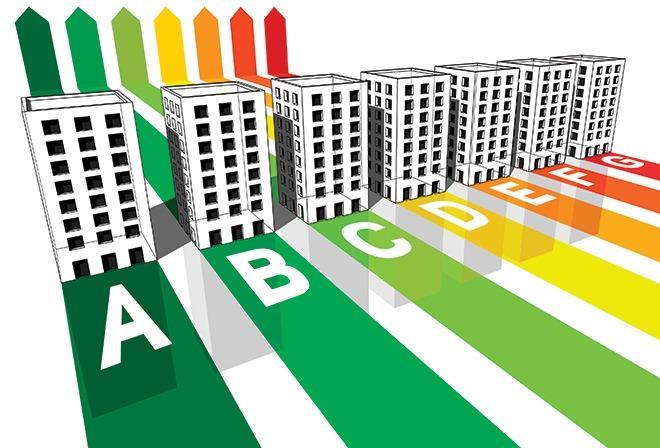
The new EG Radius feature will enable investors, landlords and developers to access live energy performance certificates EG, an established provider of data, news and analytics for the commercial real estate sector, has launched an Environmental, Social and Governance Certificate (ESG) dataset in the EG Radius platform, providing property owners, investors and developers with a quick and reliable way to access commercial property energy efficiency information. EG’s new functionality compiles ESG data, which users can currently only access through different segments on the UK Government website, into one streamlined process, enabling EG Radius customers to easily identify if an existing property is in need of energy upgrades. The data will be available within Property Reports on EG Radius and will include energy performance certificates (EPCs) for domestic and non-domestic properties as well as display energy certificates (DECs) for public authority buildings and properties with a floor area over 250m2 together with recommended improvements. The launch of the ESG dataset follows the introduction of the anticipated minimum energy efficiency standards (MEES) legislation in the commercial sector, requiring buildings to meet certain energy efficiency standards. Providing clear and accurate information surrounding a building’s energy efficiency, the new feature will highlight the building’s current rating (A being most efficient and G least efficient) and offer insight into recommended improvements to enhance the property’s energy rating. Michael Marciano, Product Director at EG, said: “Following the introduction of MEES and the minimum EPC standards in the commercial real estate sector, landlords are now required, by law, to ensure their properties meet the required EPC rating. Currently, an EPC rating of band ‘E’ is the minimum a commercial property must hold prior to any new leases or renewals – with this set to increase to a rating of C in 2027 and finally B in 2020. “The addition of ESG data in EG Radius will enable investors and landlords to identify opportunities for properties that need upgrading. In doing so, they can drive their investment strategies by easily identifying new properties in need of energy upgrades that could deliver an effective return on investment. It will also support agents and tenants looking for quality properties with a high EPC rating and in turn, lower running costs.” With flexible search and filter options, users can break down their search into units, or different spaces within the building, and view when a building has an expired certificate. This provides a time-effective solution as EG Radius users no longer need to navigate through various information sources, including the UK Government website, to access the property’s energy efficiency information. Michael further commented: “The CRE market will see an increase in the demand, and rental premiums, of buildings with higher EPC ratings due to the number of properties that are not currently compliant. In London alone, 24.1million sq. ft are expected to fail to meet the new regulations, putting the equivalent of 20 Shard’s at risk. And regulations will only become stricter over time. “Investors and developers will benefit from EG’s new dataset as it will enable them to filter for lower rated assets to seek opportunities but also enable them to help meet the market demand for energy efficient, sustainable buildings.” For more information, please visit https://eg.co.uk/esg-data/. Building, Design & Construction Magazine | The Choice of Industry Professionals 

Read More »
Transform handling operations with QUASAR

Transform handling operations with QUASAR

Award-winning battery technology cuts both operating and capital costs. Almost every one of the 3,000 business executives in a survey reported by the influential magazine Forbes believed their companies lacked the capability to address major changes. * That doesn’t come as a surprise to Tom Burgess, Managing Director of international specialist Triathlon Battery Solutions: “Making major changes can be disruptive. The bigger the change, the greater the risk, both for the organisation and the individual instigating it. “It’s one of the key reasons why our award-winning new QUASAR battery is proving so successful. Businesses currently operating either IC engine or traditional lead acid powered trucks can make massive cost savings and improvements to productivity – at low or no risk.” Here’s why. QUASAR provides a clean, no-compromise answer for organisations looking to switch away from diesel to a greener alternative (without sacrificing any power or go-anywhere performance). Developed to excel in the most demanding applications – including prolonged operation in extremely low temperatures with no power drop-off – QUASAR really comes into its own in heavy duty and multi-shift operations. For those wishing to replace or upgrade lead acid battery fleets, QUASAR is a total game-changer. It offers 25% greater run-time than traditional batteries, and typically delivers additional shifts. Full re-charge times are slashed by 50% and to keep you working even longer, QUASAR batteries can be opportunity charged. “QUASAR represents a much smaller step than committing to lithium-ion whilst offering almost all the same benefits,” explains Tom Burgess. “Not only is QUASAR cheaper than lithium-ion but it is potentially less disruptive, as some premises do not have the necessary power supply to sustain the high loads required for large numbers of recharging points… or can only achieve it at significant additional cost.” Perhaps the biggest bonus at the outset is the reduction in capital costs. Switching from traditional lead acid to QUASAR means fewer batteries and fewer chargers (plus all the associated equipment). Along with significantly lower capital investment, it also frees up additional valuable space. Tom Burgess adds: “As part of a world-leading organisation offering every type of battery technology, I believe QUASAR offers distinct advantages over both lithium-ion and traditional lead acid. Perhaps most important of all though, the benefits can be achieved with little or no disruption or risk.” To find out more aboutQUASAR, call 0161 6699180 or visit www.triathlon-batteries.co.uk/enhanced-lead-acid-batteries/ *https://www.forbes.com/sites/kathymillerperkins/2022/01/06/report-shows-anxious-leaders-in-2022-here-is-how-to-address-culture-fears/?sh=7e5cc28b28b7

Read More »
RIBA Future Trends April 2023

Increasing workloads expected despite growing planning application delays: RIBA Future Trends April 2023

The Royal Institute of British Architects (RIBA) has published the latest Future Trends survey results, a monthly report of the business and employment trends affecting the architects’ profession.  Architects’ outlook for future work remains positive. In April 2023, the RIBA Future Trends Workload Index stayed at +8, the same as in March, and the third successive positive month. The RIBA Future Trends Permanent Staffing Index remains positive and improving, at +3.   The commercial sector expects more work for the first time in a year, though the housing sector is less optimistic. Medium and large practices still see a bright future, while the regional picture is mixed. However, current workloads remain down on a year ago, and those in smaller practices are more likely to be underemployed. Slower processing of planning applications is worsening project delays compared to two years ago.  Workload expectations remain stable  The RIBA Future Trends Workload Index stays at +8, the same as in March.  Over the next three months, 28% of practices expect workloads to increase, 21% expect them to decrease, and 51% expect them to stay the same.   Medium (11+ staff) and large (50+ staff) practices remain firmly optimistic about future workloads, with a combined figure of +29. Small practices (1-10 staff) remain positive but fell 3 points to +4.  The regional picture remains mixed, with most regions feeling positive about future work. There is some growing optimism – the North of England (+28) rose by 10 points and Wales & the West (+17) rose by 3 points. London’s (+3) outlook dipped but remains positive. The Midlands & East Anglia (-5) remains negative, and the South of England (-2) fell by 10 points.  Three out of four monitored work sectors show an improved outlook. The commercial (+3) sector had a positive outlook for the first time since May 2022, indicating growth is anticipated. Whilst remaining negative, the public (-6) and community (-3) sectors improved, with the latter rising by 5 points. The housing (-2) sector fell by 3 points.   Staffing levels expected to hold steady  The RIBA Future Trends Permanent Staffing Index remains positive, rising by 2 points to +3.   Planning application delays increasingly holding up projects  Our results show that the speed with which planning applications are being processed is deteriorating compared to two years ago, causing project delays.  What action is RIBA taking?   In addition to monitoring and reporting on the impact of planning delays, our Policy and Public Affairs team has responded to a number of government consultations relating to the planning system this year, making recommendations that reflect the concerns of our members.  We have repeatedly called for the Government to invest in building up the capacity of local authority planning departments, particularly with qualified design expertise. As part of this, we have also called for planning departments to be allocated additional financial resources to recruit and retain planning professionals.  In January 2023, former Housing Minister (current Secretary of State for Culture, Media and Sport) the Rt Hon Lucy Frazer MP spoke at an event held in conjunction with the Office for Place at RIBA HQ in London. Our engagement with government continues.  Commenting on RIBA’s survey findings, Royal Town Planning Institute (RTPI) Chief Executive Victoria Hills said:   “It is widely recognised that Local Planning Authorities, along with the wider public sector, are facing significant resourcing challenges. We have continuously warned that chronic under resourcing is burdening our Local Planning Authorities, leaving them struggling to meet public expectations and support the delivery of much needed homes and infrastructure, for example.   This survey’s alarming results illustrate the consequences of neglecting our planning departments. The ongoing housing crisis demands our immediate attention. Without a sufficiently resourced planning system, the homes that individuals, families, and communities desperately need will remain out of reach.”  Commenting on the RIBA Future Trends April 2023 report, RIBA Head of Economic Research and Analysis Adrian Malleson said:    “Architects remain cautiously optimistic about future work. London is positive, regional work remains strong in the West and North, the commercial sector is improving, staffing levels are steady, and larger practices are increasingly optimistic.   However, while architects are looking beyond immediate difficulties to see growth ahead, ongoing challenges include PII costs, fee pressure, and the continuing adverse effects of our current EU trading arrangements. Inflation and interest rate increases are hindering practices. Inflation is increasing project costs while decreasing the value of fees. Higher interest rates are increasing the long-term capital costs of projects, deterring potential clients.   The speed with which planning applications are being processed is deteriorating compared to two years ago, delaying projects, holding back architects and the creation of the buildings we need.  Nevertheless, some practices report increasing workloads, brisk enquiry levels and improving activity from developers.   We will continue to report our findings to the Government and work with other built environment bodies to monitor trends.” 

Read More »
Laing O’Rourke’s decision was admirable – reducing embodied carbon is key for the construction industry

Laing O’Rourke’s decision was admirable – reducing embodied carbon is key for the construction industry

Steve Bennett, Managing Director, Dura Products The construction industry has taken a major step forward with Laing O’Rourke, the UK’s largest privately-owned construction company, announcing that it will only use low carbon concrete for all new projects. The change takes place with immediate effect, resulting in a significant reduction in the company’s scope 3 carbon emissions – that is the embodied carbon in purchased materials – equalling a carbon reduction of 28% compared to its concrete usage last year, a saving of 14.4 million kgCO2e. It’s certainly encouraging to see such a major player in our industry fully embrace a change that couldn’t be timelier. The Global Alliance for Buildings and Construction (GlobalABC) recently reported that the climate performance of the sector and the 2050 decarbonisation pathway is widening[1]. However, with the built environment generating 39% of annual global CO2 emissions, of course the industry needs to play a bigger role in mitigating them. Clearly, relying on designing and building developments that boast lower operational carbon – the energy needed to heat, cool and power them, which currently accounts for 28% of the estimated 40% of CO2 emissions emitted by the industry[2] – isn’t the full answer. Embodied carbon contributes 11% of the industry’s CO2 emissions – a smaller percentage than operational, but one just as vital to tackle if we, as an industry, are to achieve our sustainability goals. That’s because once it is locked into a completed building, it can never be recaptured. Architects and developers use Life Cycle Assessments (LCAs) that help to measure the embodied and operational environmental impacts of a project – from procurement, construction, operation and end-of-life – all to internationally accepted standards. They also allow project planners and designers to compare alternative materials and understand and evaluate which products and parts of the building have the most and least impact.  Importantly, LCAs offer major stakeholders a legitimate way to substantiate their environmental claims using credible data. Dura Products has long been a trailblazer when it comes to green construction – in addition to being predominantly created out of recycled plastic content, the products also require little energy use during transportation and installation thanks to their lightweight composition. They also provide the option to recycle again, as each unit can be reused, recycled or remade. Their environmental credentials were further underlined in September 2021, when we updated our first PAS2050 study and released our LCAs. Our flagship product, Durakerb, achieved a carbon footprint of 5.95kg of CO2 per 914mm unit. However, I stress that LCAs cannot account for the environmental savings gained from using building materials fabricated from waste products that would have otherwise gone into landfill: Durakerb is manufactured from 88% recycled material – from margarine tubs and used packaging, to post agricultural polymers and recycled car parts. The material composition of a solution itself is something too often overlooked, yet sustainable materials for infrastructure, such as drainage and kerb systems, could unlock the key for contractors looking to reduce the quantity of embodied carbon for clients – and future-proofing projects to ensure they comply with the increasing number of environmental prerequisites. I very much hope that with a construction company of Laing O’Rourke’s size making such a significant environmentally-positive move, this could be a catalyst for the whole industry to embrace more sustainable building products, and to take the extra steps and changes needed to embrace a more sustainable future. Building, Design & Construction Magazine | The Choice of Industry Professionals  [1] 2022 Global Status Report for Buildings and Construction | UNEP – UN Environment Programme [2] Embodied Carbon – World Green Building Council (worldgbc.org)

Read More »
Horizon Construction, based in Colchester, has fought off stiff international competition to scoop a prestigious RoSPA Award

HORIZON CONSTRUCTION WINS 4th Consecutive RoSPA Award

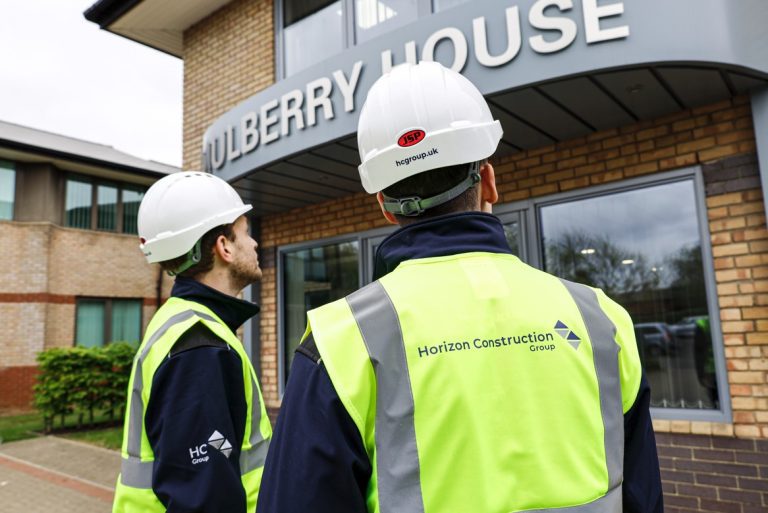
Horizon Construction, based in Colchester, has fought off stiff international competition to scoop a prestigious RoSPA Award, demonstrating its commitment to health and safety excellence. Horizon Construction won a Silver Award in the construction industry sector category, demonstrating its dedication to ensuring all personnel in its construction operations get home safely at the end of every working day. The RoSPA Health and Safety Awards is the largest occupational health and safety awards programme in the UK. Now into its 67th year, the Awards have almost 2,000 entries every year, covering nearly 50 countries and a reach of over seven million employees. The programme recognises organisations’ commitment to continuous improvement in the prevention of accidents and ill health at work, looking at entrants’ overarching health and safety management systems, including practices such as leadership and workforce involvement. While most awards are non-competitive – recognising individual organisations’ achievements – competitive awards are presented in 20 industry sectors and for specialist areas of health and safety management. Phil Holding, Horizon Construction’s Managing Director, said: “The achievement and recognition by RoSPA of our Health and Safety practices are crucial in ensuring we are up-to-date and implementing the latest methods in safeguarding our employees and people working on our construction sites. We continuously invest in health and safety and benefit from our in-house HSQE department to develop our culture. “The health, safety and well-being of our people are at the forefront of everything we do. This also demonstrates to our clients, along with the use of other industry-recognised frameworks such as ISO, that we have everyone’s best interests in mind and aspire to be a leader in our field for high-quality construction practices. “This achievement does not occur without an unwavering commitment from our team, so I would like to pay particular thanks to our team for their hard work. We are all very proud of the recognition by RoSPA and being part of a highly esteemed awards community.” Julia Small, RoSPA’s Achievements Director, said: “Accidents at work and work-related ill health don’t just have huge financial implications or cause major disruption – they significantly impact an individual’s quality of life. That’s why good safety performance deserves to be recognised and rewarded. “We are thrilled that Horizon Construction has won a RoSPA Award and would like to congratulate them on showing an unwavering commitment to keeping their employees, clients and customers safe from accidental harm and injury.” The RoSPA Awards scheme is the longest running of its kind in the UK, and receives entries from organisations across the globe, making it one of the most sought-after achievement awards for the health and safety industry. For more information about Horizon Construction visit https://hcgroup.uk and for RoSPA visit https://rospa.com.

Read More »