BDC News Team
Bureau Veritas reminds facilities managers to prepare now for ESOS deadline

Bureau Veritas reminds facilities managers to prepare now for ESOS deadline

The Energy Saving Opportunity Scheme (ESOS) assesses all energy used by buildings, processes and transport. With an unrivalled knowledge of a firm’s operations, facilities managers are often responsible for taking the lead on ESOS submissions and ensuring the assessment process is followed correctly according to Bureau Veritas, a world leader

Read More »
Aesthetic Access Control: Finding the Balance

Aesthetic Access Control: Finding the Balance

Where access control is concerned, architects and design teams must find the right balance between aesthetics, functionality and security, says Daniel May of Consort Architectural Hardware. Following a period of innovation and integration, access control has developed into an ever-prominent facet of building design over the past decade. Where systems

Read More »
Dual hire at East Midlands engineering company

Dual hire at East Midlands engineering company

Nottingham-based civil and structural engineering firm Howard Ward Associates (HWA) has bolstered its team with the hire of two new engineers. Claudia Henry joins as a structural engineer and Rob Morley as a principal engineer, increasing the company’s team to 16. The new recruits come following a sustained period of

Read More »
Latest Issue
Issue 339 : Apr 2026

BDC News Team

Bargate Homes Commences Construction at £13m Norton Chase Scheme in Lovedean, Hampshire

Bargate Homes Commences Construction at £13m Norton Chase Scheme in Lovedean, Hampshire

Bargate Homes has started construction at its latest development; Norton Chase, located in the East Hampshire village of Lovedean. The 2.61 Ha (6.45-acre) site straddles the boundary of East Hampshire and Havant, and will provide 43 much-needed homes for the area. Located off Lovedean Lane the scheme will provide a mix of one-, two-, three- and four-bedroom apartments and houses, set amongst 0.81Ha of public open space. Bargate Homes has provisioned 40% of the housing on the development as affordable. The design of the spacious site is highly considerate of the local area and vernacular and includes a number of sustainable initiatives. The £13m Norton Chase scheme is expected to take approximately 22 months to complete. 180 construction jobs will be created during the course of the project, providing a boost to the local economy. The new development is the sister project to Norton Heights, which Bargate Homes completed during 2018. Situated close to Lovedean village centre, the new homes will be built to a high EPC – B rating and designed to include a number of sustainable features. Each house will have a mixed recycling point, with external and internal storage, and an improved air tightness specification to ensure the energy saving performance of the homes is above current Building Regulations. The first tranche of homes will be available for occupation before the end of 2023. Mark White, Managing Director of Bargate Homes, said: “We are excited to start construction at Norton Chase and provide much-needed new homes for Lovedean and the wider East Hampshire area. We are a community-led housebuilder, and for all our developments we consider how our customers will live now and in the future. In addition to the sustainability features, the 43 homes have been designed to be in keeping with the style of houses found locally – including beautiful flint detailing.” “Situated close to South Downs National Park, Lovedean benefits from a thriving community, which is well connected and serviced by local shops and village amenities. With nearby train links to central London, as well as other commuter locations such as Guildford and Portsmouth, it is an extremely desirable location. We are looking forward to releasing the first tranche of homes for sale, as there is already a high level of early interest.” New public open spaces will be created across the development, enhancing the character of the area, and delivering both recreational and ecological benefits. Green buffer zones will provide a valuable amenity function and retain and enhance local wildlife corridors. There will also be native tree and shrub planting to benefit local bird populations. A combination of both private and public open spaces will be created across the site, which will include a variety of enclosures to define the spaces. The new development is only 1.4 miles away from the town of Horndean, which has a local primary school, an array of shops, restaurants, and supermarkets. Horndean is also home to the Hazelton Common Nature Reserve, which is popular with locals. Rowlands Castle is the closest train station, which is two miles from the site, with trains running to London Waterloo in just under an hour and a half. The line also runs through Guildford as well as providing regular 21-minute services to Portsmouth & Southsea station. There is easy access to the A3 via the B1249, which leads onto the M25 and the wider motorway network. The design for the range of dwellings is in keeping with the local topology of the area. The site will utilise a single facing brick, with an alternative brick to add contrast where the house designs have traditional detailing elements. Key and corner homes will benefit from flint elevations to add variety and legibility to the street scene. Roofs will be simple in form with extensive use of reduced eaves and dormers in the principal elevations. Gables will be used occasionally on the larger dwellings, providing contrast and interest to the street scene, which is in keeping with the predominant architectural style found on the highly regarded neighbouring Norton Heights development. Established in 2006, Bargate Homes builds select developments in prime locations within Hampshire, Dorset, and West Sussex. The company is currently delivering 900 homes across six live developments and has a pipeline of future sites expected to deliver in excess of 2,500 new homes. Building, Design & Construction Magazine | The Choice of Industry Professionals 

Read More »
Bureau Veritas reminds facilities managers to prepare now for ESOS deadline

Bureau Veritas reminds facilities managers to prepare now for ESOS deadline

The Energy Saving Opportunity Scheme (ESOS) assesses all energy used by buildings, processes and transport. With an unrivalled knowledge of a firm’s operations, facilities managers are often responsible for taking the lead on ESOS submissions and ensuring the assessment process is followed correctly according to Bureau Veritas, a world leader in testing, inspection and certification Organisations that qualify for ESOS must carry out assessments every four years and for this latest phase, should submit its compliance notification to the Environment Agency (the scheme’s administrator in England) by 5 December 2023. These include audits on the energy used by a business’ buildings, industrial processes, and transport to identify cost-effective energy saving measures. Last year, the Government released the outcomes of its ESOS consultation, aimed at raising the ambition and standard of ESOS reporting, to make it a greater driver for energy efficiency action and align it with UK decarbonisation goals. Key introductions include a reduction in the amount of energy that can be excluded from the assessment – known as the Total Energy Consumption (TEC) – from 10% to 5%, meaning 95% of total energy used across buildings, processes and transport must now be assessed, leaving a much tighter margin when it comes to data collection. There are also new compulsory action plans, which participants must set following the phase three compliance deadline and report progress annually as part of its Streamlined Energy and Carbon Reporting framework; however, meeting these targets won’t become mandatory until phase four. ESOS has also introduced an energy intensity metric whereby a business will need to detail kWh/m2 for buildings, kWh/unit output for industry and kWh/miles travelled for transport. Whilst businesses still have nine months to comply with the latest changes, Bureau Veritas is on-hand to support facilities managers to file their submission sooner rather than later. Every business that must complete an ESOS assessment has the same deadline, which results in resource scarcity as the deadline approaches, therefore achieving compliance sooner could be more cost-effective and offer more choice when it comes to appointing a lead assessor – driving additional benefits for the business. David Murray, Business Unit Manager – Sustainability at Bureau Veritas, comments: “Whilst ESOS reporting must only be carried out every four years, it’s vital that businesses get ahead of the curve to ensure any required audits are completed and submitted ahead of the strict 5 December 2023 deadline. Penalties for non-compliance can be up to £50,000 fines plus £500 per day, so as well as the opportunities to reduce energy usage and better a business’ carbon footprint, there are clear financial gains to be had from early compliance. “Facilities managers form a key part of the ESOS process, given they have vast knowledge of a businesses’ operations, including buildings, processes and transport, and a solid over-arching view of the company’s corporate structure – an imperative aspect of filing an ESOS submission. “Phase three has introduced a number of key changes, most notably the tighter scope on energy reporting, new metrics and the requirement for an energy efficiency action plan to be drawn up. It’s important for facilities managers involved in this process to ensure they understand the full scope of the new strengthened requirements, engage a lead assessor early on, and have a understanding of the data collection requirements.” Bureau Veritas is also urging facilities managers who may not have previously had to report to get ahead for their first assessment. Companies which qualify for the mandatory assessment under ESOS include those which employ 250 or more people, have an annual turnover in excess of £44 million and an annual balance sheet total in excess of £38 million. David continues: “The ESOS qualification criteria are complex and many organisations will need to take significant steps in order to comply with all requirements. Furthermore, businesses which may not have had to report under phase two of ESOS but have since met the criteria to comply with the reporting scheme this time around, may be in the dark when it comes to what they need to do first, and the business drivers to push forward with the process. “There are clear benefits to ESOS, other than compliance – although this is the main driver for many. Firms that have a clear vision when it comes to sustainability and sustainable policy are able to have an increased awareness of energy issues within their business, save money when ESOS recommendations are implemented, support the business’ net zero transition, and improve their corporate sustainability reporting. “As an independent third-party with experience helping many clients comply with the ESOS regulation in the UK, we’re able to support businesses with UK and European operations to take action towards compliance. Our global network of energy experts offers a wealth of knowledge to help your company achieve compliance in a cost-effective manner. In many cases, going beyond compliance can also maximise the business benefits that can be gained from reducing and optimising energy consumption.” With vast experience and technical expertise in energy assessment and verification, Bureau Veritas is uniquely placed to help organisations achieve compliance with the ESOS regulations and take advantage of energy savings opportunities. With qualified Lead Energy Assessors available to guide the process, Bureau Veritas can support businesses through every step of its energy efficiency journey, starting with full ESOS compliance. To further support businesses in meeting phase three of ESOS regulations, Bureau Veritas has released a brand new downloadable guide, to help navigate the process. For further information on ESOS and how Bureau Veritas can support your business on its energy efficiency journey, get a free quote. Building, Design & Construction Magazine | The Choice of Industry Professionals 

Read More »
Aesthetic Access Control: Finding the Balance

Aesthetic Access Control: Finding the Balance

Where access control is concerned, architects and design teams must find the right balance between aesthetics, functionality and security, says Daniel May of Consort Architectural Hardware. Following a period of innovation and integration, access control has developed into an ever-prominent facet of building design over the past decade. Where systems were once rudimentary, modern user requirements have led to several operational and technological advancements, resulting in a versatile selection of options that move beyond the limited capabilities of centralised deployment architecture. The push for smarter buildings has played its part too. In fact, according to a 2022 report, the number of smart buildings worldwide is projected to climb from 45 million to 115 million by 2026, with global market size estimated to hit $201.16 billion by 2031 – and this growth shows no signs of slowing down (omitting another global pandemic). In order to meet growing market demand, manufacturers continue to modernise access control solutions, introducing the use of mobile credentials, cloud control and even bio-metric systems. As such, the specification process for access control hardware continues to become more nuanced, and for architects in particular, there’s an increasing challenge to ensure all design objectives are met. With this in mind, how can professionals strike a balance between seamless integration and design? Aesthetic choices For many decision makers, access control is viewed as an efficient and flexible route to securing their building. But more than that, it has become critical to the operative performance of our built environment, where from residential settings to commercial space, the adopted use of interconnected systems is further boosting accessibility, functionality and security. Take modern hotel environments for example. According to a 2022 report, 56% of hospitality consumers expressed locking and unlocking rooms using biometrics and facial recognition would enhance their experience. From Wi-Fi infrastructures to cloud services, technology has almost become synonymous with a hotel guest’s experience and is designed to improve their stay. Where digital access control systems are adopted, guests can interact with the premises independently, streamlining their access to essential entry points while safeguarding rooms against unauthorised visitors. Similarly, hotel operators benefit from enhanced building security and increased traceability, not to mention improved business efficiency and higher guest ratings. However, while security and accessibility are frequently top of the agenda when it comes to specifying hardware, from an architectural perspective, a solution’s aesthetic is just as valuable and plays a crucial role in the decision-making process. Often, door hardware can feel like the finishing touch to a design project, and so, careful consideration must go into consistent design choices that make a positive impact on the building’s aesthetic. Ultimately, better-quality aesthetics enhance environments by making them more welcoming. Again, hospitality is a good case in point, where hotels must ensure their environment is visually pleasing as part of the service quality offered to their guests. However, a survey on urban design revealed 40% of architects find incorporating security measures into new developments without impacting aesthetic appeal a key design challenge. With this in mind, architects and design teams can be forgiven for past frustration towards the unattractive and cumbersome access control systems that were once in their infancy. In reality, today’s systems offer a much more seamless design, and with end users placing value on key elements such as accessibility, fire safety and reliability, it’s now possible to incorporate a solution that works for everyone. Combining value and visuals Upon recognising today’s access control systems promote functionality and seamless installation without compromising aesthetics, there’s a growing demand for comprehensive, single-package solutions across many contemporary projects. As a result, architects and designers are increasingly met with questions on door hardware and access control and must keep up to date with the latest solutions that are available. As such, the initial design stage provides an opportune period for architectural teams to consider the needs of the end user in relation to access control systems. From a building’s security elements to its flow of movement, there are various objectives to reflect upon, and architects must look to develop their knowledge on access control solutions to ensure all end user objectives are met, and all while considering the final aesthetic. Naturally, projects can often benefit from greater collaboration and architectural professionals are urged to lean on the expertise of manufacturers where required. By working closely with trusted manufacturers early in the process, teams can incorporate the latest technology into buildings at the initial stages of design, as opposed to being an addition later in the process. In many cases, manufacturers now offer bespoke access control solutions too, each designed to adapt around the end user’s needs while working with the architect on a design level. Through greater collaboration and the use of tailored solutions, architects are given the ability to choose consistent finishes and materials that fit the planned aesthetic, removing the need to try and match across various suppliers later down the line. Seemingly, access control will continue to play a larger role in building design as the industry progresses. And while the adoption of new technology may inherit an element of uncertainty for some, by introducing tailored solutions with seamless integration at early stages of the design process, architects can rest assured that their proposals address core challenges such as security and fire safety, while keeping their aesthetic vision intact. Building, Design & Construction Magazine | The Choice of Industry Professionals 

Read More »
RWE appoints local Humber based firm to commence Grimsby Hub construction works

RWE appoints local Humber based firm to commence Grimsby Hub construction works

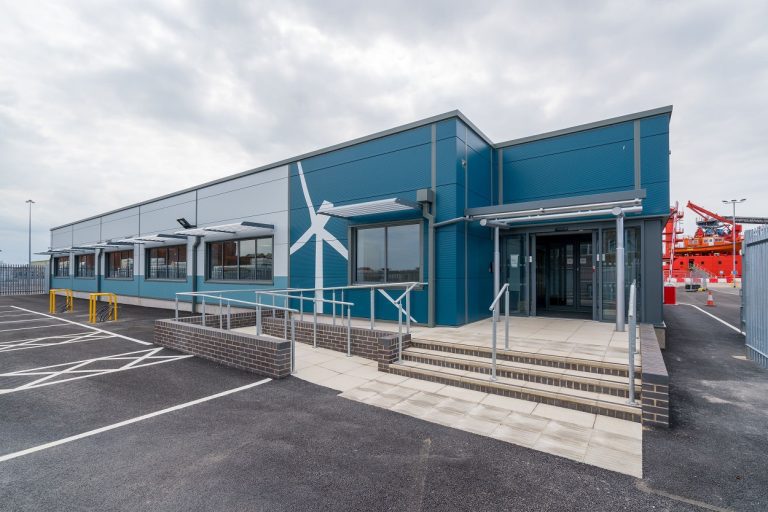
RWE has appointed Humber-based firm Hobson & Porter to complete the construction of its new state-of-the-art operations and maintenance facility known as the Grimsby Hub. The multi-million pound contract includes an extension to the existing Triton Knoll Offshore Wind Farm operations base located at Grimsby’s Royal Dock, and includes the creation of a new Centralised Control Room (CCR) to oversee the operation of the vast majority of RWE’s UK Offshore portfolio, helping to cement Grimsby’s role as a leading location for the UK’s offshore wind sector. RWE announced the creation of the Grimsby Hub back in 2021, marking a major strategic commitment to the UK’s east coast. As well as Triton Knoll, RWE’s 1.4 gigawatt (GW) Sofia Offshore Wind Farm, currently under construction, will also locate its operations and maintenance activities to the new hub in the future. In total, RWE expects the new facility will accommodate around 140 RWE employees, with potentially around 70 new local jobs created, plus indirect jobs required in support. The Grimsby Hub will also enable the company to strengthen its relationship with the region’s businesses and local communities, by committing to a longer-term presence in the area. The location of the Grimsby Hub was chosen because of its proximity to existing and future projects and its deep-water quayside, which is suited to the use of Service Operations Vessels (SOVs). Construction is due to commence shortly and will take around one year to complete. Once construction has finished, the new facility will include a joint control room offering 24/7 monitoring of multiple sites, new shared office space, and separate warehouse facilities. Guy Middleton, RWE general manager for the Grimsby Hub said: “We are thrilled to have Hobson & Porter onboard to complete the extensive construction works required to extend the existing Triton Knoll facilities. It is great to have been able to award the contract to a local firm which brings a wealth of experience to the project. We can’t wait for construction to finish and provide even more locally based, skilled jobs for the region.” Hobson & Porter is an award-winning construction firm operating across the Yorkshire and Lincolnshire region and shares a lot of the same principles as RWE including being community focused, environmentally pro-active and they have a longstanding commitment to develop skills and training. Joe Booth, business development director for Hobson & Porter said: “We are delighted to be working with RWE on this exciting project and continuing our strong affiliation with both the Humber-based offshore wind industry and the town of Grimsby. This project will take our business revenues from the offshore wind industry beyond £25million in recent years having previously delivered the adjacent East Coast Hub for Orsted and the Aura Innovation centre in Hessle for The University of Hull; plus a number of other smaller projects. “For a local, family-owned business like ours, this is testament to the vast array of business opportunities the offshore wind sector is creating for local businesses, especially when you consider that not one of our 120 local employees have ever had to step offshore to attain or deliver these projects. We look forward to seeing this one, once complete.” RWE is a leading player in renewables and expects to invest more than €50 billion gross by 2030 to grow its green core business, globally, with £15 billion earmarked for the UK. During 2022, the 856 megawatts (MW) Triton Knoll offshore wind farm became fully operational, while RWE’s 1.4 GW Sofia offshore wind farm is now well into construction. RWE is also involved in four of the UK’s seven offshore wind extension projects and recently signed Agreements for Lease for their two Dogger Bank South offshore wind farm sites. Meanwhile the company is also exploring floating wind projects including in the Celtic Sea region. Building, Design & Construction Magazine | The Choice of Industry Professionals 

Read More »
Digital twin tech used to decarbonise Dublin's social housing

IES and Dublin City Council work together on whole-life carbon Digital Twin project to optimise renovation of social housing

Net-zero technology firm, IES, has collaborated with Dublin City Council on a Digital Twin project to identify how Dublin’s social housing stock can be decarbonised in the most efficient manner in terms of both operational energy and embodied energy. Using its world-leading digital twin technology, IES carried out modelling of three residential blocks located on Lower Dominick Street. It assessed the full carbon impact and efficiency of four renovation strategies, over three different time periods, to regenerate the vacant buildings built in 1962. The strategies align with the council’s climate targets for 2030, 2050 and beyond. The project took a whole-life carbon approach, taking into account both embodied and operational carbon. Consideration of embodied carbon, which is the emissions associated with construction and materials throughout the whole life-cycle of a building, is a critical part of sustainable building analysis that is often overlooked. A digital twin is a virtual replica of a building, which uses real data, and physics-based simulations to behave as it would in real life. Powered by dynamic simulation modelling software, the digital twin models were used to identify which strategy, from shallow retrofit to demolition and rebuild, would result in the biggest reduction in whole-life carbon emissions. In order to determine the strategy which would lower emissions most significantly, the main sources of energy consumption were identified by calibrating data from existing energy bills of the social housing site. The results are included in the Dublin City Council Climate Resilient Housing Report, which highlights that over a 60-year life period, the best renovation strategy determined for social housing was Deep Retrofit. Under this strategy, each residential block can achieve around an 85% reduction in cumulative emissions by carrying out a deep retrofit. Because of the study, Dublin City Council can make evidence-backed decisions when developing the most optimal whole-life carbon regeneration strategy for the refurbishment of ageing, social housing buildings. The project was funded by the Department of Public Expenditure and Reform’s Public Sector Innovation Fund, with IES and DCC in partnership winning this project to create the digital twin. The results of the project will help Dublin City Council to meet emissions reduction and retrofitting targets for social housing, alongside housing delivery targets. As more targets are imposed by the government to mitigate climate change, new systems must be developed to assess the strategies for derelict buildings. Following its success, it’s hoped that the study can be scaled to other sites across Dublin and beyond to estimate the carbon impact of renovation projects. Don McLean, founder and CEO of IES, said: “Retrofitting vs demolition continues to be a widespread debate, particularly as higher targets are imposed to tackle climate change. With around 80% of the buildings that will exist in 2050 likely already built, retrofitting has a key role to play in decarbonising our built environment and driving energy efficiency. Whilst demolition is sometimes unavoidable, it increases emissions, through embodied carbon and materials required for rebuilding. “We hope that the results of this project will help local authorities to determine the best strategy for decarbonising derelict buildings and meeting targets. It’s a step in the right direction to making vacant buildings in Ireland as carbon neutral as possible, and one that we hope other councils will soon replicate.” Sabrina Dekker, climate change co-ordinator at Dublin City Council, said: “This project has demonstrated the results that can be achieved through working collaboratively, exchanging knowledge to drive innovation and meet targets. IES’s digital twin technology has enabled us to confirm the importance of retrofitting to reduce our emissions and we hope that the results can be utilised to inform future projects.” Building, Design & Construction Magazine | The Choice of Industry Professionals 

Read More »
Whitecode Consulting provides MEPH designs for stunning new r development in Greater London.

Whitecode Consulting provides MEPH designs for stunning new residential development in Greater London

Due to be completed in 2023, Park East is a £95 million residential development in Erith, delivered by Orbit Housing Association in partnership with the London Borough of Bexley. The project will offer 320 new homes built, of which 20% are for private sale, 24% Shared Ownership and 56% for rent in order to accommodate a mixed tenure community. As a London Borough, purchasers, if eligible, may take up to a 40% equity loan with the Help-to-Buy scheme for the private sale properties. There are a number of one and two-bedroom apartments available, all decorated in a modern and stylish fashion. The development offers landscaped urban gardens and green spaces for its occupants to relax and unwind in. Moreover, easy access to local shops and amenities and excellent transport links to the city are also available, creating a connected community in the south-east corner of Greater London. In terms of engineering services on Park East, the main contractor required an experienced engineering consultancy that could provide value for money. Whitecode Consulting has expertise in all areas of MEPH design and provides advice from initial concept and through the design stages to project completion, making this firm the obvious choice. Whitecode joined the project in July 2020 to provide Wates with MEPH services to RIBA Stage 5, as well as MEPH installation drawings and record drawings for the new-build apartments. The Whitecode team collaborated with planners, architects and other consultants to deliver high quality building services design whilst providing the client with technical expertise throughout the project. Whitecode’s designs have ensured that the apartments on this project will offer the highest standard of comfort for Park East’s residents. This stylish mixed-use development has invigorated the local area, and the presence of Whitecode Consulting’s designs has ensured that occupants can live in comfort for years to come. Building, Design & Construction Magazine | The Choice of Industry Professionals 

Read More »
Strong headwinds buffet construction, as project-starts fall over a third in March

Strong headwinds buffet construction, as project-starts fall over a third in March

Glenigan, one of the construction industry’s leading insight experts, releases the April 2023 edition of its Construction Index. The Index focuses on the three months to the end of March 2023, covering all underlying projects, with a total value of £100m or less (unless otherwise indicated), with all figures seasonally adjusted. It’s a report which provides a detailed and comprehensive analysis of year-on-year construction data, giving built environment professionals a unique insight into sector performance over the last 12 months. Heading into Q.2 2023, the April Index shows construction-starts continuing to slide on a downhill trajectory. Similar to the February and March editions of the Index, project-start performance remained frustratingly slow across the sector throughout Q.1, amid eye-watering price inflation and intense economic uncertainty. This protracted period of depression is emphasised through a massive 46% decline during the Index period, compared to last year’s figures, as climbing interest rates keep public and private investors cautious about committing to new projects. Commenting on the findings, Glenigan’s Economic Director, Allan Willen, says, “Poor construction performance in the three months to March is disappointing but unsurprising, with a continued slowdown in project-starts reflecting the UK’s stagnant economic situation. Despite the Chancellor’s confirmation that we are not entering a recession in last month’s Budget, the UK economic outlook remains weak. Investor and consumer confidence is at a low ebb which has, inevitably, stalled private sector activity. “Public sector starts have also disappointed, reflecting capital under-spending by a number of government departments during the last financial year. However, the Chancellor also used the Spring Statement as an opportunity to bring forward some of these underspent funds to the new financial year. This is potentially good news for those contractors specialising in critical infrastructure, where this money will likely be committed, helping to boost the industry through greater investment in mega-projects and transport upgrades throughout the rest of 2023.” Taking a closer look at sector verticals and UK regions… Sector Analysis – Residential Residential construction experienced overall decline in the three months to March as starts fell 39% to stand 51% lower than a year ago. Private housing performance was particularly weak, finishing 39% down against the preceding three months and by half compared with the previous year. Social housing also dropped back, with work starting on site falling 41% against the previous three-month period, plummeting 52% on 2022 levels. Sector Analysis – Non-Residential The value of starts across non-residential sectors fell by a third (-33%) during the three months to March, finishing 42% lower than 2022 figures. Overall performance was weak, with all verticals experiencing a decline against the preceding three-month period. Industrial project-start performance was especially poor, with project-starts weakening 50% during Q.1 to stand 64% lower than a year ago. Retail also fared poorly, with the value of project-starts falling back 32% against the preceding three months and 48% against the previous year. It was a similar story for offices, stumbling on a previous flurry of activity in Q4 2022. The value of underlying project-starts fell back 32% during Q.1 to stand 40% down on a year ago. Health project-starts also slipped back abruptly, declining 36% against the preceding three months to stand 42% down on the year before. Hotel & leisure and community & amenity also decreased 44% and 5% against the preceding three months, to stand 40% and 19% down on the previous year, respectively. Education starts fell down 5% against the preceding three months but increased a modest 4% on 2022 levels. Civils work starting on-site dropped 28% against the preceding three months to stand 29% down on a year ago. Infrastructure starts dropped 43% against the preceding three-month period, down 49% on the previous year’s figures. However, in a rare bright spot amid the overall gloom, civils general decline was partly offset by utilities activity, which only declined 3% in Q.1 2023, but finished 23% up on a year ago. Regional Analysis Regional performance was poor, with project-starts weakening across all areas of the UK during the three months to March. Yorkshire & the Humber suffered the heaviest fall, declining 57% during Q.1 to stand 65% down on a year ago. It was a similar story in the South East, with the value of project-starts decreasing 48% against the preceding three months and remaining significantly down (-52%) on the previous year. Faltering on its strong performance in recent months, project-starts in the North East experienced a sharp fall against both the preceding three months (-46%) and previous year (-41%). London and the South West weakened against the preceding three months, falling back 28% and 24%, respectively. Both regions were down on the previous year, remaining 42% and 31% lower than a year ago. Some areas of the UK fared even worse, including Scotland where the value of project-starts fell 48% against the preceding three months to stand 56% down on a year ago. This was also the case in the East Midlands, West Midlands, Wales, Northern Ireland, and the North West which all crashed compared to both the preceding three months and previous year. To find out more about Glenigan and its construction intelligence services click here. 2023 sees Glenigan celebrate its 50th anniversary, commemorating half a century of delivering the highest-quality construction market intelligence. To find out more about its services and expertise click here. Building, Design & Construction Magazine | The Choice of Industry Professionals 

Read More »
Kingspan launches its lowest-ever embodied carbon access floor panel

Kingspan launches its lowest-ever embodied carbon access floor panel for commercial offices

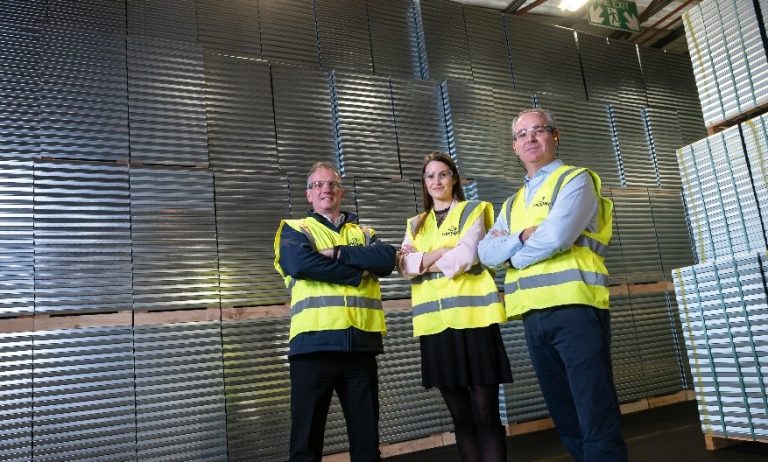
Kingspan Group, the world leader in high-performance insulation and building envelopes, has further demonstrated its commitment to decarbonising the built environment, unveiling its lowest-ever embodied carbon raised access floor panel Kingspan RMG600+ — designed specifically for UK & Ireland’s commercial office industry – as part of the group’s new Lower Embodied Carbon (LEC) range. The materials and construction phase of buildings is responsible for 11% of all global energy-related carbon emissions. These emissions are known as embodied carbon. Reducing emissions in the built environment is critical to limiting warming to 1.5 ºC by 2050, as laid out by the IPCC. Kingspan’s new RMG600+, developed by its Data & Flooring division, has -3.04kg of CO2e (A1-A3) showing a 57% reduction in embodied carbon (A1-C) when compared to the standard range*. Independently assessed by One Click LCA, this advancement from Kingspan to reduce embodied carbon in raised access floor panels, can be attributed to several key factors including the procurement of low-carbon steel, a focus on renewable energy and the use of a minimum of 86% recycled material. The low-carbon steel used in Kingspan’s New RMG600+ is produced using an electric arc furnace (EAF) that uses electricity, as opposed to coke used in a traditional blast-furnace, as its energy source. Additionally, the EAF production process uses 90% recycled steel.  The new product is of part of a groupwide decarbonisation strategy which includes Kingspan’s commitment to Net Zero Carbon manufacturing by 2030, a 50% reduction in carbon intensity in its primary supply chain, the introduction of an internal carbon charge of €70/ tCo2 and the investment in H2 Green Steel – a company pioneering the manufacture of steel using hydrogen instead of fossil fuels. “Existing buildings and construction are responsible for 39% of annual energy and process -related carbon dioxide (CO2) emissions globally. At Kingspan we aim to contribute to a net zero carbon built environment by minimising our climate – related impacts across our value chain, with the launch of our new Kingspan RMG600+ as part of our Lower Embodied Carbon range.”  says Debra Smith Kingspan Data & Flooring’s Divisional Head of Sustainability. As part of its ten-year Planet Passionate sustainability strategy and science-based targets, Kingspan is committed to developing solutions that will reduce the carbon footprint of buildings. Two of the targets in Planet Passionate will directly impact this by 2030: Net Zero Carbon manufacturing by 2030 and a 50% reduction in carbon intensity in its primary supply chain. Donagh Nolan, Kingspan Data and Flooring’s Divisional Operations Director adds: “We have been manufacturing for 120 years and this is one of those truly important advances, which we think will be transformative both for our business and for our clients’ projects. As part of our broader sustainability commitments, we continuously enhance and upgrade our products.  To deliver this, we employ a dedicated team of expert BIM (Building Information Modelling) engineers, advanced technical professionals, sustainability experts and manufacturing specialists.” Embodied carbon in materials is however only part of the solution to dramatically reducing carbon in buildings. This can only be achieved by developing products which not only save on the operational day-to-day carbon emissions of a building, but also save on carbon during manufacturing and offer options for recycling. Kingspan is focused on creating products that deliver carbon reductions for buildings on all of these fronts. Building, Design & Construction Magazine | The Choice of Industry Professionals 

Read More »
Mesothelioma UK is calling time on asbestos with new ‘Don’t Let the Dust Settle’ campaign

Mesothelioma UK is calling time on asbestos with new ‘Don’t Let the Dust Settle’ campaign

To raise awareness of asbestos exposure and mesothelioma during Global Asbestos Awareness Week in April National charity, Mesothelioma UK has launched a new ‘Don’t Let the Dust Settle’ campaign to call time on asbestos by raising awareness of the dangers of asbestos exposure and the asbestos-related cancer, mesothelioma. The campaign will focus on sharing information about asbestos and mesothelioma, and will launch on 3 April 2023 to coincide with Global Asbestos Awareness Week which runs from 1-7 April. Asbestos is estimated to kill more than 200,000 people per year globally and exposure to asbestos is responsible for nine out of ten mesothelioma cases. Asbestos is the single greatest cause of work-related deaths in the UK each year, as more than 5,000 people die from asbestos-related cancers. More than half of those deaths are from mesothelioma, a cancer of the lining that covers the outer surface of some of the body’s organs, most commonly of the lungs or abdomen, for which there is no cure. Up to 60 per cent of patients die in the first year after diagnosis, and just over five in 100 survive their mesothelioma for five years or more. According to the Health and Safety Executive (HSE), Britain’s national regulator for workplace health and safety, the UK has the highest rate of mesothelioma deaths per capita in the world. The cancer has a long latency period of 15-45 years, with some prolonged cases of 60 years before symptoms show. Despite its use being banned, asbestos remains in many UK buildings. The HSE estimates that between 210,000 and 400,000 buildings in the UK contain asbestos. Other sources say that there are about six million tonnes of asbestos, spread across approximately 1.5 million buildings – the most asbestos per capita in Europe. Freedom of Information requests in 2022 revealed that 81 per cent of schools reported asbestos was present in their buildings, with more than 90 per cent of hospital buildings containing asbestos. The ‘Don’t Let the Dust Settle’ campaign is demanding that the Government heeds the two key recommendations of the Work and Pensions Committee inquiry into the management of asbestos. In 2022, the Committee recommended the creation of a central digital register of asbestos and a commitment to the phased removal of asbestos over the next 40 years, prioritising schools and hospitals. For more information on the campaign and to find out how to show your support, visit www.mesothelioma.uk.com/dontletthedustsettle or follow and share the social media posts on Mesothelioma UK’s Facebook, Twitter and Instagram pages. The campaign is being supported by a wide range of individuals and organisations including politicians, healthcare providers, support groups, cancer charities, asbestos removal firms, trade unions and more. Rt. Hon Sir Stephen Timms MP, Chair of House of Commons Work and Pensions Committee said: “The 1999 ban on using asbestos didn’t make it a thing of the past. It’s still in our buildings and causes over 5,000 deaths per year. This risk from asbestos will increase in coming decades, as we retrofit buildings to meet net zero targets. To prevent needless deaths and suffering, we need to act decisively, and finally make asbestos history. We need a central register so that we know where all the asbestos is and in what condition it is. We also need to set a timeframe for its safe removal, prioritising the highest risk asbestos from settings such as schools and hospitals. The clock is ticking.” Nick Maskell, Chair of Mesothelioma UK and Professor of Respiratory Medicine at University of Bristol commented: “It’s very difficult to have to tell a 50-year-old with a young family that his work during a summer whilst still at school is probably why he has developed mesothelioma. That there isn’t a cure, and his life expectancy is less than 12 months only makes the situation more devastating. The UK has the highest incidence of mesothelioma in the world with as many as 2,700 people diagnosed per year, illustrating that asbestos is a very real and present danger. We need to call time on asbestos because with a better plan to protect people, we know that mesothelioma is largely preventable.” Jane Hunt MP for Loughborough said: “Our heavy use of asbestos in the past has left the UK with a painful legacy of suffering and fatal diagnoses. So, I am extremely proud to have the national Mesothelioma UK charity in my constituency, providing specialist care and support to patients and families affected by mesothelioma – a devastating cancer caused by exposure to asbestos. I will do all that I can to support their mission for a future without mesothelioma by calling time on asbestos. Together we will not ‘let the dust settle’ on this issue.” Building, Design & Construction Magazine | The Choice of Industry Professionals 
Read More »
Dual hire at East Midlands engineering company

Dual hire at East Midlands engineering company

Nottingham-based civil and structural engineering firm Howard Ward Associates (HWA) has bolstered its team with the hire of two new engineers. Claudia Henry joins as a structural engineer and Rob Morley as a principal engineer, increasing the company’s team to 16. The new recruits come following a sustained period of growth in 2022, with growing workstreams from Midlands contractors under major construction frameworks, and a surge in housing and renewable energy projects. HWA has secured a pipeline of work for 2023 with a Gross Development Value of over £400m in the East Midlands and nationally and is continuing to expand its team this year to facilitate its growing portfolio. HWA director, Dan Bailey, said: “Our strategy over the last 12 months has been to diversify our client base and the sectors we operate in and our efforts in delivering that strategy have really started to come to fruition. HWA is experiencing a welcome time of significant growth and innovation which is great following a challenging time for the industry. “We are working with incredible clients, old and new, on really impressive, innovative schemes and the growing demand for our services has led to us expanding the team at all levels. “Rob and Claudia join us at an exciting time and their passion and expertise is a real asset to our team and will enable us to expand our offer and portfolio further. “Likewise, we feel it is just as important to invest in the next generation of engineers and our year out student, Jakub, has gained valuable experience over his time with us which we are sure will benefit his studies. “We’re a close-knit business with a supportive and progressive culture and myself and the rest of the team are really pleased to be welcoming new people to the company.” Claudia, who studied Civil and Environmental Engineering at the University of Nottingham and is a graduate member of IStructE, has already become a valuable member of the team delivering building designs for the wider HWA team. Rob has over 25 years of consultancy experience and has worked with some of the HWA team previously. He will add further expertise to the reporting and structural assessment side of the business, whilst carrying a substantial depth of knowledge of building and design projects. The HWA team are currently working on significant student residential projects nationwide, multiple care projects across the North West, Midlands and East Anglia, and a number of public sector and housing projects across the Midlands. The engineer is also a specialist in renewable energy, assisting providers in delivering projects which included 35,000 solar panels in 2022, and in 2023 that number will more than double. HWA specialises in structural and civil engineering, along with a range of complementary services including geotechnical, environmental, flood risk and highways consultancy. It also has particular expertise and experience in undertaking structural investigations. Building, Design & Construction Magazine | The Choice of Industry Professionals 

Read More »