BDC News Team
Experts reveal commercial design trends for 2023 and beyond

Experts reveal commercial design trends for 2023 and beyond

The design of commercial buildings and interiors is constantly evolving as business owners focus on increasing resilience, productivity and efficiency in 2023.  With the rise in building material costs, disruption in supply chains and strain on cash flow from the pandemic and cost-of-living crisis, alongside increased interest in sustainability, many

Read More »
Extensive vibration isolation for Park Modern

Extensive vibration isolation for Park Modern

Mason UK meets stringent specification with proactive engineering Park Modern is a residential development with luxury apartments, exceptional facilities, and views across Hyde Park. Due to the proximity of the structure to the London Underground, extensive vibration control was required. This article describes how vibration control specialist Mason UK tackled

Read More »
Architects’ drawing on ASWS expertise

Architects’ drawing on ASWS expertise

Different ages of the UK’s built heritage are frequently most recognisable from their fenestration patterns as by their roof structure or choice of walling materials – making decisions regarding the windows replacement or conservation critical to the overall success of any redevelopment. So it is that London-based Associated Steel Window

Read More »
Residential falls 43% as contract awards disappoint in February

Residential falls 43% as contract awards disappoint in February

Barbour ABI has released its latest snap analysis of construction contract awards and planning applications for February, noting a disappointing month for awards value. Residential awards were a key driver, with a 43% monthly fall. Residential planning approvals and applications are currently weak, suggesting trouble ahead for housebuilding targets. This

Read More »
New £6.5 million footbridge improves accessibility in Peterborough

New £6.5 million footbridge improves accessibility in Peterborough

Civil engineering specialist GRAHAM has delivered a new multi-million-pound footbridge in Peterborough, ensuring that members of the public can continue to cross the A47 easily and safely. GRAHAM was appointed by National Highways, which needed to replace Longthorpe’s old bridge as it approached the end of its life. Now operational,

Read More »
MODULHAUS™ Crowned Innovation of the Year

MODULHAUS™ Crowned Innovation of the Year

Following a year of unprecedented growth and success in 2022, leading innovators in offsite modular solutions – VOLUMETRIC™ are celebrating after being crowned ‘Innovation of the Year – Wellbeing’ winners, at the 2023 CIBSE Building Performance Awards. The VOLUMETRIC™ team picked up the trophy for SOLOHAUS™ in the MODULHAUS™ range.

Read More »
Latest Issue
Issue 339 : Apr 2026

BDC News Team

Elevate Property Group appoints Bode Contracting to build its £50m Silk Yard scheme in Derby

Elevate Property Group appoints Bode Contracting to build its £50m Silk Yard scheme in Derby

The developer of a £50m property scheme in the centre of Derby has appointed an East Midlands construction specialist to deliver the project over two years. Elevate Property Group, which is responsible for the iconic Trent Bridge Quays development in Nottingham, has selected Bode Contracting to build the 258 apartments that will offer high quality, affordable city centre living for young professionals, couples, and downsizers. Phase 1 of The Silk Yard will provide 94 apartments on the corner of John Street and Castleward Boulevard, with the second release set to include 164 properties in a five and seven-storey building on the adjacent site. Buyers and investors will be able to choose from one, two and three-bedroom apartments, as well as studio-style apartments across the 1.55-acre site that was once an historic manufacturing sawmill. Steve Dodd, managing director of Elevate Property Group, commented: “We have built a very strong partnership with Bode Contracting. They have just finished The Priory House Development for us in Birmingham and are currently working on the second phase of our Trent Bridge Quays development in Nottingham. “The company have always impressed us with the quality of their build and ability to meet deadlines, especially with the well documented supply chain disruption we’ve seen in construction in recent years.” He continued: “Bode are also working with us to ensure that sustainable construction techniques are used in what will be one of the highest-profiles schemes Derby has seen since lockdown eased.” The Silk Yard, which has been designed by architects Corstorphine & Wright, is the first time Elevate Property Group has developed in Derby and continues the firm’s desire to bring historic city centre sites back to life through high quality residential developments. Bode Contracting will start work this month and the construction of the three apartment blocks will take two years to complete. The 258 new homes will be ideally located between the city centre and the railway station, contributing a valuable new source of quality housing in central Derby for first-time buyers, downsizers, investors, and professionals commuting by rail. Dan Bodell, managing director of Leicestershire-based Bode Contracting, went on to add: “This is our fourth appointment by Elevate Property Group in the last two years and underlines the strength of the relationship and the fact we share the same passion and values of high-quality construction, regeneration and best practice.” He concluded: “The Silk Yard is a very ambitious project and will unlock a vital site that will support Derby’s desire to regenerate this area and attract new people and businesses into the city.” Elevate Property Group’s development footprint in the East Midlands continues to grow, with Phase 1 of its Trent Bridge Quays project almost sold out and Phase 2 well underway and selling fast. Building, Design & Construction Magazine | The Choice of Industry Professionals 

Read More »
Experts reveal commercial design trends for 2023 and beyond

Experts reveal commercial design trends for 2023 and beyond

The design of commercial buildings and interiors is constantly evolving as business owners focus on increasing resilience, productivity and efficiency in 2023.  With the rise in building material costs, disruption in supply chains and strain on cash flow from the pandemic and cost-of-living crisis, alongside increased interest in sustainability, many architects and designers will be looking for new trends in building design. With this in mind, UK’s leading structural glass manufacturer, Specialist Glass Products, has worked with reputable experts to predict the most popular commercial design trends for 2023 and beyond. 1. Break-out areas Over the past several years, commercial spaces have moved away from segmented and boxy layouts in favour of more open and inclusive spaces, especially following social distancing and restrictions during the pandemic. Open-plan spaces also allow more natural light to flow, which is known to boost productivity and well-being alone. Sarah Rose Haigh, Head of Design at Opus 4, said, “We expect to see more requests for dedicated breakout spaces throughout workplaces where employees can engage and interact with each other more freely. More areas will focus on rejuvenation and provide a safe space that allows people to relax and recharge in line with well-being objectives.  “Employees are the best asset for any business, and a happy and positive work environment will encourage productivity and staff retention.” 2. Sustainability and minimising waste Sustainability and reducing carbon emissions are at the forefront of many business objectives and are essential when considering future commercial redesigns. When thinking about designing commercial spaces, it is important to consider the types of products used and minimise waste levels. Federica Pisacane, Junior Project Manager at Agilite Solutions, says, “It’s all about reusing materials and avoiding ‘useless’ waste. Ask subcontractors not to throw away materials that can still be used, particularly small items such as screws and bolts, which are often deemed ‘waste’ even when in perfect condition.” Following the inflation of energy prices, businesses are also looking for ways to reduce their use of gas and electricity. As a result, eco-friendly features such as recycled materials, energy-efficient windows, daylighting and solar energy are showing up more and more in commercial buildings. 3. Structural glass features More architects and designers are using glass partitioning to create adaptable, multifunctional spaces that can enhance a building’s natural light. Frameless glass systems are also becoming a popular request which can extend working areas on fine days but remains closed when needed allowing extra ventilation to enter the space while preserving privacy on bad weather days. Managing director of Specialist Glass Products, Andrew Taylor, explained, “Many businesses and organisations are opting to install structural glass not only for its sleek look and versatility but also for many physical and environmental benefits. Not only is glass environmentally friendly and recyclable, but it also uses less energy than other materials. Glass products are made from abundant raw materials, so the production process requires lower temperatures which saves on energy usage.”  “Many architects and designers are opting for energy-efficient glass that can help reduce annual energy costs and reduce carbon footprint too. Energy-efficient glass can be very effective at keeping the heat in winter, and it can do quite the opposite in the hot summer months, which can help businesses keep energy costs down.” 4. Technology integration The COVID-19 pandemic has highlighted the benefits of technology when it comes to working from home – many organisations have turned to its use for more flexible and remote work. However, this experience also revealed some issues surrounding productivity, work-life balance, workforce engagement and well-being, which must be considered when introducing new technology into the workplace. Mara Rypacek Miller, Managing Director at Industville Ltd, advised, “In 2023 and beyond, we will see office spaces adapt to support the emerging needs of flexible working, and as such, modern office spaces need to consider areas for video conference meetings with excellent audio and visual access to ensure staff stay connected whether they are at working remotely, in the office or even meeting with clients on another continent. “Smart tech is constantly evolving and moving at a fast pace. Not so long-ago technology was used for simply switching lights on and off in a meeting room, but now offices are accustomed to smart tech devices that know the occupancy of the room and adapt accordingly. With the rate of how quickly new technologies come into play, I think it’s safe to say that Artificial Intelligence Tech will be the next big thing.” 5. More outdoor space Over the years, employee well-being has expanded beyond physical well-being to focus on building a culture of holistic well-being, including physical, emotional, financial, social, career, community, and purpose. The growing need for flexibility in where, when, and how employees work is at the heart of this.  Moving forward, we expect to see more workplaces creating outdoor space to reduce stress, attract great talent, be more sustainable, and, most importantly, create happy and engaged employees. Consultant Psychologist Dr Sarah Bishop says, “Pods, pavilions and outdoor amphitheatres make excellent outdoor areas for meetings, presentations, and team-building activities. Break times could be optimised with outdoor seating areas using picnic tables, food trucks or outdoor kitchens. Incorporating green spaces by adding landscaped areas, gardens, and green roofs to the workplace would also provide a connection to nature and improve the environment.” Andrew summarises, “The pandemic had already made people realise that mediocre is not enough anymore. Employees do not want to turn up to work in boring buildings and organisations that don’t care about the people within them.  “Instead, commercial architecture and design need to prioritise the connection and shared values between people, whether that’s simply incorporating open spaces, focusing on employee wellbeing or sharing sustainable beliefs.” For more information, please visit: https://www.specialistglass.co.uk/commercial-design-trends-for-2023/ Building, Design & Construction Magazine | The Choice of Industry Professionals 

Read More »
National Careers Week: Prologis UK welcomes Northamptonshire students to DIRFT

National Careers Week: Prologis UK welcomes Northamptonshire students to DIRFT

In celebration of National Career’s Week, Prologis UK invited students to The Hub at DIRFT in Daventry, a purpose-built centre for logistics training & education. On Thursday 9 March, over 100 students were given the chance to learn about the variety of jobs and opportunities within the logistics sector. The students, aged from 11 to 14, were invited from six Northamptonshire schools to participate in a variety of activities throughout the day. The activities were specifically designed so they could learn more about the career opportunities the sector has to offer, especially in the East Midlands, where logistics companies are a key employer. To broaden their knowledge, children were taken through different learning experiences on topics such as technology and automation, as well as being given the opportunity to tour warehouse facilities at GXO Clipper, a construction site being managed by Winvic and a rail terminal operation run by Malcolm Rail. Other activities included a speed networking event with a range of logistics operators including DHL, Culina, Europa and Kinaxia, and industry bodies, such as the UK Warehousing Association and Generation Logistics, where they were given the chance to talk to a wide range of people currently working in logistics. Robin Woodbridge, Head of Capital Deployment & Leasing, Prologis UK, said: “Changing the perceptions about the logistics industry and what it’s like to work in warehouses is crucial. We’re always proud to be able to teach and inspire young people and show them the exciting opportunities that the sector offers – these days it’s more about coding and programming skills than the more basic tasks people associate with the industry. As well as being a fun day with the chance to look around some of the huge operations here at DIRFT, we hope our event gave the children some practical knowledge about how important logistics is and the careers it offers.” Building, Design & Construction Magazine | The Choice of Industry Professionals 

Read More »
Extensive vibration isolation for Park Modern

Extensive vibration isolation for Park Modern

Mason UK meets stringent specification with proactive engineering Park Modern is a residential development with luxury apartments, exceptional facilities, and views across Hyde Park. Due to the proximity of the structure to the London Underground, extensive vibration control was required. This article describes how vibration control specialist Mason UK tackled these challenges and delivered a challenging specification. Park Modern includes 57 high-end apartments, with prices for these apartments ranging from £2 million for a one bedroom to £60 million for a striking nine-bedroom penthouse. The development also includes a wellbeing floor, with a residents-only spa, treatment rooms and private healthcare, a 25-metre swimming pool, a gymnasium, and a 16-seat cinema that residents can reserve for private use. For contractor Ant Yapi, this was their sixth project in the UK and their largest to date. The building rises nine levels above the ground with the majority of apartments overlooking Hyde Park. The design and building project required extensive ground retaining structures in close proximity to the London Underground Central Line to support the open excavation to 20 metres below ground level for the lowermost basement level. In addition to the facilities listed above, such as the swimming pool and gymnasium, the basement levels also contain plant areas. Enter Hoare Lea With the London Underground Central Line so close to the basement, vibration from the tube would be easily transmitted into the building’s structure, causing unacceptable noise within. Martin McNulty, a vibration consultant with Hoare Lea, provided the specification to guide the contractor and meet the client’s requirements. In addition to comprehensive site surveys, Hoare Lea carried out a number of computer simulations to predict the vibration levels at the basement level and throughout the development. The results confirmed high levels of vibration would be present in the primary structure. McNulty recalled that ‘‘a view was taken to ensure a premium-quality approach throughout all noise sensitive spaces, including the basements. In this scheme, sensitive spaces were not confined to above ground residential spaces, as is common, but also below ground in amenity and health care zones. This presented a challenge, as a one size fits all approach for building with significant basement zones is difficult.’’ Ultimately, this required a two-stage approach, controlling both groundborne vibration, comprising building isolation to mitigate dwellings at Level 1 and above, and a box-in-box strategy for the floors below. Box-in-box solutions would be required at all basement floors down to the lowest floor of development. Further, the client’s aspiration was that certain noise-sensitive spaces below ground were subject to the same performance standards as those above ground. This was particularly challenging as proximity to the tube tunnels meant vibration levels below ground were far in excess to those which would be above ground. ‘‘To meet this challenge, we developed a high performing box in box system and also insisted upon the contractor testing at key points throughout construction to ensure the designs were optimal. This also had the added benefit of permitting some value engineering opportunities to benefit the client,’’ explained McNulty. To deliver the specification, Ant Yapi turned to vibration control specialists Mason UK. ‘‘We needed Mason both for the structural isolation of the entire building, and for box-in-box isolation at the basement level,’’ explained Baris Bayraktar, Construction Manager at Ant Yapi. Ant Yapi also brought on board another acoustic consultant, Cahill Design Consultants (CDC), to ensure that Hoare Lea’s recommendations were implemented on site. The isolation line As depicted in Figure 1, the isolation line for the project ran horizontally across level one, while dipping down the two elevator cores to the bottom of the basement (B3). This is standard when providing structural isolation for a building with elevators, as cutting through building cores or reacting ground bearing pressures compromises acoustic performance.  This method meant the elevator cores at the bottom of B3, along with the entire building from level one upwards, were isolated on a system of 8Hz rubber bearings. ‘‘I had previously been involved in projects where bearings were used for seismic activity, so I was familiar with the theory. However, this was the first time I had worked on a project where they were required for acoustics,’’ recalled Bayraktyar. In total there were approximately 350 vertical load bearings, ranging in size from 130x130x95mm thick to 460x460x95mm thick to suit the various loads.  The implementation of this design interrupted the vibration transmission path from that generated by tube trains into the building’s structure, where it could manifest as noise disturbance in the apartments above. However, with the bearings in place there was a need to provide lateral restraint. Columns and building cores provide extensive lateral restraint and prevent a building swaying under wind loading. However, measures have to be implemented, both to provide lateral restraint but also to ensure that the acoustic performance of the bearings is not compromised. For this project, this was achieved through the use of a system of shear pins. These are simple, inexpensive and acoustically excellent as they do not engage unless wind loads are present. Furthermore, the introduction of bearings required working closely with the structural engineers at AKT. Adding bearings to a building effectively introduces movable connections which would otherwise be rigid. It was essential that Mason provided preliminary bearing designs well before ground was broken to AKT so the structural model could be updated, and loads redistributed. Charlie Ashton, a structural engineer with AKT, described a ‘‘long winded, iterative approach,’’ involving lots of coordination between AKT’s engineers and Adam Fox, Director at Mason UK. A key part of Ashton’s job was updating the finite elements model to incorporate Mason’s bearings. After the model had been run (a process that typically would take twelve hours) it would usually require Mason to make changes to the system of bearings in light of fresh calculations about loads. ‘‘Every time you run the model, you get a different set of reactions,’’ explained Ashton. ‘‘In addition to calculations about what load a bearing can handle, you also have to

Read More »
Architects’ drawing on ASWS expertise

Architects’ drawing on ASWS expertise

Different ages of the UK’s built heritage are frequently most recognisable from their fenestration patterns as by their roof structure or choice of walling materials – making decisions regarding the windows replacement or conservation critical to the overall success of any redevelopment. So it is that London-based Associated Steel Window Services (ASWS) has built a solid reputation far beyond the capital for successfully undertaking some of the most challenging fenestration contracts. ASWS worked in close cooperation with the project’s lead design consultants; as well as coordinating its operations with the main and other contractors.  In fact, the multi-generational expertise ASWS offers extends beyond its management team to many of its long-serving workforce; while the company also retains a vast library of ironmongery and other window and door components, together with an established supply chain to keep contracts on track. “ASWS was involved from beginning to end and they were exceptionally helpful, working assiduously right the way through the project. We were very pleased with their proactive approach. From my point of view, they have done remarkably well and came up with the goods; I’m very happy with the result and would certainly go back to them.” – David Loxton – Loxton & Associates – (Project – Alexandra House) Managing Director, Kris Bennell, explains: “As a family business with a long track record within the industry, we are respected for our experience and try to offer added value for architects and the other professionals we deal with; often on a regular basis.  In fact, we are frequently brought on board at an early stage to conduct very detailed condition surveys, and to offer ideas on how conservation goals can be achieved. Which then becomes part of the negotiation with the planning authorities.” “There has also been a shift in the way projects are run, with end clients now actively encouraging architects to engage with specialists like ourselves – especially where the main contractor is leading the work.  This can include them making use of our enablement service: where we can remove heritage fabric and windows to facilitate access for hoists or chutes, as well as cataloguing and putting frames and other components of historical value into safe storage for the duration.” “We relied on ASWS as specialists to tell us what could and couldn’t be repaired. They were incredibly knowledgeable and their expertise was helpful in understanding what needed to be done with the windows.” Andrew Morgan – JM Architects  – (Project – Heals Building) Amongst the many historic buildings where ASWS has provided its unique skillset are Woolwich Arsenal, the South Bank’s County Hall building, The Royal Academy of Arts, the iconic retail emporium Whiteleys and the recently redeveloped Battersea Power Station.  Both the Royal Academy and award-winning renovation work on one of the Crown Estate’s most public properties – Quadrant Arcade, on Regent Street – both saw the specialist offering advice to the leading architectural practice, Barr Gazetas. “We regularly use ASWS and the project went really well. The initial schedule of work that they produced was incredibly useful and detailed. It was quite a tricky project for them and they did a good job, especially considering the budgetary constraints and number of windows involved. Their advice and expertise were very helpful, especially with the ironmongery.” Karen Fuller – Barr Gazetas  – (Glasshouse and multiple other projects) For more information on ASWS, please visit asws.co.uk. Building, Design & Construction Magazine | The Choice of Industry Professionals 

Read More »
Blue Sky Thinking: ACO and Aquality Create A Blue Roof Like No Other At Queen’s Gate Place Mews

Blue Sky Thinking: ACO and Aquality Create A Blue Roof Like No Other At Queen’s Gate Place Mews

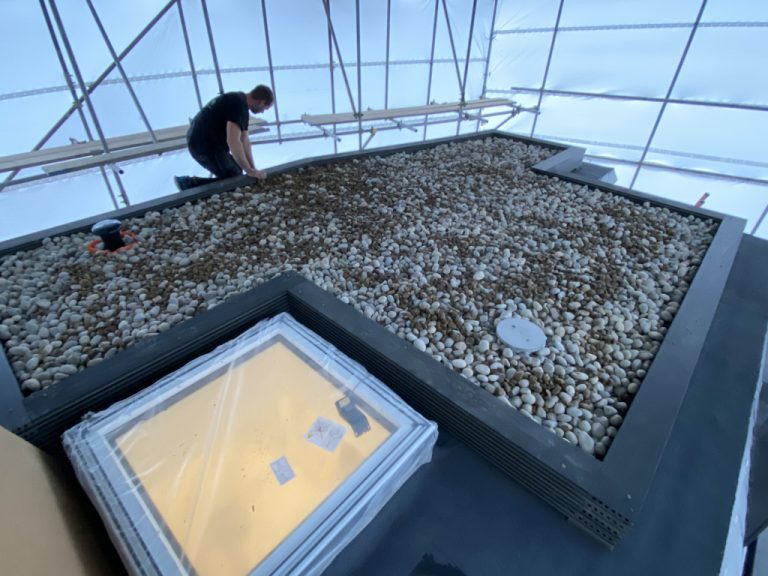
Using its unique RoofBloxx blue roof attenuation system, ACO Building Drainage has combined with Aquality to retrofit a blue roof on an extended building in the middle of London where it was initially thought not possible. Featuring a cobbled walkway and a grand archway and combined with its status as part of Kensington’s ‘Queen’s Gate’ conservation area, Queen’s Gate Place Mews is one of London’s most sought-after and prestigious places to live. Tucked away off a busy high street, the mews is a collection of quaint residential and commercial properties, with many of the buildings boasting lavish, luxury interiors alongside their retained, quintessentially London façades. Part of that collection at Queen’s Gate Place Mews is The Lodge. Recently revamped and extended with a new mansard roof to allow for a second storey, one of the key challenges of the project was meeting the SuDS (sustainable urban drainage system) requirement and managing the water runoff from the roof, as set out by the planning committee from The Royal Borough of Kensington and Chelsea (RBKC). To meet the demand, principal contractors Keystone Construction worked with Aquality and ACO Building Drainage to design and install a unique blue roof attenuation system that sits separately above the roof construction, without adding any risk of water leaking onto the mansard roof itself. Doing what no others can With sustainable drainage as a vital factor of the extension being granted approval by the planning committee, Keystone consulted with a number of blue roof manufacturers and roofing contractors to look at how this could be achieved for this unique project. However, all the suppliers Keystone approached had refused the project and stated that it would be impossible, given the small roof area and the necessity of holding the water on the roof’s surface while controlling the rate at which it runs off.   This is where Aquality and ACO stepped in with an approach that no other manufacturers could offer. Using ACO’s innovative patented RoofBloxx attenuation system, this was adapted into a free-standing retrofit application. Martin Durham, Managing Director and Owner of Keystone Construction said: “We were faced with a very tricky challenge set by the authorities. On one hand, to achieve planning permission, we had to comply by controlling the runoff to prevent flood risks and overwhelming the sewer. However, we couldn’t go forward with a typical blue roof, as holding water on top of a conventional roof invariably adds risk and goes against best practice of roof construction. Water will eventually seep into the roof layers and compromise the structure. “This was a key reason for choosing to work with Aquality and ACO – as their solution was unlike anybody else’s. By being a standalone system, we could install it on top of the roof build up and it works independently of the roof. Alongside the ingenuity of the system itself, we were very pleased with the design service as well as the ease of the installation too.” Designed to Last To help specify the blue roof, Neill Robinson-Welsh, consultant at ACO, worked with Aquality on the hydraulic design of the tank. With a footprint of 13m² and with two layers measuring 30mm each, ACO’s RoofBloxx cell is designed to withstand the ‘once in every 100 years’ extreme rainfall events. It is also intended to account for a 40% climate change and to control runoff at 0.07 litres per second. The system comprises a free draining edge upstand, the inside of which has a drainage layer placed directly on the gradient roof and on the inside of the upstand. A geotextile membrane was then installed on the top of this layer and the roof fall built out to create a level invert for the open tank that forms part of the ACO patented system. A geomembrane was then placed inside and detailed at the edges and around the soil pipe, and ACO RoofBloxx Cell units placed inside the liner to create the attenuation void. A further geotextile was placed over top to prevent fine sediment entering the open tank and then cobble ballast was placed on top. For any rainfall event, water discharges from the tank at the base through the system’s flow restrictor at a controlled rate. The water then runs across and down the sides of the mansard roof into the gutter and away to the sewer system. Easy Installation, Simple Maintenance Installation was completed in under a day thanks to the lightweight yet robust ACO RoofBloxx units that can be manually handled and interlocked in a bonded structure. As well as meeting the SuDS principles, ACO had to ensure the system would be easy to maintain, as with only a 10mm outlet where the surface water drains to, debris could end up blocking the outlet. ACO overcame this challenge by creating an access point to the attenuation tank for regular cleaning and clear out. Robinson-Welsh said: “When we were approached by Keystone and Aquality, we knew that only our ACO RoofBloxx system would meet the brief. Although the roof area is small, the project has been hugely rewarding and satisfying. This project goes to show how versatile the ACO RoofBloxx attenuation system is.” For more about ACO Building Drainage and the ACO RoofBloxx system, please visit: https://www.aco.co.uk/products/roofbloxx Building, Design & Construction Magazine | The Choice of Industry Professionals 

Read More »
Residential falls 43% as contract awards disappoint in February

Residential falls 43% as contract awards disappoint in February

Barbour ABI has released its latest snap analysis of construction contract awards and planning applications for February, noting a disappointing month for awards value. Residential awards were a key driver, with a 43% monthly fall. Residential planning approvals and applications are currently weak, suggesting trouble ahead for housebuilding targets. This is driven by the Bank of England’s decision to increase the base rate to 4% suppressing demand from potential buyers. Increased energy and material costs are also increasing the cost of construction, making residential developments less viable in the current climate. Infrastructure also produced a disappointing month in terms of contracts awarded, despite continued government support for national projects. However, an 85% increase in planning approvals suggests a positive outlook thanks mainly to windfarm and road project approvals, alongside large applications for solar farms and battery storage facilities. Barbour ABI Chief Economist Tom Hall commented: “So far, 2023 appears to be ushering in a more subdued planning environment. Contract awards disappointed with £5.2bn in February, a monthly fall of 30%. The commercially sensitive sectors appear to be on lower paths compared to 2022. “The residential sector, in particular, has seen large falls, with a 43% monthly fall and a third less than the 2022 monthly average. The infrastructure sector produced a rare disappointment with £1.1bn; this was only the second month below the long-run average since Autumn 2021. “More positively, the healthcare sector had another exceptional month with £500m. Three of the last six months have been around the half-billion mark. And education is showing some small improvement, also seeing £500m in February – so far, 2023 is 20% up on 2022. “Meanwhile, planning approvals staged a partial recovery in February thanks to stronger infrastructure, warehousing and healthcare numbers – but commercially sensitive sectors stayed subdued. And planning applications got off to a satisfactory start to the year, again thanks to strong infrastructure and healthcare activity.” Find out more at https://barbour-abi.com/. Building, Design & Construction Magazine | The Choice of Industry Professionals 

Read More »
Construction nearing completion at Leeds shared ownership development, Points Cross

Construction nearing completion at Leeds shared ownership development, Points Cross

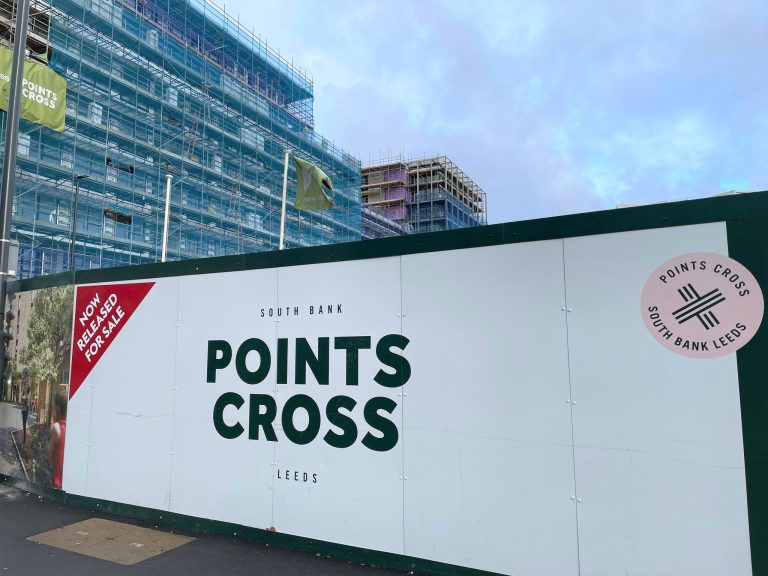
Phase One of Guinness Homes’ shared ownership development, Points Cross, is nearing completion ahead of its projected Autumn 2023 target.  The development brings 193 properties to the Leeds South Bank area and is comprised of one, two, three-bedroom apartments and three-bedroom duplexes, which are now available for reservation.  Shared ownership offers an alternative route to homeownership, particularly for first time buyers, as it allows prospective homeowners to purchase a percentage of a property from the housing developer, with a monthly rental payment to be made on the unpurchased shares.  With prices starting from £89,500 for a 50 per cent share in the property, shared ownership is often  more affordable due to the lower deposit that is required upfront. Over time, owners have the opportunity to purchase more shares in their property, building up the percentage that they own in a process known as ‘staircasing’, which in turn reduces the monthly rental cost to the developer.   Points Cross is strategically located at the edge of Leeds city centre and is only a 10-minute walk from Leeds Train Station. Local to Leeds City College campus and within walking distance of Crown Point shopping centre, the development is ideally situated in the heart of a vibrant community.   Amy Gooder, North Regional Sales Manager at Guinness Homes said:   “We’re very excited to open the first phase of the development to the public and have started to invite the community to view the show home and marketing suite. The completion of Phase One marks a major milestone in the development’s progress, and we’re well on track for our projected completion in Autumn 2023  “Shared ownership can make home ownership more affordable, especially for first time buyers. At Guinness, we’re passionate about being able to help so many people achieve their goal of getting on the property ladder with our properties and we can’t wait to welcome prospective buyers into our latest development at Points Cross.”   The marketing suite and show apartment are now open at Points Cross for viewings between Thursday to Monday 9am-5pm.  For more information about the apartments at Points Cross Phase One, click here.   Building, Design & Construction Magazine | The Choice of Industry Professionals 

Read More »
New £6.5 million footbridge improves accessibility in Peterborough

New £6.5 million footbridge improves accessibility in Peterborough

Civil engineering specialist GRAHAM has delivered a new multi-million-pound footbridge in Peterborough, ensuring that members of the public can continue to cross the A47 easily and safely. GRAHAM was appointed by National Highways, which needed to replace Longthorpe’s old bridge as it approached the end of its life. Now operational, the new 30-meter-long structure (which is located just five meters from the site of the old bridge) was designed to be more accessible for cyclists, pedestrians, and wheelchair users. It was delivered as part of a £250 million package of National Highways projects, geared towards improving safety on the A47 between Peterborough and Great Yarmouth. To ensure no biodiversity has been lost as a result of the bridge build, four hundred new trees will be planted locally to replace those it was necessary to remove as part of the project. Wood chippings produced were donated to a community garden in nearby Ravensthorpe and wood from pallets, which had been used to deliver materials to the site, were also given to the community garden where a volunteer transformed them into a model of a steam train. This was subsequently donated to a school nursery. Andrew Harmon, Contracts Manager for GRAHAM, commented: “We’re proud that National Highways appointed GRAHAM to deliver these essential improvements to the major road network. GRAHAM strives to make a difference to communities, and the new footbridge will improve accessibility in the area, making it safer for everyone to cross the A47.” As part of the project, GRAHAM demolished the old arched concrete footbridge, which was built in the 1970s and failed to meet current industry standards. The new structure was constructed whilst keeping the old footbridge open, complete with reinforced containing walls and pre-cast concrete bridge beams. The new bridge also features shallow access ramps for enhanced accessibility, two abutment walls, CFA piling, and a luminated handrail. Its retaining wall contains Lightweight Expanded Clay Aggregate (LECA), a unique, sustainable material. GRAHAM worked to minimise disruption, managing two full weekend closures, and shutdowns of the A47 for the bridge beam delivery and demolition phase. The old bridge was kept open for the duration of the works, with a minibus service provided for members of the public. GRAHAM’s team could only gain access to the site via the A47, as residents live on either side of the structure. GRAHAM have programmed works in April and May to carry out improvement works upgrading central reservation vehicle restraint system and streetlighting Addressing attendees at the bridge opening, Chris Eglinton, National Highways Project Manager for the bridge build, commented: “This is a fantastic day, and I am delighted for everyone whose hard work and professionalism has got us to this point. “Improving the major road network and making it safer – including how you cross over it – is what we do. This new bridge will make that much easier. Whether you’re on a bike or perhaps pushing a pram, I’m sure people will notice the difference.” Building, Design & Construction Magazine | The Choice of Industry Professionals 

Read More »
MODULHAUS™ Crowned Innovation of the Year

MODULHAUS™ Crowned Innovation of the Year

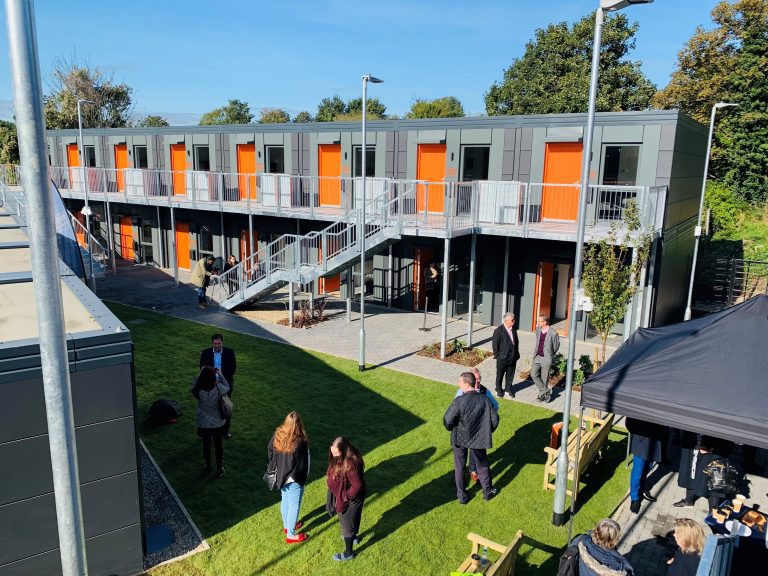
Following a year of unprecedented growth and success in 2022, leading innovators in offsite modular solutions – VOLUMETRIC™ are celebrating after being crowned ‘Innovation of the Year – Wellbeing’ winners, at the 2023 CIBSE Building Performance Awards. The VOLUMETRIC™ team picked up the trophy for SOLOHAUS™ in the MODULHAUS™ range. Designed to help overcome the homelessness crisis, these single person modules offer a safe, independent and innovative interim housing solution which helps former rough sleepers find the stability they need before making the transition to a permanent home. The Chartered Institution of Building Services Engineers (CIBSE) celebrate projects that offer actual, measured performance outcomes through their awards. Finalists were invited to attend the prestigious awards ceremony, held at Park Plaza Westminster Bridge, London. Judges were impressed with the low-energy and cost-efficient modular homes and described MODULHAUS™ as a ‘stand out’ winner of the Innovation of the Year award. The judges praised the initiative commenting: “VOLUMETRIC™ has made a significant contribution to wellbeing, due to the close partnership with Hill Group, to design and manufacture the bespoke single-person homes, with 200 being gifted to homeless charities and councils across the country.” Trevor Richards, Director, VOLUMETRIC™ said: “To gain another award win is a fantastic way to start 2023. It is particularly rewarding that the judges not only commented on the sustainability and performance benefits of the range but also recognised the important role our modular homes have in combating housing shortages in areas of urgent need. The team are delighted and want to thank the judging panel for their positive comments.” The MODULHAUS™ range includes single-occupancy SOLOHAUS™, DUOHAUS™ for double-occupancy, and the latest addition, FAMILYHAUS™ – designed to meet all interim housing needs. All VOLUMETRIC™ homes use sustainable technologies to offer exceptional airtightness for minimal heat loss and to reduce carbon emissions. Modules are BOPAS Certified, LABC Assured and are fully fitted with high-performance, low-energy white goods and are designed to surpass the Future Homes Standard. VOLUMETRIC™ has received significant industry recognition over the past twelve months, having won the Product Innovation Award for the DUOHAUS™ model at the 2022 Offsite Awards. The team also achieved a regional winner title for Best Purpose-built Accommodation at the LABC Building Excellence Awards and the wins culminated at the NCE Techfest Awards where VOLUMETRIC™ picked up the trophy in the Offsite and Modular category. Trevor Richards added: “This has been a period of achievement and growth for VOLUMETRIC™. We have improved our product range and our manufacturing facility. The team has been working with several councils, local authorities, and charities to deliver modular housing across the UK, tackling the housing shortage head-on.” For more information on SOLOHAUS™, DUOHAUS™ or FAMILYHAUS™ go to www.volumetric.co.uk Call 01743 290020 or email info@volumetric.co.uk Building, Design & Construction Magazine | The Choice of Industry Professionals 

Read More »