BDC News Team

NEC Webinar to Tackle the Collaboration Issue

NEC would like to invite all civil engineering, construction and infrastructure project managers to the NEC webinar entitled ‘Enhancing performance through collaboration’ on the 28th of March. The aim of the seminar is to enhance understanding of the cost and time efficiencies of collaborative working and to persuade project managers

Read More »

RCM Offers Rockpanel Exterior Cladding

RCM has announced its latest acquisition – the Rockpanel exterior cladding, part of the Rockwool group, the world leader in stone wall solutions. Rockpanel is now part of RCM’s extensive portfolio of façades offerings. The façade is quick and easy to install, easy to maintain, highly cost-effective, and virtually waste-free.

Read More »

First UK Distributor for Blazecut Fire Suppression System

BlazeCut Fire Suppression System manufacturer, The BlazeCut® Company has appointed Tecserv UK as its first independent distributor for industrial and commercial applications in the UK.   The BlazeCut® fire suppression system is designed to protect small closed spaces at greater risk of fire and operates automatically without any external power

Read More »

Buying Becomes More Popular Than Renting

A new research from AA Mortgages found that one in eight Brits (13%) is looking to move into a new home in the next 12 months, having an average budget of £322,000. The South East region is the most popular place people want to move in, while the East Midlands

Read More »

Retirement Homes in Lewisham

London is home to an estimated two million people over the age of 50 and in order to accommodate the needs of this growing group a new breed of retirement housing has been created. A new retirement development in Lewisham, South London, part of the Christopher Boone development by Season’s

Read More »

Got your GCSE results? Consider a career in construction!

Yesterday, hundreds of thousands of teenagers collected their GCSE results. Not so long ago, I was in their position. Many of them are probably still unsure of what they want to do next. However, I was always adamant I wanted to pursue a career in construction. After collecting my GCSE’s,

Read More »

Housing affordability falls in Scotland for third year in a row

Rising house prices in Scottish cities has led to a further deterioration in affordability with average values up 3% from £176,009 in 2015 to £181,077 in 2016. This has resulted in average affordability in Scotland’s cities worsening in the last 12 months from 5.25 to 5.36 times gross average

Read More »

Brussels launches competition probe into Engie

September 19, 2016 by: Alex Barker in Brussels and Rochelle Toplensky in London Brussels has opened an investigation into Luxembourg’s tax arrangements with Engie, the French utility, as it expands its state-aid clampdown on “sweetheart” tax deals. The European Commission probe comes shortly after it hit Apple with a €13bn

Read More »
Latest Issue
Issue 340 : May 2026

BDC News Team

Negative equity rates down in the US but still affecting one in 10 owners

Negative equity is still affecting more than one in 10 home owners in the United States five years after the nation’s housing market recovery began, new research shows. Home owners who owe more than their homes are worth are nearly equally dispersed among urban and suburban communities in most metros across the country, says the latest report from real estate firm Zillow. But the numbers are falling. Nationally, some 12.1% of mortgaged home owners were underwater in the second quarter of 2016, down from 12.7% in the first three months of the year and below the 14.4% recorded a year ago. A breakdown of the figures show that 13.7% of owners in urban regions are underwater and 11.2% of those in suburban regions while Cleveland and Detroit have the greatest difference between urban and suburban negative equity rates. After the housing bubble burst, nearly a third of home owners in the United States were underwater on their mortgages. As the market recovered, many home owners have gained back the lost value on their homes, freeing them to sell or refinance. In most areas of the country, negative equity is nearly equally spread across urban and suburban areas. In 13 of the nation’s largest metros, the share of urban and suburban homeowners who are underwater is within two percentage points. But some metros are seeing notable gaps in the share of underwater homeowners between urban and suburban areas. Cleveland and Detroit have the biggest difference between negative equity rates in urban and suburban neighbourhoods at 13.6% and 10.8% respectively. In these metros, home values in the main urban centres are trailing behind the overall region’s recovery, and are still well off from their peak levels. By contrast, negative equity is equally common among urban and suburban areas in the Seattle area, where a more balanced recovery and strong economic growth have led to home values near or exceeding their bubble peak levels in urban and suburban areas alike. ‘At its worst, negative equity touched all kinds of home owners in all kinds of markets. The type of community a given home was in, urban or suburban, mattered little. Fast forward a few years, and the relative vibrancy of a given community and how it has performed over the past few years, and not necessarily its location in the city or suburbs, matters a great deal,’ said Zillow chief economist Svenja Gudell. For the first time, all of the largest markets in the country now have negative equity rates below 20% and the data shows that Western metros with strong job and housing markets have the lowest rates of negative equity. Less than 5% of mortgaged home owners in San Jose, San Francisco, Portland, Denver, and Dallas are underwater. Source link

Read More »

Thrings moves further into primary care property with Chocolate Quarter surgery relocation

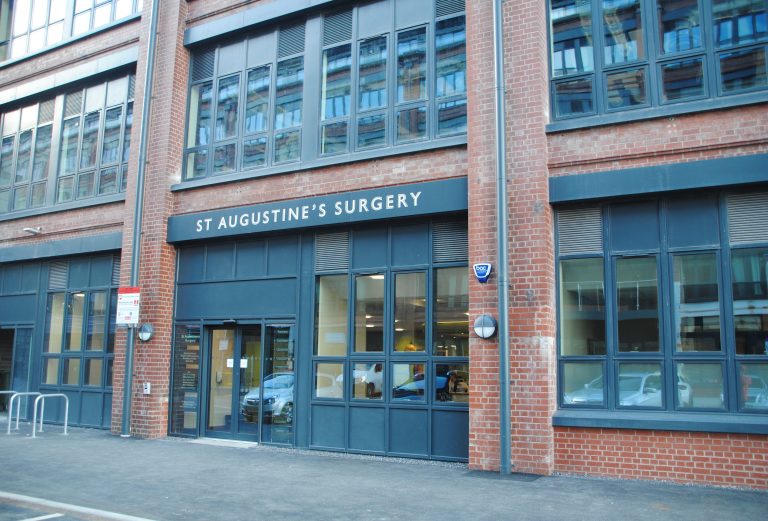
Leading law firm Thrings has acted for St Augustine’s Medical Practice in connection with its relocation to an 8,200 square feet purpose-built premises. The practice moved into the iconic former J.S. Fry & Son’s Somerdale factory in Keynsham – a site best known for producing some of Cadbury’s finest treats. Opened to the public this year, the surgery sits in the large retirement village at the newly named Chocolate Quarter. The £60 million mixed-use development by St Monica Trust, a Bristol charity founded by the Wills family in 1925, includes restaurants, a cinema, swimming pool and spa. Meeting the complex’s demand for healthcare services as well as that of a fast-growing local population, the medical practice’s new premises provide larger and more modern facilities including a state-of-the-art minor surgery suite, 12 consultation rooms and more spacious staff facilities. The practice has over 10,000 patients and has been supported by Bath & North East Somerset Clinical Commissioning Group and NHS England as part of their strategy to strengthen primary care in the region, ensuring its sustainability and resilience into the future. Leading on the transactional property aspects of the move, including the negotiation of the agreement for lease and subsequent lease documentation, was Commercial Property partner Ben Tarrant, also a member of Thrings’ health and care sector team. Supporting Ben was Thrings’ Construction associate, Natalia Sokolov, who advised on the building contract and construction warranties provided by the contractors responsible for the design and building of the premises. Working with St Augustine’s Medical Practice marks Thrings’ continued expansion into the primary care sector in the South West. Ben said: “I am pleased that Thrings was appointed to deal with this significant primary care development, working alongside some of the key players in the sector and helping St Augustine’s Medical Practice to move into these superbly modern premises which offer state-of-the-art facilities to patients and staff. “This development really does reflect the future of primary care, allowing the practice to offer more services that better meet the needs of its patients.” Nick Woodward, senior partner at St Augustine’s, said: “We are delighted with the move to our new purpose-built premises in the Somerdale chocolate factory development site. We feel this is great for our patients and enables our practice to support Keynsham’s ever-growing population. “We have been planning to relocate for over 10 years in order to provide bigger, more modern facilities that can keep pace with the growing local population and increased demand for health and care services.  The government has also been keen to move care closer to patients and our new surgery will allow us to do this. We are also excited by the prospect of closer collaborative working with St Monica’s to develop new resources which can be used by the local population.” Alongside Thrings, GVA acted for St Augustine’s Medical Practice in relation to securing funding, relocation, lease terms on the new premises and project managing the fit-out of the new surgery. Beyond commercial property advice, Thrings provides support to GPs on a wide range of matters including federation structures, new models of care and contracts for the delivery of services. Its health and care team spans the firm’s South West, Hampshire and London offices.

Read More »

NEC Webinar to Tackle the Collaboration Issue

NEC would like to invite all civil engineering, construction and infrastructure project managers to the NEC webinar entitled ‘Enhancing performance through collaboration’ on the 28th of March. The aim of the seminar is to enhance understanding of the cost and time efficiencies of collaborative working and to persuade project managers to abandon the widespread ‘fear of failure’ that prevents the collaborative approach from happening. Simon Vaughan, Managing Director at JCP Consultancy Limited will be hosting the free-to-attend webinar alongside Robert Gerrard, NEC Consultant and NEC Users’ Group Secretary and together will provide tactical advice on creating the right conditions for collaboration between project partners, mitigating risks and achieving the benefits of a more collaborative approach. Additionally, the webinar will also highlight how the industry can effectively plan and prepare for such a change. The call for greater collaboration comes at a time of significant pressure on the industry to modernise following the high profile collapse of Carillion. “While companies are already aware they should support more collaborative attitudes to projects, they don’t always take the steps to do so,” said Simon, who believes that a collaborative approach depends not only on contracts but also on people’s behaviours and mindsets. “The construction and engineering industry often finds itself clinging to long-held traditions and practices that they’re used to, mainly out of a fear of failure. While embracing collaboration may be breaking with tradition for some, it is vital,” he continued. “Integrating the entire supply team for large complex projects can lead to a much deeper collaboration, bound common interests and reduced grounds for dispute, allowing all parties to work together in achieving client objectives, and sharing the risks and benefits of doing so.” The NEC webinar will be taking place on the 28th of March at 1pm and those wishing to register can do so by visit: http://www.neccontract.com/Collaboration.

Read More »

RCM Offers Rockpanel Exterior Cladding

RCM has announced its latest acquisition – the Rockpanel exterior cladding, part of the Rockwool group, the world leader in stone wall solutions. Rockpanel is now part of RCM’s extensive portfolio of façades offerings. The façade is quick and easy to install, easy to maintain, highly cost-effective, and virtually waste-free. The boards could be used as exterior cladding, for applications along the roofline and for building detailing. Each one of them is made from compressed mineral wool from basalt, which is then mixed with a small quantity of organic binder, resulting in a unique board that combines the strength and durability of stone with the workability of wood. The full range contains eleven products for different applications and finishes: Rockpanel Uni, Rockpanel Ply, Rockpanel Colours, Rockpanel Metallics, Rockpanel Chameleon, Rockpanel Brilliant, Rockpanel Woods, Rockpanel Natural, Rockpanel Stones, Rockpanel Lines 2 and Rockpanel Premium. In addition, all boards are available in various colours and are treated with a 4-layer water-based high quality coating that locks in their appearance, colour and finish for years to come. “RCM are delighted to be able to offer Rockpanel façades to our customers. It has added a new dimension to our façade portfolio and compliments the already existing range on offer. Rockpanel is made from natural volcanic rock-basalt and offers many benefits. It is as easy to process as wood, the colours remain stable and the material does not delaminate or rot. We look forward to increasing demand for this exceptional façade,” said Ian Quinton, Managing Director at RCM. RCM has already started supplying the Rockpanel range to various UK based project and is looking forward to expanding its façade range over the coming months. RCM is a major supplier of wall solutions for the UK construction industry, offering building boards, façades, breather membranes, and airtightness solutions. It is a market leader in providing innovative products and solutions designed and tested to meet the demands of the industry.

Read More »

First UK Distributor for Blazecut Fire Suppression System

BlazeCut Fire Suppression System manufacturer, The BlazeCut® Company has appointed Tecserv UK as its first independent distributor for industrial and commercial applications in the UK.   The BlazeCut® fire suppression system is designed to protect small closed spaces at greater risk of fire and operates automatically without any external power source. An extinguishing agent is charged in a storage tube that is installed in the area requiring fire protection. If a fire is detected, the high temperature or the fire automatically melts the storage tube forming a nozzle to release an extinguishing agent. This action can both help to suppress the fire and activate other fire alarm triggers that can help to initiate further emergency responses in order to prevent the fire from spreading.   Tecserv UK’s head office is based in Underwood, on the Notts and Derby border, commenting on the appointment, Grahame Tilley, Tecserv UK CEO said, “BlazeCut Fire Suppression System is highly innovative and quite unique in the UK. We are delighted to have been appointed as the first UK distributor and expect the demand to be very high.”   He continued, “Initially, we will be raising awareness of the availability of this new product to electrical installation companies, IT network providers and automotive manufacturers. However, in time, we hope to sell it on-line to retail customers who wish to install the detection equipment to the engine bay of their own motor vehicles, or in the home adjacent to audio visual equipment or home cinema’s, which could create two or three new jobs at Tecserv.”   BlazeCut® is suitable for the protection of spaces such as electrical switchboards and fuse boxes, IT network cabinets and server rooms, audio-video equipment, vehicle and marine engine rooms and other enclosed spaces at risk of fire.   Commenting Sherwin Barroga, BlazeCut®  Business Manager for the UK and Eire added, “I am delighted to be working with Tecserv to promote our products within UK markets. BlazeCut® products have been fully certified and have undergone rigorous testing to gain CE, ISO and AQAP approval. I am sure that demand will be high for this highly effective and cost-efficient means of suppressing fire within spaces that are at a high risk of fire.”   Tecserv believe that insurers may also view the installation of  the BlazeCut Fire Suppression System as a positive approach to risk management by companies who choose to install them. This may be an additional benefit if this further precaution results in more favourable insurance terms.   The BlazeCut® Company has a global sales head office in Sydney, Australia, a manufacturing facility in Slovakia, Central Europe and worldwide sales and after care support delivered from the above as well as the UK, America, Thailand and South Africa.

Read More »

Buying Becomes More Popular Than Renting

A new research from AA Mortgages found that one in eight Brits (13%) is looking to move into a new home in the next 12 months, having an average budget of £322,000. The South East region is the most popular place people want to move in, while the East Midlands is the region most people want to leave. At the same time, people in Scotland and the North West are the most likely to move within the same region. The study also found that almost a quarter of the population (24%) is planning to move house in the next two years. In addition, more people are planning to buy (46%) than to rent (42%) their next home, while 24% of those currently renting say their next move will involve them buying a home. According to the research, the region people are most likely to be moving to is the South East with 14%, followed by South West with 12% and North West with 12% as other top locations to move to. The region that people are least likely to move to was the North East (2%). People in North West (74%) and Scotland (71%) are most like to be moving house within the region, which is good news for these regions in terms of house prices and for employers in retaining a skilled workforce. To find out the average budget, AA researchers asked people who planned to move into a new house what their budget was. Across the UK, the average budget for movers was £322,829, which ranged from £410,840 for those from London to the lowest £201,269 for people from Scotland. Furthermore, the budget for renters planning to buy was £286,000 compared to £367,000 for homeowners that were looking to move. “For many years, commentary on the property market has been dominated by supply dynamics, where and when houses are coming on the market and how much houses are selling for. Whilst perfectly valid, we have been keen to better understand the demand factors, to see things through the eyes of those planning to move house and to understand more fully their reasons for moving, the extent to which they are fulfilling new ambitions with a move and their own sense of financial mastery over the decisions they are making. It is the people – not the bricks – that make a house a home, and the first findings from our new tracking study suggest as long as people are getting married, changing jobs, having babies – and wanting more for their family – then people will always be moving house,” commented David Searle, Director of AA Financial Services.


Read More »

Retirement Homes in Lewisham

London is home to an estimated two million people over the age of 50 and in order to accommodate the needs of this growing group a new breed of retirement housing has been created. A new retirement development in Lewisham, South London, part of the Christopher Boone development by Season’s parent company One Housing Group, will be opening for sale in March for the Londoners that want to stay part of the communities that they built during their lifetimes. “Most people who come to us have spent a lifetime creating their communities and don’t want to be forced out. Quite often their home has become unwieldy and they want to see it go to a new family while they enjoy a better lifestyle with the sense of security, community and independence our developments offers,” said Nuala Foley from Season. The new retirement living provision includes 30 two bedroom apartments available for purchase by over 57s. Every spacious apartment has large windows and patio doors, creating an abundance of natural light and is fronted by outside patios, balconies or terraces. Moreover, the development is populated with mature trees and connected by spacious covered walkways. In addition, the apartments also have convenient wheelchair storage space and come ready for smart technology to be installed. The prices for the two bedroom apartments start from £530,000, while 26 other properties with two, three and four bedrooms will also be available for private sale at prices starting from £545,000. The Christopher Boone development is located at a short distance from Greenwich Park and 15 minutes from the shops and the traditional outdoor weekend market of Lewisham shopping centre. The sale and marketing manager of the development is SiteSales Property Group, a leading residential property sales and development consultancy in London and the South East. “We’re pleased to be working for Season on this exciting new development, and to be bringing a range of attractive, affordable and convenient homes for the over-57s to Lewisham. With a summer garden, modern appliances and excellent transport links, this development is the perfect place to retire and enjoy this vibrant part of London,” said Eloise Robins, Associate Director of SiteSales Property Group.

Read More »

Got your GCSE results? Consider a career in construction!

Yesterday, hundreds of thousands of teenagers collected their GCSE results. Not so long ago, I was in their position. Many of them are probably still unsure of what they want to do next. However, I was always adamant I wanted to pursue a career in construction. After collecting my GCSE’s, I went on to study engineering at college three days a week, while working part time in mechanics. Then, before I knew it, came my lucky break. CITB offered me a two-week work experience placement at M.B. Roche & Sons. Following a thoroughly successful and enjoyable two weeks, I was offered a full apprenticeship in General Construction and Highways Maintenance. Even though I’ve only been in the role for eight weeks, it’s been the best eight weeks of my life. What I love about construction is that there are so many different aspects to learn. I’m not one to sit around and I like getting my hands dirty, so it’s perfect for me. On my first day, my boss took me through the Go Construct website and I was amazed to see that there were even more job roles and opportunities I wasn’t aware of. Go Construct is a fantastic tool for anyone looking to join the construction industry – I would highly recommend it. At the moment I am working five days a week on site and have already worked on some great projects in my home town of Hull. From September, I will start at Hull College one day a week to work on the theory side of my apprenticeship. I hope to pass and then eventually the ideal scenario would be to start my own business. The opportunities in construction are endless. I was lucky enough to know exactly what I wanted to do from a young age. But if you collected your GCSE results yesterday and still don’t know, I suggest you consider a career in construction! To learn about all the careers construction has to offer – visit Go Construct.  Source link

Read More »

Housing affordability falls in Scotland for third year in a row

Rising house prices in Scottish cities has led to a further deterioration in affordability with average values up 3% from £176,009 in 2015 to £181,077 in 2016. This has resulted in average affordability in Scotland’s cities worsening in the last 12 months from 5.25 to 5.36 times gross average annual earnings, the third successive annual decline in affordability. The data from the Bank of Scotland Affordable Cities Review also shows that on average, affordability in Scottish cities is now at its lowest level since 2009 but is still 12% lower than the peak of 6.12 times earnings in 2008 at the height of the last housing market boom. The overall improvement in affordability across Scottish cities as a whole over the past eight years has been driven by a combination of an increase of 10% in the gross average annual earnings and an average house price decline 3%. Edinburgh is Scotland’s least affordable city where the average house price is 6.12 times the gross average earnings in the city. With an average price of £220,099, houses in Edinburgh are more expensive compared with average earnings than in any other Scottish city. Inverness at 6.03, Aberdeen at 5.72, Dundee at 5.38 and Perth at 5.24 make up the top five least affordable cities in Scotland while Stirling is the most affordable city and the second most affordable in the UK with an average property price of £165,658 which is 4.11 times the gross average annual earnings. Glasgow is the second most affordable city in Scotland and 10th in the UK, with an average house price of £159,580, which is 5.07 times the gross average annual earnings in the city. House price growth has been highest in Aberdeen over the past decade and since 2011 Aberdeen has recorded the biggest price rise of any Scottish city over the past decade and with a gain of 58%, is the only Scottish city to appear in the top 10 UK cities with highest house price growth in fifth place. The report explains that this is as a result of rising housing demand due to the strong performance of the oil and gas sector over most of the period. More recently, Aberdeen has seen a 22% rise since 2011 but prices are not declining due to a decline in the resources sector. ‘The rising house prices over the past three years have resulted in a deterioration in home affordability in Scotland’s cities. Although affordability is at the lowest level since 2009, it is still much lower than the height of the last housing market boom in 2008,’ said Nicola Noble, mortgages director at Bank of Scotland. ‘Aberdeen has recorded Scotland’s highest house price growth over the past decade and more recently during the economic recovery, due to strong performance in the oil and gas sector,’ she added. BOOKMARK THIS PAGE (What is this?)      Source link

Read More »

Brussels launches competition probe into Engie

September 19, 2016 by: Alex Barker in Brussels and Rochelle Toplensky in London Brussels has opened an investigation into Luxembourg’s tax arrangements with Engie, the French utility, as it expands its state-aid clampdown on “sweetheart” tax deals. The European Commission probe comes shortly after it hit Apple with a €13bn bill for back taxes in Ireland, a record-breaking penalty that has enraged Washington and corporate America. The Engie case opens up a new front by targeting the treatment of intra-group financial transactions, which accounts show ran to more than €1bn. The commission alleges that Engie, formerly known as GDF Suez, enjoyed “double non-taxation” because the loans were treated as both debt and equity for tax purposes. Margrethe Vestager, the EU’s competition commissioner, said: “Financial transactions can be taxed differently depending on the type of transaction, equity or debt — but a single company cannot have the best of two worlds for one and the same transaction. “Therefore, we will look carefully at tax rulings issued by Luxembourg to GDF Suez. They seem to contradict national taxation rules and allow GDF Suez to pay less tax than other companies.” The decision to confront a big European champion over its tax dealings in Europe is symbolically important for Ms Vestager as she begins a three-day tour of the US. Apart from showing that she is determined to press on with more investigations, the Engie probe will be used to counter claims that the commission is targeting American multinationals. Engie, which is 33 per cent owned by the French state, said it was co-operating with the probe. Engie has had operations in Luxembourg since 1933 and employs about 300 people in the country, said a spokesperson. Ms Vestager’s drive against tax avoidance has triggered an angry response from Apple, the US administration and corporate America. Some 185 US chief executives described the decision last week as a “grievous self-inflicted wound” for Europe’s economy. As well as ordering Ireland to recover €13bn from Apple, the commission has hit Fiat in Luxembourg, Starbucks in the Netherlands and a number of companies in Belgium. There are also investigations into Luxembourg’s tax arrangements with Amazon and McDonald’s. Jean-Claude Juncker, the European Commission president who was Luxembourg’s premier when the tax deals were struck, has strongly backed the probes into “illegal backroom deals”. “Very often, bank robbers and poachers are among the very best police forces,” he said last week. Margrethe Vestager: © Reuters Brussels’ Luxembourg-Engie investigation turns on several tax rulings — letters confirming the interpretation of tax laws — regarding financial transactions in 2009 and 2011 between four companies in the Engie group. The loans can be converted to equity and bear zero interest for the lender. An FT review of company accounts shows the first 2009 loan to be worth around €1.3bn at the end of 2014. The size of the second 2011 loan is not disclosed in public records. By allowing the loans to be treated as both debt and equity, the investigators argue ”a significant proportion” of profits on the arrangements recorded by Engie in Luxembourg “are not taxed at all”. “This is because the borrowers can significantly reduce their taxable profits in Luxembourg by deducting the (provisioned) interest payments of the transaction as expenses,” the commission said. “At the same time, the lenders avoid paying any tax on the profits the transactions generate for them, because Luxembourg tax rules exempt income from equity investments from taxation.” Sample the FT’s top stories for a week You select the topic, we deliver the news. Source link

Read More »