BDC News Team

RSS tests lifting beams at Crossrail

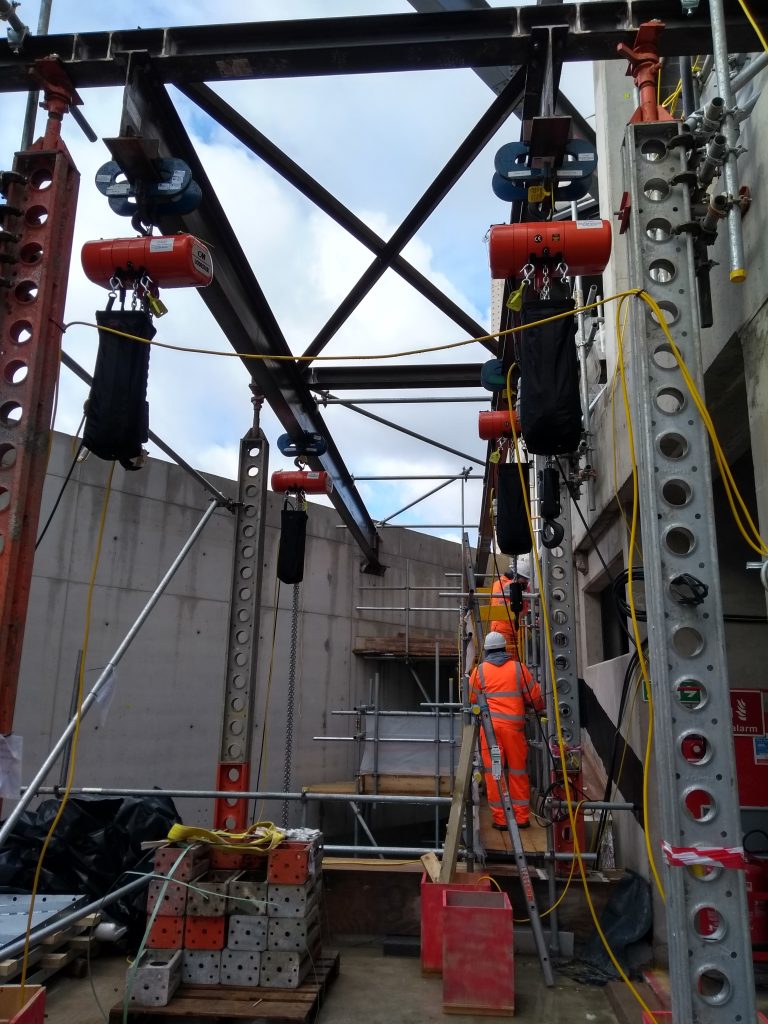
Rope and Sling Specialists Ltd. (RSS) has completed proof tests on three runway beams at the Durward Street shaft site, part of Contract C512, a main station contract worth £110m, awarded as part of Crossrail, Europe’s largest infrastructure scheme. RSS accepted a scope of work to test newly installed, temporary

Read More »

DHF produces comprehensive guide to benefits of complete Timber Doorsets

Door & Hardware Federation’s (DHF) Timber Doorset Group has produced a comprehensive guide to the benefits of ‘factory prepared complete timber doorsets’.  The group actively promotes the commercial and legal benefits of specifying complete timber doorsets, as opposed to purchasing individual components from various sources; they are then made up

Read More »

John Elliott on Land Banking

John Elliott, Managing Director of Millwood Designer Homes, has decided to share his views and discuss the recent Government claims on house builders land banking in the UK. He explains that land banking is usually associated “with the claim that house builders deliberately hold onto land after being granted planning

Read More »

Why Hire an Architect?

Your house is probably your biggest investment, so when you think about refurbishing it or brining a few changes to it, why not hire a professional to help you with it? An architect can make sure that your vision becomes reality and Lonsdale Patent Glazing & Rooflights is giving you

Read More »

NHBC Award Winning Family Owned Luxury Home Developer Bentier Homes

A family owned organisation with a longstanding history of both designing and building luxury homes, Bentier Homes operates out of its Reading head office and provides a leading service for the planning, designing, and creating of exclusive luxury housing developments for resale. Not just looking to build houses, but instead

Read More »

Construction Industry Needs Workforce

The Government has pledged to build 300,000 homes per year to solve the current housing shortage. However, in order to meet the demand for the new building projects, the UK construction industry needs an estimated 400,000 new workers every year until 2021. The shortfall has been blamed on failure to

Read More »

Open Plan Offices Prevent Concentration

A research from Unispace, the global design firm, has revealed that the noise and distraction coming from open plan workplaces are preventing employees from focusing on tasks that require high levels of concentration and minimum disruption. The global study of working practices and workplace design included more than 11,000 workers.

Read More »

Heavy penalty for F-Gas regulation breach

Heavy penalty for F-Gas regulation breach Published:  15 April, 2016 Schneider Electric has been prosecuted for breaching the F-Gas Regulations, after environmentally-harmful sulphur hexaflouride (SF6) gas was released to the air in Stanford-le-Hope, Essex in 2013. The company was fined £3,000 and also ordered to pay £18,368 in costs by

Read More »

UV pipe relining first for Lanes

Lanes Group’s Reline Division has carried out its first project to rehabilitate a pipe using a chemically-resistant UV liner. Above: The relined pipe A team from Lanes installed three UV liners, with a combined length of 200 metres, at a plant run by Solutia UK, part of Eastman Chemicals, in

Read More »

Community group gets £4k boost from Scottish Water wind turbine

Scottish Water has handed an Aberdeenshire community group more than £4,000 funding as a result of its green energy use. The water firm paid £4,206 to Mearns Community Council as a share of the revenues raised from a recently installed wind turbine at its Laurencekirk wastewater treatment

Read More »
Latest Issue
Issue 340 : May 2026

BDC News Team

RSS tests lifting beams at Crossrail

Rope and Sling Specialists Ltd. (RSS) has completed proof tests on three runway beams at the Durward Street shaft site, part of Contract C512, a main station contract worth £110m, awarded as part of Crossrail, Europe’s largest infrastructure scheme. RSS accepted a scope of work to test newly installed, temporary beams at two locations—Levels 1 and 3—that will be used to lower parts for escalator installations. This part of the project principally covers the implementation of internal and external walls alongside new staircases, escalators, and lifts for passengers to get to and from platforms. At Level 3, RSS performed a 4t proof load test on a 3.2t working load limit (WLL) beam, while the assignment at Level 1 involved a gantry system comprising two beams that provide a total lifting capacity of 8t. Each beam had a proof load of 5t applied for the tests, which were covered by Lifting Operations and Lifting Equipment Regulations (LOLER) and will be subject to six-monthly inspections for the duration of the project. The gantry system at Level 1 is used at an incline for moving escalators into place. Graham Dawson, RSS depot manager, explained that the beams were all the same depth and width but different lengths. The beam on Level 3 was a 5.25m x 457 x 152 beam; at Level 1, the first beam was 13m x 457 x 152 and the second was 10.85m x 457 x 152. To conduct the tests, the Level 3 beam was fixed via bolts to a concrete floor, whereas brackets and strong backs combined at the other location, Dawson said. He added: “We had already spec’d the job two days earlier; we were onsite over a three-week period to conduct six-monthly LOLER tests on the project’s lifting gear. Ian [Thompson, RSS engineer / surveyor] and I were asked to complete the work at Level 3 first, as the pulling plate had been installed onto the floor in advance. The plate was used on three beams; we took measurements of the beam for the deflection readings, and checked the fixings to make sure they were correctly installed.” Once an exclusion zone was in place the RSS team installed a trolley, 5t chain block, 5.3t collar chain, and load cell via shackles to complete the test. The Straightpoint (SP) 10t capacity wired load cell was utilised with a Handheld plus reader, while a Leica laser-measuring device read beam deflections. The first deflection reading was taken from the floor to the beam, before various loads were put on the beam and subsequent readings recorded. The process was repeated at Level 1. Upon completion of the tests four electric chain hoists and trolleys, sourced from RSS, were attached to the beam for lowering of the escalators. Connecting the City, Canary Wharf, the West End and Heathrow Airport to commuter areas east and west of London, Crossrail is a major new rail link project designed to provide a world-class, affordable railway with high frequency, convenient and accessible services across the capital. BBMV, the joint venture encompassing Balfour Beatty, Morgan Sindall and VINCI Construction, will be constructing the project in three distinct parts including refurbishment of the existing Whitechapel Station in the Hammersmith & City and District Line cutting, the new station bridge concourse above the East London Line cutting and the new ticket hall behind the retained building fronting on Whitechapel Road.  

Read More »

DHF produces comprehensive guide to benefits of complete Timber Doorsets

Door & Hardware Federation’s (DHF) Timber Doorset Group has produced a comprehensive guide to the benefits of ‘factory prepared complete timber doorsets’.  The group actively promotes the commercial and legal benefits of specifying complete timber doorsets, as opposed to purchasing individual components from various sources; they are then made up on site.  And with an all-inclusive list of benefits now available in an easy-to-download publication, it is anticipated that building professionals such as specifiers, architects and contractors will achieve a wider understanding and recognise the advantages to purchasing a complete product, including those involved in the modular build market. The new DHF publication lists the many benefits of choosing a complete timber doorset, primarily, that these products derive from one single source of supply, are quality-controlled products and will ultimately, result in cost-savings as all necessary items are included.  In addition, using a complete timber doorset is a greener option, as they are engineered for energy efficiency and sustainability. “In everyone’s minds, recent events have brought to the fore, the premise that a poorly fitted door, or one that has had the integrity compromised, can be a liability,” explains DHF Marketing Manager, Patricia Sowsbery-Stevens.  “DHF believes that installing a complete doorset that has been tested as a complete unit, manufactured under a third-party certification scheme, installed and maintained by a company certified to do so under third-party certification, provides peace of mind, reduced installation time and ultimately, costs. “It is a ‘no fuss’ solution, with no need to purchase separate components as everything is included.  In addition, complete doorsets can be installed later in the building process, reducing the risk of on-site damage whilst works are on-going and are a perfect solution for modular builds.  There are so many advantages to purchasing a complete doorset and we believe that DHF’s latest publication will enable a greater understanding of the benefits of selecting these products.”

Read More »

John Elliott on Land Banking

John Elliott, Managing Director of Millwood Designer Homes, has decided to share his views and discuss the recent Government claims on house builders land banking in the UK. He explains that land banking is usually associated “with the claim that house builders deliberately hold onto land after being granted planning permission for commercial benefit or profit, if house prices increase”. However, accusing developers of storing up land is not the right way to tackle the current housing market. Unfortunately, this is exactly what the Government and the Mayor of London have been doing in recent months. John said that together with Millwood they are always on the lookout for more land in Kent, Sussex and further into Surrey. The Secretary of State for Communities and Local Government ordered a review that will look into the gap between planning permissions granted and the number of new homes being built, hoping to find out why more homes are not being delivered. Even though the Government has planned to increase the supply of new homes over the next few years, John believes that “the starting point for this will be delivering more land with consent in the right places. The South East continues to perform extremely well and more Londoners are exiting the capital and moving to the Home Counties. If this is where people want to live and are areas where demand is currently outweighing supply, the Government need to do more to provide the land for house builders to meet strong buyer demand.” What he believes is the reason behind this issue is the amount of “conditions that come with the consent as well as utility companies sometimes taking months before they start work, these are typically the primary causes of the delay, which can drag on, in some cases up to 2 years after planning consent is formally granted.”

Read More »

Why Hire an Architect?

Your house is probably your biggest investment, so when you think about refurbishing it or brining a few changes to it, why not hire a professional to help you with it? An architect can make sure that your vision becomes reality and Lonsdale Patent Glazing & Rooflights is giving you a few more reasons to employ a creative professional. 1. Peace of mind An architect spends many years in education, learning and perfecting the skills required to succeed. All architects are registered with the Architects Registration Board (ARB) and if they follow a further set of requirements, they gain recognition by the Royal Institute of British Architects (RIBA). By choosing a professional you know that the correct insurance and management systems are in place throughout the process. 2. Creative design If you’re looking for an original and outstanding concept, then you must employ an architect. The creative eye of an architect will produce superior designs maximising space, light and symmetry truly capturing the essence of the building and catering to the needs of the homeowner. 3. Efficient budgeting Without the advice of a professional, the costs can easily spiral out of control, so when hiring an architect you not only get someone creative, but you get someone who knows how to be efficient. A good architect will advise you on necessities and suggest cost savings where possible, while making sure that you understand the confusing quotations from builders and suppliers. 4. Risk management Architects can advise on hiring suitable contractors and draft a contract that ensures work is carried out to the required building regulations, high quality and delivered on time. This way, you will avoid unwanted and unexpected extra costs and you will know exactly how much you are investing and when. Lonsdale Patent Glazing & Rooflights encourage the highest standards within the construction industry, ensuring clients receive the best possible experience from beginning until the end of their project. Get in touch for advice about how rooflights can enhance your building and to find your nearest RIBA architect use this useful search tool at https://find-an-architect.architecture.com/FAAHome.aspx.

Read More »

NHBC Award Winning Family Owned Luxury Home Developer Bentier Homes

A family owned organisation with a longstanding history of both designing and building luxury homes, Bentier Homes operates out of its Reading head office and provides a leading service for the planning, designing, and creating of exclusive luxury housing developments for resale. Not just looking to build houses, but instead to create homes for its customers, Bentier Homes comes to the fore by tailor-making properties to suit specific locations whilst also maintaining the highest standard of workmanship across all properties. Through the individualisation of property design, the company effectively delivers homes which fit neatly into communities, add aesthetic value, and effectively contribute to the locality beyond the base provision of housing stock. Also noteworthy for the attention to detail, the finish of Bentier Homes developments is regarded as head and shoulders above the rest. Including everything from the building of the house all the way through to aspects such as landscaping and more, this attention to detail sees the company offering a comprehensive development package which allows for customers to move in with minimal fuss, hassle, or requirement for any additional work. All this, surprisingly, is provided as part of the traditional package, and not an optional extra. Extending the focus on minimal fuss further, Bentier Homes also operates in a responsible way when considering community interaction. Regularly contacting local community representatives not simply before works commence, but also with regular updates if there may be any noise disruption or otherwise, Bentier Homes effectively makes sure that community representatives are engaged with and made fully aware of the works being performed on site. This not only helps in the area of health and safety when larger works are being performed, but also in easing community concerns and has proven very successful. This year, Bentier Homes has also been very successful with Site Manager, Tim Parker winning the Pride in the Job 2017 Award, affording clear recognition of the hard work and standards being maintained by both Parker and the wider company. “It’s a great award for us. It’s something we’ve been working on for some time. Just to be able to say we have a Pride in the Job Award is a great USP for the company, and on a personal note great for my C.V naturally! It’s all positives really,” commented Tim Parker, Site Manager at Bentier Homes. Although this is the first Pride in the Job Award won at Bentier Homes, Parker remains confident that this will be the first in a long line of awards thanks to an overhaul in the company’s organisational strategy, allowing for the company to better showcase excellence in awards such as these. But of course, beyond the change in organisation, the company has also been adamant in maintaining the driving factors behind the company’s renowned level of quality and attention to detail. Commenting on how this has been made possible, he continued: “It’s been key to make sure our trades are up to date and also fully understand all the relevant NHBC regulations. It’s also been about maintaining high standards and consistency of workmanship on site, while maintaining a good working relationship between our trades which is something I always encourage.’’ Of course, Bentier Homes has been with its trades the entire time in ensuring that standards are continually improving. On a day-to-day basis, the company strongly encourages its trades to take note of where challenges or issues may be arising so that they can do things differently next time, whilst on a longer-term basis the organisation also involves trades with constructive meetings and training on best-practices. The combination of these two elements has, of course, allowed for a continuous cycle in improved performance from both an efficiency and quality workmanship perspective. This has only been successful thanks to the level of passion which Bentier Homes’ trades put into their work, as well as their commitment to working closely together for the benefit of the customer. Indeed, the cooperation and collaboration between trades and management have been the driving force behind the success, as Parker clarifies: “It’s a massive team effort and although I am at the forefront of it, it’s about that teamwork really that ensures a great home is handed over.” Going forward, Bentier Homes looks to strengthen its relationship with the NHBC further. Having enjoyed the success of the first award, Parker is determined to win further awards with the NHBC and has a number of projects in the pipeline which it will be putting forward for such awards.


Read More »

Construction Industry Needs Workforce

The Government has pledged to build 300,000 homes per year to solve the current housing shortage. However, in order to meet the demand for the new building projects, the UK construction industry needs an estimated 400,000 new workers every year until 2021. The shortfall has been blamed on failure to replace employees who have left the industry due to retirement or career change. Even though it seems like the new generation should take over the vacant positions, the youngsters no longer view construction as a desirable career choice. A survey conducted by the Construction Industry Training Board that asked a group of 14 to 19 year olds which careers interested them, found out that construction scored 4.2 out of 10, because young people see it as ‘being outdoors and getting dirty’. For this reason, the construction industry should start working on its image and rebuild the way the young generation sees it. A good start would be educating the workforce of tomorrow on the innumerable benefits of a construction based career. Training is also an option, particularly for those looking for an industry recognised qualification as an opportunity and career enhancer. The training academy of Baumit offers bronze, silver, and gold courses that can be tailored to suit individual or group needs. They are a practical experience with ‘real life’ challenges that can be encountered in the workplace. The silver and gold courses take place over two days, which gives candidates more time to absorb and reflect on the information and skills they’ve learnt. An extra thing the academy offers is support even after the course is finished. Those that complete the bronze to gold course journey will be equipped with an industry qualification and will become a Baumit approved partner, gaining access to a host of other benefits. Those wishing to pursue a career in construction should know that there has never been a better time to do it than it is now. The country needs people interested in the construction industry.

Read More »

Open Plan Offices Prevent Concentration

A research from Unispace, the global design firm, has revealed that the noise and distraction coming from open plan workplaces are preventing employees from focusing on tasks that require high levels of concentration and minimum disruption. The global study of working practices and workplace design included more than 11,000 workers. 15% of the respondents said that noise was the primary cause of inefficiency during working hours, a number that has risen by 4% in the last 12 months. Other factors included the lack of quiet areas (13%), the lack of privacy (9%), and the temperature and air quality in the office (7%). “Our research shows that the vast majority of our time at work is based on the need to ‘focus’ — more than 60% of the working day,” said Simon Pole, Unispace Global Director, Design. “The workplace has changed radically in the last few years, but it may have gone too far now. Collaboration is obviously a central tenet of many modern spaces and in this environment, creating a fusion of ideas and socialisation is key. But for the majority of everyday business tasks, workers need space for focus, calm and solitude.” The research also found that 60% of the average day is devoted to individual task focused work, while 25% was dedicated to collaboration and 7% to socialising. The participants indicated that even routine tasks, such as filing, creative work, and training, take up more time (10%) than collaborative tasks such as group meetings, presentations, and audio conferences. The most popular type of workspace (31%) is the open plan offices. “Open, collaborative work environments promised us increased employee performance, higher levels of productivity, happier employees and happier CFOs — as these environments were typically more efficient,” explained Albert De Plazaola, Unispace Global Principal, Strategy. However, there needs to be more thought put into how to elevate the experience of the employees, considering the type of jobs they do. “For example, progressive workplace designs for social media or tech companies may not be appropriate or culturally suitable for professional services firms. Similarly, napping pods and zen lounges may do wonders for overworked software engineers, but would miss the mark entirely if placed in the office of a conservative management consulting firm,” concluded De Plazaola.

Read More »

Heavy penalty for F-Gas regulation breach

Heavy penalty for F-Gas regulation breach Published:  15 April, 2016 Schneider Electric has been prosecuted for breaching the F-Gas Regulations, after environmentally-harmful sulphur hexaflouride (SF6) gas was released to the air in Stanford-le-Hope, Essex in 2013. The company was fined £3,000 and also ordered to pay £18,368 in costs by Basildon Magistrates Court. The case concerned 15kg of SF6 gas, which was released to the air from high-voltage switchgear being installed at the London Gateway Port. Following the installation, busbars were found to be faulty and needed to be removed from within the circuit breaker. The gas was released when this part of the system was being removed. SF6 has the highest global warming potential of any gas being targeted under climate change legislation. The emission of 1 kg of SF6 is equivalent to an emission of 22,800 kg of CO2. Rooma Horeesorun from the Environment Agency, who led the prosecution, described SF6 as a “highly potent” fluorinated greenhouse gas that would remain in the atmosphere for generations. She added that the environmental damage caused was equivalent of flying a 737 jet airliner from Heathrow to Sydney, Australia, and back three times over. Schneider Electric was subcontracted by the project’s principal contractor to install the switching gear. Schneider used its own subcontractor to remove the busbars, but that company – Metricab Power Engineering Ltd – was not informed and did not realise that the switchgear had been filled with SF6 gas. Schneider Electric reported the gas’ release to the EA and the Health & Safety Executive.  “It is always disappointing to hear of any incidence of environmentally harmful gas being released to atmosphere,” commented Tim Rook, technical director of the Building Engineering Services Association (the BESA). “Our industry has made real progress in managing recovery and reclamation of f-gases in recent years, thanks to initiatives such as Refcom, the mandatory refrigerant handling certification scheme,” he said. “This episode reminds us of the importance of remaining vigilant, and it is reassuring to see that the government agency charged with enforcing the F-Gas Regulations is able to follow up reports of wrongdoing with punitive action.” Mr Rook believes that the policing of the F-Gas Regulations is under-resourced, and that government cannot depend on companies to do the right thing and report any errors themselves. “There can be little dispute that there are all too many unreported f-gas venting episodes going on out there, and that the EA needs much greater investment to step up its monitoring work,” he added. It has been a legal requirement since July 2009 for all businesses that install, maintain or service stationary equipment containing or designed to contain f-gas refrigerants to obtain an F-Gas Company Certificate. Refcom, which was set up by the BESA in 1994, was appointed by the government to provide this mandatory service for the refrigeration and air conditioning sectors. It works with the EA to ensure that the regulations are properly enforced and that satisfactory reclamation is carried out – and now accounts for more than 80% of the total UK refrigerant handling market. Pictured: BESA technical director Tim Rook Source link

Read More »

UV pipe relining first for Lanes

Lanes Group’s Reline Division has carried out its first project to rehabilitate a pipe using a chemically-resistant UV liner. Above: The relined pipe A team from Lanes installed three UV liners, with a combined length of 200 metres, at a plant run by Solutia UK, part of Eastman Chemicals, in Newport, South Wales. It was also the first time that Lanes Group’s supplier, Reline Europe – one of the world’s leading pipe relining technology companies – had supplied a UV liner to provide chemical resistance in the UK. Solutia UK engineering manager David Davies said: “The lining solution identified by Lanes Group was ideal for us, given our production schedule and the limited window of opportunity we had to complete the project.” Chemically-resistant pipe liners are usually installed using the hot cure in place pipe (CIPP) technique, where pressurised water is heated to nearly 100 degrees centigrade to harden the resin-impregnated liner. But there was not time for this method here. Damian Tranter, business development manager for the Lanes Group Reline Division, worked with Reline Europe to develop a technically robust proposal for using UV relining technology, which would have a shorter installation time – and also be cheaper. Solutia UK agreed to the proposal and also commissioned Lanes Group to rehabilitate and spray-line 10 manholes that service the pipeline. Damian Tranter said: “The fact that this is a first for us and for our supplier reflects the rarity of using UV lining to rehabilitate pipes to provide chemical resilience. “However, our success, and the benefits UV lining delivers, demonstrates how this is a viable pipe rehabilitation option for our other clients in the chemical processing industries.” The 600mm diameter pipe being refurbished takes surface water from the site to a surface water holding tank before being pump to the onsite effluent treatment plant. The refurbishment was commissioned to ensure the structural integrity of the drainage system was sound and to eliminate the potential for any infiltration or exfiltration of contaminated water. Lanes Group provided Solutia UK with detailed data, supplied by Reline Europe, to show the chemical resistance of the fibre glass liners and the specialist vinyl ester (VE) resin selected for the project. Three liners impregnated with the resin were inserted end-to-end, one 104 metres long, the second 28 metres long and the other 97 metres. A UV light array was then sent through the pipe to cure the resin. Damian Tranter said: “The UV light array was taken through the pipe at less than half normal speed, because the properties of the VE resin mean it takes longer for the light to penetrate the liner and cause the exothermic reaction needed for the curing process. “Even with the extra time taken, each UV liner was installed during one 12-hour shift, whereas a hot cure liner would have taken at least 20 hours to install.” A system of over-pumping, with 14 pumps, was needed to control water flows during the lining and manhole rehabilitation process, which was completed in 14 days, including weekend working. With conventional hot cure lining, the water used to cure the liner becomes contaminated with styrene, and must be disposed of at an authorised waste site.     This article was published on 5 Feb 2016 (last updated on 5 Feb 2016). Source link

Read More »

Community group gets £4k boost from Scottish Water wind turbine

Scottish Water has handed an Aberdeenshire community group more than £4,000 funding as a result of its green energy use. The water firm paid £4,206 to Mearns Community Council as a share of the revenues raised from a recently installed wind turbine at its Laurencekirk wastewater treatment works. The payment is front-ended for the community – the sum they would be expected to earn from the turbine at the plant over the next 20 years. The 80kW turbine was installed by Scottish Water Horizons, a subsidiary of Scottish Water which aims to drive forward the company’s green agenda. It generates 160,000kWh per year and has the potential to offset around 60 per cent of the treatment works’ electricity consumption per annum. Scottish Water Horizons head Andrew Macdonald said: “We are pleased that we have been able to share the benefits of this renewable scheme to improve facilities and wellbeing for the local community. “Investing in renewables supports economic growth, helps Scottish Water to become a low-carbon business and delivers tangible benefits for local communities over the longer term. “The turbine at Laurencekirk is one of several renewable technologies now operating on our assets, with several treatment works now generating at least all, and in some cases more, of the energy they need to operate.” Scottish Water’s general manager of energy Chris Toop said: “Scottish Water really tries to put the community at the heart of everything we do, both in terms of the early stages of consultation, in terms of whether it’s appropriate to put these technologies on our sites, and as we work through planning and implementation of the scheme and its great there is now the benefit to the local community at the end of that to be able to invest as they so wish.” Scottish Water is one of Scotland’s largest single users of electricity. It requires approximately 445GWh per year. In the last two years, the company has doubled the amount of renewable energy which can be generated at treatment works and in water mains to more than 50GWh. Source link

Read More »