Cristina Diaconu

SES Wins Contract with Leeds Beckett University

A major M&E contract at Leeds Beckett University has been landed by SES for a new £45 million sports hub. Delivered by contractor Galliford Try, the project will involve building a new state-of-the-art Carnegie Teaching and Research Building, which will house the Carnegie School of Sport, located at the Headingley campus. SES

Read More »

Construction Begins on Paddington Hotel

McAleer & Rushe has secured the contract for the new £82 million hotel and aparthotel development in Paddington, with construction work due to begin shortly. The new 620-room development is the final stage of the Paddington Basin Masterplan. The development will be built on an existing two-storey basement and feature

Read More »

Partnership to Bring ‘Green’ Initiatives to Hotel

Five-star lifestyle hotel Andaz London Liverpool Street, is launching a unique collaboration with world leading eco fashion duo VIN + OMI, to further the hotel’s sustainability efforts and support its vision to operate in an environmentally conscious way. This will be achieved through various creative initiatives to reuse and recycle

Read More »

Cambdrige Continues to Attract Science and Tech Firms

Bidwells’ latest analysis indicates Cambridgeshire remains a magnet for science and technology companies that are looking beyond the current Brexit uncertainty. Their analysis of the Cambridge office and laboratory market finds that 0.6 million sq ft of new space will be complete during the first half of 2019. This is the

Read More »

London School of Economics Celebrates Milestone

A project milestone has been achieved by the London School of Economics and Political Science (LSE) on its new Marshall Building. After the demolition of the existing structure at 44 Lincoln’s Inn Fields, Mace commenced construction work on the redevelopment project. In order to improve the impact, effectiveness and appeal

Read More »

16th Century Farmhouse Restored

A 16th century Grade II Listed former farmhouse in East Suffolk has been restored and it includes subsequent 17th and 19th re-modelling. With a primarily oak timber frame, the construction features a double jettied gable at the first floor with brick noggin exposed in Flemish bond. A ground floor oriel window

Read More »

Encasement Provides Solution for Catholic College

‘Forma’ and ‘Vecta’ decorative metal casings from Encasement have been used on a project at Saint Richard Reynolds Catholic College in Twickenham to conceal structural steelwork around a new courtyard walkway, as part of its recently opened £14 million teaching block. Designed by DHP Building Design Consultants and built by main

Read More »

Cameron Butcher Wins House Build Project

Cameron Butcher has been awarded a unique house build project to create 33 luxury homes in the centre of the West Midlands. The developments is modern and highly individualised, mixing six different traditional design features with all the contemporary conveniences one would expect in homes of this calibre. Sizeable aluminium framed

Read More »

Digital Will Win the Design of Future Properties

By Aleš Špetič, CEO and co-founder of Klevio When you consider the design of modern buildings, you probably don’t think of the computer. The PC was invented in the 1970s as a way for workers to be more productive. It ended up changing the way that modern workplaces were designed. Miles

Read More »

Shakespeare North Project Receives Funding

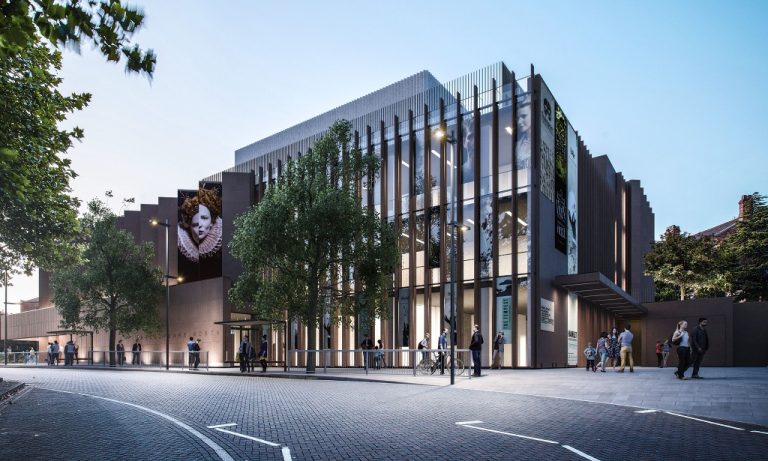
Major public realm improvements and upgrades around Prescot train station are due to commence, along with walking and cycling routes to the £26 million Shakespeare North theatre. The 350-seat, 30,000 sq ft Jacobean court-style theatre also includes a study centre, education, and exhibition space. Knowsley Council is set to formally

Read More »
Latest Issue
Issue 338 : Mar 2026

Cristina Diaconu

SES Wins Contract with Leeds Beckett University

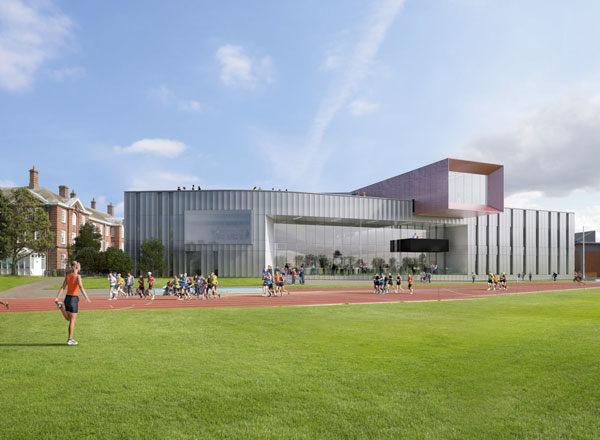
A major M&E contract at Leeds Beckett University has been landed by SES for a new £45 million sports hub. Delivered by contractor Galliford Try, the project will involve building a new state-of-the-art Carnegie Teaching and Research Building, which will house the Carnegie School of Sport, located at the Headingley campus. SES will design and install a full range of building services on the development, which will include a hypoxic laboratory, a health and wellbeing studio, an indoor 60m sprint track for performance training and analysis, a roof walker track and terrace, and an enhanced strength and conditioning space as well as changing and recovery facilities. “Having recently had the privilege of working with Galliford Try on a number of complex higher education facilities, such as the award-winning refurbishment of the University of Leeds’ world-class School of Chemical and Process Engineering, we have amassed a great deal of knowledge and experience of the sector,” said SES business director North and Scotland, Steve Joyce. “To be involved with such an innovative building as the Carnegie Teaching and Research Building further cements our excellent working relationship with the contractor. It also presents a further opportunity for SES to demonstrate its BIM Level 2 experience to great effect,” added Steve. The Carnegie Teaching and Research Building is scheduled for completion in Autumn 2019.

Read More »

Construction Begins on Paddington Hotel

McAleer & Rushe has secured the contract for the new £82 million hotel and aparthotel development in Paddington, with construction work due to begin shortly. The new 620-room development is the final stage of the Paddington Basin Masterplan. The development will be built on an existing two-storey basement and feature a 373-bed Premier Inn and a 247-bed Staycity aparthotel across 19 floors. The development will also deliver 27,000 square feet of social and community floorspace. “We are looking forward to working as development partners with Concierge 3 and all shareholders in delivering this exciting project within the wider Paddington regeneration masterplan. Our experience in delivering high quality mixed-use buildings will ensure this project is a real success and is currently our second major development in Paddington Basin,” said Emmett McGinley, Commercial Director, McAleer & Rushe Contracts UK. Led by developer Concierge 3, a consortium of BSW Land & Property, Staycity and The Pickstock Group, the scheme is the final stage of the Paddington Basin Masterplan and part of a wider investment which has seen new offices, shops, homes and leisure facilities being built over the last number of years revitalising this unique location. The new hotel-aparthotel hybrid will open its doors in late Summer 2021.

Read More »

Partnership to Bring ‘Green’ Initiatives to Hotel

Five-star lifestyle hotel Andaz London Liverpool Street, is launching a unique collaboration with world leading eco fashion duo VIN + OMI, to further the hotel’s sustainability efforts and support its vision to operate in an environmentally conscious way. This will be achieved through various creative initiatives to reuse and recycle waste. VIN + OMI are well known for their innovative approach to eco-fashion and have received international acclaim for their sustainable practices and circular social impact projects. Their clothing is regularly seen on global icons and influencers such as Michelle Obama, Lady Gaga and Beyonce. They have been working with Andaz London Liverpool Street since 2016 and have hosted a number of their eco fashion shows at the hotel. ”We are proud to have a long term relationship with the Andaz London. Choosing a partner venue for our shows is a carefully thought out process. The Andaz’s creative and eco approach makes them a perfect partner” said VIN+OMI. Over the last couple of years, Andaz London Liverpool Street has been active in making daily changes to operational procedures, from energy saving practices to the elimination of plastic and the reduction of food waste, transitioning to more sustainable processes and biodegradable alternatives. In 2018, Andaz London Liverpool Street was also awarded for its efforts by the Association of Energy Engineers for their Monitor & Save project. This was achieved on the back of their Western Europe Region Energy Project, which kicked off in 2016 and, within a year, saved 21% of electricity and 27.1% of gas consumption. 2019 will see the implementation of a number of environmentally-conscious procedures and the hotel will encourage guests and staff to become more aware and sustainable. The collaboration with VIN + OMI is another step to introduce a ‘green’ mindset all around. “We love VIN+OMI’s passion for sustainability and the incredible creativity they bring to address environmental issues. We feel they are the perfect partner to support the hotel in its mission to become more sustainable. Through this collaboration, we aim to raise more awareness of the issue and educate our team and guests in reducing waste, focusing on small steps every day across all areas of the business,” said Amanda Richter, Director of Food & Beverage at Andaz London Liverpool Street.

Read More »

Cambdrige Continues to Attract Science and Tech Firms

Bidwells’ latest analysis indicates Cambridgeshire remains a magnet for science and technology companies that are looking beyond the current Brexit uncertainty. Their analysis of the Cambridge office and laboratory market finds that 0.6 million sq ft of new space will be complete during the first half of 2019. This is the highest level of new supply in over a decade. This perhaps sounds alarm bells given the apparent slowdown in demand for labs and offices combined to 1.154 million sq ft at the end of 2018. However, despite Brexit fears, the UK’s BioTech sector continues to thrive and Cambridge has been at the centre of growth in the UK’s BioTech sector over the past five years. Investment in the city continued to flood into industry, with £1.6bn raised in the first eight months of 2018, already 33% ahead of the figure raised over the whole of 2017. University of Cambridge tops the list of capital raised by spin out companies as research undertaken by Global University Venturing has revealed that the University of Cambridge has raised the greatest capital investment from its spinout companies amongst the world’s universities. Between 2013-17, spinouts from the University of Cambridge raised £1.75bn, 20% more than the second place Stanford University £1.43bn. University of Cambridge Enterprise reported a further £300m investment to 16 spinouts in 2018, although the final year figure is expected to be in excess of this figure. New Digital Strategy for Cambridge funded by CPCA Cambridge & Peterborough Combined Authority has provided initial funding to Cambridge Wireless and Anglia Ruskin University to develop an integrated and impartial digital strategy, helping to promote the region’s strong technology sector. Cambridge already has a significant representation in the growing Artificial Intelligence sector, with Apple, Microsoft, Amazon, ARM and Samsung all having AI research teams based in the city. According to Bidwells’ data, 85% of space is pre-let or already under offer. This, in theory, leaves a total of 91,000 sq ft available during 2019 with an expectation of more than 50% of space to be let shortly after practical completion. This pre-letting activity, combined with a slight increase in take-up in 2018 compared with 2017, underpinned a further increase in rents. During the second half of 2018 the prime office rent rose to £41.50 psf, with increases also seen for all grades of second hand space. The prime rent for laboratory space also rose in 2018 to £34.50 psf. These latest lettings figures are consistent with the findings of research undertaken by Bidwells on the location and property requirements of major R&D companies. The research, undertaken by YouGov on their behalf, underlines the importance of location. The ability to recruit highly skilled staff, combined with the requirement to be near the centre of research ideas and innovation are the determinants of location for such businesses. With a global outlook these companies will consider location from an international perspective and therefore are compelled to be exacting in their requirements.

Read More »

London School of Economics Celebrates Milestone

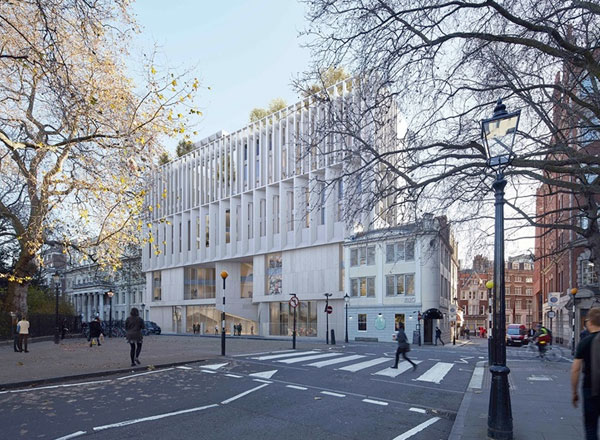
A project milestone has been achieved by the London School of Economics and Political Science (LSE) on its new Marshall Building. After the demolition of the existing structure at 44 Lincoln’s Inn Fields, Mace commenced construction work on the redevelopment project. In order to improve the impact, effectiveness and appeal of private contributions to the public good, the new building will contain The Marshall Institute for Philanthropy and Social Entrepreneurship, founded by Sir Thomas Hughes-Hallett and Sir Paul Marshall. The new building will also house the academic departments of Accounting, Finance and Management, teaching facilities, as well as sports and arts rehearsal facilities including a Sports England standard multi-purpose sports hall for use by staff and students. “This is a real milestone for the project, and we look forward to working with Mace over the next two years to turn our plans for the Marshall Building into reality. The demolition of the existing buildings has gone very well, and our success to date is a reflection of all of the hard work put into the project so far by the entire team,” said Kenneth Kinsella, Director of Capital Development for LSE. This is the second collaboration between Mace and LSE, which have previously worked on the Centre Buildings Redevelopment, due to be completed this year. “Over the last four years we have built a fantastic working relationship with LSE, first with the redevelopment of the Centre Buildings and now with the Marshall Building. They are a fantastic client, always pushing us to be more ambitious; and we are extremely pleased that they have chosen Mace to deliver the second phase of this very important project. The Marshall Building will be an iconic addition to the LSE’s campus, and we have been working closely with the architects, Grafton, to bring this ground-breaking design to life,” added Terry Spraggett, Managing Director of Public Sector Construction for Mace. The Marshall Building project is expected to be completed in 2021.

Read More »

16th Century Farmhouse Restored

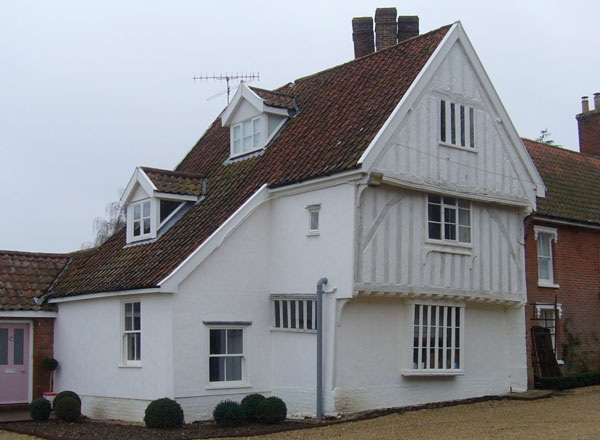
A 16th century Grade II Listed former farmhouse in East Suffolk has been restored and it includes subsequent 17th and 19th re-modelling. With a primarily oak timber frame, the construction features a double jettied gable at the first floor with brick noggin exposed in Flemish bond. A ground floor oriel window is flanked by pargeted render panels and the outshot was rendered with partial parge work to the gable still visible. Exposed timbers and brickwork to the gable had been re-pointed in recent years and painted with heavy modern paint, which led to the areas showing sign of distress and a sorry appearance. Render to the gable, return wall and outshot had been patch repaired over the 20th century with heavy impervious cement render and various forms of filler, along with modern paint which was leading to the degradation of the structure. During exposure extensive decay to supporting laths and de-lamination of render coats, some resultant from water penetration and previous repairs resulted in render being removed. To fix the defect, careful measure and recording of the remaining detail and dimensions of parge work was undertaken so that templates and tools could be manufactured by a local engineer to replicate previous design and layout. The heavy paint to the exposed timber gable was removed with a chemical stripper, which was manufactured and supplied by Strippers Paint Removers, and cement pointing to brick noggins was carefully removed and re-pointing undertaken with one of Anglia Lime Company’s readymixed lime mortar mixes along with localised brick repairs with reclaimed Tudor reds. External cement render was removed and period render was found to be in a friable condition with supporting laths rot affected and fixing nails corroded. The previous rendered walls were then re-lathed and applied with ALC’s Fibrechalk and laid to a smooth finish. The gable end wall to outshot was re-dressed with parge work consisting of a continuous rope in borders, whilst panels to either side of the ground floor oriel window of the main gable was stamped with a pricked indent with beaded surround to match existing profile. To finish, and preserve it was all then painted with ALC’s Original Limewash. The restoration was completed by Rickards Period Plastering Ltd.

Read More »

Encasement Provides Solution for Catholic College

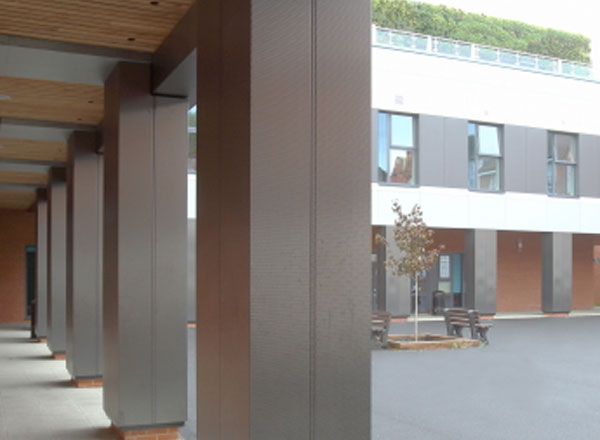
‘Forma’ and ‘Vecta’ decorative metal casings from Encasement have been used on a project at Saint Richard Reynolds Catholic College in Twickenham to conceal structural steelwork around a new courtyard walkway, as part of its recently opened £14 million teaching block. Designed by DHP Building Design Consultants and built by main contractor, Graham Construction the project involved the refurbishment of the existing Edwardian structure, alongside the construction of The Elizabeth Building to create a modern learning environment for pupils. The Elizabeth Building includes primary and secondary classrooms, a hall, library and sixth form centre. The construction of covered walkway along two sides of the college’s main ‘quad’ courtyard were an integral part of the new facility. It also incorporates 14 structural support columns, which are concealed by Encasement’s rectangular ‘Forma’ decorative metal column casings and matching ceiling soffits and fascias. Each 650mm x 990mm weatherproof column casing stands 3.74metres high and is manufactured from 1.5mm thick aluminium, which incorporates a Rimex ‘Black Pearl’ finish that combines a highly polished surface with a pattern of small circular indentations, making the casings both durable and aesthetic. In addition to the column casings, the walkway also includes almost 70 metres of aluminium fascias and soffits at ceiling level, which use the same Rimex Black Pearl finish to conceal building services and drainage pipework. All casings solutions were not only manufactured and supplied by Encasement, but were also installed by the company’s specialist installation team. “The Black Pearl finish was an excellent decision for this project as it helps provide interest by breaking up the large surface areas of the column casings. Also, the pattern helps provide some additional rigidity to the aluminium, making it even more durable and ideal for high traffic use. The same applies to the ceiling soffits and fascia, but the main advantage of using the same material is the it integrates with the column casings and provides a uniform finish to this excellent project,” commented Encasement’s Managing Director, Martin Taylor.

Read More »

Cameron Butcher Wins House Build Project

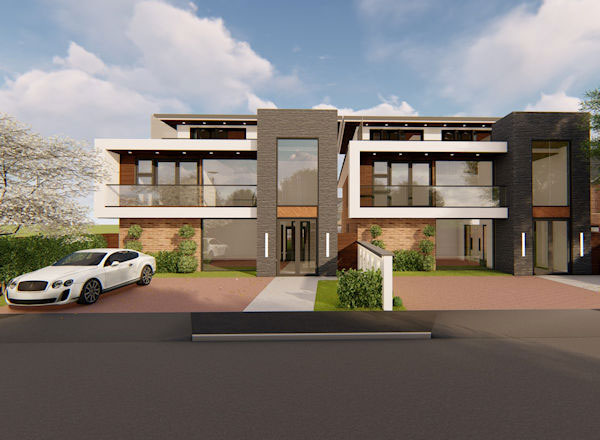
Cameron Butcher has been awarded a unique house build project to create 33 luxury homes in the centre of the West Midlands. The developments is modern and highly individualised, mixing six different traditional design features with all the contemporary conveniences one would expect in homes of this calibre. Sizeable aluminium framed windows allow natural light to pour into the living areas, creating a warm and inviting atmosphere. Many other premium internal features are also included, such as stylish carpets; an integrated alarm and CCTV system that can be controlled via an App; tile and wood laminate flooring; underfloor heating throughout; tailored wardrobes; procelanosa kitchens with Krion worktops; NEFF appliances; and automated heating, lighting and blinds that can be remotely controlled with an App. “Our desire to build homes that will stand the test of time and still look fantastic for years to come stems from our guiding principle. A principle that emphasises exceptional design and superior craftsmanship, all the while ensuring each home ticks boxes for value and location,” said Gulraiz Sidique of Architecture and Interior Design. Cameron Butcher are devoted and reliable house builders, bringing with them over 30 years of experience working on house building projects of varying sizes and complexities. Project manager Shaun Bergan oversees all matters and is responsible for maintaining a high standard of quality across each of the luxury homes. Shaun is aided by site manager Jon Taylor and site assistant Carmen Bolea – two staff members who are dedicated to their client’s needs and committed to creating homes that elevate their owner’s quality of life, providing an unparalleled living experience in the West Midlands in the process. “We believe that quality should never be compromised and as house builders undertake stringent control checks and monitor the entire building process; from the moment we break ground right up until the final piece is put in place,” commented Steven Butcher MD of Cameron Butcher.

Read More »

Digital Will Win the Design of Future Properties

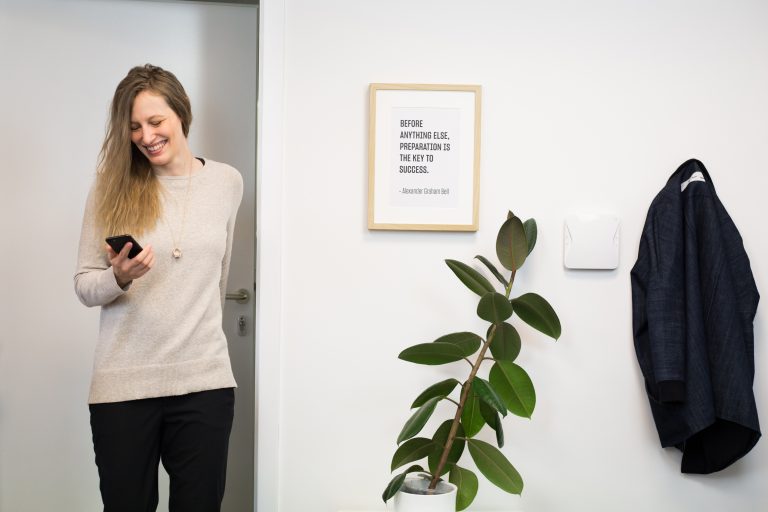
By Aleš Špetič, CEO and co-founder of Klevio When you consider the design of modern buildings, you probably don’t think of the computer. The PC was invented in the 1970s as a way for workers to be more productive. It ended up changing the way that modern workplaces were designed. Miles of copper and fibre cable were strung throughout modern high rises. Extra outlets were installed to make sure that employees had a place to plug in. The open floor plan was added as the computers weren’t as loud as the typewriters they were replacing. Builders at the time were reacting to what customers wanted and what they showed us was a willingness to indulge in forward thinking. We all know what happened next, what we saw develop in the new offices filtered across into our homes as the PC was adopted by the consumer market, and with it came the copper and fibre cables. If the PC was invented to help people get their work done, modern buildings are designed to benefit residents and to help building managers work less. Designing for a digital world is no different now than it was back in the 1970s. Builders, architects, and developers need to look at the digital landscape and respond to what the customer requires. Digital is not going away Much like the PC at the time, the trend of all things digital is not going away. The vast majority of us carry the same computing power of those early PCs in our pockets. What the modern smartphone allows is access. Access to information and community, but it can also offer access to physical places too. Digital keys and live video displays help building managers and end-users alike. Digital keys allow businesses to manage and secure offices more efficiently. The modern workplace is portable and flexible. Just like in the design of an open floor office in the 70s, builders of today need to focus on the demands of their clients on building design. In order to attract tenants, you’ll need to provide a series of modern technologies. Mainly internet access, physical access using technology as a driver, and control over the buildings systems with remote access. The view from the top If you look at the Auto Industry, you’ll see a lot of future-proofing. Manufacturers, have moved to a digital-first footing. From prototype design to facility management, they operate in a digital version of all things physical. This drastically reduces the costs of building a physical model and testing it in a windtunnel. It also reduced costs by being able to idle certain aspects of the business from a computer. This Digital Twinning is a big trend and should be looked at as a model for modern building design. There are many things that need to go into modern design. Consumer demands focus mainly on a few key desires. Access to the space from a computer or mobile phone and confidence in the key replacement. Control of the space, such as turning off appliances and lights remotely, and finally allowing guest access to the property; or providing access to maintenance workers from a computer or phone. What people want now is time   These are just a few examples of what the new generation is coming to expect, not only in the workplace or at home, but in virtually every industry they interact with. Streaming entertainment, online-only banking, e-commerce, and software driven Teslas, are all examples of industries that didn’t exist 10 years ago and only exist now because of consumer demand. In order to satisfy the needs of the modern consumer, your building design needs to have elements that are basically a requirement in 2019. If you’re able to design in a way that will help people save time, you are truly building for the future.


Read More »

Shakespeare North Project Receives Funding

Major public realm improvements and upgrades around Prescot train station are due to commence, along with walking and cycling routes to the £26 million Shakespeare North theatre. The 350-seat, 30,000 sq ft Jacobean court-style theatre also includes a study centre, education, and exhibition space. Knowsley Council is set to formally sign off £8.2 million funding for this project. Shakespeare North, which is currently being built by contractor Kier, will benefit from better links, which are set to transform the area around the railway station and features a shared-use walking and cycling route from the station to the town centre and on to the theatre. The project also includes a remodelled car park to up the number of spaces from 38 to 48, additional lifts to provide step-free access to the station and platforms and better wayfinding and signage to direct visitors to the town centre and towards Knowsley Safari Park. Liverpool City Region’s Strategic Investment Fund offered £7.9 million and the majority of it will be drawn down between 2019 and 2021. There is also a local contribution of £186,000 to take the total funding package up to nearly £8.2 million. Knowsley Council is set to sign off the funding at a meeting next week. Tarmac and SSE are the chosen contractors for the scheme. They will deliver all the public realm works, while Network Rail will deliver the new lifts and station access. Meanwhile, Kier is set to complete the theatre by December 2020, after beating rival bidders Morgan Sindall and Wates to the job last year. The public realm works are also likely to be completed around the same time. The theatre has been backed by £5 million from the Government, which was first announced by then-chancellor George Osborne in May 2016. The council is also providing £6 million towards the scheme, with the remainder coming from a £14 million contribution from the Liverpool City Region Combined Authority Single Investment Fund.

Read More »