Cristina Diaconu

London to see surge in construction of luxury homes

London is to see a boom in the construction of luxury properties over the next 10 years, new analysis has suggested. According to research from consultant Arcadis, some 35,055 top-end homes will be built in the capital over the coming decade. The figure is an increase of 40% on the

Read More »

Holiday Home Business Rates Scandal

The Government’s Business Rates System is giving holiday home owners, who make their properties available to rent, a windfall of millions of pounds in tax reliefs at the expense of those businesses paying full business rates, according to Colliers International, the global commercial real estate agency and consultancy. In the

Read More »

Clarification needed after Brexit result, says BSRIA

Clarification needed after Brexit result, says BSRIA Published:  01 September, 2016 A recent BSRIA survey has highlighted a desire for clarification of the exit deal among members, with the anticipation of a short-term downturn until Article 50 of the Lisbon Treaty has been implemented. The survey showed Brexit has had

Read More »

North Sea oil: The £30bn break-up

It will end one of the UK’s most successful industries but decommissioning also offers a silver lining ©Brian Jobson / Alamy The Pioneering Spirit, a catamaran the length of five jumbo jets, will next year sidle up to Royal Dutch Shell’s Brent Delta oil platform in the North Sea, 115

Read More »

Touch down for Hainan Airlines at Bridgewater House, Manchester

Cording Real Estate Group, represented by international real estate advisor Savills, has let office space at Bridgewater House on Whitworth Street, Manchester to Hainan Airlines. The Chinese firm has agreed a new five-year lease for 2,100 sq ft (195 sq m) at the Grade II-listed building and will pay a

Read More »

Healthy, wealthy and wise

Amid the post-Brexit uncertainty, the specialist property sector has stood firm, particularly the retirement and health care sectors, which are not just weathering the storm, they are prospering. The post Healthy, wealthy and wise appeared first on Estates Gazette.com. Source link

Read More »
Latest Issue
Issue 338 : Mar 2026

Cristina Diaconu

Specflue Recognised as a Finalist for the Pellet or Wood Chip Appliance Category

At the Home & Hearth Awards this year, Specflue has been recognised as a Finalist for the Pellet or Wood Chip (Non-Boiler) Appliance category. Specflue is a leading company in the UK working to deliver flue, chimney and renewable heat solutions. Specflue has been operating since 1992 and has sites in Castleford, Sudbury and Honiton. The company works to offer their customers an excellent service with their wealth of experience and knowledge of the industry. As one of the leading UK providers of flues, chimneys and renewable heating solutions, it is an accolade to be recognised as a part of the competitive Hearth & Home Awards. The 2017 edition of these Awards took place at the Hearth & Home Exhibition in Harrogate. The Exhibition ran between the 11th and the 13th of June, with Specflue being recognised for their MCZ Curve. The model of stove mentioned has been designed to comply with the Ecodesign directive, not expected to be enforced until 2022. The different features of the MCZ Curve includes a ceramic spark plug that is expected to cut ignition times by 40% leading to a reduction in electricity use. The stove als has a 5 litre ash drawer, with the compartments offering a further 8 litres meaning that there is the capacity for a week of ash before emptying is required. The Comfort Air version ofthe Curve model has fans that can be controlled remotely and carry the warmth of the fire into other rooms. The No air feature of the MCZ allows for silent operation of the stove and  remove forced ventilation from the MCZ Curve. The Hearth & Home Finalist stove can also be controlled by remote control, including weekly and daily programming. There is also an app that allows the user the ability to manage the stove via a smartphone or tablet.

Read More »

Modular building specialists Actavo announces major expansion and jobs boost

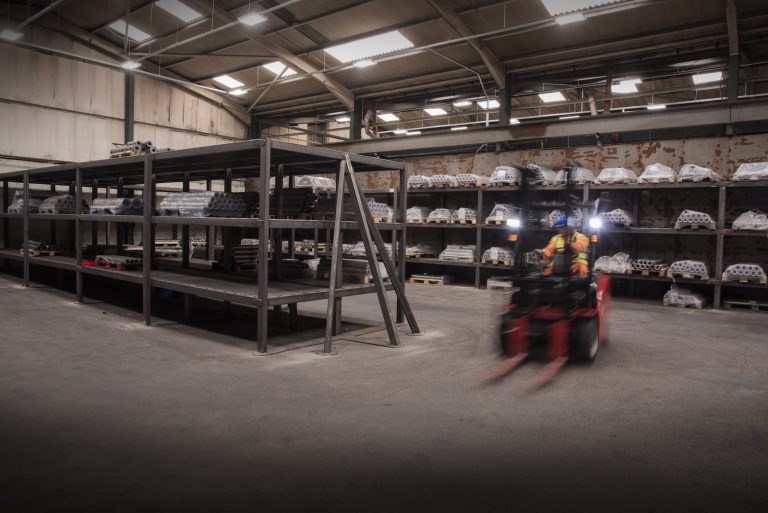
Actavo, the UK’s fastest-growing modular building company for the past three years*, has today expanded its presence with the opening of a new 120,000 sq ft manufacturing facility in Hull, initially creating 33 new jobs. The new factory, located at 30 Freightliner Road in Hull, will produce bespoke, state-of-the-art modular accommodation for a variety of sectors, including education, healthcare, construction, commercial, rail and defence. CEO of Actavo | Structural Division, Roger Hastie, said “Today’s opening takes place against the backdrop of a revolution in the building industry, where modern methods of construction are increasingly being embraced. Faster, cost-effective and more flexible, there is now a groundswell of support for modular construction’s ability to address many of the challenges we face in terms of supply and demand for accommodation in both the public and private sectors. We look forward to operating from our new Hull base and to playing an active role in the locality in the years ahead.”   Matthew Goff, Operations Director for Actavo | Building Solutions, said “Actavo is delighted to be establishing its new manufacturing facility and generating employment here in Hull. Initially, 33 new jobs are being created, and this number will rise over the next 12 months. Actavo chose Hull primarily due to the critical mass of industry and the skilled workforce in the city and surrounding areas. Our new premises is also strategically located, adjacent to the A116 Ring Road on the western side of Hull city centre, which is ideal for an offsite construction company. As a business, we have always sought to lead from the front. In addition to being the UK’s fastest-growing modular building company for 2014, 2015 and 2016, we were one of the first modular building companies to fully implement BIM Level 2 into our business.” Chairman and CEO of Actavo, Sean Corkery, commented: “As a company involved in many different sectors and geographies, we are extremely proud of the phenomenal growth of Actavo | Buildings in the UK in recent years. While the attention today is understandably on construction and innovative design techniques, essentially our primary focus is on people – the thousands of families, workers, teachers, pupils, students, healthcare professionals, patients, defence force members and others who will benefit from using these modular buildings into the future.”  

Read More »

London to see surge in construction of luxury homes

London is to see a boom in the construction of luxury properties over the next 10 years, new analysis has suggested. According to research from consultant Arcadis, some 35,055 top-end homes will be built in the capital over the coming decade. The figure is an increase of 40% on the last prediction from 2014, when it was thought the number of such properties built would be 25,000. In total, the sales value of these homes will come in at around £77 billion. They will be mainly flats and apartments valued at more than £1 million, and will cover upwards of 40 million square feet. Yet despite this projected surge in construction, demand for such properties is actually falling, according to the research. This could mean that a number of the projects end up being repurposed as commercial properties, or even downgraded to become cheaper homes. The fall in demand is also leading some developers to re-evaluate the money they had planned to spend on areas such as interior design and fit-out specifications. Mark Cleverly, head of commercial development at Arcadis, said the house-building sector in London is one of the strongest around. But he added that a number of factors are also having an impact on the state of the industry, which could require developers to adapt. “Since around 2009, the value of prime residential property in central London has seen dramatic rises, making it one of the hottest markets in recent memory,” he said. “That said, things are changing. Land, materials and labour are growing in price, meaning the costs involved in actually building these homes is growing significantly. “This, coupled with a recent gradual easing off of buyer demand, could affect margins and mean investors opt to convert their developments to target the more buoyant office and commercial markets.” Greater London will see 3,650 construction jobs created every year for the next five years, according to CITB’s latest Construction Skills Network report.  Source link

Read More »

Midland Lead Awarded With the New ISO 14001 2015 Environmental Management

Midland Lead has been awarded with the new ISO 14001 2015 Environmental Management accreditation. The business is the leading manufacturer of lead sheeting in Britain, so their receipt of this award is great news for British industry as well as Midland Lead. The accreditation has been awarded by the British Standards Institution. The updated ISO has been given to the manufacturing business in order to recognise and showcase their commitment to reducing the environmental impact that their operations have. The company also have the extra gift of being awarded the accreditation ahead of schedule. The business was audited by the British Standards Institution in November 2016 with the accreditation given in the December of last year. Midland Lead has carried out a number of improvements recently to implementa more energy efficient crane for use in their refinery plant. The business has also invested in schemes to make their operations more efficient such as truck upgrades and LPG-operated  forklifts. These forklifts use Autogas which reduced the CO2 exhaust emissions. Other upgrades include the installation of LED lighting throughout the factory. The company passed the audit, but is concentrated on upkeeping their environmental procedures and making sure that everything possible is done to operate more sustainable. The new ISO was introduced in 2015 and focuses of identifying the lifecycle of the products as a way of making companies pay attention to the wider impact of their operations. This update to the ISO 14001 2015 means that Midland Lead’s factory and supply chain upgrades needed to be reflective of the company’s lead sheet product, which is made from 100% recycled lead and has a predicted lifespan of more than 60 years. The Government is striving to make vehicles more energy efficient by 2020 and the ISO 14001 encourages companies to maintain the enthusiasm for improvement and to constantly push to be more sustainable. It is with this mentality that Midland Lead continues to operate.

Read More »

Holiday Home Business Rates Scandal

The Government’s Business Rates System is giving holiday home owners, who make their properties available to rent, a windfall of millions of pounds in tax reliefs at the expense of those businesses paying full business rates, according to Colliers International, the global commercial real estate agency and consultancy. In the current business rates environment, second home owners, who make their properties available to rent as holiday lets for 140 days of the year, often qualify as small businesses, and are entitled to relief on 100% of the business rates payable if their properties have a rateable value of less than £12,000. And those whose properties have a rateable value between £12,000 and £15,000 are also entitled to relief on a sliding scale, in line with the Government’s small businesses rates relief policy. Colliers analysed the potential rate bill of 7300 holiday homes in Cornwall and found that over 7150 of those second home owners had properties with a rateable value of less than £12,000 and so are paying nothing in business rates. This means that they are being subsidized by £13.2 million, compared to if they were paying their business rates. Over the five-year rating list, this equates to £66 million. If they were paying the equivalent Council Tax they would pay up to £3371 (Band H 2017/18) per property, and with the average Council Tax of £2036 in 2017/18,  receive a saving of £14.6 million or £72.8 million over 5 years. Adding in the properties on the sliding scale of business rates relief and then multiplying this across the other counties in the UK where second home owners offer holiday lets and receive the rates relief, it appears that second home owners are being subsidized by many millions of pounds. John Webber, Head of Rating at Colliers International commented, ”The Government’s Business Rate system is totally unjust and needs serious reform. It’s a scandal that those who have holiday homes and rent them out are able to take advantage of the Small Business Rates Relief and so pay less tax, putting the burden of the rates bill onto other businesses who are struggling to pay their bills. The 2017 business rate revaluation resulted in many businesses being hammered when revalued, particularly the smaller specialist high street retailers in the major cities, but also other businesses that provide jobs and make major contributions to the economy. I doubt many second home owners would begrudge paying these charges but if the Government is foolish enough to allow this to happen then it is the Government’s running of the system that should be seriously questioned’ He added, “We do not criticise second home owners that take advantage of this tax break through making their properties available to let- that could be considered sensible tax planning. But we do criticise that the Government has allowed this situation to happen and has ignored the rating industry’s calls for root and branch reform of the business rates system. “   Colliers Manifesto for Business Rates Reform includes: More frequent revaluations, three-yearly, at least, by 2022; Increase funding for VOA in order to deal with existing appeals’ backlog; Release VOA from pressure exerted by local councils and HM Treasury; Introduce a register of appeals professionals  – removing the ‘cowboy’ element; Root and branch reform of current business rates exemptions and reliefs.

Read More »

Federation of Master Builders Say That You Should Book Builders at Least Four Months Before

The Federation of Master Builders, or the FMB have said that, according to the figures Homeowners should book their builder at least four months before the project begins in order to reduce the risks of hiring a cowboy. The research that has been carried out also showed that a large amount of consumers don’t think to ask their builders for more essential things required for work such as a contract or any references before they start a significant piece of building work. Brian Berry, the Chief Executive of the FMB has said that is a builder claims to be free to start work pretty much immediately then there should be concerns. There is a high demand for skilled workers in the building industry at the moment, with a lack of people working in the sector. This means that nearly one in two builders would need to be contacted at least four months in advance, according to the research. Over the past two years the workloads for builders has been increasing and plentiful. The Federation therefore ask homeowners wanting to start a home improvement project to contact any prospective builders as soon as possible in the phases of work in order to avoid disappointments and delays to their schedule. Not contacting early and then choosing a builder who can get to work straight away increases the risk of working with a dodgy builder. On top of choosing builders who seem to be more free than a busy professional builder, homeowners are also at risk when approaching a building project. The majority of builders say that clients can fail to ask for a contract and references before work starts, leaving them vulnerable to dodgy operators as well. Other things that the Federation are highlighting the importance of is agreeing a payment schedule, making sure that they have key warranties for the work that is carried out and finding out if the builder has any external accreditation or recognition.

Read More »

Clarification needed after Brexit result, says BSRIA

Clarification needed after Brexit result, says BSRIA Published:  01 September, 2016 A recent BSRIA survey has highlighted a desire for clarification of the exit deal among members, with the anticipation of a short-term downturn until Article 50 of the Lisbon Treaty has been implemented. The survey showed Brexit has had a “sharply negative impact on an already slowing work stream”, with those consulting engineers surveyed expecting a general slowdown in investment until clearly defined plans for trade tariffs have been outlined, along with details of whether the UK will remain in the European Economic Area, and how labour availability from the EU may be impacted on. Other results from the survey suggest there may be a delay in infrastructure spending due to ‘government turmoil’, as well as signs that companies are less willing to move into new office space after the result, with a resulting impact on office construction and investments. Clair Prosser, BSRIA press officer, said: “One respondent commented: ‘EU legislation with respect to the building industry could be of benefit once the final negotiations of BREXIT are completed and could make the industry less constrained by influences from Brussels’.” Overall, the survey suggests the current uncertainty will reduce construction activity in the UK, with an “almost wholly negative” impact on the construction market until the exact nature of the exit is understood. Of particular concern to respondents was the future of EU energy policies and the Energy Performance of Buildings Directive (EPBD). Ms Prosser added: “There were more frank comments: ‘A loss of confidence of overseas investors – this has already occurred on some of the larger projects, though not those with German investors in particular’, but more encouraging feedback: ‘An increase in overseas investment due to value of the pound in apartments within London, maintaining the growth in apartment block construction’, finally: ‘difficult to say, we are in a funny limbo period at the moment, so don’t expect much to happen positively or negatively until we enact Article 50’.” The results were attained from supplementary questions asked of consulting engineers in the August BSRIA Business Bulletin questionnaire. Source link

Read More »

North Sea oil: The £30bn break-up

It will end one of the UK’s most successful industries but decommissioning also offers a silver lining ©Brian Jobson / Alamy The Pioneering Spirit, a catamaran the length of five jumbo jets, will next year sidle up to Royal Dutch Shell’s Brent Delta oil platform in the North Sea, 115 miles north-east of the Shetland Islands. Its hulls will manoeuvre either side of the platform’s legs and it will grip on with 16 specially reinforced beams. Then in a single motion, it will lift the 24,000-tonne “topside” of the platform — accommodation block, helipad, drilling derrick and all — away from its legs, before carrying it back to shore to be dismantled. More On this topic IN The Big Read In doing so, the ship will have undertaken the heaviest lift ever attempted in the North Sea. More significantly it will also have begun what is expected to be a wave of decommissioning across the North Sea, as oil companies struggling with low prices shut down production and pack up one of the UK’s most successful industries of the past 50 years. Between now and the mid-2050s, around 470 platforms, 5,000 wells, 10,000km of pipelines and 40,000 concrete blocks will have to be removed from the North Sea. Decommissioning takes place regularly in other mature basins such as the Gulf of Mexico but nowhere in the oil industry will such a major clean-up have happened in such a short time. People who have spent their lives in the industry are going through what some call a “grieving process”. Mal Hunter, who works on the Kittiwake platform east of Aberdeen, says: “We hear about platforms getting shut down, never to produce again and people get deflated. But it [decommissioning] offers continued employment, so those that stay in work are pretty happy.” Many in the north of Scotland hope decommissioning can provide a lifeline for the local economy, which has been battered by the collapse in oil prices since mid-2014. It could even turn the area into a centre of excellence from where expertise and technology can be exported worldwide, say supporters. But if it goes badly, costs will escalate, vital pieces of infrastructure could be abandoned with oil left under the sea, and the UK taxpayer could be liable for tens of billions of pounds. “Decommissioning is a bittersweet pill,” says Matt Betts, UK vice-president at Halliburton, the world’s largest oil services company. “Nobody wants to have to close down platforms, but it is inevitable that they will have to.” Making a loss For the first time, the British offshore oil and gas industry is plugging and abandoning more wells than it drills. Production, which has fallen two-thirds since its peak 16 years ago of 4.5m barrels of oil equivalent a day, will stop in more fields than are being started up. “Decommissioning has happened before,” adds Mr Betts. “But we’ve never seen anything on the scale of what is about to happen in the North Sea.” The industry has always known that it would have to decommission ageing platforms, but the process has been accelerated by an oil price that has crashed from $115 in the summer of 2014 to around $50. This has left half of the operators in the North Sea — the most expensive place in the world to drill for oil — running at a loss, according to figures from Company Watch, which monitors corporate financial risk. These companies face a difficult decision: should they continue to produce oil and gas at a loss, hoping to make the money back if and when the price rebounds or do they pack up altogether, incurring millions of pounds of decommissioning costs in the process? It is prohibitively expensive to come back and start drilling once a well has been left, so any decision to leave is final. Once a company decides to abandon a facility, the hard work begins. It must first make the reservoir safe, a process that involves removing tonnes of steel from the well and sealing it up to make sure no oil or gas escapes. Only then can a company think about how to remove the structures that sit above the well, the process that Shell is about to undertake at Brent Delta. Companies calculate it will cost an average of £10m to plug and abandon a complex North Sea well. Removing the physical structures could be far more expensive. On Brent Delta it will cost several billion pounds, according to Shell, and take hundreds of workers years to complete. Oil and Gas UK, the industry body, suggests it will cost nearly £17bn over the next 10 years to remove around 80 platforms and their associated infrastructure. The estimated cost to complete the entire job through to the 2050s ranges between £30bn and £60bn, a figure that has risen on several occasions as the scale of the task has become clear. “We keep saying decommissioning spend is going to be higher and higher,” Davi Quintiere, a senior manager at Accenture’s energy practice, recently told a conference in Aberdeen. “We are terrible at forecasting and we will continue to be.” Part of the problem is that few companies have attempted it, especially in conditions like those in the North Sea, where waves can swell to 40m high. “It is difficult to decommission a platform,” says Mr Betts. “It is very difficult to do so in water as deep and bouncy as the North Sea.” Cost cutting Shell was due to remove the topside at Brent Delta — which rises 160m above sea level — this year. But difficulties in building the reinforced beams caused a delay, highlighting that the decommissioning industry remains in its infancy. Another brake on the process is the fact that companies make no financial return from taking apart a platform and so many are hesitant to make the decision. Operators are legally obliged to take down platforms at some stage but with the oil price fall putting pressure on balance


Read More »

Touch down for Hainan Airlines at Bridgewater House, Manchester

Cording Real Estate Group, represented by international real estate advisor Savills, has let office space at Bridgewater House on Whitworth Street, Manchester to Hainan Airlines. The Chinese firm has agreed a new five-year lease for 2,100 sq ft (195 sq m) at the Grade II-listed building and will pay a rent of £16.50 per sq ft (£178 per sq m).  Bridgewater House offers 180,000 sq ft (16,722 sq m) of high quality office accommodation across 10 storeys and still features many of its original characteristics including cast iron columns and exposed brickwork.  On the ninth floor, 17,000 sq ft (1,579 sq m) of open plan office space has recently been refurbished and there are further plans to reform and extend the reception area. Daniel Barnes, associate in the office agency team at Savills, comments: “This landmark building combines contemporary business space with original features and a very well-connected location.  We are pleased to have completed this deal with Hainan Airlines and look forward to securing additional occupiers for the building.” Hainan Airlines was unrepresented.  Savills is joint letting agent at the property with OBI. Source link

Read More »

Healthy, wealthy and wise

Amid the post-Brexit uncertainty, the specialist property sector has stood firm, particularly the retirement and health care sectors, which are not just weathering the storm, they are prospering. The post Healthy, wealthy and wise appeared first on Estates Gazette.com. Source link

Read More »