Cristina Diaconu

Ineos aims to kick-start shale gas market

Ineos, the $50bn petrochemicals giant controlled by British billionaire Jim Ratcliffe, aims to accelerate shale gas development in the UK by lodging as many as 30 planning applications to drill test wells in the next six months. Tom Crotty, a director at Ineos, said the company hoped to start drilling

Read More »

ROCKFON CPD – creating beautiful, comfortable and safe environments

Earn double CPD points by attending the latest RIBA accredited ROCKFON CPD. ROCKFON is renowned for its innovative acoustic ceiling and wall solutions that exceed expectations. ROCKFON has used its knowledge and technical expertise to create a CPD designed to explain all aspects of stone wool acoustic solutions, their suitability

Read More »

Brexit spells disaster for France

Hollande’s room for manoeuvre in Europe will now be limited, writes François Heisbourg ©EPA François Hollande For France in the postwar period, the UK has been an indispensable benchmark: the ex-imperial, nuclear twin against which to measure ourselves, and vice versa. Now, Brexit spells potential disaster for France, both as

Read More »

RIBA reacts to Brexit

Browser does not support script. Contact us The Royal Institute of British Architects (RIBA) has given its initial response to the result of the United Kingdom’s European Union (EU) referendum. RIBA President Jane Duncan said: “The RIBA is a global organisation that supports its members, validates schools of architecture and

Read More »

FM mergers see sector major on 'people and data'

21 June 2016 | Jamie Harris The facilities management market is evolving from a ‘people’ business to a ‘people and data’ business, according to a report from business advisory firm BDO LLP. The BDO FM UK Market Outlook Report 2016 found that M&A (mergers and acquisitions) analysis of the sector reveals

Read More »

New research shows the worst rates of negative equity in the US

As the housing market continues to recover in the United States, home owners who are underwater on their mortgages are increasingly concentrated in the Rust Belt, according to the latest real estate report. The data from the Negative Equity Report from real estate firm Zillow also shows that West Coast

Read More »

Does the construction industry need an ACOP?

Christian McCale reviews the debate over the need for a new approved code of practice for the Construction (Design and Management) Regulations 2015. Above: Christian McCale is project director of CDM specialist Innov8 At its meeting towards the end of 2015, the Construction Industry Advisory Committee (CONIAC) reported that the

Read More »

Saudi will keep grip on Aramco after IPO

Khalid Al Falih Khalid Al Falih, Saudi Arabia’s oil minister and chairman of the country’s state energy giant, said the government will make sovereign decisions on production and capacity even after a public offering of Saudi Aramco. Speaking to reporters on the sidelines of his first Opec meeting in Vienna,

Read More »
Latest Issue
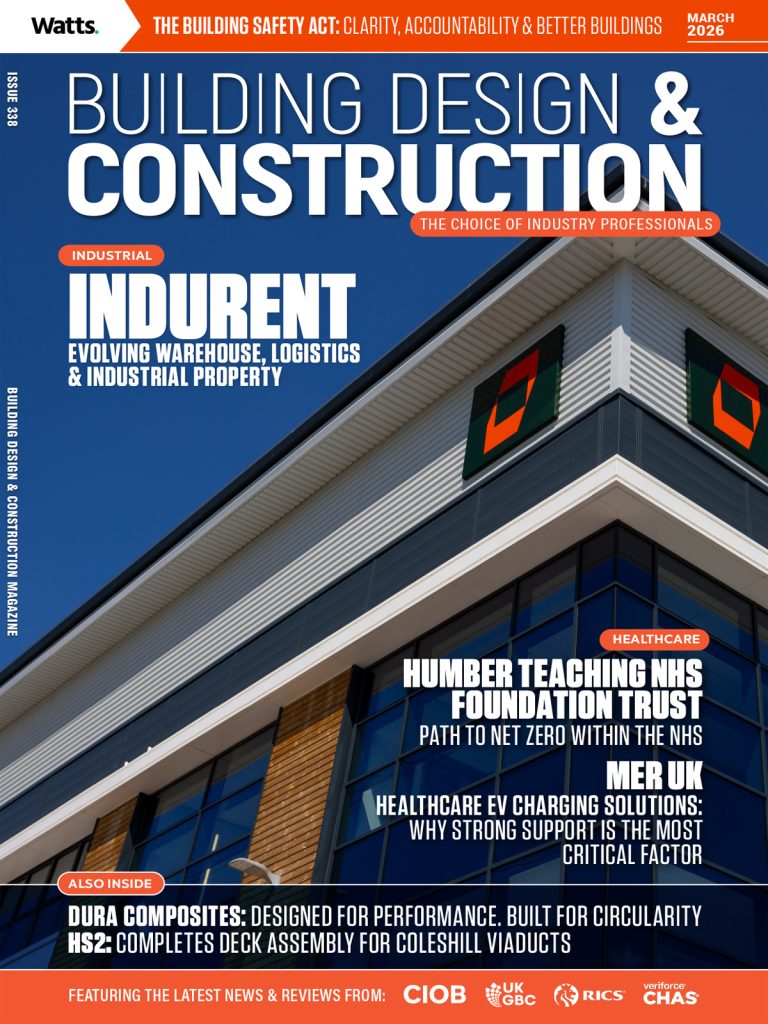
Issue 338 : Mar 2026

Cristina Diaconu

Ineos aims to kick-start shale gas market

Ineos, the $50bn petrochemicals giant controlled by British billionaire Jim Ratcliffe, aims to accelerate shale gas development in the UK by lodging as many as 30 planning applications to drill test wells in the next six months. Tom Crotty, a director at Ineos, said the company hoped to start drilling in the north of England early next year and could begin extracting gas in about 18 months through the controversial technique known as fracking. The move comes as the group this year ends a six-year tax exile with the opening of a new headquarters in London for its mainly UK-based upstream oil and gas businesses. Mr Ratcliffe, the UK founder of Ineos who took the company to Switzerland in 2010 when it was struggling to pay taxes in the wake of the global financial crisis, has also returned to live in the UK, as first reported by the Sunday Times. Mr Crotty said the decision to headquarter the upstream businesses in the UK predated Britain’s vote last month to leave the EU. Mr Ratcliffe, who has argued that Britain would thrive outside of the EU, had decided to return given the rapidly growing business in the UK, he said. The main concern for Ineos now was to maintain free trade with the EU as in Norway, where Ineos had a sizeable petrochemical business. “As a model that works for us,” he said. Ineos, which has been built up over more than a decade through a series of acquisitions, last year moved into gas production after acquiring 12 North Sea fields from Russian oligarch Mikhail Fridman for $750m. The group, which owns the Grangemouth refinery in Scotland, has ambitions to become a substantial oil and gas producer, particularly in shale gas. Ineos has backed a highly public campaign to convince the Scottish government to lift its moratorium on fracking over the past year. However, the failure of the campaign has encouraged the group to bid for licences in England. It now has rights covering some 1m acres, mainly in the Cheshire basin, the north Midlands and North Yorkshire. Mr Crotty said that he was confident that recent changes to rules allowing ministers to intervene if local councils delay granting permission would finally lead to Ineos drilling test wells. Once drilling started, Mr Crotty said, people would “see [fracking] is not the Frankenstein monster they thought it was”. However he admitted that until permission was granted, it would continue to be “difficult” to convince critics. In May, councillors in Yorkshire approved the UK’s first fracking project in five years for a company called Third Energy. The technique, which forces a combination of water, sand and chemicals into the ground at high pressure to break rock and release gas, has come under fire from environmental campaigners who claim it has led to earthquakes and contamination of the water table. Source link

Read More »

Scope for Glasgow office designers to do more to improve worker productivity

A survey released by international real estate advisor Savills and the British Council for Offices (BCO) has revealed that 66% of workers in Glasgow value the interior layout and design of the workplace as important, the highest number recorded in the UK along with Edinburgh. However, only 19% of employees in Glasgow feel that the layout and design of their current workplace increased their productivity. The What Workers Want poll of 1,132 office workers across the UK investigates the factors that are important to employees in the workplace, and how much they believe that their current environment satisfies those requirements. Glasgow workers also valued the cleanliness of the office more highly than anywhere else in the UK, with 86% citing it as the most important feature of their working lives, along with workers in Edinburgh. Additionally, although not ranked as a top 10 most important factor, Glasgow had the highest percentage of workers who believe it is important to have a crèche in the workplace, at 19%, and the highest number, at 50%, of workers who want access to a variety of local retail and leisure facilities. David Cobban, director in the business space team in Savills Scotland, says: “This survey successfully outlines what workers really want from their workplace and highlights the importance of  thoughtful office design.  We are working with a number of office occupiers who are moving away from the notion that ‘one size fits all’ in terms of what  workers want from their fit-out and this mirrors the results of the survey. Fit-out design needs to be sympathetic to the wishes of the employees in building if it is to be credited with improving productivity.” According to What Workers Want, there seems to be a significant mismatch between what Glasgow office workers deem important and current levels of satisfaction. By comparing these, it is possible to identify the size of the ‘frustration factor’ and thereby what organisations need to address in order to attract and retain staff. Steve Lang, director in Savills research and author of the report, adds:  “That 66% of Glasgow workers think that the design and layout of their office is important, but that only 19% feel their current office design helps productivity, should be a wake up call to employers. The frustration levels reported show that if organisations don’t get the basic office design and infrastructure right it can be a major drain on productivity and risk frustrating and alienating the workforce.” Bill Ritchie, incoming Chairman of the Scottish Chapter of the BCO, comments:”What Workers Want is a very important piece of research as it allows both office developers and employers to fully understand what their employees actually need. This in turn could significantly help with attracting and retaining staff. Our survey of Glasgow employees has thrown up some fascinating insights, such as the fact that Glasgow workers are the least likely in the UK to feel that the layout and design of their current workspace helps productivity. This finding in particular should certainly inform building designers and employers going forward – if current layouts are not working, businesses need to rethink them. Glasgow workers also voiced a clear demand for workplace crèches and access to retail facilities. “Another clear finding, which has featured heavily throughout the UK, is a dissatisfaction with the availability of quiet spaces to work. Glaswegian workers have made their views clear – and businesses now need to use these findings to make positive change.” Top 10 factors Glasgow office workers are most dissatisfied with Top 10 factors most important to Glasgow office workers Source link

Read More »

Winners of the 2014 President's Medals Student Architecture Awards announced in London

The winners of the 2014 RIBA President’s Medals were announced this evening (Wednesday 3 December) at a ceremony at the Royal Institute of British Architects (RIBA) in central London. The prestigious RIBA President’s Medals, which date back to 1836, reward talent and excellence in the study of architecture, and this year invited nominations from 317 schools of architecture located in 61 countries, the highest number ever in the history of the awards. Nick Elias, from the Bartlett School of Architecture (University College London) received the highest design prize of the evening, the RIBA Silver Medal (awarded to the best design project at Part 2 – Diploma/Masters level) for ‘PoohTown’. While revisiting Slough and the industrial growth and social inequality the town experienced during the 1920s – the decade when A.A. Milne’s Winnie the Pooh stories were first published and became popular for their accounts of a fictitious happy world – the project re-evaluates covert responses to socio-political exclusion. This is achieved by reinterpreting the underpinning state of contentment that typifies Milne’s protagonist in order to propose ‘happy’ architectures where residents can live, work and play together in a sustainable economic network. By doing so, ‘PoohTown’ establishes the grounds for a subtle critique of today’s cities potential to prescribe policies of happiness alongside familiar amenities (a concept, in the author’s opinion, worryingly absent in current city planning) and alerts for the need to design for emotions as a way to find architecture’s purpose in a changing world. Nick was tutored by CJ Lim and Bernd Felsinger. Simon Dean, tutored by Jane Houghton and Stephen Baty at Kingston University, was awarded the Bronze Medal (for best design project at Part 1 – degree level) for ‘Flow, 1944’. On the surface, the project proposes a design for a bathhouse located on a quarry carved into the rock created by solidified lava that erupted from Mount Vesuvius in 1944. As it develops this idiosyncratic space of transience on a shunned landscape, ‘Flow, 1944’ highlights the importance of the notions of ephemerality and the passing of time in the formation of built environments as they are conceived by architects and inhabited by users, thus alerting for the role played by architecture in constructing historical layers of physical strata and collective meaning. Jasper Ludewig was awarded the Dissertation Medal for ‘Made Ground: A spatial history of Sydney Park’. Produced under the supervision of Ross Anderson and submitted by the University of Sydney, the dissertation focusses on Sydney Park as a case study of ‘Spatial History’, a method of historical inquiry developed by Australian geographer, historian and architectural theorist, Paul Carter. Each of Made Ground’s six essays discusses a series of practices, beliefs and tools in the historical production of Australia’s physical and social space to, ultimately, illustrate the postcolonial capacity of interpreting the texts and records of the past as a way of destabilising assumptions about Australia’s places of the present in which architects, planners, urban designers and artists intervene. RIBA President Stephen Hodder said “Congratulations to the winners of this year’s RIBA President’s Medals whose talent and hard work remind us all of the important part that architecture plays in creating a better world and the key role performed by the architect in the process. “Without a doubt, the projects deserve to be rewarded not only for their accomplished words, images and models, but also for revealing the intellectual and experiential dimension architecture brings to daily life.” Other student awards presented at this evening’s ceremony were: Silver Medal High Commendation: Justin Cawley from the University of Sydney for ‘An Ark for Endangered Atmospheres’ Silver Medal Commendations: Yannis Halkiopoulos from the University of Westminster for ‘Brooklyn Co-operative’ Louis Sullivan from the Bartlett School of Architecture, UCL, for ‘The Living Dam’ Bronze Medal Commendations: Samuel Little from London Metropolitan University for ‘City Frame: The reappropriation of Maple House’ Emily Priest from the Bartlett School of Architecture, UCL, for ‘Rong Xhan Safehouse’ Ho Yeung (Howell) Tsang from the University of Hong Kong for ‘Urban Living Transition: Vanishing heritage of Hong Kong residence’ Dissertation Medal High Commendation: Ekaterina Tikhoniouk from University College Dublin for ‘Towards a Common Ground for Play: Examining the history of play and playgrounds in Dublin’s Liberties’ Dissertation Medal Commendation: Leon Fenster from the Bartlett School of Architecture, UCL, for ‘Exilic Landscapes: Synagogues and Jewish architectural identity in 1870s Britain’ Serjeant Awards for Excellence in Drawing Part 1: Oliver Riviere from the University of Brighton for ‘The Institute of Concrete Poetry’ Part 2: Adam Bell for the University of Greenwich for ‘The Restored Commonwealth Club’ The UK office of Skidmore, Owings & Merrill (SOM) also awarded the SOM Foundation UK Fellowships selected from this year’s entries for the RIBA President’s Medals. SOM Foundation Fellowship Part 1: Kent Gin from the University of East London for ‘Cultural Perforation of Madrid, Disruption of the Defined’ SOM Foundation Fellowship Part 2: Mike Lim from the Royal College of Art, for ‘Untitled, 2014. Mixed Media’ The 2014 President’s Medals Student Architecture Awards Show, a free exhibition celebrating this year’s best student architecture and showcasing new ideas and from around the world opens to the public in the Practice Space,  RIBA, 66 Portland Place W1 on 4 December 2014 and runs until the 31 January 2015.  http://www.architecture.com/WhatsOn/December2014/TheRIBAPresidentsMedalsStudentAwards.aspx   ENDS Notes to editors For further press information contact Howard Crosskey in the RIBA Press Office: 020 7307 3761 howard.crosskey@riba.org To download supportive images from this year’s winners visit: https://riba.box.com/s/8uxph82tarxrefgfuom5 A full list of this year’s entries can be found at http://www.presidentsmedals.com/, the awards website, which also holds an archive of images and dissertation synopses from nominated projects and dissertations since 1998 This year’s judging panels included: Bronze Medal / Part 1 Design Projects: Chair: David Gloster, RIBA Director of Education Roz Barr, Roz Barr Architects and RIBA Vice-President Education Paolo Desideri, ABDR Architetti Associati and Professor of Architecture at University of Roma Tre, Italy Mary


Read More »

ROCKFON CPD – creating beautiful, comfortable and safe environments

Earn double CPD points by attending the latest RIBA accredited ROCKFON CPD. ROCKFON is renowned for its innovative acoustic ceiling and wall solutions that exceed expectations. ROCKFON has used its knowledge and technical expertise to create a CPD designed to explain all aspects of stone wool acoustic solutions, their suitability for all indoor environments and the design opportunities available. Each CPD seminar covers: how stone wool is made its fire resistance properties how it contributes to sustainability acoustic performance. CPD seminars are presented by one of the ROCKFON team who is happy to share their knowledge and experience to answer any questions and provide advice. The seminars are held in the architect’s office, last 45 minutes and a buffet lunch is provided. Everyone who attends receives a certificate of CPD attainment.ROCKFON offers a comprehensive range of acoustic solutions including ceiling tiles, baffles, wall absorbers and islands, all made from a 100% stone wool core. Architects are specifying ROCKFON products because they are a fast and simple way to create beautiful, comfortable and safe spaces. They protect people from unwanted noise and the spread of fire, while making a constructive contribution towards a sustainable future.The benefits include: superior design, aesthetics and ease of installation exceptional fire resistance and acoustic characteristics dimensional stability, even in up to 100% relative humidity non-hygroscopic surface prevents harmful micro-organisms 100% recyclable – ROCKFON upcycle too, reducing waste. For further information or to book your RIBA Accredited CPD seminar please call: 0800 389 0314, email RockfonCPD@m-spring.com or visit www.rockfon.co.uk  Source link

Read More »

Brexit spells disaster for France

Hollande’s room for manoeuvre in Europe will now be limited, writes François Heisbourg ©EPA François Hollande For France in the postwar period, the UK has been an indispensable benchmark: the ex-imperial, nuclear twin against which to measure ourselves, and vice versa. Now, Brexit spells potential disaster for France, both as a nation state which, along with Britain, has had justified pretensions to punching above its weight, and as a member state of the EU. David Cameron had been expected to put the renewal of Britain’s nuclear deterrent before Parliament in the weeks following a Remain vote. This is now unlikely. The so-called Successor programme rests on the assumption that the new nuclear force will continue to be based in Scotland. Rushing a decision through Westminster could send a pro-EU and anti-nuclear Scotland into a headlong rush in a different direction — towards independence. At the very least, sorting out the impact of a vote to Leave in England and Wales on the future of the nuclear base at Faslane and of the nuclear deterrent more generally will cost time and money. France is not enthusiastic about being left exposed as Europe’s sole nuclear power while a politically assertive Russia ramps up its own nuclear capabilities. More On this topic IN Opinion At the diplomatic level, the UK will not be a dynamic global player, as most of Whitehall’s energies will be devoted to negotiating with the EU. This will limit France’s ability to put forward diplomatic initiatives which often rely on the ability of our two countries to work together as permanent members of the United Nations Security Council, the pinnacle of diplomatic influence. This inevitable collateral damage could turn into something much worse if the UK fell apart with Scotland seceding and Northern Ireland torn between competing allegiances. In 1992, after the Soviet Union had collapsed, Russia presented its credentials to the UN as the successor state of the USSR, including its seat at the Security Council. This was strongly supported by the members of the UN in general and the west in particular. Would the world and indeed Russia view with similar enthusiasm the claims of a “rump” UK? So the French are not only worried. They will most likely provide whatever diplomatic support they can. They will also press for the continued implementation of the Lancaster House defence treaty, which binds the two countries in military terms, notably in the crucial area of nuclear warhead stewardship. At the EU level things are no better. The forces of sovereigntism in many continental countries will enjoy a boost from Brexit. This is already apparent in the Netherlands, one of the six founding states of the European institutions. It is also true of France, not only in the form of the National Front, but also in parts of the mainstream right. “Frexit” remains unlikely, unless other continental countries start rushing towards the exit: for the French, the European project remains more like a marriage than the cohabitation it always was in the eyes of many in Britain. But Brexit will severely limit the room for manoeuvre in Europe of a largely discredited incumbent president, François Hollande, and government. Ten months before the next presidential election in France, there will not be enough political leeway for a credible and determined push by France and Germany towards a more integrated Europe. Berlin and Paris will want to be seen as trying, but will hardly expect to succeed. The most likely outcome is an EU that more closely resembles the 19th-century Concert of Nations than Jean Monnet’s dream of a United States of Europe. As a result, France will be increasingly torn between continuing to put all its efforts into maintaining a relationship with Germany, in which it is becoming an evermore junior partner, and playing coalition politics with like-minded states in order to balance German influence and power. Before the UK decided to leave the EU, France’s prioritising of the Berlin-Paris pivot was clear, and justifiable in terms of the national as well as the European interest. It was also comparatively easy to defend in the court of public opinion. This may now change, whoever is the next French president, at the expense of European stability and cohesion. The writer is special adviser at the Fondation pour la Recherche Stratégique, a Paris-based think-tank Copyright The Financial Times Limited 2016. You may share using our article tools. Please don’t cut articles from FT.com and redistribute by email or post to the web. Source link

Read More »

RIBA reacts to Brexit

Browser does not support script. Contact us The Royal Institute of British Architects (RIBA) has given its initial response to the result of the United Kingdom’s European Union (EU) referendum. RIBA President Jane Duncan said: “The RIBA is a global organisation that supports its members, validates schools of architecture and champions the importance of a quality built environment around the world. UK architecture talent is incredibly resilient and we will continue to ensure that our profession has a bright future, whatever the operating environment. “Clearly there is uncertainty about the timescales and impact on a range of issues important to our industry including free movement in the EU for architects as well as students, trading and material sourcing, inward investment relationships, EU procurement rules and the effect on the construction sector if restrictions are placed on EU migration. “In common with other UK businesses and organisations, the RIBA is assessing the short and longer term effect of the withdrawal on our members and the Institute and we will provide further guidance in due course. “Most importantly, we will work with colleagues in industry and government to ensure that architects have a strong voice in the coming weeks, months and years.” ENDS     Posted on Friday 24th June 2016 Source link

Read More »

FM mergers see sector major on 'people and data'

21 June 2016 | Jamie Harris The facilities management market is evolving from a ‘people’ business to a ‘people and data’ business, according to a report from business advisory firm BDO LLP. The BDO FM UK Market Outlook Report 2016 found that M&A (mergers and acquisitions) analysis of the sector reveals that just over half of deals completed in the past two years involved businesses in the building management systems, M&E and compliance services sub-sectors. The report notes that the government’s austerity drive in the public sector is making life difficult for service providers to win contracts on any factors other than price. Slim margins are also being pressed by a number of regulatory requirements such as the introduction of the National Living Wage, says BDO. M&A transactions are seen as a way to achieve efficiency savings to help position contractors for future growth, adds the report. The number of mergers in the sector in 2015 increased by 43 per cent on the previous year, with hard services accounting for 77 per cent of transactions. M&E maintenance transactions in particular recorded a four-fold increase in 2015, compared with 2014. Management buyouts (MBOs) accounted for 22 per cent of FM deals last year. Nearly four in 20 M&E services deals were MBOs. Satvir Bungar, head of facilities management at BDO LLP, said: “Despite the pressures faced by FM players, businesses have muted optimism for the year ahead and see a wealth of opportunities including stickier contracts, developing strategic relationships, and initiating new service lines. FM operators are embedding themselves more closely in their client organisations to provide valuable data-led services such as predictive maintenance, asset management and space optimisation services.” The report is available to view here.   Source link

Read More »

New research shows the worst rates of negative equity in the US

As the housing market continues to recover in the United States, home owners who are underwater on their mortgages are increasingly concentrated in the Rust Belt, according to the latest real estate report. The data from the Negative Equity Report from real estate firm Zillow also shows that West Coast home owners are less likely to be in negative equity. Nationally, 12.7% of home owners with a mortgage were in negative equity, meaning they owed more on their mortgage than their homes were worth. However, negative equity is down from a peak level of 31.4% in the first quarter of 2012. For years, Las Vegas has been the prime example of the housing bubble and bust, with nearly three quarters of mortgaged home owners underwater when the market bottomed out in in the first quarter of 2012. But Chicago now has the highest negative equity rate among large US markets, surpassing Las Vegas in the first quarter of 2016. At its worst, Chicago had a 41.1% rate of negative equity, but its recovery has been sluggish and the negative equity rate has declined more slowly than elsewhere. As the housing market recovered, the distribution of underwater home owners across the country has shifted. In the first quarter of 2012, the West Coast, Southeast, and Rust Belt regions had a disproportionately greater share of underwater home owners. For example, the Southeast had 20.4% of homes with a mortgage, but 24.9% of homes in negative equity. Four years later, the West Coast, home to hot markets like the Bay Area, Portland, and Seattle, has only 10.2% of home owners with negative equity, but 15.2% of all mortgaged home owners. The imbalance was worst in the Rust Belt region, which includes Wisconsin, Illinois, Indiana, Michigan and Ohio, and which had an unevenly large share of underwater home owners. ‘When the housing bubble burst, the West Coast had more than its fair share of underwater homeowners. But the strong local economy and job markets have significantly helped these housing markets recover, and several are now more expensive than they were during the housing bubble,’ said Zillow chief economist Svenja Gudell. ‘Other parts of the country didn’t get those same benefits, and until market fundamentals improve, home owners and buyers in these areas will be facing disproportionately higher levels of negative equity as they navigate the housing market,’ she added. The data also shows that four of the 10 metros with the highest rates of negative equity are in the Rust Belt. Meanwhile, the West Coast is home to five of the 10 metros with the lowest levels of negative equity. BOOKMARK THIS PAGE (What is this?)      Source link

Read More »

Does the construction industry need an ACOP?

Christian McCale reviews the debate over the need for a new approved code of practice for the Construction (Design and Management) Regulations 2015. Above: Christian McCale is project director of CDM specialist Innov8 At its meeting towards the end of 2015, the Construction Industry Advisory Committee (CONIAC) reported that the majority of its members thought that the latest Construction (Design and Management) Regulations (CDM 2015) did not require an approved code of practice (ACOP). The final decision on whether or not an ACOP will be produced will be made by the board of the Health & Safety Executive (HSE). However, it now seems likely that it will follow CONIAC’s recommendation that the case for an ACOP has not been made. This potential outcome has generated further debate and views have been expressed on both sides of the argument. When CDM 2015 was introduced in April 2015, the HSE produced a guidance document, L153, to accompany the new regulations, but this was not as comprehensive as an ACOP. In addition, a number of other of organisations, such as the Construction Industry Training Board, published their own information for principal designers, designers, contractors, and other roles included in the new legislation. At the time it was understood that an ACOP was still under consideration and the general perception was that, as with the old ACOP, by complying with its instructions, a duty holder would be able to demonstrate that it had done enough to comply with CDM 2015. However, it now appears that this initial view of the need for an ACOP has changed. In fact, it seems that the foundations of what we are now seeing go back much further than the introduction of CDM 2015, and essentially are a consequence of the HSE review of ACOPs that was undertaken after the Lofstedt Review of health and safety regulations in 2012. This introduced a set of principles for producing future ACOPs that were designed to provide users with confidence in how to comply with a specific law or regulation. Importantly this review also required that any new ACOPs should be shown to add value, be considerably shorter and be ‘signposting’ in nature – and it is against these measures that the need for a new CDM ACOP is now being determined. It was as part of this consultation process that CONIAC reported that the majority of its members thought that the CDM regulations were already well established and that an ACOP would not add any value. It added that an ACOP would not meet the needs of SMEs, and would be confusing for smaller duty holders and domestic clients.  In addition, it was thought that the general inflexibility of an ACOP could block progress because the lengthy process associated with any amendments would not respond quickly enough to changes in practice and innovation as they became available. In response to these arguments, the main views put forward by members in favour of an ACOP largely reflected its special legal status. This allows concerns to be raised without fear of victimisation, reinforces messages about employer duties and provides the only true and definitive benchmark for compliance. However, in its conclusion, CONIAC refuted these points by pointing out that with the huge range in size and nature of construction projects carried out, a single, short signposting ACOP would be unlikely to bring greater certainty to compliance and the management and control of risks than is provided by L153. Furthermore it claimed that developing a number of separate ACOPs for sub sectors would only serve to duplicate, confuse and proliferate guidance. Until the HSE makes a final decision, this is where matters currently stand, but it may be worth reflecting that when CDM 2015 was introduced, part of the rationale was to eliminate previous confusion and clarify precisely when CDM is applicable, particularly in relation to the domestic market. As a result, the current regulations now capture all construction activities and have de-coupled the duties required of a CDM co-ordinator and principal contractor from when a project is notified.  This means that the CDM regulations are now required to be understood by a greater number of people to ensure compliance for all types of construction activities. As a result, there are many who would say that there has never been a greater need for sub sector guidance and the clarification of the regulations to be provided. CONIAC did acknowledge this position in its report by highlighting those views that mentioned the need for additional Q&As issued for inspectors as an addition to L153, having more additional FAQs on the HSE website, and producing proportionate guidance by industry sectors without the involvement of the HSE to contextualise what is necessary to comply with duties within the sector depending on the size of the business or project. Members also referred to some new consolidation of examples included in the 2007 ACOP into case studies. As well as best practice, the lack of an ACOP also poses questions of competence. The previous ACOP had a series of questions which specifically targeted the competency needed to undertake a CDM role. This has now changed, with the new regulations requiring individuals/organisations to have the necessary skills, knowledge, experience and capability to undertake a role. In practice this can be a very grey area and until test cases emerge, the lack of an ACOP offering examples or a more defined application means the task of assessing who to employ for a specific task is very difficult and open to interpretation, only really making reference to PAS91 and Safety Systems in Procurement (SSIP). As an example, the Contractors Health & Safety Assessment Scheme (CHAS) offers accreditation to designers and contractors and formerly CDM co-ordinators.  When submitting to CHAS now, there is a new category for accreditation to principal designers; so if an individual or organisation has CHAS accreditation as a designer, are they competent to be a principal designer? Overall, there would certainly appear to be a case for having greater

Read More »

Saudi will keep grip on Aramco after IPO

Khalid Al Falih Khalid Al Falih, Saudi Arabia’s oil minister and chairman of the country’s state energy giant, said the government will make sovereign decisions on production and capacity even after a public offering of Saudi Aramco. Speaking to reporters on the sidelines of his first Opec meeting in Vienna, Mr Al Falih said any minority investor would be buying into the relationship between the Saudi government and the world’s largest oil producer. More On this topic IN Oil & Gas “Part of this is that the government makes decisions on production and capacity,” said Mr Al Falih, adding that it would be up to the company to demonstrate to investors the benefits of the arrangement. “It’s a win-win policy and strategy that the kingdom has adopted [and] Aramco has benefited from it. Investors will have to accept this reality,” he said. The IPO of fewer than 5 per cent of Saudi Aramco, the country’s largest cash cow and one of its biggest employers, comes as part of a broader overhaul of the kingdom’s economy led by the powerful deputy crown prince Mohammed bin Salman. He has said the IPO, which is at the core of a strategy to diversify away from oil, could value the entity at $2tn. The announcement earlier this year has whet the appetite of international bankers, investors, lawyers and consultants, but placed the global energy major under the microscope. Mr Al Falih said the offering by the parent company, set for 2018, would need to surmount many obstacles because of how entwined the company was with the government. The taxation and accounting of Aramco would require “extensive rewiring”, Mr Falih said. Projects undertaken on behalf of the government rather than for the commercial entity would have to be “delineated”. Saudi Aramco began as an oil explorer and producer that not only branched out into refining and petrochemicals but has also been called on by the state to build schools, stadiums and other infrastructure. Prince Mohammed said last month an IPO would give Saudi Aramco more independence from government oil policy. An elected board, he said, would be able to make its own decisions. Industry analysts have questioned how an entity that is deeply involved in the activities of the state could also ensure that it was acting in the best interests of minority shareholders at the same time. Mr Falih said the public offering had multiple objectives: to showcase Saudi Aramco and make it a participant in global capital markets, and to enable it to expand internationally. “Another aspect is to remove this notion that Saudi Aramco is not transparent,” he added, citing the company’s international governance and accounting standards and compliance practices. The structure of an IPO or where it would be listed are among the key issues that remain undecided. Proceeds and dividends from the offering, Mr Falih said, would be invested by the country’s sovereign wealth fund into non-oil assets. Saudi Arabia, the world’s largest exporter of oil, relies on its hydrocarbon riches for more than 90 per cent of its government revenues. Copyright The Financial Times Limited 2016. You may share using our article tools. Please don’t cut articles from FT.com and redistribute by email or post to the web. Source link

Read More »