Cristina Diaconu

Short-seller Glaucus takes aim at Japan’s Itochu

Itochu, Japan’s third-largest trading house, has come under a rare attack by a US activist short-seller who questioned its accounts over a $1.5bn investment in Colombian coal mining assets. The Japanese group on Wednesday said that it has taken proper accounting measures and disputed the allegations made in a critical

Read More »

Meet the Jersey Boys at powerBall 2016

Experience a night of glitz and glamour and get your feet moving with the unforgettable music from the Jersey Boys at powerBall 2016. Get your ticket now and secure your place for this must-attend event.   Taking place on Friday 11 November 2016 at Grosvenor House, Park Lane,

Read More »

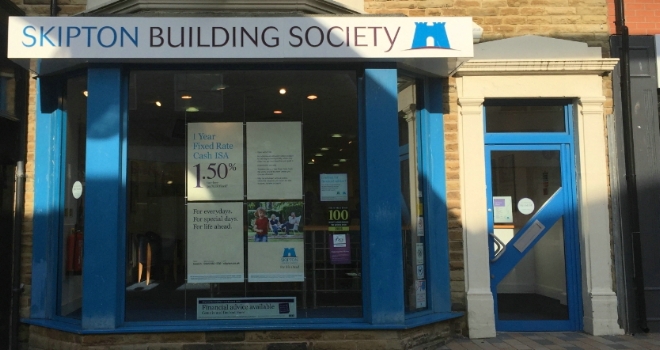
Skipton announces cuts to HTB fixes

Skipton announces cuts to HTB fixes Skipton Building Society has announced that from Thursday 28th July, it will be cutting rates by up to 0.20% on selected Help to Buy products. Skipton’s Help to Buy purchase range includes a fee free 2 Year Fixed Rate at 2.31% to 70% LTV

Read More »

Kelda’s Three Sixty is ‘focussed on growth’

Three Sixty has said it is “focussed on growth”, as the industry prepares for the opening of the shadow market next month. Three Sixty managing director Robert Marrill The firm has already secured some large contracts in Scotland – such as BT and Royal Mail Group – and

Read More »

Cost of land to build prime homes in Asia still rising

Prices of residential sites in Asia increased by 1.9% in the first half of 2016, down from 2.8% in the preceding six months, put office land increased from 1.9% to 2.2%. Overall development land investment volumes in Asia matched the level registered in the corresponding period last year, according to

Read More »

What Did The Property Market Teach Us In 2016?

Last year wasn’t the best year for the property market. With the housing crisis a very real problem now, the Government are trying to save money where they can so that they can spend it on building affordable housing for first-time buyers. The aim is to stop the never-ending spiral

Read More »

Vote Remain say 21 of world’s largest property names

Senior executives of the two largest property owners in the world have come out in support of the UK remaining in the EU. Gerry Murphy, chairman of Blackstone Europe, and Bruce Flatt, chief executive of Brookfield, were among 1,200 business owners to sign a pro-remain letter published in The Times this

Read More »

Uniper shares rise following stock market debut

Uniper shares have risen in the first morning of trading after the newly formed company was floated on the Frankfurt stock exchange. The stock market debut marks the completion of the spin-off of Eon’s conventional power generation and energy trading operations into a separate company. Eon shareholders

Read More »

Sweco UK Awarded BREEAM Assessor Company of the Year

Sweco UK has been awarded the BREEAM Assessor Company of the Year. The leading consultancy company for engineering, environment and design have won the award for the third time. Their expertise in sustainability assessment methods for master planning projects, infrastructure and buildings has helped Sweco claim the title three times.

Read More »
Latest Issue
Issue 343 : Aug 2026

Cristina Diaconu

Short-seller Glaucus takes aim at Japan’s Itochu

Itochu, Japan’s third-largest trading house, has come under a rare attack by a US activist short-seller who questioned its accounts over a $1.5bn investment in Colombian coal mining assets. The Japanese group on Wednesday said that it has taken proper accounting measures and disputed the allegations made in a critical report issued by Glaucus Research, a California-based short-seller, which accused Itochu of overstating its net profits by ¥153bn ($1.5bn) in the 2015-2016 financial year. In a statement, Itochu said its books have been approved by its auditing firm. Shares in Itochu were down 8.8 per cent in morning trading, in a broader market that was up more than 1 per cent. Itochu has become a favourite of investors in the sector after establishing itself as the most profitable among Japan’s five trading houses. For the financial year that ended in March, Itochu reported a net profit of ¥240.4bn, compared to a profit of ¥300.6bn the previous year. With a strong focus on non-resources sectors such as food and textiles, the company has weathered the global commodities rout better than bigger rivals such as Mitsubishi Corp and Mitsui & Co that reported their first annual losses in more than six decades. But in its report, Glaucus questioned why Itochu has not booked any losses on its $1.5bn acquisition of a 20 per cent stake in Colombian coal assets owned by Drummond, a family-owned US mining company, in 2011. Since the deal, the price of thermal coal has collapsed. Analysts have raised similar questions in the past, but Itochu has said it does not need to take a writedown since it has revised its joint venture contract with Drummond and reclassified its stake on its books. Some of the Glaucus allegations relate to well-known issues about the carrying value of investments on Itochu’s balance sheet. Many of the concerns are known to investors and raise questions about book values rather than cash flows. Shareholder activism has made a modest comeback in Japan on the back of Prime Minister Shinzo Abe’s corporate governance campaign urging companies to put cash piles to use and boost returns to shareholders. Over the past three years, US activist investor Daniel Loeb has scored victories with his investments in robot maker Fanuc and retailer Seven & i Holdings. But public attacks by activist short-sellers in Japan are still unusual. Glaucus has previously targeted Asian companies including Singapore-listed China Minzhong Food and Hong Kong-listed Ozner Water International, but Itochu is its first subject in Japan. “Prime Minister Abe’s commitment to corporate governance and transparency requires that Japanese markets be open to a dialogue of investment opinions. At the same time, we think there has been an absence in the market of critical analysis of highly questionable accounting decisions by companies such as Itochu,” said Soren Aandahl, director of research at Glaucus. Additional reporting by Robin Harding Source link

Read More »

Meet the Jersey Boys at powerBall 2016

Experience a night of glitz and glamour and get your feet moving with the unforgettable music from the Jersey Boys at powerBall 2016. Get your ticket now and secure your place for this must-attend event.   Taking place on Friday 11 November 2016 at Grosvenor House, Park Lane, London. This years powerBall promises to be better than ever and will bring even more entertainment with worldwide hits from the Jersey Boys. Book your table now and don’t miss a chance to be at this unforgettable event of the year. Managing director, Tessa Ogle said: “We are so excited for this year’s powerBall. Each year hundreds of industry professionals gather together for this spectacular event, and this year we are expecting to see an even larger number of people attending. Pre-book your table now to avoid missing out on this fantastic party.” For further information or to book your ticket, visit www.powerball2016.com Source link

Read More »

Skipton announces cuts to HTB fixes

Skipton announces cuts to HTB fixes Skipton Building Society has announced that from Thursday 28th July, it will be cutting rates by up to 0.20% on selected Help to Buy products. Skipton’s Help to Buy purchase range includes a fee free 2 Year Fixed Rate at 2.31% to 70% LTV with free upfront valuation and £500 cashback. Five year fixes are available at 2.39% to 60% LTV with £995 fee and free valuation, and fee free 2.75% to 60% LTV and 2.89% to 70% LTV with free valuation and £500 cashback. Skipton is introducing two new Help to Buy remortgage 3 Year fixes at 2.83% to 70% LTV and 2.85% to 75% LTV, both with free valuations and £500 cashback. The society has also extended the end dates on all Help to Buy and New Build products to 31-January In addition to the above product changes, Skipton has replaced the current free legal incentive on Help to Buy remortgage products with £500 cash-back. Skipton’s New Build proposition encompasses a range of product, policy and service enhancements tailored to give new home buyers the best possible experience and increase support for the new build market. The New Build products all include free upfront valuations. Kris Brewster, Skipton’s Head of Products, said: “We are delighted to offer lower rates on selected products in our Help to Buy range, and to introduce new 3 year remortgage products. We’re also pleased to continue to offer our 2 and 5 year New Build range, which offers great value for those wishing to purchase their new home. We believe our New Build Residential Products offer very attractive rates and will help first time buyers and those looking to move up the housing ladder to realise their dream of moving into a new property. All new build applications to Skipton are given a priority underwrite within its specialist underwriting team.” Source link

Read More »

Kelda’s Three Sixty is ‘focussed on growth’

Three Sixty has said it is “focussed on growth”, as the industry prepares for the opening of the shadow market next month. Three Sixty managing director Robert Marrill The firm has already secured some large contracts in Scotland – such as BT and Royal Mail Group – and further growth is important, according to managing director Robert Marrill. The process of transferring the 90,000-strong Yorkshire Water business customer base to Three Sixty is currently underway, and will be formalised “when due process has happened”. However, Marrill also emphasised that growth isn’t the only thing important to the company. “We want to be leading the market,” he told Utility Week. “We want to be known for our thoughts, our ideas, our contribution. “We don’t need to be the biggest, but we do want to be the best. We’re passionate about that.” When asked if he had any concerns ahead of market opening, Marrill said he didn’t want to get “hung up” on different features of the market. “My view is that we’ve got what we’ve got, we should make it work to the best of our abilities,” he said. He added that, in time, things may need to change and the way the market is constructed is not “fit forever”. “There are bound to be teething troubles as we go through shadow and market opening, but until you start playing in it, you don’t know what these will be,” he said. “We’re very much about working with the market, rather than shouting about why it won’t work – that’s not our nature.” Read the full Q&A with Robert Marrill here Source link

Read More »

Cost of land to build prime homes in Asia still rising

Prices of residential sites in Asia increased by 1.9% in the first half of 2016, down from 2.8% in the preceding six months, put office land increased from 1.9% to 2.2%. Overall development land investment volumes in Asia matched the level registered in the corresponding period last year, according to the Prime Asia Development Land Index from international real estate firm Knight Frank. As compared to the preceding six months, however, they were 40.4% lower and the index report explains that land markets tend to be more active in the second half of the year, which accounts for 60% of the transactions historically. With state owned enterprises purchasing land aggressively, China, which accounts for more than 90% of the deals in Asia, saw a 6% year on year increase in volumes while in Thailand some major deals boosted volumes by 190.4%. However, cross border land investment volumes fell by 11.5% year on year. ‘Part of the reason is that while Chinese developers have previously snatched up land in Hong Kong and Singapore, they now appeared to have joined their local counterparts to become more cautious amid the ongoing correction in housing prices in these markets,’ the report explains. As a result, China bought 88.8% less land year on year in the rest of Asia. In China, among the cities tracked, Shanghai experienced the strongest growth in prime residential land prices. ‘While the government raised the down payment requirement on second and subsequent properties as well as tightened non-locals’ purchase eligibility, shadow banking and peer to peer financing helped home buyers circumvent these rules, although authorities are closing the loopholes,’ it adds. According to the National Bureau of Statistics, residential prices in Beijing, Guangzhou and Shanghai surged by 15.3%, 12.8% and 19.5% respectively in the first half of 2016 and the report says this emboldened developers to bid for land aggressively. In particular, Shanghai saw the average premium over reserve price in residential land auctions soar to 154% in the first six months of the year from 60% in the corresponding period last year. As a result of an overhang of unsold prime housing inventory in Mumbai and New Delhi that requires an estimated four and seven years to clear respectively, the Knight Frank indices registered a decline in prime residential land prices. It adds that strong office leasing demand boosted the prices of prime office development sites in Bengaluru, which grew the fastest in the region. Similarly, prices of commercial land in Mumbai and New Delhi outperformed those of residential sites. Tokyo registered the largest increase and the report says that the negative interest rate introduced by the Bank of Japan has brought mortgage rates down, supporting housing demand. Indeed, recent condominium launches with hefty price tags were met with much enthusiasm from home buyers, with one development in Minato ward even fetching a record high average price of US$33,800 per square meter. Sites for office development in Asia also saw healthy price growth helped by a slight compression in yields and an eight year low prime vacancy rate at the end of the first half of 2016. Similarly, prices of office land in prime locations in Hong Kong were also buoyed by limited availability. However, on the residential side, the confluence of weak demand due to economic headwinds and abundant future supply exerted downward pressure on prices. In Southeast Asia, a strong supply pipeline in the prime office markets of Jakarta, Kuala Lumpur and Singapore weighed on rents. Meanwhile, the lacklustre global economy has softened leasing demand. In particular, the Jakarta and Kuala Lumpur office markets continued to be impacted by the slump in the oil and gas industry, while the slowdown in financial services sector is dampening demand in Singapore. Consequently, the prime office land indices for these cities registered negative growth in the first half of the year. In addition to economic slowdown, the prime residential market in Jakarta was also adversely affected by the government’s effort to tackle tax evasion as well as lower affordability following years of rapid price appreciation, the report explains. Residential land prices barely moved as a result. However, the report says that if the recently passed tax amnesty scheme succeeds, the repatriation of funds, together with the easing of monetary and macro-prudential policies by raising loan to value and financing to value ratios for instance, could boost demand for prime residential properties. In Singapore, the prices of luxury homes started rising in the second half of 2015 after tumbling by more than 20% in the previous one and a half years according to Knight Frank’s Prime Global Cities Index. The report says that prime residential land prices could stabilise in the near future. Demand for prime land in Bangkok remained robust due to limited availability. Nearby, Phnom Penh continued to outperform other cities in Southeast Asia, although price growth is decelerating. Source link

Read More »

What Did The Property Market Teach Us In 2016?

Last year wasn’t the best year for the property market. With the housing crisis a very real problem now, the Government are trying to save money where they can so that they can spend it on building affordable housing for first-time buyers. The aim is to stop the never-ending spiral of renters who can’t save up enough money for an initial deposit, due to paying inflated rental prices. So, just what did we learn from the state of the property market in 2016? Let’s take a look: There aren’t enough homes Something that rang clear throughout 2016 was that the Government need to build around 300,000 homes each year in England to keep up with the growing population. This has been recognised and acted on but chancellor Philip Hammond still only has plans for 140,000 homes by 2020-21. The plan is to build these affordable homes on brownfield sites and sell them to 23-40 year olds for 20% below their actual worth to give them a much-needed step up onto the property ladder. Landlords are going to lose out Despite the massive shortage in affordable housing, landlords providing accommodation to people with no alternative are no longer going to receive any relief when it comes to tax. With new Stamp Duty laws adding an extra 3% onto second homes and a 20% tax on the overall income of rent, 2016 saw many buy-to-let landlords leave the market. Sales were down 64% on buy-to-let properties by November and landlords that aren’t selling up have resigned to the fact that they might have to hike their prices up to stay profitable in 2017. The property bubble might have popped House prices got a bit out of hand in 2016 but instead of continuing to rise at an alarming rate, by the end of the year they had steadily started to flat line out. According to Nationwide, they have predicted that growth in house prices will more than halve in 2017 to 2% from 4.5% in 2016. Whether this remains the same throughout the rest of 2017 is not clear yet but it’s a good sign for first-time buyers trying to get on the housing ladder. It’s the age of renters Despite landlords losing out, more people are learning that they can earn extra income from renting out spare rooms to lodgers. Websites such as Airbnb and Spareroom.com mean that individuals can find rooms in sought after locations for as little as £400/month or £20/night as long as they don’t mind living with the home owners. It’s usually far cheaper than a hotel or an actual rental property so a huge benefit to the lodger while giving homeowners some extra pocket money.

Read More »

Vote Remain say 21 of world’s largest property names

Senior executives of the two largest property owners in the world have come out in support of the UK remaining in the EU. Gerry Murphy, chairman of Blackstone Europe, and Bruce Flatt, chief executive of Brookfield, were among 1,200 business owners to sign a pro-remain letter published in The Times this morning. The letter backed a vote to stay in the EU, saying that the UK leaving would hurt both companies and their employees. “Our reasons are straightforward: businesses and their employees benefit massively from being able to trade inside the world’s largest single market without barriers,” the letter said. “As business people, we always look to the future – and a future inside the EU is where we see more opportunities for investment, growth and new jobs.” Click here for more news, analysis and comment on the EU referendum. Those in the property industry who signed the letter include: Mark Glatman, chief executive, Abstract Securities Eric Van Der Klej, co-founder and chief executive, Adeptra Matt Pullen, managing director, AkzoNobel Ross Bailey, founder and chief executive, Appear Here Surinder Arora, chairman, Arora Group David Thomas, chief executive, Barratt Homes Rob Perrins, managing director, Berkeley Group Tony Pidgley, chairman, Berkeley Group Gerry Murphy, chairman, Blackstone Europe Chris Grigg, chief executive, British Land Bruce Flatt, chief executive, Brookfield Asset Management Chris Oglesby, chief executive, Bruntwood Sir George Iacobescu, chairman and chief executive, Canary Wharf Group Stephen Stone, chief executive, Crest Nicholson David Atkins, chief executive, Hammerson Christian Salbaing, deputy chairman, Hutchison Whampoa Andrew Williams, partner and chief executive, LJ Partnership Charlie Cornish, chief executive, Manchester Airports Group Gary Landesberg, managing director, Mountain Capital Marc Vlessing, chief executive, Pocket Living Charlie Fillingham, managing director, Strutt and Parker (Farms) • To send feedback, e-mail karl.tomusk@estatesgazette.com or tweet @ktomusk or @estatesgazette Source link


Read More »

Uniper shares rise following stock market debut

Uniper shares have risen in the first morning of trading after the newly formed company was floated on the Frankfurt stock exchange. The stock market debut marks the completion of the spin-off of Eon’s conventional power generation and energy trading operations into a separate company. Eon shareholders were allocated 53.35 per cent of Uniper shares when the split was officially registered in Germany on Friday. They received one Uniper share for every ten shares they owned in Eon. The two companies have effectively been operationally independent since Uniper came into being at the beginning of this year. Uniper is not listed in the main indices on the Frankfurt stock exchange, unlike its parent company Eon which is listed on the blue chip index DAX. This is likely to have provided some downward pressure on Uniper’s share price, as indices trackers offloaded their newly created stocks. Nevertheless, after being floated in an opening auction at a price of €10.015, the shares gained ground over the first half of the day. At the time of publication, they were trading at €10.538 – valuing the company at around €3.85 billion.  Speaking ahead of the floatation Eon chief executive Johannes Teyssen said: “Eon and Uniper now have every opportunity to be successful with their clear focus on their respective segments of the energy industry. They can now develop without compromises and serve the needs of their respective customers. “This strategy is the right way forward for Eon, for Uniper and for the customers, shareholders and employees of both companies. The new and the classical energy worlds are so fundamentally different that they each require a totally different entrepreneurial approach.” Eon shares dropped 13 per cent in the first half an hour of trading this morning from €8.12 to €7.10. It meant the company’s value fell by around €2 billion to roughly €13.85 billion. At the time of publication, the shares had fallen further to €7.05. Source link

Read More »

Average British Worker Spends 120 hours a Year using Their Smartphones

It has been released that the average British worker spends up to 120 hours a year using their smartphones in the workplace. It has also been released that those who work in the construction sector are amongst the worst culprits. Research has been carried out by LaptopsDirect.co.uk, the gadget and technology etailer. The research was conducted on 2,012 UK adults and revealed that construction workers admit to using their smartphones during working hours. The survey asked questions that has uncovered that 120 hours have been lost per year per employee by personal smartphone use. 78% of those asked admitted to responding to a personal text message during working hours. The results also discovered that 59% will regularly take personal phone calls while they are working. Other results from the technology company’s survey includes 52% of participants say they answer instant messages from platforms such as WhatsApp and Facebook, and 9% have sent a Snapchat while at their workplace. However, 44% of respondents say their workplace permits reasonable use of smartphones, with 14% of those asked have been told off for using their phones at work, with 4% being disciplined for their own devices during work time. The construction sector was the 5th worst sector for using their smartphones at work, with 78% admitting to personal phone use. The results of the survey have been compiled to show the top 10 business sectors that use their personal smart phone at work. Top of the list is the Marketing sector, with 98% admitting to using their personal phone while at work, with Information and communications coming in a close second with 96% using their smartphones. Coming 10th on the list is healthcare, with 23% of participants from this sector admitting to using their phone while at work. Other sectors included in the survey includes retail, 64% of whom admit to using their phone for personal reasons while working.

Read More »

Sweco UK Awarded BREEAM Assessor Company of the Year

Sweco UK has been awarded the BREEAM Assessor Company of the Year. The leading consultancy company for engineering, environment and design have won the award for the third time. Their expertise in sustainability assessment methods for master planning projects, infrastructure and buildings has helped Sweco claim the title three times. The Building Research Establishment Environmental Assessment Methodology, BREEAM, have recognised Sweco for the third time because of the consultancy company’s consistency when it comes to achieving the highest BREEAM ratings on its projects over a 12-month period. This rating has led to Sweco producing some of the most sustainable as well as user focused buildings. Sweco is part of planning and designing of communities and cities of the future. The consultancy company has a hand in designing sustainable buildings with efficient infrastructure as well as access to electricity and clean water. The consultancy company employs 14,500 people throughout Europe, and carries out a variety of different projects in 70 countries around the world every year. Sweco is Europe’s leading engineering, environment and design consultants and receiving this BREEAM accolade three times cements their reputation. The awards ceremony was held on March 7th at the London Marriott Hotel in Grosvenor Square. The event was attended by hundreds of industry professionals. BREEAM is an association that is internationally recognised in their measure of sustainability for buildings and communities. BREEAM’s measure is used in more than 70 countries and has issued more than 530,000 certificates to over 24,000 projects around the world. This wide spread reputation has led to more than 2.2 million buildings and communities being registered for the BREEAM certification. Sweco has been involved in a variety of different projects over the past year including the 107-meter-tall South Bank Tower based in London. The design consultants were also involved in the Four Pancras Square building, a 170,000 sq. ft. building in the Kings Cross area of London.

Read More »