Kenneth Booth

GLOBAL CONSTRUCTION COST CONSULTANCY FIRM SOBEN EXPANDS SENIOR MANAGEMENT TEAM

Global construction cost consultancy, Soben has expanded its senior management team with the appointment of Pieter Schaap as Director. Pieter is the sixth director-level appointment to be made at Soben this year, with further growth planned in the coming months. Pieter joins award-winning Soben from Yondr Group, where he was Supply Chain Director

Read More »

Sustainable hybrid construction that combines wood elements with concrete

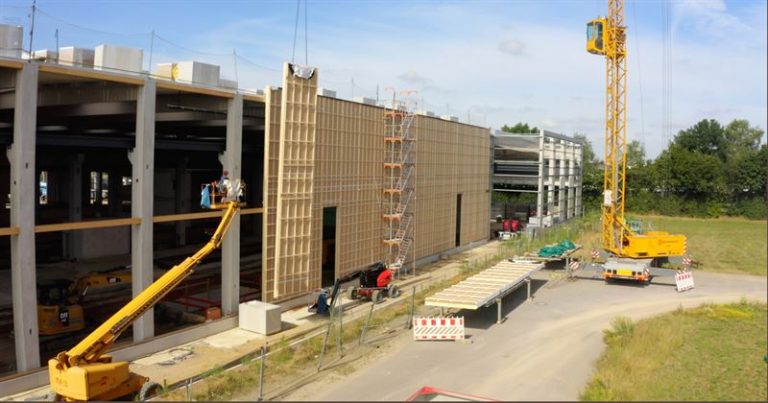
A German element manufacturer Brüninghoff favoured prefabricated wooden wall elements made of Kerto® LVL for its new concrete element plant. Due to the high level of prefabrication, assembly times were optimised. At the same time the material is impressively sustainable and material-efficient, fitting in with the overall concept of the

Read More »

Health & Safety Executive Issues Refreshed Guidance on Silica Dust Ahead of Inspections  

Industry expert Tim Turney from Casella, a leading manufacturer of air monitoring equipment, shares his expert insights on protecting workers from silica dust   The Health and Safety Executive (HSE) has refreshed its guidance on airborne respirable crystalline silica (RCS) to support brick and tile manufacturing, stonework and foundries ahead of manufacturing-focused

Read More »

New technology sees increase in first time gas appointments for housing association

A social landlord has announced a significant increase in customer’s first time gas appointments thanks to a powerful digital solution.  Platform Property Care – a subsidiary of Platform Housing Group, one of the UK’s largest housing associations – has employed the Voicescape Compliance solution with excellent results.  The brainchild of Manchester-based Voicescape, Voicescape Compliance helps

Read More »

Sovini Construction appointed to £1bn new build housing framework

Sovini Construction, part of The Sovini Group, has been appointed to LHC’s £1bn new build housing framework (H2) which will deliver public sector construction projects across England. Following the appointment to the framework, Sovini Construction will have access to a wide range of exciting projects until 2026 as part of

Read More »

Work starts on high quality care home in Rayleigh

LEADING East Midlands contractor Kori Construction has broken ground on a new care home development in Rayleigh, Essex, in a contractor worth £10m. The business is bringing forward the high quality, 60-bedroom facility on Rawreth Lane in the town, on behalf of independent care provider Barchester Healthcare. The care home

Read More »
Latest Issue
Issue 334 : Nov 2025

Kenneth Booth

GLOBAL CONSTRUCTION COST CONSULTANCY FIRM SOBEN EXPANDS SENIOR MANAGEMENT TEAM

Global construction cost consultancy, Soben has expanded its senior management team with the appointment of Pieter Schaap as Director. Pieter is the sixth director-level appointment to be made at Soben this year, with further growth planned in the coming months. Pieter joins award-winning Soben from Yondr Group, where he was Supply Chain Director for the APAC region. He brings with him a wealth of experience and expertise, including in oil and gas, petrochemical, and data centre sectors, and has a strong background in mission critical environments. Pieter’s initial key responsibilities include the formation of supply chain workstreams, sustainability transformations and organisational changes, and creating development activities that relate to Soben’s key clients. Pieter, born and raised in the Netherlands, and a master’s graduate of the University of Groningen, said: “Having the opportunity to work with clients around the globe and add real value to our industry is something I have always enjoyed. “Soben is enabling me to do what I love, and I am looking forward to making a strong impact.” Scott Smyth, Soben Founder and Group CEO commented: “I am delighted to welcome Pieter to the Soben team and know he will do an excellent job in overseeing the development of our global supply chain. “Pieter’s extensive leadership and knowledge in driving successful procurement strategies will benefit our clients and their stakeholders tremendously. “He also has fantastic relationship-building skills, which will help to further cement our strong ties with our current client base across the world. “I believe Pieter’s hire is a real statement of intent and perfectly demonstrates our underlying ambitions to build and develop a global company that offers the marketplace something different.” Soben has further plans for expansion, targeting 1000 people globally by 2027 to support growth in current locations and expansion into additional territories.

Read More »

40% TURNOVER GROWTH PROPELS LEADING CONSTRUCTION CONSULTANCY TO FURTHER EXPAND INTO LEEDS 

ONE of the UK’s leading multi-disciplinary property consultancy firms – EDGE PS – has revealed how a 40% year-on-year growth in turnover provided the momentum needed for the strategic launch of its Leeds office earlier this year. Since the office’s initial formation in January 2022, the company has further grown its regional portfolio of commissions and local resource to a team of 17 professionals, incorporating project and commercial management to building and digital surveying services. The expansion builds on the company’s continued business growth in its established bases in Nottingham, Sheffield, Birmingham and London, resulting in a 40% year-on-year increase in turnover from 2021 to 2022. To mark this strategic accelerated growth and commitment to delivering services within the Leeds city region, a special celebration with more than 200 key industry stakeholders and clients was hosted at the Dakota Hotel in Leeds at the start of September. The consultancy has a solid reputation for delivering a variety of services to national and international clients across the property and construction industry. EDGE PS is delivering both public / private sector projects across the region including supporting the strategy for reducing carbon and energy reduction for the University of Leeds in its target to achieve Net Zero by 2030. Nick Phelan, partner at EDGE PS, said: “The rapid expansion of our operations in Leeds and the wider northern regions signifies a major milestone for the company as a whole and is a reflection of the continued growth of the Company. We have been delivering key projects across the region for several years, our new Leeds office now provides further localised support to our key clients and partnerships across the region. “Our celebration event on Thursday was a fitting celebration to mark eight hugely successful months from our new base and we were delighted to be joined by some of our most supportive colleagues, clients and friends to mark the occasion.” EDGE PS’s regional healthcare portfolio includes Leeds Teaching Hospital NHS FT, Doncaster and Bassetlaw Teaching Hospitals NHS FT, Sheffield Health and Social Care NHS Trust, and Sheffield Children’s Hospital. Clients in the wider West Yorkshire region include Leeds Bradford Airport, UNITY Doncaster, and Wykeland Group, along with household names B&Q and Johnson & Johnson. Through the team’s expertise in cost management, project management, health and safety advice, and building and digital surveying, EDGE PS has built a strong foundation for successful and continued expansion across the north of England. Its unique approach ensures that more than 86% of EDGE PS’s projects are sourced from repeat business. The Leeds office enables EDGE PS to build upon the company’s existing client base within Leeds and the wider West Yorkshire region in the business’ focus areas of, healthcare, schools & higher education, infrastructure, aviation, residential, retail, commercial and manufacturing sectors, food and drink, distribution, through both the public & private sectors over the coming years. Dale Rodgers, director at EDGE PS Leeds, added: “The meteoric success in the West Yorkshire area – both in terms of the quality and profile of our clients supported by the growth of our team since the start of the year – is testament to our professional approach, tailored service model and expertise of our staff.  “It’s important to us that as we continue to expand, we retain our unique collaborative culture at heart to ensure EDGE PS remains a leading construction consultancy business across the UK.” For more information on EDGE PS and its services, follow the link for more information: https://www.edgeps.co.uk/

Read More »

Sustainable hybrid construction that combines wood elements with concrete

A German element manufacturer Brüninghoff favoured prefabricated wooden wall elements made of Kerto® LVL for its new concrete element plant. Due to the high level of prefabrication, assembly times were optimised. At the same time the material is impressively sustainable and material-efficient, fitting in with the overall concept of the new plant. The modern concrete element plant in Heiden Germany has an area of around 17,000 square metres. Metsä Wood’s Kerto LVL L-panels and Kerto LVL T-studs have been used for the prefabricated non-load-bearing wall elements. The high-quality wall elements completely cover the height of the hall giving it an attractive appearance while meeting strict standards of sustainability. “The Brüninghoff Group makes prefabricated wooden elements with a particular focus on products with a very high proportion of wood products – such as laminated veneer lumber. To this end, we carefully select partners that fit our sustainability strategy and who are reliable. In this context, we chose wall elements made of Kerto LVL from Metsä Wood for our new concrete element plant,” explains André Leipold, Technical Director of Brüninghoff Holz GmbH & Co.KG. A hybrid structure combines wooden elements with concrete Sustainability was considered as early as the planning and construction phase of the new plant. That is why a hybrid construction structure with prefabricated external non-load bearing wall elements made of Kerto LVL was chosen for the building. Metsä Wood’s laminated veneer lumber is perfect for element manufacturing. It is also extremely material-efficient; it is needed less in volume compared to other wood materials and its strength-to-weight ratio is excellent. “According to calculations using Carbon Storage Calculator, just the Kerto LVL used in the factory building stores carbon a total of 165.8 tonnes of CO2eq. This means that in comparison to other construction materials, wood is very sustainable,” explains Leipold. The building has a total of 239 wall elements with an overall area of around 5,000 square meters. The elements were produced at the Brüninghoff element factory and are attached to a load-bearing concrete frame consisting of a hybrid structure. Sustainability in focusThe new concrete element factory does not just steer production towards sustainability, but also develops a consistently sustainable construction concept. “Through this construction, we are forcing structural change towards construction that supports circular economy. Change is needed as the construction sector is responsible for consuming huge quantities of resources. It is a question of optimising construction methods, developing low-emission concepts and increasingly backing recycling solutions,” explains Frank Steffens, Managing Director of Brüninghoff.

Read More »

Atkins opens up historic Cardiff canal in regeneration development

Atkins, a member of the SNC-Lavalin Group, has helped to unveil a historic canal in the centre of Cardiff which has been covered over for more than 70 years, as part of a £6m regeneration project in the city. Atkins was appointed by Cardiff Council to design the Canal Quarter development, alongside Faithful+Gould, also a member of the SNC-Lavalin Group, which is providing project management and commercial support. The development scheme involves the daylighting of 70 metres of the Dock Feeder Canal on Churchill Way, Cardiff. The dock feeder was originally constructed in the late 19th Century to provide a constant supply of water to the Bute docks – allowing for large container ships to dock in Cardiff, regardless of the tide, leading to Cardiff becoming a world leading exporter of iron ore and coal. It was paved over between 1948 and 1950, and after being hidden to generations of shoppers and city residents, will now form the centrepiece of a new sustainable urban district in the city centre. Alongside opening up the canal, the scheme involves the construction of two pedestrian footbridges, a cantilevered stage and rain gardens to manage surface water drainage among other structures. The project also includes the upgrade of the surrounding highways network with the creation of cycleways, EV taxi charging points, refurbishment of existing highways and new bus links. Atkins has provided the design for the scheme with a multidisciplinary approach including the design of structures, drainage, landscape, lighting and electrical as well as highways, with the surrounding road network. Hamish Watkins, project manager for Faithful+Gould, said: “This is a really important development for Cardiff as it forms a key part of the regeneration of the area. Already, prior to completion we have seen the redevelopment of near-by buildings to boost hospitality and business to This part of the city. “It will also provide an area for residents and tourists alike to visit, work in and enjoy, which means it’s providing commercial value as well as social value for the community it serves. Ben Ferguson, Senior Landscape Architect for Atkins and lead designer on the project, said: “It’s great to be able to reflect the industrial heritage of the area by re-opening the dock feeder. During the late 19th and the early 20th century this waterway was at the centre of a tree-lined boulevard and to re-establish that aesthetic, and to reveal the waterway once again within a forward looking and sustainable design will be incredibly exciting.” Additional work on the scheme will include multiple packages of work such as street lighting, CCTV, new traffic signals and additional service diversions. Cllr Dan De’Ath, Cabinet Member for Strategic Planning and Transport at Cardiff Council, said: “The opening of the dock feeder canal and the new transport scheme will not only mark the beginning of a new district centre for the city and act as a catalyst for new investment, but it will play an essential role in managing traffic flow and surface water drainage in the city centre. “A series of rain gardens will be built, with specific soil and planting to treat the surface water to remove pollutants before the water flows into the canal. This will ensure that 3,700 m2 of water will be diverted away from the sewage system each year, reducing the cost and energy of treating this water through the sewage pumping station at Cardiff Bay.” This project, which started in February, is part of a wider masterplan to develop a new district in the city, interlinking Bridge Street, David Street. Charles Street, Tredegar Street, Guildford Crescent, and Barrack Lane to develop a high-density, mixed-use development, attracting homes, hotels, hospitality, high quality offices, leisure and retail units.

Read More »

Health & Safety Executive Issues Refreshed Guidance on Silica Dust Ahead of Inspections  

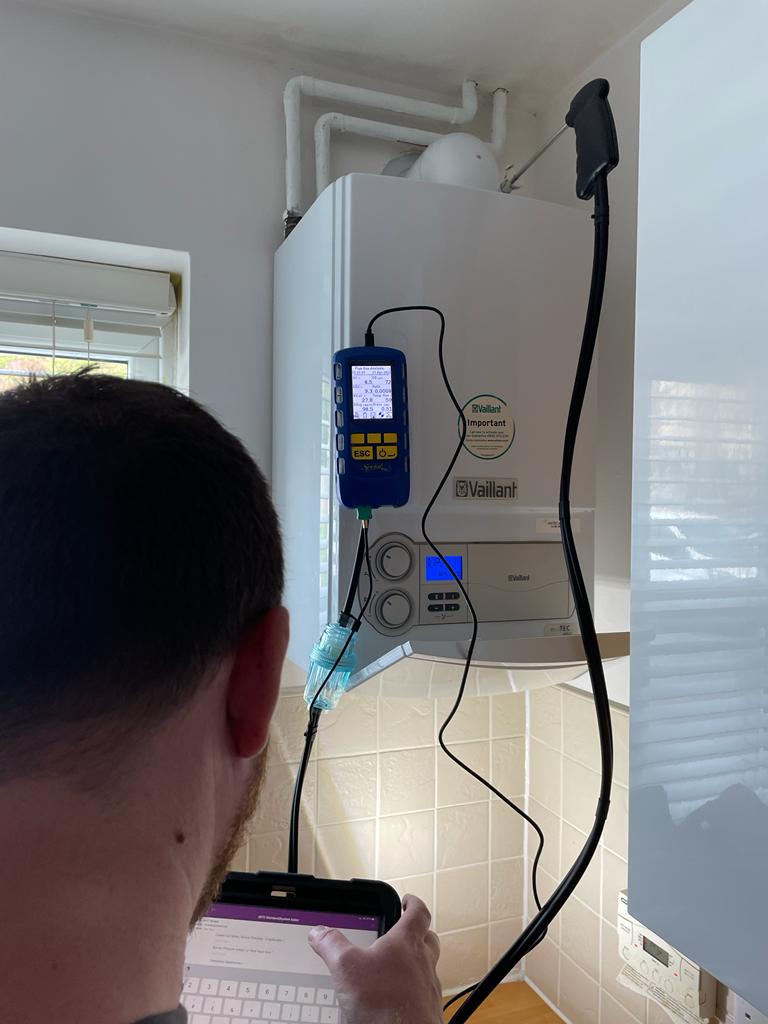
Industry expert Tim Turney from Casella, a leading manufacturer of air monitoring equipment, shares his expert insights on protecting workers from silica dust   The Health and Safety Executive (HSE) has refreshed its guidance on airborne respirable crystalline silica (RCS) to support brick and tile manufacturing, stonework and foundries ahead of manufacturing-focused inspections this Autumn and Winter. Commencing in October, the HSE will investigate manufacturing businesses where materials containing silica are used to assess whether suitable arrangements are in place to manage health and safety and that the measures comply with the Control of Substances Hazardous to Health Regulations 2002 (COSHH).  Crystalline silica   Silica is found in varying amounts in most rocks, sand, and clay, and is a major constituent in construction materials made from these resources, including bricks, tiles, and concrete. Workers can breathe in silica dust while cutting, sawing, drilling, or crushing materials. Silica has a crystalline form, which occurs naturally in varying amounts in any substance containing silica, that poses potential health concerns. Crystalline silica can damage tissue in the lungs and lead to lung disease, chronic obstructive pulmonary disease, or incurable silicosis.  As with any known workplace health risk, a correctly implemented scheme of controls using the hierarchy of controls is the most effective means of reducing worker exposure to respirable crystalline silica. This can help reduce both the likelihood of workers developing health complications such as silicosis and the potential legal ramifications for employers. Measures include a correctly executed program of air monitoring, which can include both monitoring at the site level and on an individual employee level using personal sampling pumps. Air monitoring can quantify exposure levels, or if controls are in place, check that they are effective and measure any residual risk.  In control  Businesses can measure worker exposure using personal sampling pumps. However, it is important that the pumps are used with the correct sampling head and in the case of respirable dust a cyclone and filter, which collects the particulate.  Once the sample is analysed by a laboratory, the level of exposure can be calculated. Action can then be taken to improve control measures to ensure exposure is reduced to as low as is practicably possible. Improvements have been made to different elements of personal sampling pumps over time. Battery technology, back pressure capability, accurate flow control, minimized pulsation, data download and the ability to be intrinsically safe have all been improved, ensuring measurement of an individuals’ exposure to harmful substances is as accurate as possible. Understanding these factors in which the personal sampling pump needs to operate effectively will allow employers to choose the most effective device suited to their working environment.  Correct implementation of personal sampling relies on a thorough understanding of practice, procedure, how sampling pumps function and use of the correct sampling head and filters.   Correct equipment, calibrated properly  Personal sampling pumps must adhere to the standard ISO 13137:2013. The standard sets limits for required flow stability and maximum permissible pulsation levels, enabling users of personal air sampling pumps to adopt a consistent approach for flow rate assessment. The standard provides a comprehensive framework that specifies test methods to determine performance of air sampling pumps and ensures that environmental influences such as air pressure and temperature have a minimal impact on the accuracy of the sampled air, which in turn could affect sample results.   Correct equipment—calibrated properly—and an awareness of the limitations and impact on data collection that the equipment itself can have should be at the forefront of correct air monitoring procedures as well as the fight against “the new asbestos.” Pumps, including the Apex2, that operate with a pulsation value of less than 10 percent and conform to all relevant ISO standards give industrial hygienists and site managers the peace of mind that data captured is reliable and unaffected by pump pulsation. Low pulsations are particularly important when sampling for crystalline silica as the sampling head is a cyclone, and only at low pulsation levels will it get the correct ‘respirable’ sample.  While awareness of silica’s negative health effects is on the rise, correct procedure, safety-focused culture, and the right equipment will ensure that the downward trend in silicosis mortality continues.  Bridging the gap  Employers have a legal duty to arrange suitable health and safety measures to ensure that they are compliant with the COSHH. Brick and tile manufacturers, foundries and stone working sites will all be held accountable for protecting their workers’ health.   With responsible employers’ collaboration with HSE guidelines, awareness can be raised of the life-changing respiratory conditions associated with pulmonary disease caused by silica dust.  For more information about air sampling, monitoring and calibration solutions visit: www.casellasolutions.com 

Read More »

CSG white paper proposes new standard to unite the sector behind construction product competence

An innovative proposal for the built environment A new white paper has been published that sets out how the entire built environment sector can unite behind a single, agreed standard to determine, demonstrate and recognise construction products competence (CPC). The white paper ‘Built environment – proposed construction product competence standard – white paper’ has been developed by Competence Steering Group (CSG) Working Group 12, led by the Construction Products Association (CPA). The CSG was tasked with responding to the competence issues raised in Dame Judith Hackitt’s report ‘Building a Safer Future’ and the subsequent requirements set out in the Building Safety Act following the Grenfell Tower fire. All industries of the built environment sector use construction products, but their misuse can lead to dangerous and potentially fatal outcomes. Ensuring those who use construction products are competent is vital to producing buildings and a built environment that is safe, efficient and performs as required. However, there is currently no universal way to demonstrate that an individual has the correct competence for the tasks they are accountable and responsible for. This white paper confirms that radical change is needed around the area of construction product competence. Individuals who supply, use, or otherwise work with construction products need to be properly assessed and deemed competent to do so. This would include those from manufacturing, merchants, design, contractors, maintainers, and many others from right across the supply chain. The proposal for a new standard comprising five core levels of competence, as well as a methodology that defines how these can be mapped consistently by the different industries to their competence frameworks. This would ensure that everyone applies CPC in the same way and would assist regulators and duty holders in identifying what levels of competence are needed for everyone who works with construction products. The levels outline fundamental knowledge bases applicable to all tasks with all construction products. They are designed to give a clear path of progression through the necessary competences required for different levels of responsibility and accountability. It can be used by industries to map against their existing training and qualifications and create any additional training infrastructure that may be needed. The white paper also proposes that the standard be added to the existing BSI 8670 series, which specifies requirements for competence frameworks for individuals working in the built environment. Peter Caplehorn, CPA Chief Executive, says: “Dame Judith Hackitt rightly pointed out that our industry needs to take responsibility for competence and work in a non-siloed manner. Now the Building Safety Act is making clear that regulators will no longer tolerate an industry that does not evidence its competence. The CPC levels have been designed to provide a single framework for everyone to work to, and I would urge the industry to read this white paper and get involved in testing it together.” The proposals are being published now to allow everyone in the built environment sector to review and consider how to apply them in their industry. It is for the different industries to recognise the necessity of clear, demonstrable CPC. Once this is recognised, it is for each industry and its organisations to take on the principles proposed in the white paper and test them. It is the aim of CPA, the CSG and WG12 that by the time the proposals go through the formal standards process, industries will have had the time to practically trial them ready for entering feedback via public consultation. There will also be a series of panel-led webinars tailored to individuals who work in the following sectors: manufacturing, design, contracting, operations & maintenance, and merchants/distributors. The first will be on for manufacturers on Wednesday 27th September. The White Paper ‘Built environment – Proposed Construction Product Competence Standard’ is available to download online here.

Read More »

New technology sees increase in first time gas appointments for housing association

A social landlord has announced a significant increase in customer’s first time gas appointments thanks to a powerful digital solution.  Platform Property Care – a subsidiary of Platform Housing Group, one of the UK’s largest housing associations – has employed the Voicescape Compliance solution with excellent results.  The brainchild of Manchester-based Voicescape, Voicescape Compliance helps compliance teams meet their statutory property maintenance requirements; in the case of Platform Property Care, it is being used for annual gas safety checks.  In essence, the software automates the process of booking, confirming and rescheduling appointments with customers before they happen.  This prevents both non-compliance and the cost of no-access visits.  Prior to using this new technology, the social landlord was booking gas appointments through either letters or texts; if a customer needed to rearrange an appointment it required the customer to make contact.    Lee Vernalls, Assistant Director at Platform Property Care said: “Voicescape is allowing us to change the way we schedule our gas servicing appointments, moving from a prescriptive approach to a more consultative approach.  We are now providing a better service for our customers and ultimately reduce the cost and inefficiency of no access appointments.  We can now see, in real time, the customers who have confirmed appointments and those who still require contact.  Having this level of information is truly changing how we work.”  In four months, the rate of no-access appointments has reduced by 24 per cent; it is hoped that this figure will continue to rise.  Lee concluded : “Voicescape has provided us with a faster, more proactive approach to engaging with our customers and having quality conversations to meet their requirements.  Our access rates have increased, allowing us to book appointments that suit the customers whilst also managing our compliance.”  Bill Williams, Chief Revenue Officer at Voicescape said : “Our partnership with Platform Property Care has helped to deliver huge efficiencies in dealing with the growing and costly challenge of no access.  The automated element of the solution ensures operatives are only involved if a customer needs to rearrange an appointment.  This has led to capacity being freed up so that Platform’s team can further concentrate on those customers who need more targeted support.  “Voicescape is proud to support Platform Housing Group – and the wider social housing sector –to meet its compliance requirements while improving the experience for both customers and team members.”  For further information please contact Lee Vernalls, Assistant Director at Platform Property Care at Lee.Vernalls@Platformhg.com. 

Read More »

Sovini Construction appointed to £1bn new build housing framework

Sovini Construction, part of The Sovini Group, has been appointed to LHC’s £1bn new build housing framework (H2) which will deliver public sector construction projects across England. Following the appointment to the framework, Sovini Construction will have access to a wide range of exciting projects until 2026 as part of the deal. The framework offers a range of traditional housing solutions to the public sector, as well as low, medium, and high-rise construction, care homes, mixed-use sites and sheltered, student and key worker accommodation. In addition, the framework also provides a focus on creating net-zero homes which Sovini Construction proudly back through their own Group’s Net-Zero Carbon Commitment.   LHC is a not-for-profit, central purchasing body providing procurement services across England, Scotland and Wales. Dean Fazackerley, Head of Technical Procurement at LHC, said: “The new H2 framework in England will equip providers to meet ongoing housing challenges within the public sector, addressing local housing demand while maintaining momentum in their journey towards the production of zero carbon homes. It’s hugely important that we continue to respond to the housing needs of local populations while at the same time looking to the future, creating healthier environments that embody social, human, and environmental considerations.” LHC frameworks are used by over 700 publicly funded organisations including local authorities, housing associations, registered social landlords, tenant management organisations, education authorities, publicly funded schools, further education authorities, NHS bodies and other publicly funded organisations. Sovini Construction has been successfully appointed their North West new build housing projects up to value of £10m. Steve Parrington, Managing Director of Sovini Construction, said: “The LHC framework provides a flexible and efficient procurement route for local authorities and social housing landlords. We are proud to have secured our place on their North West new build framework.   “We look forward to strengthening our relationship with the LHC to deliver vital infrastructure for communities across the North West and working with local supply chain partners to leave lasting legacies in the areas in which we work”. Sovini Construction are delighted to partner with LHC, one of the UK’s leading, not-for-profit procurement consortiums within the built environment. To learn about the positive impact Sovini Construction in creating across the North west visit – https://sovini.co.uk/construction/ or follow them on LinkedIn @Soviniconstruction 

Read More »

Tellon Capital Appoints Henry Construction Projects Limited for its 40 Broadway London SW1 Development

Tellon Capital have appointed Henry Construction Projects Limited as the main contractor for the construction phase on their site at 40 Broadway in the heart of Westminster.  The 40 Broadway site originally comprised a mid-1960s office building at 40/48 Broadway with large car park, 1920s “warehouse” style building at 1/11 Carteret Street and a further 1980s office building at 13/15 Carteret Street.  Tellon secured planning permission in 2018 for a comprehensive redevelopment. The scheme proposes complete redevelopment to create a distinct office building providing approximately 135,000 sqft GIA of new high quality bespoke accommodation in this sought after location. The scheme includes a series of terraces at various levels with views across St James’s Park. Demolition of the existing buildings is now nearing completion and Henry Construction Projects Limited have been appointed for the construction phase to bring the proposed plans to reality from the end of October.  Tellon Capital was established in 2014 and via the acquisition of high quality investments patiently unlocks asset potential and has developed a reputation for delivering high level returns through innovative and well executed asset management initiatives. James Burchell, a partner at Tellon said “We are excited about delivering a top quality ESG compliant office building in this prime location and are thrilled to have appointed Henry Construction Projects Limited to be our main contractor for the construction phase at 40 Broadway. Their focus on delivering many services in-house means we can deliver a scheme of the highest standards. We look forward to working with them” Henry is one of the UK’s leading construction firms. Their focus is on using traditional building techniques and modern methods of construction and can now deliver between 50-70% of the trades in-house. Mark Henry, Director of Henry Construction Projects Limited said “We are delighted to have been appointed as main contractor for the construction of new offices at 40 Broadway. We look forward to delivering a high quality scheme in a prime location.”   

Read More »

Work starts on high quality care home in Rayleigh

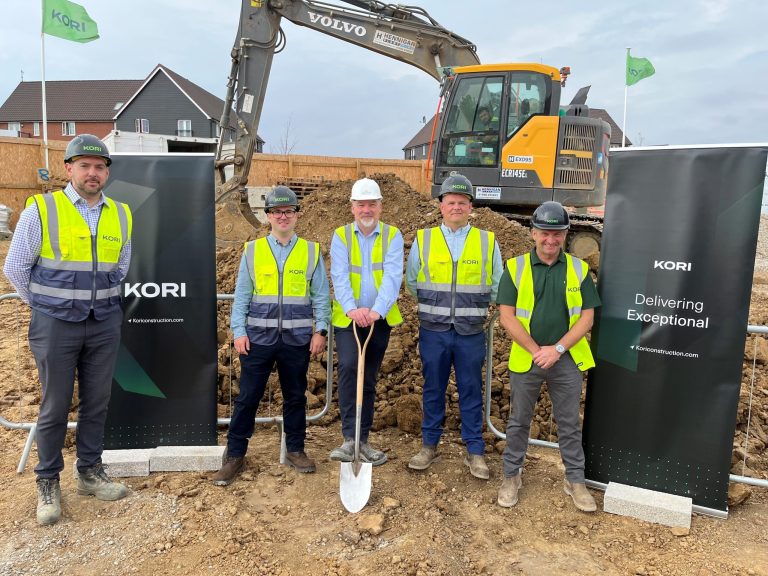
LEADING East Midlands contractor Kori Construction has broken ground on a new care home development in Rayleigh, Essex, in a contractor worth £10m. The business is bringing forward the high quality, 60-bedroom facility on Rawreth Lane in the town, on behalf of independent care provider Barchester Healthcare. The care home is part of a wider plan for a new residential scheme on land to the north of London Road which includes outline planning permission for up to 500 houses as well as non-residential facilities. Occupying a 0.44 hectare green field site, it will provide high quality living accommodation and care to elderly and frail residents, along with communal facilities, landscaped grounds and parking facilities for visitors. Wayne Bedier, Project Manager for Kori Construction at Rayleigh, said the care home had been designed with a contemporary material palette to reflect the style of the surrounding properties. The layout of the home has been carefully considered to provide a safe and secure environment for residents, along with effective infection control. Mr Bedier said: “We are delighted to be able to break ground and start work on this important development. “Rayleigh is a very popular and attractive town and as a result, there is significant demand for residential care. As in common with all Barchester Healthcare care homes, this development will provide a high quality solution, helping meet that demand. “Each bedroom will have its own private wet room and en-suite facilities, ensuring continued independent living for residents, and the wings and floors have been designed to function autonomously from each other allowing isolation to take place in the event of a virus outbreak. “This ensures that the care home will provide precisely the right balance of independent living and security, giving residents and their family members complete peace of mind.” The three storey property will have a total internal area of 3572m2. The design includes 15 ground floor bedrooms, 21 bedrooms on the first floor, and 24 on the second floor. Building materials include red multi brick walls with dark grey cladding, dark grey roof tiles and natural stone window sills. The development was also designed with sustainability in mind, achieving a ‘very good’ BREEAM rating due to PV panels on the roof, and a target to reduce water usage on site by 25%. There will also be four EV charging points in car park which has a total of 24 car parking spaces, including two disabled spaces. Mr Bedier added the development was forecast to be completed by December, 2023. “This is a fantastic scheme on a well-proportioned site,” he said. “Now work has got underway, we’re expecting to good progress on the build to ensure it is delivered on time.”

Read More »