Kenneth Booth

£20 million funding boost for Devonshire Homes

Devonshire Homes has increased its existing revolving credit facility (RCF) from Lloyds Bank to £20 million to facilitate the housebuilder’s future growth plans.   The privately-owned housebuilder is currently active on five West Country sites, with a further four additional sites in the region acquired within the last three months.

Read More »

SPRINT FINISH: £22.5M LEISURE CENTRE COMPLETES FIVE MONTHS AHEAD OF SCHEDULE

SPORT and leisure specialist GT3 Architects has completed a new gateway leisure centre in Coalville, Leicestershire, allowing residents to access the centre’s state-of-the-art facilities five months earlier than anticipated.  Replacing the former Heritage Leisure Centre in neighbouring Whitwick, this leisure destination has been completed ahead of schedule after seamless collaboration with contractor

Read More »

Stoford secures funding for British Salt warehouse

Commercial property developer Stoford has secured funding for the construction of a new warehouse for British Salt, the UK’s leading salt manufacturer and part of Tata Chemicals Europe. It has signed a funding agreement with ICG, the global alternative asset manager, for the 184,493 sq ft state-of-the-art warehouse in Middlewich,

Read More »

Signify announces first ever on-demand CIBSE accredited CPDs

Signify (Euronext: LIGHT), the world leader in lighting, has announced five new CIBSE accredited Continuous Professional Development (CPD) courses to arm specifiers, lighting designers, facilities managers and installers with the knowledge to be able to respond to a range of business needs from meeting sustainability goals to protection from COVID-19.

Read More »

Siemens businesses partner to help factory accelerate towards net zero

Partnership between Siemens Digital Industries and Smart Infrastructure help Congleton plant achieve carbon neutral target Siemens’ Congleton factory is on track to achieve carbon neutrality this year – eight years ahead of its original target. The operation, which manufactures more than 1.2m controls and drives each year, is inching its

Read More »
Latest Issue
Issue 335 : Dec 2025

Kenneth Booth

£20 million funding boost for Devonshire Homes

Devonshire Homes has increased its existing revolving credit facility (RCF) from Lloyds Bank to £20 million to facilitate the housebuilder’s future growth plans.   The privately-owned housebuilder is currently active on five West Country sites, with a further four additional sites in the region acquired within the last three months. Devonshire Homes has enjoyed a long-standing relationship with Lloyds Bank since 2016 and this newly extended finance facility supersedes its previous arrangement with Lloyds Bank that was announced in February 2022. Devonshire Homes has been building homes across the West Country since 1992 and the new RCF will accelerate the housebuilder’s expansion plans to double turnover and deliver 400 homes per annum by 2026. Angus Cook, Managing Director at Devonshire Homes, commented: “This marks another important milestone for Devonshire Homes and we are delighted to have agreed this new £20million facility with our long-term and supportive banking partners at Lloyds Bank. “Devonshire Homes is on a significant growth trajectory and this new RCF helps cement our position as an established and ambitious developer in the South West. It provides us with the flexibility to continue to acquire and establish new sites to deliver high-quality homes to people who need them. “This new agreement comes at the perfect time. As a privately-owned housebuilder, our ability to make swift decisions with landowners has been the cornerstone of a string of recent land acquisitions in this last quarter.  And now with this extended financing secured to support our business growth objectives, we are keen to build on the momentum; to build our land bank, further strengthen all areas of the business and are very much looking forward to the future.” Paul Collings, Relationship Director at Lloyds Banking Group, commented: “Sustainability has become more of a priority than ever for homeowners, so it’s great to see Devonshire Homes bring forward greener homes, provide energy solutions to help reduce household costs and ultimately help futureproof properties for generations to come. “We’re proud to back Devonshire Homes and its long-term commitment to providing sustainable housing for the West Country. We will continue to be by the side of local businesses as they accelerate their environmental ambitions and help the South West to reach its net zero goals.” Independent housebuilder Devonshire Homes has been creating new homes and communities in towns and rural areas across the South West for 30 years. The housebuilder specialises in providing homes which reflect the traditional characteristics and building styles of the region combined with high specification, contemporary interiors. Current developments include: Tarka View, Crediton; Applegate Park, Kingsbridge; Longston Cross, Bovey Tracey and Gwallon Keas, St. Austell with The Grange, Bideford, launching this autumn. For more information, visit www.devonshirehomes.co.uk.

Read More »

Five things every builder needs to know before they buy an electric van

Electric vans are increasing in popularity, but should you buy one for your business? Dan Powell from Desperate Seller reveals the top five things every electrician needs to check before going electric.  With the 2030 ban on petrol and diesel vans looming large over the horizon, you may be wondering if now is the right time to make the switch to electric.  Electric vans are more expensive to buy than their diesel counterparts but they offer significant long-term savings when it comes to fuel, tax, and maintenance costs. Electric vans are easier to drive and more refined than their diesel rivals too, which means they tend to be more comfortable over a long journey.  The latest crop of electric cargo carriers from Ford, Vauxhall and Peugeot will also deliver heavy-duty load carrying capacity that will easily match the latest diesel panel vans. However, before you ditch your diesel, there are some important things you should be aware of. Dan Powell, editor at the online van marketplace Desperate Seller, reveals the top five things you need to know before joining the electric revolution.   Work out your mileage How many miles do you drive a week? Does your daily commute involve long motorway trips or are you a local electrican who covers lots of short journeys? Before you set foot in a van showroom, you’ll need to work out what your daily and weekly mileage is (then add 20% to cover those unexpected site visits and trips to the local wholesaler).  Once you have an idea of your mileage, you can start shortlisting vans. The Ford E-Transit will cover between 166 and 196 miles on a full charge, while the Vauxhall Vivaro-E is advertised with a maximum range of 205 miles.  It’s important to note the real world range may be slightly lower than the advised figure as things like air conditioning and heating will require power from the van’s EV battery.   Do the maths An electric van could save your business thousands every year. Charging the 75kWh version of the Vivaro-E will cost around 28p/kwh and give you around 200 miles of range. A diesel van that returns 47mpg will cost at least £37 to fill (at 191p-per-litre) and you could save even more if you charge your van at home on an overnight tariff. Electric vans are more expensive to buy than their diesel rivals, however. The Vivaro-E, for example, is around £5000 dearer than the standard diesel model. But road tax is free and electric vans also have fewer moving parts than diesel vehicles, which means maintenance and servicing costs tend to be lower.  Many supermarkets and public car parks will also let you charge your van for free while electric vans are exempt from clean air zone charges, like the London ULEZ.  Take charge Obviously, if you buy an electric van then you’ll need somewhere to charge it. And a home charger is the cheapest and most convenient way for your business to operate an electric van. Charging your van via a three-pint plug will take all day, so invest in a home wallbox if you have a driveway as this will cut the charging time to six or seven hours.  There are more than 33,000 public EV charging points in the UK. And more are being added to this figure every day. Some public charging stations are free to use. Rapid charging is the most expensive way to charge your van but is useful if you get caught short, boosting your battery from 10% to 80% in around 30 minutes.  Check your weight Electric vans tend to have lower towing capacities than their diesel counterparts. The Vivaro-E, for example, will tow a braked trailer up to 1,000kg – so always check the spec if you need your electric vehicle to tow tools or equipment. Payload capacity and loadspace is generally the same as diesel and petrol vans. In 2018, the Government changed licensing laws to make it easier for people to drive electric vans. This means you can operate an electric van weighing up to 4,250kg with a standard driving licence (instead of the 3,500kg you’d normally be limited to with a petrol or diesel vehicle).  Take a test drive Have you ever driven an electric van before? If you haven’t, you’ll probably find the experience a little strange at first because electric vans are silent and don’t have a manual gearbox.  Electric vans also use regenerative braking, which recovers energy to top up the battery when you slow down. This means the van will lose speed when you lift your foot off of the accelerator much quicker than a standard diesel vehicle. As a result, we’d recommend taking an electric van for a lengthy test drive so you can see if it is something you feel comfortable with.  

Read More »

SPRINT FINISH: £22.5M LEISURE CENTRE COMPLETES FIVE MONTHS AHEAD OF SCHEDULE

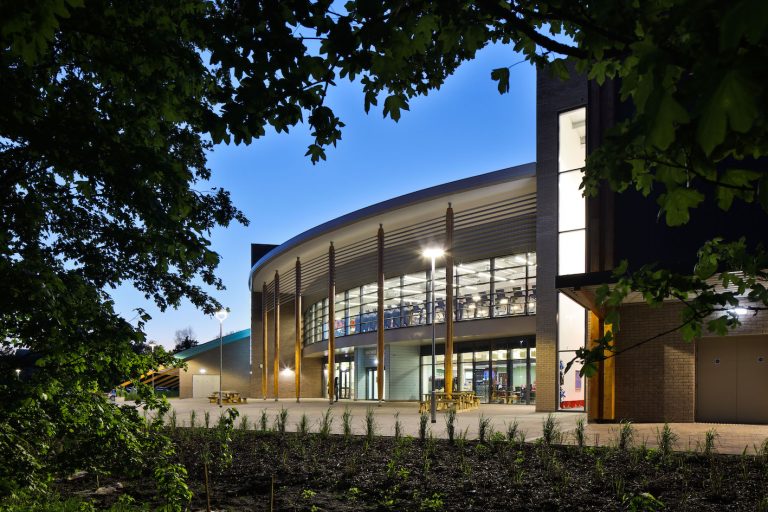
SPORT and leisure specialist GT3 Architects has completed a new gateway leisure centre in Coalville, Leicestershire, allowing residents to access the centre’s state-of-the-art facilities five months earlier than anticipated.  Replacing the former Heritage Leisure Centre in neighbouring Whitwick, this leisure destination has been completed ahead of schedule after seamless collaboration with contractor Metnor, project manager Paragon, landscape architect OOBE and M&E and BREEAM consultant Envision. The project, delivered on behalf of Everyone Active and North West Leicestershire District Council, includes an eight-lane, 25m pool, teaching pool with movable floor, eight-court sports hall, three squash courts and a 120-station fitness suite with spin and dance studios.  Clare Noble, senior architectural technologist at GT3, said: “We were delighted to deliver this leisure centre so efficiently in collaboration with a host of great firms and contractors. We’ve worked with Everyone Active, Metnor and Paragon on a variety of leisure schemes and have a brilliant working relationship – this communication and transparency (combined with a lot of individuals putting in hard work) is what allowed us to accelerate the completion of the Whitwick and Coalville Leisure Centre. “A good working relationship is exceptionally important to GT3. We aim to create beautiful spaces while delivering transparency, inclusivity, and added value – which is why collaborating seamlessly with our partners is central to our work. Our ‘people architecture’ ethos extends beyond the people we’re designing for to the people we’re designing with, too.” One of the themes central to the site’s design was the sensitivity to its setting. Situated opposite an existing further education college, the new pool hall gives the appearance of pre-patinated copper cladding on its overhanging roof to reflect the design of the college. External glulam timber columns were carefully chosen to mirror the National Forest setting, and full-height glazing in the café opens up the centre to its surroundings. The bricks incorporated into the design have been locally sourced from nearby Ibstock, just 3.5 miles away, linking Whitwick and Coalville Leisure Centre further to its surroundings. The scheme has already seen great interest, with impressive engagement from the local community. Paul Sanders, head of community services at North West Leicestershire District Council, said: “Our state-of-the-art Whitwick and Coalville Leisure Centre is a fabulous facility for the district which, fits well into its National Forest setting. It’s a building we hope will get people excited about getting fit and active, and demonstrates our commitment to ensuring high-quality design.” The centre opened its doors to the public on 14 February and will facilitate a healthy lifestyle for the local community, with memberships to the former Hermitage Leisure Centre automatically transferring to the new state-of-the-art scheme.   For further information visit www.gt3architects.com or join the conversation over on Twitter @_GT3Architects 

Read More »

Stoford secures funding for British Salt warehouse

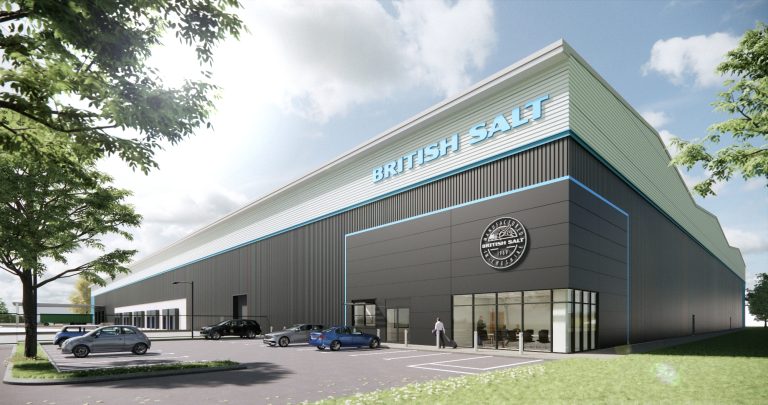
Commercial property developer Stoford has secured funding for the construction of a new warehouse for British Salt, the UK’s leading salt manufacturer and part of Tata Chemicals Europe. It has signed a funding agreement with ICG, the global alternative asset manager, for the 184,493 sq ft state-of-the-art warehouse in Middlewich, Cheshire, which will enable British Salt and Tata Chemicals Europe to store the high purity salt and sodium bicarbonate products manufactured at its three sites in Cheshire and streamline its packaging and supply chain operations. The funding agreement, the first between Stoford and ICG, comes as Cheshire East Borough Council granted planning permission for the unit, which will be built at the British Salt manufacturing site on Faulkner Drive, Middlewich.  The new warehouse will support Tata Chemicals Europe’s existing operations, storing products destined for the food and pharmaceutical markets and support its future business plans in Cheshire. Edward Peel, Stoford’s Development Manager, said: “Securing funding for this strategically important warehouse for British Salt is great news. The business has ambitious plans to invest in the region it has called home for more than 50 years. Now that funding and planning approval have been agreed, we’re putting plans in place to start construction work as soon as possible and are looking forward to delivering this warehouse.” Building begins in August with a projected completion date by July 2023.  Angus Vause, Sales & Marketing Director of Tata Chemicals Europe, said: “We are delighted that Cheshire East Borough Council has granted planning permission for our new warehouse, which is a key part in the delivery of our future growth plans for the business in Cheshire and will enable British Salt to deliver enhanced customer service and supply chain excellence.” Chad Brown, Managing Director at ICG Real Estate, added:  “We’re pleased to be partnering with Stoford on the forward funding of this well located and mission critical asset. This is an attractive deal for ICG, underpinned by strong real estate fundamentals and favourable lease dynamics, with the firm eager to deploy further capital in the sector across the UK and Europe.” Stoford and British Salt were both advised by DTRE on the sale and Avison Young were the appointed planning consultants.

Read More »

Signify announces first ever on-demand CIBSE accredited CPDs

Signify (Euronext: LIGHT), the world leader in lighting, has announced five new CIBSE accredited Continuous Professional Development (CPD) courses to arm specifiers, lighting designers, facilities managers and installers with the knowledge to be able to respond to a range of business needs from meeting sustainability goals to protection from COVID-19. Ranging from topics like the correct use of UV-C technology as an added layer for disinfection to driving better connectivity through lighting, the five new CPDs are the first ever on-demand Chartered Institution of Building Services Engineers (CIBSE) accredited CPDs. These courses are an addition to an existing portfolio of 700 courses on the Signify Lighting Academy that delivers training to thousands of subscribers. The trainings are available on demand, and at the end of the training, a certificate is generated confirming the CPD hours. ‘’Continuing Professional Development (CPD) is a long-term commitment to undertake the systematic maintenance, improvement and broadening of knowledge and skills. It is about learning and putting into practice new competencies year after year and investing in your future. The on-demand digital CPDs are a great initiative by Signify to enable installers, specifiers and the whole community to learn about the latest technologies and innovations and move with the times, as this also aligns closely with our agenda at CIBSE. I encourage other members to also introduce more digital CPDs, on an ongoing basis.’’ John Aston FSLL, a member of the CIBSE CPD panel The list of on-demand CPDs announced includes: • With the World Health Organization now focusing on UV-C technology as a means of disinfection, a recorded webinar UV-C for Disinfection – General Awareness Training, has been made available. This training, which is ideal for Installers, contractors, specifiers, distributors, resellers, lighting designers and facilities managers, focuses on UV-C lighting for disinfection, how it works, research conducted to date, the benefits, safety considerations, and applications to help keep air and surfaces free from viruses & bacteria. Most importantly, the training also teaches how installers/managers can ensure safe use of the technology. • Addressing the ongoing disinfection challenges posed by COVID-19, the CPD titled Airborne transmission – why UV air disinfection is essential? is a webinar from Harvard Professor, Edward Nardell, about the necessity of UV-C technology from a medical perspective and how UV-C technology is readily available, safe for room occupants, cost-effective, and can be implemented today, learn more. • More and more devices connect to the internet every day, most wirelessly. While wireless connectivity is a must have, conventional wireless connectivity solutions use the crowded radio spectrum to communicate. What’s more there are areas where radio frequency wireless connectivity is not permitted or the best fit. Responding to the growing need for better connectivity, the CPD titled Trulifi by Signify offers an introduction to LiFi, how coworking, equipped with Trulifi, isn’t just the preserve of the jet-set and digital nomads. • For those installers interested in biophilic design and natural light indoors, the CPD titled Biophilic Design addresses how enhancing our connection with nature is more than simply adding plants and that it’s a design ethos that can appeal to us all. The CPD covers the core principles and 14 patterns of biophilic design, a business case and research demonstrating that it is good for people, and good for business. • Lastly, another CPD added is the Connected Lighting CPD. As the climate crisis intensifies, every business needs to play its part to cut carbon emissions. The use of lighting controls can be used to improve the efficiency of a lighting system. This CPD focuses on how connected lighting can be crucial to designing an energy-efficient system, along with its benefits and applications. The CPD also helps delve into how the IoT systems from Signify can take you beyond the base requirements in Part L to create a truly efficient lighting installation. All courses listed above are 1-hour long sessions. ” We are proud to work closely with CIBSE to provide the first ever on-demand digital CPDs. With the CPDs now being available on demand, we are excited to offer the trade community continuous learning and development, on the go and play our part in making the industry grow. It is our aim is to create a complete programme of CPDs covering the entire spectrum of lighting. We see it as an important part of our role to increase knowledge and raise technical standards for the lighting industry. These CPDs also affirm our dedication to developing long-term partnerships with our customers and supporting them in delivering their lighting visions – from design through to installation and maintenance as these CPD meet a pressing need for up-to-date guidance on the latest technology and legislation.” Simon Greenwood, Sales Director, Trade and Specification, Signify UK&I The Signify Lighting Academy offers a comprehensive range of educational resources to advance lighting knowledge. The educational lighting materials are provided by world-class lighting experts and professionals that come with assessment tests and certificate handouts that are certified by CIBSE.

Read More »

Glodon Gsite nominated for `Construction Software of the Year´ at London Construction Awards

Glodon Gsite, a cloud-based software for construction management and information handling, has been shortlisted for Construction Software of the Year at the London Construction Awards, which will be held on 23 September 2022. The London Construction Awards is part of London Build, the UK’s leading construction and design show. The awards recognise achievements, projects and innovation in the construction industry and feature a wide range of categories for tech companies, contractors, architects, civil engineers, developers and local authorities. “We‘re pleased to be a finalist for Construction Software of the Year”, says Tom Young, Construction Director at MagiCAD Group Ltd. “Regardless of the final outcome of the competition, we consider it recognition for our efforts and the growing position in the market. We look forward to representing our company brand and product at the upcoming event. I am proud of my colleagues’ fantastic work with our clients to develop a product that improves the construction management between site and the office.” Gsite is a flagship construction platform for construction management and information handling in building projects. Gsite users include Operatives, Supervisors, Project managers, Engineers, as well as all other members of the Construction team. Gsite is used in over 30,000 construction projects all over the globe. With a robust mobile application and web browser interface, it enables users to be as mobile as the construction project requires while still being able to work on the same tasks when back at the office. Glodon Gsite is used in over 30,000 construction projects all over the globe. With a powerful mobile application and web browser interface it enables users to be as mobile as the construction project requires while still being able to work on the same tasks when back at the office. Gsite provides a single, easy to use unified construction management platform. It allows you to handle multiple use-cases, tasks, and operations from a single application with integrated instant communication functions.

Read More »

Volvo Group UK Ltd adopts waterless urinal tech to reduce emissions impact

Volvo Group UK Ltd is adopting waterless urinal technology at its UK HQ in Warwick, and its Felixstowe Renault Truck Commercials Depot, to help cut CO2 and water waste. The flushless urinals are part of the organisation’s commitment to reach net-zero by 2040, covering direct and energy indirect emissions from operations, purchased goods and services. The roll-out of the waterless urinals, provided by UK-based Smarti Environmental, is set to slash Volvo Group UK Ltd’s carbon footprint from its washrooms by 105kg of CO2 per urinal, per year. Volvo’s installation of waterless urinals is part of its commitment to actively looking at ways to optimise water. Last week’s announcement of a national drought shows the importance of such water saving measures. Volvo’s switch from flushing to waterless urinals will enable it to do its part to protect national water supplies, reducing its water use annually by 100,000 litres for every urinal converted to become waterless.

Read More »

Siemens businesses partner to help factory accelerate towards net zero

Partnership between Siemens Digital Industries and Smart Infrastructure help Congleton plant achieve carbon neutral target Siemens’ Congleton factory is on track to achieve carbon neutrality this year – eight years ahead of its original target. The operation, which manufactures more than 1.2m controls and drives each year, is inching its way to the major milestone after deploying a range of sustainable solutions for energy generation and demand with support from Siemens’ energy and performance services business, Smart Infrastructure. These include generating 75kw of renewable energy through a hydro-electric plant at Havannah Weir on the river Dane and using carbon neutral, certified biogas to power its on-site gas engine. These measures alone saved over £250,000 pounds a year and took the 80% power-independent factory off the grid. Beyond these innovations, Siemens Congleton adopted a building management system which automatically adjusts to drive energy efficiency improvements, while modern windows and LED lighting have reduced the total energy bill by 13% and 30% respectively. Combined with reducing waste to landfill to zero and EV charging for staff and visitors, the Cheshire site is eight years ahead of Siemens’ original 2015 commitment to ensure carbon neutral operations by 2030. Commenting on the achievement, Andrew Peters, Managing Director of Siemens Digital Industries Congleton, said: “Siemens believes that sustainability is a force for good and can deliver value for all its stakeholders. We want to help customers achieve sustainable growth and to transform their industries through decarbonisation. The first step of that is for us to achieve these ambitions in our own operations. “I am delighted that by leveraging a culture of continuous improvement and sustainability – the vital components to Siemens’ Congleton’s long-term success – we have achieved carbon neutrality, a major milestone in our ambitions to reach net zero emissions by 2030.” The 50-year-old Siemens Congleton factory began its sustainability journey in 1990 when it began manufacturing drives to meet the demands of industry. In 2018 the factory became fully digital by embracing lean manufacturing methods to achieve continuous improvement and by adopting leading-edge Industry 4.0 processes. Using advanced manufacturing methods include Virtual Reality, Digital Twin, the Industrial Internet of Things (IIoT), Advanced Robotics, Cloud Technology and Additive Manufacturing, it has mastered producing up to 50,000 variations of its products to fulfil the shifting demands of its customers and markets, increased productivity by driving down costs, and improved efficiency. In 1990, 400 workers made 50,000 variable speed drives and controls a year. Today, a similar number of workers produce 1.2 million electrical devices – including 600,000 variable speed drives (VSDs). What is more is that it has been achieved within the same physical footprint. The factory is bounded by industrial units and housing estates, with no room to expand, meaning Congleton has one of the highest productivity rates per m2 of any Siemens’ sites. Faye Bowser, Head of Siemens’ Energy & Performance Services GB&I, said: “The climate emergency puts the demand on businesses of all sizes and sectors to really accelerate their efforts for decarbonisation. But a challenge is that often decarbonisation isn’t their core business. So, at Energy and Performance Services we make it our business to use our skills, our knowledge and our tools to help our customers transition to net zero in a way that contributes to their business priorities. “Despite us being from the Siemens family, we have approached working with Congleton the same we do with any organisation. It has been fantastic. In Andrew Peters you have a leader in a business which has put continuous improvement and sustainability at the heart of their long-term success. Our job was to apply those components to their energy system and their energy strategy. What we ended up with is an engineered roadmaps to net zero that considers timelines, finance, digital services, all there to safeguard business continuity, and to have a method to continuously identify more opportunities to reduce carbon on site.” The Congleton factory is leading the way for Siemens which has committed, as a global organisation, to ensure all its operations are carbon neutral by 2030 and for all production facilities and buildings to achieve net zero-carbon footprint by 2030. In the UK Siemens’ progress has been recognised by The Carbon Trust, an expert partner for supporting organisations to achieve science-based targets. In June it awarded Siemens its Route to Net Zero Standard tier one certification for ‘Taking Action’. Commenting on this milestone achievement, Olivia Whitlam, Head of Sustainability, Siemens Plc said: “Siemens is taking a holistic approach to achieving net zero and we are pleased to be guided by the Carbon Trust who helps us monitor our progress each year. “We have 8,600 people spread across offices and 11 manufacturing sites across the UK and we are creating innovation up and down the country with sustainability at the core of our operations and services. Our Congleton factory is paving the way for sustainability whilst setting a great example on how manufacturers can join this amazing journey to net zero.”

Read More »

Vattenfall and J. Murphy & Sons sign £2.5m deal for Norfolk Offshore Wind Zone

New £2.5m deal signed to deliver early works for the onshore cable installation scope of the Norfolk Offshore Wind Zone Early works will help provide greater certainty in construction and help deliver the project more efficiently Boost for local economy and supply chain businesses In a major step forward for delivery of the Norfolk Offshore Wind Zone, J. Murphy & Sons, the leading specialist engineering and construction company has been awarded a £2.5m contract with Vattenfall to deliver early works for the onshore cable installation scope of the project. J. Murphy & Sons is also preferred bidder for the future construction works contract. J. Murphy & Sons early works will include site investigations and design optimisation activities, for example topology surveys, boreholes and small trial pits along the cable route to further understand ground conditions.  Design optimisation provides greater certainty in construction requirements to allow a more efficient delivery of the project, with a focus on sustainable design through the use of innovation and minimising materials and programme. This is the first phase of Vattenfall’s extensive works to turn East Anglia into a powerhouse of renewable energy and is essential to ensure that future work onshore progresses as efficiently as possible. Working with local businesses and communities is an essential part of delivering the Norfolk Offshore Wind Zone. Alongside Vattenfall’s drive to deliver their ambitious supply chain and skills and employment plans, J. Murphy & Sons will be engaging with local contractors and businesses during this period, seeking their support in delivering the works. They will also be working with local colleges to find young people who are keen and available to work in the sector, delivering one of the largest offshore wind zones in the world. Rob Anderson, Project Director of Vattenfall’s Norfolk Zone, said: “We’re taking the project into the next phase so we’re delighted to have J. Murphy & Sons on board, helping us to deliver the Norfolk Offshore Wind Zone. Their expertise will be invaluable, as will their focus on boosting the local economy by supporting jobs and growth in the region.” Andy Ingram, Operations Director for J. Murphy & Sons said: “The award of the early contractor involvement contract marks the next step of our journey with Vattenfall, the local supply chain and wider community in delivering this essential piece of green energy infrastructure. We are delighted to bring our expertise and experience to the project and play our part in developing sustainable and secure energy sources for the UK market”.

Read More »

CONSTRUCTION NOW AN ‘ATTRACTIVE’ CAREER PATH FOR OVER 50% OF UK YOUNG ADULTS

Construction now considered an ‘attractive’ career prospect by 56% of 18-29-year-olds Over 20% women now interested in construction role, even after being dissuaded by third-parties Engineers are back in demand, as second ‘most wanted job’ in UK after ‘healthcare professional’ Over a third (35%) of young people want to be a part of construction, as an industry ‘undergoing massive, positive change’ 31%of young people want to build a ‘better physical world’ through construction careers Teaching shortages loom as sector struggle to fill roles for essential construction courses New research from construction data platform NBS reveals that construction has now become a desirable career path for UK school leavers and young adults, with 56% now considering it an’ attractive’ profession with plenty of prospects.” NBS quizzed 2,000 18–29-year-olds across the UK regarding construction as a potential vocation, yielding surprising, but refreshingly positive results. This will come as welcome news to a sector that saw job vacancies hit an all-time high (49,000) earlier this year. Importantly, the survey indicates a distinct cultural shift in attitudes amongst younger generations, in part, helped by the growing number of digital opportunities available and extensive media attention around the sector’s use of industry-leading tech, dispelling the myth that construction is a dead-end career. Russell Haworth CEO of NBS, said: “It’s clear that perceptions around construction are changing. Young people now realise it’s not the dull, dangerous, and dirty job as mislabelled for years by educators and career advisors.  It’s great to see such an uptick in interest following some very lean years recruitment-wise. The challenge for the sector now is to jump on this opportunity, we must not miss it as has previously been the case.” This Woman’s Work The poll included diversity-related questions and found marked improvement in a sector which has struggled to be inclusive for decades. Highlighting the fact that construction has been made to be more inclusive, 57% of females also stated that they consider construction to be a generally ‘diverse’ industry. Now over a fifth of women are ‘very interested’ in construction as a career, showing scope for an influx of female employees following A-level and university results day. However, a similar number are being actively dissuaded by peers and family to take a job in the industry. It shows whilst personal attitudes are changing, sector misconceptions persist, which must be overcome. Mirudhula Ponraj, 26, a Technical Trainee Assistant at Bellway Homes, said, “It’s interesting to hear that more women are interested in construction. Great strides are being made in terms of inclusion, but we know more work still needs to be done for the sector to represent 21st century Britain. With schemes such as Women into Construction, I’m optimistic that we’ll see more change in the next ten years. “There’s a misconception that construction is all about muddy boots and strong shoulders, today’s industry is so much more. I studied Building Information Modelling (BIM) at uni. The fifth of women mentioned in NBS’ study looking to enter the industry might be surprised to learn that roles can be incredibly diverse. The next generation now have the opportunity to work with technical programmes and computer systems, utilising brains over brawn.” Engineering Success Dismissing stereotypes that Millennials and Gen Z aren’t interested in highly skilled occupations, ‘Engineer’, particular structural and civils roles, ranked number two when it came to the list of most sought-after jobs. This was second only to ‘Healthcare Professional’ in popularity, ranking higher than ‘Legal Professional’ ‘Teacher’, ‘Designer’ or even ‘Social Media Influencer’. Drilling down, 8% were specifically interested an architectural career, potentially indicating why so many young people appear interested in making their mark in construction. Almost a third stated a passion for architecture and a similar number wanted to ‘create a better physical’ world, further supporting Gen Z’s growing reputation as the ‘sustainability generation’, regarding greener construction as a route to a lower carbon future An evolving industry Over a third flagged they were interested in construction because they see it as an industry ‘going through a massive, positive change’. This might reflect a growing public awareness over the past few years around the sector’s growing diversity, greater digital adoption and greener approaches to business. Emphasising the impact innovation is having on the industry, three quarters of respondents also recognised that ‘a lot’ or a ‘fair amount’ of technology is used in contemporary construction. Unsurprisingly, salary and earning potential were a main motivator. ‘Good pay’ ranked top of the incentive list, followed by a good home and work balance (2), a respectful working environment (3), interesting work (4) and working with nice people (5).  Train Drain However, despite an uplift in interest from a younger generation looking to make their way in the industry, another recent study by the Association of Colleges (AoC) found skills shortages amongst staff looking to teach construction are stalling progress. Putting the problem into context, 85% of further education colleges have struggled to secure staff to teach the relevant subjects. It’s a problem that will need to be addressed should the indicative findings of NBS’s report be borne out in reality and an influx of interest in construction roles occurs over the next six months. Haworth concludes: “This study has proven to be a litmus test of where the industry is heading within the next twenty years – seeing more women and greater diversity entering the workforce will only continue its upward trajectory. With so much interest from young people our next challenge is turning interest into long and fruitful careers.” To see the full survey data, click here 

Read More »