Kenneth Booth

Beard completes stunning restoration of UK’s oldest lido

Beard Construction has completed a meticulous £6.2m restoration of Cleveland Pools in Bath, the UK’s oldest lido. As well as calling on Beard’s expertise in heritage restoration, the 15-month project to restore the decaying, 207-year-old Georgian site to its former glory had significant logistical challenges – as all plant and

Read More »

Energy-efficient and sustainable vacuum solutions from Atlas Copco provide the final perfect touch for Noelle + von Campe

The UN has declared 2022 the “International Year of Glass”. This puts even more focus on production conditions in the energy-intensive glass industry, and efficient technologies along the entire value chain are particularly in demand. Vacuum technology also has a major influence on sustainability in glass production – because stable

Read More »

GAS TURBINE FOR SALTEND POWER STATION

The Collett Team safely deliver a 100Te gas turbine rotor to Saltend Power Station in Hull, East Yorkshire Touching down on board one of the World’s largest cargo aircrafts, the Antonov 124, the 100 Tonne gas turbine rotor arrived at Doncaster Sheffield Airport.  Utilising the 3,000 metre runway, one of

Read More »

NEXT STAGE OF FUNDING APPROVED FOR KIRKLEES CULTURAL HEART

The next stage of funding for Kirklees Cultural Heart has been approved at a cabinet meeting today, paving the way for Kirklees Council to carry out the next steps in the regeneration scheme’s programme. Cabinet agreed to release £10.5 million of funds to enable the next stage of works on

Read More »
Latest Issue
Issue 343 : Aug 2026

Kenneth Booth

Beard completes stunning restoration of UK’s oldest lido

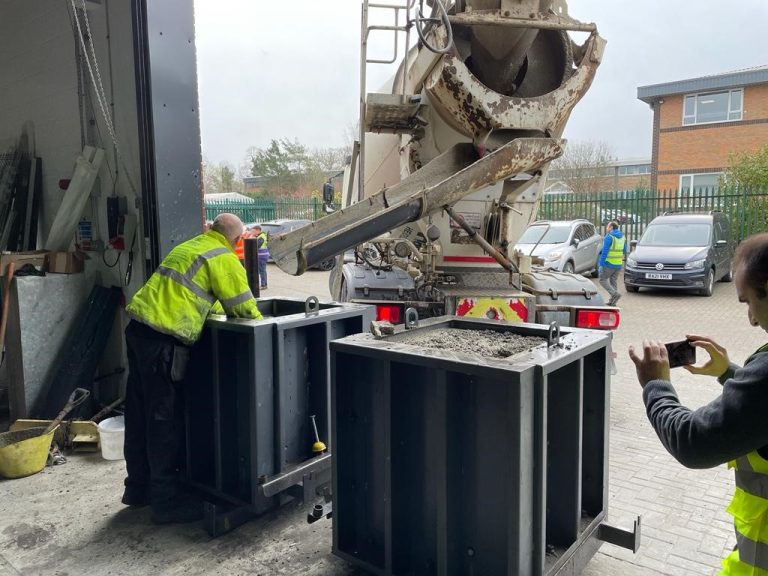
Beard Construction has completed a meticulous £6.2m restoration of Cleveland Pools in Bath, the UK’s oldest lido. As well as calling on Beard’s expertise in heritage restoration, the 15-month project to restore the decaying, 207-year-old Georgian site to its former glory had significant logistical challenges – as all plant and materials could only be brought to the site by boat on the adjacent River Avon.  Machinery, building materials, equipment and everything else required to carry out the major refurbishment work on the Grade II* listed site was loaded up at the nearby Avon Rugby Club, which was used as a base, and carried up-river by barge. The barge was limited to carrying five tonnes of material per trip and made about six trips a day -navigating around everything from pleasure craft to the canoeists and kayakers who shared the river.  The work saw the creation of a new crescent-shaped waterproof concrete main pool within the footprint of the original, listed red-brick pool, which was preserved beneath it. Work began with the draining of the existing pool, followed by the installation of a system of drainage crates to allow natural spring water to continue to flow into the listed pool and around the shell of the new one. The existing children’s pool walls were temporarily held in place while the team excavated out the base to construct the waterproof, below-ground plantroom which is now home to the pool filtration equipment, along with hi-spec water source heat pumps which will be used to heat the pool water.  A refreshment kiosk and seating area is now housed above the plantroom. Curving around one length, the original Georgian changing rooms and a central cottage with archway were made structurally safe, restored, stripped of centuries of paint back to their original Bath stone and re-roofed in Welsh slate – some of which was reclaimed from the original roofs. New terrace seating was also added, as well as a new toilet and shower block. Outdoor chrome showers also flank both pools. As well as allowing for access, water from the river will feed the water source heat pumps, providing the Pools with a sustainable heating solution when the pool fully re-opens to the public in spring next year and heating the pool to 28 degrees centigrade. The pool is now ready to welcome its first swimmers. Hundreds entered a competition to be the first to swim and the winning 100 will do so on Saturday, September 10 – from when the pool will be open to the public for a preview, cold-water season. The restoration is the culmination of an extraordinary 18-year community campaign by the Cleveland Pools Trust, supported by thousands of Bathonians. The trust’s tireless campaign has taken the 207-year-old, Grade II* listed site from the lows of its closure in 1984 and a threat of demolition in 2003, to the highs of its stunning, present-day restoration. The overall cost of the project is £9.3m, £6.47m of which came from The National Lottery Heritage Fund. The project has also had significant support from the DCMS Capital Kickstart Fund, Historic England and Bath and North East Somerset Council. Bath-based architectural practice Donald Insall Associates were lead designers on the project with Hydrock carrying out the structural design. The restoration has been led by project director Anna Baker, a chartered architect who specialises in historic buildings. Anna said: “I am proud to have played a part in a restoration that many didn’t believe was possible. It’s been complex and very challenging. But it’s also been unique, the project of a lifetime. “We are a small project team and could not have done it without the help of our hundreds of volunteers. It’s been a real privilege to work on such a community-driven undertaking. “I’ve especially enjoyed taking this from a community heritage scheme to a project which engages with wellbeing, culture, sustainable energy and the natural environment.” Beard’s project manager Mark Tregelles added: “This has been a rare opportunity to restore a heritage building to its original use. Although logistically challenging, the overriding theme of this project has been collaboration. Working together with Anna, her team, volunteers and local residents has meant that no problem has been insurmountable. “Having access only by river has really tested our initiative, not only getting materials in and out of the project but also in the method of construction, given the limited plant and equipment that we could get to the site. Overall, it has been an honour to breathe new life into an historic landmark which can now be enjoyed for generations to come.” David Barnes, associate director at Donald Insall Associates, said: “We are delighted to have had the opportunity to lead the design team for the restoration of this precious historic outdoor public pool. The restored and updated facilities at Cleveland Pools present a new and exciting chapter for continued enjoyment of this much-loved site that is inescapably part of Bath’s rich bathing heritage”.

Read More »

Building College Launches Innovative Commercial Gas Engineering Apprenticeship

A new apprenticeship for Commercial Gas Engineering Operatives has officially launched at Leeds College of Building.  The apprenticeship is the first of its kind in Yorkshire, and the first time the College has offered a commercial rather than domestic pathway for gas engineers. The training is aimed at individuals employed by gas, heating, and ventilation firms who specialise in business services. Jim Branney, Curriculum Manager for Gas and Short Courses at Leeds College of Building, explained: “Since changes were made to the entry requirements to allow people work in the gas industry, employers have been unable to easily tap into this kind of commercial gas engineering training. We have therefore been responsive to employer feedback and adopted a BPEC curriculum framework, endpoint assessment, and accredited certification specifically for these apprentices working in commercial organisations. “The training is a little different to the domestic route as it’s not a qualification – it’s a managed learning programme leading to Gateway. The outcome is still an End Point Assessment and ultimately an apprenticeship certificate. Training is designed for those who need to know theories and safety procedures involved in the commercial installation, commissioning, decommissioning, or service and repair of gas appliances and associated equipment.” Jim continued: “This is probably one of only a handful of apprenticeship routes regionally into the commercial gas industry, yet there is a huge demand for trained professionals needed for thousands of opportunities nationally. This apprenticeship is an ideal route for individuals looking to specialise as commercial gas engineers.” The new apprenticeship will cover statutory requirements such as health, safety and environmental legislation and regulation, along with maintenance of gas installations and appliances in accordance with industry standards. Apprentices also learn about electrical and mechanical principles, energy efficiency, products, company rules, policies and procedures, risk assessments, tool maintenance, personal protective equipment (PPE), working on customer premises, effective communication, working with different trades, flue testing, pipework installation, ambient air testing, and identifying faults. In the final three months of the apprenticeship, trainees submit a portfolio consisting of a Gas Safe® registration certificate, competency test, and work-log review which includes an interview with a Technical Expert. On achieving a pass or distinction, apprentices will be eligible for membership with the Institution of Gas Engineers and Managers (IGEM) professional registration as an Engineering Technician (EngTech). Applicants should be aged 16 or over and ideally already be employed or have secured a work placement. Those unable to find an apprenticeship can apply for a study programme at Leeds College of Building and switch over to an apprenticeship at any point when a vacancy becomes available.  Visit the Leeds College of Building website for more details about how to apply or to enquire about training your employees.

Read More »

Key Milestone reached as Glencar’s new regional office in Manchester officially launched.

Significant recent project wins at sites across the Northwest and Yorkshire now brings the Glencar order book in the region to over £100M. Glencar, a leading UK construction company that was recently ranked amongst Europe’s fastest growing businesses, has today revealed it has reached a key milestone with its order book in the Northern region now topping £100M. To celebrate this growth the business has expanded to its new Manchester office headquarters which it moved into in August following a move from its previous location in the Neo building which it opened in May 2021.  The office located within the One St. James building, right in the heart of Manchester’s central business district is testament to the expansion of the region following a number of successful contract wins. The office is currently working on projects in Crewe, Wigan, Rochdale, Sheffield and Stafford for clients including PLP, RULA, Trammell Crow Company, Firethorn and Wilson Bowden Developments where Glencar are onsite building in excess of 1.4 million sq ft. Talking about the opening of the new office, Pete Goodman Glencar Managing Director Midlands and North said: “Since we established our office in Manchester in May 2021, the region has gone from strength to strength and is now home to over 40 Glencar colleagues.  As part of our strong customer first ethos, the office has enabled us to be closer to our customers and continue our strong growth in this fast-growing area. In addition to our notably strong industrial/logistics project order book across the North we are also seeing strong growth in the retail/leisure, commercial, storage and manufacturing sectors and will look to continue expanding our offering during the coming months”.

Read More »

Warringtonfire commits to future of fire safety following inaugural graduate scheme intake

Warringtonfire, a global leader in fire testing, inspection and certification, has welcomed four new engineers as part of its inaugural graduate recruitment scheme. The company, which is part of Element Materials Technology, launched the scheme to help future-proof the fire safety industry and coincides with the 50th anniversary of the first commercial fire test at its fire testing laboratory in High Wycombe. The extensive history and experience of Warringtonfire’s multiple laboratories enable the company to provide graduates with the support and knowledge needed to make valuable contributions to the fire safety industry going forward. Amman Ahmed, Evandro Valente, Shannon Muir and Susie Hall joined Warringtonfire as graduate engineers in September 2022. The two-year structured training programme will see the four new recruits join Element’s team of over 7,000 scientists, engineers, and technologists working across a network of over 200 laboratories worldwide. It is the first time Warringtonfire has formalised its approach to graduate recruitment, with the scheme receiving over 200 applications for just four places from recent graduates with a minimum of a 2:1 degree classification in a STEM subject. The scheme comprises four rotations through key areas of the business: Reaction to Fire Testing, Fire Resistance Testing, Technical Assessments and Quality. An additional three-week ‘flexible placement’ to focus on a selected topic will complete the programme. As well as a thorough schedule of internal training, the new graduate engineers will also undertake external IFE Level 1, 2 and 3 qualifications throughout the two-year cycle. As a testament to the company’s commitment, each graduate engineer is guaranteed a full-time role within Warringtonfire following their completion of the scheme. Mark Cummings, Technical Director – Built Environment at Warringtonfire comments: “Talent identification and retention are fundamental to the success of any organisation and Warringtonfire is very proud of its record of developing world class fire safety professionals. Many leaders and senior stakeholders within the business have spent the majority of their careers within the organisation. However, given the pace and scale of product development within the construction industry, fostering the next generation of engineering talent is more important than ever. “After a highly competitive application process, which saw over 200 graduates apply for just four places, we are delighted to have welcomed Amman, Evandro, Shannon and Susie into Warringtonfire. We hope the 2022 cohort are the first of many to undertake this programme, all of whom will be playing their part in helping us make tomorrow safer than today.” Amman Ahmed, Graduate in Aerospace Engineering, added: “I’m over the moon to have been selected for the Warringtonfire Graduate Scheme. It really stood out to me how much help and guidance we will be given, and the opportunity to get exposure to different areas of the business, whilst gaining new qualifications, is invaluable. I can’t wait to get stuck in.” To find out more information on Warringtonfire, please visit: www.warringtonfire.com.

Read More »

Hear from Dame Judith Hackitt at FIRE 2022 – Working together to drive change

Date: 18 October 2022 Location: St Helen’s, London and online Book now Speaker Dame Judith Hackitt, former Chair of the Health and Safety Executive, and author of Building a Safer Future, the independent review of Building Regulations and Fire Safety in High Rise Buildings conducted for UK Government in the wake of the Grenfell Tower tragedy. Under a month to go until FIRE Conference 2022! The day’s highlights include a Ministerial Plenary; a journalist-led session reflecting on the Grenfell Tower Inquiry; a panel debate on sustainability in the fire sector; and workshops covering future fuels, the fire and rescue service reform, curtain wall fires, and professional indemnity insurance. We are delighted to be joined by Dame Judith Hackitt who will provide a conference wrap up of the day’s proceedings, interspersed with her personal thoughts on the fire safety sector and its progression since her critical report. Dame Judith will also reflect on her desire to ensure an appropriate rate of culture change within the construction and fire safety industries.“This is an opportunity for everyone involved in fire safety to think differently about how we design and maintain fire safety in buildings. We’re moving away from an era of compliance with prescriptive rules, and to a new regime that requires people to take responsibility and demonstrate safety both to the regulators and to the people who live in the buildings. That is a big shift in culture…a challenging one. And I very much look forward to the discussions that will take place in London on 18 October about how we are going to make that happen.” About Dame Judith Hackitt Dame Judith Hackitt is the former Chair of the Health and Safety Executive, and author of Building a Safer Future, the independent review of Building Regulations and Fire Safety in High Rise Buildings conducted for UK Government in the wake of the Grenfell Tower tragedy.

Read More »

Energy-efficient and sustainable vacuum solutions from Atlas Copco provide the final perfect touch for Noelle + von Campe

The UN has declared 2022 the “International Year of Glass”. This puts even more focus on production conditions in the energy-intensive glass industry, and efficient technologies along the entire value chain are particularly in demand. Vacuum technology also has a major influence on sustainability in glass production – because stable vacuum is needed in many processes. Atlas Copco specializes in providing energy-efficient, intelligent, and sustainable vacuum solutions to manufacturers worldwide. They have supplied the German glass producer Noelle + von Campe with three GHS 4600 VSD+ screw vacuum pumps. The Atlas Copco GHS VSD+ series of vacuum pumps are a range of highly efficient, intelligent vacuum pumps with Variable Speed Drive (VSD) technology. Individual glass packaging for bottling companiesNoelle + von Campe produces individual glass packaging for bottling companies. The individualized bottles and jars are given their shape and the final touch using vacuum technology. The final touch includes adding a customer’s logo or name. When shaping the glass, better embossing of the logo or any lettering is achieved if the trapped air between the glass mold and the actual glass has been removed as best as possible. With an output of 650 million jars per year, the right vacuum system is an important element for the efficiency of the entire plant for Noelle + von Campe. Atlas Copco, with its application expertise and experience in supplying vacuum pumps to the glass industry, knows the exact requirements of the market. They have a long history in partnering with glass manufacturers. Their solutions and installations are made to measure for each individual customer. This was one of the reasons Noelle + von Campe chose Atlas Copco’s GHS VSD+ oil-injected screw vacuum pumps for their production facility. Energy savings with Variable Speed Drive (VSD) technologyThe use of vacuum technology alone saves a lot of energy: the same production result could also be achieved with compressed air but would consume more energy. With its innovative motor concept for glass production, the Atlas Copco GHS VSD+ series is one of the most energy-efficient oil-lubricated vacuum pumps on the market: with the VSD variable speed control, the screw pumps can be adapted precisely and quickly to the respective vacuum requirement. Variable speed and the set point control offers optimum vacuum levels. The GHS VSD+ vacuum pumps installed at Noelle + von Campe have saved around 27% in energy costs. Increased stability in the vacuum supplyThe reduced energy consumption isn’t the only advantage of the GHS VSD+ vacuum solution. The entire vacuum supply at Noelle + von Campe is now more stable than before. „When we change tools or adapt our processes, for example, the new central vacuum system continues to reliably supply our entire production“ reports Timo Scherf, the Head of Maintenance Plant 1 at Noelle + von Campe. „This was an important factor for us, because the reliable, uninterrupted vacuum supply in turn has a direct effect on the quality of our end products. And when it comes to the quality of our jars and bottles, neither we nor our customers make any compromises“, Timo Scherf emphasizes. Significantly faster amortizationAccording to Atlas Copco sales engineer Oliver Heitjohann, further cost reductions are generated by the ES central control: „The intelligent system coordinates the use of the vacuum pumps with each other – this saves even more costs, also for maintenance and electricity. A big advantage: the customers also achieve significantly faster amortization“. The ES16 central controller can monitor and control multiple GHS VSD+ vacuum pumps simultaneously. The smart control system balances and optimizes the performance of all machines, reducing the overall energy consumption. Compared to competitor products, the intervals between maintenance are also longer. Other note-worthy features of the GHS 4600 VSD+ vacuum pump is its low noise level, space-saving design and the fact that the pumps are supplied in a single, compact housing. The installation is plug & play and is correspondingly uncomplicated. More for lessThe Atlas Copco GHS VSD+ oil-sealed screw vacuum pump series thus put the finishing touches not only to the products but also to the production process. This is where Atlas Copco’s extensive experience in working with glass manufacturers pays off. That is why Atlas Copco also customized the piping of the vacuum pumps. Atlas Copco is thus, as it were, a one-stop shop for glass manufacturers – from the pump to the connection systems. And so, on balance, Noelle + von Campe gets more for less: more vacuum, more control and more stability for less energy consumption and less effort.

Read More »

The Crown Estate and BMAPA release annual Area Involved report and 2022 Aggregates Review

The Crown Estate and The British Marine Aggregate Producers Association (BMAPA) have published their 24th annual Area Involved report, detailing changes in the area of seabed licensed and dredged for marine aggregates during 2021. Key information from the report includes: A total of 21 million tonnes of sand and gravel were dredged under Crown Estate licence in England and Wales during 2021 (compared to 18 million tonnes in 2020) The total area of seabed licensed in 2021 was 1,068km2 (1,055km2 in 2020) Dredging took place within 106 km2(10 per cent of the licensed area) compared with 101km2 (also 10 per cent) in 2020 The area of seabed dredged for more than 1 hour 15 minutes per year (high intensity – red on charts) was 6km2 (5km2 in 2020) 90 per cent of dredging activity carried out under Crown Estate licence took place from an area of 43km2 (42 km2 in 2020). Nick Everington, Marine Minerals Portfolio Manager for The Crown Estate, said: “As manager of the seabed around England, Wales and Northern Ireland, we work in partnership with industry to help support the sustainable use of sand and gravel resources. The annual ‘Area Involved’ report is an integral part of this, providing insight and data to improve our understanding and management of the marine environment over the long term. Our 24th annual report reflects the ongoing commitment from both The Crown Estate and industry to this important initiative.” Mark Russell, BMAPA Director, said: “UK Government has recognised that it is essential there is a sufficient supply of minerals to provide the infrastructure, buildings, energy and goods that our nations need, and marine aggregate supplies play an important role in meeting these needs in England and Wales. The area of seabed licensed and dredged remain key indicators of the UK marine aggregate sector’s performance and its potential to interact with both the environment and other marine users. The significant reductions in both of these over the last two decades reflect an industry committed to continual improvement.” The Area Involved initiative commenced in March 1999, when BMAPA and The Crown Estate made a public commitment to review all dredging licences on a rolling five-year basis, to publish an annual report detailing the extent of dredging activities within licensed areas, and to surrender areas no longer containing economically viable resources of marine sand and gravel. Alongside the Area Involved report, The Crown Estate has also published its 2022 Annual Review of the marine aggregates industry, containing data for the calendar year 2021. This provides a national and regional view of consented marine aggregate reserves and licensed output capacity, alongside details of the quantity of aggregates dredged, in terms of both their extraction and delivery location. It also provides case studies outlining major construction and coastal defence projects in which marine aggregates have been used, and updates on items of wider interest. Key points from the 2022 report include: There is an estimated national consented reserve of 338 million tonnes of aggregates, enough to meet current average demand levels for the next 21 years Marine aggregates provide over 20 per cent of the sand and gravel demand in England and Wales, with the majority of supply (nearly 90 per cent) used in high-value ready-mixed concrete and concrete products One-third of all primary aggregate demand in London and the South East of England is met from marine resources, whilst in South Wales over 90 per cent of the market demand for natural sand also comes from the sea A total of 4.3 million tonnes of aggregate materials were exported in 2021, primarily to Belgium and The Netherlands. Marine aggregates constitute a crucial component in the supply of building materials to support the development of the UK’s built environment. They currently supply around 25% of the sand and gravel used across England and Wales. In London, they meet around 50% of primary aggregate demand. They are also critical in developing climate change resilience for our coastal communities. Read the full reports on the Crown Estate website: The Crown Estate and BMAPA: The Area Involved 24th annual report (marine aggregate extraction 2021) The Crown Estate: Marine Aggregates Annual Review 2022

Read More »

RICS: Demand for sustainable commercial property rises in the UK, but built environment must progress on decarbonisation

RICS Sustainability Report 2022 – UK Occupier and investor demand for green buildings continues to rise in the UK as nearly half of respondents report lower rents and sale prices for non-sustainable buildings. 55% note a rise in climate risk assessments by investors on their built assets, suggesting that climate issues could be influencing the behaviour of key market players. Lack of tools, databases, established standards, and benchmarks identified as key obstacles. Industry must, however, help drive the establishment of standards by adopting and utilising those that are available* Contributors also highlight high costs or low availability of low carbon materials and skill shortages as a challenge. Progress is being seen in some aspects of the built environment on the drive to be more sustainable, according to the latest annual sustainability report produced by RICS, however the rate of advancement needs to accelerate significantly and become more widespread. The 2022 RICS Sustainability Report, which collated sentiment from almost 4,000 chartered surveyor contributors, around 1200 of which are from the UK, across commercial and construction sectors globally, shows that some improvement in the push for sustainability has been made in the past year, notably in the commercial real estate sector as demand for green buildings continues to rise. However, the data also shows there has been little or no change in some important areas in the past 12 months. Indeed, in construction, a significant share of professionals say they do not measure carbon emissions on projects. Commercial Property: While the appetite to seek green buildings in the commercial property sector continues to rise in the UK, the change is modest. Looking at investors and occupiers separately in the UK, around 65% of contributors note that occupier demand for green/sustainable buildings has risen over the past 12 months, however the UK is falling behind Europe as a whole, with Europe leading the way with around 52% of contributors across the region seeing a modest increase in demand, and just under one-quarter stating that occupier interest in green/sustainable buildings has increased significantly. On the investment side around 45% of survey contributors in the UK report a modest increase in investor appetite for green/sustainable buildings over the past 12 months, which is 5% higher than the global average. A further 21% suggest there has been a more significant increase in demand. Comparing the UK to the rest of Europe where the pick-up in investor demand is again stronger, around 80% of those surveyed across the whole of Europe see an increase in investor demand for green/sustainable real estate in the past year. As demand for sustainable buildings continues to increase not just in the UK but on a global scale, it is impacting both rents and prices, with a significant share of contributors seeing a market premium for sustainable buildings, and citing that non-green real estate assets are subject to a ‘brown discount’.  For those buildings that aren’t classed as green or sustainable, 48% of respondents noted a reduction in rents, and around half also cited a reduction in sale prices in the UK, with both figures lower than as can be seen in the whole of Europe, with 57% of respondents noting ‘brown discount’ for rental properties, and 60% noting a ‘brown discount’ in prices. In another signal that people in the UK are placing more focus on sustainable property, the majority of respondents (55%) note a rise in climate risk assessments by investors on their built assets, suggesting that climate issues are now rising up the agenda and could be influencing the behaviour of key market players. The figures suggest Europe is seeing stronger progress on sustainability in the built environment due to the spotlight being turned on green buildings by the European Commission’s ambitious Green Deal. Policymakers in other regions turning their attention towards sustainable real estate will lead to market shifts elsewhere, the report notes. Construction: Survey respondents report that Construction professionals in the UK are beginning to embrace digital tools and technologies to complete sustainability-related analysis for construction projects, predominantly to assess energy needs and costs, but they are less likely to utilise these tools to reduce embodied carbon or to measure the impact on biodiversity. 47% of respondents in the UK report that digital tools and processes are used to complete sustainability assessments on less than half or none of their projects. By comparison, Europe’s figure is lower with 40% of respondents reporting that digital tools and processes are used to complete sustainability assessments on less than half or none of their projects, indicating that the UK is falling behind the rest of the region. This year’s results also show that there is much room for improvement in measuring carbon emissions. 76% of professionals in the UK state that they make no operational measurement of carbon emissions on projects, which is in line with the whole of Europe, but slightly higher when compared globally (72%). With more than half of the UK respondents also saying that they don’t measure embodied carbon, even for those that do, less than 14% use it to select the materials they use in their project. When probed on the barriers to reducing carbon emissions, around 38% of contributors identified both the lack of established / adopted standards, guidance and tools  and high costs or low availability of low-carbon products as the most fundamental issues. Alongside this, contributors also highlight cultural issues and established practices as a challenge. Kisa Zehra, RICS Sustainability Analyst, commented: “It is of benefit to all to embrace climate strategy, and we must reduce our impact as the built environment.  Behaviour change is happening, with higher rents and prices being seen for the more desirable sustainable properties, and climate risk assessments by investors on their built assets rising across the globe.  But, measuring all forms of carbon, is also critical to the changes we need to see from the built environment. “Barriers to progress cited in the report have included a lack of established standards, guidance and tools. However,

Read More »

GAS TURBINE FOR SALTEND POWER STATION

The Collett Team safely deliver a 100Te gas turbine rotor to Saltend Power Station in Hull, East Yorkshire Touching down on board one of the World’s largest cargo aircrafts, the Antonov 124, the 100 Tonne gas turbine rotor arrived at Doncaster Sheffield Airport.  Utilising the 3,000 metre runway, one of the longest and widest in the UK, the heavy transport airplane, with a carrying capacity of 150 Tonnes, landed ready to offload the cargo. Awaiting the arrival airside were Collett’s Heavy Transport and Heavy Lift Teams, complete with a mobile crane, escort vehicle, 10-axe flat top trailer and ballasted Mercedes-Benz 8×4 Arocs SLT.  Working on a full contract lift basis, and under CPA Contract Lift Conditions, Collett’s Heavy Lift Engineers utilised a 500 Tonne Leibherr LTM 1500-8.1 mobile crane to unload the cargo from the Antonov Aircraft’s skid track.  Having unloaded the 100 Tonne gas turbine rotor and integrated transport frame from the nose of the fuselage, Collett then loaded the cargo to their awaiting 10-axle flat top trailer ready for onward transport. Prior to delivery, Collett Projects Department were tasked with safely planning a viable route. The first three proposed routes proved unsuitable as the 100 Tonne gas turbine would have exceeded various bridge weight limitations. To overcome these limitations, the Collett Team mapped the route of the cargo, exiting the M62 at Junction 36, travelling North past Drax and Camblesforth before crossing the River Ouse at Selby and travelling through Howden to rejoin the M62 at Junction 37. Having liaised with North Yorkshire and East Riding Councils ahead of the project, Collett ensured any route modifications and necessary street furniture removals had been undertaken to allow the 4.5 metre wide cargo to safely navigate the route from collection in Doncaster to final delivery in Hull. Destined for Saltend Power Station, a CCTG (Combined Cycle Gas Turbine) CHP (Combined Heat & Power) power station located on the Humber Estuary, Collett began the 75 mile journey. Travelling under abnormal load permits, and escorted by Collett’s Code of Practice pilot cars, the 19 metre long loaded vehicle travelled via Hatfield, Goole, Howden and North Ferriby, before safely arriving at Saltend Power Station on the banks of the River Humber, ready for offloading by the client.

Read More »

NEXT STAGE OF FUNDING APPROVED FOR KIRKLEES CULTURAL HEART

The next stage of funding for Kirklees Cultural Heart has been approved at a cabinet meeting today, paving the way for Kirklees Council to carry out the next steps in the regeneration scheme’s programme. Cabinet agreed to release £10.5 million of funds to enable the next stage of works on the £210 million project to commence. This work will initially include the finalisation of the design – in line with the RIBA (Royal Institute of British Architects) design framework – and the submission of the relevant  planning applications, which are expected to be submitted to the Local Planning Authority in the Autumn. The funding will also cover securing possession of key buildings and units across the Cultural Heart site, various site surveys, partial building strip outs and asbestos asbestos removal. To support their decision, cabinet were presented with the latest business case for the project. This outlined how the Cultural Heart will deliver many long-term, strategic, economic and community benefits for Kirklees, including increasing the number of visitors; safeguarding heritage assets; creating new jobs; enhancing the town centre’s green credentials; and, acting as a catalyst for further private-sector investment – particularly in the retail, leisure and accommodation sectors. Councillor Graham Turner, Cabinet Member for Regeneration, said: “I think we, as a cabinet, have made the right decision for Kirklees in approving this next stage in the Cultural Heart programme. This is a significant step closer to delivering the transformational masterplan and I am excited to move towards the submission of a planning application in the coming weeks. “This comes on the back of several weeks of healthy public consultation and engagement, which is helping us finalise the plans. We are extremely confident in the Cultural Heart investment and can’t wait to deliver an amazing new landmark for the people of Kirklees. “This administration will not sit idly by and watch our once great towns slowly decline. We will invest across Kirklees to create thriving vibrant communities. The Cultural Heart will create an exciting and vibrant new chapter for Huddersfield which builds on its great history.” The Cultural Heart is the centrepiece of the wider Huddersfield Blueprint – Kirklees Council’s ambitious ten-year vision to create a thriving, modern-day town centre for Huddersfield. Plans for the Cultural Heart would see the refurbishment of the historic Queensgate Market and Huddersfield Library buildings to house a vibrant food hall and a dedicated museum space respectively. These new offers will sit alongside a new community-focused library, modern art gallery, multi-purpose live entertainment venue and a 350-space car park – all of which will be connected by a series of world-class public spaces and green parks. Two phases of public consultation on the Cultural Heart proposals, which began back in May, finished last week. In total, around 8,000 people engaged online and nearly 600 people attended the various in-person exhibition spaces and events to learn about the plans. All comments that were submitted as part of the consultation have been considered and are helping to shape the final plans.

Read More »