Kenneth Booth

Enerveo (formerly SSE Contracting) announces appointment of its new CEO

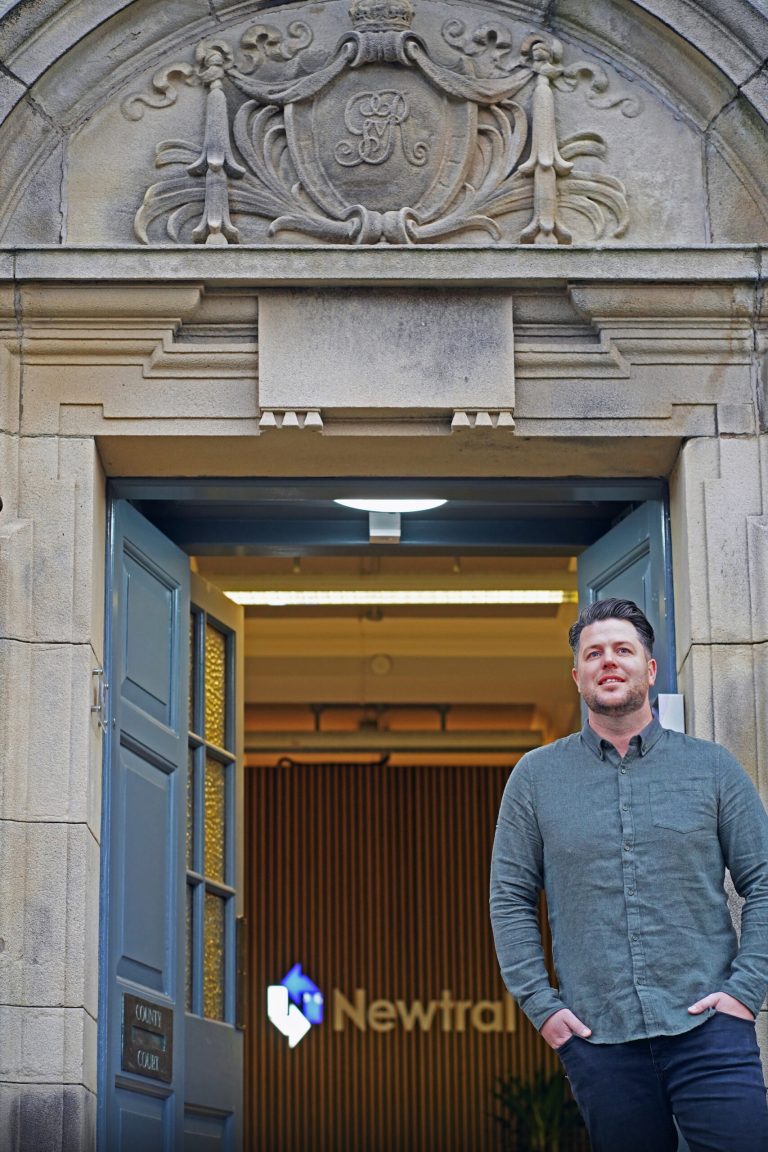
Enerveo, previously known as SSE Contracting, is delighted to announce the appointment  of  Zak  Houlahan  as  its  new  Chief  Executive  Officer,  effective 1st December 2021, following the sad passing of former CEO Stuart Chaston in August. Zak has more than 15 years of extensive senior management experience in a range

Read More »

Are The Majority Of Construction Accidents Avoidable?

In a sense, accidents in the construction industry are inevitable. All the safety standard improvements and preventative technologies in the world cannot completely eliminate human error from the equation, and so issues of this kind are a statistical certainty. However, with figures showing that on-site injuries and deaths are actually

Read More »

Winvic Tops Out 23-Storey BTR Project in Cardiff’s Capital Quarter

IM Properties Development will be handed over for Grainger plc’s Operations in Summer 2022 Winvic Construction Ltd, a leading main contractor that specialises in the design and delivery of multi-sector construction and civil engineering projects, has celebrated the topping out of a 23-storey, 307-home build-to-rent (BTR) scheme in Cardiff with

Read More »

Prestigious new £25M York City Centre built by GMI open for business

Impressive new 143-bedroom project situated in the castle gateway district with uninterrupted views of the famous Clifford’s Tower. GMI Construction Group has announced the completion of a new 143-bedroom Piccadilly hotel for leading UK hotel specialist Avantis Hotels at a site in the heart of York city centre. The new

Read More »

Northumbria supports search for next generation of creative talent

The National Trust and leading architecture practice, GT3 Architects, have teamed up with Northumbria University to search for the next generation of talented architects as part of a project supported by the National Lottery Heritage Fund. The Rising Stars creative partnership is a strand of the National Trust’s The Curtain

Read More »
Latest Issue
Issue 343 : Aug 2026

Kenneth Booth

ED REYNOLDS’ BLOG SHARES VALUABLE INSIGHT FROM RECENT SUSTAINABILITY CONFERENCE

Following the global focus on sustainability prompted by COP26, 300 public and private sector industry professionals recently came together to learn about how the built environment can do more and go further in their efforts towards net zero. Ed Reynolds, Midlands technical director at Willmott Dixon, reflects on the recent ‘Net Zero – What’s Stopping Us?’ panel event hosted in Birmingham and how the spirit of collaboration was felt more than ever. “Collaboration and transparency. If there were two words I heard over and over again during our debate, it was those. “It felt like times of old once again, with colleagues, customers and fellow industry professionals all gathered together with a shared interest to discuss. Events such as this offer a timely reminder of what can be achieved when we take the time to catch up with one another properly, instead of via Zoom or Teams, which we have all become reliant on over the past two years. “Bringing everyone together to discuss such a hot topic post-COP26 meant we saw over 300 people and from various organisations and walks of life – local councils, designers and consultants, students, universities, tech companies, LEPs and more. It was heartening to see the sector united in their efforts to drive forward sustainable practices and push for industry action in tackling the climate emergency. “It was my pleasure to open the event on behalf of Willmott Dixon and introduce our knowledgeable and insightful panellists, including our very own Julia Barrett; Deborah Cadman OBE, chief executive of Birmingham City Council; Belinda Morgan from Cundall; Tim Carey, chief product director at Collida; James Douglas from Lendlease, and Chris Clarke from Scape. “Together, the expert panellists pointed out opportunities for growth and shared visions for the future, whilst sparking meaningful conversations and drawing on their breadth of cross-sector experience. “Our sustainability strategy Now or Never, sets out our key priorities in three parts to take us to 2030: Brilliant Buildings, Building Lives and Better Planet. As a business we know that all three are important to align our customers, supply chain and the wider community in meaningful ways. But we also know that each of these three areas take investment, a commitment to continuous learning and development, and a determination to engage, collaborate and innovate to drive sustainability above all other interests. “Judging from the atmosphere in the room, and the conversations that have followed, the event has already had a significant impact, and I look forward to working closely with our industry on the topic again.” Challenging behaviours “One of the underpinning themes throughout the debate was the pace at which we need to change attitudes towards sustainability in the sector. To prevent the ‘race to the bottom’ on price, contract selection must be geared more towards sustainability. “Deborah gave her views, insisting that Birmingham Council would “turn investment and development away if it’s not done with good intent and with low carbon in mind.” “James, representing Lendlease, agreed: “We must report our performance and share our progress. I don’t want to see carbon become commercial, we’re all on the same journey. We are going to turn down investment and development opportunities if they don’t have low carbon in mind. We will simply say this is not the place for you.” “Julia also challenged panellists on the performance gap – or, in her words, “how long are we going to be building buildings that don’t do what they say on the tin?” “To ensure effective designs are robustly delivered on-site, it was agreed that more needs to be done in terms of legislation and holding businesses to account over sustainable standards – though believed the ‘carrot over the stick’ approach would be more effective to set targets and encourage greater collaboration. This is something I wholeheartedly believe in myself. “Belinda, speaking on behalf of engineering consultancy Cundall, emphasised that “early engagement is the key to collaboration” – and provided an example of where they had been appointed on a contract following a behavioural workshop to determine the team’s efficiency and said that fees came secondary. Belinda said the scheme was highly successful and believed that lessons could be applied from the experience. Cundall became carbon neutral last year.” We’re not moving quickly enough “There were also discussions about how many retrofits to buildings is now required, all of which could have been avoided had available energy-efficient methods been implemented at the time of construction. “To echo this, Deborah said that it is “almost criminal” for gas boilers to be installed in new homes in the next five years. Deborah was also “not convinced that innovation, research and development is where it needs to be. The industry needs to work with higher education institutions to fix this.’ “A section of the discussion focused on ‘whole life value’, and Julia explained how “we’re going to see the decarbonisation of the grid by 2035, which is when we will see embodied carbon take over.” “James believes that “it’s the biggest challenge to the construction sector. There is no legislation in place to drive forward lower embodied carbon and very little reporting. Leading private sector organisations are tackling this independently, but I believe there needs to be policy and intervention.” “Whilst positive strides from government have been made in recent years, I think that the allocation of funding to meet sustainability targets has been a cause of concern. “Julia pointed out that that the Code for Sustainable Homes existed in 2006 but was scrapped in 2016. She said that if the UK had stuck with it, every house being built today would be net zero carbon – and reiterated messages from her recent webinar series, shared as a podcast here. “Tim explained that Collida was established because they knew the construction industry needed to change. He said: “We know that we need to accelerate our rate of modernisation, embrace aspects such as the Construction Playbook and offsite manufacturing. We want to operate with integrity, so we chose

Read More »

Enerveo (formerly SSE Contracting) announces appointment of its new CEO

Enerveo, previously known as SSE Contracting, is delighted to announce the appointment  of  Zak  Houlahan  as  its  new  Chief  Executive  Officer,  effective 1st December 2021, following the sad passing of former CEO Stuart Chaston in August. Zak has more than 15 years of extensive senior management experience in a range of industries, including Waste Management, Aviation Infrastructure and most latterly in Local Government Contracts as National Business Director – Environmental Services at Amey. Announcing Zak’s appointment Neil Kirkby, Enerveo Executive Chair, said “I am thrilled to welcome Zak into Enerveo. Zak’s track record in business transformation, customer engagement and value generation will be a great fit with the Enerveo team. I know Zak is excited to build on the successes of the business and develop our business further, with a focus on further enhancing our employee experience, customer services and driving the Enerveo business to industry “best in class”. Reflecting on his appointment, Zak Houlahan said “Enerveo is a fantastic business, with a deep talent pool and strong customer base, so I am delighted to be joining the team. The industry is entering a new era of growth, predominatly led by the drive for carbon zero and renewed focus on infrastructure. Enerveo’s standing in the industry places the team in an excellent position to support our existing customers and gain new partnership opportunities in the market. My goal, with the team’s support, is to lead Enerveo to even greater things.”

Read More »

Are The Majority Of Construction Accidents Avoidable?

In a sense, accidents in the construction industry are inevitable. All the safety standard improvements and preventative technologies in the world cannot completely eliminate human error from the equation, and so issues of this kind are a statistical certainty. However, with figures showing that on-site injuries and deaths are actually growing in some contexts, it is clear that outright negligence still has a part to play in perpetuating the problem of construction accidents. So let’s investigate this conundrum more closely, explore the avoidability of costly construction mistakes and look at what precautions can be taken to turn the tide in favor of business owners and workers alike. Types of accident to take onboard When it comes to the kinds of conundrums that workers typically encounter on-site, construction accident lawyers are kept busy by personal injury claims arising from third party negligence, product liability caused by defects in equipment and materials, and wrongful death. The types of accidents which are most frequently reported are falls from height by the workers themselves, injuries suffered as a result of heavy objects falling from above, tripping over debris and equipment left in an inconvenient place, collisions between vehicles and the aforementioned equipment defects. Claims can also be made as a result of long term side-effects of working in construction, such as if employees are not provided with adequate ear protection and thus suffer hearing damage. However, claims from construction accidents aren’t only due to the injuries suffered by the employees. One may also file a wrongful death claim if a loved one dies in a particularly catastrophic incident.  In that case, a surviving family member may enlist the assistance of a dedicated lawyer who specializes in handling wrongful death claims to protect their rights and ensure a more favorable outcome.    The debate around avoidability In the introduction, we argued that construction accidents are inevitable, but the point to be taken away is that they are still possible to avoid in most instances. As such, businesses and individuals need to do all they can to protect themselves and others from the financial and human cost of workplace hazards in this industry. It is better to preempt the likelihood of accidents occurring rather than paying out compensation afterwards to make up for deficiencies. For example, giving workers the right protective clothing and equipment to do the jobs they are assigned and stay safe on-site will mean that even if things go wrong, the chances of serious injuries occurring will be lessened. However, in the unfortunate event that an accident does occur, seeking advice from a construction accident lawyer can ensure proper legal steps are taken. There is a reason that head, ear and eye protection are all used widely in this industry. Likewise you not only need to give workers the gear to operate safely, but also put policies in place to ensure protective equipment is used universally and in a way that aligns with the designer’s intent. Creating a culture of on-site safety has to come from the top down, so don’t get complacent about following PPE rules as this sets a bad example for others. In addition to these points above, overseers must do their part to promote worksite safety. These include steps like: By keeping these tips in mind, you can keep your workers safe and reduce the likelihood of fatal incidents. The other aspects of negligence Another often overlooked yet crucial preventative measure that can make all sorts of construction accidents avoidable is equipment maintenance. Well-maintained machinery, tools and vehicles will operate in line with expectations. Those that are left to fall into disrepair will expose the users and those around them to unnecessary hazards. Furthermore, well maintained gear will last for longer and thus be a better value proposition, rather than needing to be replaced. So once again it is a financial advantage for construction firms to take safety seriously, as well as a moral and legal obligation. Otherwise, they’ll face serious consequences, such as legal liabilities, financial losses, and grave damage to their reputation. Final thoughts The fallout of serious workplace accidents in construction can be hard to quantify, and for businesses the costs can continue for years as a result of the damage done to your brand reputation. Responsible employers have to be attuned to the safety implications of the workplace, and while not all construction accidents can be avoided, most should be if you plan ahead.

Read More »

Winvic Tops Out 23-Storey BTR Project in Cardiff’s Capital Quarter

IM Properties Development will be handed over for Grainger plc’s Operations in Summer 2022 Winvic Construction Ltd, a leading main contractor that specialises in the design and delivery of multi-sector construction and civil engineering projects, has celebrated the topping out of a 23-storey, 307-home build-to-rent (BTR) scheme in Cardiff with its client, IM Properties (IMP) and Grainger plc, the residential landlord that will own and operate the building. The project – located in the heart of the city on Tyndall Street and close to Cardiff Central railway station within Cardiff’s Capital Quarter development – is being constructed on a compact site, with just 1500mm space between the façade and boundary. In addition to the 307 one-bed, two-bed and studio apartments, the scheme will also deliver a range of communal spaces for residents, including a double height rooftop sky-lounge and terrace, and comprise commercial units on the ground floor. To date, Winvic has undertaken the groundworks, piling operations, completed the reinforced concrete frame and are progressing with the two-tone grey and white Glass Reinforced Concrete Cladding panels, including windows to the eighteenth floor. The complementary copper façade – one of the features which makes the building aesthetically unusual and striking – will be one of the final programme elements to be completed. The mechanical and electrical installation and fit out works are also well underway, with the benchmark rooms completed. Winvic’s Director of Multi-room, Mark Jones, commented: “This RC frame project – as with any scheme being constructed on a very compact site – has presented a significant number of challenges for our team. But our years of experience combined with the drive and tenacity to succeed has illustrated anything can be achieved. Having worked with IM Properties and Grainger plc previously, we’re working in partnership to be a solution and goal focused team and we’re proud to have reached the topping out milestone in Cardiff’s Capital Quarter.”         Majella Lynch, IM Properties’ project director for the building, said: “We are delighted to have reached this major new milestone. It is such a complex scheme to deliver, we have all had to apply a lot of thought and ingenuity to get it to this point, which really shows the strength of our in-house project delivery team working in partnership with Winvic.” Michael Keaveney, director of Land and Development at Grainger added: “It’s great to reach this milestone in our first Cardiff scheme. Upon completion this will be an excellent development, delivering professionally managed, high quality rental homes in a vibrant area of the city. We look forward to seeing the scheme progress and come to life in the coming months.” Furthermore, last week the site team welcomed a Considerate Constructors Scheme assessor, and the project was awarded an ‘Excellent’ score. Progress of the scheme can be followed on Winvic Live. For more information on Winvic, the company’s latest project news and job vacancies please visit www.winvic.co.uk. Join Winvic on social media – visit Twitter @WinvicLtd – and LinkedIn.  

Read More »

Two thirds of local authorities have no plans to install EV chargers

FoI request reveals only 33 per cent of UK local authorities have EV charging plans in place A freedom of information request (FoI) by leading electrical industry trade body ECA revealed that almost two thirds (66 per cent) of local authorities do not have any plans to roll out electric vehicle charge points (EVCPs).  With government plans to end the sale of petrol and diesel cars by 2035, the lack of charging infrastructure could prove a significant setback.   ECA produces exclusive guidance to help its Members deliver net zero carbon skills and technologies. Learn more here. Only one third (33 per cent) of local authorities could confirm they had an EVCP strategy in place. Nearly half (48 per cent) said they did not currently operate any EVCPs. Nearly two thirds (60 per cent) have no funds earmarked for EVCPs to be installed in future.  Comments revealed a lack of ‘joined-up’ policy from central Government. One local authority representative said, “One of the barriers [to EVCP installation] is the uncoordinated approach – it’s not joined-up enough.” With the annual COP26 climate conference underway in Glasgow, these findings follow a disappointing Budget announcement and long-awaited Net Zero Strategy. Luke Osborne, ECA’s Energy & Emerging Technologies Solutions Advisor, said: “The electrical and building services industry has the potential to build and maintain the green infrastructure we need to deliver Net Zero Carbon by 2050 and make Government’s promises a reality. “But with public interest in electric vehicles reaching an all-time high, the worrying lack of plans to install charge points will seriously hold us back in our pursuit of Net Zero – and stunt the growth of a booming market.” “A key focus for local authorities should be enabling constituents without off-street parking to readily charge with ease.” A report produced by the Green Jobs Task Force earlier this year showed that the UK could produce up to 1.6 million Electric Vehicles (EV) by 2040 and 50,000 vehicle technicians will need retraining or upskilling by 2025 to meet predicted demand. ECA’s 2,700 Member businesses, with a combined turnover of over £4 billion, ranging from SMEs to large, nationwide contracting businesses, are at the forefront of grid decarbonisation and the electrification of heat and transport.

Read More »

Construction is destructing animal homes, and Londoners aren’t bothered

Elliott UK surveyed 2,000 UK adults to find out their thoughts and feelings on construction and its impact on climate change. The results are in and it turns out Londoners are the least compassionate towards the safety of animals and their homes, instead choosing to adopt a ‘big city mentality.’ 19% of Londoners admit to their main worry of construction being the destruction of animal habitats. Whereas 27.2% of Northerners and 28.67% of Southerners, excluding London, say it’s their biggest concern. Climate change remains a vital conversation, especially within the construction sector as globally, they’re one of the largest contributors. In 2019, buildings and building construction work emissions totaled 2.4 million metric tons, representing 17% of total construction industry emissions. Elliott is taking the necessary steps and is committed to becoming carbon net-zero by 2050. Londoner’s take on a ‘big city mindset’ and care less about saving wildlife, so long as the buildings are built London is home to hundreds of construction sites at any one time. With each new project comes building on green space, carbon emissions, water, noise and air pollution, all of which are harmful to the environment. Construction has a direct impact on wildlife, and it is therefore vital all projects are undertaken with care to help with wildlife and nature conservation. Each year, thousands of acres of natural, green land are uprooted to make way for the construction of new buildings. In England, public parks and garden – personal and public – count for the largest proportion of green space. West Yorkshire has 45.8% natural land cover – shrubbery, fields etc. Greater Manchester has 37.7%, whereas London has only 34.2% natural land cover. 39 of the top 100 construction projects in 2021 are set to take place in London, whereas only 5 are planned in Yorkshire and The Humber. However, the South exc. London, do care about conserving wildlife and nature The survey revealed 28.67% of people living in the south, excluding London, are concerned about the destruction of animal habitats and 40.76% are worried about the loss of green space. Compared to London, only 19% of the respondents said they’re worried about animal habitat destruction and 38% are worried about the loss of greenspace. The results suggest people living in London take on a ‘big city mindset’ whereby they rarely see green space and wildlife, and therefore become desensitised due to a lack of it. So they don’t prioritise the the  environment as it doesn’t impact their daily lives. What can we take from this? London’s priority is to remain a business and culture capital, and that means continuously constructing and evolving the skyline. The London mindset is completely different to rest of the country who are more conscious about conserving nature and wildlife.

Read More »

QUALITY INSULATION AND VENTILATION OFFER A SOLUTION TO CREATING HEALTHY INTERIORS

An estimated 9,500 people in London die each year due to poor air quality. The findings in a study carried out by researchers at King’s College London attribute the premature deaths to pollutants known as PM2.5s and the toxic gas nitrogen dioxide (NO2). Emissions from cars, planes and heavy industry are widely known to have a detrimental effect on the exterior air we breathe, but is our interior environment becoming equally as harmful to inhabit? We spend 90% of our lives indoors due to a combination of home, work or school commitments. As for the buildings we inhabit, they are being built to regulations designed to make them as airtight as possible in order to reduce emissions from fuel usage and increase our comfort and wellbeing. But in sealing the thermal envelope on our homes and offices, are we opening ourselves up to dangers previously unconsidered? It would appear so. According to the World Health Organisation, Indoor air quality is up to five times more polluted than typical outside conditions. Reduced air leakage – although key to attaining regulation U-values – could also be affecting the indoor air we breathe, as a lack of natural ventilation allows concentrations of indoor air pollutants to build-up rather than escape. Harmful sources Toxic gases within the home can be emitted from a number of sources including emission-generating air purifiers, water treatment systems in washing machines and appliances that use UV or unnatural light. Home cleaning and personal care products also release harmful airborne chemicals, whist some interior paints contain volatile organic compounds (VOCs) which can be released into the atmosphere many years post-application. Cooking appliances such as ovens and toasters, if not regularly cleaned, have also been found to produce particles that fill interior air. The aforementioned emissions are exacerbated in multi-occupancy buildings. Where ventilation is poor, this will intensify the trapping of appliance-based toxins, whilst vapour created from baths, showers and general washing duties increases the risk of condensation occurring. This in-turn runs the risk of introducing another harmful element to the indoor environment: damp. According to a public heath report by academic studies’ specialist MDPI, exposure to indoor mould contamination instigated by damp in social housing increases the risk of doctor-diagnosed asthma, particularly in older adults and women. Improving living standards for the health and wellbeing of residents in poorer UK communities is an issue Recticel is seeking to address through its membership of the National Home Improvement Council. The non-profit organisation was set up nearly 50 years ago to promote the benefits of safe and sustainable homes as a means of creating comfortable, affordable interiors. This is particularly aimed at occupants facing fuel poverty, a threat that’s been exacerbated for many households nationwide due to the current worldwide rise in energy prices. Importance of good ventilation Figures released by the Committee on Climate Change show emissions from buildings account for 34% of total UK greenhouse gas emissions. It is a statistic that is no doubt being unnecessarily fuelled by the poor thermal performance of the country’s housing stock. This is borne out by a 2017 Green Council Report which found that 25 million UK homes will need to be refurbished between now and 2050 in order to meet mid-century insulation standards. However, when looking to improve a building’s energy rating, there is a balance to be struck. Airtight buildings need to be properly ventilated in order to improve indoor air quality. This can be achieved effectively with a heat recovery ventilation system, which extracts moist and stale air from a property’s wet rooms and recovers the – usually – lost heat from the extracted air. Therefore, with modern building methods, tighter regulations and improved efficacy of a building’s fabric, it’s often the case that a correctly-specified mechanical ventilation system also needs to be considered when improving a property’s thermal envelope.  An airtight house without adequate ventilation can suffer the same issues as one with too little ventilation, as both create uncontrolled airflow. This can result in condensation issues – and eventually damp or mould patches – due to air being moved from areas of high humidity within a building such as the kitchen and bathrooms, to bedrooms and main living room spaces where the air tends to be cooler and dryer. A mechanical ventilation system helps ensure the correct amount of air flows consistently through a building by extracting it from areas of high humidity and returning it to living areas. Our future built environment’s sustainability depends on improving the airtightness of the buildings we live, work and learn in. But we must safeguard against cocooning ourselves in spaces that are potentially harmful to our long-term health. Hence, a professionally-prescribed ventilation solution will be crucial to us leading happier, more comfortable lives on the inside and outside.   

Read More »

Prestigious new £25M York City Centre built by GMI open for business

Impressive new 143-bedroom project situated in the castle gateway district with uninterrupted views of the famous Clifford’s Tower. GMI Construction Group has announced the completion of a new 143-bedroom Piccadilly hotel for leading UK hotel specialist Avantis Hotels at a site in the heart of York city centre. The new Hampton by Hilton building is situated in the Castle Gateway district of the city which has been identified by York City Council as an area of major regeneration and development.  In addition to its 143 guest bedrooms, the hotel also features eight luxury private residences all enjoying uninterrupted views of Clifford’s Tower. The scheme has been designed to the latest BREEAM standards and boasts cycle parking bays and a number of electric vehicle charging points. A detailed and complimentary landscape design acknowledges the sensitive nature of its surroundings – something guests can enjoy from the hotel’s terrace that overlooks Clifford’s Tower. Talking about the project GMI Divisional Managing Director Lee Powell said: “This impressive new Hampton by Hilton hotel serves as the 11th hotel development GMI have completed to date and one of the most impressive developments completed so far We are very pleased to have been appointed by Avantis Hotels on this project and look forward to working together again on further ventures in the near future”. Also commenting Ravi Majithia, Director – Avantis Hotels said: “GMI have delivered a quality asset to Hilton standards during a very challenging time. Avantis, acting as both developer and owner operators were delighted with the finished product. We were eager to develop and test one of the first “new-prototype” Hampton by Hiltons’ – a refreshed, lifestyle product. We hope this development sparks further regeneration of Piccadilly. GMI also delivered the luxurious Piccadilly Riverside Apartments which look fantastic and are now on sale”.

Read More »

Northumbria supports search for next generation of creative talent

The National Trust and leading architecture practice, GT3 Architects, have teamed up with Northumbria University to search for the next generation of talented architects as part of a project supported by the National Lottery Heritage Fund. The Rising Stars creative partnership is a strand of the National Trust’s The Curtain Rises  project, centred on conservation and improvement work at the historic Seaton Delaval Hall, which was acquired by the trust in 2009. A live project inspired by the building was set up to give students an opportunity to flex their creative skills and offer invaluable industry experience. With more than 20 students from Northumbria’s BA Interior Architecture programme taking part in the project, Hattie Keel was crowned the winner with her striking structure centred around visual trickery. Hattie’s installation was unveiled with a celebration at Seaton Delaval Hall, where it has now been constructed for visitors to enjoy. After recently graduating from Northumbria, Hattie has secured a job with GT3 and is now working as a designer for the company, which has studios in Newcastle and Nottingham. She explained: “My time at Northumbria gave me great insight into the industry through numerous live projects, including this partnership with the National Trust. Throughout the process I also worked alongside GT3 Architects, giving me valuable career experience in the industry. “The Rising Stars competition put my foot in the door to life after graduation; the knowledge it gave me boosted my confidence in my creativity and design capabilities. I am incredibly grateful for the opportunity provided by Northumbria, as this enhanced my portfolio and assisted in securing my role as a Graduate Interior Architectural Designer at GT3.” Thanks to a donation from the National Lottery Heritage Fund, since 2018 Seaton Delaval Hall has been the focus of The Curtain Rises  project, where as well as improvements to visitor facilities and extensive conservation work, the stories of Seaton Delaval Hall’s colourful past are now being brought to life through initiatives like the Rising Stars creative partnership. Speaking about her winning entry to the project, Hattie added: “My design was inspired by the playfulness and trickery of the Delaval family, who lived in Seaton Delaval Hall in the 18th century. I wanted to provide a space for visitors to sit and dwell within the structure. The seats therefore follow the natural folds of origami, enabling visitors to interact and engage with the structure. “I’ve really enjoyed the entire process and seeing my initial concept brought to life.” Paul Ring, Associate Professor and Head of Architecture at Northumbria, said: “In creative partnership with the National Trust, Rising Stars provides a folio of live project experiences for our students across many creative disciplines, and we are delighted that Hattie’s design was chosen and then built for the National Trust’s visitors at Seaton Delaval Hall. “GT3 worked with students to guide them through client meetings, design detailing, budget, and fabrication decisions. Hattie is without doubt a more informed and accomplished designer thanks to this experience and we are exceptionally grateful to GT3 and the National Trust for the opportunity, their expertise, and their support to our students.” Taylor Grindley, project architect at GT3, was the day-to-day lead on the work. He said: “We really enjoyed taking part in the Rising Stars project and working closely with the National Trust and Northumbria University. All the designs were fantastic and incredibly creative, but Hattie’s really blew us all away. “We worked really closely with Hattie to ensure all aspects of the design were viable and that we could bring it to life, with the construction handled by Raskl. We love educating and inspiring the next generation of architects and designers, so the Rising Stars project has been a brilliant experience.” Emma Thomas, the National Trust’s general manager of Seaton Delaval Hall, said: “Hattie’s excellent design helped us achieve our ambition of telling the stories of the Hall and our National Lottery Heritage Fund-supported project more creatively to members and visitors. The Rising Stars project has supported the employment and soft skills development of Northumbria University’s students and at the same time helped the National Trust realise several creative and conservation-based ambitions.” The installations are available to visit in the Saloon at Seaton Delaval Hall. There are a range of study options available within the department of Architecture and the Built Environment at Northumbria. Find out more here about the courses and facilities on offer.

Read More »

New Joblogic Refcom Software Module Ensures Fast and Accurate F-GAS Compliance

Joblogic and Refcom have collaborated to launch a software module in the UK that ensures F-Gas compliance.  It also makes it simpler and faster for HVAC engineers to comply since they can now input the data directly into a compliant logbook via a mobile app. Legislation demands that an engineer must track and record any movement of refrigerant gas in an official logbook.  There also needs to be a back-office system that shows all the work completed on equipment. Says Greg Hill, Principal Consultant at Joblogic: “While it is possible to record work completed on paper-based systems this can be time consuming and lead to errors when a second person inputs the data into the back-office system. With each piece of equipment and all the cylinders having their own logbooks, it can take time to find all the necessary paperwork, discover what needs completing on an asset, do the work and then fill in each of the logbooks with all the correct information. “Using the Refcom F-Gas Tracking Module, the engineer will know what work they need to do before they arrive to ensure that they have the right tools and equipment to get it right first time.  Having completed the work they simply input the relevant information into the Joblogic Refcom App on their phone or tablet which will then automatically populate the online logbooks and the back-office systems to save time and avoid any errors.” Further time savings are possible if a company decides to use QR codes to identify individual assets within an HVAC system since the engineer can then simply scan the equipment to find out about its service history and the work that needs doing.  This will also automatically find the form for that asset to make it easier and faster to complete and record the job. With each asset in a system having its own logbook, automating the track and trace system will save hours of time so that the engineer can complete more work. Says Graeme Fox, Head of Technical for Refcom: “We wanted a software system that would report data straight into the correct forms to ensure compliance.  We also wanted to make the task simpler and faster for our members and take advantage of all the technology that is available to ensure accurate track and trace, such as for example using QR codes. “It is vital that HVAC engineers are fully compliant with F-Gas legislation and there have been occasions where data has been missed or the logbook has been incorrectly filled in so that a job was not compliant.  This is generally an honest mistake and people may not even realise that they have not met the legislative needs.” All Refcom members will receive a free user licence for the new software module which includes a back-office reporting system, logbooks and the facility to add the mobile app for an engineer.  This allows an organisation to plan and schedule future maintenance work and customise and produce reports in whatever format they want. For a free demonstration of the Joblogic Refcom F-Gas tracking and compliance software visit https://www.joblogic.com/features/fgas-compliance-software/.

Read More »