Kenneth Booth

BELLWAY ACQUIRES PRIME RESIDENTIAL SITE AT INTEGRA 61

£300M Durham Mixed Use Scheme Announces Deal With One Of The UK’s Largest House Builders Citrus Durham has announced a major deal with housebuilder Bellway to build up to 100 new homes at the £300m mixed-use Integra 61 development at J61 of the A1(M). Savills was appointed in Spring 2021

Read More »

No excuse for poorly ventilated buildings

One of the government’s top scientific advisors has called for a concerted programme of ventilation improvements in buildings including professional accreditation for contractors. Professor Cath Noakes told the Building Engineering Services Association (BESA) National Conference that the pandemic had increased understanding of how disease is transmitted around indoor spaces and

Read More »

Partners join together as West Cliff Mansions tops out

Partners from joint venture, Bournemouth Development Company, joined together recently (Wednesday 17 November) to celebrate the ‘topping out’ of West Cliff Mansions – a £14 million high-quality collection of 44 one, two and three-bedroom apartments in Bournemouth town centre. More than 20 guests from joint-venture partners, BCP Council and leading

Read More »

A BRIEF OVERVIEW OF CONDOMINIUMS IN FORT WORTH, TEXAS

Considered safer than other cities in Texas and home to over nine hundred thousand people, Fort Worth is an incredible place to live. With plenty of job opportunities, significant hospitals, and reputed educational institutions, the city regularly welcomes an influx of residents from other Texas cities. In such a scenario,

Read More »

Carter Jonas Comments on the Introduction of Biodiversity Net Gain

On Wednesday 9 November, the Environment Bill passed into law, creating a statutory requirement that new development achieves a minimum 10% biodiversity net gain (BNG). Kieron Gregson, Associate Partner and Mark Russell, Partner and Natural Capital Lead at national property consultancy Carter Jonas, comment on the change and its impact

Read More »

COP26: the good, the bad, and the colossal missed opportunity

Rod Davies and Nick Gander of green heating pioneers Energy Carbon give their take on COP26. Heating accounts for nearly half the world’s energy consumption, and a third of UK carbon emissions. There’s no route to a net zero future that doesn’t involve rapidly decarbonising the way we heat billions

Read More »
Latest Issue
Issue 343 : Aug 2026

Kenneth Booth

BELLWAY ACQUIRES PRIME RESIDENTIAL SITE AT INTEGRA 61

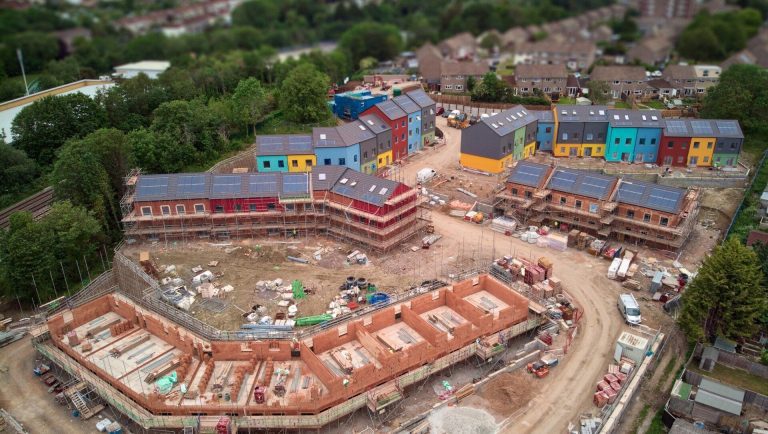
£300M Durham Mixed Use Scheme Announces Deal With One Of The UK’s Largest House Builders Citrus Durham has announced a major deal with housebuilder Bellway to build up to 100 new homes at the £300m mixed-use Integra 61 development at J61 of the A1(M). Savills was appointed in Spring 2021 to market the 8-acre site located on the northern part of the Integra 61 scheme, immediately adjacent to Bowburn village. The site already benefits from outline planning consent and following very strong competition, Bellway has now exchanged contracts and is aiming to start on site in Spring next year, subject to detailed approval from Durham County Council. The scheme will comprise a mix of 3 and 4 bed houses with the first units expected to be available from late 2022. Following the completion of major infrastructure works in 2020, Integra 61 is now progressing rapidly and is well on its way to creating thousands of new jobs in the area, adding around £2 billion to the regional economy over the next 10 years. Integra 61 is the largest mixed use employment-led scheme the North East has seen in a generation and is already home to Amazon’s new 2 million sq ft Fulfilment Centre which is fully operational with over 1,000 employees on site. A further 1 million sq ft of employment space will be delivered over the next few years to satisfy huge demand from companies looking to move to or expand in the region, which faces a chronic shortage of good quality industrial and logistics floorspace. The scheme will provide a wide range of unit sizes, from 1,200 sq ft up to 500,000 sq ft or more. In addition to the employment space and new homes, the masterplan for Integra 61 also includes a care home,  70-bed hotel, a family pub/restaurant, nursery and roadside/retail opportunities.  Costa Coffee already has a drive-thru unit on site and further lettings are expected shortly. David Cullingford, Project Director for Integra 61 and Citrus Durham, said; “We are delighted to be welcoming Bellway to Integra 61 and to contribute to its ongoing success. Providing new, high quality homes at Integra 61 has always been an extremely important part of our vision to create a thriving, sustainable community on a mixed-use development in a strategic, well-connected location”. Helen Russell, Land Director for Bellway Durham, said: “Located just off the A1(M) near the popular village of Bowburn, Integra 61 is set to become a high quality mixed use scheme located on the outskirts of Durham City. Working alongside Citrus Durham, we are looking forward to building and delivering a prime new homes development. The development will benefit from the extensive local village amenities Bowburn has to offer and the excellent commuter links to the wider North East region”. “Further plans are set to be submitted to Durham County Council in the coming weeks.” For more information about Bellway Durham visit www.bellway.co.uk/new-homes/durham.

Read More »

No excuse for poorly ventilated buildings

One of the government’s top scientific advisors has called for a concerted programme of ventilation improvements in buildings including professional accreditation for contractors. Professor Cath Noakes told the Building Engineering Services Association (BESA) National Conference that the pandemic had increased understanding of how disease is transmitted around indoor spaces and raised public awareness of the importance of mechanical ventilation. “I never thought I would see the day when the Prime Minister and the Chief Scientific Officer were talking about ventilation,” said Noakes, who is one of two engineer members the government’s Scientific Advisory Group for Emergencies (SAGE). She told the Conference that the pandemic had exposed systemic failings in how we design and retrofit buildings and said we should pay far more attention to the impact of poor ventilation on human health and productivity. “Many of our buildings are under-ventilated and there is no excuse for it,” said Noakes, who is Professor of Environmental Engineering for Buildings at the University of Leeds and an expert in fluid dynamics. “This is not just about complying with regulations. We also need to show clients that there is a benefit to them through the health and wellbeing of people. We know buildings improve health and that poor indoor air quality reduces productivity by up to 9% – that’s half a day a week. Tangible “Before the pandemic 5.3 million working days were being lost every year to respiratory infections [figures from the Office for National Statistics], but it is still not as tangible as your energy bill, so we need to push that message harder,” she told the Conference. She agreed with BESA chief executive David Frise that people operating at the “sharp end” had a bigger part to play in the development of practical solutions to building operating problems. Professor Noakes said it was important that ventilation contractors were included in wider discussions because they understand what works in the real world and what clients can be persuaded to pay for. “We also need to look at professional accreditation [for the ventilation sector] because we are not applying the same standards to the ventilation industry as we do to gas and electricity, for example,” she added. She also called for better evaluation of systems in use to assess whether the ventilation was delivering what occupants need, had been correctly installed and commissioned, and was being adequately maintained. “The increased amount of indoor air quality monitoring since the pandemic is helping because it is making people more aware of their indoor environment,” she told delegates at the two-day online event. “However, it is now clear that it is very hard to naturally ventilate buildings adequately in winter.” Professor Noakes also warned building owners and managers to be wary of many of the new solutions being promoted – some of which she described as “snake oil”. “We seem to know a lot about the new technologies emerging into the market, but some of the existing solutions are probably better – we just need to measure what they are doing. They also need to be well-maintained,” she said. Professor Noakes added that approaches to ventilation had been prioritising comfort and energy efficiency, rather than health and productivity, for more than 30 years and it was now time for a change of emphasis. All the BESA National Conference sessions can be viewed on demand here.www.theBESA.com/conference

Read More »

Partners join together as West Cliff Mansions tops out

Partners from joint venture, Bournemouth Development Company, joined together recently (Wednesday 17 November) to celebrate the ‘topping out’ of West Cliff Mansions – a £14 million high-quality collection of 44 one, two and three-bedroom apartments in Bournemouth town centre. More than 20 guests from joint-venture partners, BCP Council and leading UK town and city-centre regenerator, Muse Developments, along with contractor Parsons and Joyce, attended the traditional event, which included the ceremonial laying of the last paving block by Cllr Philip Broadhead, Portfolio Holder for Development, Growth and Regeneration of BCP Council, on the highest terrace. Commenting on the milestone achievement, Cllr Philip Broadhead, BCP Council’s Portfolio holder for Development, Growth and Regeneration, said: “It’s fantastic to see such a strong reaction to West Cliff Mansions which is attracting a diverse mix of homeowners choosing to invest and live in Bournemouth town centre.   This shows huge confidence in our place, and demonstrates people really are wanting to embrace all that our coastal town centre living can offer.  From sunset strolls at Durley Chine, a dip in the ocean, and browsing the many boutique shops, to evenings out soaking up the hustle and bustle that our many independent cafes, bars and restaurants have to offer.  “Building on the strengths of our outstanding environment and globally recognised coastline we are determined for our city region to be world class – a place where people and businesses want to be because of the vibrancy of our communities, the strength of our economy, the skills of our people, the wealth of our culture and the quality of our infrastructure, our environment and quality of life. “As well as providing new town centre living, West Cliff Mansions is providing a financial return to the local authority for investment in key council services and future regeneration projects.” Each of the homes have been carefully designed inside and out, offering open-plan kitchen/living/dining spaces as well as access to their own outside space in the form of a private terrace or balcony. Toby Marden, senior development manager, Bournemouth Development Company, added: “West Cliff Mansions is our fifth residential scheme and is a notable addition to our portfolio which supports our aim to regenerate Bournemouth town centre.  In the four months that the sales office has been open we have had strong interest from a diverse mix of buyers from first-time buyers to downsizers as well as second-home purchasers.  We have secured a number of off-plan sales ahead of building completion in Summer 2022.  This reflects the quality of the scheme but also confidence from our buyers that Bournemouth is a great place to live”. Toby continued: “The topping out ceremony was a brilliant opportunity for those involved in creating this fantastic residential development to celebrate the progress made so far.  The celebration represents a high point not only for the build, but it is also testament to the entire project team who have worked so effectively, diligently and safely together in making such impressive progress.” For more information on West Cliff Mansions, call 01202 497 232, email WCM@stubbingsltd.co.uk or visit www.westcliffmansions.com  

Read More »

Shell and RWE Pinpoint North-East of England for Gigawatt-Scale Offshore Wind-to-Hydrogen Projects

RWE Generation & Shell New Energies will explore the possibilities of establishing integrated projects for the production of green hydrogen using offshore wind power on a gigawatt scale in the industrial regions in the north-east of England such as Teesside and/or Humberside. The plan is one of the steps set out in a recently signed Memorandum of Understanding between the two companies to jointly advance projects for the production, use, and distribution of green hydrogen, as well as further options to decarbonise RWE gas and biomass-fired power plants in northwest Europe. The aim of the MoU is to identify concrete project options which could then be developed toward investment decisions, the two companies said. ”Effective climate action needs cross-sector and cross-national cooperation. In our cooperation with Shell, we want to develop solutions that combine new approaches with proven technologies and, above all, can be applied quickly and on a large scale. We will also contribute our special expertise in the development of offshore wind projects as well as the provision of energy in the form of electricity, heat and, in the future, green hydrogen for our customers,” said Markus Krebber, CEO of RWE. RWE and Shell already have a background of cooperation through the NortH2 project in the Netherlands, and AquaVentus in Germany.

Read More »

“Forgetting to call the plumber puts Net Zero at risk” – think-tank

Plumbers have been overlooked in the Government’s plans to end the use of gas boilers in British homes, putting the whole Net Zero agenda in jeopardy, a think-tank warns today. The Social Market Foundation said that the Government strategy aimed at decarbonising home heating does not give plumbers and other workers enough incentive to get training to install the heat pumps that ministers want to replace gas boilers. The SMF is undertaking a major research project with the heat installer workforce.  Its interviews with plumbers suggest that many see little reason to spend time and money getting the skills needed for heat pumps. The UK’s Net Zero plans mean decarbonising the heating of buildings, including homes, which account for 14% of carbon emissions. Over the coming decades that will mean replacing millions of domestic fossil fuel-burning heating systems with new ones, including heat pumps. The Government’s stated ambition is for a deployment of 600,000 heat pumps installed a year by 2028. The Heat Pump Association estimates that 50,200 fully trained heat pump installers will be required to fit one million heat pumps a year by 2030. But the SMF found that the Government does not appear to know how many installers are currently trained for heat pumps.  Official Net Zero documents use different figures, the SMF found. The Heat and Buildings Strategy, published by the business department, suggests that there are 1,100 fully accredited companies.  The Net Zero Strategy, published by Boris Johnson on the same day, suggests there are currently 3,000 trained fitters. SMF analysis of the heat strategy, published today, concludes that the policies it sets out do not give plumbers and installers enough reasons to train for heat pumps.  The strategy overlooks the fact that most the relevant workers are self-employed sole traders, who must spend their own time and money on training. Many plumbers do not currently believe that such training will be soon justified by work installing heat pumps, the SMF found.   The heat strategy does not do enough to support household demand for heat pump, it concluded: the £450 million set aside for grants will support just 90,000 new pumps a year for three years.   The heat strategy also postpones a decision on whether to support the use of hydrogen in boilers as an alternative to fossil fuel gas. That creates uncertainty among plumbers about heat pumps, the SMF said. Finally, the SMF found that some plumbers, especially those closer to pension age, are calculating that existing gas boilers will create enough work for them until they retire.   Ministers have said they hope to end all installations of new gas boilers by 2035, but have not set a firm deadline and insist that no-one will be required to replace a pre-existing boiler. The combined effect will be that Britain risks being left with not have enough workers with the skills and training needed to replace millions of gas boilers, the SMF said. Amy Norman, senior researcher at the SMF, said: “Taking the carbon out of home heating is a vital part of Net Zero, and the Heat and Buildings Strategy is a good start.  But as things stand, the government isn’t creating enough incentives to plumbers and other heat workers to get the training needed to replace gas boilers with greener alternatives.  That can still be fixed, but unless it is, forgetting to call the plumber could put Boris Johnson’s whole green agenda at risk.” “Plumbers, installers and heat engineers are vital to Britain’s greener future. They’re skilled workers who are used to making sure they have the right training to meet customers’ needs. But when you’re your own boss, you need to know the costs of training are going to be worthwhile, and right now Net Zero plans don’t offer enough incentives to train.”

Read More »

SIX-FIGURE INVESTMENT MEANS CONSTRUCTION INDUSTRY SUPPLIER IS ON TARGET FOR ZERO CARBON

Aquaspira, which specialises in producing large low carbon pipes for the construction, housing, utilities and infrastructure industries, has made further strides in its ambitious target to achieve zero carbon production by the end of the decade. A £45,000 investment has been made to switch to electric forklifts at its site in Nelson, Lancashire. AquaSpira will also start installing solar panels in November to generate electricity for the site, allowing the forklifts to be charged using renewable energy. AquaSpira Managing Director Neil Wallace explained: “We are investing in a series of initiatives to make our production process more environmentally friendly in line with our Research & Development innovations to de-carbonise through pipe design and sensors. This has included the use of recycled materials in our manufacturing, the installation of solar panels and reducing our road mileage. Investment must be based on a return on capital and while reducing our carbon footprint we can also be more competitive. “It’s all about making sensible decisions for the good of both our company and our workforce. Choosing electric forklifts will help us cut not only our carbon footprint but also our running costs. Due to their low energy consumption, the forklift trucks only need to be charged every couple of days. There are also no emissions so it is much safer for the team, especially on the factory floor. “This in-house work supports the huge strides we are making in helping housing and commercial developers and the transport industry considerably reduce their impact on the environment through their drainage specifications.” As well as supporting leaner and cleaner operations, electric trucks have the added benefit of being future-proof, given the impending end to red diesel subsidies that could see the running costs of diesel trucks soar. Aquaspira’s drive to achieve zero carbon production doesn’t stop there, a six-figure investment into Research and Development (R&D) is already paying dividends, with Aquaspira boasting its first drainage product using recycled material. A further significant investment has seen the delivery of a new research laboratory at its Nelson-based headquarters. The company is working in partnership with the University of Birmingham on its R&D to develop a digital twin to improve design and to investigate the use of recycled materials for backfill to reduce carbon usage in the construction sector. This research can make a huge step-change in helping the sector achieve Government de-carbonisation targets. The R&D is also looking at the use of sensors in pipes for long term monitoring and maintenance of systems which will contribute to the life cycle of the product Aquaspira’s unique light weight composite pipe already reduces the number of vehicle movements and fuel consumption when compared to traditional concrete products. A significant advantage with the current shortage of haulage drivers. Aquaspira is also on course to eliminate landfill waste from its North West site and is installing digital media to reduce road mileage. Overall the company believes that it is on target to save 126 tonnes per annum. Neil concludes: “We have been watching events at COP26 with interest and feel every company, whether large or small, has a role to play in reducing carbon consumption. We will continue to drive innovation, both in our products and the way we run our business, so we can help utility companies, housebuilders and the wider infrastructure and construction sectors reduce their impact on the environment.”

Read More »

A BRIEF OVERVIEW OF CONDOMINIUMS IN FORT WORTH, TEXAS

Considered safer than other cities in Texas and home to over nine hundred thousand people, Fort Worth is an incredible place to live. With plenty of job opportunities, significant hospitals, and reputed educational institutions, the city regularly welcomes an influx of residents from other Texas cities. In such a scenario, condos Fort Worth are becoming a popular choice for housing among people. There are several different condos (also known as condominiums) in the city that one can choose from. If you wish to invest in one, consider the type, cost, and other critical aspects before making the final purchase decision. Below are the points to keep in mind before buying these spectacular homes better and buying the best one for you. Condo styles A condominium is a form of house in Fort Worth that combines individual apartments or homeownership with shared ownership of other common structures or facilities in the residential community. For instance, you may own a separate condo in a community while sharing ownership of the community pool, gym, canteen, and other elements. The following are some standard condos you will get to see in Fort Worth. Pick the one that best suits your needs. Rowhouses or Townhouses – These are the best options in Fort Worth for families or individuals looking for a bit of outdoor recreational space. Typically, the exterior is a common property owned and maintained by the condominium association with traditional townhouses. In contrast, owners of Rowhouses have complete property ownership right up to the fence in bare land townhouses. Lofts – These are stylish condos in Fort Worth often converted out of warehouses, industrial buildings, and commercial structures. Several of them are available as resale or new ones in the city, with the number and quality of amenities determined by the property value, space, and other details. High-rises – Several high-rise condos are often conversion properties sold as commercial condo units at the lower levels, mainly for retail use. Most of the upper floors are given for residential purposes, with individuals and families investing in them alike. Low-rises – Less expensive than high-rise condos, low-rise ones are an affordable option in Fort Worth for home buyers on a budget. So, you can either rent or buy them, depending on your finances and the length of your stay. Detached homes – Detached condos are part of a larger complex occasionally in the city. A gated community with multiple separate housing units is a good example. Common property elements would include sidewalks, roads, pools, recreation areas, and other facilities used by all homeowners. Price As per 2019 statistics, the average value of a Fort Worth condo is around $209,000 or more. This estimate can increase or decrease depending on the type and model of the structure. This cost estimate increases for detached structures, townhouses, and other independent housing. Therefore, people can invest in any property they want in the city, as many architectural designs are available. Furthermore, several people who come down just for jobs rely on rented apartments and condos. Insurance coverage Whether insurance covers any damage to your Fort Worth property depends on your ownership rights and extent. For instance, suppose a colossal hail storm (quite common in Texas) knocks out a fence, some walls, and a couple of railings. You will need to find out who owns the damaged structures to figure out if your homeowner’s insurance covers it or if it is an issue that must be dealt with by the association’s insurance. Similarly, if you want to remodel some part of your house, check beforehand if there are any parts of the unit that you do not have ownership of. For this reason, it is advisable to have signed association agreements that detail all aspects of your Fort Worth condo ownership.

Read More »

Energy Assets wins government grant to digitise underground utility asset data

Energy Assets Networks and Pipelines (EAN & P) have won grant funding from the Government’s Geospatial Commission to digitise their underground power and gas assets. EAN & P are one of two organisations operating in Greater London to have received funding, which is being distributed and managed by the Greater London Authority (GLA). The funding will enable EAN & P to vectorize and digitally share the position of their electricity cables and gas pipes across London’s boroughs. This data will help speed up residential and commercial development, reduce the risk of accidental pipe and cable strikes, and minimise the disruption to communities and traffic caused by new or emergency infrastructure works. The geospatial survey and data capture project will create a highly accurate digital map of the companies’ underground utility assets across the capital and will feed into the National Underground Asset Register (NUAR) being built by the Geospatial Commission for the UK. “As an independent distribution network operator and an independent gas transporter, we work closely with contractors building out residential and commercial developments,” said Andrew Collin, EAP’s Network Manager. “One of the biggest challenges our customers face is identifying the precise location of existing infrastructure, so this new digitized and shared asset register will provide the detail they need to plan and install utility networks much more efficiently. This resource will also help minimise the disruption to communities caused by emergency repair work or the laying of additional infrastructure by pinpointing existing pipes and cables within a range of a few centimetres.” The grant funding, won in a competitive bid process, will support the vectorization of existing EAN & P assets by specialist partner Graitec and the provision of geospatial technology and training by MGISS. Once EAN & P have completed the vectorization work across the London boroughs, the businesses aim to extend the work to map their utility assets across the rest of Britain – and then adopt a ‘Vector First’ approach by capturing geospatial data as assets are built out. Nigel Clifford, Deputy Chair of the Geospatial Commission commented: “Unlocking value from geospatial data is the heart of the UK’s Geospatial Strategy. Our National Underground Asset Register will be a momentous step towards providing the UK with a shared national data asset of significant value. I am proud of the collaboration with industry that we have so far established as part of our preparatory work and look forward to it continuing.” EAN & P are responsible for the ownership and management of many thousands of final mile electricity and gas connections across the country. The companies, part of the Energy Assets Group, are among the fastest-growing local energy network owners in Britain, with a reputation for digital innovation in support of a growing customer base of accredited connections providers, housebuilders, commercial developers and EV charging network owners.  https://www.energyassetspipelines.co.uk

Read More »

Carter Jonas Comments on the Introduction of Biodiversity Net Gain

On Wednesday 9 November, the Environment Bill passed into law, creating a statutory requirement that new development achieves a minimum 10% biodiversity net gain (BNG). Kieron Gregson, Associate Partner and Mark Russell, Partner and Natural Capital Lead at national property consultancy Carter Jonas, comment on the change and its impact on planning and development. “The Environment Bill will enable the planning system to support, protect and enhance the natural environment in a more measured and consistent way, whether that be through onsite provision, the opportunity for developers to partner with farmers and landowners to provide off-site BNG (such as by creating woodland or a wildflower meadows from arable land) or via ‘conservation covenants’, says Gregson. “Essentially, this changes the status of natural capital, transitioning it from a concept into an asset which can be traded by government bodies, local authorities, landowners, and land managers. “Although there is to be a two-year transition period, we anticipate a knock on effect for land values in locations with high development pressure.  Landowners may see an increase in value in these locations because of its potential to attract BNG credits. “On the whole we see benefits to most parties involved in the planning and development process. Landowners (including local authorities, wildlife trusts, farmers and private  individuals) will have the opportunity to offer land as donor sites. However, green spaces will only maintain their value with investment of both time and money. Vision, management, governance and funding structures will all be important. Furthermore, additional costs or a reduction in net developable acreage will impact on development land values and possibly the viability of schemes. It will be important to ensure that greenfield schemes with low land values aren’t disproportionately affected. And it is hoped that the Government might consider developers having the option of purchasing BNG credits on Green Belt surrounding cities, which could create a popular natural amenity while also protecting the Green Belt.” Research from the Office for National Statistics in 2019 found that urban green spaces increase nearby property prices: houses and flats within 100 metres of public green spaces are on average £2,500 more expensive than if they were more than 500 metres away – an average premium of 1.1%. Similarly the Land Trust has undertaken research which highlights that the Trust’s management of green spaces around homes creates an uplift in house prices estimated to be in the region of £394 million. Furthermore at a time when, according to the RSPB, 94% of us feel a moral obligation to halt biodiversity loss, developers are increasingly aware of the reputational value of mitigating environmental damage. BNG provides developers with an opportunity to show that the natural environment can be enhanced because of new development – not despite it. And it provides the opportunity for this to be demonstrated literally on the doorsteps of new homes. “Another significant consideration is that local authorities will require specialist advice covering ecology, biodiversity calculation, valuation, legal delivery, verification, and site management,” says Russell. “Delivery options and ongoing management advice on the ground will also be required for the required 30 year period once the development has been completed. Furthermore, we are awaiting clarity on how trusted verification bodies will be established as they will be required to manage and monitor biodiversity schemes. “Whilst the direction of travel is clear, in the context of a rapidly changing market and with so much detail still to be established, fully understanding the impact of BNG is not easy to determine. Unsurprisingly we have already seen considerable demand for our services which assess development proposals against assets owned or planned, enabling developers, landowners and land managers to consider objectively the question of on-site or off-site at the outset.”

Read More »

COP26: the good, the bad, and the colossal missed opportunity

Rod Davies and Nick Gander of green heating pioneers Energy Carbon give their take on COP26. Heating accounts for nearly half the world’s energy consumption, and a third of UK carbon emissions. There’s no route to a net zero future that doesn’t involve rapidly decarbonising the way we heat billions of homes. And yet, at the most critical climate conference in history, it barely got a mention. Frankly, we weren’t expecting it to get much of a look-in at COP26 – we’re still at the stage when governments are agreeing the speed they’re going to cut carbon, rather thanhow they’re actually going to do it. But if we’ve got any chance of meeting the increasingly ambitious targets world leaders are setting, we need to very quickly shift to the practicalities of how we drastically cut carbon emissions. The good – sort of But while it’s always very tempting to write off conferences like COP as meaningless talking shops, progress was made. On construction and the built environment, that progress was virtually non-existent, which we’ll get into more later. But more generally, decisions were taken that will have a definite impact on cutting carbon emissions – if they’re followed through. Forty countries, including major energy consumers like Poland, Vietnam and Ukraine, promised to begin phasing out their use of coal. Another forty, including America, India, China and the EU, agreed to British proposals to accelerate investment in green tech across the power, transport and agricultural sectors. Meanwhile, the EU teamed up with billionaire philanthropist Bill Gates to launch a major initiative intended to accelerate green innovation across Europe. More than a hundred nations, representing 85% of the world’s rainforests, signed a pledge to halt and reverse deforestation by 2030. And a hundred countries promised to cut emissions of methane, a greenhouse gas that’s 80 times more potent than carbon dioxide, by 30% in the next nine years – something many scientists suggest could significantly slow rising temperatures in the short-to-medium term. The bad But the biggest outcome of the lot – the headline-grabbing Glasgow Climate Pact, that world leaders spent most of the two-week conference debating – left a lot of wiggle room for polluters to carry on as normal. In the closing hours of the summit, negotiators were trying to push through a more stringently-worded agreement, that would commit countries to “accelerate the phasing out of coal and subsidies for fossil fuels”. In the end, they could only get sign off on a much softer statement of intent: countries would agree to “phase down unabated coal” and “inefficient” subsidies. There’s an argument to be made that even getting the word “coal” in at all was an achievement – this is the 26th COP summit, and, remarkably, the first to produce an agreement that mentioned fossil fuels by name at all. But to us, it’s quite clear – “phase out” means “stop using”, while “phase down” means “use less”, which is an extremely important distinction when you’re talking about the dirtiest fossil fuel of all. And surely, if countries thought their multibillion-dollar fossil fuel subsidies were “inefficient”, they wouldn’t spend the money on them in the first place! Given that the EU chose the second week of COP to authorise €13bn in new gas projects, Boris Johnson is poised to give the green light to a new coal mine in Cumbria and a new oil field in the North Sea, and that there were more COP delegates from the fossil fuel industry than any one country, perhaps we shouldn’t be all that surprised. The missed opportunity And any of us in construction who’d been eagerly awaiting radical, joined-up international action to decarbonise the built environment would’ve been left bitterly disappointed. COP organisers clearly know this is an enormously important issue – Day 12 of the conference was supposedly dedicated to it. But world leaders were silent on the issue. That day would’ve been a perfect opportunity to announce huge investments in new green heating technologies like far-infrared, to reject the use of gas boilers across the developed world, and to signal a global shift away from fossil fuel heating in favour of heat provided by green electricity. We saw none of that. Without governments around the world seriously engaging with the critical importance of green building, and green heating in particular, our chances of preventing climate crisis are slim. For more information, visit www.energycarbon.co.uk.

Read More »