Kenneth Booth

Groundwork starts on £6bn North London regen scheme

Construction of roads, bridges, cycle lanes, water, gas and communications to service the 10,000 homes set to be built at Meridian Water in Edmonton will start later this month. Enfield council has entered a framework agreement with Vinci Taylor Woodrow, BamNuttall and VolkerFitzpatrick to deliver the £90m works. Council leader

Read More »

Meeting demand for specialist training services within the trade sector during a pandemic

Safety training across manufacturing and processing sectors is integral to ensure employees are as safe as possible within workplaces where a host of potential hazards are present.  2020 saw search volumes for lockout training services rapidly increase, with the search term ‘lockout tagout training’ increasing by 33% from July to December 2020, and ‘lototo training’ by 25% from September to December 2020, showing a rise in demand for specialist safety training

Read More »

3 Ways to Empower Your Teams to Be More Productive

Having a good team on board will transform your business as you will receive better results. More than likely you will need to do certain things to ensure that knowledge and morale is high so everything runs smoothly. Once you have a stronger team you will notice your productivity levels

Read More »

Parliament’s Suburban Taskforce Releases Update Report

The parliamentary Suburban Taskforce has today unveiled an Update Report summarising its workstreams and emerging considerations since it formed in March 2020. This includes key feedback from its public “Call for Evidence” and initial data analysis. The cross-party Taskforce was established, with the backing of the Government, to shine a

Read More »

Stanhope joins Planet Mark community to reduce its carbon footprint and enhance social value

As part of its Environmental, Social and Governance (ESG) strategy, sustainable construction company Stanhope plc is joining the Planet Mark community to reduce its corporate carbon footprint and increase its social value while engaging with all stakeholders.  Its membership aligns with Stanhope’s commitment to undertake initiatives which acknowledge the climate emergency by responding with

Read More »

£170m infrastructure works at Meridian Water forge forward

Work to deliver the £170m of infrastructure which will make the £6bn Meridian Water project a reality took a huge step forward on Tuesday 16 March with the appointment of the first contractors. Enfield Council was awarded the money by the Ministry of Housing, Communities and Local Government last year

Read More »
Latest Issue
Issue 343 : Aug 2026

Kenneth Booth

Groundwork starts on £6bn North London regen scheme

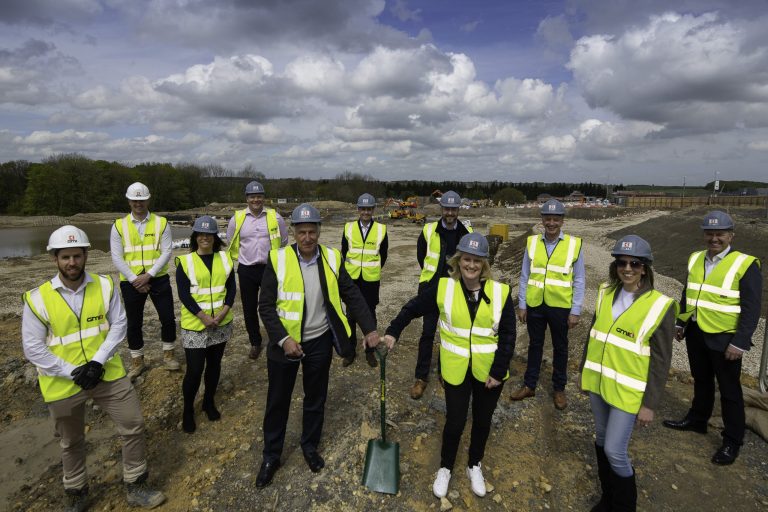
Construction of roads, bridges, cycle lanes, water, gas and communications to service the 10,000 homes set to be built at Meridian Water in Edmonton will start later this month. Enfield council has entered a framework agreement with Vinci Taylor Woodrow, BamNuttall and VolkerFitzpatrick to deliver the £90m works. Council leader Cllr Nesil Caliskan said: “Successfully delivering the infrastructure on the site will be a major step forward in what will be a transformational plan for the area, providing homes, jobs and parkland for the lasting benefit of our borough’s residents.” The work is expected to generate 150 jobs supporting ten skilled apprenticeships with at least £4m of contracts going to local construction companies. So far, the council has won £170m in infrastructure funding from the government. Vistry Partnerships is overseeing phase one of the project which includes 950 new homes of which half will be affordable. Work on the first 300 homes will start later this year with the first completions due in 2022. Creative hub ambitions underway The former Vehicle and Operator Services Agency building is already being converted to create workspace for thousands of freelance designers, artisans and small businesses. The workshops will provide 30,000sq ft of workspace for up to 1,000 makers and creators across engineering, wood, metal, digital and additive technology plus a fashion studio.  A new station was built last year to service the 210-acre site next to the Ikea store and close to Lea Valley Park.  Hank Zarihs Associates said the 25-year regeneration scheme was just the type of innovative property development finance lenders were keen to support. In January, the council struck a deal with Troubadour Theatres to build film and television studios at the development which are expected to open this spring. It’s hoped they will enhance Meridian Water’s ambitions to be a creative hub offering jobs and cultural activities. Meridian Water has suffered a series of setbacks since the council unveiled the masterplan in 2013. Talks with master developer Barratt Homes collapsed in 2017 with the council claiming the firm’s plans offered a ‘poor deal’ for locals. After discussions with the reserve bidder, Pacific Century Premium Developments fell through the council decided to work with several smaller developers to deliver the scheme.

Read More »

Meeting demand for specialist training services within the trade sector during a pandemic

Safety training across manufacturing and processing sectors is integral to ensure employees are as safe as possible within workplaces where a host of potential hazards are present.  2020 saw search volumes for lockout training services rapidly increase, with the search term ‘lockout tagout training’ increasing by 33% from July to December 2020, and ‘lototo training’ by 25% from September to December 2020, showing a rise in demand for specialist safety training services within the trade sector. To meet such demand, businesses must adapt and develop ways to safely train staff through the pandemic to ensure that staff are receiving the tuition that they require to stay safe at work.  Keeping up to date with training is important for all workforces, but none more so than that of workers within the most dangerous industries in the UK[1] including aggregates, waste and recycling and construction. It is imperative that Health and Safety training within these industries remains up to date, yet current restrictions mean that in person training is limited, meaning less people can currently attend each course at once due to social distancing rules. Different levels of training courses are also important to cater for, with everyone from general operators to management and supervision requiring differing aspects to be understood.   If a workforce fails to keep up with industry standards, they could be in danger of falling behind within their specialist area due to sector changes and newly introduced regulations. Continuing to train throughout the pandemic allows companies to emerge from the Covid-19 crisis with their employees in a stronger professional position and working safely.  To meet the demand for such training services, safety product specialists Reece Safety has expanded its business to offer training on safe isolation, ladder use & inspection, working at height and permit to work, in addition to the City Guilds confined space training already offered by the business.  To accommodate the current restrictions due to the pandemic, the company is offering restricted groups of five for Covid-safe face-to-face training based in Halifax, West Yorkshire, and a very well received live stream training package, with each course lasting half a day.  Andy Graham, Managing Director at Reece Safety had this to say: “The MineralProducts Association identified that failure to safely lockout was one of the top three in the “Fatal 6”, and we wanted to meet the growing demand for training and bringing Mark Wright Training into Reece was a great way to do this. We have also expanded our specialist training and consulting team with highly experienced safety trainers such as Ben Fytche. We strive to only deliver the highest quality of training and to make it relevant to all learners in attendance.”  For more information and booking enquiries for safety training courses, including confined space training, visit: https://www.reecesafety.co.uk/training-and-consultancy

Read More »

Spectrum Properties snaps up prize unit on Dixon’s Blazes Industrial Estate

Spectrum Properties, one of Scotland’s largest family-owned property businesses, has scooped a prize industrial facility in Glasgow to add to its portfolio of more than 700 commercial units in the city. It has taken on a 25,000 sq ft former factory on the Dixon’s Blazes Industrial Estate in the South Side for a sum in the region of £800,000, and the company now plans to spend up to £500,000 on a comprehensive refurbishment. Spectrum Properties, which operates all over Glasgow, Edinburgh and Stirlingshire, acquired the property from the Matthew Clark Group, a national drinks wholesaler which supplies thousands of premises across the UK. The group was disposing of the property following a reorganisation. Dixon’s Blazes estate – named after the iron works blast furnaces which lit up the night sky in the 19th century – is a prime industrial area offering high quality industrial, warehouse and office space. Bill Roddie, Managing Director of Spectrum Properties, said: “The estate is located in the Gorbals area and is within walking distance of the city centre. It has enviable transport connections and is only a short distance from the M74. “We intend to carry out a major renovation, including re-roofing, re-cladding, re-plumbing and re-wiring. The unit will be sub-divided into four new facilities, ranging in size from 10,000 sq ft to 3,000 sq ft. Planning applications are already in, and we expect work this month (March 2021) and to last four months.” Mr Roddie said that there was a noticeable shortage of good industrial property in the Glasgow area as markets continue to evolve to accommodate changing consumer patterns and demands. He said: “There is a significant appetite for space for parcel delivery businesses, which are expanding rapidly to deal with the enormous upsurge in online retail, especially since March last year when the pandemic changed everything. “Similarly, because so many people are spending so much of their time at home, there has been a huge increase in companies looking for space to provide products such as replacement windows and doors, garden furniture, sheds and home improvement. “This facility will be a very attractive prospect when we have finished with it, creating a large amount of valuable space in line with all the current regulations and situated in a well-established industrial estate.” Although Spectrum Properties has moved into residential development in the last 10 years, its primary focus remains on commercial property, which comprises some 70% of its group holdings. The company directly employs 75 people and the same number of sub-contractors. It is actively recruiting to cope with rapid expansion. Established by Mr Roddie in 1988, the company now has a portfolio valuation of £60 million and a turnover in excess of £5 million.

Read More »

3 Ways to Empower Your Teams to Be More Productive

Having a good team on board will transform your business as you will receive better results. More than likely you will need to do certain things to ensure that knowledge and morale is high so everything runs smoothly. Once you have a stronger team you will notice your productivity levels will rise to improve quality of work and completion of projects. Training your staff members Providing training to your staff members will ensure that they give you the best quality of work at a rapid pace. It may be an investment now, but it will help you massively in the future by saving you time and money. Workplace training companies such as https://kallibr.com.au/ will provide the training for you so you can have the peace of mind that no key information is missed. They have loads of courses that you and your team members can enroll on to further your knowledge. Whether you have a business that requires training on-site or off-site there are courses for everyone so it is well worth putting your time and money into to allow your team to thrive in your business. When a team member has the knowledge they need, they will often work faster and more confidently. Often it can really bring out the personality in someone which can improve their overall growth within the company.  Using strengths to your advantage When it comes to delegating your daily tasks it is best to use strengths and weaknesses to your advantages. Any weaknesses that your team have should be spoken about and resolved by providing the option to enroll onto a course to maximize their confidence. This will allow them to gain confidence in the activity and it will be easier to place them on any department or task. Noting people’s strengths will make it easier to delegate your team members when you need a job doing well in a timely manner. In addition when team members get to do their favourite task they will keep the overall environment up as well as doing it correctly. If you are struggling then pair up someone who is confident in that area with someone who is unsure as they will be able to work with one another to complete it in a non intimidating way.  Good working environment Keeping the overall environment a happy and motivating space will ensure that your team keeps their passion for their roles. Hold regular team activities and bonding sessions such as paintballing or go karting and you will notice how your team will work better together afterwards. Often it will loosen up and relax the relationships between your team which will make them more confident to ask one another for assistance. Even holding a film night or a game of UNO at lunchtimes will eliminate stress and tension which will reduce the cause for mental health problems. It does not need to cost lots of money but even bringing in a box of donuts will improve everyone’s mood and will enjoy their jobs more.

Read More »

Business prosperity bolstered by launch of next-generation property and finance services consultancy

Unique approach to solutions provision with unrivalled proposition from industry experts A unique firm to assist businesses and help them prosper in the ‘new normal’ with an innovative approach to property and finance-based services has launched today. ARMCo is the brainchild of Birmingham-based business founder and investor Russell Martin, and combines specialist lending, corporate support, land procurement and development, and insurance services – catering for a rapidly evolving business landscape – to benefit clients with truly holistic and tailored solutions. ARMCo is based in the heart of Birmingham’s finance district, where its HQ is the base from which the firm delivers its local, regional and national offering. It has a strong foundation: Russell formed Finance 4 Business, a specialist broker for finance transactions, 15 years ago – and used his experience, expertise and connections to form four further businesses which have grown strategically year on year, offering agile and integrated solutions to clients. With four new firms offering synergistic services added to the group, this forms the complete ARMCo offering. Jon Preston has been appointed as Chief Operating Officer at ARMCo. Jon brings a wealth of experience, having worked at a UK-based lender which underwent a £26m MBO last year with Foresight Group, a leading independent infrastructure and private equity investment manager. ARMCo founder Russell Martin explains: “We are living in uncertain times and a post-pandemic world looks very different for a lot of businesses. Overcoming challenges such as access to business finance, sourcing sector-based specialist risk and insurance solutions or navigating land procurement and development opportunities will have presented complexity before Covid, but the ‘new normal’ will be more challenging for many. “The combination of expertise at ARMCo means we can deliver bespoke solutions for our clients to help them maximise growth opportunities and give them an exceptional experience. Our adept approach ensures that even the most complex of transactions are navigated with integrity, proficiency and pace. The combination of a human approach, passion and commitment of strong leaders and highly collaborative partnerships, combined with a central services approach, presents an unrivalled proposition in the UK – particularly with Jon at the helm, leading and propelling the group,” he added. The ARMCo group comprises Finance 4 Business, Liquidity Club, Innovation 4 Business and  Walker Doble – as well as new firms Atlas Land & Planning, Midshore Partners, Chordis Capital and Cape Insurance. These are operated by industry experts Russell Martin, David Pinnington, David Totney, Philip Moore, Rebecca Doble, Marc Walker, James England and Rob Lankey and Henry Gallacher. The group offers expertise on financial solutions including asset, bridging and development finance, tax solutions and MBOs – helping SMEs in a range of sectors, property developers (including allied trades and professionals) and investors. One such business benefitting from ARMCo’s expertise is Fitzpatrick Group Ltd – a housing delivery service provider with a requirement for finance provision to aid its expansion into a number of specialist sub sectors. The firm’s Managing Director, Mark Fitzpatrick, explains: “I have worked with Russell for more than a decade, initially through Finance 4 Business (F4B), through which I have had in excess of 25 loans arranged for me, across many disciplines and through a multitude of different lenders, from commercial mortgages, Buy-To-Let and bridging loans, to development and asset finance. The attention to detail, end-to-end service and dedication has been a staple feature of the service.  “The evolution of ARMCo has seen the inception of some great businesses led by fantastic people, with whom I have transacted on many occasions, with great satisfaction and results. The launch of ARMCo makes absolute sense and I have no doubt Russell and his team will go from strength to strength.” Russell concluded: “Success in any business involves being able to navigate a market, identify business opportunities and be agile enough to be able to plug gaps in the market. I have applied that formula to my businesses, and the ARMCo offering can now support businesses in realising their ambitions, as we all try to navigate our way through these turbulent times. We are a group of companies built on strong relationships, not transactions, and I’m delighted to have such robust and proven expertise on board at ARMCo. We have ambitious expansion plans, and will be adding more companies to provide further synergy within the group.” For further information about ARMCo visit www.ARMCo.partners.

Read More »

Parliament’s Suburban Taskforce Releases Update Report

The parliamentary Suburban Taskforce has today unveiled an Update Report summarising its workstreams and emerging considerations since it formed in March 2020. This includes key feedback from its public “Call for Evidence” and initial data analysis. The cross-party Taskforce was established, with the backing of the Government, to shine a light on the suburbs in order to identify and secure the clear, long-term and properly resourced policies needed to support thriving, sustainable and inclusive suburban areas. The Taskforce has spent the past twelve months reviewing evidence on the state of Britain’s suburbs in order to make recommendations to the Government on policy initiatives to enhance them. It is co-chaired by Dr Rupa Huq MP and David Simmonds MP, assisted by UCL as Knowledge Partner and with an expert Advisory Board chaired by leading British urbanist Jonathan Manns, Executive Director at Rockwell. The Taskforce has collated and reviewed quantitative data, such as those related to land use, built form, population, transport and infrastructure. It also held a public “Call for Evidence” which ran from August to October 2020 in addition to hosting a range of workshops and meetings with Government Ministers. The emerging analysis suggests that suburban areas can be seen as distinct from urban or rural locations but cautions against a one-size-fits-all approach and indicates that it may be more appropriate to understand them against a spectrum of characteristics. It also highlights the continued relevance of long-established ‘suburban debates’ about their relationship to urban centres and management of growth pressures, in addition to the potentially transformative impacts of the Covid-19 pandemic. Commenting on the recent update, Dr Rupa Huq MP stated: “Almost exactly to the day, a year ago a bunch of MPs from three parties met to start the ball rolling with the Suburban Taskforce. Since then, suburban society has changed in ways unimaginable at the time with working from home for white collar staff, a new appreciation of space, and lockdown all subsequently normalised. “As this interim report shows densification, sustainability, decline of pubs, all bracketed under need for renaissance and anticipation of the new normal were all identified. This provides a solid basis for the next phase of this groundbreaking work to build on… and I personally can’t wait.” Jonathan Manns, Executive Director at Rockwell and Chair of the Suburban Taskforce’s Advisory Board added:“England’s suburbs are long-overlooked and the potentially transformative impacts of Covid-19 on the way we live and work make this cross-party review yet more pressing and relevant. There has been strong engagement to-date, supported by fresh new data, which is shining a light on the importance of managing change in a way that is both contextual and popular. The next steps will be to focus on the implications of the evidence-gathering stage for policy-makers and decision-takers.” www.suburban-taskforce.org About the Suburban Taskforce The Suburban Taskforce is an independent inquiry into the state of the suburbs and charting a course “Towards a Suburban Renaissance”. It is a cross-party parliamentary taskforce, comprising representatives of both Houses of Parliament, from all political backgrounds. It seeksto set out an agreed agenda for change. Its goals are: To illuminate the nature of social and economic activity in the suburbs. This is to include patterns of work, life and play and associated conditions in terms of investment, expenditure, built and natural environment. To illustrate the potential differences between suburban areas and those which are either more central or more rural, in addition to wider spatial distinctions which may exist, for example between larger and smaller settlements. In doing so, to inform our understanding of what constitutes a “suburb” in 21st Century Britain. To identify policy mechanisms and interventions which may assist in supporting the long-term sustainability of suburban areas. This will have particular regard to supporting polycentric centres, not least through fiscal considerations such as taxation and investment and the management of change through the planning system. The Taskforce currently comprises the following members: Co-Chairs: Rupa Huq MP (Labour) and David Simmonds MP (Conservative) Vice-Chairs: Jon Cruddas MP (Labour) and Gareth Bacon MP (Conservative) Lords Liaison: Baroness Susan Kramer (Liberal Democrat) Current Members Karen Buck MP Seema Malhotra MP James Murray MP Bell Ribeiro-Addy MP Steve Reed MP Sam Tarry MP About the All-Party Parliamentary Group (APPG) for London’s Planning and Built Environment The All-Party Parliamentary Group (APPG) for London’s Planning and Built Environment will act as the Secretariat to the Suburban Taskforce. It was inaugurated in October 2015 to provide a cross-party forum for consideration of planning and development matters in London. It has been Chaired since inception by Dr Rupa Huq, MP for Ealing Central and Acton. It was convened by Jonathan Manns, Executive Director at real-estate developer Rockwell and widely recognised as one of the country’s leading urbanists, as an important step in helping develop a coherent political voice on key issues affecting the future shape of London. About UCL UCL is the number one London university for Research Strength, recognised for its academic excellence and global impact. The Bartlett School of Planning is one of the leading research-led planning schools within Europe. As Knowledge Partner to the Suburban Taskforce, UCL’s support will be coordinated by Dr Lucy Natarajan and assisted by Dr Dimitrios Panayotopoulos-Tsiros. About the Advisory Board An independent Advisory Board has been assembled to assist the Suburban Taskforce in its work. The Advisory Board is Chaired by Jonathan Manns; Board Director at Rockwell, Visiting Associate Professor at UCL and Convenor of the APPG. Representatives from both professional built environment organisations and civil society include: Richard Blyth, Royal Town Planning Institute; Nicholas Falk, URBED Trust; Katie Perrior, InHouse Communications; Will Tanner, Onward; Tony Mulhall, Royal Institute of Chartered Surveyors; Peter Murray, New London Architecture; Phineas Harper, Director of Open City, and Prof. Laura Vaughan, Professor of Urban Form and Society and the Director of the Space Syntax Laboratory at the Bartlett School of Architecture, UCL.

Read More »

A changed market, and changed lifestyles, but the post-Covid demand for housing in Scotland is as enduring as ever

Spring is in the air in the Scottish residential property market and, after a winter which both dampened and at times froze growth, activity and interest is burgeoning again, raising hopes of a bountiful and fruitful summer. We are in quite a different place from a year ago, when the storm clouds were just beginning to gather on the horizon. Now, cautious optimism is permeating not just the housing arena, but many other sectors of the economy as well. It is not hard to see why. After 12 months in the doldrums, there is a widespread sense that restrictions may be beginning to lift at last – with less of a threat that the cell door will slam shut again. Schools are heading back, the vaccine rollout continues to be a spectacular success and people are drifting back to work. Spring and summer promise to be periods of frenzied activity, comparable to July and August last year when lockdown was first eased. Then, the market bubbled away nicely until the brakes were hastily applied again on Boxing Day and activity dropped down several gears in January and February. Now that we are back on the road, agents are reporting that they have a cornucopia of stock lined up on their books just waiting for the sellers to press the start button. There is a feeling that people are champing at the bit to get on with their lives. But unlike last year, when we had to cram a completely lost Spring market into a frenetic Summer market, this year promises a more measured market, which should allow the pent-up demand to come through in a controlled manner, rather than as a dam burst. And there is no doubt that aspects of the market are irrevocably changed. While in pre-Covid times aspirational moves tended to be price-driven, the new, fluid job market in which the majority of people are now operating has focused attention on other attributes. An increasingly dominant factor on the wish list now is more space – a most understandable imperative for families in which both parents are hot desking in the kitchen while trying to maintain some educational stability in their children’s home schooling. Gardens, views, countryside and local amenities have assumed a much greater importance for people whose lives have been confined for a year and, as a consequence, peripheral markets have done very well of late. As well as offering a different lifestyle, they have the added attraction of being significantly cheaper. Of course, Glasgow and Edinburgh will always be vibrant, but buyers in this more comprehensively interconnected period are also looking further afield – in the case of the former to Renfrewshire and Ayrshire, and in the latter to Fife, the Borders and East Lothian. The North East has always been a distinctive market in its own right, still dominated by the hydrocarbons industry, and the North West has seen a surge in demand, with our offices in Oban, Elgin and Inverness reporting huge interest in lifestyle opportunities. We can have little to complain about in a year where official statistics report average prices across Scotland rising by 8.4% and the number of sales rising by over 30%, but there has to be a degree of disappointment that the extension of the stamp duty holiday in England until June, with tapered relief until September, has not been matched in Scotland. The rationale in Holyrood for stopping the limited concessions in Land and Buildings Transaction Tax at the end of this month (March) appears to be that the market is active, the stimulus has done its job and therefore it is no longer necessary. It has to be remembered, however, that the property market is always a major economic driver and there surely also has to be an argument, as seems to have been recognised by the UK Chancellor, for keeping it stimulated as we claw our way to post-Covid recovery. And that recovery, when it comes, could well be a rollercoaster ride. The Bank of England note that significant amounts of money have been accumulating in people’s pockets over lockdown – in December the estimate was over £100 billion – and, when it is unleashed, we could be heading for a new Roaring Twenties. Scotland has great choice and diversity in its housing, as well as affordability, and there is no reason why we should not also forge ahead. But perhaps, by the end of the summer, a more desirable state might be a steady but unspectacular market with stable price growth. John McHugh is Managing Partner of DM Hall Chartered Surveyors.

Read More »

Stanhope joins Planet Mark community to reduce its carbon footprint and enhance social value

As part of its Environmental, Social and Governance (ESG) strategy, sustainable construction company Stanhope plc is joining the Planet Mark community to reduce its corporate carbon footprint and increase its social value while engaging with all stakeholders.  Its membership aligns with Stanhope’s commitment to undertake initiatives which acknowledge the climate emergency by responding with pioneering action through responsible delivery and operation.  Stanhope’s total carbon footprint for its direct business in the year ending March 2020 was 87.8 tCO2e and the relative carbon footprint was 1.5 tCO2e per employee.  Its total social value was £98,051.  The company’s total carbon footprint is currently the equivalent of 77 return flights from London to New York.  ESG is integrated into every aspect of Stanhope’s business including its assets, investments and developments, and it works closely with its clients, partners and peer groups to align ESG objectives.  The company sets delivery targets for every asset and project tailored to the specific project context, and its Planet Mark membership will enable Stanhope to enhance its action plans by measuring its carbon emissions and social value; and ultimately making carbon reductions for its headquarters in London.       Adam Smith, head of sustainability at Stanhope plc, says, “A key focus in 2021 is to set out our policies on ESG, climate change and stewardship that will enable us to meet our WGBC Net Zero Carbon Buildings Commitment.  By joining the global Planet Mark community, we are aligning our ESG objectives with clear decarbonisation and social value goals to put us at the forefront of urgent, immediate and ambitious climate action.”   Steve Malkin, founder and CEO of Planet Mark, adds, “I’m delighted that Stanhope plc is joining our engaged member community at Planet Mark.  Its strong commitment to development, asset management and corporate sustainability will ensure it plays a leading role in contributing to reduction in carbon emissions in the property and construction industry.  Through its diligent policies and stewardship the company is well on its way to achieving its Net Zero goals. I applaud its urgent and immediate actions in tackling the climate crisis in this Decade of Action.”  

Read More »

£170m infrastructure works at Meridian Water forge forward

Work to deliver the £170m of infrastructure which will make the £6bn Meridian Water project a reality took a huge step forward on Tuesday 16 March with the appointment of the first contractors. Enfield Council was awarded the money by the Ministry of Housing, Communities and Local Government last year (2020) from its Housing Infrastructure Fund. It will be used to build the roads, bridges, cycle lanes and parkland, as well as the water, gas and communications networks required to deliver the flagship 10,000 home, 6,000 job Meridian Water scheme. Today, Tuesday 16 March, Enfield Council can announce that it has entered into a Framework Agreement with Vinci Taylor Woodrow, BamNuttall and VolkerFitzpatrick to support  the delivery of £90million of the works following a competitive procurement process. Furthermore, the Council has today appointed Vinci Taylor Woodrow, as the first ranked framework contractor, to provide pre-construction services. Construction works are due to start on site later this year. The scheme is expected to generate 150 jobs that last for a year or more, with at least 30 of those roles going to local people, and supporting 10 skilled apprenticeships. In addition, there will be an anticipated boost to Enfield’s construction sector, with at least £4 million of contracts with Enfield construction companies, supporting further local jobs. The Leader of Enfield Council, Cllr Nesil Caliskan, said: “This is a major step forward for Meridian Water, the delivery of infrastructure on the site will pave the way for the 10,000 homes and 6,000 jobs we will be creating in this development. “Successfully delivering the infrastructure on the site will be a major step forward in what will be a transformational plan for the area, providing homes, jobas and parkland for the lasting benefit of our borough’s residents. “We are proceeding with pace on this ambitious programme which transform the face of Enfield and play a major role in tackling the housing crisis locally and providing a new, state of the art development which will provide the good quality jobs and homes our residents need.” Enfield Council has made major strides forward in the delivery of Meridian Water, a brand new £46million station was funded by the local authority to improve transport links to the site and the first homes – on the first phase of the development – which will provide circa 950 homes – are due to achieve first completions in 2022. In terms of job creation, the Council has struck a deal with Troubadour Theatres that will provide jobs and increase skills to build film and television studios at its £6bn Meridian Water development. The complex will be known as Troubadour Meridian Water Studios and will assist with the economic regeneration of the Edmonton and Enfield. Work on converting the former VOSA building on the Meridian Water development, to create workspace for Building BloQs to provide to thousands of freelance designers, makers and small businesses, started in December last year. The new workshop will provide 30,000sq feet of workspace and support up to 1,000 makers and creators across a range of departments – engineering, wood, metal, digital and additive technology, paint finishing, and a fashion studio for many years to come.  For more information contact Andrew Golder, Press and New Media Manager, Enfield Council. Tel: 020 8379 5147. Email: Andrew.golder@enfield.gov.uk  

Read More »

FAILING TO PLAN IS PLANNING TO FAIL – WE MUST GET PROCUREMENT PREPARATION RIGHT

THERE is a big focus in the Construction Playbook on procuring for value and harnessing the power of SMEs within the industry. Chief executive at Pagabo, Simon Toplass, discusses how our approach to SME relationships and treatment, and the procurement planning process will deliver on several of the core principles outlined in the playbook. Programme versus project With social value to consider as well as physical delivery costs, there is a huge education process that needs to happen led by framework providers, contractors, and consultants to help identify what best value and whole life value actually is. Framework providers like ourselves need to work with public sector organisations to define this, looking at whole programmes rather than on a project-by-project basis. We have an important role, especially as many clients seek to use frameworks to ensure they get the best possible outcomes. This outcome-based approach is another key focus within the playbook, and it is where the creation of a gold standard for frameworks would benefit absolutely everyone working in procurement. For example, frameworks will vary in commercial offerings, so transparency of cost will be important, to ensure contracting authorities aren’t caught out by hidden extras. In the same way that the public sector needs to consider the suitability of a consultant or contractor, it also must choose a framework provider equally as carefully. This means providers must provide simple, affordable and accessible solutions, but more than this they must be transparent about their costs and compliance as well. An excellent example of the action of looking at outcome-based approaches of a programme of work is our recently launched developer-led framework. The projects procured via this framework will be many, and lasting for many years, so all parties must work together to examine the best value – not just simple, monetary cost – beyond the construction phase and across the whole lifecycle. This whole life approach to best value enables us to embed all the key elements we need to be considering for the built environment moving forwards, from delivering true social impact on a local basis, to working towards the government’s goals for net zero carbon. This can all be outlined and embedded into the procurement process, and even within the contracts themselves as KPIs too, particularly within the NEC4 suite of contracts. Preparation is key One of the earliest lessons of my career was that the biggest enemy of good procurement is lack of time, and that rushing the preparation should be avoided at all costs. This is something that has stuck with me throughout several decades of working in procurement, and feeds into our focus on excellent, expertise-led procurement services at Pagabo. What has really resonated with us about the Construction Playbook is that ten of the 14 key policies outlined fall within the first of the five phases of procurement – i.e., within the preparation and planning phase. This section alone is half of the entire 83-page playbook, so it demonstrates the old saying ‘failing to plan is planning to fail’. A huge focus must be placed on getting the preparation spot on to make sure that project success is not threatened, and the best outcomes can be achieved for all parties involved. SMEs are the future of construction The Construction Playbook ultimately aims to deliver a better and fairer industry, including prompt and fair payments – something that is really important to focus on in the conversation around SME engagement. It’s clear that the government is keen to involve SMEs, and ensure their early engagement in programmes, but it’s crucial that this involvement is fair – including proper and prompt payment. This is highlighted even further when we examine the impact of the pandemic on these businesses. Insolvency practitioner Real Business Rescue recently released its Business Distress Index for Q4 2020, with the data revealing that the number of UK SMEs in significant financial distress is now 620,000. If this isn’t startling enough, that figure had risen by 14 per cent from the previous quarter. Construction is second only to fishing as one of the least innovative sectors in the UK, which means we have a real opportunity to make a huge stride forward in how we do things – and SMEs are central to this. They serve as the engine room of our industry, being best placed to bring forth the new ideas, products, services and tech adoption and will help us move out of this comfortable zone where we keep to ‘this is the way we’ve always done it’. The industry has been banging the SMEs and innovation drum for years, but the important thing is to put words into action. At Pagabo, 70 per cent of the suppliers across our ten frameworks are SMEs, and during the latest episode of our ‘Building Blocks’ podcast it was great to hear from Peter Masonbrook at Faithful+Gould that 83 per cent of its supply chain are SMEs. Willmott Dixon’s national account manager Andrew Brookes also joined the podcast discussion. He shared the various innovations taking place within the main contractor organisation, from the small pockets that are constantly happening across its live sites and offices, to larger, business-led approaches such as investment in products for standardisation and digitisation – another two key areas covered by the playbook. Pagabo’s relationship with industry SMEs goes beyond simply appointing them to our frameworks. We have a set of robust KPIs in place which ensure our suppliers are working with local supply chains on every project they undertake. By putting this process in place we’re able to track both the spend on and engagement each supplier has with local SMEs. Another example of this is our work with health tech brand Moodbeam. We’re currently undertaking a series of trials to understand how to best integrate its wearable wellbeing device into our on-site health, safety and wellbeing strategies in the construction sector. Simply put, we cannot afford to lose SMEs within our industry. They will be central to building

Read More »