Kenneth Booth

Power station redevelopment plans gets the green light

A disused coal-fired power station in Staffordshire is set to be redeveloped to offer 2,300 new low carbon homes and a school. Cannock Chase and Lichfield district councils granted outline planning permission for energy and redevelopment specialist ENGIE, who own the 139-ha brownfield site, to press ahead with the mixed

Read More »

PLANNING APPROVED FOR DURHAM BUSINESS HUB

Approval Granted For New Speculative Industrial Scheme at Integra 61 Durham County Council has granted planning consent to Citrus Durham for the delivery of the next phase of employment accommodation at its £300m mixed-use Integra 61 development at J61 of the A1(M). The new business/industrial hub, Evolution@Integra61, will be delivered

Read More »

MRI Report: Musculoskeletal Injuries in the Construction Industry

Musculoskeletal Injuries in Construction Health and safety is a key priority for today’s businesses and employees. Although the majority of people working in the construction industry care about health and safety and are diligent in their work, the construction industry remains one of the most dangerous sectors to work in

Read More »

The Kingspan Effect & Grenfell

Kingspan’s founder, Eugene Murtagh’s fortune has gone up nearly a billion dollars in a year, but investors are moving away from the Grenfell Tower insulation supplier. Forbes published its annual list of billionaires earlier this week with Kingspan founder and Chairman, Eugene Murtagh is on the list with a $2.4 billion fortune,

Read More »

Search is on for Stars of North East Construction Industry

After a year in which the construction industry has led the way in terms of the safe return to work during a global pandemic, organisers of a North East awards ceremony are preparing to celebrate this year’s incredible construction heroes at a fully live, online awards ceremony. The Trades Awards

Read More »

Building a better tendering process

Contract Finder Pro’s Sandy Boxall explains why we need to industrialise the bid process for the construction industry I’ll never forget the sight of dormant cranes adorning the skylines of city centres across the UK during the first national lockdown. Talk about an apt metaphor. As the country closed down

Read More »

Foxhills puts family first with launch of £7m venue

Foxhills Club & Resort has underlined its family values and value to the local economy by forging ahead with the launch of its new venue, the Pavilion. The new £7m facility is the latest to be unveiled by the Surrey resort as it continues to invest in its array of

Read More »
Latest Issue
Issue 345 : Oct 2026

Kenneth Booth

INDUSTRIAL INSPIRED APARTMENT COMPLEX SET TO REVITALISE WOLVERHAMPTON CITY CENTRE

Planning permission has been granted for a significant new apartment complex and office space on the southern edge of Wolverhampton city centre. Designed by East London-based architectural practice, Ackroyd Lowrie, the £11m scheme will regenerate an underused brownfield site on the corner of Dudley Road and Bell Place. Comprising 100 one and two bedroom apartments, basement car parking, cycle parking, communal rooftop gardens and associated landscaping, the Dudley Road development will also have a 230m² office space for use by the developer, M&E Group. “The redevelopment of Dudley Road represents a major regeneration for one of the city centre’s main gateways and we’re pleased it is already being viewed as a positive contribution,” explains director, Oliver Lowrie. “Underutilised and neglected sites like these can have a massive impact in rejuvenating city centres into attractive places to live and work. We are pleased to be working with the developer, M&E Group on the delivery of hundreds of new homes on brownfield sites across the Midlands, supporting the governments’ aim to level-up the economy. “Our design for Dudley Road is focused on providing a visually distinctive building that is suitable for modern living. Taking inspiration from the neighbourhood, which has a predominantly industrial heritage, we’ve created a scheme of varied height and massing to both respond and connect to surrounding buildings. The material palette features characterful dark and light grey brickwork, red zinc cladding along with feature detailing such as balustrading,” concluded Oliver. Extensive consideration was also given to Dudley Road’s environmental impact and a fabric first approach will be adopted throughout construction. The development will include high-efficiency LED lighting throughout as well as rooftop solar PV panels, which are expected to achieve a reduction in carbon dioxide emissions of at least 10%. Oliver added: “The pandemic has fundamentally changed people’s priorities and with so much time being spent in our homes, living as sustainably as possible in well-positioned and well-insulated properties is crucial. The new apartments at Dudley Road are situated within just a 10-minute walk of the city centre, and we deliberately designed each space to be dual aspect, so plenty of natural light. In addition, each home has access to private outdoor space in the form of a garden, balcony or roof terrace.” Hardeep Singh, director at developer, M&E Group said: “We’re excited to bring forward this major new development for Wolverhampton and we believe the mix of apartments will have widespread appeal among professionals, young families and investors. We are delighted the Council has echoed this viewpoint by granting planning permission.” Planning permission for Dudley Road was secured by specialist urban planning consultancy, Hybrid Planning & Development. Work is anticipated to begin in summer on an 18 month build programme.

Read More »

Let us Evolve our Buildings from being Passive Structures, to Interactive and Reactive Systems

Today, and in fighting this awful virus, it has never been more pertinent to test room integrity, for airtightness. A building that is not airtight cannot be properly mechanically ventilated. Now is the time to build tight, ventilate right. Until the outbreak of this global pandemic there was plenty of frustration around the slow pace of technology adoption within the built environment. Whilst other industries had made good progress, teams of builders were struggling to meet minimum building performance standards. Inefficient processes left much room for improvement. New homes often fail to meet low-energy targets, and to satisfy residents with fundamental issues such as ease of use, summer comfort and energy costs. There is far too little Building Performance Evaluation (BPE) happening routinely on projects to close the performance gap.  HOW COVID-19 CHANGED OUR BUILDING SECTOR The pandemic can be credited with pushing the construction industry in the right direction. Many processes have changed and there is no need to go back to the way it was. The technological advances that would have happened over the next few decades, have now been achieved, due to the pandemic’s dramatic acceleration of technology adoption.     Most buildings are tested for airtightness, air permeability, and air leaks with outdated and intrusive technology, making tests difficult, time consuming and expensive. Yet it is critical to quickly locate and accurately quantify air leaks in rooms and buildings. There is now a unique solution from Coltraco Ultrasonics who have brought testing for airtightness, and air permeability into the 21st Century. Air leaks with a diameter as small as 0.5mm can now be detected and quickly located with the Portascanner® AIRTIGHT 520.  BUILDINGS, AIRTIGHTNESS AND VENTILATION In March 2020, the world as we knew it fundamentally and suddenly changed, however, innovation continued to evolve and thrive. There was an urgent requirement within the NHS to prevent infection spread in hospitals and contain the virus by maintaining negatively pressurised ICU Wards and ensuring their airtightness. UK Government put out a COVID-19 emergency response grant through InnovateUK for technology to help the NHS. In June 2020 Coltraco Ultrasonics was one of the winners. The grant was for adapting their already award-winning watertight integrity technology into technology suitable for room airtight testing. Like many businesses, Coltraco Ultrasonics was transformed by the pandemic. In just 8 months Coltraco Ultrasonics had successfully designed and manufactured 2 innovative solutions to help the NHS and healthcare settings with infection control and the building sector to ensure effective ventilation through airtightness. Following from this need to contain the spread of airborne diseases, Coltraco Ultrasonics swiftly saw the demand for this leak detection technology to be re-designed for the built environment. Portascanner® AIRTIGHT 520 is a new solution to ensure that buildings are airtight so that people can be confident that they are returning to “safe buildings” and “safe working” by properly ventilating them. This is to ensure that all ventilation systems are operating effectively, and thereby enhance indoor air quality (IAQ) which has now become a poignant issue. No alternative leak measuring technologies measure the leak size directly, but instead infer it from pressure differences of airflow measurements, which are assumed to be taken at constant temperature and pressure, something that in reality, is never the case. This means that alternative technologies have inaccuracies that may be minimised, but not eliminated entirely, by highly skilled operators using manual calculators. For the first time, with minimal training, the user can locate a leak, quantify the leak site, calculate the air flow rate through it, and generate an air permeability value for the room. You can then take accurate remedial action where necessary, and have full confidence in both the airtightness of your room, and the effectiveness of your ventilation in circulating clean air.   SOLVING THE PROBLEM OF CLEAN AIR Human Resources and Facilities Management Teams are tasked with keeping buildings and spaces comfortable, sustainable, efficient, safe, healthy and well maintained, and this list keeps growing as buildings, including residential buildings are expected to deliver more. More can include addressing the effects of Climate Change by making a building more energy efficient. More after this pandemic will include a critical appraisal of indoor air quality.  Seventy per cent of the world’s population spends an estimated 90% of its time indoors, and the World Health Organisation estimates that in 2020 there were more than 6 million premature deaths due to air pollution much of it attributed to poor IAQ. Digitalisation has the power to evolve buildings from being fixed passive structures into highly interactive and richly informative systems. Homes are becoming more autonomous, so that the mechanical components inside of the spaces created can ensure that occupants are safer, healthier and more comfortable.  ADDRESSING AIR POLLUTION Air filtration has never been considered a hot topic, but reflecting on what we know now, perhaps it should have been. Air quality plays an important role in our physical and mental health, and with COVID-19 good air filtration could mean the difference between sick and healthy, and in some cases, life and death.  A fundamental requirement for energy efficient mechanical ventilation and for effective air filtration is achieving a minimum level of air tightness in buildings. Air pollution is an increasing concern, as is maintaining an adequate level of Oxygen within the built environment.   The air we breathe is made up of multiple gases, however for a human to function normally the air must contain enough oxygen. Under normal atmospheric pressure we normally inhale air that contains 20.9% oxygen; if this falls even by one or 2 %, then functionality starts to become more laborious and the environment turns hypoxic, meaning that oxygen levels are low and could be harmful. Humans like fires need to have a constant and assured level of oxygen, and as we consume oxygen, more must be delivered to us.   THE LINK BETWEEN PANDEMICS AND BUILDING VENTILATION The design choices being programmed into buildings right now will be with us for years to come. This is a good thing because of the increased emphasis being placed upon, “Build tight, ventilate right.” COVID-19 will not be the last pandemic disease we will suffer, but our spaces will be better prepared for


Read More »

Work starts on refurbishment of Innovation Suite at Arts University Bournemouth

Willmott Dixon Interiors has begun work on a £200,000 project to deliver a new suite within the state-of-the-art Innovation Studio at Arts University Bournemouth (AUB). The national fit-out and refurbishment specialist contractor will refurbish an existing administrative space at AUB to create a c.3,000 sq ft Innovation Suite that will include a new reception area to the art incubation facility studio. The Innovation Suite will deliver collaborative work and social space for local businesses, start-ups, CPD delivery and post graduate students working in the innovative creative, cultural, engineering and manufacturing sectors. It will also house specialist digital and clean digital fabrication equipment supplied by the university’s Innovation Resources project. Willmott Dixon Interiors will create a new collaborative reception space and workshop rooms at the Innovation Suite, including AV, body scanner, 3D printing and textiles facilities. The project will see the installation of new mechanical and electrical services and the refurbishment of existing seating areas. Works will include new floor finishes and decoration, as well as new furniture and a timber feature wall. The Innovation Suite project will use £230,000 in Dorset LEP Local Growth Fund allocation and £65,000 in AUB match funding, and was awarded through the Pagabo Refit and Refurbishment procurement framework. It has been designed by architects at Willmott Dixon Interiors, with Selway Joyce as project manager, quantity surveyor and employer’s agent. Graham Shaw, managing director at Willmott Dixon Interiors, said: “AUB has justifiably developed a reputation as a top sector specialist and leading arts university for the creative industries. A new Innovation Suite will enhance the already impressive facilities available through the Innovation Studio. We look forward to delivering a space that supports local businesses and aspiring entrepreneurs and further contributes to the successful growth of the digital and creative sectors in the region.” First established in 1885 as a specialist art institution, AUB is now the UK’s number one specialist university for employability, according to The Times Higher Education’s Teaching Excellence Framework (TEF) and is ranked as the UK’s top specialist art and design university by The Sunday Times Good University Guide 2021. Willmott Dixon Interiors is one of the UK’s specialist high-quality interior fit out and refurbishment contractors. It has delivered a wide range of projects across the higher and further education sectors, including a £39 million refurbishment at London South Bank University’s London Road Building and the design and refurbishment of space across the Waterlooville Campus at Havant & South Downs College.   For more information, visit: www.willmottdixoninteriors.co.uk

Read More »

Power station redevelopment plans gets the green light

A disused coal-fired power station in Staffordshire is set to be redeveloped to offer 2,300 new low carbon homes and a school. Cannock Chase and Lichfield district councils granted outline planning permission for energy and redevelopment specialist ENGIE, who own the 139-ha brownfield site, to press ahead with the mixed development. ENGIE UK & Ireland’s divisional chief executive Colin Macpherson said: “We have been in positive and productive communication with all the relevant local authorities and local residents for many years now; as we pushed to drive forward with a powerful proposal that would enrich the local area and inject new homes, jobs and opportunities after the closure of the power station.” Initial work will start to the north of the development, where the coal yards are.  Remediation will begin next month and should finish by the end of 2022. The cooling towers are due to be demolished on 6 June 2021, which will mark a milestone for the start of the redevelopment. Infrastructure work is to begin this autumn with housing parcels allocated following remediation. Cannock Chase council interim managing director Bob Kean said: “As we recover from the pandemic the development of the former power station site becomes hugely significant for us. It is one of our main economic objectives in our new corporate plan and will help us realise our ambition to be a carbon-neutral district by 2030.” The wider Rugeley masterplan includes more than 12 acres of employment space and a new country park alongside the River Trent.  ENGIE has incorporated significant local commitments as part of the section 106 agreement, including the delivery of a new neighbourhood centre and dentist facility.  Brokers Hank Zarihs Associates said the low carbon development was an innovative one and just the type of project development finance lenders would be keen to back. ENGIE is exploring how it can support and enhance amenities for several locally loved fixtures including the model railway, local allotments and the canal. The former 1GW power station closed in 2016 due to challenging market conditions and competition from cleaner sources of energy, marking another milestone towards the UK closing all its coal-fired power plants by 2024.

Read More »

PLANNING APPROVED FOR DURHAM BUSINESS HUB

Approval Granted For New Speculative Industrial Scheme at Integra 61 Durham County Council has granted planning consent to Citrus Durham for the delivery of the next phase of employment accommodation at its £300m mixed-use Integra 61 development at J61 of the A1(M). The new business/industrial hub, Evolution@Integra61, will be delivered speculatively by Citrus and will add up to a further 23 flexible units totalling 52,142 sq ft in sizes from 1,205 sq ft up to 6,480 sq ft at the Integra 61 development, which already includes Amazon’s new 2m sq ft Fulfilment Centre and has consent for over 3 million sq ft of employment space with the potential to create some 4,000 jobs. The new units at Evolution@Integra61, which will be available to purchase or lease, can be occupied individually or combined to meet larger requirements of up to 14,940 sq ft. With design and build packages available for units up to 600,000 sq ft in the wider Integra 61 scheme, the development can accommodate occupiers of all sizes making it inclusive for all businesses seeking new space in the North East. Integra 61 will also create circa 300 new homes, a 70-bed hotel, a family pub/restaurant, a nursery, car showrooms and a number of trade counter/retail units all adding to the diverse offering. Located at J61 of the A1(M) and fronting onto the newly upgraded A688 and Durham Services, Integra 61 is just 4 miles away from the City of Durham. Evolution@Integra61 has been designed to address the regional shortage of modern small units to satisfy strong demand from local and regional occupiers seeking high quality industrial/warehouse units in the centre of the County. Citrus Durham will be appointing a contractor to start work on site in the summer and agents, Avison Young and Colliers International, are already taking reservations in advance of practical completion of Evolution@Integra61 in Q4 2021.  David Cullingford, Project Lead for Integra 61 and Citrus Durham, said; “We are proud to be delivering such an inclusive scheme and to be able to offer a wide range of opportunities to businesses of all sizes. Research has demonstrated the critical lack of new build space in the North East and we are confident that this next phase of flexible business accommodation will not only support regional occupiers but also provide an influx of jobs to boost the local economy.” Danny Cramman, Director at Avison Young commented; “The scheme will unlock much-needed new supply for the region. With the industrial and logistics sector so busy, there continues to be an increasing need for these type of units and there has already been a huge amount of interest expressed by local and regional businesses seeking a rare opportunity to purchase premises of this size in such a prime location. Occupiers will also benefit from the wide range of on-site amenities being delivered as part of the wider scheme.”

Read More »

MRI Report: Musculoskeletal Injuries in the Construction Industry

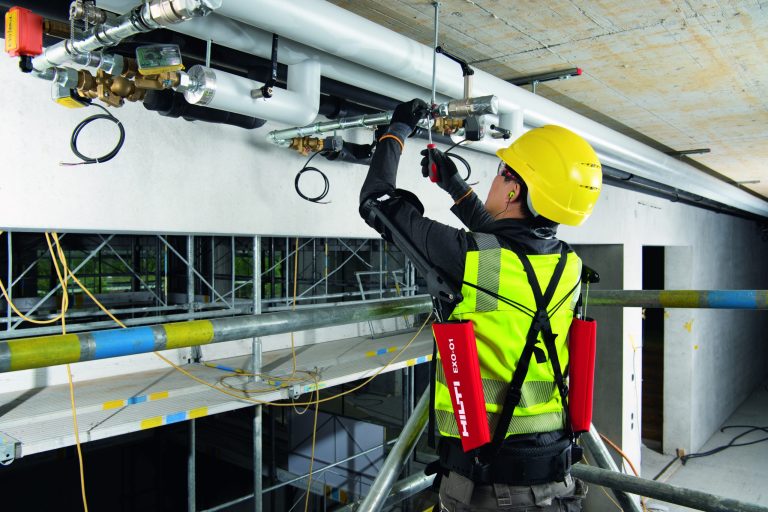
Musculoskeletal Injuries in Construction Health and safety is a key priority for today’s businesses and employees. Although the majority of people working in the construction industry care about health and safety and are diligent in their work, the construction industry remains one of the most dangerous sectors to work in when it comes to musculoskeletal injuries.1 According to statistics from the UK government agency, Health and Safety Executive (HSE), there were 498,000 workers reported to be suffering from work-related musculoskeletal injuries in 2018/19 with 41% of these injuries relating to upper limbs and neck.2 Altogether, HSE reports that 8.9 million working days were lost due to work-related musculoskeletal injuries in 2019/20.3 Overhead Work: A Major Risk Factor Musculoskeletal injuries develop when biomechanical demands, such as extreme postures, repeatedly exceed the worker’s physical capacity during construction work. In this regard, overhead work has been identified as a major risk factor for this type of injury in the shoulder region. Working with the arms raised over 90° for more than 10% of a worker’s working hours increases the risk of work-related musculoskeletal injuries in the shoulder region by one to two thirds.4 Support is Needed Overhead work remains a very common part of construction work today. And despite growing automation, numerous strenuous tasks cannot be fully automated, at all or at a reasonable cost. One solution to physically relieve workers while keeping them in control of the task is to assist them with an exoskeleton. An exoskeleton is a wearable system that provides physical assistance to its user through assistive torques and/or structural support. As the system is worn on the body and follows the user’s movements, no – or very limited – modifications of the workplace are required. Exoskeletons are drawing great interest from the industry to help alleviate some of the issues caused by overhead construction work. Hilti Exoskeleton: Addressing Productivity and Increased Demand xoskeletons are designed to enhance productivity by reducing stress on the body, causing less pain and fatigue due to a reduced load on muscles and joints. This reduced stress and increased comfort when working enables workers to improve their health and reduce the amount of sick days they take, provided that they still take the required rest breaks for physical and mental wellbeing. Tests have proved the effectiveness of the exoskeleton in terms of reducing stress on a worker’s muscles and joints, to improve the health of a worker and minimise days lost through ill health. By being able to retain skilled workers for longer periods of time due to less employee sick days, construction companies can utilise exoskeletons to improve operations twofold by improving employee wellbeing and increasing on-site productivity. Read the MRI Report here > References: HSE, Construction Statistics in Great Britain, 2020 HSE, Health and Safety at Work: Summary Statistics for Great Britain, 2019 HSE, Work related musculoskeletal disorder statistics (WRMSDs) in Great Britain, 2020 Grieve J, Dickerson C., Overhead work: Identification of Evidence-based Exposure Guidelines. Occupational Ergonomics, 2008; 1: 53-66

Read More »

The Kingspan Effect & Grenfell

Kingspan’s founder, Eugene Murtagh’s fortune has gone up nearly a billion dollars in a year, but investors are moving away from the Grenfell Tower insulation supplier. Forbes published its annual list of billionaires earlier this week with Kingspan founder and Chairman, Eugene Murtagh is on the list with a $2.4 billion fortune, up from $1.4 billion in 2020. He owns 16% of the shares in Kingspan, which he founded in Ireland in 1965. Kingspan is the manufacturer of insulation materials used on Grenfell Tower. Kingspan executives appeared in front of the Grenfell Tower Inquiry through November and December 2020 and gave further evidence at the end of March 2021. WHEB, a financial investor specialising in sustainable investing, published the minutes of its Investment Advisory Committee and revealed why it no longer invests in Kingspan. “Our overriding concern is that there was, in our view, a culture within the UK operations that saw regulation as an impediment to doing business. There is clear evidence that senior leaders sought to manipulate tests to provide positive results. There is also evidence of management seeking to bully and threaten employees and put pressure on external consultants and clients who raised concerns. “This core issue of culture remains, in our view, largely unaddressed by the company. Compounding this concern was the decision by the company to appoint the CEO’s brother to the Board. This appointment was announced with the annual results in late February. In our view, this was a missed opportunity to make board appointments which present the clearest possible signal of independent governance.” Concluding its analysis, WHEB said that the cultural problems in Kingspan were “tacitly endorsed by group management” and that they did not believe that proposed remedies would go far enough to deal with these concerns.   As a result, WHEB sold all its financial interests in Kingspan by 26 February 2021, 0.11% of Kingspan’s outstanding equity.   WHEB is not the first investing firm to respond to the evidence provided at the Inquiry. In January, The Irish Times reported that Liontrust Asset Management had also cut its investment in Kingspan by about 400,000 shares. The Mail on Sunday published its survey of ethical investment firms on 23 January and found many still held Kingspan shares but were reconsidering their positions. “Until late last year, the £2 billion Baillie Gifford Positive Change fund had Kingspan as a top ten holding, with 3.9 per cent of its assets in the company. But last month, it reduced this stake.” The Grenfell Inquiry reconvenes on 19 April.

Read More »

Search is on for Stars of North East Construction Industry

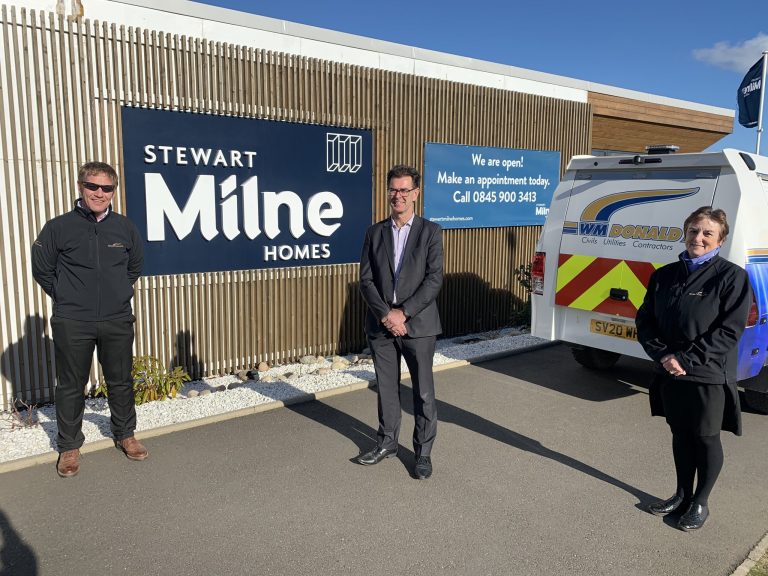
After a year in which the construction industry has led the way in terms of the safe return to work during a global pandemic, organisers of a North East awards ceremony are preparing to celebrate this year’s incredible construction heroes at a fully live, online awards ceremony. The Trades Awards are organised by local creative marketing agency Mearns & Gill and were launched in 2012 to reward and recognise individuals, teams, and businesses within the North East construction industry. Now entering its ninth year, the awards ceremony invites applications from businesses across all disciplines within construction, and from sole traders right up to national construction businesses with a head office in the North East. With 14 award categories available to enter including ‘Apprentice of the Year’, ‘Tradesperson of the Year’, ‘Sustainability in Construction’ and ‘Construction Project of the Year’, there are many opportunities for businesses of all sizes to share their success story. Trades Awards 2020 was initially postponed due to Covid-19, and eventually took place in October as a live, online event, broadcast from a studio at Mearns & Gill. Over 400 guests took part in the celebrations that saw winners give their acceptance speeches from living rooms, kitchens, and boardrooms around the North East, due to a tightening of restrictions at that time. This year’s ceremony will take place online again on Friday 1st October, with organisers hoping that finalists will be able to gather in smaller groups this year if government guidelines allow. Mike Wilson, Managing Director, Mearns & Gill said “We are very excited to be starting the search for this year’s crop of construction heroes. We organise a range of construction events throughout the year, so we get to see first-hand the incredible work that is being done out there, and we believe it is important to highlight these achievements. “We had initially hoped that we could celebrate together this year, but with so much uncertainty in terms of restrictions we took the decision to organise the event online again. We’ll be broadcasting live from our very own studio, with the hope that our sponsors and finalists will be able to gather in smaller groups to hear the award announcements. The world of digital events continues to get more exciting, and we’ll be using the best technology and techniques to ensure that all of our guests have an entertaining an interactive evening.” Neil Thomson, Deputy Managing Director, Stewart Milne Homes Scotland, said “On behalf of everyone at Stewart Milne Group, we are extremely proud to be the main sponsor of the Trades Awards for the seventh year in a row. I speak regularly about how proud I am to work in the construction industry, and that has never been truer than now. Our industry has led the way in terms of operating safely and efficiently during a global pandemic, and everyone has worked so hard to create new ways of working that have been adopted by other sectors. We have witnessed individuals in our own business, and amongst our contractors, suppliers, and peers rise to the huge challenges we have faced, and the Trades Awards offers an important opportunity to give these construction heroes the recognition they richly deserve.” Elaine Donald, W M Donald, said “Our industry is very much about the people, and we continue to support the Trades Awards because it offers a unique platform to highlight the skill, knowledge and passion within construction. For us, it is very important that individual apprentices, young professionals, and tradespeople receive recognition for outstanding achievements, as well as giving local companies the chance to talk about their efforts with regards to sustainability, health and safety, and looking after their people.” The deadline for entering Trades Awards 2021 is Friday 25th June, more information can be found on www.tradesawards.com

Read More »

Building a better tendering process

Contract Finder Pro’s Sandy Boxall explains why we need to industrialise the bid process for the construction industry I’ll never forget the sight of dormant cranes adorning the skylines of city centres across the UK during the first national lockdown. Talk about an apt metaphor. As the country closed down so, too, did construction sites and only after new operating procedures were rolled out, and disruption costing billions of pounds, did they re-open. Even though the industry was able to largely stay open for business during the second and third lockdowns, there’s no doubt that these events have proved a real shock to the system, driving both short and long term change. It’s also showcased the construction industry’s ability to pivot and rapidly implement innovative change. Of course, no sector of the economy or society has been untouched by the pandemic. However, it strikes me that firing up my laptop from home is one thing, safely deploying new operating procedures, including social distancing protocols and enhanced hygiene processes on building sites, is quite another. Nonetheless, despite these challenges, organisations have persevered and found ways to deliver projects safely. Ongoing opportunities The good news is that better times are fast materialising on the horizon. While the pandemic’s economic consequences continue to play out, public sector opportunities have thankfully remained plentiful, with over 1,500 of open tenders and worth more than £928 billion issued by the UK and Republic of Ireland governments within the last 12 months alone. Of course, such opportunities vary in size from the smallest to the largest, but competition is fierce – if anything fiercer than before Covid and likely to remain so as the recession reduces commercial construction opportunities. While who you know is still important in any procurement, the process is becoming ever more digital, with more tenders moving online and industry open days and other one-to-one interactions becoming an ever more digital experience. Industrial revolution The sheer scale of this conversion to all things digital means that now, more than ever, businesses need to industrialise their business winning processes. This will enable them to reap digital dividends, such as using technology to streamline procedures and increase their own efficiency, and in the process save their precious time to do the things that cannot be streamlined – such as the human interaction that can often secure the golden nugget of information that secures the win. An online treasure trove of information is now available, on both the market and on new opportunities that organisations would wish to bid for. Using data feeds, market trackers (like my very own Contract Finder Pro, for example) and integrating both outsourced (like bid writers and legal teams) and insourced components and services, the business winning process can become increasingly automated and slick. With a bit of thought and some changes to business winning processes, big improvements to efficiency can be made. Since there is never quite enough time to write a bid, those organisations that can automate the process most effectively and take advantage of the digital opportunity at hand will be more competitive than those that don’t. Their reward will be larger market shares and the promise of even more competitive advantage still to come. The future really is digital.

Read More »

Foxhills puts family first with launch of £7m venue

Foxhills Club & Resort has underlined its family values and value to the local economy by forging ahead with the launch of its new venue, the Pavilion. The new £7m facility is the latest to be unveiled by the Surrey resort as it continues to invest in its array of leisure amenities – despite the unprecedented difficulties of the last 12 months. It is further proof of Foxhills’ role as a leading hub for the local community for when life returns to some kind of normality. As one of the borough’s largest local employers, Foxhills is set to play a pivotal role in helping the local economy get back on its feet. The Pavilion will not only create even more jobs, but will also be an attractive proposition for holidaymakers ahead of the expected staycation boom this summer. The Pavilion follows 2019’s investment in the refurbishment of The Fox dining rooms, the opening of the Practice Den – a floodlit short-game area which adds to the club’s extensive golf practice facilities – and the Yoga Cabin, which has already gained huge popularity among the members and guests. Opening in May, just in time for the easing of most restrictions and ready for when leisure and socialising will be cherished the most, The Pavilion is one of Foxhills’ most exciting developments in its 46-year history. Designed by Michaelis Boyd, the architects behind Soho Farmhouse, the brief was to build “beautiful boxes filled with optimists”. The building is now just a few weeks away from completion and will feature indoor and outdoor swimming pools, a crèche, art studio, playroom with soft play and role-play ‘high street’, three more studios for dance, functional fitness and group cycling, a games room, a new restaurant and two terraces – all set within a Victorian walled garden overlooking one of the resort’s golf courses.  The Pavilion joins an Olympic range of leisure facilities already at the club, offering more than 200 weekly activities for both adults and children. Highlights include group cycle, yoga, combat, reformer Pilates, Zumba, arts and crafts, Nordic walking, dance, judo, orienteering, tennis, table tennis, cycling and running clubs, basketball, football and golf. And with the new facility opening in a completely different world than expected, every step has been taken to make sure that it is Covid-safe and adaptable to the times we find ourselves in. The building itself is spacious and airy, with a state-of-the-art air exchange system to improve ventilation, while the design has also made the most out of outdoor space with two terraces – the larger with heaters and an awning for year-round dining and relaxing. More classes will also take place outdoors with yoga, boot camps and power walking on the 4km woodland trail on the estate, as well as the opportunity for most of them to be live-streamed or on demand so they can be enjoyed at home. Social distancing will be easy with three studios which are larger than the existing, with one being used for private one-to-one personal training. Swimming outside in the new 25m outdoor pool is better for limiting transmission and it will be possible every day as the pool will be heated all year. Takeaway food and drink will be available, a strict cleaning regime will be in place to thoroughly sanitise any touchpoints – although automatic doors, sinks and showers on sensors, as well a counter service, will also limit these. Hand sanitiser will also be available throughout. Marc Hayton, Foxhills managing director, said: “At this extraordinary time, we all need something to look forward to. The Pavilion will not only help to cement our place as a family club, but also as a valued business at the heart of the local community and will give a well-needed boost to the local economy. “Family is a vital component to Foxhills’ ethos and has always been the bedrock of the resort. We want to give our members and the local community the facilities they deserve – even more so after the tough year everyone has had. “We’re delighted that The Pavilion will arrive just in time and will provide the community with space to exercise, socialise and unwind in a safe environment.” Foxhills takes its role in the community seriously. In time for Christmas, the club organised an initiative which saw its members donate £25k to food banks in Weybridge and Runnymede and £100,000 has been committed to summer camps for local children providing those most in need with up to a month of activities.

Read More »