Kenneth Booth

WILL 2021 BE THE YEAR OF THE CONNECTED SITE?

Construction is almost back to pre-COVID levels, according to Eurostat, but this doesn’t mean that the construction industry will be back to its pre-COVID ways of working. The industry is rapidly adopting technology to increase productivity, safety, accuracy and traceability. Here Ian Barnes, Head of Business at SITECH UK & Ireland, a leading distributor of Trimble® machine control technology for the civil and heavy construction industry,

Read More »

National property network launches funding arm

New service offer to address current lending challenges which are further adding to the housing crisis In direct response to the housing crisis in the UK and the increased challenges in developers securing funding to build homes – which has been further hindered by the pandemic – property facilitator and network

Read More »

10 Facts About Lawns You Probably Didn’t Know

Green lawns are a staple of suburbia, but how much do you really know about grass? If you’re like many people, probably not much beyond what’s required to keep the lawn alive. The fact is, lawn, lawn care, and the history of lawns in the U.S. is actually rather interesting

Read More »

STEPNELL TAKES ‘CENTRE STAGE’ FOLLOWING COMPLETION OF HISTORIC COSTUME WORKSHOP CONSTRUCTION AND RESTORATION

NATIONAL construction partner Stepnell has recently completed the multi-million-pound redevelopment phase of the Royal Shakespeare Company’s (RSC) Costume Workshop in Stratford-upon-Avon. The renovation of the Grade II listed site, which required retention and heritage remedial works and was valued at more than £6 million, included the stockroom and costume cottage

Read More »

DLA Piper appoints Overbury to deliver £4.7m office fit out

Global law firm DLA Piper has appointed Overbury to deliver a state of the art fit out of its new regional offices in Birmingham. National fit-out and refurbishment specialist Overbury will be working alongside architect TP Bennett and property and construction consultants Ridge to deliver the 40,000 sq ft fit

Read More »

SO Modular invests in new talent after uplift in demand

Timber frame construction specialist SO Modular has created two new jobs on the back of an uplift in demand, despite the challenges of the COVID-19 pandemic and subsequent lockdown. The Neath-based company has brought in two new apprentices and partnered with Cyfle and Neath Port Talbot College to give them

Read More »

Green light for 4,500 homes near Cambridge

Waterbeach New Town East is set to get a further 4,500 new homes after South Cambridgeshire district council granted outline planning approval a few days ago. The new development is five miles north of Cambridge and comprises a mixture of one-bed flats and family homes of up to five beds

Read More »
Latest Issue
Issue 344 : Sep 2026

Kenneth Booth

WILL 2021 BE THE YEAR OF THE CONNECTED SITE?

Construction is almost back to pre-COVID levels, according to Eurostat, but this doesn’t mean that the construction industry will be back to its pre-COVID ways of working. The industry is rapidly adopting technology to increase productivity, safety, accuracy and traceability. Here Ian Barnes, Head of Business at SITECH UK & Ireland, a leading distributor of Trimble® machine control technology for the civil and heavy construction industry, shares his thoughts on the technologies we can expect to become more important in our the industry in 2021 and beyond. The construction industry can learn a lot from industries like manufacturing, where cutting-edge facilities are operating in an entirely autonomous way. Construction, historically, was a highly manual industry, but the industry continues to innovate age-old processes for the better. Accelerated by the COVID-19 pandemic and one of the biggest projects across Europe in the past 100 years, 2021 will be the year civil and heavy construction companies embrace a host of new technologies to connect and enhance their on-site operations. On-site project and progress tracking The industry has seen a significant uptake in technology, such as site positioning equipment, machine control and telemetry. Technology tracks, updates and maps the progress of operations, such as hydraulic control and cut and fill. Many operators choose machine control because of its benefits, such as reduced double handling, lower fuel consumption and improved accuracy and efficiency. Technology adapts on-site field-to-finish workflows into an office-to-field-to-finish for 360-degree operational awareness. The A14 improvements are one of the first projects to be delivered on time and to budget, largely helped by the investment in connected technology. The way the project was managed and the technology used resulted in some impressive statistics and gains, such as building 126 new lane miles in 14 million man-hours. Connected site technology allowed improvements in productivity and, on this large scale, caused a dramatic time and cost saving. Drones PwC’s membership network report, Skies without Limits, revealed that cost savings from using drone technology is expected to uplift the UK’s construction and manufacturing industries by £8.6 billion by 2030. Construction businesses are turning to drones to help with data analytics and as a visualisation platform for earthmoving applications, to improve surveying accuracy across large areas and to collect and share data. Operators can use drones to accurately collect and communicate relevant data between the site and the office. Access to real-time drone footage enables site managers to keep up to date with the progress of the project, which means they can organise the correct equipment and materials when required. Integrating data analysis into site management reduces lead times and avoids project delays because materials and equipment are on site exactly when they are needed. Connected software Intuitive, workflow software like Trimble® WorksManager can sync real-time data between the field and the office. This connected approach enables Site Managers to oversee a project remotely and make data supported decisions based off real-time data, without time lags. By integrating a connected approach with design software, such as Trimble® Business Center, changes can be wirelessly and automatically communicated, so that everyone is working to the most up-to-date design. When the design has been finalised in Trimble Business Center it will be sent to the cloud during the export process, ready for the operator to download. Once the operator has selected the new design, they will be able to monitor the correct cut/fill values against design to avoid over dig and work more efficiently. As-built data can be collected and compared against design back in the office as part of the QA process. Visuals of sites before, during or after can also be provided to avoid challenges in advance, or even progress versus design. Augmented reality (AR) Final designs can be hard to visualise in the early stages of a project, and it can be time-consuming to check if there are any clashes, such as underground pipes that restrict the amount of possible groundwork. AR-enabled devices, like Trimble® SiteVision, project designs in 3D over the existing landscape and quickly visualise separate phases of construction. AR allows the Project Managers, Engineers and Site Managers/Foreman to visualise designs more accurately to help get construction right first time. This reduces the risk of wasting time and money on correcting mistakes and helps the project meet relevant deadlines.   Unified design Just as mobile phones now do much more than make calls, construction technology is also starting to offer additional functionality, giving operators and surveyors more information and control at the touch of a button. As the industry integrates more technology into its projects, construction companies will benefit from processes that are more cost effective, productive and safe. To remain competitive in a year that looks to be increasingly digital, Site Managers should consider drone technology, AR and software to create a more connected site. To find out more about how SITECH could help you create a connected site, visit our website https://www.sitechukandireland.com/products/.

Read More »

National property network launches funding arm

New service offer to address current lending challenges which are further adding to the housing crisis In direct response to the housing crisis in the UK and the increased challenges in developers securing funding to build homes – which has been further hindered by the pandemic – property facilitator and network specialists, Land & New Homes Network, has announced the launch of LNH Funding, adding to its suite of services for its developer and estate agent members. With access to funding continuing to be difficult for developers, the need to meet clear targets for housing throughout the UK and many lenders being increasingly cautious due to the pandemic, Land & New Homes Network has created LNH Funding to unlock potential development sites, and drive forward house building. LNH Funding sees the introduction of a panel of specialist development finance brokers and insurance brokers, that are ready to help fund and insure schemes across the country. This new department is working to address the common issue that small and medium-sized house builders encounter; the struggle to access sufficient funding and insurance to complete developments for much-needed homes throughout the UK. The only property network of its kind in the country, Land & New Homes Network offers its members access to a large network of property sector contacts, as well as land and new home opportunities, best practice guidance, marketing, training, resources, workshops and now funding and insurance. Founder Kevin Ellis, said: “The addition of LNH Funding for our members is an important step in aiding developers to secure the funding streams they need to complete their housing schemes. “Failure to secure funding is one of the biggest issues causing major delays in the building of new homes and this new, trusted financial resource, is a strategic solution to fill that gap. “The need for this has never been stronger.  The pandemic has caused many residential developments fail to secure funding, coupled with the demand for housing rapidly increasing and the surge of people wishing to move to take advantage of the current stamp duty holiday, there simply isn’t enough stock. “Through LNH Funding and our vast network of partners, we are able to connect industry professionals from all over the country to bring new homes and land deals to life.” Tim Downing, director at residential and commercial estate agency Pygott & Crone, and member of the Land & New Homes Network, said: “The network is as ever proving to be an innovative and vital resource for professionals in the industry. The introduction of LNH Funding is an important part of the puzzle which will aid the thousands of developers who are unable to get their schemes off the ground due to funding, as well as providing estate agents like ourselves with significant volumes of selling opportunities. “The demand for housing in the UK remains high and Kevin and his team are market leaders in enabling and facilitating deals, giving its members all they need to deliver much needed housing for the public.” DenCo Advisory is one of the founding LNH Funding partners. Managing director Mark Denney, said: “DenCo is proud to be partnering up with this fantastic network. 10 years on from the banking crisis the lending landscape has changed drastically. DenCo aims to assist developers and SME house builders in navigating this landscape. It’s not simply a case of providing terms, we aim to manage transactions through to completion. We advise at every stage of the deal with the sole aim of generating value for our clients.” With over 450 branch locations across the country, Land & New Homes Network has become a one-stop shop to find, facilitate and support opportunities for house builders to build homes, and estate agents to expand their portfolios of new homes. For more information about Land & New Homes Network and membership opportunities, please visit www.lnhnetwork.co.uk/.

Read More »

Kite packaging have expanded their range of vacuum, bagging, and shrinking equipment.

Kite Packaging is one of the UK’s leading packaging suppliers and the only employee-owned business of its kind within its sector. They have a broad team of in-house experts who are constantly bringing new and improved packaging solutions to market, with the latest being a focus on their range of vacuum, bagging and shrinking equipment. Vacuum sealer Operating slightly different from vacuum chambers, vacuum sealers are operated different in that the bags are placed externally to the machine rather than inside it; air is then removed, and the bag is sealed, all of which is done outside of the machine. Particularly useful when packs need to be packaged in a certain way. Available in 3 different seal bar lengths 520mm, 720mm and 1020mm, they are suitable to accommodate a variety of different sized goods and can be purchased with a range of accessories to improve efficiency. Shrink hoods Designed to speed up packaging lines by providing both a heat and shrinking method in one unit, they are a quicker alternative to heat shrink guns or standard desk top sealing. Commonly used for products such as retail, as the clear wrap displays items professionally and is secure and tamper-proof. Available in the range are shrink hood chambers, suitable for smaller volume operations and shrink hoods, suitable for larger sized operations and shrink hood tunnels, which can be used in conjunction with the shrink hood machines to reduce time and labour time. Bagging machines Bagging machines are automated solutions designed to speed up the filling and sealing process and are suitable for a variety of products. They give consistency to your operations and reduce labour time. Typically used in conjunction with a conveyor or packing bench for speed and efficiency, we have two options available in the range to suit various operations. To find out more please visit kitepackaging.co.uk.

Read More »

10 Facts About Lawns You Probably Didn’t Know

Green lawns are a staple of suburbia, but how much do you really know about grass? If you’re like many people, probably not much beyond what’s required to keep the lawn alive. The fact is, lawn, lawn care, and the history of lawns in the U.S. is actually rather interesting — and might even surprise you. Check out these fun facts. 1. George Washington Had One of the First Lawns One of the first lawns in America can be found at Mount Vernon, George Washington’s home in Alexandria, Virginia. Washington was known as a farmer, and was one of America’s first landscape architects. After the Revolutionary War, he knew that he would be hosting many dignitaries at his home, and set out to make the landscape as impressive as the buildings. This included the building of a great lawn, or bowling green. Inspired by the drawings of such expanses of grass at European manors, Washington incorporated a large lawn in front of the home. The lawn was cut using scythes, and regularly rolled to keep it flat and even. 2. Grass is Food Grass is actually the most common food in the world. All grass is part of the Poeceae family, which includes everything from pasture grasses that feed livestock to varieties like wheat and barley that are processed into flour and other products. 3. Professional Lawn Care is in Demand More than 22 million Americans rely on a professional lawn service to take care of their grass. This gives them back an average of 70 hours of free time every year that would otherwise be spent on lawn care. 4. Without Grass, We Might Not Survive Grass is not only a major food source for most species, it also produces a significant amount of oxygen. In fact, the typical lawn is more efficient than trees when it comes to making oxygen. A 50 foot by 50 foot lawn produces enough each day oxygen for a family of four to breathe, while also helping to improve air quality by catching contaminants like dust. 5. A Healthy Lawn Increases Home Value If you’re trying to sell your home, a healthy lawn can attract buyers — and even spur them to make a better offer. According to the Lawn Institute, a healthy lawn can help increase your home’s value by 15-20%. And the National Association of Realtors notes that when you invest in lawn care, you’ll see more than a 250% return on investment when you sell the home. 6. A Lawn Requires a Lot of Plants Maintaining a thick lawn means lots of plants — several million of them, in fact. In a well-maintained, 10,000 square foot lawn, you can expect to find about 8.5 million individual plants. That breaks down to about six plants per square inch, or 850 plants per square foot. Given that every grass seed only produces a single sprout, that’s a lot of seed to cover an entire lawn. 7. Grass Isn’t What You Think By weight, the typical blade of grass is 75% water. However, the bulk of a grass plant’s weight, about 90%, is in its roots. The green color comes from chlorophyll, but each blade also contains carbon dioxide, ozone, hydrogen fluoride, and peroxyacetyl nitrate absorbed from the atmosphere. 8. Grass is a Natural Air Conditioner You might not realize it on a hot day, but your lawn actually helps keep your home cool. If you added up the cooling power of the front lawns of eight typical suburban homes, you’d have the effect of about 70 tons of cooling power. The average household air conditioner only produces about 3 to 4 tons of cooling power. In more practical terms, if your home is surrounded by grass, trees, and shrubs, they can lower the temperature by about 14 degrees. 9. Lawn Mowers Have Existed for About 150 Years Although there have been any number of devices and tools for cutting grass used over time, it wasn’t until 1868 that the first patent for a reel-type lawn mower was issued in the U.S.. The first patent for a rotary type lawn mower wasn’t issued until 1919. Although different types of sprinklers existed previously, the first sprinkler patent was awarded to J. Lessler in Buffalo, NY in 1871. 10. People Take Their Lawn Mowers Seriously Finally, some people are really into their lawn mowers. There’s actually a museum dedicated to lawn mowers in England, and in 1992, the US Lawn Mower Racing Association (USLMRA) was established, becoming the first sanctioning body for, you guessed it, professional lawn mower racing.

Read More »

The Golden Rules When It Comes To Finding Work on the Internet

If you’re using the internet to look for a job then you’re a very small fish in an incredibly large pond. With so many people on the internet these days, any listing on a popular job site is going to get swarmed with thousands of applications. Whether or not these people are qualified doesn’t matter–it’s more applications that will end up competing with your own. There’s even a chance that the company is just going to pick the first person that seems qualified enough for the job. They’re not going to comb through every single cover letter and there’s a small chance that they’ll contact you. Sadly, things have gotten even harder due to the pandemic. Finding work certainly wasn’t easy before and it’s definitely getting harder as the days go by. Thankfully, there are a couple of golden rules when it comes to finding work on the internet that will help you uncover new opportunities. Look at job boards for specific industries Instead of just looking at a generic job board, it’s a good idea to look at job boards for specific industries as well. For instance, if you’ve got experience in driving trucks and logistics, then you can search for trucking work on specific websites instead of a general job board. The same goes for writing and other creative talents. You can look on job boards that are made specifically for creative freelancers, or you can even look at the careers page of various businesses to see if they’re recruiting. Consider using social media to search for opportunities These days, there are many businesses that use social media as a free way to get exposure for new job openings. If you follow specific types of businesses or people on platforms like Twitter and Facebook, then there’s a good chance that companies will post about job listings. You can follow the links that they post, or you can contact them directly on the social media platform or via email to enquire about the job opening. You don’t get opportunities on social media every day, but it’s a great place to set notifications and alerts so you can check it every now and then. Don’t just sit and wait for opportunities to come to you You need to be a lot more active when it comes to finding work. Don’t just post your resume on a website and hope that someone sees it. Don’t just post a listing on a website like Fiverr then hope that work comes in. You need to be more active and you need to start pushing yourself out there to get noticed. If you market yourself as a competent worker, then you’re more likely to find job opportunities. There are lots of different flexible working opportunities these days and it’s important to understand where you can find work. Don’t just look at typical job boards–there are hundreds of other places to search for work and it’s up to you to be more active when looking for a job.

Read More »

STEPNELL TAKES ‘CENTRE STAGE’ FOLLOWING COMPLETION OF HISTORIC COSTUME WORKSHOP CONSTRUCTION AND RESTORATION

NATIONAL construction partner Stepnell has recently completed the multi-million-pound redevelopment phase of the Royal Shakespeare Company’s (RSC) Costume Workshop in Stratford-upon-Avon. The renovation of the Grade II listed site, which required retention and heritage remedial works and was valued at more than £6 million, included the stockroom and costume cottage buildings that were originally constructed in 1850, and the scene dock building constructed in 1887. Stepnell also worked to remodel the internal spaces to create a new reception area, costume workrooms, costume stockroom and prop workshop, as well as a costume fitting and exhibition area – which in the future will be open as part of public tours Adrian Barnes, regional director at Stepnell, said: “This was an incredible project to work on and we’re so happy that we were able to play a part in preserving such an important era of British history. We have a wealth of experience in working on heritage projects, so we’re glad that we are able to add this to our growing portfolio of restoration schemes.” In 2019, Stepnell also completed the restoration of Stratford-upon-Avon’s 16th century Falcon Hotel, which underwent a comprehensive internal refurbishment while preserving its historic front. Adrian continued: “Although these projects are amazing to work on in terms of legacy and community value, logistically they can be incredibly challenging. While on site at the Costume Workshop, we had to work within the constraints of limited noise and vibration to ensure we didn’t disrupt local residents or damage the structure of neighbouring buildings, which also hold historic significance. “Not only did we need to consider the preservation of the surrounding area, we also had to navigate operations with limited access and space as the site was surrounded by the RSC cottages and head office, and a small road leading to a local school. “The issue of space was also heighted by the Covid-19 pandemic and the need to adhere to strict social distancing guidelines. The team did a great job of implementing stringent health and safety precautions that allowed work to continue throughout both national lockdowns – something that we think was pivotal in the project’s success.” Stephen Rebbeck, technical director and project lead at the Royal Shakespeare Company, said: “We are delighted to have worked with Stepnell on this challenging project to keep our world class Costume Workshop close to our theatres in the heart of historic Stratford- upon-Avon. The end result gives us a place to create the best facilities for our costume-making, as well as offering new training and apprenticeship opportunities and allowing visitors to experience our Costume Workshop for themselves in the future. “We are enormously grateful to all our funders and donors for their support including crucial local support from the Coventry & Warwickshire Local Enterprise Partnership and the National Lottery Heritage Fund”. Stepnell worked closely with architects Aedas Arts Team to blend the Workshop’s traditional aesthetic with more contemporary elements to help boost its functionality so that staff can properly utilise the creative space. The build, which is now fit for purpose, serves both the women’s and men’s costume workrooms, a dye workroom, an armoury, and a millinery and a jewellery workroom. Julian Middleton, executive director at Aedas Art Team, said: “Rather like a theatrical production, creating buildings to support the performing arts is a genuine team effort. Stepnell understood this from the very start and it was the cornerstone of their approach. The team worked collaboratively and proactively throughout the construction process as we tackled the challenges of working in and around important historic buildings. For us, they did a great job amidst the most extraordinarily challenging of times – with imagination, pragmatism and good grace.” The 19th century, two-storey build spans across 1,644sqm and the RSC has now begun work to recommission the Costume Workshop and move the Company’s skilled costume makers into their new home, which will re-open when government restrictions are lifted and the RSC is able to re-open the Company’s theatres. To find out more about Stepnell’s, visit https://www.stepnell.co.uk or join the conversation at @Stepnellltd.   

Read More »

Balfour Beatty once again tops the charts as Britain’s Most Admired Company in its sector

For the second year in a row, Balfour Beatty has secured the top spot in the Heavy Construction category in the 2020 awards for Britain’s Most Admired Companies; the longest running annual survey of corporate reputation in the UK. Organised by leading reputation specialists and academic partners, the awards represent a peer-review of corporate reputation, considering views from board-level representatives, financial analysts and city commentators to identify Britain’s largest public companies and leading employers across 25 sectors. Balfour Beatty was scored against 13 criteria points, securing the highest marks in six categories. The company was praised for its quality of products and services, long-term value potential, competitiveness and quality of marketing as well as its commitment to diversity & inclusion. Balfour Beatty was also commended for its inspirational leadership, driving forward world class projects for customers across the UK, US and Hong Kong. Leo Quinn, Balfour Beatty Group Chief Executive, said: “This award, which celebrates the best of British business, is a direct result of our culture, as lived by our employees and partners who work tirelessly every day to successfully deliver critical national infrastructure and projects at the heart of local communities. “We’re particularly pleased to have also been recognised for our commitment to creating a diverse and inclusive culture – not only because it is the right thing to do, but because it makes us a better business.” Balfour Beatty is a leading international infrastructure group with 26,000 employees driving the delivery of powerful new solutions, shaping thinking, creating skylines and inspiring a new generation of talent to be the change-makers of tomorrow.  

Read More »

DLA Piper appoints Overbury to deliver £4.7m office fit out

Global law firm DLA Piper has appointed Overbury to deliver a state of the art fit out of its new regional offices in Birmingham. National fit-out and refurbishment specialist Overbury will be working alongside architect TP Bennett and property and construction consultants Ridge to deliver the 40,000 sq ft fit out across the sixth and seventh floors of Two Chamberlain Square, which is part of the £700m Paradise scheme. The sixth floor of the £4.7m fit out will feature an impressive reception area, a staff lounge complete with kitchen facilities, a boardroom and several seminar and meeting rooms which will be fitted with hi-tech Skyfold walls, which can be raised or dropped from the ceiling to provide spaces with flexible sizes for different purposes. The seventh floor will include a selection of varied working spaces including desk spaces, touchdown areas, breakout meeting rooms and collaborative areas all set within an open-plan environment to house over 200 employees.   The two floors will be brought together by a feature helical staircase, designed to be a statement piece for the office and to aid connectivity between the two floors. The new space also provides a stunning panoramic terrace overlooking the transformed Chamberlain Square providing exceptional city views. DLA Piper is the second tenant at Two Chamberlain Square to appoint Overbury to deliver a fit out of its new space, following financial services firm Mazars which is currently fitting out 12,000 sq ft on the first floor of the Glenn Howells designed building. Andrew Wood, Managing Director of Overbury’s Birmingham-based team, said: “Two Chamberlain Square is a landmark building which will become one of the premier business addresses within Birmingham, so to have another opportunity to work alongside a globally recognised business like DLA Piper to provide a space which pushes the boundaries of design and sets the standard for quality is a hugely exciting prospect. “The designs have incorporated several of the key factors needed to create a successful modern day workplace, including flexible spaces which will breed collaboration and innovation and a working environment which staff will enjoy working in every day. “We’re looking forward to working alongside TP Bennett and Ridge to create a superb space which will ensure that DLA Piper can continue to grow within the city.” Work is set to begin this monthand is estimated to be completed this summer. Trevor Ivory, Birmingham Managing Partner at DLA Piper, said: “Moving to a new office in Birmingham is a key part of our plans for growth in the Midlands. It is imperative that we continue to attract and retain the best talent within the sector, and we’re thrilled to be able to rely on the expertise of Overbury to provide a truly outstanding new workplace which matches our ambitions. “We wanted to create a flexible and modern space which would encourage collaborative working and provide an environment for our staff to produce their best work possible, and we’re excited to see our new home come to life over the next few months.” For more information about Overbury, go to www.overbury.com.

Read More »

SO Modular invests in new talent after uplift in demand

Timber frame construction specialist SO Modular has created two new jobs on the back of an uplift in demand, despite the challenges of the COVID-19 pandemic and subsequent lockdown. The Neath-based company has brought in two new apprentices and partnered with Cyfle and Neath Port Talbot College to give them a rounded education and ensure they are fully qualified in their respective fields. Joseph Murnane joins us as a Trainee Designer and Harrison Davies as a Trainee QS. The course will mix classroom training with on-the-job experience, learning a number of skills in the process. Harrison Davies, apprentice quantity surveyor, said: “I am delighted to be a part of SO Modular. I am very excited to develop new skills, gain a plethora of knowledge from my colleagues and pursue my desired career in Estimating and Quantity Surveying.” Joseph Murnane, trainee timber frame designer, said: “I am happy to have started work here at SO Modular and I look forward to the challenges that lay ahead. I have already developed more knowledge and skills, including working the software needed for design, during the few weeks that I have been here. I have also learnt a lot about how the structure of timber frame is made. During my first year in college, I thoroughly enjoyed the design module, and this is why I wanted to start an apprenticeship based on design. So far, I have enjoyed the work that I have done at SO Modular.” Charlotte Hale, operations director, SO Modular, said: “We are enjoying a big uplift in demand as we move into 2021 and we are excited to be able to offer young people this opportunity. We look forward to watching our new apprentices grow with our company in 2021 – giving young people a chance is important in these challenging times.”

Read More »

Green light for 4,500 homes near Cambridge

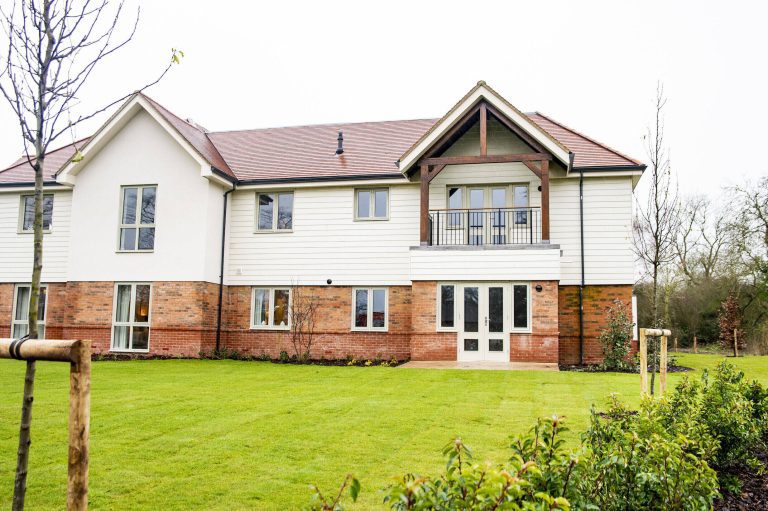
Waterbeach New Town East is set to get a further 4,500 new homes after South Cambridgeshire district council granted outline planning approval a few days ago. The new development is five miles north of Cambridge and comprises a mixture of one-bed flats and family homes of up to five beds with 30 per cent being affordable. Planning consultants Boyer submitted the application on behalf of RLW Estates – a consortium comprising Royal London, St John’s College, Cambridge and Turnstone Estates. Turnstone Estates managing director Chris Goldsmith said: “We are committed to delivering a new community that will place cyclists and pedestrians at its heart, creating an environmentally conscious and future-proofed development.” The site is on land between the former Waterbeach airfield and barracks to the west and the ‘Fen Line’ railway line which links Cambridge to Ely to the east. South Cambridgeshire District Council’s Lead Cabinet Member for Planning, Cllr Dr Tumi Hawkins, said: “One of our key aims now is to work with RLW Estates to ensure the development comes forward while being respectful of the village of Waterbeach. We’ll also be working alongside our local government partners to progress the necessary transport upgrades, including local public transport, cycling and walking routes.” The scheme will offer 24,800 sqm of employment space, plus additional retail and community space with 35 hectares of open space, including a 20-acre country park. New scheme will be well-connected RLW Estates gained permission to relocate the station at Waterbeach village to the new town back in 2018 to offer good communication links. “Its delivery is crucial for ensuring sustainable transport options from day one and we now look forward to working with our partners to bring the plans forward,” said Mr Goldsmith. The station will have two platforms long enough for eight-carriage trains with the potential for 12 carriage trains in the future. “It will result in a new, modern station that existing and future residents will benefit from,” said Cllr Hawkins. The development will offer more than £100m towards local infrastructure, such as improving the busy A10, with one secondary, two primary schools and a six-form college planned. Bridging loan intermediary Hank Zarihs Associates said the new scheme was the type of project property development lenders would be keen to finance. Waterbeach New Town East will be developed alongside Urban&Civic’s consented scheme in 2019 to build 6,500 homes at Waterbeach Barracks. Waterbeach New Town was allocated for a development of about 8,000 to 9,000 homes in the 2018 local plan. The final decision as to whether the current project can go ahead will lie with housing secretary Robert Jenrick.

Read More »