Kenneth Booth

Works complete on phase two of £3.9m King Edward VI School renovation

Midlands contractor G F Tomlinson has completed the latest phase of works on the expansion and renovation of King Edward VI School in Lichfield, Staffordshire. Comprising two phases of works led by G F Tomlinson for Staffordshire County Council under the Staffordshire Construction framework, the project involves the delivery of

Read More »

BigChange Equips RFM Facilities Maintenance Teams with Mobile Tech

RFM Group, the property maintenance company, is rolling out a high tech mobile workforce management system.  Supplied by BigChange, the cloud-based system provides a complete business solution incorporating back office management software that synchronises in real time with rugged tablets used by RFM’s mobile workforce.  BigChange provides is a single platform CRM,

Read More »

Amey puts weight behind recycled paint within its prison FM operations

The new partnership will see Paint360 installed as the sole provider of paint to Amey’s Clean, Rehabilitative, Enabling and Decent (CRED) programme. Paint360 is a social enterprise that turns waste paint back into new paint. Each litre contains a minimum 65% recycled content, while competing on quality and price with

Read More »

Concrete: let’s separate the carbon facts from the fiction

As we collectively begin to map our recovery from the Covid-19 crisis, the ways the UK will achieve the target of net-zero carbon by 2050 is coming into sharper focus. Here Elaine Toogood, head of architecture at MPA The Concrete Centre and contributor to built environment event Futurebuild explores the

Read More »

Virtual Awards honours ‘exceptional effort in exceptional times’ as profession and people salute FM’s COVID ‘heroes’

The sequins may have been in shorter supply at this evening’s virtual 2020 IWFM Impact Awards, but the star quality shone out as an online audience of hundreds celebrated the gamechangers whose extraordinary achievements were honoured at the most unusual ceremony in the flagship event’s twenty-year history. Transmitting from home,

Read More »

Five Ways To Build More Eco Friendly Homes In 2021

There has never been such a big focus on the environment and sustainability as there is now. Each business wants to do their bit to avoid adding to the carbon footprint and constantly find new ways to innovate. At present, the building and construction industry is one of the largest

Read More »

Sustainability: Net-Zero Construction

In 2020 the planet closed down like never before. Governments worldwide, faced with the threat of a highly contagious deadly virus, were caught in the dilemma of saving lives or saving the economy. Somewhere in the middle of this dilemma lay questions about the future and our performance as human

Read More »
Latest Issue
Issue 343 : Aug 2026

Kenneth Booth

Works complete on phase two of £3.9m King Edward VI School renovation

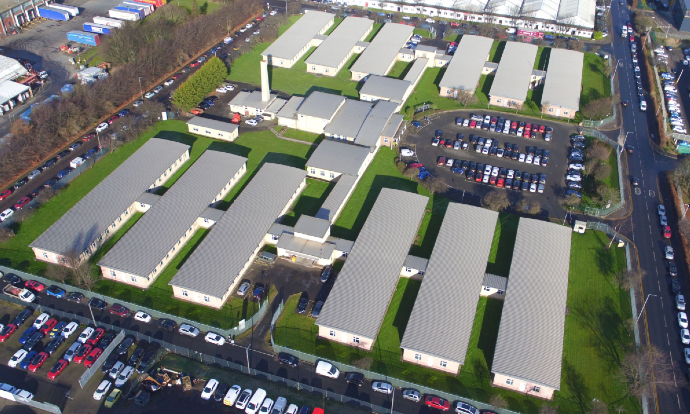
Midlands contractor G F Tomlinson has completed the latest phase of works on the expansion and renovation of King Edward VI School in Lichfield, Staffordshire. Comprising two phases of works led by G F Tomlinson for Staffordshire County Council under the Staffordshire Construction framework, the project involves the delivery of a new extension to an existing building, as well as the construction of a new modular building to provide essential replacement teaching spaces at the co-educational comprehensive for pupils aged 11 to 18. Phase one, which is progressing well, is expected to be complete in spring 2021, and involves the construction of a new three-storey extension on the site of a former swimming pool, which has been closed for over ten years. The extension will provide the school with enhanced teaching and auxiliary spaces, as well as an administration area on the lower ground floor, which will be the location of the school’s new student services area. Phase two started in spring this year and is now complete – works involved the demolition of the existing accommodation buildings, replacing them with a brand new standalone modern modular structure to provide enhanced science laboratory teaching facilities. This is the second contract secured by G F Tomlinson through the Staffordshire Construction framework for Staffordshire County Council, led by Entrust Property Services, and follows the successful delivery of the £5.2m Poppyfields Primary School in Cannock last summer, as part of a major housing development in the area. Building on a winning collaboration following Poppyfields Primary School, G F Tomlinson once again appointed Arc Partnership to provide architectural and engineering services for works at King Edward VI School. Ideal Modular, part of G F Tomlinson’s existing supply chain, was also appointed to deliver the modular element of this project. During the course of the construction works, G F Tomlinson has been looking to engage with both staff and students at the school. Once COVID-19 guidelines allow, the site management team will perform virtual live site tours for the school to report project progress and allow them to raise any queries they have. Chris Flint, director of G F Tomlinson, said: “We are pleased to have completed the latest phase of this project for our client Staffordshire County Council. The works are providing the school with a much-needed renovation, by removing older buildings and replacing them with brand new, optimised teaching spaces and facilities. These important changes to the school will maximise the space and have a positive impact on the overall experience of both the pupils and the staff. “We continue to enjoy productive partnerships with Staffordshire County Council, Arc Partnership and Entrust Property Services, as well as all of our local supply chain partners on the framework, and look forward to seeing the next phase of the renovation at King Edward VI School progress over the coming months.” County Councillor Jonathan Price, Cabinet Member for Education said: “Ensuring we can meet the needs of local parents and provide enough school places to accommodate increased demand is incredibly important. Once finished, the work to King Edwards will enable the school to expand by 150 pupils by September 2021. It’s really good to see this stage of the construction completed, and it has already transformed the look of the school whilst creating extra space for staff and pupils.” John Doherty, CEO of Entrust Support Services, said: “We are delighted to have project managed the construction of the new teaching facilities at King Edward VI School. This has been a complex project which we are proud to have worked on alongside our partners G F Tomlinson, Staffordshire County Council and the school. We are confident these new spaces will support pupil’s learning for a long time to come.” Jane Rutherford, headteacher at King Edward VI School, said: “We are delighted to be moving in to our new science accommodation in November and by Easter 2021, the staff and students will also benefit from new teaching accommodation for History and refurbished areas linked to Art, Drama and Geography. “The support from Staffordshire County Council in providing 21st century facilities for our students and the partnership with the project team at Entrust has been hugely important to us. G F Tomlinson has undertaken a complex project, delivered while we have over 1500 students on site and we cannot speak highly enough of this working partnership. Our students and staff are looking forward to our new and improved working environment.” Staffordshire County Council is leading this project, with project management from ENTRUST, G F Tomlinson acting as main contractors and Arc partnership acting as architect and structural engineer.

Read More »

BigChange Equips RFM Facilities Maintenance Teams with Mobile Tech

RFM Group, the property maintenance company, is rolling out a high tech mobile workforce management system.  Supplied by BigChange, the cloud-based system provides a complete business solution incorporating back office management software that synchronises in real time with rugged tablets used by RFM’s mobile workforce.  BigChange provides is a single platform CRM, Job Scheduling, Mobile App Tracking and a Customer Portal.  RFM are property experts that consult, build, manage and maintain all types of property and the company has built a reputation as a pioneer in the use of technology.  The switch to BigChange has been timed to support ambitious expansion plans for the business.  RFM had grown out of a server-based system and needed to overhaul their IT; over 12 months the company reviewed 15 different systems.  “In the end only one met our needs and that was from BigChange,” says Mark Flanagan, Client Services Director, RFM Group. “We realised we could replace 4 separate systems with 1 completely integrated solution that was also very affordable. We were very impressed with how easily it could be customised and therefore meet our needs across the company now and in the future.”  “BigChange gives us an IT solution that is completely scalable and it will make it relatively easy to bring new acquisitions onboard. Adoption is very straightforward as anyone will be able to go online and access the system instantly anytime from anywhere – plus it is very easy to use,” Flanagan adds.  Initial implementation of the system is within social housing where RFM are the appointed maintenance contractor for Housing Associations Railway Housing and Habinteg Housing. BigChange provides an all in one system incorporating CRM, job booking and scheduling, mobile working and financial control and with planned integration with Sage, the company will have a single system replacing 4 disconnected systems.  RFM’s mobile operatives, who provide a full range of services from plumbing to electrical and other trades, have been equipped with rugged tablet devices. These devices run the JobWatch app to replace all paperwork in the field with electronic job sheets, health and safety workflows, certifications, inspection reports, backed with job-linked photographs from site.  BigChange vehicle tackers meanwhile give RFM a real time view of worker movements and tracking logs support job records.   “Previously we had little insight into ongoing work and records were limited and not very accessible,” Flanagan comments.  “With BigChange that’s all changed and the system is already having a big impact and we now have levels of management control, whether our own maintenance teams or those of our contractors.”   Another key benefit for RFM was the way JobWatch mobile app can be used by contractors allowing third party operatives to simply access the app on their smartphones. It means contractor work is seamlessly integrated into RFM operations, reporting on jobs in the same way as their own operatives.  Flanagan also sees BigChange providing a platform for expansion into new sectors. “With greatly improved and electronic reporting we can meet the stringent demands of the biggest operators in areas such as facilities management and insurance. It means we can expand to new areas and with such a powerful cloud and mobile working solution, there are no longer barriers to expanding nationally.”      

Read More »

Living Space Housing secures a site in Milcombe, Oxfordshire to deliver 40 affordable homes

Living Space Housing and housing provider Paradigm have secured a 3.5-acre site off Oak Farm Drive in the traditional Oxfordshire village of Milcombe. All 40 homes will be delivered for affordable rent or shared ownership. Cherwell District Council has already awarded planning for the scheme, which has a development value in excess of £9million. Construction work will commence next month, with the first homes scheduled to be available for occupation before the end of 2021. A proportion of the homes will be constructed to meet Lifetime Home Standards. The house designs across the spacious scheme will be constructed in either brick or ironstone, to reflect the appearance of many traditional residences within the historic North Oxfordshire village. Living Space and Paradigm have collaborated to ensure the scheme works towards the Government’s Future Homes Standard to lower carbon emissions. Air Source Heat Pumps will be installed at all 40 new homes to provide the future residents with sustainable, cost-saving heating technology. Living Space has appointed Betts Associates as the Engineering Consultant, while Birmingham-based UMAA Architecture is producing working drawings for the scheme. Arcadis has been appointed as the Employers Agent. Steve Davies, Managing Director of Living Space Housing said: “This is our first development in Oxfordshire, our first collaboration with Paradigm Housing, and the first scheme where we’ve taken the proactive decision to introduce Air Source Heat Pumps, so we are especially pleased to announce this key addition to our rapidly growing development portfolio. The whole team is working exceptionally hard to be in a position to commence construction as soon as possible, in order to meet the shortage of quality new homes in North Oxfordshire. “We are actively seeking additional immediate and longer-term development opportunities and have the funding in place to progress these deals. We would be delighted for agents, developers and landowners to get in touch and explore how Living Space Housing can offer a sound and viable solution for your residential land.” Living Space Housing specialises in providing an end-to-end service to Registered Providers (RPs), enabling them to deliver more homes with greater efficiency. Living Space takes care of land, planning, design, build and development. It can also assist RPs by delivering open market homes in order to help with a scheme’s viability. This enables Living Space’s clients to be able to focus on the funding and management of high-quality homes for their residents. Having launched to the market last year, the company is already on site at its first four developments. It has a total of 406 residential plots in agreement across middle England, representing a combined construction value in excess of £61million. Rebecca King, Head of Land and New Business for Paradigm Housing said: “We are always looking for opportunities to provide new homes in areas that lack affordable housing, such as in this historic and picturesque part of North Oxfordshire. These 40 highly sustainable new homes will be offered for affordable rent and shared ownership – so that depending on the needs of the family or individual, there will be a suitable and affordable option for them. We are especially pleased that the homes will be installed with Air Source Heat Pumps, which will deliver cost-savings for our future residents.” Milcombe is a charming Oxfordshire village located five miles southwest of the market town of Banbury. It benefits from a village green, local stores, a village hall, a 17th Century pub, and a church dating back to the 13th Century. It also enjoys excellent transport links to London, Oxford and the Midlands. Living Space’s live development sites comprise 38 homes located off Park Road in the Malinslee ward of Telford for Wrekin Housing Group, 26 homes located off Britannia Way in central Telford for Accord Housing, 51 homes at Pixiefields in Cradley, on the outskirts of Malvern, Herefordshire and 48 homes at the former Victoria Carpets Sports Ground on the outskirts of Kidderminster town centre in Worcestershire. The latter two schemes are in conjunction with affordable housing provider Stonewater.

Read More »

Amey puts weight behind recycled paint within its prison FM operations

The new partnership will see Paint360 installed as the sole provider of paint to Amey’s Clean, Rehabilitative, Enabling and Decent (CRED) programme. Paint360 is a social enterprise that turns waste paint back into new paint. Each litre contains a minimum 65% recycled content, while competing on quality and price with premium brands. It collects waste paint from waste management companies, councils and contractors and recycles it. Amey’s CRED programme seeks to give offenders a fresh start after they are released, providing workplace training within its prison facilities management operations. The Paint360 partnership follows a trial at HMP Holm House, where the quality of paint provided by Paint360 was confirmed as matching that of leading industry providers. Amey estimates that the paint provided by Paint360 will help save 26 tonnes of CO2 in the 14 prisons where the CRED programme operates, with further plans to roll this out to 19 prisons maintained by Amey once CRED is active in those.   Amey is also providing advice via its Consulting business to help Paint360 expand its operations to support a future pipeline of work which would see Paint360 providing paint materials for use on Amey’s defence, schools, local authority and central government building FM contracts across the UK.  Craig McGilvray, managing director of Amey Secure Infrastructure & Utilities, said: “By working with Paint360 across our CRED programme we are helping to tackle economic inequality, including creating new jobs and skills, as well as increasing supply chain resilience and reducing wastage across our contracts.  Our ongoing commitment to social enterprise organisations will be integral to the long-term sustainability of our business, and the wider industry, and I encourage our teams to take advantage of these services where possible.” Paint360 managing director Lee Cole said: “Amey has supported Paint360 from the beginning and was one of our first customers to buy our re-engineered finished paints. Seven years on, it’s been an incredible journey and we look forward to supporting the CRED scheme in its’ roll out while being able to help more young people with barriers into employment.”

Read More »

Concrete: let’s separate the carbon facts from the fiction

As we collectively begin to map our recovery from the Covid-19 crisis, the ways the UK will achieve the target of net-zero carbon by 2050 is coming into sharper focus. Here Elaine Toogood, head of architecture at MPA The Concrete Centre and contributor to built environment event Futurebuild explores the role of the UK concrete and cement industry in tackling climate change. The UK built environment sector’s aspirations to ‘Build Back Better’ are rightly centred on delivering positive social, environmental, and economic outcomes. But it’s critical that decisions are based on clear facts, accurate data and shared action. As much as construction needs to avoid a carbon rebound in the short term, it’s equally vital that we plot a clear course now for the longer journey — to achieve a meaningful net zero. Those that design our buildings and infrastructure, as well as the people that shape our legislation, must therefore have their actions informed by data and evidence rather than purely by rhetoric. It’s no secret that in some quarters there are currently widely held misperceptions and negativity around the use of concrete. In reality, concrete often remains the right choice of material due to numerous critical performance benefits including its sustainability, passive cooling potential, and flood and fire resistance. The facts are important. Global figures are often quoted, almost always missing the fact that 95 per cent of the concrete used in the UK is manufactured here, using locally and responsibly sourced materials. The UK concrete and cement industry has a strong track record. It has been measuring and reporting on various sustainability metrics for over a decade now, already having delivered a 53 per cent reduction in absolute carbon dioxide emissions since 1990 — meaning it is decarbonising faster than the UK economy as a whole. This clearly isn’t the end of the journey. The UK concrete and cement industry is fully committed to delivering net zero, reducing emissions from production and supporting the Government’s target. Taking action Critically, the concrete and cement industry plans to do this without offsetting emissions or offshoring production facilities. It believes that net zero should be achieved by reducing emissions from the construction materials manufactured in the UK, rather than by simply replacing these with imports and moving the problem abroad. The aim should be to retain jobs and economic value in the UK whilst ensuring that the UK takes responsibility for the emissions it creates. This collective early action by industry means it is already possible to construct buildings and homes with a lower environmental impact across their long lifetimes by using contemporary low carbon concrete. However, the truth is that many projects are currently conceived without adequate consideration and measurement of whole lifecycle carbon impacts. All too often short-term embodied carbon in building material selection takes precedence over the carbon emitted across the full lifecycle of an asset. Specification decisions and carbon measurement should rather consider the longer-term operational performance of a building or structure, together with its flexibility to adapt to its users’ needs and recyclability at the end of life — as well as the materials used to construct it. Lifecycle Carbon Assessment To do this however, it’s essential to have more, better informed and intelligent conversations about material specification, adopting responsibly sourced, sustainable supply chains and an increased focus on Lifecycle Carbon Assessment (LCA). While LCA has great potential, it’s clear that more data transparency and robust, consistent standards are needed. Uncertainties, assumptions, and omissions in LCA studies and environmental product declarations (EPDs) suggest that accurate and like-for-like comparisons across building materials are still extremely complex. Currently, these studies are not facts but interpretations — with multiple variables and estimated calculations — and so should be treated as such. Urgent attention needs to be given to developing robust LCA techniques and standards to ensure carbon is assessed evenly and in the most effective way, and not informed by a material bias based on perceptions and should focus assessment at a building level. It’s equally important that material efficiency and building longevity are put at the heart of design so that we build less and invest resources more efficiently. This is an essential part of a future circular economy and key to unlocking greener, more sustainable assets and infrastructure. This is particularly key as society continues to adapt to climate change, where we need to ensure our buildings help to look after us, save energy and are appropriately designed to cope with future weather conditions. By building with concrete we can take advantage of its potential to reduce maintenance needs and greatly enhance energy efficiency through its use of thermal mass. Now more than ever, we need to be applying measures to help ensure long term resilience to overheating as a result of climate change. Of all the adaptation measures, a building’s fabric, along with its form and orientation, are the most fundamental to get right. End of life When it comes to end of life, there are no unknowns with concrete. It is 100 per cent recyclable and can be crushed for reuse as a cost-effective material for hard core or used as a recycled aggregate in new concrete. Despite construction waste often being framed in terms of ‘tonnes of concrete’, in truth all is reused and almost none ever goes to landfill. Moreover, 90 per cent of hard construction and demolition waste is recycled as aggregates. Looking forward, R&D teams are working to deliver a wave of innovative new concrete solutions. Already, high-performance concretes that are lightweight, ultra-thin and thermally insulating are helping architects and engineers to shape a safe, exciting and sustainable built environment that uses less primary finite resources. Pollution eating, self-healing, water permeable and bioreceptive concretes are just some of the wave of new materials being developed that in time will further contribute to lowering emissions, and a greener urban environment. Together, all of this work can drive decarbonisation. It should also help to drive more informed and intelligent conversations about

Read More »

West Yorkshire industrial scheme units to be filled by local businesses

A new industrial development in Leeds is reaching capacity, after two local businesses acquired units within the scheme for a combined £2.3m. Total Park, located off Pontefract Lane east of Leeds in the Aire Valley, consists of six warehouse units across 16 acres. The site is the first logistics scheme from Chester-based Total Developments. Mary Randall Vickers & Co Ltd has purchased a 10,898 sq ft unit, for use by Vickers Oils. The business, founded in Leeds in 1828, currently operates from Clarence Road in Hunslet, supplying lubricants to the marine, textiles and food and drink industries. In addition, B Gallagher Construction has acquired an 8,279 sq ft unit, which will become the company’s new HQ, replacing its current premises on Sheepscar Grove. The company was founded in 2002 and predominantly specialises in groundworks, roads, sewers and civil engineering contracts. The two recent sales take the site closer to capacity, with only three units ranging in size from 35,000 sq ft to 59,000 sq ft available. They follow a sale to international courier, parcel and express mail service giant, DHL, earlier this year, which used a 57,350 sq ft unit to open new parcel logistics centre. Morgan Morris, of Vickers Oils, said: “This excellent new facility will enable us to provide Vickers Oils with space for our anticipated growth and serve as a long term investment for Mary Randall Vickers which makes it an exciting opportunity for us.” Daniel Walker, from Gent Visick, said: “This development has proved extremely popular, due to the high specification of the units and its location, which is just a mile from junction 45 of the M1. These latest pre-sales mean we now have just three units still available, which will all complete in January 2021. “All three units benefit from secure yards, eaves heights between 10 and 12 metres, HQ office space and prominence to the A63, so we’re already generating interest in them. There is a shortage of stock in the local market of this standard and specification so we are confident they will soon be occupied.”

Read More »

Virtual Awards honours ‘exceptional effort in exceptional times’ as profession and people salute FM’s COVID ‘heroes’

The sequins may have been in shorter supply at this evening’s virtual 2020 IWFM Impact Awards, but the star quality shone out as an online audience of hundreds celebrated the gamechangers whose extraordinary achievements were honoured at the most unusual ceremony in the flagship event’s twenty-year history. Transmitting from home, in full tuxedo, IWFM Chairman Martin Bell said: ‘This year, workplace and facilities professionals have been helping their organisations confront unprecedented challenges. Yet we have also been at the forefront of new opportunities around the evolution of work and workplace during and post-pandemic. ‘I would like to thank all of the organisations that entered across all of our categories this time, when everyone was managing significant challenges in their organisations or with their clients; without you, the impact on society from COVID-19 is unthinkable, and we must recognise our relevance and our impact.’ Eleven winners, representing teams and individuals from across the sector, were revealed via video-link by the lead judges whose independent teams had scrutinised and shortlisted scores of entries they whittled down to thirty-seven finalists across the diverse categories. A further four winners were also announced, chosen by public vote from a second shortlist of twenty finalists in an additional ‘COVID Response’ category. Launched in the summer, the new category was devised to recognise the contribution made by workplace and facilities managers in the wake of the pandemic. The award proved so popular it was divided into four discrete awards to recognise the scale and variety of initiatives. Chair of Judges Julie Kortens said:   ‘It has been an absolute privilege to be involved in the COVID Response Award. It acts as a true reminder of how special workplace and facilities management really is. Whether it’s maintaining safe, productive and connected working environments, supporting the wider community, responding directly to the pandemic or adapting to new realities; every single one of you is a true FM hero.’ A new Trailblazer Award, recognising an individual who is a leading light and inspiration to others and for the positive and profound impact they have on the workplace and facilities management profession, went to Steve Gladwin. Describing Gladwin as a quiet, distinguished pioneer of all matters relating to workplace and facilities management, IWFM CEO Linda Hausmanis said:   ‘In recent years, [he] has been at the heart of these very Awards, but that is only one of the contributions that this industry titan has made. He is a well-recognised figure, both in the UK and on the world stage. He has been a Board member of BIFM, as we once were, Chair of the Facilities Management Association in Australia, Chair of the umbrella organisation, Global FM and, of course, Chair of Judges for these, Awards.’ The winners were: Workplace Experience: Office/Corporate Environment Edinburgh Park Office, Diageo & Sodexo Workplace Experience: Non-Office/Corporate Environment 12 Day Mobilisation of all FM Services at NHS Nightingale North-West, Interserve Group Positive Climate Action Barings Social Value Homeworks Garden and Home Improvement Service, PM Training Technology Matrix Booking, Hubs Network Collaboration Collaboration ‘WeCo’ – at the leading edge of Vested partnership, Johnson & Johnson together with Sodexo Wellbeing Authentic Wellbeing, EMCOR UK Newcomer of the Year Jack Flanagan, Pareto Facilities Management Manager of the Year Stephanie Welch, Ove Arup & Partners Team of the Year (Private sector) Yorkshire Ambulance Service Interim FM Team, Sewell Facilities Management Trailblazer Award Steve Gladwin. The COVID Response winners were: COVID-19 Response Award: Keeping Good Work Going Covid-19 Response, Lloyds Banking Group and Mitie COVID-19 Response Award: Supporting the Community Edmonton Green Shopping Centre – Supporting the Community throughout COVID-19, Ashdown Phillips & Partners COVID-19 Response Award: On the COVID Frontline Facilities Management Team, NHS Property Services COVID-19 Response Award: Adapting to New Realities University of Greenwich IFM Mobilisation, Sodexo, The University of Greenwich and Gardiner & Theobald LLP Read the winners’ stories here.

Read More »

Five Ways To Build More Eco Friendly Homes In 2021

There has never been such a big focus on the environment and sustainability as there is now. Each business wants to do their bit to avoid adding to the carbon footprint and constantly find new ways to innovate. At present, the building and construction industry is one of the largest contributors to this, and operational costs can have a huge impact on emissions. This is why it is more important than ever to think about all elements of a build and how things can be improved. With new homes, there are constantly new developments in their sustainability, from new ways to heat houses, to the materials themselves that the house is made from. Wanting to improve the sustainability and eco-footprint of the home has particularly been true since December of 2006 when the government committed that after the year 2016, all new homes would be “Zero Carbon”. The official definition behind this means a home that adheres to the following: Where CO2 emissions from regulated energy use were limited by achieving the maximum Fabric Energy Efficiency Standards based on heating and cooling, using low and zero-carbon technologies and mitigating any remaining CO2 commissions from the site through allowable off-site solutions. We decided to look at some of the ways that you can look to build more eco-friendly homes when we come in 2021 so you can have as positive an impact as possible on the environment over the twelve months that follow. Be sure that with any job you do, you look into protecting both yourselves and the job at hand with the correct insurance. Companies such as Key Man insurance UK specialists are available to assist with any queries or help you might need. 1) A waste-reducing water system  While we all know that wasting water is damaging for the environment and our water bills, we don’t all realise quite what an impact it might have. By simply recycling wastewater, you can quickly reduce water consumption and make a property much more efficient. There are many systems out there which would be good to add to a house, from a system that completely repurposes water that has been used to be used again for washing clothes or toilet flushing, to systems such as smart attenuation systems. These work to collect rainfall for use in the future and can be used for a myriad of purposes in and around the house. 2) An eco-friendly heating system  An eco-friendly heating system is another way to reduce the carbon footprint of a home. Try installing smart heating which means it can be controlled from anywhere – no more having to leave your heating on all day, or timing it for when you get back only to be delayed by a few hours having had it on needlessly. High-heat retention storage heaters are another option that is better for the environment. They are very well insulated and come with individual room controls meaning the homeowner doesn’t need to heat the whole house un unnecessarily. Heat batteries are also an option, yet these are relatively new to the scene and still need some more research. They store heat produced by a heat pump, solar thermal panel, solar PV panel or electricity for later use. This can then be used to provide hot water for showers, baths and radiators. Infrared and solar-powered heating are two more options that are getting more interest within the market. 3) Using Eco-Friendly Building Materials When building a new home, there is a myriad of different materials to use out there. In order to make it more sustainable and better for the environment, there are plenty of eco-friendly materials you can turn to. This is arguably the most important factor when building a new home and leads into the “fabric first” approach which has been gaining traction within the industry. The fabric first approach involves maximising the performance of materials and components o a building, then considering any of the other main aspects such as the electrics or mechanical elements. Some of the ways to improve the sustainability of a home include maximising the air-tightness of the house, using high insulation to keep the heat in, optimising solar gain and natural ventilation and using energy from other devices in the house such as cookers and electric appliances. With climate change an ever-present issue, it is vital that we all do our bit to help save the planet. These are just a few ways to build more eco-friendly homes in the new year that will make a difference to the future.

Read More »

Sustainability: Net-Zero Construction

In 2020 the planet closed down like never before. Governments worldwide, faced with the threat of a highly contagious deadly virus, were caught in the dilemma of saving lives or saving the economy. Somewhere in the middle of this dilemma lay questions about the future and our performance as human beings on a living planet. The crisis is a stark reminder that our future as a species lays somewhere in an optimal balance of wellbeing, economy, and climate.    The crisis has also accelerated ideas practices in several industries that were predicted to take years to unfold. Construction is no different. The evident need to use the technologies at our disposal to create more net-zero buildings and homes has risen quickly to the summit of the agenda. There is a pressing need in construction to reduce the carbon footprint significantly, digitize design and delivery and recast supply chains.  To achieve net-zero homes in the near future, construction professionals will have to work collaboratively to implement design and processes that complement each other to deliver the best possible outcomes. In that past, builders may have been primarily concerned with land, but now the sun’s position is more relevant. Industry experts must be consulted, and the building has to be carefully planned. Finally, a net-zero home will not become a reality with responsible ownership. Effective systems and appliances must be invested in by the homeowners to maximize efficiency and reduce carbon reliance. This will include solar systems, geothermal systems, and Energy Star appliances; since the point of creating highly energy efficient homes is so that homeowners can benefit from reduced costs and smaller carbon footprints, that’s why the culture of energy efficient lifestyles must also be encouraged. Energy-Efficient Design  The coronavirus pandemic has posed the question of how to make our construction projects more sustainable as we work towards a net-zero construction standard. There are already technologies in place, and some emerging, that can help us to design and build carbon-neutral structures, but the deployment of such technologies and techniques is still fairly specialized.  That said, there are ways to transpose current methodology for standard construction onto more progressive projects. The design stage is crucial. In the beginning, specialized architects and designers must be either hired or consulted to ensure the project is well planned. These specialists are more familiar with the latest technologies and net-zero techniques that will help the project save money and ensure its success.   Specialized contractors such as these understand the needs of the project and the technologies at their disposal. They can outline a build based on the end result, factoring in essential carbon neutrality elements, such as site selection, climate, size, R-value, ventilation, and insulation. As with any build, a net-zero build needs careful planning, but there is more to consider in the case of net-zero builds.   Designer selection is one of these factors. In a standard build, the designer might be looking at the land, but a net-zero builder will consider the building’s position in relation to the sun. The type of climate will also be considered, as this can affect the home or building’s overall energy capacity. Hiring designers with experience will ensure all these factors are considered and implemented.  Green Construction Technology For net-zero construction to be successful, builders must utilize the latest technologies. The latest green technologies can help builders model the construction and assess its energy needs and possibilities; this helps to visualize the construction and better optimize it. Furthermore, prefabricated construction technologies help to reduce the carbon output of the construction process and create better, more insulated structures.  Image Credit Energy modeling software is specially designed to optimize the project for efficiency and cost. It identifies the least expensive materials and processes required to build a highly energy-efficient building and eliminates any human error. For example, modeling software can quickly analyze two types of pump, a heat pump, and an air pump, and update the builder on the best device for the property – the most energy-efficient one.  Another useful green construction technology is Information Management Technology (BIM), which creates 3D models of a building as and when they’re needed. The 3D models help builders to make decisions on the prefabricated orders that are manufactured separately. Prefabricated construction methods also qualify as a green construction technology. They reduce an excellent way of making the building process more efficient and reducing the build’s carbon footprint.  The combination of modeling types and prefabricated builds is the latest in net-zero construction technology. Without question, these methods will be overtaken in the coming years, particularly with the acceleration of net-zero demand. For now, though, they offer the best road map to net-zero success.  Net-Zero Insulation Methods   One of the best ways to make a building energy efficient and contribute to net-zero construction is effective insulation. Super-sealing refers to the process of air- sealing a building to eliminate unwanted heat loss. Regardless of the heat generation process, the building will store energy for longer, allowing it to improve its efficiency rating.  To super-seal a building and reduce energy consumption, a continuous seal is applied inside the building. This seal is used within the structure to ensure the drywall runs at its highest energy efficiency capability. It also ensures there is optimal cooling within the structure. This kind of high-tech energy control is crucial to net-zero construction.  Techniques used by net-zero design specialists include the use of airtight drywall (ADA). To super insulate a home, it’s important to seal the outer wall using double construction. It’s also vital to seal the inner wall and all cavities in the building: these include doors, windows, attics, crawl spaces, and electric boxes.  Along with super sealing the building, you will also need super-insulation. It is the combination of these two techniques that give buildings under construction the best chance of achieving net-zero status. Without implementing these twin processes, other energy efficiency measures taken in the building will be largely ineffective. Designers know this and recommend adequate know-how and planning. 

Read More »

How to Construct the Perfect Shop Aesthetic to Draw In Customers

If you have created or work in a shop, then you will know that the appearance of the building is crucial to its success. A shop’s layout and windows can have a dramatic effect on whether potential customers decide to buy anything or possibly even enter the building. Potential customers need to be enticed in with the promise that it is going to be worth their while, so how do you encourage customers to browse through your business? Choose the Right Floor Plan A floor plan is essential for ensuring a steady flow within your shop that will allow customers to browse without bumping into other customers and will let them browse all that your store has to offer. Choosing the right floor plan will depend upon the size and shape of your shop, but you can try out a range of floor plans by changing the way you position your product. For example, if you wanted to try out the straight floor plan, you need only move your products into rows of straight lines. This creates an easy layout for customers to manoeuvre and is very popular. Create an Imaginative Window Display A window display is probably the easiest way to encourage a potential customer to enter your shop. It is important to really spend some time thinking about what you would like to include in your window display, as this is your opportunity to showcase your products and business. At this point, you may need to hire a professional window dresser to construct your window display for you, such as VM & Window Displays, as they know best how to make busy shoppers stop and stare at your shop windows. Use the Space Wisely  It is important to make the most out of every inch of your business premises. You should use items such as furniture to guide shoppers around the space in a way that exposes them to as many products and as much of the store as possible. But, make sure that customers do not just walk aimlessly through your shop. It would help if you created breaks within the empty spaces of your shop to slow customers down. These breaks tend to be special displays that the customer will want to pause to examine. You may need to enlist the help of an interior designer to help you construct a shop floor that makes the most of the space you have. Decorate the Exterior If you have a shop that is based on a long street where all the buildings look very similar, it can be difficult to stand out from the rest. You do not need to do anything extravagant to resolve this issue; it can really be as simple as just painting your shop door a bright and mesmerising colour, or placing a flower pot outside that customers will notice. These small adjustments to your shop’s exterior will help you to stand out from the crowd – the little details matter.  Making just these small changes to your shop will not only help you gain more customers, but it will also construct the perfect shopping experience for them.

Read More »