Kenneth Booth

Benefits of using a water filter at home

It’s not a secret that water is an essential need. Aside from keeping our body hydrated and healthy, it sustains our environment for us to live. Unfortunately, not all water is the same. Fresh running waters from the mountains may look refreshing however it most likely contains bacterias harmful to

Read More »

Relationship Between Community Education and Community Development

Every country has different communities, which are answerable for different aspects. One may find economic, medical, industrial, and other communities. Each community regulates its sector and affects others. The united effort of all communities affects the growth and development of the entire country. Of course, education plays a vital role

Read More »

Rising to the challenge: sustainable commercial buildings

The Co-operative Group’s headquarters in Manchester exhibits world-class sustainability, with features such as exposed concrete that acts as a thermal sponge, a rainwater recycling system and a cogeneration combined heat and power (CHP) biofuel boiler. With sustainable commercial buildings on the rise, which eco-friendly features should designers invest in? Here

Read More »

TODD Architects wins planning for aparthotel at Belfast linen warehouse site

TODD Architects has won planning permission for Bedford Yard, an aparthotel and office development in the heart of Belfast City centre, opposite the BBC’s HQ on Ormeau Avenue. By refurbishing a vacant four-storey red brick former warehouse and adding a newbuild structure behind, the landmark development will deliver approximately 10,000sq

Read More »

BPH Plant invests in expansion of plant machinery to meet demand

Sussex-based plant hire company BPH Plant has invested £600,000 in expanding its range of machinery available for hire following increased demand from customers across Sussex, Surrey, Hampshire and Kent. The company has taken delivery of numerous Kubota KX015-4 1.5-tonne mini excavators, Kubota KX027-4 3-tonne mini excavators, JCB 120 Rollers, Mecalac

Read More »

Keyland Sells Colne Bridge Treatment Works Site

Huddersfield Industrial Development Site Sold With Planning Keyland Developments Ltd, the property trading arm of Kelda Group and sister-company to Yorkshire Water, has sold the former Colne Bridge treatment works site in Huddersfield, West Yorkshire to R.A.K.B Ltd for an undisclosed sum.  The site has planning consent in place for

Read More »

HS2 and Innovate UK to drive new ideas in the construction industry

HS2 Ltd – the company delivering Britain’s new high speed rail network – and Innovate UK – the UK’s innovation agency – have today (Wednesday 21 October 2020) teamed up to drive innovation on Britain’s largest construction project.   The Innovate at HS2 2020: Small Business Research Initiative is open to small and medium-sized firms who will receive support

Read More »

PLANNING GRANTED FOR SALFORD’S ANCHORAGE GATEWAY SCHEME

Salford City Council’s planning committee has approved Cole Waterhouse’s Anchorage Gateway scheme which will deliver 290 new apartments in Salford Quays. Outline consent was granted last November and was followed by a reserved matters application which the committee stamped for approval yesterday. The 250,640 sq ft, L-shaped residential scheme will

Read More »
Latest Issue
Issue 343 : Aug 2026

Kenneth Booth

Benefits of using a water filter at home

It’s not a secret that water is an essential need. Aside from keeping our body hydrated and healthy, it sustains our environment for us to live. Unfortunately, not all water is the same. Fresh running waters from the mountains may look refreshing however it most likely contains bacterias harmful to our bodies. Your tap water is not exempted from these bacterias. Even if the water seems to taste okay, some other contaminants might slip to your glass. That’s why it is important to have a water filter at home. With a water filter, you can make sure that your water is clean for drinking, cooking, and a lot more. Here are some of the benefits you will enjoy using a water filter at home. Removes Harmful Bacterias The water you use at home is exposed to a large scale of chemicals including chlorine and chloramines. Lead is also a harmful chemical usually present in unfiltered water. These chemicals are not meant to be consumed. They bring harm to our bodies which can cause serious health problems. Water filters also get rid of bad bacterias that can cause serious gastrointestinal problems. Prevents Microorganisms Numerous countries have developed great water systems. The public water systems were created to bring water into each household seamlessly. However, the system is aging. As a result, some pipes may have leaked, corroded, or broken. These damages may lead to unsafe microorganisms in your tap water. A house filtration system with UV protection is the best option for fighting bacterias. It will give you and your family safe water to drink. Save Money Aside from the health benefits, you can get, water filters also save your time and money from buying bottled water. With your water filter at home, you’re saving your health, money, and the environment by getting rid of the plastic bottle. You can always get a water filter for the whole house. Some companies offer installation and cleaning services. Make sure that you’re getting the right kind of filters before making any decisions. Reduce the risk of skin irritation If you have sensitive skin, you should consider getting a water filter system. Chemicals from unfiltered water can not only cause damage inside your body but can also cause skin problems for individuals with sensitive skin. Persons who suffer from skin conditions such as psoriasis or eczema might develop allergies when exposed to different chemicals present in unfiltered water. Courtesy of making use of water filters brings a lot of benefits. It keeps your entire household healthy and well by drinking clean water. It reduces the chances of getting skin irritation and problems. It also saves you from buying bottled water that is not helpful to the environment. Normally, water filters are installed one-time and the cost is considerably low. It includes regular cleaning and occasional replacement of filter elements. Afterward, you can enjoy fresh and safe water at home.

Read More »

Relationship Between Community Education and Community Development

Every country has different communities, which are answerable for different aspects. One may find economic, medical, industrial, and other communities. Each community regulates its sector and affects others. The united effort of all communities affects the growth and development of the entire country. Of course, education plays a vital role and can ensure success or lead to the failure of a community in general. A professional team of essay writers from EssayLib writing service tried to dig deeper into the relationships between community education and community development. This informative guide highlights the way they are linked to one another and what importance for people they may bring. What is Community Development? Before we begin to seek the links between education and development, we should understand the phenomenon of a developed community in any country. Community development is a complex and important process, which is designed to make people knowledgeable and competent in a targeted geographical area. They are supposed to have certain skills, knowledge, and motivation to develop under certain economic circumstances. This approach is used to transform the area and thus affect the wellness of the country by embedding competencies. People are supposed to “know” what to do, rather than reading and following the instructions. This is when education steps up. Community development is frequently taken as an economic indicator to define the efficacy of development. If the community isn’t properly developed, the economic situation is poor. Education as the Basic Building Block It’s really hard to underrate the role of education in the life of every citizen. When a person is educated, he/she knows a lot about the world and specific industries. He/she can efficiently apply his/her knowledge and skills to enjoy success. The success will be personal, as well as social because those skills and knowledge help society. This relationship is clear for every community. An educated nation equals a prosperous nation. Boost in Economic Growth If a group of people (who belong to a concrete community) is incompetent, the country will hardly reap many dividends. People with poor skills and a lack of knowledge simply don’t know how to work fast, efficiently, and productively. Thus, a certain sector begins to delay the development of other sectors. Did you ever wonder why some countries are more successful and the other fall behind? Some people say it’s because of the many natural resources. However, many African nations are undeveloped even when they have precious gems and other resources. Why can’t they enjoy economic success? The answer is obvious – a huge part of their population is uneducated. People have the potential but have almost no idea how to use it. As a result, they require the help of developed countries to show the right path. In the meanwhile, their own people are unemployed because workers from other countries can do that better. Accordingly, economic growth is heavily dependent on the level of education in the country. Cultural Progress and Evolution Education is the most efficient and important medium to pass the experiences of the previous generations. When children learn the history, customs, and traditions of their country, they preserve their own culture. If a country forgets about its cultural heritage, it is doomed to vanish. It is impossible to exist without knowing your own language, culture, history, traditions, etc. Every next generation creates something new and changes its culture. Nevertheless, authenticity survives because people do not forget their ancestors, history, and culture. Education helps to pass that knowledge and experience. Technological Progress Undoubtedly, a well-educated nation can follow the pace. We mean the creation of innovative technologies, which make our lives easier. Highly technological nations are the most successful ones. If a nation continuously creates new mechanisms, applications, medical equipment, industrial equipment, etc., it shows that it’s a wealthy nation. It has genius scientists, mechanics, engineers, physicians, etc. who have been educated in this community. The level of education is high to create technological marvels that improve the wellness of the entire country. It surely leads to economic growth and stability. What Are the Main Benefits? As we review the relationship between community education and development, we should summarize the main benefits of their collaboration. The government and other structures invest in education to achieve certain results. What are those results? Make allowances for the following essentials: Economic growth and stability; Technological progress; A reliable method to preserve cultural heritage; Intelligent and happy children; Bright perspectives for future development; Economic independence and prosperity; Development of social institutions; Progress of medical and scientific industries, etc. The benefits are almost immeasurable, but all of them are possible thanks to an educated nation. That’s why different governments, nonprofit organizations, and international development agencies invest in education. They know that a high level of education benefits the development of the community. They implement and improve the methods of teaching to ensure an intelligent nation. This investment will surely provide the desired results, which help to overcome an economic pit and improve the wellbeing of the country. As you can see, the development of any community is directly dependent on its compliance with the educational sector. If a separate group of people is not educated, that community falls behind and does not complete its functions. It negatively affects the country in general. Accordingly, educated communities are the foundations of economic development in every country.

Read More »

Rising to the challenge: sustainable commercial buildings

The Co-operative Group’s headquarters in Manchester exhibits world-class sustainability, with features such as exposed concrete that acts as a thermal sponge, a rainwater recycling system and a cogeneration combined heat and power (CHP) biofuel boiler. With sustainable commercial buildings on the rise, which eco-friendly features should designers invest in? Here Nick Cowley, managing director at aluminium building product supplier, Endurawood, explores the options. In 2018, the business sector accounted for 18 per cent of overall UK carbon dioxide (CO2) emissions. With the race to combat climate change on, businesses are looking for ways to lower their environmental impact. With the building and construction industry accounting for almost 40 per cent of global emissions, building re-design is a good starting point. Fortunately, many sustainability changes also benefit a business’s bottom line. Renewable energy systems Large commercial buildings can hold thousands of workers, and therefore require a large amount of heating and power. It’s important to put systems in place to save these resources where possible, and source them in a more sustainable way. Building managers must ensure all equipment uses the most up to date technology, which can significantly increase efficiency. For example, air source heat pumps (ASHPs) can absorb heat from the outside air, which is renewable, and use it to heat the internal building. This heating method is highly efficient, with every one kilowatt (kW) of electricity supplied producing two to three kW of heat. The process can also provide air cooling and water heating depending on the model, and even work in minus temperatures. Another way to source your own renewable energy is to install solar panels. Solar panels emit no carbon emissions and use zero water in operation. Installing solar panels has the additional benefit of lowering energy costs, as you aren’t subject to energy supplier prices. Producing your own solar energy can save between six to ten pence per kilowatt hour (kWh). Extra insulation Energy usage by the UK commercial sector increased by 258 kilotonnes of oil equivalent (ktoe) between 2017 to 2018. An impactful way to reduce the figure is to increase building efficiency. Building managers should ensure all windows are rated A for efficiency. Strategic placement of the windows can confer other benefits, such as increased daylight, which naturally warms rooms and further lowers the use of electricity. An additional option is the installation of window films, which can add an extra layer of insulation and even reflect unwanted solar energy to reduce air cooling energy requirements. External cladding can provide further insulation, while protecting the building from weather damage. Cladding can also be used for architectural enhancement, giving the building a sleek and unique look. Green solutions Green roofs, also known as living roofs, involve covering flat or slightly-sloped roofs with a waterproof membrane and then cultivating a layer of vegetation on top. The systems deliver an environmental benefit by removing CO2 from the surrounding air and lowering energy usage by adding extra building insulation. Living roofs also present ecological benefits because they can provide a steppingstone habitat for wildlife. Business benefits include lower energy bills and increased soundproofing, with just twelve centimetres (cm) of substrate reducing sound by around 40 decibels (dB). Additionally, a rain harvesting system can be fitted to the top of the building. Rain harvesting systems collect rainwater that falls into the gutter and transport it to a storage tank. The stored rainwater can be pumped out when needed, and used for various, non-potable uses such as flushing toilets. By incorporating rainwater into the building’s water supply, reliance on mains water supply can be reduced by around 40 per cent. Eco building materials Embodied carbon is a significant concern in the construction industry, which is already renowned for its high levels of emissions. And it’s not just carbon we should worry about, building materials can use glues and solvents that contain volatile organic compounds (VOC), which can form ozone and particulates in the atmosphere, as well as being harmful to human and animal health. In addition, large volumes of building materials can go to waste, ending up in landfills. The UK Government’s most recent figures found that construction, demolition and excavation generated 62 per cent of waste in 2016. To combat this waste, sustainable buildings must be built using materials that have a lower environmental impact. Widely recyclable materials, for example, are an ideal starting place for designers that require durable materials that are better from a recyclability standpoint. Aluminium has one of the highest recycling rates of any metal, namely because its scrap still contains a high value. This means that used aluminium can be melted and reused, without diminishing its original qualities. Furthermore, recycling aluminium only requires five per cent of the energy consumed during its initial creation, and recycling one tonne of the material saves 15,000 kilowatt hours of electricity, making excellent environmental and financial sense. Endurawood is an aluminium building material that looks like wood, and can be used in a range of building applications, such as cladding, railings and enclosures. We believe that greener is better, and use VOC free coatings and lead-free finishes in all our products. Endurawood’s weather resistance and superior durability means it will remain flawless for years to come, but when end of life arrives, it’s 100 per cent recyclable. The Co-operative Group’s Manchester headquarters sets a shining example of sustainability, and with businesses becoming increasingly conscious of their environmental impact, many are following in their footsteps. By incorporating features such as green roofs and solar panels, and using environmentally friendly building materials, commercial buildings can become more sustainable and work towards a greener future.

Read More »

London’s ‘green and pleasant’ multi-million-pound residences thrive

A room with a view, a front door onto the street, and a garden are proving more seductive for the wealthy than a James Bond-style bachelor pad in Chelsea. London’s high-end housing market is surprising estate agents who are reporting increased transactions for properties worth more than £5m. Estate agents Dexters marketing director Richard Page says: “Since the market re-opened we’ve had more than 9,000 viewing appointments across London per week and our website has never had so much traffic with 90,000 visits a week. “London is busy and people are getting on with their lives.” However, travel restrictions mean foreign investors are no longer driving the market. Demand for a pied-à- Terre in traditional super-prime hotspots such as Belgravia, Chelsea, Kensington, Marylebone, and Westminster have waned. Global estate agents Savills says central London prime properties are currently on sale for 21 percent less and sales activity is slow. Savills PR director Sue Laming says: “The prices are good value for non-sterling buyers and normally we would expect the market to pick up. Right now, these buyers are physically not in the market.” London’s green villages are on a roll Instead, rich domestic buyers and people from abroad who have already made London their home are the ones buying homes in the city’s desirable green districts. Finance brokers Hank Zarihs Associates chief executive Shiraz Khan says: “The rich no longer need a pad near their office in the City but a country style home within easy reach of the big smoke where they can work and relax.” Trendy green oases like Fulham, Islington, St John’s Wood, Notting Hill, and Dulwich are attracting intense interest from buyers who have up to £10m to spend. Property network LonRes research and data analysis head Marcus Dixon says: “A high proportion of moves are life-style ones whether it’s to move from a flat to a house or the countryside.” Estate agents Knight Frank’s head of residential research Tom Bill agrees saying the market for family houses in these areas has shown a month-on-month rise. “Family houses in these districts are doing very well. There’son top  strong momentum in the market.” Although he admits most of August and September’s exchanges were related to pre-lockdown sales. The pandemic has also led to longer times of up to six months for a sale to complete. The type of buyer has also changed with the home-grown purchaser outnumbering overseas ones. “We are seeing a higher proportion of domestic moves rather than international. This has meant that areas of central London with a high proportion of flats and little outside space, which were appealing to overseas buyers, are less busy than leafier areas with houses and green space,” says Dixon. He says that September has shown a 21 percent year-on-year increase on houses under offer but says this is skewed in favor of more expensive properties. “People aren’t buying small flats for investment. They are making long-term larger property decisions.” The capital’s resilience is partly due to the city’s good schools and universities which are commanding wealthy people’s loyalty. Page says: “I think London is still seen as a safe haven. There’s still demand here driven by access to a good education and cultural life. They tend to take a long-term view.” In fact, sales for properties worth more than £5m in September are showing a 29 percent year-on-year increase according to LonRes figures. The rich take a life-long view Bill agrees that the wealthy are in the fortunate position to be thinking 20 to 40 years ahead and are less restricted by banks tightening their lending criteria. “The high net worth prime buyers are less constrained by the mortgage market,” he says. “The ability to react and respond is something we’ve seen with the prime buyers.” But there’s trepidation about how the market will fare at the end of March when the stamp duty holiday on properties worth up to £500,000 ends. Although, stamp duty savings of £15,000 helps wealthy buyers it’s not a make or break issue for buying a high-end des res. But it is important for stimulating activity at the lower end of the market which enables the wealthy to free up assets and buy more high-end properties. “There will be a rush of activity then afterward there will be a slump and buyers will demand price drops,” says Dixon. On top of that, an extra 2 percent surcharge on stamp duty for overseas buyers will kick-in in April 2021. Bill adds that political uncertainty with Brexit, changes to capital gains tax, and higher stamp duty are likely to contribute to a more subdued market next Spring. The page is optimistic that the future for London, although a little tricky in the near-term, will be bright in the long run. “London goes through trials and tribulations, but it always comes through and it generally comes through stronger.

Read More »

Job applications in the construction sector grow by 44.5% in Q3 as end of Job Retention Scheme looms

According to the latest quarterly job market report from CV-Library, the UK’s leading independent job board, job applications in the construction sector grew by 44.5% in Q3 2020 and by 21.2% year-on-year.   The report looks at job market data throughout Q3 2020 and compares this with findings from the previous year. It reveals that the construction sector, alongside the following industries, saw the highest growth in applications quarter-on-quarter:   Administration (up 90.2%) Recruitment (up 85.5%) Marketing (up 78.6%) Sales (up 77.7%) Telecoms (up 74.6%) Legal (up 61.5%) Finance (up 58.6%) Education (up 51.5%) Electronics (up 46.9%) Construction (up 44.5%)    Lee Biggins, founder and CEO of CV-Library comments: “It’s no surprise that there are more candidates on the market given the impact of the coronavirus pandemic on the state of our economy. While the circumstances around this influx of talent are unfortunate, it provides a great opportunity for businesses in the construction industry to snag top talent.”    The data also reveals that the number of job postings has increased by 213.4% between Q2 and Q3 2020. However, the number of roles advertised between July and September is still 19.2% lower than at the start of the year.   What’s more, as vacancies continued to rise during Q3, the number of applications per vacancy dropped by 53.9%. However, this is still 85.5% higher than during the same period last year.  Biggins continues: “This data clearly shows that the construction industry has started to recover from the national lockdown in March, but it still has a long way to go. However, it’s likely that this new found confidence may be short lived.   “The uncertainty surrounding future government restrictions, as well as those put in place last week will force businesses to put a freeze on their hiring plans. Sadly, this will coincide with the end of the original Job Retention Scheme, which may spell bad news for professionals.   “That said, if you’re planning on hiring this quarter, you’re likely to have your pick of the best candidates on the market. However, be sure to approach your hiring process with sensitivity as this will be a particularly difficult time for job seekers.”  

Read More »

TODD Architects wins planning for aparthotel at Belfast linen warehouse site

TODD Architects has won planning permission for Bedford Yard, an aparthotel and office development in the heart of Belfast City centre, opposite the BBC’s HQ on Ormeau Avenue. By refurbishing a vacant four-storey red brick former warehouse and adding a newbuild structure behind, the landmark development will deliver approximately 10,000sq ft lettable office space and a 132-room aparthotel with spectacular vistas across the city. The scheme is expected to create hundreds of jobs in the city. Working with client Andras House Ltd, a leading property development and hospitality company based in Belfast, TODD’s design for the aparthotel will add a new high-rise building to Belfast’s commercial core whilst securing and enhancing the appearance of the Victorian terrace that sits within the city’s historic Linen Conservation Area. Andrew Murray at TODD Architects, says: “The success of this planning application is welcome news for the local hospitality sector and Belfast city centre as a whole. The scheme will breathe life back into the historic frontage on Bedford Street, blending the modern design of the aparthotel with the traditional features in the existing terrace. “We believe Bedford Yard is the type of thoughtfully designed, high-quality, large-scale development desired by Belfast City, assisting growth and supporting other investment and the City’s’ ongoing regeneration, in a scheme that will provide vitality through its mixed-use nature.” The refurbishment and transformation of the Victorian linen warehouse will create two new ground floor restaurants with Grade A office accommodation above, delivering economic benefits to the historic heart of Belfast city centre.  An open-air courtyard will be located between the existing terrace and proposed aparthotel, accessed through a gated opening that harks back to the traditional Belfast ‘entries’. The 13-storey aparthotel will offer panoramic views of the city from the upper floors, over the City Hall, Gasworks, Dublin Road and through to the Belfast Hills. Commenting on the design of the new aparthotel, Andrew Murray at TODD Architects, says: “The aparthotel’s mix of solid panels and glass has been balanced to create a light feeling building without becoming a ‘glass box’. The building’s form has been carved and cut back to respect neighbouring frontages and reduce its visual impact. Horizontal banding on each floor adds gravitas, whilst ethereal glazed panels encase the top floors. The colour palette – an ombre effect in muted bronze – helps sit the new building sympathetically beside the redbrick terrace, nearby listed buildings and the wider Linen Conservation Area.”

Read More »

BPH Plant invests in expansion of plant machinery to meet demand

Sussex-based plant hire company BPH Plant has invested £600,000 in expanding its range of machinery available for hire following increased demand from customers across Sussex, Surrey, Hampshire and Kent. The company has taken delivery of numerous Kubota KX015-4 1.5-tonne mini excavators, Kubota KX027-4 3-tonne mini excavators, JCB 120 Rollers, Mecalac 6-tonne road legal Swivel Skip Dumpers, a Komatsu D65PXi Dozer, and the all-new 30-tonne Hitachi ZX300-7 excavator – all of which are now available for self-drive or operated hire. The expansion of its offering comes after the company experienced an upturn in business over the past few months to pre-COVID levels. The decision to invest in Kubota mini excavators aims to meet the needs of a more diversified client base following the changes brought about by the pandemic. Simon Bastable, Director at BPH, comments: “We’ve received more enquiries from small to medium-sized groundworks companies and independent traders that have been able to continue working despite COVID restrictions and are busier than ever with smaller residential projects in gardens and driveways. However, we’re now starting to notice a return to business as usual with larger contractors and developers needing equipment for bulk earth work.   “We think it’s important to continue to invest in the latest models of plant machinery to ensure we can meet growing demand with up-to-date, reliable equipment. Our plant and machinery includes tracked and wheeled excavators, dumpers, dump trucks, dozers, rollers and telehandlers to cater for the widest range of tasks from working in tight spaces to large-scale demolition and earthworks. Offering this level of versatility is an important part of our company’s ethos.” As one of the best-selling mini excavator manufacturers in the UK, the Kubota KX027 was selected for its compact size but powerful performance. The purchase of the new Hitachi ZX300-7 means BPH Plant is one of the first hire companies in the country to offer this latest model. The Komatsu Dozer is also the latest model of an industry-leading machine with intelligent machine control for automated operation. All machines are now available to hire from BPH Plant’s site in West Sussex on next-day delivery by calling 0845 017 6971 or via https://bphplanthire.com.

Read More »

Keyland Sells Colne Bridge Treatment Works Site

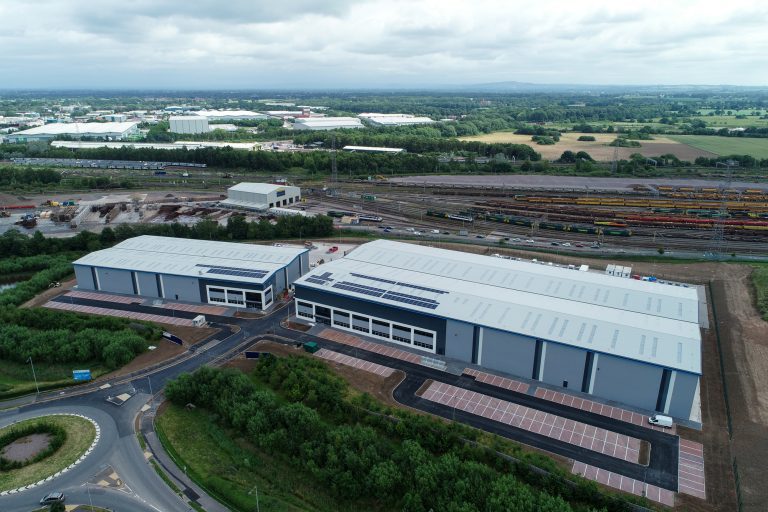
Huddersfield Industrial Development Site Sold With Planning Keyland Developments Ltd, the property trading arm of Kelda Group and sister-company to Yorkshire Water, has sold the former Colne Bridge treatment works site in Huddersfield, West Yorkshire to R.A.K.B Ltd for an undisclosed sum.  The site has planning consent in place for up to 40,000 sq ft of industrial accommodation and the potential to create some 80 jobs for the area. The 3.5 acre site is located off Colne Bridge Road, between the River Colne and the Huddersfield Broad Canal in an established industrial area approximately 3 miles to the north east of Huddersfield town centre, connected to the A62 Leeds/Huddersfield Trunk Road and in turn to Junction 25 of the M62. Keyland previously secured outline planning consent to bring the former treatment works site back into use as a job-creating industrial development. The sale to the West Yorkshire-based property developer will facilitate the creation of a new industrial/warehousing development to address regional shortages and relieve the pressure on neighbouring industrial parks which are operating at full capacity. Peter Garrett, Managing Director at Keyland Developments, said; “We are pleased to have concluded the site sale and to have safeguarded the future of this strategically positioned site. The planning consent will unlock some new industrial stock at a time when regional shortages are rife, contributing also to the local economy with associated job creation. We look forward to seeing the development progress in due course.” Walker Singleton and Gent Visick acted as agents for Keyland on Colne Bridge.

Read More »

HS2 and Innovate UK to drive new ideas in the construction industry

HS2 Ltd – the company delivering Britain’s new high speed rail network – and Innovate UK – the UK’s innovation agency – have today (Wednesday 21 October 2020) teamed up to drive innovation on Britain’s largest construction project.   The Innovate at HS2 2020: Small Business Research Initiative is open to small and medium-sized firms who will receive support to put together research and development plans for their proposal.  The scheme is looking to harness innovative ways to advance the digitalisation and automation on construction; improve efficiency; integrate and digitise the many interfaces of a construction project the size of HS2. Other innovations sought as part of this initiative include recruitment; and cost management and control. With the R&D phase beginning in March 2021, each of the 10 selected firms will have three months to demonstrate the desirability and feasibility of their solution and that their innovation has a viable business case.  Commenting, HS2 Ltd innovation manager, Rob Cairns said:  “Thousands of businesses right across Britain are already getting involved in HS2, benefiting from the project and creating jobs at a time when the country needs it most.  “There are huge benefits to be reaped from innovating in the construction sector – not just for HS2’s delivery but also to provide a legacy of innovation benefitting future infrastructure projects.   “HS2 encourages innovative small businesses to come forward with their ideas. We’ll help the chosen 10 firms to hone and develop their solutions and integrate with the HS2 supply chain, unlocking a route to market.”  Simon Edmonds, Deputy Executive Chair and Chief Business Officer, Innovate UK, said:  “HS2 has the potential to revolutionise Great Britain’s railway. It will connect commerce and communities, providing capacity and speed. It is right that such an innovative project should call upon the UK’s most innovative smaller companies in its delivery. Innovate UK can bring its unique ability to reach these enterprises and bring forward the best of British ideas.”  Further details of the competition will be published at https://apply-for-innovation-funding.service.gov.uk/competition/708/overview Applications close on 16 December 2020.

Read More »

PLANNING GRANTED FOR SALFORD’S ANCHORAGE GATEWAY SCHEME

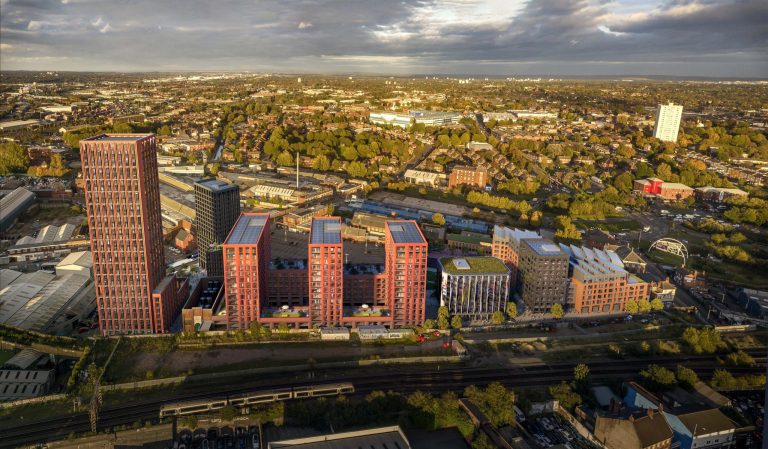
Salford City Council’s planning committee has approved Cole Waterhouse’s Anchorage Gateway scheme which will deliver 290 new apartments in Salford Quays. Outline consent was granted last November and was followed by a reserved matters application which the committee stamped for approval yesterday. The 250,640 sq ft, L-shaped residential scheme will re-develop brownfield land on the corner of The Quay and Anchorage Quay which has lain vacant for several years. Following the appointment of a main contractor later this year work will start on site early in 2021. Designed by Chapman Taylor architects, the building comprises 29 storeys, across ground, mezzanine and 27 levels of residential accommodation which will offer one, two and three-bedroom homes.  At ground level the building will offer 4,000 sq ft of commercial space and extensive areas of public realm and landscaping as well as cycle storage facilities. On the mezzanine, and at level 19, there will be two landscaped terrace gardens for residents and rooftop penthouse apartments that have extensive private terraces. Commenting on the planning committee’s approval Damian Flood, CEO of Cole Waterhouse said: “We are committed to building quality homes for the people of Salford and have been working closely with the Council throughout the determination period to refine our plans and ensure that the building and landscaping meets the changing needs of the local market and future occupiers. We undertook a number of revisions to the design to reduce the amount of commercial space in favour of delivering as much outside amenity space as possible and the city-wide views from the rooftop sun terrace will be hard to beat.” The scheme sits at a primary gateway into Salford Quays in a location which offers residents the best of both Manchester and Salford with direct access to the Anchorage Metrolink station which is just 30m away from the site. It will be Cole Waterhouse’s second residential scheme in the area following in the footsteps of the 214,000 sq ft No1 Old Trafford, a two-tower 354 unit scheme which is being built by Domis Construction and which is due for completion early 2021. Damian continued: “We look forward to appointing a contactor as soon as possible and starting the build programme which will not only deliver much-needed, high quality homes but will also create new jobs and training opportunities for local people. We are proud that Anchorage Gateway will be a key scheme in the ongoing regeneration of Salford.” As part of its commitment to the area, Cole Waterhouse will pay a total of £1.3m towards local projects, including improvements to Ordsall Park, Monmouth Park, Montford Street Park and Weaste Cemetery.  Funds are also earmarked for several transport and highways improvement as well as a residents-only parking permit scheme. The delivery team includes WSP|Indigo Planning, structural engineers Renaissance, M&E contractors Novo, landscape architects Exterior Architecture, project managers/quantity surveyors Henry Riley with legal advice from Ward Hadaway. Cole Waterhouse specialise in delivering medium to large mixed-use, residential and student schemes. The team has 2,743 homes in the pipeline, delivering offices, mixed-use, leisure and commercial industrial space in Manchester, Leeds, the Midlands and London. Its schemes are valued at over £800m GDV. 

Read More »