Kenneth Booth

Register now to attend the virtual BALI National Landscape Awards 2020

The British Association of Landscape Industries (BALI) has opened registrations for the 44th BALI National Landscape Awards 2020, to be held virtually for the first time on Friday 4th December 2020. Join from 12.30pm for a sponsor’s introduction with the ceremony commencing from 1pm. BALI Chief Executive Wayne Grills commented, “While our

Read More »

HOW WILL INFECTION CONTROL CHANGE THE FACE OF VENTILATION?

COVID-19 has had an undeniable impact on how we live – but how could the pandemic potentially change the way we approach ventilation within our healthcare facilities as we learn from the coronavirus and tackle potential airborne infection control?  Mechanical engineer at Pick Everard, Simon Atkin, discusses how the pandemic

Read More »

Triple technical hire for Midlands contractor GF Tomlinson

Midlands-contractor G F Tomlinson has appointed three new technical apprentices as part of its commitment to investing in the next generation of construction workers. The latest recruits to the construction firm’s apprenticeship scheme include Jack Harvey and Joe Langley who both achieved successful GCSE results, and Joshua Worrall who recently

Read More »

FOUR YEARS ON: PERFECT CIRCLE DELIVERS MORE THAN 1,450 PUBLIC SECTOR PROJECTS

PROPERTY, construction and infrastructure consultancy Perfect Circle has celebrated four years delivering Scape Group’s Built Environment Consultancy Services (BECS) framework – having been commissioned on more than 1,450 public sector projects during its term. Set up in 2016 by sector-leading firms Pick Everard, Gleeds and AECOM, Perfect Circle delivers the broadest

Read More »

BRETT MARTIN DELIVERS A GOLD STANDARD PERFORMANCE AT SPORT IRELAND’S NATIONAL INDOOR ARENA

Brett Martin Daylight Systems’ Marlon Clickfix VF polycarbonate glazing system is delivering exceptional natural daylight inside Dublin’s new National Indoor Arena. The system has been used to create a bright, appealing interior that will help provide the perfect environment for sports, whilst providing exceptional aesthetics. Built by contractor Buckingham Group,

Read More »

REBRAND MARKS NEW ERA FOR LEADING GEOSPATIAL FIRM

ONE OF the UK and Ireland’s leading land surveying companies has announced a new name and look to enhance its position as an innovator in the geospatial market. Murphy Surveys will now be known as Murphy Geospatial, reflecting the rapidly changing land surveying industry and the evolution of the company’s

Read More »

Key emergency fire safety equipment for worksite safety

There are many fire hazards present on building and construction sites, with flammable liquids and hot work present on the day to day job. These hazards mean that workers and visitors are at high risk of injury and potential fires. A fire on a construction site can cause damage to

Read More »

Fusion21 invites bids for £1.1bn facilities management framework

Fusion21 has launched a £1.1bn workplace & facilities framework, to meet the facilities management needs of a range of public sector organisations Designed to meet the facilities management needs of a wide range of public sector organisations in the blue light, central government, education, health, housing and local authority sectors,

Read More »
Latest Issue
Issue 344 : Sep 2026

Kenneth Booth

GLASS FUTURES WELCOMES UK GOVERNMENT £15 MILLION GRANT FOR GROUND-BREAKING PROJECT

Following the announcement of a £15m capital grant from UK Research and Innovation (UKRI) under the Transforming Foundation Industries Challenge to bring globally leading capacity to the Glass Futures’ Centre of Excellence in St Helens, Glass Futures’ Chief Executive Richard Katz, said: “This £15m funding is an essential catalyst to kickstart the delivery of Glass Futures’ £54m Global Centre of Excellence in St Helens, an area rich in glass history. The state-of-the-art R&D facility will enable Glass Futures and its members to work collaboratively to research and develop innovative solutions enhancing resource efficiency, moving the industry closer to sustainable low-carbon glass production and increasing productivity.” “With this grant, UKRI recognises the importance glass has to play in a future to be built on sustainable, fully recyclable, low-carbon products manufactured with highly efficient processes.”  The £15m UKRI grant will be used to install a collaboratively designed, globally unique, experimental furnace and state of the art infrastructure capable of producing 30 tonnes of glass per day. This line will enable Glass Futures’ members and researchers to work together with academia to test alternative fuels, new raw materials, Industry 4.0 concepts, demonstrate new products and develop new processes, enabling the Glass Industry to implement change in a safe experimental space. Developments at the facility will also have profound implications for other Industries such as Chemicals, Ceramics, Paper, Steel and Cement. Together with Glass, these industries known as Foundation Industries provide the foundations for civilisation. They share common challenges and require similar developments and, although Glass Futures’ primary focus is the glass sector, it is hoped many of the industry efficiency projects can be directly implemented in other Foundation Industries. Richard added: “The world as a whole needs to move to low carbon and highly efficient processes, but this change does not come without investment, both in time and money. Our Government is supporting the Foundation Industries to enable innovation and help create shared prosperity. No single organisation can enable a global shift in industrial practice, but Glass Futures has begun to show a new path to collaboratively pooling knowledge, resources, and effort. We  sincerely thank all our members and supporters who are helping realise an ambitious and game changing facility.” Glass Futures is a not-for-profit membership organisation with a Board comprising leading individuals from the global glass industry, its supply chain and academia.  The facility will also enable highly diverse apprenticeships and a unique centre to up-skill workers across the total glass supply chain, tapping into existing and potential talent within the St Helens’ community, across the Northern Powerhouse and internationally. The facility will attract inward investment to the north-west of England as leading players across the glass supply chain and academia begin to use the facility for R&D, training, conferences and even as a new base for parts of their business. Global glass manufacturers, large and small, and their supply chains are invited to join with Glass Futures to be at the forefront of these essential new technologies, promoting collaboration and change. Equally, the sister Foundation Industries are welcome to join and share knowledge. Further Background on Glass Futures: The 158,000 sq. ft facility is being built on a 14-acre site adjacent to St Helens’ Rugby League ‘Totally Wicked’ stadium. The facility will be centred around a 30 tonne per day low carbon demonstration furnace creating the world’s first openly accessible, commercially available, multi-disciplinary glass melting facility with provision for research and development trials to establish new manufacturing techniques, raw materials, improved efficiencies whilst decarbonising the glass industry. The site in St Helens is expected to create around 50 highly skilled jobs directly, along with hundreds of indirect employment opportunities. Earlier in 2020, Glass Futures was awarded a £7.1m contract by the Department for Business, Energy & Industrial Strategy (BEIS) to investigate alternative low carbon energy sources to replace high carbon natural gas in the production of glass. Glass Futures is already lauded as a game changer leading to substantial improvements in manufacturing methodology, enhanced automation and increased efficiencies whilst targeting the removal of CO2 from the manufacturing process, significantly enhancing sustainable growth in the Liverpool City Region.

Read More »

Register now to attend the virtual BALI National Landscape Awards 2020

The British Association of Landscape Industries (BALI) has opened registrations for the 44th BALI National Landscape Awards 2020, to be held virtually for the first time on Friday 4th December 2020. Join from 12.30pm for a sponsor’s introduction with the ceremony commencing from 1pm. BALI Chief Executive Wayne Grills commented, “While our Awards event may have lost its physicality, I can assure you it won’t lose its quality, integrity, professionalism and grandeur.” This is a fantastic opportunity to celebrate the outstanding work carried out by BALI members and we invite you to join us in celebration by registering to attend the virtual ceremony where this year’s Principals, Specials and Grand Award will be announced. Unsure how you will celebrate on the day? Here are some ideas sent in by BALI members to help you get the most from our online event… Host a socially distanced watch party using Microsoft Teams or similar (John O’Connor Grounds Maintenance) Our management team, along with our office-based staff, will be celebrating this year’s virtual ceremony together, here at our head office (Landscape Associates) Restrictions permitting…we’re considering meeting up in a hotel bar with a laptop and table service! (PWP Landscape Design) For further information on this year’s virtual ceremony contact Events Project Manager Emily Feeney or visit baliawards.co.uk.

Read More »

HOW WILL INFECTION CONTROL CHANGE THE FACE OF VENTILATION?

COVID-19 has had an undeniable impact on how we live – but how could the pandemic potentially change the way we approach ventilation within our healthcare facilities as we learn from the coronavirus and tackle potential airborne infection control?  Mechanical engineer at Pick Everard, Simon Atkin, discusses how the pandemic could shape ventilation systems moving forwards. He said: “Sustainability and energy efficiency has long been high on the agenda for the construction industry as we all look to move towards Net Zero Carbon and to deliver the most environmentally sound infrastructure – but COVID-19 has introduced a new focus for many; ventilation. More importantly, how we can ensure that the systems we use within our buildings keep end users safe and prevent the spread of airborne diseases such as coronavirus? “Historically, ventilation has been related to the thermal comfort of end users, particularly in commercial settings. However, the way in which we handle air circulation within our buildings has become a key point of discussion in relation to infection control, whether that be within new builds or what options there are to retrofit older buildings to help improve the role of ventilation in bacterial control within our buildings – especially those with healthcare purposes.” Adapting to changing scientific advice Throughout the coronavirus pandemic, building services engineers have had to pay close attention to the scientific advice on the disease to ensure that clients can be advised on their systems appropriately – whether this be a commercial office space or a medical facility.  Simon added: “Several months into the pandemic in the UK, the World Health Organisation (WHO) acknowledged that there was emerging evidence that the virus could be spread by tiny particles suspended in the air, and that such airborne transmission could not be ruled out in crowded, closed or poorly ventilated settings.  “With many patients needing critical treatment for other conditions throughout the pandemic it is of critical importance that we adapt quickly and efficiently within healthcare facilities to ensure that patients are still able to receive potentially life-saving treatment without being put at risk of contracting coronavirus. “High-performance ventilation systems are already commonplace within the healthcare sector, with systems including negative pressure air handling and fresh air exchangers utilised effectively in hospitals – but are we likely to see these types of systems integrated into other sectors as we move out of the pandemic? It could be that hospital grade ventilation systems become the norm across all varieties of buildings as consumers become more focussed on how we ventilate spaces to prevent the spread of disease. “There is an inevitable cost implication to utilising higher performance ventilation systems as well as a potential compromise on other sustainability credentials within the build, both of which may make clients think twice about how far they are willing to go – especially given the evolving ways in which we are all using spaces as a result of social distancing.  “We may also see changes to the maintenance and cleaning of ventilation systems. In the past, this is something that has been carried out infrequently – if at all – but as increasing focus is placed on germ control, it may be that we see pressure being applied on building owners and occupiers to illustrate these measures are being taken, possibly even via legislation and certification.” The future of ventilation At Pick Everard, we have been keeping abreast of the latest scientific data and advice from the WHO, to make sure we provide our clients with the best possible service in what has been undoubtedly one of the toughest years for the healthcare sector. As well as the obvious pressures the coronavirus placed on services directly, there have been huge ripples of indirect pressures as well.  “One hospital with whom we at Pick Everard have a working relationship has sought consultancy services on its ventilation systems due to one such indirect pressure – a forced reduction in the number of patients served,” said Simon. “Following the WHO acknowledgement of potential airborne transmission in enclosed spaces, the hospital had to introduce a process of leaving a minimum of one hour between patients in its consultancy rooms to avoid cross-contamination issues. This of course has a significant impact on the number of patients that can be treated each day, increasing the waiting lists for treatments and has a very real human impact on those patients waiting for treatment.  “We have never seen such a focus on air circulation and ventilation, but whether or not there will be a long-term change in approach when it comes to designing systems in our buildings is not yet clear. There will undoubtedly be cost implications associated with higher grade ventilation systems, as well as considerations around performance and energy efficiencies, which will potentially require clients to find additional funding to see projects come to fruition.  “As we move through the pandemic and with a vaccine potentially on the horizon, any longer-term shift towards high-performance heating, ventilation and air-conditioning systems may not be obvious as changes take their time to filter through. Without legislation it is likely that progress will be slow across the board, but there are certainly many learnings to take forward from 2020, and opportunity for forward-thinking organisations to deliver better, more hygienic, and sustainable buildings.” Pick Everard employs more than 500 staff across its 13 offices, providing a range of project, cost and design consultancy services. For more information, please visit www.pickeverard.co.uk.

Read More »

Triple technical hire for Midlands contractor GF Tomlinson

Midlands-contractor G F Tomlinson has appointed three new technical apprentices as part of its commitment to investing in the next generation of construction workers. The latest recruits to the construction firm’s apprenticeship scheme include Jack Harvey and Joe Langley who both achieved successful GCSE results, and Joshua Worrall who recently passed his A levels – all three joined the technical team this month to kick start their careers in the industry. Derby-based Jack Harvey starts his apprenticeship scheme as a technical apprentice with GCSEs in maths, English, French, science, technology and ICT. His main responsibilities will be performing a range of tasks assigned by line managers, working across a variety of departments to gain a wide breadth of experience, especially in the initial first few months. Technical apprentice, Joe Langley, from Crich achieved GCSEs in maths, English language, English literature and science, and his interest in entering the construction industry led to him completing a BTEC in the Construction and the Built Environment, in which he achieved a Level 2 distinction. He will be focusing on growing his skills across various departments. Nottingham-based Joshua Worrall, joins as a technical apprentice having achieved A levels in business studies, physical education and ICT. His responsibilities will include meeting the needs and requirements of all projects that he is assigned to, to ensure they are completed properly, safely, and to the best price and time scale as possible. G F Tomlinson has 24 professional apprentices currently across the Group and the firm has an ongoing commitment to invest in the future generation of construction workers, all of which participate in fully recognised apprenticeship training schemes. The apprenticeship schemes are open to 16 to 19-year olds, and all apprentices that are offered a place with G F Tomlinson undertake an intensive training programme which consists of working alongside a dedicated mentor and spending a designated period in all parts of the company, before specialising in their selected roles. Applications for apprenticeships start at Christmas time for the following September, and all applicants are advised that the recruitment process then starts in early May with a formal review of all applications. For this September intake, seven applicants attended a COVID-19 secure interview back in June. Associate construction director, Kevin Dodds, said: “Our apprenticeships are all about unlocking potential for young people, helping them into the construction industry and nurturing and developing skills. Training is a core value at G F Tomlinson and we pride ourselves on the programme we offer. There are plenty of roles open to young people in construction, not just on the craft side such as bricklaying and joinery, but also including site management, site engineering, design management, quantity surveying, estimating, and health and safety.” On his new appointment, technical apprentice, Jack Harvey, said: “I am excited and keen to learn, gain experience and build relationships with my colleagues at my new job. I was attracted to the company after completing my work experience last year, meeting all the friendly people on site. I hope to bring even more success to the company and aim to become a site manager at G F Tomlinson in the future.” Technical apprentice, Joe Langley, said: “As part of my work experience programme, I previously spent time in an architect’s practice and this insight made me realise that a career in construction was something that I wanted to pursue. Previous part time job roles that I’ve held have also given me experience in teamwork and communication, which I believe will help me be a good addition to the G F Tomlinson team.  I am really looking forward to starting my career and am excited by this opportunity to join a company with an outstanding reputation. I hope to maintain this reputation and see myself in a leading or management role in the future.” Technical apprentice, Joshua Worrall, said: “G F Tomlinson has a very good reputation and is a well-respected company, and the firm is recognised for helping young people succeed in the industry. In my new role, I am excited to get to work in a large, friendly company with a great reputation, meeting lots of new people and being able to prove my worth within the workplace. I am also excited to learn about the trade and how everything works within the industry, as well as being able to do my part. I hope to bring enthusiasm and hope to get stuck into projects to help the company develop as a whole.” Investing in the next generation of construction workers and giving them the skills that they need to enter the industry, is a key value held by G F Tomlinson. The firm values training and investment in young talent, and invests time, money and effort in developing the skills of its staff and apprentices. Commitment to training includes promoting Continuous Professional Development (CPD) and 400 person hours are dedicated per annum, enhancing the overall education level of its local workforce.

Read More »

FOUR YEARS ON: PERFECT CIRCLE DELIVERS MORE THAN 1,450 PUBLIC SECTOR PROJECTS

PROPERTY, construction and infrastructure consultancy Perfect Circle has celebrated four years delivering Scape Group’s Built Environment Consultancy Services (BECS) framework – having been commissioned on more than 1,450 public sector projects during its term. Set up in 2016 by sector-leading firms Pick Everard, Gleeds and AECOM, Perfect Circle delivers the broadest range of property, construction and infrastructure consultancy services available to the public sector via Scape’s BECS framework, which was due to come to an end in early October but was extended by three months to support partners and clients during the COVID-19 pandemic. Victoria Brambini, managing director at Perfect Circle, said: “We are immensely proud of the success we have achieved with Scape over the past four years, and the strong relationships we have forged with clients and our growing network of supply chain partners. “Our public sector clients have benefitted from vastly reduced procurement time and real savings for the public purse. Together with Scape, we have delivered real value, ensuring social, economic and environmental benefits sit at the heart of every project – enabling clients to unlock true social value and create a lasting legacy for their communities. As a result, more than £44m in social value has been generated on projects commissioned via the framework, including the delivery of 900 hours of employability workshops.” Perfect Circle has assembled a supply chain of more than 680 partners across the UK since the start of the framework, helping micro-businesses and SMEs to work with a diverse range of public sector organisations. Victoria said: “SMEs are the backbone of our industry and the building blocks of strong local communities; their involvement in public sector schemes is vital. Our regional presence across the UK allows us to engage with local supply chains effectively and provide them with opportunities to work on schemes that directly benefit their communities – supporting their growth and ensuring that public money is reinvested in the area. “The Scape BECS framework has significantly contributed to the government’s drive for levelling up in the UK and we are delighted to have spent more than £52m through SMEs on public sector projects.” Despite the impact of the coronavirus pandemic, Perfect Circle has continued to respond to the ongoing need for public services to be provided to communities – be it in designing new bridges and adding electricity charging points to car parks, or managing hospital refurbishments and school extensions. The framework has grown, with the consultancy teams securing 89 new commissions over the past six months and reaching a height of activity that has generated month on month record fee earnings. During this time, Perfect Circle provided valuable cashflow for its suppliers, ensuring crucial public sector schemes keep moving, generating local spend and adding inclusive social value. Victoria said: “During 2020 in particular, SMEs have experienced – and are continuing to experience – a range of challenges. As well as continuing to preserve and support growth of opportunities for our suppliers by giving them a route to market, with consistency and collaboration with clients, we have continued to make fair and even faster payments. Over the past quarter, 100% of invoices have been paid in 30 days, with 60% of payments made in five days.” Sara Boland, managing director of chartered landscape architecture practice Influence, added: “2020 has presented many challenges to the industry, with the impacts of both Brexit and coronavirus to consider. “During this unprecedented time, working with Perfect Circle’s transparent, reliable payment terms has demonstrated their respect for and commitment to our relationship and the projects that we collaborate on. The certainty and assurance of trusted partners like Perfect Circle have been critical to supporting the planning of cashflow in businesses at this time.” Scape’s BECS framework is the most efficient route to market, allowing direct award for commissioning services with full public procurement compliance. It significantly reduces the time needed for brief preparation – accelerating delivery of projects and programmes. Mark Robinson, Scape Group chief executive, said: “The vast array of successful projects the team at Perfect Circle have delivered throughout the lifetime of the BECS framework is testament to the outstanding value this partnership has brought to the public sector. “Importantly, this pioneering framework has achieved what we had all hoped. It has systematically introduced real change in the community, through our joint commitment to implement social value wherever possible. “The partners that came together to form Perfect Circle know exactly what it takes to generate a positive legacy, something that will continue to play an increasingly integral role in shaping the future of the UK. “To build back better means that every element of best practice that has been identified throughout this framework partnership is improved upon in the future. And we’re tremendously excited about seeing what can be achieved through our new consultancy frameworks. “It’s clear that Perfect Circle has set a high bar and I look forward to seeing how the next generation of TeamScape consultancy partners respond to its unequivocal success.” The £1bn, next generation Scape’s Consultancy framework will replace the current BECS framework for new commissions in January 2021. To find out more about Perfect Circle, please visit www.perfectcircle.co.uk. 

Read More »

BRETT MARTIN DELIVERS A GOLD STANDARD PERFORMANCE AT SPORT IRELAND’S NATIONAL INDOOR ARENA

Brett Martin Daylight Systems’ Marlon Clickfix VF polycarbonate glazing system is delivering exceptional natural daylight inside Dublin’s new National Indoor Arena. The system has been used to create a bright, appealing interior that will help provide the perfect environment for sports, whilst providing exceptional aesthetics. Built by contractor Buckingham Group, this 18,480m2 multipurpose facility features 2300m2 of the Marlon Clickfix VF glazing system for the roof gables and as part of the triangular-patterned façade on the front elevation, a key architectural feature of this multi-sport arena. With aesthetics, light and U-values a vital consideration for the design of the arena, Brett Martin’s daylighting solution offered optimum light transmission, minimal installation time and an ability to accommodate building movement. Specified in clear and blue glass polycarbonate, the Marlon Clickfix VF system ensured a fast and straightforward installation for roofing and cladding contractor, Roofscape. Commenting on the project, Peter Hanvey of Brett Martin Daylight Systems said: “Brett Martin was involved throughout the design, development and construction phases, ensuring design intent was translated with material use, along with appropriate and robust detailing. As part of this, the 17-metre high gable elevations were designed to maximise natural internal diffused light, and allow a cross flow of air to ventilate the internal playing environment.” The design of both end gables featured a course of 2m light blue polycarbonate panels to the base, central 10m long panels, and maximum 5m panels finishing to the ridge. The Marlon Clickfix VF glazing bar system has been specifically developed for vertical installations such as façades, partitioning, rain screens and vertically-glazed northlights. Forming part of the 520 acre Sport Ireland Campus in north Dublin, the National Indoor Arena comprises a National Gymnastics Training Centre, National Indoor Athletics Training Centre and National Indoor Training Centre. Brett Martin’s Marlon Clickfix VF system has ensured this state-of-the-art sports destination provides an exemplary sporting experience for fans and athletes alike.

Read More »

REBRAND MARKS NEW ERA FOR LEADING GEOSPATIAL FIRM

ONE OF the UK and Ireland’s leading land surveying companies has announced a new name and look to enhance its position as an innovator in the geospatial market. Murphy Surveys will now be known as Murphy Geospatial, reflecting the rapidly changing land surveying industry and the evolution of the company’s services to meet these developing needs. The company – which employs around 300 people across offices in six countries – works with its clients to capture, collate, verify and govern geospatial data, allowing them to reduce risk and make strategic decisions with confidence. Raymond Murphy, chief executive of Murphy Geospatial, said: “We are incredibly proud of this significant milestone in our company history – our new brand reflects our proud heritage and a bright future. Today marks the beginning of a new chapter on our journey, where geospatial certainty is the trusted single source of truth for all projects.” Growing on the concept of geospatial certainty, the firm has recently enhanced its offering to the market with its GeoCERT™ platform – an integration of its people, processes and technology that is providing greater efficiencies for its clients. The platform will ultimately be developed to incorporate artificial intelligence (AI), machine learning and other new developments as the construction industry moves towards even greater technological involvement.   Raymond added: “We consider ourselves the gatekeepers for single source of truth geospatial data – both onsite and in our offices – so our offering has to adapt as technology develops to ensure we are delivering for our clients. “The geospatial industry is changing rapidly, with higher definition surveying and data analytics positioned as two of the key trends when discussing future of construction. Demand for these services is growing, with many of our clients already taking advantage of the increased certainty that they bring. “As the construction industry continues its pivot towards greater reliance on technologies such as BIM, AI and bespoke workflows, we will continue to evolve to position ourselves as innovation leaders in the industry, and it is from that desire that Murphy Geospatial has been born.”

Read More »

Key emergency fire safety equipment for worksite safety

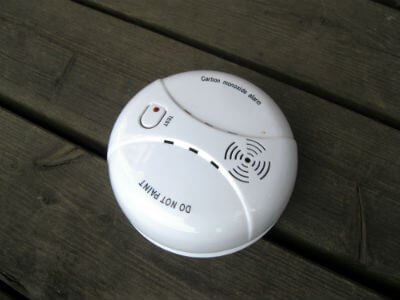
There are many fire hazards present on building and construction sites, with flammable liquids and hot work present on the day to day job. These hazards mean that workers and visitors are at high risk of injury and potential fires. A fire on a construction site can cause damage to the project itself, surrounding areas, and everyone within the vicinity, so it is vital that fire safety equipment is kept safely on site. Here are several pieces of equipment that should be on every work site: Fire hazard risk assessment The risk assessment on a construction site will identify hazards, risks, and who will be affected. It assesses the extent of the risks and measures to put in place to reduce or eliminate the risk of a fire to make the environment as safe as possible. Controlling the hazards in the environment is fundamental to decreasing the risk of fire, with the need of specific controlled measures implemented on site. Once these measures are put in place, this risk assessment must be kept safe and referred to when needed to ensure measures and safety standards are remaining high. A safe place to store high priority items All important documents and worksite keys, padlocks and cards are to be safely stored in a secure place so that management and employees who require access to these items are able to. A competent key system is needed regardless of the amount of people working on site, as security is paramount for everyone involved. Simple key cabinets, special security cabinets and outdoor key storage cabinets are available depending on company and site requirements. Key cabinets from Reece Enterprise are also fire resistant, so in the instance of a fire on site, the contents will remain safe and intact. Sprinklers and extinguishers Once a risk assessment is completed, the hazards that may cause a fire are sourced and the types of equipment that is required can be assembled. Smaller sites may only require single extinguishers, whereas high risk sites may need a sprinkler system and several extinguishers for employees to use if needed. It is important that the correct extinguishers are kept on site and fire equipment is stored in easily accessible places. Alarms Fire alarms or fire warning systems are used to alert people of a fire on the site, allowing them to escape safely and quickly. Low risk sites may require one alarm or system in place, whereas larger, high-risk construction sites will need a comprehensive alarm system and detectors. It is important that all fire alarms and fire detectors are tested once a week. Escape equipment Escape equipment, such as escape ladders, are of use to construction and building sites when working at height or in multi-story buildings. Before using escape equipment, an escape route should be established that is clearly marked and known to all workers and visitors. In conclusion, fire safety on construction sites must be detailed due to the hazardous working environment. It is vital that all persons present on site have knowledge of how to react in the event of a fire with knowledge of how to use the fire safety equipment.

Read More »

Fusion21 invites bids for £1.1bn facilities management framework

Fusion21 has launched a £1.1bn workplace & facilities framework, to meet the facilities management needs of a range of public sector organisations Designed to meet the facilities management needs of a wide range of public sector organisations in the blue light, central government, education, health, housing and local authority sectors, the framework is aligned with market requirements. Opportunities are available for both large organisations and SMEs. Lots 1 and 2 are multi-sourcing options that allow the appointment of a service provider to deliver multiple services (bundled or TFM) incorporating elements of physical asset management, service management and process management. Lots 3 to 6 offer individual services and will allow interested suppliers to bid for lots specific to their capability. The full lot structure includes: Lot 1 – FM principal contractor Lot 2 – FM managing agent Lot 3 – Cleaning & washroom services Lot 4 – Security services Lot 5 – Waste management Lot 6 – Building engineering services (M&E) The framework includes flexible call-off processes with options for both direct awards and further competitions. ‘In response to market demand’ Peter Francis, director of operations at Fusion21, said: “Set for launch in February 2021, this framework has been developed in response to market demand – reflecting feedback provided from both our members and the supply chain. “It marks the next stage in developing Fusion21’s FM offer which has grown from strength to strength over recent years. “Fusion21 is an established framework provider that is well respected throughout the public sector. “Our procurement teams are experienced technical experts in their fields that understand the needs of suppliers when tendering and a contributor to our success is how we work for the mutual benefit of our suppliers and members. “We welcome applications from interested organisations that meet the criteria set out in the tender documents are now available on the Delta e-Sourcing Portal. The submission deadline for the framework is 9 December at noon.

Read More »

Torus steps up affordable housing delivery in Cheshire West with Ellesmere Port development

North West growth and regeneration Group, Torus, is delighted to unveil another major development in Cheshire West, The Coppice at Rossbank, which will deliver 130 affordable family homes for Ellesmere Port.  A mix of 2, 3 and 4-bedroom homes and 2-bedroom apartments, built as part of a larger 260-unit development, all homes at The Coppice at Rossbank will be available via Shared Ownership, Rent to Buy and Affordable Rent.  The development builds on Torus’ expanding portfolio in Cheshire West, with schemes currently in development in Lostock Gralam and Kingsley. Combined, these developments represent a £9.2 million investment to date, with over 70 mixed-tenure properties created to meet the region’s shortage of affordable housing.   This expansion showcases the Group’s ongoing commitment to Cheshire West and to building the homes people want and need, exactly where they need them – supporting the development of sustainable, thriving, multi-generational communities.   By building a mix of homes, all of a mixed size and tenure, The Coppice at Rossbank is suitable for future homeowners, at any stage of life, and will see first time buyers, families and downsizers alike given the option of owning the homes they truly want. Working to create homes and communities, The Coppice at Rossbank will grow and evolve with the people who call the development home and become a place people live for many years.  Discussing the scheme, Group Head of Sales, Jeanette Grady, said; “We are proud to be building more homes in Cheshire West and increasing access to truly affordable housing solutions and this ambitious project will see high-quality homes built exactly where they’re needed.  “This development is an important one for the area and will see the brownfield site regenerated to accommodate affordable homes suitable for first time buyers, young professionals, families and downsizers alike.   “With demand for affordable housing now at an all-time high following the national economic downturn caused by COVID-19, it is vital that we continue bolstering access to options such as these so communities across Cheshire West are able to thrive now and in the future.” 

Read More »