Kenneth Booth

University of Brighton student accommodation protected with Cygnus

Bull Products, a manufacturer of life-saving fire protection equipment, is taking site safety to new heights during the expansion of the University of Brighton’s largest campus. Bull Products is helping to secure the safety of the workforce of leading construction company, Bouygues UK, as it delivers the multi-million development for

Read More »

Henry Brothers Midlands completes simulator facility at RAF Waddington

Henry Brothers Midlands has completed the refurbishment of a hangar at RAF Waddington to convert it into a joint training facility, on behalf of the Defence Infrastructure Organisation (DIO). Simulators allow certain forms of training to be undertaken without the need for flying, which represents a significant cost saving. The

Read More »

WILL COVID-19 CHANGE THE FUTURE OF BUILDING DESIGN?

THE IMPACT of Covid-19 on every aspect of life is undeniable. As the pandemic began to spread throughout March 2020, no one could have foretold the ways in which this disease would change society. One industry that has remained open throughout lockdown and been forced to quickly innovate is construction

Read More »

CIOB REACTS TO TODAY’S STATEMENT FROM THE CHANCELLOR

Chancellor Rishi Sunak MP has today made a statement to the House of Commons on the Government’s plans to protect jobs through the winter.   The Chancellor’s Winter Economy Plan includes a six month Job Support Scheme, an extension to the coronavirus loan schemes and the Self Employment Income Support Scheme,

Read More »

Hörmann UK takes Panattoni Park Luton to the next level

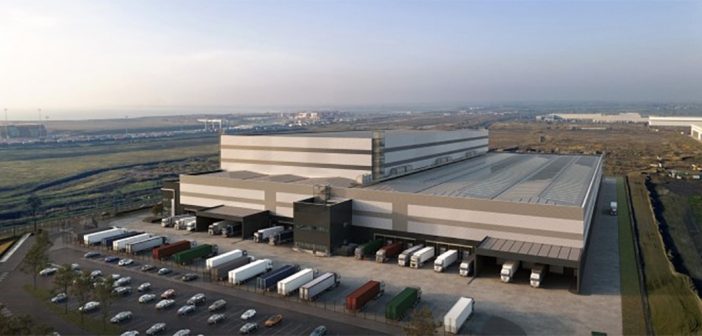
Located on one of the most prominent and advantageous sites on the Southern M1, Panattoni Park Luton offers 414,000 sq. ft of prime logistics and manufacturing warehousing space. As the UK’s largest speculative developer, Panattoni continues to drive forward its commitment to producing smarter, faster developments that have the smallest

Read More »
Latest Issue
Issue 343 : Aug 2026

Kenneth Booth

Mick George become longest serving shirt sponsor after extending U’s Partnership

Cambridge United are delighted to announce that the Mick George Group will become the Club’s longest serving shirt sponsor after extending their partnership with the U’s. The extension, which will run until 2023, will see the partnership reach the decade milestone. The local company, one of the area’s leading suppliers to the construction industry, initially became the U’s main shirt sponsor prior to the 2013/14 campaign – the season the club reclaimed its place in the Football League and won the FA Trophy at Wembley. The agreement will see the Mick George Group logo printed on all home and away replica shirts as well as those worn in competitive action by the club at all levels. This includes the first team and all youth academy teams. Since their first involvement, the company have shown tremendous support and backing for the Club with a number of significant projects, events, and fan engagement initiatives – all of which are continuing despite the current challenging circumstances. During the partnership to date, the club has experienced a number of memorable moments which will go down in U’s folklore. The aforementioned 2014 season will be remembered as one of the best in the Club’s history with two Wembley appearances which heralded an FA Trophy victory and promotion back to the Football League. More recently, other standout occasions include the famous draw against Manchester United FC in the 2015 FA Cup. Through continuous offerings of hospitality, discounts, giveaways, competitions and fun entertainment, not least Mick the Skip mascot and the Half-Time Skip Challenge, The Mick George Group have played a pivotal role in embracing the wider ‘supporter activation programmes’ that the club participates in. Head of Commercial at Cambridge United FC, Nick Fairbairn said: “We are absolutely delighted that the Mick George Group have extended their sponsorship. We have built a fantastic relationship with them over the last seven years – the renewal of the partnership is all the more special given that they are genuine supporters and advocates of the club. The current climate is tough for everybody, so to have the extended support of a key partner such as the Mick George Group is huge for us at Cambridge United. It underlines the fact that this goes further than simply a commercial deal, but is built on shared values and a real solidarity between our two organisations. We thank Jon and his team for their fantastic support, particularly at such an uncertain and challenging time.” Jon Stump, Joint CEO at the Mick George Group commented: “We have built a genuine and valued affinity with both the club and supporters since we became the front of shirt sponsor in 2013 and consider that we are seen as much a partner and fellow fan as opposed to just a corporate sponsor.” “Through our association with the club, which dates back well before the shirt sponsorship commenced, we have regularly invested in the club in different capacities and recognise the importance in doing so at the present time, to help provide the Club and fans with some much-needed stability in the present climate.” “The Club is a critical hub for community activation, representing the togetherness that exists in the City. That ethos is something that aligns with our business philosophies and has been a key factor in our decision to renew despite economic uncertainty.” “The Club should be applauded for the way it has conducted itself in the current circumstances.” “We are proud to be the club’s front of shirt sponsor and hope that by signing a three-year extension to the current deal, reflects the fantastic relationship that has been built between the Mick George Group, Cambridge United FC and its supporters. More importantly, we want to do what we can to help the club fulfil its full potential and experience many more memorable occasions in the future.’’

Read More »

GE Renewable Energy launches the uprated Haliade-X 13MW wind turbine for the UK’s Dogger Bank Wind Farm

GE Renewable Energy to supply 190 Haliade-X turbines for Dogger Bank A and B The project will be first in the world to feature the 13MW variant of GE Renewable Energy’s Haliade-X platform GE confirms marshaling harbor activities at Able Seaton in Hartlepool will create around 120 jobs and service activities from the Port of Tyne will create around 120 jobs GE Renewable Energy announced today that it has finalized supply contracts (subject to final notification to proceed) with Dogger Bank Wind Farm (a 50:50 joint venture between SSERenewables and Equinor) for the first two phases of what will become the world’s largest offshore wind farm.These first two phases (Dogger Bank A & B) will each feature 95 Haliade-X 13MW wind turbines. The agreements will include a total of 190 units of the 13MW Haliade-X wind turbine, and a five-year Service & Warranty agreement to provide operational support for the wind turbines. GE’s Service team will be co-located with the Dogger Bank Operational and Maintenance team, based out of the Port of Tyne. The Haliade-X 13MW is an enhanced version of the successful 12MW unit which has been operating in Rotterdam since November 2019 and which recently secured its provisional type certificate§ from DNV-GL. The uprated13MW Haliade-X will also feature 107-meter long blades and 220-meter rotor. One spin of the Haliade-X 13MWcan generate enough electricity to power a UK household for more than two days. John Lavelle, President & CEO, Offshore Wind at GE Renewable Energy, said, “We are delighted to take the next step in developing the most advanced proven technology in the market. At GE, innovation is in our DNA, and that is why we continue to innovate, enhance and develop the Haliade-X platform to meet market demands to deliver offshore wind as a competitive and affordable source of renewable energy. In signing these agreements with Dogger Bank, our Haliade-X technology will now have an important role to play in the UK’s offshore wind ambitions (40GW by 2030) and greenhouse emission reduction to “net-zero” by 2050.” Energy Minister Kwasi Kwarteng said: “I am thrilled to see so many green jobs on the way to the North East of England thanks to our world-leading offshore wind industry. Projects like Dogger Bank are absolutely crucial to building back greener from the coronavirus pandemic – creating jobs, growing the economy and tackling climate change. I look forward to watching its progress in the months and years ahead.” Peter Stephenson, ABLE UK’s Executive Chairman, commented: “We have enjoyed a long and constructive relationship with GE Renewable Energy culminating in today’s announcement – it’s a massive vote of confidence for the company and the UK. Our sustained investment at Able Seaton Port means we can provide a bespoke and tailor-made solution for Dogger Bank. “We are delighted that 120 skilled jobs will be based here at the Port, in this exciting and growing industry. The offshore wind sector will increase four-fold by 2030 through the Sector Deal, and with the increasingly demanding targets for low carbon power generation, there is an unparalleled level of market visibility. Combine this with the sectors’ extraordinary efforts in terms of developing new products and significantly reducing costs, this industry is set to become a dominant factor in a post Covid 19 UK economy.” Steve Wilson, Dogger Bank’s Project Director at SSE Renewables said: “Signing the contract with GE Renewable Energy is not just great news for Dogger Bank and GE, but for the wider offshore wind industry, marking the first time a 13MW turbine will be installed in the world. “In addition to this, today’s announcement will bring huge economic benefits to the North East of England, where120 skilled jobs will be created during construction of the wind farm, along with 120 skilled jobs during the maintenance phase. “These turbines are a true testament of how hard the offshore wind industry is working to continually innovate and drive down costs and we look forward to working with GE Renewable Energy to help us deliver the largest offshore wind farm in the world.” Halfdan Brustad, vice president for Dogger Bank at Equinor, said: “We want Dogger Bank to be a flagship project that leads the way in both digitalisation and innovative technology, so it is a great honor to confirm that this project will be the first in the world to use these powerful turbines. “The sheer scale of Dogger Bank brings huge opportunities to the UK. As well as being home to the world’s largest offshore wind farm, the North East will benefit from hundreds of jobs and local supply chain opportunities. We look forward to working with our partners and suppliers to build up a skilled team in the area, to operate and maintain these turbines for the lifetime of the wind farm from our new base, which will be constructed at the Port of Tyne.” The Service & Warranty agreements for the first two phases of Dogger Bank Wind Farm will account for around 120of the Operational and Maintenance jobs that will be based from the Port of Tyne. In addition, GE RenewableEnergy has also confirmed that it will establish its marshalling construction team activities at Able Seaton Port in Hartlepool. This port will serve as the hub for all equipment marshalling, installation and commissioning activities, resulting in the creation of an estimated 120 jobs during the construction period. Recruitment activities are likely to begin early next year. The contracts with Dogger Bank Wind Farm are subject to a Notice to Proceed from project joint venture partners SSE Renewables and Equinor. Financial close on Dogger Bank A and Dogger Bank B is expected in late 2020. The Dogger Bank Wind Farm is located over 130 km off the north-east coast of England and will be capable of powering up to 4.5 million homes each year when complete in 2026. Due to its size and scale, the site is being built in three consecutive phases; Dogger Bank A, Dogger Bank B and Dogger Bank C.

Read More »

Ballymore launches new green chapter at the west London regeneration project

This September & October, a new collection of town centre apartments will come to the market at waterfront neighbourhood, The Brentford Project. Following its successful launch in September 2019, developer Ballymore has brought forward the latest opportunity to live in this exciting new quarter, in a new green phase for the development. Perfectly positioned on the doorstep of west London’s famed parks and green spaces, this new collection of two-bedroom apartments at The Brentford Project benefit from river views across to Syon Park and beyond. A focal point for the development, the newly-released apartments will also overlook the beautiful gardens of the deconsecrated Grade II* Listed St Lawrence’s Church on site, which is set to be reimagined with tranquil landscaping for residents and locals. Uniquely located at the meeting point of the River Thames and River Brent, The Brentford Project will see the transformation of 11.8 acres in the very heart of the town. Alongside delivering 876 new homes, the major regeneration scheme will revitalise the southern half of the town’s high street and reconnect it with the waterfront, establishing a thriving mix of dining, entertainment and shopping amenities and public spaces. Homes surrounded by greenery The first apartments to come forward within the new building, which will also act as the home for the residents’ club and concierge service, residents are perfectly placed to take advantage of the impressive lifestyle and wellness facilities on their doorstep. Contemporary open-plan apartment layouts and floor to ceiling glazing – alongside the cantilevered terraces many homes enjoy – are thoughtfully designed to maximise the far-reaching views, which take in the neighbouring St Lawrence’s Gardens, the water and the greenery of west London. Reflecting Brentford’s green, leafy surroundings, residents and visitors will be welcomed into an ‘Arrival Garden’. Inside, a tranquil retreat that has thoughtful landscaping and covered walkways and porticos, alongside a residents’ outdoor pool and woodland play space surrounded by mature trees. This charming pocket of The Brentford Project will also house ‘The Wick’, a unique wellness offering for residents, including a state-of-the-art gym, spa and treatment rooms overlooking the gardens. Meanwhile, St Lawrence’s Church itself – a truly historic piece of Brentford’s past with aspects of the building dating back to the 15th century, designed by architect Thomas Hardwick – will become a culinary and cultural hub for the community, and play host to pop-ups, events and shows. Internationally renowned practice, McCullough Mulvin Architects, has overseen the architectural design of the development’s new residential building and the revitalisation of St Lawrence’s Church – adopting a thoughtful approach to integrating this heritage gem into the wider vision for the new neighbourhood. Revitalising a historic neighbourhood Alongside an invigorated stretch of the high street – which will be home to all the amenities desired for modern life – a series of distinctive pedestrianised lanes and yards will reconnect the high street with the waterfront. Creating a new foodie destination, Workhouse Dock, an existing but neglected mooring on the River Brent, will be rejuvenated with 24 hour moorings, and lined with restaurants, pubs and cafés, with new public realm including tiered seating terraces – a space to relax, spend time and enjoy life on the water. Complementing Workhouse Dock’s romantic connection to the river is the adjacent Waterfront Square, which extends the communal experience of life at The Brentford Project. A dedicated space for outdoor markets, performance and public events, Waterfront Square will add to Brentford’s strong community feel. Providing another unique perspective across the water, a series of raised podium gardens will be interspersed throughout Workhouse Dock. An address with world-class connections Despite its leafy position surrounded by the prized neighbourhoods of Chiswick, Richmond and Kew, Brentford itself is a powerhouse of business and creativity. The development is walking distance from the Great West Road, otherwise known as the ‘Golden Mile’, home to the UK headquarters of global titans including Sega Europe, Dell EMC, Sky Studios, GlaxoSmithKline and JCDecaux Group. To the east, Chiswick Park hosts a suite of global, European and national corporations including Paramount, Sony and Starbucks. Creating a business community of its own, The Brentford Project already hosts classic car entrepreneur, Duke of London, and on-site bakery and restaurant, Rye by the Water with the future retail vision to include over 50 new shops, boutiques, restaurants and entertainment venues in order to create a new riverside destination in west London. An important commuter corridor into central London, trains from Brentford to London Waterloo just taking 24 minutes, while nearby Boston Manor Underground station takes locals to Leicester Square within 32 minutes via the Piccadilly line. Heathrow Airport is also a mere 15-minute drive away by car for unrivalled international connections. Jenny Steen, Sales Director at Ballymore, comments: “One year on from the launch of The Brentford Project, this new release of homes offers a fresh opportunity to become part of the thriving community and exciting destination that is in the making here in west London. “The Brentford Project offers residents a rare lifestyle not often found in London. Not only are there some of the capital’s most beautiful parks nearby, but the extensive landscaping, public spaces and impressive variety of amenities throughout the neighbourhood will create a unique waterside destination. This new chapter of The Brentford Project provides the latest look at what is still to come in a constantly evolving neighbourhood – set amongst some of Brentford’s most historic surroundings.”

Read More »

GLP Europe Raises €1.1 billion for First Close of GLP Europe Income Partners II

Fund seeded with 1.9 million sqm of prime European logistics real estate assets GLP’s second pan-European income logistics fund closed within 30 days of GLP JIF, Japan’s largest private open-ended logistics real estate income fund GLP announced today the first close of its newly established pan-European logistics fund, GLP Europe Income Partners II (“GLP EIP II”), with €1.1 billion of equity commitments. The investors in GLP EIP II comprise both new and existing global institutional investor partners. GLP EIP II is seeded with a prime pan-European logistics real estate portfolio of income-producing assets, largely sourced off-market, and totalling 1.9 million sqm across 25 established logistics locations in nine countries. With an average age of less than five years, the seed assets have superior specifications and benefit from a weighted average unexpired lease term of nearly seven years. The portfolio has performed exceptionally well throughout 2020, with nearly 100,000 sqm of new leasing growing occupancy to over 97 percent. GLP EIP II will continue to acquire logistics assets across Europe’s prime locations while delivering superior risk-adjusted returns for investors. Ralf Wessel, GLP managing director, fund management, said: “Since entering the European market in 2017, GLP has tripled its assets under management and strategically expanded its presence to meet investor demand and support its disciplined growth strategy. In 2020, GLP added close to US$9 billion across our logistics strategies globally, signifying strong investor confidence in our investment and operating expertise.” Nick Cook, president of GLP Europe, said: “GLP Europe Income Partners II demonstrates the continuing strength of the European logistics market driven by consumption, e-commerce and supply chain modernization. Over the past two years, our experienced on-the-ground team has executed more than 20 off-market transactions to create a truly pan-European logistics platform and support our disciplined growth strategy.” In Europe, GLP is one of the longest-standing fully-integrated logistics investors, developers and operators and manages €9 billion (US$10 billion) of AUM across Europe’s strongest logistics markets. GLP EIP II is the company’s fourth Europe-focused investment vehicle and follows US$2.6 billion GLP Japan Income Fund (“GLP JIF”), Japan’s largest private open-ended logistics real estate income fund, which was launched in August 2020. About GLP GLP is a leading global investment manager and business builder in logistics, real estate, infrastructure, finance and related technologies. Our combined investing and operating expertise allows us to create value for our customers and investors. We operate across Brazil, China, Europe, India, Japan, and the U.S. and have US$89 billion in assets under management in real estate and private equity funds. Learn more at glprop.com.

Read More »

WORK SET TO BEGIN ON £650M DEVELOPMENT WITH PLANNING APPROVED FOR CANAL TURN

NOTTINGHAM’S biggest regeneration scheme for decades will begin in earnest in the coming weeks following the granting of planning approval for the first phase of The Island Quarter. The plans for Canal Turn today (23 September) received planning consent from Nottingham City Council, with work scheduled to start on site in November. The approved phase will include a three-storey 2,000 sqm pavilion on the waterfront, featuring two restaurants, circa 500 sqm of events space with panoramic views and a large rooftop terrace, forming the opening phase of development on the 40-acre site. The plans also feature provision for a bandstand and a substantial area of new, attractive public realm – all of which will open up the canal basin area, enhancing one of Nottingham’s most under-utilised assets. The first phase will also include extensive improvement works to the canal at the London Road end of the site, which will help form a focal point for The Island Quarter.  Christopher Ware, property director of Conygar, the developer behind the scheme, said: “We are delighted that planning for Canal Turn has been granted. We’ve worked closely with Nottingham City Council to progress the application and ensure that we can get started promptly on what is a landmark site not just for the city, but the region as a whole. “Canal Turn marks the first stage of a development that will create a unique, year-round destination for the city, as well as a thriving and vibrant new community for Nottingham.” Having been granted outline planning consent for the former Boots Island site in April 2019, the team behind the development worked closely with the city’s planning and regeneration team on the Section 106 agreement, which was signed off earlier this year. Richard Watson, director of Conygar Nottingham, said: “Throughout this process, we’ve been committed to creating a development that reflects Nottingham and enhances its credentials as a first-rate city. “We’ve worked closely with the city and the design team to put together these plans for a development, which will be of huge benefit to the local economy and will create thousands of jobs during the build phase and beyond.”  The overall plans for the site, which has been derelict for many years, will bring new homes, grade A office space, creative spaces, a lifestyle hotel, PRS apartments and co-working space, a ‘linear’ park and vibrant community and event space as well as student accommodation to the city.   Councillor David Mellen, leader of Nottingham City Council, said: “It’s really pleasing to see not just new developments taking place in Nottingham, but major developments like The Island Quarter and on such a huge, transformative scale. “Not many places have the opportunity to create a new addition to their city like this, with 40 acres of land prime for redevelopment so close to the city centre. It will become a major asset to Nottingham, connecting nearby neighbourhoods to the city centre through an area long overdue for redevelopment. “The plans to provide a mix of places to live, work and play will perfectly complement the other redevelopments across the southside area, and hopefully this first phase is a sign of the quality of the developments to come on site. We’re pleased to be working with Conygar on creating this new space for our city and like many others, I look forward to watching it change before us.”

Read More »

University of Brighton student accommodation protected with Cygnus

Bull Products, a manufacturer of life-saving fire protection equipment, is taking site safety to new heights during the expansion of the University of Brighton’s largest campus. Bull Products is helping to secure the safety of the workforce of leading construction company, Bouygues UK, as it delivers the multi-million development for Uliving, a student accommodation developer. The accommodation will provide over 800 student bedrooms and new fitness and social facilities at its Moulsecoomb campus. Bull is protecting the site with the Cygnus Wireless Alarms including the Fire Call Point & First Aid Alarm. This market-leader temporary fire alarm and evacuation system offers heightened site safety, ensuring workers can distinguish if a fire or first aid alarm is raised. In the case of a first aid alert, each device beeps intermittently every eight seconds. Matt Trigwell, Sales Director at Bull Products, says: “Our experience of installing our wireless fire alarms in high-rise buildings means we are well suited to protect the University of Brighton throughout the different stages of development. “A cause and effect functionality has been set up between zones which allows different personnel in each zone to escape in a controlled manner, therefore reducing accidents and trips during any evacuation.” Bull Products’ fire extinguisher trolleys, equipped with fire extinguishers and alarms, also ensure all safety equipment is stored in one convenient place. An ideal solution for larger sites, the equipment can be moved around as the site develops, offering maximum site protection where and when it is needed the most. Nicolas Amice, Site Manager at Bouygues UK, adds: “The Cygnus alarm system has been extremely efficient and reliable and has met the needs of what we required for this particular project. We are proud to be supporting Uliving, our student accommodation developer partner and sister company that is investing in the future of students by transforming its facilities and we are also delighted to be working with Bull to ensure health and safety is optimised.” For more information, contact Bull on 01432 371170, visit www.bullproducts.co.uk or email enquiries@bullproducts.co.uk 

Read More »

Henry Brothers Midlands completes simulator facility at RAF Waddington

Henry Brothers Midlands has completed the refurbishment of a hangar at RAF Waddington to convert it into a joint training facility, on behalf of the Defence Infrastructure Organisation (DIO). Simulators allow certain forms of training to be undertaken without the need for flying, which represents a significant cost saving. The new facility at RAF Waddington acts as a central hub which connects existing RAF simulators around the country, allowing multiple simulators to work together in daily repeatable exercises. The work has been undertaken by Henry Brothers Midlands at a cost of about £8m. The project team faced a number of challenges including working around RAF training periods and carefully timing noisy work to reduce disruption. RAF personnel were training only three metres away from parts of the work, so the team built a temporary wall and adapted their construction techniques and hours of work to make sure they did not interrupt training. A great relationship with the Air Battlespace Training Facility was vital to make sure they could continue training to maximum effect. Like everyone, the team also had to deal with the impact of COVID-19. Work halted in March for four weeks while steps were taken to ensure the project could continue safely. It also understandably caused a delay in delivery of materials needed for the project but a proactive attitude and close working relationships between DIO, Henry Brothers Midlands, the RAF and Boeing UK helped to reduce the impact. DIO’s Project Manager, Dan Wilmott, said: “I’m really pleased with how everyone pulled together not just to deal with the many challenges presented by construction in the age of COVID-19, but also throughout the rest of the project. The end result is a tremendous facility which will be of great benefit to the team at RAF Waddington and RAF aircrew community across the country.” Air Cdre David Bradshaw, Senior Responsible Owner for the Gladiator programme, said: “The completion of this infrastructure project is the first stage of a larger programme of the Royal Air Force’s future synthetic training capability. This new capability, known as Gladiator, will provide a step-change in the ability of our front-line Forces to train together in operationally realistic situations to meet an ever-increasing adversary threat.    “The successful completion of this project is a shining example of collaboration between the Royal Air Force as an end user, DIO as the delivery agent and Henry Brothers Midlands as the construction partner to deliver a facility to meet the future requirements of collective synthetic training.” Wg Cdr David Williams, Officer Commanding the Air Battlespace Training Centre, said: “My team and I have been working closely with the Programme and DIO teams throughout the design and construction process to ensure our requirements were fully understood and met. I have been really impressed by the collaborative approach everyone involved has taken to work as one team to deliver this new facility. We are very excited to take over this facility and work towards the delivery of the next generation collective synthetic training exercises.” Managing Director at Henry Brothers Midlands, Ian Taylor, said: “This project is the latest in a number of defence projects undertaken by Henry Brothers Midlands in recent times and the third consecutive development at RAF Waddington. We are delighted to have handed over the facility and look forward to continuing our relationship with the base.” Nottingham-based Henry Brothers Midlands is part of The Henry Group, which comprises a number of manufacturing and construction sector companies, ranging from external construction through to interiors fit-out. In partnership with clients, it has a proven track record in defence, along with education, accommodation, commercial, industrial, transport and healthcare sectors. The newly-refurbished hangar has now been handed over to RAF Waddington’s Air Battlespace Training Centre, who will run the facility and work with Boeing Defence UK, to co-ordinate the fit-out of the simulator equipment.

Read More »

WILL COVID-19 CHANGE THE FUTURE OF BUILDING DESIGN?

THE IMPACT of Covid-19 on every aspect of life is undeniable. As the pandemic began to spread throughout March 2020, no one could have foretold the ways in which this disease would change society. One industry that has remained open throughout lockdown and been forced to quickly innovate is construction – and Matt Linekar and Stephen Moore from contractor Willmott Dixon have been at the forefront.  Gone are the days where you could enjoy a concert surrounded by tens of thousands of people, or hug those outside of your household as a friendly greeting. Instead, we now live in a world of social distancing and masked outings. But the impact of Covid-19 isn’t just those changes staring us in the face. There are more subtle, underlying ramifications that are yet to be explored completely – such as alterations in building design.  The question is, are Covid-related changes we are now seeing in building design here to stay, or a passing trend as the industry attempts to guide itself back to normality when the pandemic is over? A change in requirements  One of the biggest changes in building design is the importance that is now being placed on ventilation. The need for proper circulation and fresh air to reduce the risk of contamination has never been more prominent – especially in the education sector where large groups of students must move around the building during regular intervals. This requirement also means that designers must think about the importance of flexibility to be able to purge the air in classrooms, and also consider window patterns and wall fans and their impact on the acoustics of these rooms. The care sector is another one that must adapt to changing times and, again, consider the importance of ventilation in communal areas or corridors that could be the hub of cross contamination. Many care homes are now drawing on primary care regimes and lobbying rooms to protect infected patients, altering facilities to increase the safety of both staff and residents. But, with providers in these sectors already struggling to source funds and a potential vaccine set to hit the UK in 2021, many of these measures may not be instigated. Stephen Moore, preconstruction manager at Willmott Dixon, said: “We have seen a variety in responses from our customers, with some not wanting to make significant, long-term changes to a problem that is deemed to be short-term. Cost management is key when it comes to these alterations, but many businesses are struggling to weigh up the short-term benefits with the financial impact that it can have on the outgoings of a project.  “This response is being reflected by local authorities. Spatial problems are undeniable when discussing social distancing in schools, but councils don’t have the money, space or desire to make long-term changes to facilitate social distancing measures, and we are seeing many private sector companies take a similar stance. There is a focus for adapting operational policy rather than a significant change to buildings and the way they are designed to function.” Perfecting the process  It’s not just the elements of design that have been impacted by Covid-19, but also the process in which these designs are created. The informal nature of construction sites means that social distancing is often hard to maintain. With a mountain of competing factors to contend with – such as the need for team work, the variety of jobs that have to be completed simultaneously and strict time scales that have to be adhered to – contractors have had to make dramatic changes to ensure staff stay socially distant while working on projects. This has meant for many firms, including Willmott Dixon, that focusing on off-site fabrication has helped the design process.  Matt Linekar, head of building services at Willmott Dixon, said: “One of the key things that the Covid-19 pandemic has accelerated is off-site manufacturing and the different ways in which we might be able to utilise modern methods of construction (MMC).  “MMC is already a hot topic for the industry and the pandemic has simply enhanced this – and the last few months has given us the opportunity to explore the options in more detail and will no doubt continue to play a part in construction projects in the longer-term.” Long-term or short-term The construction industry is one that has never stopped working, so very quickly firms were forced to adopt new ways of working to help protect their teams and prevent the spread of Covid-19, all while ensuring that essential building projects did not stall.  Matt added: “Distancing on site – and within the wider community – is probably here to stay, so as an industry we are having to find ways to accommodate that, but whether or not there will actually be long-term design implications remains to be seen.  “The short-term response has been one of meeting practical challenges on sites and moving forwards with a different way of working, but the reality is that the construction industry is a very competitive marketplace – potentially even more so as the government has positioned the built environment at the forefront of the recovery strategy. “The government is encouraging a ‘build back better’ approach but there are inevitably cost implications associated with that and without legislation to demand improved standards and a force for change.” Should we change the approach to building design? There are potentially significant positives associated with a change in design focus, especially when you consider the environmental targets the UK is working towards and the impact more sustainable building would have.  Stephen added: “Moving towards a focus on whole life cost is an important first step – but that will rely heavily on customers adopting a shift in mindset, thinking about overall value rather than initial outlay. It’s challenging, especially against a backdrop of a damaged economy and already stretched budgets, especially within the public sector.  “Sustainability will be key, but that is something that has been put somewhat on the backburner for

Read More »

CIOB REACTS TO TODAY’S STATEMENT FROM THE CHANCELLOR

Chancellor Rishi Sunak MP has today made a statement to the House of Commons on the Government’s plans to protect jobs through the winter.   The Chancellor’s Winter Economy Plan includes a six month Job Support Scheme, an extension to the coronavirus loan schemes and the Self Employment Income Support Scheme, and flexibility for VAT repayments.   The impacts of the COVID-19 pandemic have been felt acutely by businesses operating in the built environment, with projects facing supply chain issues, a halt to planning and inspection timetables and new health and safety measures changing the way the industry works.   The CIOB welcomes the Chancellor’s announcement of these measures, and particularly the extension of the coronavirus loan schemes, which have been an important lifeline to construction businesses over the past months. Small and medium sized enterprises make up around 99% of the construction industry, and support for these businesses is essential for their survival.   Despite these challenges, construction professionals have remained optimistic throughout the crisis and have worked hard to adapt and operate safely to support the economy and provide vital infrastructure, including the NHS Nightingale field hospitals. The Construction Talent Retention Scheme is helping businesses to quickly recruit talented individuals and reduce skills shortages within the industry.  The construction industry has a crucial role to play in safeguarding employment and supporting the economy through the coming winter months.   While The CIOB recognises that now is not the time to outline long-term plans, it is important that thought is given to a stable pipeline of future work for the industry. The industry will need confidence if it is to retain its existing skills base, as well as attract new entrants and train or retrain them in the low carbon skills of the future.   The CIOB is calling on the Government to build on its £2 billion Green Homes Grant scheme (GHG) and make progress towards its manifesto commitment of £9.2 billion to improve energy efficiency in homes, schools and hospitals.   The CIOB also recommends that the Government implement a ‘Help to Fix’ interest-free loan scheme, predicated on energy efficiency, to improve the quality of the nation’s housing stock and encourage the uptake of retrofit measures by homeowners not covered by the GHG. This will help to protect existing employment and provide new, green jobs across all regions of the UK.

Read More »

Hörmann UK takes Panattoni Park Luton to the next level

Located on one of the most prominent and advantageous sites on the Southern M1, Panattoni Park Luton offers 414,000 sq. ft of prime logistics and manufacturing warehousing space. As the UK’s largest speculative developer, Panattoni continues to drive forward its commitment to producing smarter, faster developments that have the smallest carbon footprint possible, with Panattoni Park Luton being one of its most recent examples. The state-of-the-art development comprises of two separate units, with Hörmann UK supplying a total of 44 Loading Bays, including both Standard and Double Deck Docks, to provide potential occupiers with flexible loading solutions that will continue to meet their future needs. 10 of Hörmann UK’s Level Access Doors, 20 Fire Exit Doors and a range of additional safety devices have also been installed across the two warehouses. The innovations were specified by Panattoni to ensure it provides the highest standards in efficiency and functionality for a diverse range of supply chain operators. The development’s prime location poses an attractive proposition for potential occupiers, with London only 36 miles away and Luton Airport just a seven mile drive. UK major ports, including Felixstowe, London Gateway, Southampton and Dover, are also within easy HGV drive times, while a proposal for a new link road from junction 11a of the M1 to the A6 has also been approved. Unit 1, Luton 346, is available for immediate occupation and spans 346,000 sq. ft of warehousing space, featuring a clear internal height of 15 metres and 12,839 sq. ft of office area located over two floors. Chosen by Panattoni to provide potential occupiers with a premium offering, 38 of Hörmann UK’s Standard and Double Deck Loading Bays are installed throughout the warehouse, with each of the 34 Standard Loading Bays featuring a 3500mm long Dock Leveller with a 1000mm telescopic lip. This innovative design provides a safe working range above and below dock for maximum operational efficiency, while the tail lift slot covers prevent debris from collecting underneath, for enhanced service life. The bays have also been installed with Hörmann UK’s DTS collapsible Frame Shelter and Vertica Lift Sectional Doors, which are constructed using a unique thermal frame system that provides enhanced U-value ratings and increased operational efficiency. The four Double Deck Loading Bays also feature a 4500mm DTS-G Dock Shelter to facilitate the loading and unloading process for a diverse fleet of vehicles. This enables occupiers to transport goods in and out of the warehouse using larger double deck trucks, as well as standard sized heavy goods vehicles for optimum operational efficiency. For improved thermal performance, the Double Deck Docks are fitted with secondary electric roller blind top flaps to provide an efficient seal on smaller vehicles when using the bay. Eight of Hörmann UK’s vertical lift Level Access Doors have also been installed throughout Unit 1, along with 13 of its heavy duty Fire Exit Doors. The combination of these industrial solutions are designed to provide the highest levels of safety, efficiency and security throughout the entire unit. Fergie Taylor, Head of Development Delivery at Panattoni, said: “Since October 2017, Panattoni has committed to more than 8.5 million sq. ft of new projects within the UK, with a development value of £1 billion. The recent completion of Panattoni Park Luton fulfils our ambitions in delivering only the very best in warehousing solutions at key locations across the UK. “Our latest contract with Hörmann UK, which will continue its supply of products to key Panattoni developments throughout 2020 and 2021, will further drive our dedication to delivering the highest standards in quality and innovation for logistics solutions.” The second unit, Luton 69, spans 69,000 sq. ft and has already been occupied by a leading electrical supplier. Four of Hörmann UK’s Standard Dock Bays and two Double Deck Dock Bays are installed throughout the site, along with seven Fire Exit Doors and two Level Access Doors. Across both units, Hörmann UK’s resilient LED Vehicle Loading Lights have also been installed on each bay, along with rayon reinforced recycled tyre rubber dock buffers with wrap around 15mm steel face plates. This ensures all of the 44 loading bays offer the highest standards in safety, whilst subsequently streamlining the loading and unloading process for operators. Phil Thorpe, Industrial Division Manager at Hörmann UK, said: “As the largest developer of logistics facilities in Europe, Panattoni sets the pace within the industry for delivering first class warehousing solutions. We are extremely proud to be one of its leading suppliers of loading solutions, providing our durable and reliable technologies for a range of its high profile sites across the UK, including the recently completed Panattoni Park Luton.” To view Hörmann UK’s complete offering for the industrial market, visit https://www.hormann.co.uk or call 01530 516868.

Read More »