Kenneth Booth

CIOB REACTS TO TODAY’S STATEMENT FROM THE CHANCELLOR

Chancellor Rishi Sunak MP has today made a statement to the House of Commons on the Government’s plans to protect jobs through the winter.   The Chancellor’s Winter Economy Plan includes a six month Job Support Scheme, an extension to the coronavirus loan schemes and the Self Employment Income Support Scheme,

Read More »

Hörmann UK takes Panattoni Park Luton to the next level

Located on one of the most prominent and advantageous sites on the Southern M1, Panattoni Park Luton offers 414,000 sq. ft of prime logistics and manufacturing warehousing space. As the UK’s largest speculative developer, Panattoni continues to drive forward its commitment to producing smarter, faster developments that have the smallest

Read More »

RTPI calls for £500m boost to England’s planning system in CSR response

Half a billion pounds must be injected into the England’s planning system over the next four years to ensure the government’s objectives on housing, beauty, climate, the economy and health can be achieved, according to the Royal Town Planning Institute (RTPI). In its formal response to the Comprehensive Spending Review (CSR),

Read More »

MediaCityUK takes action to become a net zero carbon neighbourhood

MediaCityUK has the highest cluster of net zero carbon buildings in the UK after a further six of its properties have been third party verified against the UK Green Building Council’s 2019 definition. White, Blue and Orange Towers, Tomorrow building as well as dock10 studios and The Garage, totalling over

Read More »

Energy sector most at risk of cyber incidents, analysis reveals

The UK energy sector is the most at risk of experiencing cyber incidents, according to a new threat table built from a global study on cyber readiness.    The sector saw a median loss of over £100,000 ($150,000) in the last 12 months on cyber events, having been impacted by phishing and virus

Read More »

Reasons for getting House & Land Packages

If it is the first time that you are buying a home, the process may seem increasingly tough. There are many things to keep in mind so that you can get the best. There are house and land packages that provide benefits for those buying a house for the first

Read More »

Barhale secures £22M Thames Water Tunnels and Aqueducts award

In one of the first key Thames Water AMP7 announcements, Barhale has been awarded a four-year, £22M programme of inspections and works on the Thames Water Ring Main (TWRM) and Raw Water tunnels. Under the Thames Water Tunnels and Aqueducts Programme, the civil and infrastructure specialist will carry out monitoring

Read More »

ITER Neutral Beam Test Facility gets too cool!

To develop the powerful ITER Neutral Beam Injectors (NBIs) a test facility has been set up in Padua, Northern Italy, counting on the contributions of Fusion for Energy (F4E), ITER Organization (IO), India, Japan, and Consorzio RFX. Together they have agreed to collaborate on two major experiments which will help

Read More »

IWFM partners with other member organisations to launch “Resilience Alliance’

The Institute of Workplace and Facilities Management (IWFM) has announced the launch of the Resilience Alliance – a new professional relationship aimed at developing and promoting resilience globally. IWFM will work alongside member organisations – Airmic (risk management and insurance professionals), ASIS International (security professionals) and the Business Continuity Institute

Read More »
Latest Issue
Issue 344 : Sep 2026

Kenneth Booth

CIOB REACTS TO TODAY’S STATEMENT FROM THE CHANCELLOR

Chancellor Rishi Sunak MP has today made a statement to the House of Commons on the Government’s plans to protect jobs through the winter.   The Chancellor’s Winter Economy Plan includes a six month Job Support Scheme, an extension to the coronavirus loan schemes and the Self Employment Income Support Scheme, and flexibility for VAT repayments.   The impacts of the COVID-19 pandemic have been felt acutely by businesses operating in the built environment, with projects facing supply chain issues, a halt to planning and inspection timetables and new health and safety measures changing the way the industry works.   The CIOB welcomes the Chancellor’s announcement of these measures, and particularly the extension of the coronavirus loan schemes, which have been an important lifeline to construction businesses over the past months. Small and medium sized enterprises make up around 99% of the construction industry, and support for these businesses is essential for their survival.   Despite these challenges, construction professionals have remained optimistic throughout the crisis and have worked hard to adapt and operate safely to support the economy and provide vital infrastructure, including the NHS Nightingale field hospitals. The Construction Talent Retention Scheme is helping businesses to quickly recruit talented individuals and reduce skills shortages within the industry.  The construction industry has a crucial role to play in safeguarding employment and supporting the economy through the coming winter months.   While The CIOB recognises that now is not the time to outline long-term plans, it is important that thought is given to a stable pipeline of future work for the industry. The industry will need confidence if it is to retain its existing skills base, as well as attract new entrants and train or retrain them in the low carbon skills of the future.   The CIOB is calling on the Government to build on its £2 billion Green Homes Grant scheme (GHG) and make progress towards its manifesto commitment of £9.2 billion to improve energy efficiency in homes, schools and hospitals.   The CIOB also recommends that the Government implement a ‘Help to Fix’ interest-free loan scheme, predicated on energy efficiency, to improve the quality of the nation’s housing stock and encourage the uptake of retrofit measures by homeowners not covered by the GHG. This will help to protect existing employment and provide new, green jobs across all regions of the UK.

Read More »

Hörmann UK takes Panattoni Park Luton to the next level

Located on one of the most prominent and advantageous sites on the Southern M1, Panattoni Park Luton offers 414,000 sq. ft of prime logistics and manufacturing warehousing space. As the UK’s largest speculative developer, Panattoni continues to drive forward its commitment to producing smarter, faster developments that have the smallest carbon footprint possible, with Panattoni Park Luton being one of its most recent examples. The state-of-the-art development comprises of two separate units, with Hörmann UK supplying a total of 44 Loading Bays, including both Standard and Double Deck Docks, to provide potential occupiers with flexible loading solutions that will continue to meet their future needs. 10 of Hörmann UK’s Level Access Doors, 20 Fire Exit Doors and a range of additional safety devices have also been installed across the two warehouses. The innovations were specified by Panattoni to ensure it provides the highest standards in efficiency and functionality for a diverse range of supply chain operators. The development’s prime location poses an attractive proposition for potential occupiers, with London only 36 miles away and Luton Airport just a seven mile drive. UK major ports, including Felixstowe, London Gateway, Southampton and Dover, are also within easy HGV drive times, while a proposal for a new link road from junction 11a of the M1 to the A6 has also been approved. Unit 1, Luton 346, is available for immediate occupation and spans 346,000 sq. ft of warehousing space, featuring a clear internal height of 15 metres and 12,839 sq. ft of office area located over two floors. Chosen by Panattoni to provide potential occupiers with a premium offering, 38 of Hörmann UK’s Standard and Double Deck Loading Bays are installed throughout the warehouse, with each of the 34 Standard Loading Bays featuring a 3500mm long Dock Leveller with a 1000mm telescopic lip. This innovative design provides a safe working range above and below dock for maximum operational efficiency, while the tail lift slot covers prevent debris from collecting underneath, for enhanced service life. The bays have also been installed with Hörmann UK’s DTS collapsible Frame Shelter and Vertica Lift Sectional Doors, which are constructed using a unique thermal frame system that provides enhanced U-value ratings and increased operational efficiency. The four Double Deck Loading Bays also feature a 4500mm DTS-G Dock Shelter to facilitate the loading and unloading process for a diverse fleet of vehicles. This enables occupiers to transport goods in and out of the warehouse using larger double deck trucks, as well as standard sized heavy goods vehicles for optimum operational efficiency. For improved thermal performance, the Double Deck Docks are fitted with secondary electric roller blind top flaps to provide an efficient seal on smaller vehicles when using the bay. Eight of Hörmann UK’s vertical lift Level Access Doors have also been installed throughout Unit 1, along with 13 of its heavy duty Fire Exit Doors. The combination of these industrial solutions are designed to provide the highest levels of safety, efficiency and security throughout the entire unit. Fergie Taylor, Head of Development Delivery at Panattoni, said: “Since October 2017, Panattoni has committed to more than 8.5 million sq. ft of new projects within the UK, with a development value of £1 billion. The recent completion of Panattoni Park Luton fulfils our ambitions in delivering only the very best in warehousing solutions at key locations across the UK. “Our latest contract with Hörmann UK, which will continue its supply of products to key Panattoni developments throughout 2020 and 2021, will further drive our dedication to delivering the highest standards in quality and innovation for logistics solutions.” The second unit, Luton 69, spans 69,000 sq. ft and has already been occupied by a leading electrical supplier. Four of Hörmann UK’s Standard Dock Bays and two Double Deck Dock Bays are installed throughout the site, along with seven Fire Exit Doors and two Level Access Doors. Across both units, Hörmann UK’s resilient LED Vehicle Loading Lights have also been installed on each bay, along with rayon reinforced recycled tyre rubber dock buffers with wrap around 15mm steel face plates. This ensures all of the 44 loading bays offer the highest standards in safety, whilst subsequently streamlining the loading and unloading process for operators. Phil Thorpe, Industrial Division Manager at Hörmann UK, said: “As the largest developer of logistics facilities in Europe, Panattoni sets the pace within the industry for delivering first class warehousing solutions. We are extremely proud to be one of its leading suppliers of loading solutions, providing our durable and reliable technologies for a range of its high profile sites across the UK, including the recently completed Panattoni Park Luton.” To view Hörmann UK’s complete offering for the industrial market, visit https://www.hormann.co.uk or call 01530 516868.

Read More »

RTPI calls for £500m boost to England’s planning system in CSR response

Half a billion pounds must be injected into the England’s planning system over the next four years to ensure the government’s objectives on housing, beauty, climate, the economy and health can be achieved, according to the Royal Town Planning Institute (RTPI). In its formal response to the Comprehensive Spending Review (CSR), the Institute sets out the vital role planning plays in facilitating economic growth, providing affordable housing, tackling climate change, ensuring access to green space and improving wellbeing. It says without significant investment, the government’s ambitions for the planning system, set out in a white paper published earlier this month, cannot be realised. Victoria Hills, chief executive of the RTPI, said: “The drive for new infrastructure, housing and progress towards net zero will create major additional need for planning services in the coming years. The planning system has been severely under-resourced for decades which has had implications not just for efficiency of process, but for the capacity of professional planners to apply their knowledge and lead on strategic place-making. “The government has set out its ambitions to ‘radically overhaul’ the planning system, but to deliver on these ambitions they will need professional planners. The development sector is crying out for support. Without adequate investment, this simply will not be possible.” The response, which comes ahead of the RTPI’s Invest and Prosper report, due to be published in October, says a new Planning Delivery Fund of £500m is required to enable the planning system to deliver outcomes efficiently, effectively and equitably. It would replace the existing fund, which was announced by the Ministry of Housing, Communities and Local Government (MHCLG) in February 2017 in a white paper, Fixing our Broken Housing Market. It allocated £25m between 2017-18 and 2019-20 to ‘support ambitious authorities in areas of high housing need to plan for new homes and infrastructure’. But only £15.8m was awarded to successful bidder in the first wave of funding, with the remaining £10m not being spent. This compares to a £150m a year (figure adjusted for inflation) Planning Delivery Grant to support local planning authorities between 2004 and 2008. The RTPI’s proposals comprise of nine sub-funds to enable investment into specific government priorities. It also calls for the funding to be ring-fenced and to be distributed fairly across all local authorities according to the number of people who live there, the scale of the development pressure and current levels of resourcing: Plan Making fund – £170 million The government has has said all local authorities must have an up to date local plan by 2023 but has not made any additional funding available. The Planning Delivery Fund would fund 50% of the costs of doing this. Design quality fund – £81 million The RTPI has welcomed the Government’s renewed commitment to high quality design, exemplified in its support for the Building Better Building Beautiful Commission. This funding would enable the delivery of the government’s ambitions for Design Codes in every local authority. Monitoring and enforcement fund – £67 million To allow local authorities to do proper assessment of what is actually being delivered through the planning system and how well the local plan is being delivered and issue enforcement proceedings. Digital transformation fund – £46 million To help support the digital transformation of planning – saving money in the medium and long term and freeing up planners’ time to plan. The existing Innovation Fnd has provided limited support (£1m between 6 LAs and one charity) Wider placemaking fund – £100 million To bring a range of place-focused professionals to local authorities, such as architects, urban designers and ecologists, and to incentivise those outside of local planning authorities, such as public health colleagues, to engage with the planning process to enable the delivery of healthy communities. Joint working fund – £15 million To enable strategic reviews of green belt, waste management and housing targets. Community engagement fund – £50 million The government has repeatedly suggested it would like participation to happen upstream – with earlier engagement for communities at plan making stage. The Planning Delivery fund should provide grant for authorities to engage in rich community participation at the earliest possible stage, for example through deliberative panels. Climate Action – £67 million To deliver the equivalent of one FTE planner to work exclusively on climate proofing policy and development management in each local authority. The Committee on Climate Change’s Net Zero UK report demonstrated there had been little or no progress in reducing carbon emissions of buildings or surface transport. Planning is part of the solution. Capacity building fund – £17m District Councils report that planning roles are the most difficult to fill out of all roles. This fund would comprise of £4m to support talent development from diverse socio-economic backgrounds and 13m to enable the country’s 11,000 public sector planners to attend five one-day courses a year over a period of four years.

Read More »

MediaCityUK takes action to become a net zero carbon neighbourhood

MediaCityUK has the highest cluster of net zero carbon buildings in the UK after a further six of its properties have been third party verified against the UK Green Building Council’s 2019 definition. White, Blue and Orange Towers, Tomorrow building as well as dock10 studios and The Garage, totalling over 1.4m square feet have all demonstrated net zero carbon status based on their operational carbon emissions, and action taken to reduce those emissions and increase their renewable energy use. During 2019/2020 alone, the MediaCityUK team implemented 26 energy saving projects, reducing electricity consumption by 800 MWh – the equivalent of 232 tonnes of carbon dioxide. This adds to actions taken across Peel L&P’s wider portfolio in 2018/2019, where a total of £859,000 was invested into 66 energy efficiency projects, reducing carbon emissions from energy by 13%. The latest verification now means half of the buildings at MediaCityUK, which was developed by Peel L&P and is now a joint venture partnership with Legal and General Capital, are net zero carbon. Remaining emissions will be offset through a Verified Carbon Standard project twinned with tree-planting in the North West, further supporting the #BuildBackBetter agenda, creation of the Northern Forest and ensuring that the benefits are kept as local as possible. Earlier this year, MediaCityUK’s newly refurbished The Vic was among 11 other Peel L&P buildings to become the first in the UK to achieve net zero carbon status. This included buildings at Liverpool Waters and offices in Glasgow and Greater Manchester bringing the company’s total net zero carbon portfolio to 17 properties. Peel L&P has also confirmed a new science-based target to reduce emissions intensity by 68% and energy use by 25% per square metre by 2030 in line with the Commission on Climate Change sectoral decarbonisation pathway.  Jo Holden, Peel L&P’s Sustainability Director said: “Our new science-based target helps us to focus our action on achieving more ambitious international decarbonisation goals set out in the Paris Agreement to help keep climate change below 1.5°C. “The addition of more independently-verified net zero carbon buildings is a positive step in the right direction and shows that we’re not just all about pledges, we can demonstrate tangible results for how we’re improving the sustainability of our assets and supporting the transition to low-carbon communities.” Peel L&P’s work to reduce carbon emissions across its assets is part of the company’s first five-year sustainability plan which supports the United Nations Sustainability Development Goals (UN SDGs) to help create a fair and sustainable planet by 2030. Councillor Derek Antrobus, lead member for Salford City Council’s planning and sustainable neighbourhoods, said: “We are delighted that Peel L&P are rising to the challenge of the City Mayor’s ambition for net zero carbon. We hope that other developers will follow their lead and make similar declarations.” MediaCityUK buildings verified as Net Zero Carbon: dock10 White Tower Blue Tower Orange Tower The Vic The Alex Quay West Digital World Centre View the full list of Peel L&P’s Net Zero Carbon buildings and the science-based target methodology on our website. Further information on Peel L&P’s five-year sustainability business plan can be found at www.peellandp.co.uk/responsibility

Read More »

Energy sector most at risk of cyber incidents, analysis reveals

The UK energy sector is the most at risk of experiencing cyber incidents, according to a new threat table built from a global study on cyber readiness.    The sector saw a median loss of over £100,000 ($150,000) in the last 12 months on cyber events, having been impacted by phishing and virus infestation attempts. Out of the 15 sectors included in the analysis, energy was one of the industries most likely to experience one or more cyber events over the past year, despite 84% of firms having a dedicated cyber security role.   The findings are part of Hiscox’s Cyber Threat Ranking Table, which uses data from the insurer’s 2020 Hiscox Cyber Readiness Report, now in its fourth year, to rate the comparative cyber risk levels of a range of sectors, from a representative sample of 1,039 UK businesses.   Cyber protection was a key factor when it came to identifying the level of risk for the sector, with only 68% of firms in the energy sector having a cyber insurance policy. The mean budget allocated to cyber security was also 10% less than the UK average.    The professional services sector, which includes lawyers, accountants and consultants, proved to be the most cyber-ready, receiving the lowest risk score overall. Businesses in the industry reported the least amount of cyber events and were among the sectors most able to measure cyber impact.   The Cyber Threat Ranking Table also includes cyber risk based on company size. The biggest UK companies experienced the highest losses on cyber incidents, with a median cost of more than £270,000 ($360,000) in the last 12 months. Risk was also associated with a comparatively low cyber security budget and the highest record of cyber incidents.   Despite some industries receiving relatively high threat ranking scores in the UK, the overall results from this year’s Hiscox Cyber Readiness Report showed a marked improvement (in comparison to previous years) in relation to cyber security readiness with the sectors achieving ‘expert’ status nearly doubling – from 10% to 18%.  Sector risk scores (highest to lowest risk)  Energy (45)  Food and Drink (42)  Business Services (41)  Government and Non-Profit (41)  Financial Services (39)  Pharma and Healthcare (38)  Travel and Leisure (38)  Manufacturing (37)  Retail and Wholesale (36)  Technology, Media and Communications (36)  Transport and Distribution (36)  Property (35)  Construction (33)  Professional Services (30)    Hiscox’s Cyber Threat Ranking Table can be found at the following URL: https://www.hiscox.co.uk/cyberreadiness  Stephen Ridley, Hiscox UK Cyber Underwriting Manager, commented: “While firms appear to be upping their game when it comes to cyber security at a global level, this is by no means uniform across sectors or countries. The UK energy sector currently appears to be among the most vulnerable which, given the growing intensity of criminal activity across the globe, is a great concern. The high risk score associated with businesses in this sector highlights the importance of on-going investment in cyber defences to help minimise vulnerability and improve overall cyber security resilience.”  

Read More »

Reasons for getting House & Land Packages

If it is the first time that you are buying a home, the process may seem increasingly tough. There are many things to keep in mind so that you can get the best. There are house and land packages that provide benefits for those buying a house for the first time. You will have more control concerning the design as well. You may save precious time because you will not have to begin by looking for land, then finding a builder, etc. Read on to find out why house and land packages may help you out. Convenient These packages are said to be convenient. Finding the best builder to build the perfect home can take much time. You will have to do a lot of research so that you can get the best. When you find someone, you may have to wait until they are available to do your work. This can be tiring. But, if you combine buying the land as well as the house, it will be fast and more effortless. Various websites offer different affordable home and land packages that you can use for sale. It is a challenge to get a genuine deal, whether online or in person. You can see our packages today at  North Harbour, which has excellent home and land packages that you can exploit to get a good deal.  Be sure to do your due diligence to get a reasonable profit margin when you sell your house. Please make sure you also check their payment options for convenience. Be sure to exercise your bargaining power to get a good compromise on the house. Can alter the design By getting the combined package, you will be able to influence certain design features so that it can be the best for you and your loved ones. This case is not present if you buy a present house. Certain changes can occur which will be perfect for your family as well as your lifestyle. It is possible to select floor plans as you want, for instance. Move-in soon By selecting the package, the house will be available to stay in when completed. It is the builder’s job to fulfill all customizable features which will be included in the package. Everything will be final and you can move in as soon as you wish. Planning options By getting an attractive house and land package, you will have increased control when it comes to planning. For instance, you will know for how much time you have to stay in the present home when will be the best time to get removers, the dates you will have to take time off work so that you can move into your new house. All these points help out buyers. Some people become involved in purchasing land, then having to wait till good builders are present to build the home. Time is required for this and if you do not have anywhere to stay, looking for temporary housing may be tough. Makes the loan procedure easier Buying the package makes the financing part easier as well. If you decide to purchase land and then hire a builder, there will be two financing requirements. One loan will be needed for the land and the other for building the home. If you get the house and land package, the procedure will be one only. The above are reasons why you should look for these packages such as the benefits of house and land packages at Mackay or where you stay. Overall the process of getting a home may become easier with them.

Read More »

Triple triumph for Caddick in national Considerate Constructors’ Scheme Awards

Caddick Construction has secured a trio of accolades at the Considerate Constructors’ Scheme National Site Awards where three of its Northern sites were recognised. The high-profile £44m Emerald Headingley Stadium build was singled out for a Silver Award, along with the new £2.7m JCT600 Porsche Centre in Newcastle. Its 20,000 sq. ft industrial unit for Ormazabal on behalf of Network Space, as part of the Mere Grange development, St Helens, received a Bronze commendation. Judges commenting on the Emerald Stadium Scheme said: “This Project demonstrated a fantastic level of consideration towards the public, its workforce and the environment, through adhering to the Scheme’s Code of Considerate Practice.” This included: care about appearance, respect to the community, protect the environment, secure everyone’s safety and value their workforce. The Knottingley-based company has been rewarded by the Scheme for its exceptional achievement and recognised that its sites have made the greatest contribution towards improving the image of construction. This year the awards were announced and presented virtually to the recipients. Adrian Dobson, Managing Director at Caddick Construction, said: “We are delighted to receive three awards this year – a great haul for us – and all for projects that offered very different challenges in terms of size, location and complexity. Caddick’s site team rightly deserve all the recognition here and we are proud that they continue to go above and beyond for each other and their neighbours during every build.”

Read More »

Barhale secures £22M Thames Water Tunnels and Aqueducts award

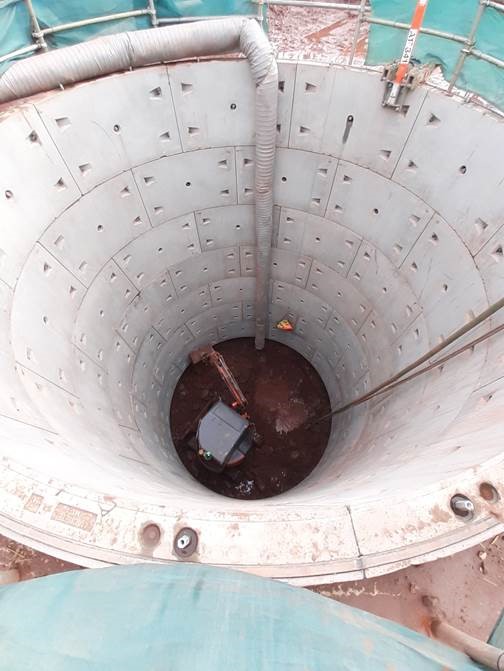
In one of the first key Thames Water AMP7 announcements, Barhale has been awarded a four-year, £22M programme of inspections and works on the Thames Water Ring Main (TWRM) and Raw Water tunnels. Under the Thames Water Tunnels and Aqueducts Programme, the civil and infrastructure specialist will carry out monitoring and maintenance on a total of 35km of ring main tunnels and a further 9km of raw water tunnels. Associated works include the refurbishment of four HIVs (High Integrity Valves) and relining a 1.8km length of the 2.5m inlet and outlet tunnels for the QEII Reservoir at Walton-on-Thames. The TWRM is an 80km long, 2.5m diameter tunnel built between 1988 and 1994 to take water from five treatment works and transfer flows via pumping stations housed in shafts along the route.  It is a major part of London’s water supply infrastructure and carries an average daily flow of 0.3 x10⁹ gigalitres – a little under one-sixth of the capital’s daily demand. Phil Cull, Barhale’s Southern Region Director believes that the business has benefitted from its unrivalled experience of working on the Ring Main over many years. “Under AMP6 we worked closely with the Thames Water team to refurbish 19 of the 22 shafts,” he said. “It’s meant that we have gained insights and knowledge of working across the Ring Main that is second-to-none. We are very pleased that experience has been recognised by Thames Water and to be given the go-ahead on this important programme of works. “The TWRM and the raw water tunnels are absolutely critical pieces of infrastructure for London and the scale of the task cannot be underestimated. To put it in perspective, one element of the programme of works will be the replacement of all of the grout hole caps along 27km of tunnel – a total of 217,000 at around 8 per metre.” Mark Grimshaw, Water Production Manager for Thames Water, said: “Providing a reliable and safe supply of water to our customers is a top priority for us so it’s vital we have the right people working with us to look after the infrastructure that makes it possible. We’re glad to once again have Barhale on board to maintain and improve such key pieces of our London network.”

Read More »

ITER Neutral Beam Test Facility gets too cool!

To develop the powerful ITER Neutral Beam Injectors (NBIs) a test facility has been set up in Padua, Northern Italy, counting on the contributions of Fusion for Energy (F4E), ITER Organization (IO), India, Japan, and Consorzio RFX. Together they have agreed to collaborate on two major experiments which will help us get closer to fusion energy. Scientists will have the opportunity to run tests using SPIDER and MITICA in order to acquire new know-how. Subsequently, the parties involved will proceed with the fabrication of the “real” components that will be used in ITER. Europe being the host of the ITER experiment is also one of the parties with significant involvement in the Neutral Beam Test Facility (NBTF). It has been financially contributing to its construction and the manufacturing of components. In terms of Research & Development (R&D), F4E has invested approximately 30 million EUR for the period 2012-2019 and roughly 100 million EUR for production of components. Converting the NBTF into a centre of excellence for future research in fusion is of strategic importance for Europe. Much will depend on access of know-how and expertise to harness fusion, the energy of Sun. The components of SPIDER, the most powerful negative ion source in the world, and those of MITICA, the real-size NBI, will need to be cooled down. The function of the water cooling plant will be to remove the deposited thermal power, up to a total of about 70 MW, for 3600 seconds. The cooling plant consists of the following main units: a specific system for each of the two experiments, and a common system which they share to release the thermal energy removed from the components.  F4E, in close collaboration with Delta Ti Impianti, the company responsible for its production (from design to commissioning), has successfully completed the works. After eight years the system has been handed over to ITER Organization on 28 May. The pipes which extend to around 5500 m crosscut the entire Neutral Beam Test Facility. In some areas the pipes follow a neat pattern almost like tapestry covering the walls. In other parts of the building, the pipes resemble to a labyrinth made of steel full of twists and turns. This is the result of about 500 deliverable documents, reviews and inspections, contract amendments and successful negotiations. A team of engineers, quality assurance experts, lawyers, procurement officers have been working together for years to complete this project. We spoke to some of the engineers involved in the project to understand the challenges they faced during the lifecycle of the project. Vincent Pilard, F4E Technical Officer who has been closely following the contract, offers some background. “One of the main difficulties we faced designing the cooling plant was the fact that the building was not constructed. We had to imagine the space distribution, walls and partitions to project the installation of the pipes and of equipment. Our design had to adapt to the civil engineering works and eventually fine-tune all inputs so that our supplier could start manufacturing. There were also some key technical details that we had to take into consideration. For example, we need to use water with very low electrical conductivity in order to avoid impurities in the system. Therefore, we had to make provisions for a chemical control unit to filter the activated corrosion products.” Andrea Garbuglia, F4E on-site supervisor, elaborates on the complexity of the cooling plant.” The system has a thermal power of 70 MW, more than 5.5 km of piping, at least 2000 sensors/instruments installed, 10 primary circuits and more than 20 components to be cooled. The most challenging part, in terms of Health & Safety, logistics and technical coordination, has been the installation, and testing, of the MITICA cooling plant carried out in parallel with the SPIDER experiment in operation. In terms of construction, we have counted more than 6000 person days for the plant erection without any accident in six years putting safety first. The valuable contributions of Consorzio RFX, Delta-Ti Impianti and the F4E Neutral Beam cooling team have made this possible.” Giorgio Biginelli, CEO of Delta-Ti Impianti, shares some thoughts on their involvement in this project. “The cooling plant of the ITER NBTF was for us a great opportunity to showcase reliability, competence and innovation. Being part of a global R&D project, on which the future of humanity’s energy will depend on the coming centuries, has given constant motivation to our workforce. The spirit of collaboration with F4E and Consorzio RFX helped us to complete successfully the work. We have acquired important know-how, fundamental to creating synergies with other projects such as ITER, laboratories such as CERN, with which we already cooperate, and others we hope to be able to cooperate with such as DTT.” “The NBTF cooling plant is one of the prerequisites for the start of MITICA’s operation.  The plant has already demonstrated its conformity to the cooling needs of ongoing SPIDER experiments. During the construction of this plant, the supplier, F4E, Consorzio RFX and ITER Organizaion have worked together successfully to overcome the difficulties that have been posed by the complexity of the size and the number of parties involved. The NBTF cooling plant is now ready to be used in its full capacity,” explains Chandramouli Rotti, ITER Organization Section Leader of the Neutral Beam Section “During the finalisation of the ITER NBTF cooling plant, a fruitful and strong cooperation was established between IO, F4E, Consorzio RFX and the industry. This equipment is essential for the operation of both SPIDER and MITICA. A continuous and intense effort has been put by all the parties during the lifecycle of the project- from conceptual design till final acceptance tests. In May 2018 the successful delivery of the first units of the cooling plant made it possible for the SPIDER experiments to begin. In September the entire cooling system will be fully operational to go ahead with MITICA experiments,” says Dr. Eng. Pierluigi Zaccaria – Project Leader for NBTF Thermomechanical plants and components.

Read More »

IWFM partners with other member organisations to launch “Resilience Alliance’

The Institute of Workplace and Facilities Management (IWFM) has announced the launch of the Resilience Alliance – a new professional relationship aimed at developing and promoting resilience globally. IWFM will work alongside member organisations – Airmic (risk management and insurance professionals), ASIS International (security professionals) and the Business Continuity Institute (business continuity and resilience professionals) – to collectively promote the importance of resilience and establish best practice ‘resilience’ initiatives. The Alliance  will also will address the implications of the changes and sudden disruptions faced by organisations already in 2020, whilst also aiming to develop and promote a common mutual understanding of what is meant by the term ‘resilience’. The basis for the collaboration lies on the belief that there is no single discipline that can claim to cover all aspects of resilience, and organisational resilience is most effectively delivered when operational and professional silos are broken down. Resilience is delivered by multidisciplinary specialists working together towards a common purpose, therefore risk management, workplace and facilities, security and business continuity professionals all play a key role. Each member organisation of the Resilience Alliance has developed its own lens and approach to the subject of resilience based on its unique purpose, activities and individual member interest. However, they also recognise that many resilience challenges are faced and shared by all. The Resilience Alliance will undertake joint communication, thought leadership initiatives and research projects on the good practices organisations can develop and adopt to better prepare themselves for the impact of sudden disruptions or crises. Each body has signed a Memorandum of Understanding to demonstrate that risk professionals across the spectrum believe that resilience is a team game and that by collaborating they are stronger. Linda Hausmanis, Chief Executive of IWFM, said: “We are excited to be a part of the Resilience Alliance and look forward to building on our existing collaborations towards a knowledge exchange platform that will benefit all of our members. Covid-19 has underlined the importance of resilience as organisations have needed to be adaptive and flexible in the face of challenging and uncertain circumstances. Resilience will continue to be paramount in the coming months as we emerge from the crisis; likewise, flexibility will remain key to any newly laid plans as we continue into the unknown.” Julia Graham, Deputy CEO and Technical Director of Airmic, explained: “The Resilience Alliance is a fantastic opportunity to drive change in organisations, making them fitter and ultimately more ‘risk intelligent’. The events of 2020 have shown us we live in a fast moving, volatile and connected world – one that is constantly changing and where working in silos is no longer an option.  “Airmic is delighted to work with our fellow Resilience Alliance members on the projects and thought leadership issues, across public platforms, which will demonstrate the power of collaboration.”  Peter O’Neil, CEO of ASIS International, stated: “Resilience plays a significant role in the security profession as a whole, particularly as it relates to crisis management and business continuity challenges. The ability to prepare for, and adapt to, changing conditions and withstand and recover rapidly from disruptions is a major role of security professionals worldwide. We are excited to join the Resilience Alliance and look forward to developing future tools and resources for our profession (and others) to strengthen organisations across the globe.”

Read More »