Kenneth Booth

SPSenvirowall’s Journey to BOPAS Accreditation

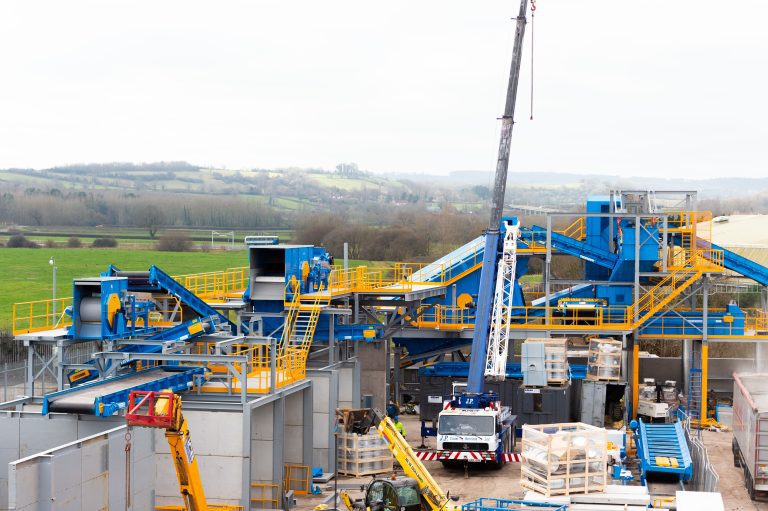
SPSenvirowall, a UK leading supplier of external wall insulation, render and facades, has secured BOPAS (Buildoffsite Property Assurance Scheme) accreditation for its innovative, rain screen cladding, RendaClad for the new build and offsite construction industry. RendaClad was developed for applying a non-structural and seamless rendered rain screen system to a

Read More »

R&M Williams delivering new housing development in Narbeth

A development of high-quality homes is being built in the Narbeth area, with local construction firm R&M Williams already starting work on the site. The Maes Yr Orsaf development will contain 19 four-bedroom properties and will comprise of private and affordable social housing, with work due for completion in 2019.

Read More »

How Can Thoughtful Construction Help Businesses Save on Energy Bills?

As the world looks to reduce its impact on the environment, one area that’s changing is construction. Governments and officials throughout the globe have started to introduce new guidelines for the construction of new buildings. Manufacturers need to be more mindful over the materials used and buildings now need to

Read More »

Ideal Commercial Free Commissioning Extended!

Ideal Commercial Boilers are pleased to announce the extension of their award winning Free Commissioning offer. Available on all Evomax, EVO S, Imax Xtra, Imax Xtra EL and Evomod condensing boiler ranges, Free Commissioning can be claimed on installations until 31 December 2019. Introduced in January 2018, this innovative service

Read More »

TECHNOLOGY DELIVERS CHANGE IN PROPERTY AND CONSTRUCTION PRACTICES

There is no doubt that the adoption of PropTech has grown during 2018.  Vicky Green, associate director in Trident’s Leeds office, explains: “Mobile data capture software is instrumental to Trident’s work today. On site, we access data efficiently using hand-held technology which we then upload to reporting software, ensuring that

Read More »
Latest Issue
Issue 343 : Aug 2026

Kenneth Booth

SPSenvirowall’s Journey to BOPAS Accreditation

SPSenvirowall, a UK leading supplier of external wall insulation, render and facades, has secured BOPAS (Buildoffsite Property Assurance Scheme) accreditation for its innovative, rain screen cladding, RendaClad for the new build and offsite construction industry. RendaClad was developed for applying a non-structural and seamless rendered rain screen system to a timber-framed substrate.  It replaces the need to build a structural masonry outer leaf that is finished with low-performance cementitious renders. RendaClad is a full façade system made up of many carefully selected components which have been rigorously tested and as an entire system makes up one of a very few BBA approved systems of its type which provides the reassurance that it will perform over the long term. The system ensures a fully ventilated and drained cavity is maintained within the wall structure, meeting the requirements of the NHBC and TRADA. The system can be applied to any wall structure, lightweight steel frame or masonry construction. SPSenvirowall is delighted that RendaClad is the first and currently only proprietary solution which has undergone the rigorous BOPAS accreditation process designed to give lenders and surveyors the assurance of the building materials utilised within a development. This has provided confidence to the market that the innovative concept has a minimum life expectancy of 60-years. This accreditation will allow SPSenvirowall to deliver its RendaClad system to offsite and modular developments, enabling the supply of a greater range of projects while providing the assurance required to satisfy mortgage lenders and their surveyors, meaning that the RendaClad system will last for a minimum of two mortgage cycles With the challenges brought by the government to build 250,000 homes per year, the demand for innovative or non-traditional methods of construction to replace poor quality and conventionally constructed homes has never been greater. BOPAS accreditation assures lenders, funders, valuers and purchasers that homes built from non-traditional means will be durable and deliver the quality required by the industry. About SPSenvirowall SPSenvirowall is a leading UK supplier of external wall insulation systems to the construction industry for new build and refurbishment applications. Supplying insulation systems, high-quality decorative renders, façades and rain screen cladding solutions, SPSenvirowall offers a value-added and integrated service to any construction project. To find out more about SPSenvirowall, visit www.spsenvirowall.co.uk or call 01535 661633. Media enquiries to Natasha Ives or Sarah Wason at SPSenvirowall on 0845 644 7081 or email natasha.ives@spsenvirowall or sarah.wason@spsenvirowall.co.uk

Read More »

R&M Williams delivering new housing development in Narbeth

A development of high-quality homes is being built in the Narbeth area, with local construction firm R&M Williams already starting work on the site. The Maes Yr Orsaf development will contain 19 four-bedroom properties and will comprise of private and affordable social housing, with work due for completion in 2019. Darryn Parry, managing director of R&M Williams said on the project: “We’re delighted to be providing new-build housing for residents in Narbeth this year. This is a highly sought after area for homeowners, particularly with the reputation Narbeth has for being a shopper’s haven and being so well connected to Haverfordwest, Tenby, Cardigan and Carmarthen. “The development will also be within close reach of Canaston Woods, which offers residents a wealth of opportunity for walking, cycling and horse riding so we expect that there will be high demand once the properties are open for occupancy.” The properties at Maes Yr Orsaf are set to be laid out over two floors, with three bedrooms on the second floor and the master bedroom in the attic with en suite attached.  Each property will be valued between £210-£240k and will be available for sale from 2019. Darryn added: “This is a great opportunity for more families to enjoy everything that Narbeth has to offer. The development of Maes Yr Orsaf has been designed to help provide quality, affordable housing for people in Pembrokeshire and attract new residents to the community. We’re very much looking forward to breaking ground on the project today.” R&M Williams is an award winning house builder which has construction, maintenance, development, mechanical and electrical installation, as well painting and decorating divisions, has experience across an extensive range of sectors and was recognised for its services to construction this year, earning a Local Authority Building Control Building Excellence Award and a silver Considerate Constructors National Site Award for its work on the Urban Quarter. For more information about the Maes Yr Orsaf Development, contact FBM Estate Agents in Narberth: https://www.fbm.co.uk/branches/narberth

Read More »

Prettys outlines why it’s essential to make a lawyer part of your toolkit …

The construction industry is booming. 2018 alone saw work valued at over £100 billion take place in the UK and the number of construction firms operating in the country rose by 6.2%.* In addition to the usual tools and equipment you’d expect to find in the toolkit of any operator in the industry there is something extra that needs to be considered to give your business the ultimate edge: a lawyer. The construction industry contends with a wide range of legal issues, each of which needs addressing swiftly by practitioners with a thorough understanding of that industry**. This is where leading law firm Prettys steps in. Based in Ipswich, the firm has experts in all areas of commercial law and an experienced Construction team that can provide responsive support on the full breadth of matters faced by businesses throughout the supply chain, both contentious and non-contentious. Rebecca Palmer, Senior Associate in Prettys’ Construction team gave her insights into how a lawyer can become an integral part of the toolkit of construction businesses of every tier of the supply chain. Solutions not problems Prettys’ lawyers tackle a variety of construction-based legal issues on a daily basis – from reviewing, negotiating and finalising documentation, to analysing the client’s position in respect of a brewing dispute and navigating the client through next steps. A client’s needs determine Prettys’ approach – sometimes the appropriate tools are a chisel and some sandpaper; on other occasions an axe may be called for!  Whatever the requirements, the team offers a bespoke package of services and a client-centred approach. The Construction team’s members make sure they are available for those ad hoc queries and present clients with solutions, not problems. Regular communication Prettys differentiates itself from competitors by delivering tailored solutions in a jargon-free way. This ensures letters are moulded to fit how they talk to their clients so that delivery is packaged in a manner that works for the client’s business. This could mean short emails with straight to the point bullets, phone calls or face-to-face visits. As well as this, to take away any administrative burden from the client, the team will ghost-write letters of correspondence on their behalf. Going above and beyond For many clients, Prettys acts as an instantly available helpline for any construction law issues they may have. The firm is very much an extension of its clients’ businesses. Price transparency is key. Prettys prioritises certainty for its clients and steers clear from issuing invoices that contain surprises. But it’s the level of support the client requires that dictates the level of input supplied – sometimes clients need urgent support, on other occasions all that is required is a quick chat and corroboration on an approach. Fighting for clients Prettys always puts clients’ interests at the forefront of everything it does. It is important to get the balance right between being approachable and friendly and being able to go into that tense negotiation ready to fight the client’s corner and achieve a timely solution. Prettys will not let clients be bullied. Moulding its service to match the needs of each and every client, Prettys’ lawyers pride themselves on being more than just providers of legal advice. Instead, they quickly become an extension of the clients’ own teams and share with everyone they work with the benefits of: industry-leading advice; commercial insight; cost effective solutions; one-to-one support; and exemplary levels of flexible, prompt and responsive service. The Construction team will be on hand to provide their expertise at The Doyle Club’s January event. The Doyle Club is an exclusive organisation that provides businesses within the construction sector the chance to network with others in the industry. The next meeting will take place on 3 January and see Rebecca and her colleague, Michael Booth, deliver a presentation on updates in Construction law in 2018. For more information on Prettys’ construction team, get in touch by calling 07770 287 967 or email rpalmer@prettys.co.uk. Sources: *https://www.ons.gov.uk/businessindustryandtrade/constructionindustry/articles/constructionstatistics/number192018edition    **Thomson Reuters and The Lawyer’s report entitled “Standing out from the crowd: What businesses value most from their law firms”

Read More »

Lafarge Cement calls on housebuilders to respond to weak mortar reports

Lafarge Cement, part of the Aggregate Industries business, is calling on housebuilders to insist on tighter controls around the use of mortar, following claims that the use of substandard product is causing damage to hundreds of new homes. The report by the BBC focused on the use of weak mortar – not meeting required industry standards – leading to crumbling found in properties across 13 estates in the UK[1]. The news has caused widespread concern amongst residents and across the construction industry. Jeremy Lee, Commercial Director at Lafarge Cement, comments: “This latest report is concerning, especially as it has been identified as a potential industry-wide problem affecting hundreds of homes. As acknowledged by the BBC, mortar performance is a complex issue, with a myriad of factors including weather and correct specification and application having a potential detrimental impact. “However, this is why it’s critical that all building products, including mortar, meet required industry standards – which according to the NHBC should be one part cement to 5.5 parts sand for most of the UK but for areas that experience extreme weather conditions such as Scotland, it’s recommended that a higher proportion of cement is used to increase durability. “Building standards are in place for a reason and tighter controls are needed to ensure that the correct products are specified, as well as being mixed and applied properly on-site.  From housebuilders to the wider industry, it is everyone’s responsibility to ensure that adequate and suitable products are used, through a robust specification process and due diligence during all stages of the construction process.” As part of Aggregate Industries, Lafarge Cement offers a solutions-based packed cement portfolio, underpinned by robust technical knowledge and the latest product innovation. Through continual research and development with builders and builders’ merchants deployed by a highly skilled team, Lafarge Cement has an unrivalled track record for customer-focused innovation in cement products. The range includes the premixed and ready to use Mortar Mixed product, which is made up of a selected blend of cement, lime and aggregates and is suitable for laying all types of brick and block. For further information, please call 01285 646900, email packedcement@aggregate.com or visit www.aggregate.com [1] https://www.bbc.co.uk/news/business-46454844

Read More »

Work starts on new £6.8 million residential development in Coventry City Centre

A Coventry company has started work on the final piece in its Belgrade Plaza jigsaw – 12 years on from its first development in the area. Deeley Construction has been appointed to complete a new £6.8 million development on Bond Street in Coventry City Centre. The project, which will be known as Bond’s Lodge, has broken ground and is expected to be completed by April 2020. Coventry Church (Municipal) Charities has appointed Deeley Construction to carry out the project, which has been designed by Nicol Thomas Architects. The completed scheme will see a three-storey building erected, featuring 45 self-contained apartments for the elderly. It marks the company’s first project awarded from Homes England’s DPP3 Framework. It is being funded from the Coventry Church (Municipal) Charities’ own resources, fundraising, together with a grant from Homes England and a loan from the Charity Bank. The Almshouses, now run by Coventry Church (Municipal) Charities, were founded in the early 1500s and today are both sheltered housing schemes for elderly citizens in the city. Since the Second World War, the charity has engaged in two major projects in Hill Street, the building of Bond’s Court in 1985 and the extension of Bond’s Hospital in 2004. With the completion of Bond’s Lodge, the number of residents will have risen from 22 in 1509 to more than 150 in 2020. Victor Keene MBE, Chairman of Coventry Church (Municipal) Charities, added: “We have acquired the long lease of a site opposite Bond’s Hospital Almshouse, which will see 45 apartments built for the elderly. “We have engaged Deeley Construction as the building contractor on this project and are very happy to be working with a company of Deeley’s integrity to complete it. “Work is now underway on site and we expect it to be completed, with the flats ready for occupation, in the autumn of 2020.” The project is the third development carried out by Deeley in the area, with the nearby multi-storey car park completed 12 years ago and the Belgrade Plaza development in 2008. Belgrade Plaza is now a thriving mixed-use scheme, home to restaurants, residential and fitness facilities – serving the community in Coventry city centre. Peter Deeley, Managing Director of the Deeley Group, said: “The ground-breaking at Bond Street marks an important milestone in the company’s development of the area. “The apartments created in this development will be a vital resource for elderly people who are looking to live in the city centre. “We’re looking forward to working in partnership with Coventry Church Municipal Charities to deliver this project.” Councillor John Blundell, Lord Mayor of Coventry, added: “There is a clear need for more accommodation of this type in our city centre and the development on Bond Street will help to cater for this need. “Coventry Church (Municipal) Charities have done some excellent work in regenerating properties across the city, including the Bond’s Hospital, and providing homes for the elderly. “It was fantastic to be on hand with the charity and Deeley Construction to mark the start of building this development.”

Read More »

How Can Thoughtful Construction Help Businesses Save on Energy Bills?

As the world looks to reduce its impact on the environment, one area that’s changing is construction. Governments and officials throughout the globe have started to introduce new guidelines for the construction of new buildings. Manufacturers need to be more mindful over the materials used and buildings now need to feature a more sustainable design in order to meet new regulations. It’s not just the environment which can benefit from more thoughtful construction. Businesses could also feel the benefits, particularly in their pockets! Here, we’ll look at how more thoughtful construction can help businesses to save on their energy bills. Insulating warehouses One of the biggest costs’ businesses face is keeping their warehouses at adequate temperatures. They are renowned for being cold and when built incorrectly, can waste a lot of energy throughout the year. This is where insulation comes in really useful. Adding high-quality insulation into warehouses can help to trap the heat in, reducing the strain on heating systems. It can also keep the warehouse cooler in the summer months too, ensuring more heat is kept outdoors. Using air source heat pumps Speaking of heating, if businesses switched to air source heat pumps, they could save over 50% on their energy bills. They’re efficient, cost effective and renewable, making them an excellent choice for new buildings. These types of heating systems can even eliminate the need for a gas boiler, electric, oil and LPG. It’s thought that using air source heat pumps can save thousands of pounds for businesses each year. Efficient lighting controls A simple thoughtful construction element which could also save businesses money on their energy bills, is the use of efficient lighting controls. Using sensors, timers and lighting controls can make significant cost reductions, as well as proving to be much better for the environment. Of course, even in existing buildings cost savings can still be delivered through the use of energy management. Companies such as Utilitywise, can ensure businesses have the best energy deals. Overall, thoughtful construction can help to really lower business energy costs. The above is just some of the ways new buildings can be constructed with energy savings in mind. Adding insulation and switching to more efficient heating systems such as air source heat pumps are both great examples of how small installations can make a huge difference to a company’s energy bills.

Read More »

Ideal Commercial Free Commissioning Extended!

Ideal Commercial Boilers are pleased to announce the extension of their award winning Free Commissioning offer. Available on all Evomax, EVO S, Imax Xtra, Imax Xtra EL and Evomod condensing boiler ranges, Free Commissioning can be claimed on installations until 31 December 2019. Introduced in January 2018, this innovative service offering was an industry first and has made a major impact on specifiers, merchants and installers. Not only does it reduce customer costs, commissioning carried out by Ideal Commercial ensures that boilers are operating correctly and activates the warranty, which can be up to 5 years*. “Free Commissioning is a fantastic offer which further positions Ideal Commercial as the market leader for Commercial boilers in the UK” said Andy Forrest, National Sales Manager. “No other competitor can offer the benefit of Free Commissioning across such a broad range of boilers, ranging from 30kW up to 1240kW.” To apply for Free Commissioning on an installation, customers simply have to complete a straightforward online form which is sent directly to Ideal Commercial’s Customer Service team. Bookings are then confirmed via email or telephone. The game changing nature of the Free Commissioning offer was recognised by national merchant BSS, who gave it their Business Initiative of the Year award in 2018. Full terms and conditions and more information on Ideal Commercial Boilers and their range of products can be found on the Ideal Commercial website: www.idealcommercialboilers.com. Ideal Commercial boilers are available from merchants across the UK. * 5 year warranty available on Evomax and EVO S boilers. 5 year warranty subject to Terms and Conditions. 5 years parts and labour warranty available subject to being commissioned by Ideal Boilers. 2 year warranty available on Imax Xtra, Imax Xtra EL and Evomod boilers.

Read More »

TECHNOLOGY DELIVERS CHANGE IN PROPERTY AND CONSTRUCTION PRACTICES

There is no doubt that the adoption of PropTech has grown during 2018.  Vicky Green, associate director in Trident’s Leeds office, explains: “Mobile data capture software is instrumental to Trident’s work today. On site, we access data efficiently using hand-held technology which we then upload to reporting software, ensuring that a consistent structure is followed and the risk of error is substantially reduced. “Our data capture software collects and compares data with predefined element lists and produces tailored outputs to suit reporting requirements, prioritising expenditure over a specified period. Due to the element grades being consistent and predefined, the software allows for more intelligent decisions to be made across portfolios, often resulting in significant cost savings. Data capture software also allows for rapid data analysis and document preparation, resulting in a faster turnaround. “In addition to increasing efficiencies, this means of reporting enables a greater understanding of the issues and the ability to isolate elements, sub elements, grades or priorities. It allows a building owner or manager to group costs by region or across their entire portfolio, creating greater efficiencies and to budget and prioritise expenditure more effectively and to put in place larger scale programmes of work. Furthermore, the ability for companies to analyse the cost of maintenance versus capital expenditure creates greater transparency in budgeting, as well as bringing to light the efficiency of their current maintenance suppliers/contracts.” So where will the technology take us next? Vicky says: “We are also exploring the use of 3D photography, which enables various sets of data to be linked to a 3D format and as such, links planned preventative maintenance (PPM) to BIM. 3D cameras have substantial benefits. Take working at height, for example. Accessing rooflines, fascias and guttering is a perpetual problem for many property maintenance professionals. Scaffolding and cherry-pickers can be prohibitively expensive and even then are sometimes unsuitable. ”Faced with exactly this dilemma, we recently carried out a series of PPM surveys for a client with unusually remote and inaccessible property assets but were able to capture all of the information using drone technology. Drones have the substantial benefit of not only providing an immediate, cost effective solution, but can photograph remote locations with virtually no disruption. “As a result of data provision through images, cloud surveys and more accurate surveying of existing buildings, BIM – once the province of just building designers – is now increasingly links to both PPM and facilities management, causing efficiencies for each. The benefits of BIM are unparalleled, particularly when a substantial survey needs to be undertaken while the building remains occupied. “And as the Internet of Things becomes more widely used it is inevitable that a building’s plant will communicate directly into PPM reporting and scheduling. “In the last year alone we have seen considerable change in the way in which building consultancy can benefit from technology and we anticipate many more positive changes in the years ahead.” Rights of light There is no doubt that a right to light has become of increasing importance. This was exacerbated following the publication of the Government’s revised National Planning Policy Framework (NPPF) in July, which states that, “When considering applications for housing, authorities should take a flexible approach in applying policies or guidance relating to daylight and sunlight, where they would otherwise inhibit making efficient use of a site.” It is no coincidence that Trident created a new Rights of Light team in 2018. The team is led by Dan Wade, director in Trident’s London office, who comments, “The need for the new service line follows evolving case law and changes to planning policy (both nationally and locally). The main issue today is building tall in city centres. What does this mean for existing affected neighbours and future developers and investors? How will they all stand together? Cooperation and clear communication are key but that’s just the basics. Rights of light assessments get into the finer detail and are something that Trident now deals with.” So, how is it done? “Technology plays a vital part in measuring impact. The future for this service will incorporate PropTech which makes each job more efficient, more accurate and easier to understand. In fact, modern technology methods such as radiance assessments are ahead of those required in current legislation. “As this technology evolves and increasingly integrates with technology such as BIM, I can see it used to better visualise complex data. Working alongside other service lines, such as architecture and project management, we can identify issues in the design stage to allow architects to incorporate design features to combat these issues. This increases our ability to deliver projects on time and on budget too. The use of technology allows us to react to last minute changes and it can speed up what is a complicated process.”  The future of office design Architects and designers are repeatedly tasked with generating innovative office designs to tempt an evolving and increasingly diverse workforce. Kim Benam, associate director in Trident’s London office explains: “Increasingly, we are asked to future-proof offices for a new generation of workers. Both Cat A and Cat B design are evolving to suit new ways of working by maximising flexibility and providing multiple ways of occupying workspaces. And as the debate between open and cellular offices continues, so does the research. Desk modules are rapidly reducing in size with shared storage zones, but designs need to be mindful of a human’s need for personal space and privacy. To combat this, soft zones, private booths and even restorative spaces to support people’s cognitive health are becoming key features of office design. This is balanced with areas for teams to congregate and to generate social interaction. The freedom for workers to roam the office to find the right balance of both social and private time, and even preferred room temperature, is also embraced in current workplace trends.”  A multi-disciplinary approach to building consultancy With the recent addition of Architecture and Rights of Light to the Trident offer, the

Read More »

The technology helping to prevent accidents in the construction industry

The construction industry continues to thrive throughout the world, with the global market expected to grow in value by 85% to 15.5 trillion US dollars by 2030. Yet while the industry flourishes, one of the biggest issues it faces is that of safety in the workplace where the number of injuries and fatalities caused by accidents on worksites continues to cause alarm. In the UK, just over 2.73 million people are employed in construction sector jobs. According to the Health and Safety Executive, there were 196 fatalities in the construction industry in Great Britain in the five years to 2017. Of these, 10% were struck by workers being struck by a moving vehicle. Statistics also showed that of the 5,055 non-fatal accidents during 2016/2017, 13% were struck by moving objects. Research shows that workers in the construction industry are at risk in a number of areas. These include: ·         Collisions due to rear, front and side blind spots ·         Collisions due to poor visibility, such as dust, fog, and working at night ·         Site workers being struck by vehicles and mobile machines ·         Ear defenders reducing site workers’ ability to hear clearly approaching vehicles ·         Tonal back-up alarms being ignored by site workers In the high-risk construction industry, organisations have a duty to safeguard their workers. Although many countries are required to comply with their own health and safety standards, organisations are increasingly choosing to invest in enhanced safety systems to protect their workers and keep their reputations intact. Technology innovations On construction sites, the need for safety is paramount, particularly as the slightest mistake can have devastating consequences. The latest innovations in technology mean many of these accidents can be prevented. A range of safety systems are available to assist construction companies in keeping their staff safe. On-board camera systems can help to alert drivers to possible dangers, while reversing and warning alarms alert workers when a vehicle is manoeuvring near them. Brigade’s reversing alarms harness high-spec broadband sound frequency, emitting a wide range of white sound frequencies. These enable workers to locate the direction of the sounds instantly. Rather than the old style ‘beep beep’, Brigade’s bbs-tek® White Sound® reversing alarms create a ‘ssh-ssh’ sound, which dissipates quickly. This means the alarm can only be heard in the danger zone, so there is more chance of alarm-weary workers paying attention. The broadband frequency also gives workers wearing ear protection devices a better chance of hearing the alarm. Sensing risk Blind spots on large worksite vehicles and machinery can be particularly deadly. The front, rear and nearside are problematic areas of vehicles, particularly those with elevated driver positions. Harsh construction site terrains, where thick dust and mud often decrease visibility even more, further increase the risk of accidents.  Radar systems, such as Brigade’s latest Backsense® Radar sensor system (BS-8000), alert the operator to potential risks. Backsense® works by emitting a continuous-wave radar that is faster than pulsed-radar products. Some detection systems can produce false alerts, which can lead to frustration for the driver, resulting in genuine alerts being disregarded. Continuous-wave radar protects against false alerts, thanks to the controlled beam pattern, which can be programmed, allowing organisations to fix a bespoke detection area specifically suited to their needs.  When a moving or stationary object is detected, the driver is given an in-cab visual display plus an audible warning. Another advantage installing a radar system is that, unlike cameras, they will continue to function at optimum levels even in the harshest of conditions, such as rain, fog and snow. As technology moves forward, systems are being developed to address the need for multiple sensors which have the ability to cover large, complex blind spot areas. Backsense® Network Radar allows organisations to connect and link up to eight sensors. This system provides object detection in CAN (Controller Area Network) gateway to display data on control panels on the vehicle and possible trigger outputs. While it may not be possible to eliminate every element of risk when manoeuvring heavy plant and machinery, radar obstacle detection is a step forward in protecting the lives of vehicle operators and those who work around them.

Read More »

Is it time for the construction industry to adopt alcohol and drugs screening legislation?

Suzannah Robin, alcohol and drug safety expert at AlcoDigital, has helped numerous companies to address their alcohol and drugs testing requirements. She explains why implementing testing policies and procedures will help to improve workplace safety. Alcohol and drugs misuse is becoming something of a thorny issue for the UK construction sector. For reasons that aren’t fully understood, the industry has been identified as ‘higher risk’ in terms of drug use, and more than a third of construction workers say they have witnessed a colleague under the influence of drugs or alcohol. According to a survey carried out by risk assessors protecting.co.uk on employees from a range of sectors, nearly a third admitted to using drugs at work. A significant number claimed to be ‘under the influence’ every working day. In fact, many of those admitting to taking drugs were using cannabis or other illegal narcotics. Despite the availability and increasing use of screening tests, around 65% of workers say they have never been tested, while a quarter said they had been tired at work because of the effects of drugs or alcohol. Construction is the most dangerous industry to work within in the UK. There were 38 fatalities in the past year, according to provisional figures issued by the Health and Safety Executive. Falls from a height were the most common cause of death, followed by being struck by moving vehicles or objects. In terms of non-fatal injuries, there are 58,000 incidents each year, and there are 82,000 work-related ill-health cases. Of these ill-health cases, 62% were caused by musculoskeletal disorders and 25% were caused by stress, depression and anxiety. This is significant as these conditions have been linked with the use of drugs and alcohol. While there is no data available to establish if any of these incidents were related to drugs or alcohol, it seems likely that they may have played a part in a proportion of cases.  Screening and the law So what is the law for workplace testing in construction? Testing is legislated for in certain sectors, such as the aviation, rail and shipping industries. But while most larger companies now have a policy in place to deal with drug and alcohol misuse in the workplace, the construction industry is not legally required to enforce testing. However, employers do have a duty of care to maintain a safe working environment under the provisions of the Health and Safety at Work Act. If methods for detecting misuse are not implemented and an accident occurs, employers could face hefty fines or even be prosecuted. In the high-risk construction industry, it’s therefore vital that a robust policy is introduced. Evidential tests For high associated risk industries, it’s recommended that drugs and alcohol testing is carried out on a regular basis. For alcohol testing, a range of professional police-grade breathalysers are available for screening workers, such as AlcoDigital’s AlcoSaber (£295 + VAT), that will provide quick, accurate and instantaneous results. Alcohol interlocks are also available, which prevent equipment or machinery from starting until a negative breath test has been given. For many years, urine tests have been used as a reliable and cost-effective form of drug testing, providing instant results. This is useful for random testing and can serve as a deterrent to employees. However, urine tests often fail to reveal if an individual has consumed drugs in the last two hours. Blood testing is the most accurate method of establishing what drugs are in a person’s system – but the medical training and laboratory analysis required mean it’s impractical for regular testing policy. Hair testing can provide historical data of what drugs a person has used – but not from the most recent few weeks. For this reason, oral fluid collection has been established as the most practical method for drug-testing. With a far simpler collection process and a window of detection that mimics that of blood testing, this is the method of choice for UK Police roadside testing. Action is needed Over the last decade, huge progress has been made in terms of tackling illegal drug use and alcohol abuse in the workplace. Now it’s time for the construction industry to address the issues head-on and direct their attention towards putting in place policies and practices to make drug and alcohol screening compulsory across the industry.

Read More »