Kenneth Booth

5 Basic Questions to Start Designing Your Dream Pool

Every year seems to bring with it an even hotter summer heatwave than the year before, encouraging homeowners to find new ways to keep their families cool. With this trend showing no signs of stopping, now could be your chance to make a huge difference to your home and install

Read More »

Preventing Septic Disasters

When it comes to sewer and septic systems, most of us would rather “flush it and forget it”, and this is a technique that we adopt…….until a problem arises. When the stuff hits the fan, and you find yourself with a spongy, smelly lawn, drainage problems and slow draining sinks

Read More »

New British Standard guides bring door hardware professionals up-to-date

A raft of revised British Standards has prompted the publication of three new technical guides from the Guild of Architectural Ironmongers (GAI) for door and window hardware specialists. BS 3621: 2017 specifies the performance requirements and test methods for a thief-resistant mechanically operated single-point lock assembly. It gives ironmongers clarification

Read More »

BIFM Scotland Chair Sandy McNaughton, Integral UK Business Development Director Mark Whittaker, NHS Grampian, Preston Gan confirmed to speak at Facilities Scotland 2018

Facilities Scotland, the only b2b exhibition dedicated to Scotland’s FM and workplace industry, has announced leading FM voices who will speak as part of the 2018 conference programme, when the show returns to the SEC, Glasgow on the 12 and 13 September 2018. Mark Whittaker, business development manager at Integral

Read More »

Long service and GAI qualified staff celebrated at IronmongeryDirect

The UK’s largest online ironmongery supplier, IronmongeryDirect, has been recognising some of its most long-serving staff. A series of awards have been recently presented to employees who have worked for the Basildon-based company for over 10 years. Sue James, Senior Contact Centre Advisor, celebrated her 21st work anniversary at the

Read More »

Forticrete hosts inaugural Roofing Forum

Innovate, invest and improve were the key themes at the inaugural Forticrete Roofing Forum. The event, held at the Forest of Arden last week (July 4), was attended by more than 50 people from across the roofing industry. As well as updates on company activity and the state of the market, a number

Read More »

The secrets of building eco-friendly construction

With environmentally friendly, recycle and green energy becoming a priority across the entire world, it’s no wonder that more and more architects and construction specialists are focusing on introducing eco-friendly building designs. Buildings are getting designed in a manner that considers their environmental impact from the start, and even the

Read More »

Housing association launches £2.4bn fire safety framework

Framework Initiative will be made available to public bodies across England and Wales. A London housing association has launched a £2.4bn framework for public bodies to use for fire safety remediation works. Hyde Fire Safety Works and Services Framework, which is being procured by Hyde Housing Association, will cover a range

Read More »
Latest Issue
Issue 344 : Sep 2026

Kenneth Booth

Modern Plasterboard: We’ve Come a Long Way from Lath and Plaster

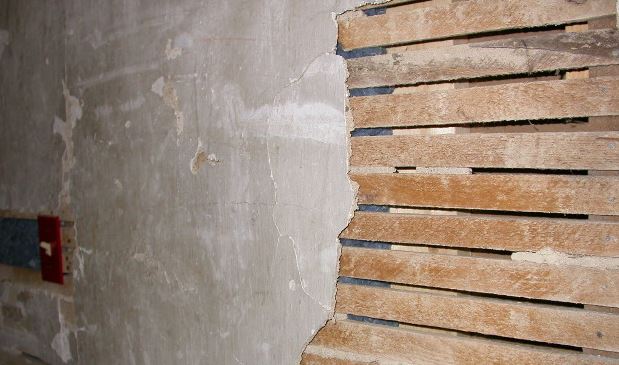
Whether you’ve plastered a room in your home or you’re a plasterer by trade, you’ll appreciate that this is a task that requires a fair bit of skill and dexterity to create a smooth and appropriate finish. Today though we’re fortunate enough to have the tools and materials that can make achieving such results a little bit easier – particularly compared to the old lath and plaster methods which certainly proved problematic. Lath and Plaster Lath and plaster used to be the main method builders and tradespeople used to finish interior walls and ceilings up until around the 1950s. This would see wood laths (strips or boards of wood) being nailed between the joists or wall studs to create the backing of the wall with a gap between each one. This gap would then be filled by a first layer of plaster with the plasterer applying it with a board to force it to spread between the slots. After this, another layer of plaster would be applied to coat the wall, before a third and final smoothing layer would be put on and allowed to dry before the wall would get painted. The Problems As effective as this might have been for creating interior walls and ceilings, the main problems that people encountered were that this method often ended up taking a long time. What’s more, by having numerous layers of plaster, it also meant that the whole plastering process could end up being quite an expensive task. Modern Plasterboard Thankfully, we now have modern plasterboard which only a few decades ago helped revolutionise plastering and offer additional usages. As well as simply being a faster means of plastering, the range and materials we can buy now can offer aspects like additional soundproofing, insulation and an easier finish. From a trade perspective it can also therefore offer customers greater value for money, while of course meaning more jobs can be done in a shorter timescale. Final Thoughts While modern plastering is better and quicker, it’s still not something to be taken for granted. As alluded to above, it takes a skilled hand to master plastering, so a final consideration here for those looking to build or renovate a room themselves is to make sure you get the right equipment, gear and know-how first. This will help ensure you get the best results in next to no time.

Read More »

5 Basic Questions to Start Designing Your Dream Pool

Every year seems to bring with it an even hotter summer heatwave than the year before, encouraging homeowners to find new ways to keep their families cool. With this trend showing no signs of stopping, now could be your chance to make a huge difference to your home and install a Dream pool. Swimming pools are fun for the whole family. Kids of all ages are more than happy to spend their entire school holidays splashing around, while parents can enjoy a refreshing dip without having to brave the local lido or queues for the beach. If you’ve been toying with the idea of installing a pool in your garden but aren’t sure where to start, here are the five essential questions to help you work out the best pool for your family. Who is it for? The first question you have to ask yourself is simple: who will be using the pool the most? If you’re thinking about using it as a way to keep growing children throughout the summer, you should be looking at very different design features than if the pool is intended for fitness.   When it comes to designing your pool (and the area around your pool), use the people who will be swimming in it the most to inform any features you might want to install for safety or convenience. For example, if you have little ones running around then a high fence and a lockable gate is a must. You will also want the pool to be in an area of the garden that can be easily supervised. On the other hand, a deep pool will be better for older children, and a pool in an adult-only residence can afford to be a little more design-led and hidden away from the rest of the building. What is it for? Similar to the first question, considering what the pool is intended for will dictate certain factors like its size, depth and leisure accessories. A pool for children should have a generous shallow end, multiple exit points and a hand or foot-hold around the edge. If you want to use your pool for entertaining, you may want to incorporate luxurious features like a tanning ledge, jacuzzi area or in-built parasols. Fitness pools will be focused towards performance – you could even opt for a lap pool, as size and depth are less of an issue. Where is it going? Choosing a location for your pool is important. Not only do you need to take into account obvious factors like its size and shape, but you will also need to think about how its sun exposure and how its position will impact the safe use of the rest of your outdoor space. Ideally, you want your pool to catch as much sun during the late morning and throughout the afternoon. This will make the water slightly warmer during use and make it a refreshing place to take a dip during the warmest parts of the day. Don’t forget to think about the dry areas you want around the pool, for lounging, dining or entertaining.   Will you be building a designated pool area, where you can store accessories, toys and any drinks and snacks you might want when you’re lounging? If not, think about your route back to the house or shed and whether there’s an efficient pathway you could build. How quickly do you want it? Above-ground pools might not look as streamlined as an in-ground design, but they will be much, much quicker to install. Additionally, the larger and deeper you expect your pool to be, the longer it will take to construct, and certain materials are faster to install than others. With this in mind, think about how much you are willing to compromise in terms of build schedule, price and aesthetic in order to get your pool installed quickly. You may want to consult with a specialist firm who use the latest technology to reduce installation times, with carbon ceramic materials and fast pool builders. How much upkeep are you prepared for? The depth and size of your pool usually correlate to the amount of upkeep it’s going to require, although its construction material will be a factor, too. Vinyl pools are inexpensive and easy to keep clean, but are prone to leaks and will need replacing every 3-7 years. Concrete is a porous material so, if you leave it unfinished, your pool will need to be kept meticulously clean to prevent bacteria growth. Fibreglass is a popular option for both affordability and ease of maintenance. Pool types that require less maintenance include lap pools and natural pools. Lap pools are simply easier to manage due to their modest size, while natural pools utilise a reed-based filtration system that keeps water clean without using chemicals. If you don’t want the upkeep of a regular pool, consider these options.   Building a pool is an investment and may not suit every household, particularly in the UK. However, their contribution to fun, fitness and leisure means that once you take the plunge, you’re sure to love your pool for years to come.


Read More »

Preventing Septic Disasters

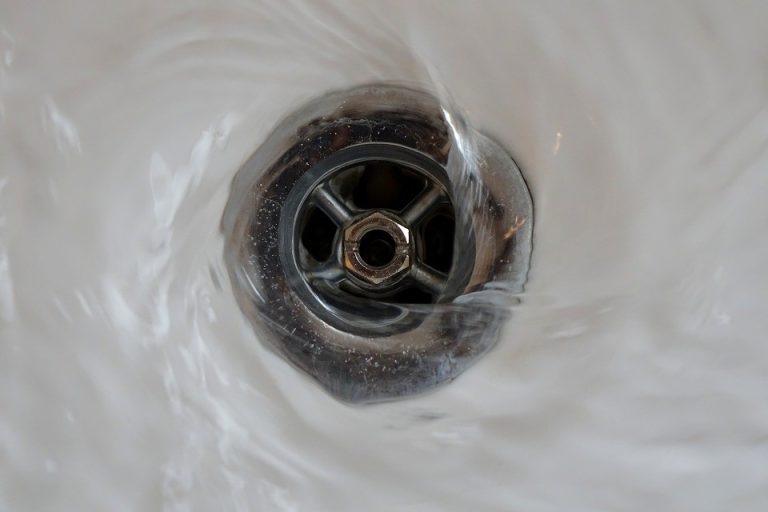
When it comes to sewer and septic systems, most of us would rather “flush it and forget it”, and this is a technique that we adopt…….until a problem arises. When the stuff hits the fan, and you find yourself with a spongy, smelly lawn, drainage problems and slow draining sinks and hard to flush toilets, your septic situation has reached its breaking point, and it’s time to call in experts for drainage help and repair, which can be quite costly. To avoid a huge septic system overhaul and a resulting large bill in your future, consider some simple things you can do at home–routine maintenance, if you will–to prevent septic disasters from happening in and around your home. How Do I Know When I Have Septic System Issues? Here are some telltale signs that your septic system needs some extra attention:   Gurgling pipes. If your pipes sing more than you do in your morning shower, chances are that you are experiencing a backup somewhere along the line. Healthy pipes are quiet pipes; have this issue looked into as soon as possible.   Slow flushing toilets. The occasional bathroom clog is to be expected, but a toilet that is regularly backing up and not flushing without the assistance of a plunger is a sign of a larger problem.   Slow drains. Slow draining sinks, baths, and showers are an indicator that your system is draining slower than usual. Making sure that extra items don’t accidentally find their way into your sewer system, like children’s toys, excess food and trash, and bathroom waste other than septic approved toilet paper will ensure that you maintain a good healthy flow away from, not into, your house.   Water backup. Water backup anywhere in the house, in a sink, tub, shower, or in the floor drain near the washing machine is an indication that something is plugged and failing to drain. This is one of the worst symptoms of system failure; contact an expert for excavation as soon as possible.   Bad odors. Do you smell rotten eggs in the basement? Something’s not right, and excessive odors can lead to respiratory problems if not addressed.   Greener grass near the drainage tank. Greener grass means that those patches are getting the benefit of extra “fertilizer”, which is an indication that there may be a leak in your septic system.   Standing, smelly water. A spongy lawn or patches of standing water on the lawn are a sanitation issue, and these patches must be drained and cleared off so that your septic system can function normally once more. What Can I Do to Prevent Disasters? There is no need to experience these unsavory conditions in and around your home; implementing a few simple preventative measures will ensure that your septic system maintains its integrity in between professional cleanings: Pump it out regularly Routine pumping is essential to clear the way for new waste. There will ALWAYS be an abundance of waste, so maintaining the health of your system by pumping it out every one to three years will keep things “moving along the pipe”. Responsible flushing Perhaps the biggest culprit to a faulty septic system function is the disposal of improper items down the toilet. Items like cosmetic and baby wipes, cotton balls, feminine hygiene products, and paper towels should never be flushed. Use only septic system approved toilet paper, and keep a close eye on those little children’s toys–they are sneaky! Inspect your drainage field While your grass in the drainage field may be a lovely shade of green, that is not an indicator of septic system health. Areas that are soft, spongy, and contain standing water indicate that there are issues with the system. Odors accompanying excess moisture are also an indicator that trouble is brewing; at the first sign of a spongy lawn or offensive odor, call in septic experts to assess the problem. Add an automated detection system Installing a liquid level sensor in your septic tank will allow you hands free monitoring of your septic tank. When the liquid reaches dangerous levels, your system will indicate to you that attention is needed. Providing an early detection system will give you time to plan your cleanup strategy.   Keeping on top of your septic system by looking for signs of slow drainage, leakage, or damage to the drainage field will ensure that you maintain its integrity for years to come. When in doubt, call in the experts for an assessment of your system and its unique needs.

Read More »

New British Standard guides bring door hardware professionals up-to-date

A raft of revised British Standards has prompted the publication of three new technical guides from the Guild of Architectural Ironmongers (GAI) for door and window hardware specialists. BS 3621: 2017 specifies the performance requirements and test methods for a thief-resistant mechanically operated single-point lock assembly. It gives ironmongers clarification on how to conform to BS 3621 and the classification for locks in respect of other British and European standards. BS 8613: 2017 covers Finger Protection Devices for Pedestrian Doors. It will help specifiers, architects, facilities managers, health and safety and risk assessment professionals to select the appropriate finger protection products to prevent entrapment at the hanging stile of doors. In January 2018 BS 8300 was revised and the 2009 version was withdrawn. The 2018 version was split in to two standards, one covering the design of an accessible and inclusive built external environment and the other on the design of an accessible and inclusive built internal environment. The Guild’s new technical guide on this particular standard focuses on the second topic as it is the most relevant to the architectural ironmongery industry. It gives an overview of the history of accessibility legislation and goes on to give further detail about specific ironmongery products to which this that this standard applies. Douglas Masterson, GAI technical manager, says: “Architectural ironmongery companies play a crucial role, working with architects, contractors and others to schedule and specify the hardware for every door and window in a building and to produce a full fixing schedule of hardware items. So it is important that our members are up-to-date with the latest standards.” To access the latest technical briefings, go to the membership area of the GAI website: www.gai.org.uk   For further information, contact Douglas Masterson on technical@gai.org.uk.

Read More »

BIFM Scotland Chair Sandy McNaughton, Integral UK Business Development Director Mark Whittaker, NHS Grampian, Preston Gan confirmed to speak at Facilities Scotland 2018

Facilities Scotland, the only b2b exhibition dedicated to Scotland’s FM and workplace industry, has announced leading FM voices who will speak as part of the 2018 conference programme, when the show returns to the SEC, Glasgow on the 12 and 13 September 2018. Mark Whittaker, business development manager at Integral UK, and BIFM North Region chair joins Sandy McNaughton, BIFM Scotland chair and Lee James, business development director, Churchill Services in the opening keynote session titled Can Scottish FM plot a new value-driven path for the sector? In this session, the panel will draw on their extensive industry experience to discuss what lessons can be learnt from the recent failures in the FM sector, and the necessary steps the industry must take to reinvigorate FM. In his session Strategic FM and the importance of the informed client, Preston Gan, head of business services and strategy at NHS Grampian and winner of the 2017 BIFM Scotland FM Professional of the Year Award, considers how FM can support corporate strategy with the importance of the informed client function to help ‘fuel’ the FM strategy in optimising and adding value to the benefit the overall organisation. Under the theme, ‘Building the Scottish FM powerhouse’, the Facilities Scotland 2018 seminar programme promises to showcase the very best of Scottish FM, panel debates on the latest trends shaping the FM market in the region and beyond and a series of talks that will help facilities managers enhance their CPD. Tim Else, director of Facilities Scotland said: “There is a plethora of fantastic work in the FM sector which is over overshadowed by the extensive negative coverage in the national press.” “The Facilities Scotland 2018 free seminar programme, aims to provide Scottish facilities professionals with access to an extensive two-day programme of sessions featuring a wealth of both technical presentations to help FM’s in their personal development, and industry discussions to help the advancement of the sector in Scotland.” Free registration for the event is now open. Visit www.facilitiesevents.com/scotland for more information.

Read More »

Long service and GAI qualified staff celebrated at IronmongeryDirect

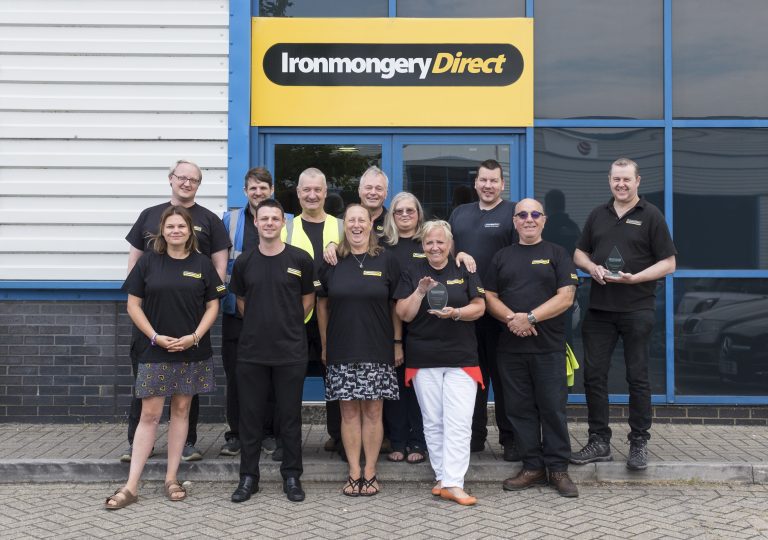
The UK’s largest online ironmongery supplier, IronmongeryDirect, has been recognising some of its most long-serving staff. A series of awards have been recently presented to employees who have worked for the Basildon-based company for over 10 years. Sue James, Senior Contact Centre Advisor, celebrated her 21st work anniversary at the end of June. She said: “I am very proud to have worked for IronmongeryDirect for such a long period of time. It’s a fantastic place to work, and I must have spoken to thousands of customers. The job brings me the satisfaction of knowing that I’m helping each tradesperson find what they need for their business or to improve their home.” Other long serving staff include, Jim Cook, Distribution Centre Team Member (17 years), Keith Harrod, Category Assistant (16 years), Debbie Butler, Executive Contact Centre Advisor (14 years), Norman Calvin, IT Support Analyst (13 years), Andrew Patey, Distribution Centre Team Member (12 years), Tom Ramshaw, Operations Director (11 years), Stuart Caddle, Distribution Centre Team Manager (11 years), Jamie Johnson, Senior Category Manager (11 years), Keith Gray, Distribution Centre Productivity & Project Manager (11 years), Terry Greene, Distribution Centre Team Member (11 years), Lance Warner, Distribution Centre Team Member (11 years), Angela Spelman, Executive Contact Centre Advisor (11 years), Gillian Thurkettle, Distribution Centre Team Member (10 years), Wayne Lysaght-Mason, Managing Director (10 years) and Victoria Gregory, Contact Centre Advisor (10 years). Wayne Lysaght-Mason, Managing Director at IronmongeryDirect, has headed up the company for more than a decade, added: “We wanted to make sure that our staff knew how much their hard work and efforts are appreciated. Many of our staff have dedicated many years of their professional lives to the business and have seen IronmongeryDirect transform and advance a great deal. Without them and all of our staff, our success would not be possible.” IronmongeryDirect has also announced that more staff are now GAI (Guild of Architectural Ironmongers) level 2 qualified, enabling them to provide enhanced in-depth technical assistance and support to customers.

Read More »

Forticrete hosts inaugural Roofing Forum

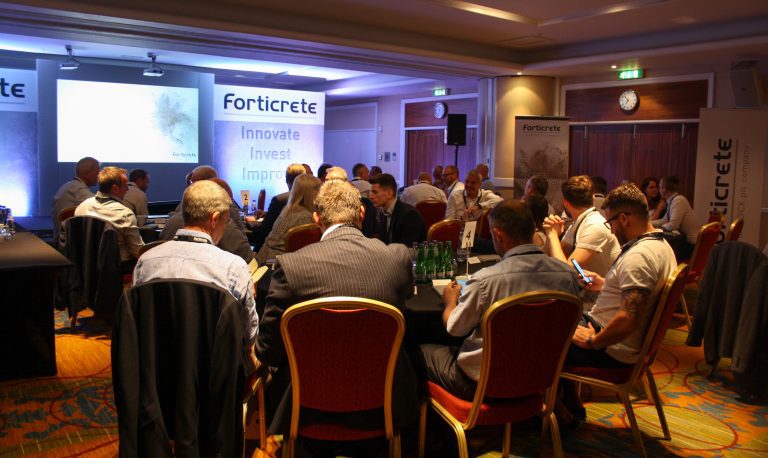
Innovate, invest and improve were the key themes at the inaugural Forticrete Roofing Forum. The event, held at the Forest of Arden last week (July 4), was attended by more than 50 people from across the roofing industry. As well as updates on company activity and the state of the market, a number of educational syndicate sessions held throughout the day gave attendees the opportunity to ask questions and give feedback in key areas. Sessions included health and safety for roofing contractors, product development, customer support as well as scheduling and ordering. A key message to emerge from the forum was that by working in partnership throughout the supply chain “everybody has the chance to grow their business”. John Lambert, Managing Director of Forticrete, commented: “This forum marks a major undertaking for Forticrete. It was an opportunity for us to share our future plans and generate feedback from the people who are most important to us. Our objective is to improve the customer experience. By listening to our customers, it will help us drive forward future initiatives across our business.  The aim of the forum was to have a collaborative approach so we can continually deliver the products, services and solutions the roofing industry needs.” Joe Hudson, Chief Executive of Ibstock plc, also stressed the value of the customer relationships, saying: “Without customers we don’t have a business. The only way we can continue to grow and invest is by having a partnership with you. By focussing on the needs of our customers and working together more closely we can make changes together that create value for everybody. There are a lot of opportunities within the roofing industry, and there is great potential for us all to grow at a very dynamic time in the market. We can achieve this by working in partnership throughout the supply chain.” Forticrete, part of Ibstock plc, is one of the UK’s leading manufacturers of concrete construction products including roof tiles, concrete decorative facing blocks, walling stone and cast stone dressings.  

Read More »

The secrets of building eco-friendly construction

With environmentally friendly, recycle and green energy becoming a priority across the entire world, it’s no wonder that more and more architects and construction specialists are focusing on introducing eco-friendly building designs. Buildings are getting designed in a manner that considers their environmental impact from the start, and even the way they’re constructed places a distinct focus on eco-friendliness and sustainability. The way in which these buildings deal with their waste during their construction is hugely important, and that is why more and more buildings are utilising skip hire in Northampton and the rest of the UK which focuses on ethical and environmentally-friendly waste removal. The secrets behind Eco-Friendly Building Construction Green Waste Removal – Even though all your efforts to reduce as much waste as possible during a construction project is great for helping the environment and reduce costs, there will always be waste created from the process. When it comes to removing the waste from your building project in anywhere across the UK, you need to ensure that you are using ethical waste removal and disposal service. That is why you need to find a skip hire company that does its best to recycle as much of the waste it receives as possible and can offer extremely high rates of recycling success. Alternative Energy Solutions – Modern buildings today, tend to have solar panels directly included into their design as a clean and renewable energy source. They utilise the natural energy provided by the sun and can not only work to reduce the environmental impact of a building’s design but can even provide decreased energy bills over the building’s lifetime. There are several government grants, incentives and tax breaks which a huge bonus to those buildings can also be which include solar power in their designs. Using Sustainable Buildings Materials – If you’re aiming to construct a green building, then it’s a no-brainer to use environmental construction materials. Each and every part of your building needs to use responsibly made and eco-friendly components, from the roofing material to the insulation you choose, the materials chosen can have a major effect on the overall sustainability of your building. Popular eco-friendly building materials include reclaimed timber, recycled plastics, recycled glass and other natural building products such as bamboo, cork and linoleum made of renewable materials. Energy Efficient Windows – Double-glazed windows can be extremely effective when to comes to a building’s insulation properties and drastically reduce costs from heating over the building’s lifetime. This also makes complete financial sense, as any additional costs incurred by installing double-glazed windows is overturned by the savings that these windows will provide in the long run. In summary, these points suggest that Britain is going in the right direction and when considering an environmentally friendly construction project, then you need to plan the most effective strategy to manage your waste, with the help of an expert.

Read More »

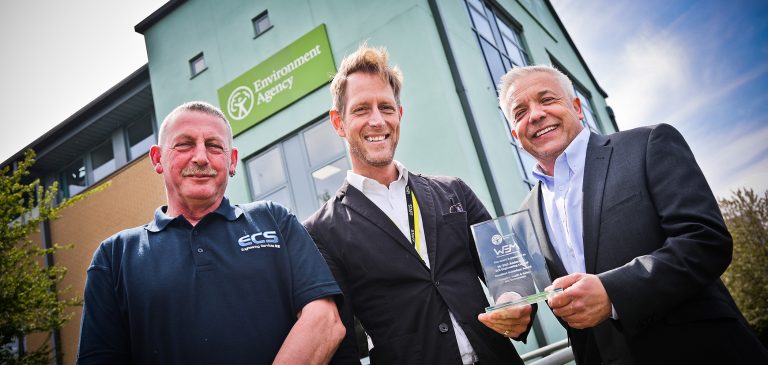
Environment Agency Award recognises ECS impressive Health and Safety Performance

ECS Engineering Services has won a prestigious Environment Agency Health and Safety Award for the way it designed and implemented critical safety systems into a project to refurbish the extensive steelwork at Colwick Sluice on the River Trent. As a vital part of the Nottingham area’s flood control infrastructure, Colwick Sluice consists of five steel vertical river control gates, each nearly 13 metres wide by 6 metres in height. This important structure has been protecting the city and surrounding countryside for over 60 years and ECS has previously been involved in the maintenance of the gates and an upgrade to their control systems. Thanks to its long history of work on water control infrastructure, ECS was invited to undertake refurbishment of the exterior steelwork structure, a project that required careful consideration and a great deal of planning and preparation. Some of the steelwork could be removed for cleaning and repainting off-site. However, much of the repainting work had to be in-situ – a lot of it had to be carried out over water, meaning special safety measures in case anyone fell into the river. There were also major environmental considerations to prevent old paint flakes, debris and other items from contaminating the waters, riverbank, wildlife and ecosystem. In the first stage of the project, ECS erected extensive scaffolding around the sluice, including a section to replace a gantry and walkway that had been temporarily removed. The scaffolding was designed to provide engineers with safe, clear access to all surfaces of the steelwork many metres in the air, and also to catch and contain falling debris. To improve the working environment and minimise the amount of debris dropping into the river, the scaffolding was encapsulated with tent-like walls allowing the operations to be carried out even in extreme weather. As part of the safety commitment a three-man water rescue team was on site at all times during the works, positioned in a small, highly manoeuvrable rescue boat, equipped for any likely eventuality so that they could deploy instantly to recover a person from the water. People working on the scaffold wore a double lanyard safety harness so that they could attach themselves to the scaffolding. If they had to move from one section of scaffold to another, they would unclip one lanyard and reattach it to the new section before undoing the second one, thus always remaining secure. The site teams carried out risk planning and mitigation during the planning phase of the project, identifying that it could be possible for a person to fall, be saved by their lanyard but unable to regain the safety of the scaffold walkway even with assistance. To cover this eventuality everyone was issued with a strap knife that they could use to cut the lanyard and drop into the river if needed – but not until the rescue boat was in position to effect an immediate recovery. Jamie Wesley, Operations Director at ECS recalls: “In conjunction with our client, ECS ensured that the rescue drills were carefully planned, exercised and that all personnel were correctly briefed on their roles prior to any works being carried out. Once ECS were happy with performance of our safe systems of work we invited our colleagues from the Environment Agency to attend an onsite demonstration where a life-sized dummy, rather than a real person, was dropped into the river and rescued.” The rescue team was on station with a Jason’s cradle to deploy over the side of the boat to initiate retrieval. The cradle is a piece of equipment specially developed to be used in retrieval from water which, when positioned beneath a person, is used to easily and quickly haul them into a boat. ECS had this demonstration filmed so that a training video could be produced and shown to all personnel working on the project. Jamie Wesley again states: “Safety is paramount and our pre-planning and demonstration showed that we had all the assets in place to make this project as safe as possible. We have learned lessons and proved systems that we can take forward into future projects. Winning the award confirmed that we had done our best and proven our capabilities for safety in ‘above water’ projects.”

Read More »

Housing association launches £2.4bn fire safety framework

Framework Initiative will be made available to public bodies across England and Wales. A London housing association has launched a £2.4bn framework for public bodies to use for fire safety remediation works. Hyde Fire Safety Works and Services Framework, which is being procured by Hyde Housing Association, will cover a range of works, goods and services relating to fire safety. The framework, which is open to public bodies across England and Wales, is divided into 11 lots covering different types of remediation works to help make buildings more fire safe, with each of the lots being worth around £200m. The framework covers everything from supply and repair of fire doors, to the installation of sprinklers, to cladding remediation works. Each lot will run for four years, with between two and 10 bidders expected to be invited to tender. Firms can submit bids for all lots. Companies have until 5 August to register their interest, with shortlisted firms expected to be invited to tender on 18 August.   Hyde Fire Safety Works and Services Framework Lots Lot 1 – Supply, installation, removal, and repair of fire doors Lot 2 – Supply, installation, removal, and design of fire safety signage Lot 3 – Supply, installation, removal, and maintenance of fire alarm, detection and suppression systems. (Lot 3 is split in to Lot 3A and Lot 3B to differentiate between fire detection and fire suppression systems) Lot 4 –  Supply, installation, removal, and maintenance of emergency lighting Lot 5 – Design, supply, installation, removal, and maintenance of sprinkler systems and dry/wet risers. (Lot 5 is split in to Lot 5A and Lot 5B to differentiate between Dry Risers and Wet / Charged Risers.) Lot 6 – Provision of fire proofing and stopping works and services Lot 7 –  Provision of cyclical and reactive electrical testing, servicing, and maintenance services Lot 8 – Remedial Works, upgrades, installations, and testing of electrical systems Lot 9 – Removed from framework Lot 10 – Design, supply, installation, removal, and inspection of cladding Lot 11 – Incident Management and provision of Business Continuity Planning advisory services to mitigate and plan for potential threats Lot 12 – Management Contractor to manage any of Lots 1 to 11 for clients and/or direct delivery

Read More »